11 résultats
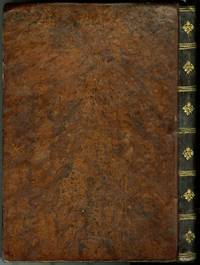
17896474Paris: Chez líAuteur 1789. Hardcover. Very Good. 12mo 137 x78mm. xiii 16pp. Calendar 288pp. original final blank. Engraved frontispiece by ìC. S. Gaucher 1788.î Near contemporary full mottled calf marbled endpapers edges gilt; margins shaved close affecting some pagination p.24 with light impression of p. 1 p.27 with deckled edge; spine headcap chipped joints tender extremities lightly rubbed. An ephemeris plural: ephemerides; from the Greek word ἐφήμερος ephemeros ìdailyî is a table of values that gives the positions of astronomical objects in the sky at a given time or times. Different kinds of ephemerides are used for astronomy and astrology. Even though this was also one of the first applications of mechanical computers an ephemeris will still often be a simple printed table. Contents in this copy include a Calendar with gold numbers a Sun cycle and Age of the Moon and dates for important liturgical holidays among them Ash Wednesday Easter and Pentecost. The majority of text is romance lyrics with 27 pages of music dedicated to particular men at the end. <br/><br/> Paris: Chez líAuteur hardcover books
1794045600Rome: Gioacchino Puccinelli 1794. First Edition. Hardcover. Very Good Condition. 19th century card covers with added endpapers light scattered foxing internally a few minor paper flaws and dampstains one small wormtrail in gutter touching a letter or two. 159pp Scarce work by the Italian violinist and music theorist. Catalogo della Biblioteca del Liceo Musicale di Bologna: I p. 309; Catalogue of Early Books on Music 210. Size: Octavo 8vo. Quantity Available: 1. Shipped Weight: Under 1 kilo. Category: Music; Inventory No: 045600. <br/><br/> Gioacchino Puccinelli hardcover books
1767WRCAM45554New York: James Parker 1767. 447991431pp. Antique-style three-quarter calf and marbled boards leather label. Titlepage neatly repaired at bottom not affecting text. Two contemporary signatures on titlepage. Light tanning and scattered foxing. A very good copy. The first book of music printed from type in America. "This is the First Edition in English of the Prayer-Book of the Reformed Dutch Church of New York. It is a translation of the old Holland liturgy. The translation of the book from the Dutch was made by the Rev. John Livingston D.D. The Psalms were rendered into English verse by Francis Hopkinson one of the signers of the Declaration of Independence. There are one hundred fifty Psalms in metre accompanied on every page by the printed music. The type for the music notes was ordered from Daniel Cromelin of Amsterdam in 1764. The Ten Commandments are also versified and supplied with music. These are followed by the Songs of Zacharias the Virgin Mary and Simeon. The same musical treatment is given to the Creed and the Lord's Prayer" - Church. EVANS 10561. ESTC W6234. CHURCH 1067. AMERICAN SACRED MUSIC IMPRINTS 398. James Parker hardcover books
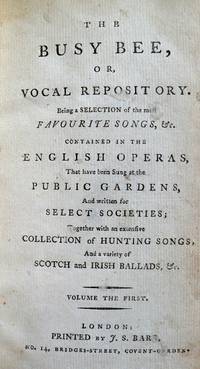
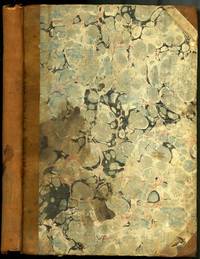
179021873London: J.S. Barr 1790. 3 volumes. 12mo. Newly bound in period-style marbled boards with printed paper title labels to spines. <br/><br/>Volume I: 1f. title iii-xvi index 350 pp. 536 songs <br/>Volume II: 1f. title v-xii index 348 pp. 282 songs<br/>Volume III: 1f. half-title 1f. title i-viii 348 pp. including "A Complete Alphabetical Glossary; Or Explanation of the Scotch Words" pp. 345-348. 306 songs<br/><br/>Text without music to a total of 1124 songs. <br/><br/>Manuscript annotation to flyleaf of Volume I: "Sept. 1792 Lent Mr. Hall the first Volume not come home yet." <br/><br/>Slightly worn and browned occasional foxing and staining. Lacking frontispiece portraits of Mrs. Billington Vol. I Mrs. Martyr Vol. II and Captain Morris Vol. III. First Edition. J.S. Barr unknown books
1779045654Lyon: Jean-Marie Bruyset 1779. Later Edition. Hardcover Half Leather. Good Condition. 19th century half leather hinges cracked binding sound but rubbed. Scattered mostly minor foxing old catalog entry pasted to front blank; generally clean internally. 10 folding plates. A nice copy. First published in 1752. xxxvi 236 4pp. Size: Octavo 8vo. Quantity Available: 1. Shipped Weight: Under 1 kilo. Category: Music; Inventory No: 045654. <br/><br/> Jean-Marie Bruyset hardcover books
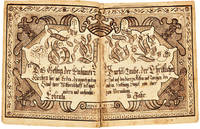
1747WRCAM46388Ephrata 1747. 264pp. plus 7pp. printed register. Small quarto. Contemporary three-quarter calf and marbled boards. Spine heavily worn split in center. Later 19th-century ownership inscription on front fly leaf. Slight wear and foxing to some leaves and some ink burn resulting in splits to some leaves. Very good. In a half morocco and cloth slipcase spine gilt. A unique and spectacular manuscript hymnbook created by the religious community at Ephrata Pennsylvania founded by Johann Conrad Beissel. This manuscript is from the period when the community was at its zenith and is an outstanding example of the Frakturschriften for which the Ephrata Cloister is known. It contains over 250 pages of manuscript music some of it likely original compositions. The printed register at the end contains 375 hymn listings and an additional fifteen pieces of music precede the main body of the work. <br> <br> Johann Conrad Beissel 1692-1768 was born in Germany and orphaned at an early age. A charismatic and engaging personality he tried on several religious movements and eventually emigrated to Pennsylvania in 1720 after being banished from his homeland for radical religious beliefs. Beissel spent part of the 1720s with the Dunkards in Germantown and Lancaster County before his controversial beliefs about celibacy and Sabbath-keeping caused a rift with his fellow congregants. He then established himself as a hermit on the banks of the Cocalico River where he was eventually joined by other like- minded individuals who wished to follow his teachings and so founded the Ephrata Cloister in 1732. "What began as a hermitage for a small group of devoted individuals grew into a thriving community of nearly 80 celibate members supported by an estimated 200 family members from the region at its zenith in the mid-18th century. During that period much of the activity surrounded the charismatic founder and leader Conrad Beissel. His theology a hybrid of pietism and mysticism encouraged celibacy Sabbath worship Anabaptism and the ascetic life yet provided room for families limited industry and creative expression" - Ephrata website. "Both within and without Ephrata Beissel aroused controversy. His opposition to the institution of marriage early divided his congregation as did his refusal to tolerate the community's money-making industries. His adoption of the Jewish sabbath and work on Sunday violated provincial laws and aroused the opposition of civil officials. That women left their husbands and homes to be with Beissel produced their husbands' ever-lasting hostility and even provoked one to attack Beissel physically. Beissel's willingness to permit women to spend nights in his cabin and his initial housing of men and women in the same building led to rumors of sexual promiscuity that prompted a neighbor to try to set fire to the cloister" - ANB. <br> <br> The community became known for its self- composed a cappella music Germanic calligraphy known as Frakturschriften and the complete publishing center which included a paper mill printing office and book bindery. Printing at Ephrata began in 1745 the third geographical location of printing in Pennsylvania. In fact the largest book printed in America before 1800 numbering more than 1500 pages was published at the Ephrata printing shop in 1748. The first printed hymnbook of the cloister was called the "Turtle-Taube Turtle Dove" and contained more than 400 of the community's hymns most of which Beissel had written. It was issued in 1747 the same year as this manuscript. <br> <br> In addition to the press the Cloister also had a scriptorium which produced beautiful manuscript hymnals and other works. Beissel composed many original hymns for the community which then produced manuscript volumes containing both the words and separately the music. He is said to have composed more than 4000 lines of poetry almost all of it religious some of it set to music also of his composition. "For the community's worship he developed distinctive types of choral harmony and antiphonal singing and he frequently required the members to sing in this style on late night walks around Ephrata" - ANB. Manuscript production at Ephrata was used as a form not only of book production but also as a meditation and spiritual act. Beissel established a monastic style of living for the Cloister in 1735 three years after its founding and the earliest output of the scriptorium dates to this time. Most of the fine manuscript work was likely done by the Sisters the Cloister was segregated by gender while the Brothers maintained the printing press. The scriptorium flourished during the 1740s and 1750s declining near the end of that decade. The present manuscript was produced while the scriptorium was at the pinnacle of its output and handiwork. <br> <br> This volume with its elaborate fraktur titlepage was likely a presentation copy rather than a standard everyday hymnbook. The Ephrata community produced virtually the only original hymn texts and tunes during the colonial era. It was meant to be used with the printed words from the 1747 edition of DAS GESANG DER EINSAMEN UND VERLASSENEN TURTEL-TAUBE. A bearded face has been drawn in each of the two upper corners of the fraktur a highly interesting and unusual feature of the work. It is inscribed on the front fly leaf with a later ownership inscription which reads "Abm. Burger's Book / January 29 1830" which is followed by a gift inscription: "A Present of a Music Book from / Abm. Burger / to / Elder Lucius Crandal / Plainfield / Essex County / N.J. / December 17th 1854." These lines were probably written by Abraham Berger 1795- 1856 a member of the Snow Hill Congregation in Quincy Pennsylvania an offshoot of the Ephrata community located about ninety miles to the southwest. When Ephrata was in its decline in the late 18th and early 19th centuries Snow Hill was in its prime and as a result many of the books and manuscripts were transferred from Ephrata to Snow Hill. This would explain how and why Berger may have acquired the volume. <br> <br> The gift recipient Lucius Crandall 1810- 76 was an elder and minister in the Seventh Day Baptist Church first at Plainfield New Jersey and later at congregations in Rhode Island and New York. The Ephrata Cloister congregation following its incorporation in 1814 became known as the Seventh Day Baptists of Ephrata also referred to as the German Seventh Day Baptists. While Ephrata had no official ties or affiliation to the Seventh Day Baptist Church with which Crandall was affiliated the two denominations formed a close relationship. This was true to the extent that in the later 19th century Crandall's denomination included the annual reports of the Ephrata and Snow Hill congregations in their own annual reports. Ministers and members would travel from Crandall's Seventh Day Baptist Church to the Cloisters at Ephrata for feast days and baptisms etc. providing a link between the two men. <br> <br> The Winterthur Library and Museum in Delaware has a significant collection of these hymnals as noted by Kari Main in her excellent 1997 article on the subject she compares eight hymnals. Columbia University has half a dozen manuscript hymnals as well and further collections can be found at the Ephrata Cloister The Free Library of Philadelphia the Library of Congress and the Hershey Museum. Many of these derive from the great Samuel Pennypacker collection dispersed at auction in 1908. Such manuscript works are incredibly rare on the market today and the present copy is an especially fine example of these remarkable manuscripts. Kari M. Main "From the Archives: Illuminated Hymnals of the Ephrata Cloister" in WINTERTHUR PORTFOLIO Vol. 32 No. 1 pp.65-78. ANB online. Website of the Ephrata Cloister http://http://www.ephratacloister.org/history.h tm. hardcover books
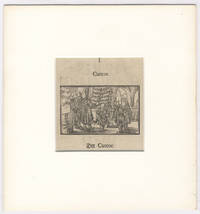
1725358341725. A singing master stands in front of a large open choir book using a pointer to guide a small group of adults and children in song. Image size 50 x 85 mm sheet size 153 x 105 mm. On laid paper.<br/><br/>Extracted from Orbis sensualium picti pars prima secunda der sichtbaren Welt an instructional book for children first published in 1658 with editions extending up to ca. 1730. <br/><br/>Slightly worn; hinged to mat at upper margin of verso. unknown books
1713WRCLIT65581Oxford: Printed for Anthony Peisley . 1713. 4191pp. Octavo. Extracted from bound pamphlet volume. Untrimmed. Tanned with old tide mark in lower margin and some early ink marginalia on B1r else a good copy. First and sole edition dedicated to William Croft and dealing with the subject of appropriate forms of cathedral music: "A Soft Gentle Strain a Grave Slow Movement much more Expressive than Sighs and Groans the usual signs of an Ignorant Piety." Dingley's publications seem to have been limited to this sermon and a quite rare 1694 miscellany of poems and translations. ESTC T54783. Printed for Anthony Peisley ... unknown books
1795045633London: Clementi Banger Collard Davis & Collard et al. 1795. Early Edition. Hardcover Half Leather. Very Good Condition. Collection of engraved scores bound up in half reverse brown leather modest wear at edges rubbing to boards with loss of marbled paper stain to rear cover. Modest foxing occasional minor staining and creasing a few ownership marks; generally very good internally. The scores are: Ignace Pleyel. Three Grand Sonatas for the Piano-Forte or Harpsichord. In which are introduced for the Subjects of The Adagios & Last movements Select Scotish Airs With Accompanyments for a Violin and Violoncello.London: Printed & sold by Preston & Son n.d. 1793; And: Ignace Pleyel. Two Grand Sonatas For the Piano Forte or Harpsichord with an Accompanyment for the Violin ad Libitum.Op. 7.London: Printed & Sold by F. Linley at his Music Warehouse n.d.; And: Joseph Mazzinghi. Three Sonatas for the Piano Forte with or without the Additional Keys and an Accompaniment for a Flute or Violin.Op. 14.NB. In this Sett are introduced several favorite Airs. London: Printed by G. Goulding n.d. 1793; And: Joseph Mazzinghi. Three Sonatas For the Piano Forte with or without the Additional Keys and an Accompanyment For a Flute or Violin. In which are introduced several favorite Airs.Op.a 19. London: Printed for G. Goulding n.d.; And: L. Latour. Three Sonatas for the Piano Forte or Harpsichord with an Accompaniment for a Violin & Violoncello.Op. I. London: Printed & Sold at A. Bland & Weller's Music Warehouse n.d.; And: James Hook. Three Grand Sonatas for the Piano Forte with an Accompaniment for a Violin in which are Introduced for the Subjects of the Adagios & last Movements Favorite Irish Airs.Op. 78. London: Printed & Sold by Preston & Son n.d. 1795; And: Bland's Collection Continued by F. Linley of Sonatas Lessons Overtures Capricios Divertimentos &c. &c. for the Harpsichord or Piano Forte without Accompts. by the most Esteem'd Composers. London: Printed & Sold by F. Linley Successor to Mr. Bland n.d.; And: T. H. Butler. Lewie Gordon A Favorite Air Arranged as a Rondo for the Piano Forte.London: Printed & Sold by Preston & Son n.d.; And: The New German Waltz adapted as a Rondo for the Harp or Piano Forte by Madame Dussek. Edinburgh: Printed for Corri Dussek & Co. n.d. Size: Octavo 8vo. Quantity Available: 1. Shipped Weight: 2-3 kilos. Category: Music; Inventory No: 045633. <br/><br/> Clementi, Banger, Collard, Davis, & Collard et al. hardcover books
1800045632London: Clementi Banger Collard Davis & Collard et al. 1800. Hardcover Half Leather. Very Good Condition. Collection of engraved scores bound up in full tree sheep spine darkened and a little dry modest wear at edges Modest foxing occasional minor staining and creasing a few ownership marks; generally very good internally. The scores are: Of Noble Race was Shenkin; Codiad yr Haul The Rising Sun; Mamma Mia; In amor ognun dichiara; C. H. Florio. Se mi Credi Amato bene A Favorite Duett Composed for Madme Mara and Sigr. Viganoni.; The Nightingale A Favorite Military Rondo As Performed at Brighton by the Royal South Glocester Band Arranged for the Piano Forte With a Flute Acct.; Robert Cooke. The Farewell Sung by Mr Bartleman at the Vocal & Other Concerts with universal applause; Here's the Bower A Ballad Dedicated to Her Grace the Duchess of Bedford; Supremely Blessed No. 17 of Songs Duetts & Trios with a Harp Accompaniment; The Poetry by Peter Pindar Esqr. Mr. Rannie &c. The Music by Mozart & Others; M. G. Lewis. He loves and he rides away A Favorite Ballad; Dr. John Clark. The Song of Fitz-Eustace The Poetry from Marmion a Tale of Flodden Fields As Sung by Mrs. Ashe At the Bath Concerts; Giuseppe Sarti. Lungi dal caro bene sung by Sigr. Marchesi in the Opera of Giulio Sabino.London: Printed by G. Walker n.d.; The Favorite Mad Song Sung by Mrs. Jordan in the Last of the Family The Melody Arranged and the Accompaniment added by Sir William Parsons. London: Printed & Sold by J. Dale n.d. 1797; Mr. Braham. A little queer Old Man Sung by Signora Storace in Out of Place or the Lake of Lausanne.; Cesare Bossi. Cinderella's Minuet As Danced by Miss De Camp & Mr. Byrne at the Theatre royal Drury Lane In the Grand Spectacle of Cinderella.and Arranged for the Piano Forte & Harp.London: Printed by M. Kelly at his Musical Saloon n.d. 1803; Louis von Esch. A Military Divertimento for the Harp and Piano-Forte.London: Printed by Broderip & Wilkinson n.d.; Boieldieu F. A. Duo pour Harpe et Piano Dédié à Vernier par son Ami Plantade. Prix 6.s/. London: Printed by Broderip & Wilkinson No. 13 Haymarket. Where may be seen their Patent Harps and great variety of New Music n.d. 1806; Johann Ladislaus Dussek. Dussek's Favorite Sonata Op. 37. Originally Composed for the Harp and Dedicated to Lord Courtenay. Arranged for the Piano Forte with Accompaniments for Violin & Violoncello by Johann Baptist Cramer. London: Printed & Sold by Rt. Birchall at his Musical Circulating Library n.d.; Mathias Holst. Un Palpito Atroce. A Favorite Air Composed with Variations For the Piano Forte or Harp.London: Printed by Broderip & Wilkinson n.d. 1807; Domenico Cimarosa. "Le Astuzie femminili." N.p.: n.d.; Philippe-Jacques Meyer. A Favorite Theme with Variations for the Harp and Accompaniments for Violin & Violoncello Ad Libitum.London: Printed by Clementi & Co. n.d.; W. Duchatz. Six Favorite Lessons for the Pedal Harp.Op. 5. London: Printed & Sold by L. Lavenu n.d. between 1805 and 1811; Jean Aimé Vernier. Sonatas for the Harp.The 1 from Op. 4. London: Printed & Sold by J. Platts at his Magazine for Harp Music n.d.; Johann Ladislaus Dussek. "O Ma Tendre Musette." London: Printed & Sold by L. Lavenu n.d. ca. 1810; Giacomo Gotifredo Ferrari. The Favorite Cavatina as Sung by Madame Catalani in the Opera of La Frascatana.Arranged as a Rondo for the Harp with an Accompaniment for the Flute ad Libitum Dedicated to Miss Lambton by Victoire Gatherot. London: Printed & Sold by L. Lavenu n.d.; L. De Marin. The favorite Air "O Dolce Concento" Sung by Madme. Catalani with New Variations for the Harp.London: Printed & Sold by L. Lavenu n.d. 1810. Size: Octavo 8vo. Quantity Available: 1. Shipped Weight: 2-3 kilos. Category: Music; Inventory No: 045632. <br/><br/> Clementi, Banger, Collard, Davis, & Collard et al. hardcover books
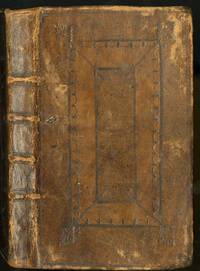
1715045411London 1715. First Edition. Hardcover Full Leather. Good Condition. Contemporary paneled calf rubbed but sound first few pages loose title a bit stained with an old signature rear endpaper worn and loose with old writing some scattered foxing and some creasing and old stab holes presumably from its brief life as an unbound volume staining in the gutter a few chips to the top edge in the index. An amusing and sometimes bawdy collection of poems. xii164p. Variant with 2 lines of errata on xii. Size: Octavo 8vo. Quantity Available: 1. Shipped Weight: Under 1 kilo. Category: Poetry; Music. Inventory No: 045411. <br/><br/> hardcover books