142 résultats
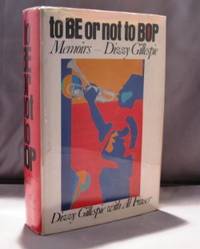
197922006<p>New York:: Doubleday 1979. First Printing of the First US Edition. A Near Fine tight copy in a Very good plus unclipped unfaded dust jacket with some tiny nicks to the edges of the spine and two short closed edge tears. This autobiography blends Dizzy's own story along with the thoughts and remembrances of those who knew and with him over the years including such notables as Miles Davis Billy Eckstine Cab Calloway Kenny Clarke to name but a few.</p> Doubleday, hardcover
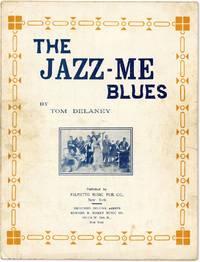
192182277New York: Palmetto Music Pub. Co 1921. First Edition. Slim quarto 30.5cm; original pictorial wrappers; 6pp. Moderate wear handling and dust-soil to wrappers some creases and edge-tears with inner spine-fold archivally reinforced with a patch of paper tape remnant to upper end of same; complete Good to Very Good.<br /> <br /> One of the earliest hits by African American songwriter and composer Thomas Henry Delaney 1889-1963. Born in Charleston SC he would eventually become one of the most popular jazz and blues composers on Tin Pan Alley. The front wrapper reproduces a photograph of Lucille Nelson Hegamin 1894-1970 backed by the band Albury's Blues and Jazz Seven. In 1920 she became the second African American blues singer to record following Mamie Smith and Perry Bradford's August 1920 recording of "Crazy Blues." She recorded "Jazz-Me Blues" in 1921 backed by her husband Bill and his band the Blue Flame Syncopators; thanks to her recording Delaney's song would go on to become a jazz standard. OCLC notes a scant 8 holdings. 82277. Palmetto Music Pub. Co unknown
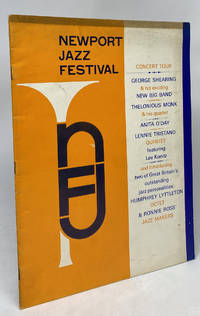
19609446New York: Weston Associates 1960. Staplebound. Very good. Quarto unpaginated 24pp. illustrated. Very good in the publisher's stapled wraps with a thin area of dust-soiling to the top of the front wrap and some gentle creasing to the spine. Staples gently rusted but sound. A fantastically designed concert program for the 1960 Newport Jazz Festival Concert Tour. Within are profiles of Anita O'Day Thelonious Monk George Shearing and others. We could find very little material written about this concert tour though Newport Jazz Festival producer George Wein is known to have organized some tours involving some of the major performers at the storied festivals during the late 1950s and early 1960s. The actual Newport festival in 1960 was one of the most memorable - there were several riots mostly involving frustrated would-be concertgoers who were unable to secure tickets and fought with police in the small ritzy town of Newport. OCLC records no holdings of this program nor any other from a Newport Jazz Festival Concert Tour. A rare and significant piece of jazz history. Weston Associates unknown
192447496Dayton OH: The Comer Manufacturing Co. 1924. Tall 8vo. 5.5 x 10.5 in. 36 pp. Numerous illustrations 4 colour plates 4 sepia-tinted plates 64 wool wool blend canvas linen leather cotton and patterned fabrics some treated w/ coating tipped-in occasional offsetting from samples either surrounding the sample or on facing leaves. Dark red printed softcovers decoration & lettering in orange & blue minor soiling some creasing still a VG- copy. First edition of this scarce salesman sample catalogue for men and women’s Jazz Age raincoats and overcoats in the mid-1920s. The company was founded before World War I by Charles E. Comer b. 1887 who quickly established the company as one of the largest manufacturers in Ohio of raincoats. The colour fashion plates are quite striking for the period and offer invaluable historical reference for the styles and weight of raincoats sold during the Flapper Era. Comer produced rubber-lined coats offered deals if you ordered two coats at once and also offered Mackinaws General Purpose coats Rubber rain slickers reversible coats and even waterproof aprons for housewives. This catalogue notes that they had just completed their new 40000 square foot and even offered waterproof luggage and garment bags. They were well known for advertising in labor magazines trade magazines and professional magazines constantly promoting their product and recruiting new salesmen. Worldcat locates only 1 copy Vol. 166. The Comer Manufacturing Co., paperback
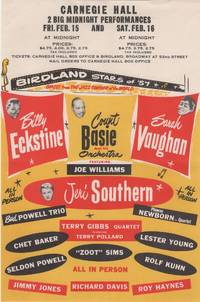
1957206793New York 1957. Old horizontal fold barely detectable; fine and bright. Original handbill 6 x 9 in. printed on one side only in black red and yellow. Vintage boxing-style handbill for the Carnegie Hall dates of this 1957 tour featuring a dizzying array of Jazz stars headlined by Count Basie with Joe Williams Billy Eckstine and Sarah Vaughan. Other performers included Jeri Southern Bud Powell Lester Young Zoot Sims Chet Baker Phineas Newborn Roy Haynes and others. unknown
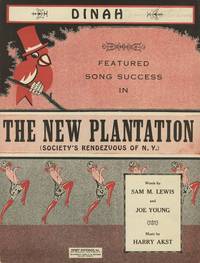
1925List3672New York City: Henry Waterson Inc 1925. Folio illustrated wraps. 5 pp. Fine condition. A striking Jazz Age sheet music issue and likely first edition for “Dinah†the widely popular song composed by Harry Akst with lyrics by Sam M. Lewis and Joe Young here promoted as a “Featured Song Success†from The New Plantation Society’s Rendezvous of N.Y. a Harlem revue-style theatrical production. The revue was advertised as an all-Black production reopening the Plantation Cabaret at 50th Street and Broadway featuring prominent performers including blues singer Ethel Waters alongside Will Vodery’s Parisian Orchestra Josephine Baker Bessie Allison Leonard Harper Jimmy Ferguson and the Plantation beauty chorus.1 “Dinah†would go on to become one of the most enduring standards of the decade. Multiple versions were published in 1925 this one in June and though we are not able to establish definitive priority we guess that this is the first edition. Very scarce with three copies found institutionally at the Francis G. Spencer collection at Baylor University BYU and the British Library reference collection. <br /> <br /> 1 “Ethel Waters Is Featured In New Plantation Revue†The New York Age June 20 1925 6. Henry Waterson, Inc unknown
192554342Philadelphia PA: Otto F. Schumann Philadelphia Textile School ca. 1925. Small 4to. 8.25 x 9.2 in. 75 leaves unnumbered including 32 leaves with detailed colour charts on weave formations producing various kinds of cloth 3 tipped-in textile samples together w/ weaving instructions in manuscript. Original limp leather 3-ring binder gilt lettering stamped on front cover ink lettering & association of Otto F. Schumann on front cover some soiling dustsoiling edgewear still VG exemplar. This Jazz Age weaving manuscript notebook complete with weave formation design plates fabric samples and instructions offer a remarkable and invaluable artifact of how a young American textile designer and weaver received training at the famed Philadelphia Textile School now Philadelphia University during the 1920s. These course books were judged on completeness and the aspiring weaver’s skill in presenting the details about the instruction as well as their abilities in running the machinery required to produce the cloth. This manuscript notebook includes Schumann’s detailed plates and notes on producing color effect on the plain weave creating Broken Twills Crowfoot Satins Checked & Figured Broken Twills Entwining Twills Basket Weaves and Broken Satins. The extensive manuscript notes detail the loom instructions how many lines are required composition and more in producing the assorted effects. Because of the poor quality of United States textiles exhibited at the Centennial Exhibition in 1876 the Philadelphia Textile Manufacturers pushed for a formalized vocational school to train weavers designers and textile workers. In 1884 it became part of the Pennsylvania Museum and School of Industrial Art with 81 students enrolled by 1885 and by 1894 the School of Textiles added a Department of Wool Carding & Spinning and a Department of Cloth Finishing and Design. By the 1920s the Philadelphia Textile School was offering extensive three-year textile courses chemistry and dyeing courses as well as design courses in cottons woolens worsteds silks Jacquard design and more. Schumann 1906-1967 was the son of Hugo Schumann founder and owner of the Maid Hosiery Mills in Reading PA through the opening decades of the 20th century for whom he worked with until after World War II as designer and sales executive. Otto F. Schumann, Philadelphia Textile School, hardcover
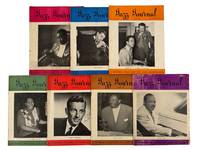
1948223231948. 1 Traill Sinclair ed. Jazz Journal issues 1948 document postwar British jazz culture as readers collectors critics and musicians rebuilt access to American jazz after wartime disruption and expanding record scarcity. Founded by Sinclair Traill in 1948 Jazz Journal became a major English-language jazz periodical; its inaugural year placed African American performers blues aesthetics revivalist debate discography and record reviews at the center of British jazz criticism. These issues support research into jazz reception in the United Kingdom transatlantic music journalism record collecting racialized cultural admiration and the postwar circulation of African American musical authority through British print culture. <br /> <br /> Jazz Journal. Volume 1 Nos. 1-3 5-6 8-9. London: J.J. Publications May-November 1948. Seven issues each approximately 12 pages in pictorial wrappers. The run includes the May June July September October and November 1948 issues with one additional issue represented by number rather than month in the supplied description and contains record reviews discographies artist profiles editorials criticism and jazz news. The premier issue opens with Traill's editorial appeal to jazz readers recalling that "Even in those far-off days between the two wars when paper was to be had for the asking and printers' costs didn't resemble a millionaire's hotel bill it was always a dubious endeavour" and closing with the hope that readers would see "a new issue of JAZZ JOURNAL on the first of each month for many years to come." Contents cited in the supplied description include "Make Way for Dixieland or Return to Sanity" a Thomas Waller discography a September 1948 appreciation of Hoagy Carmichael with signed portrait cover and Hugues Panassié's November essay "Count Basie and the Blues" which argues that "Count Basie knows how to play the blues as well as it seems possible to do so on the piano." Cover portraits include Louis Armstrong Nellie Lutcher Count Basie and Humphrey Lyttelton placing African American jazz innovators alongside British revivalist musicians within a magazine aimed at a postwar readership hungry for recordings biographical knowledge and critical guidance.<br /> <br /> Traill Sinclair ed. Jazz Journal. Vol. 1 No. 1. London: J.J. Publications 1948. The opening issue establishes the magazine's postwar purpose through Traill's editorial address to jazz enthusiasts and its promise of sustained monthly criticism. Its contents including revivalist commentary and discographical attention to Thomas "Fats" Waller show the early publication's effort to organize jazz knowledge for British readers dependent on print mediation and record collecting. 2 Traill Sinclair ed. Jazz Journal. Vol. 1 No. 2. London: J.J. Publications 1948. This issue continues the magazine's early program of criticism record commentary and performer-centered coverage for a readership attentive to American jazz and its British reception. It belongs to the first sequence of issues issued after the May 1948 relaunch from Traill's earlier Pick Up whose final issue preceded the first Jazz Journal in May 1948. 3 Traill Sinclair ed. Jazz Journal. Vol. 1 No. 3. London: J.J. Publications 1948. The third issue forms part of the magazine's initial attempt to stabilize a postwar jazz readership through recurring reviews essays and documentation of recordings and artists. Its position in the first volume is useful for tracing how British jazz criticism developed a regular periodical form in 1948. 4 Traill Sinclair ed. Jazz Journal. Vol. 1 No. 5. London: J.J. Publications 1948. This issue continues the first-year sequence with the supplied description emphasizing the magazine's mix of artist portraits discographical writing and critical essays. The issue contributes to the archive's broader value as evidence of how British jazz readers encountered American performers through images reviews and commentary. 5 Traill Sinclair ed. Jazz Journal. Vol. 1 No. 6. London: J.J. Publications 1948. The September 1948 issue features an appreciation of Hoagy Carmichael with a signed portrait cover connecting jazz readership to popular song composition and the American music industry. Its treatment of Carmichael alongside coverage of African American jazz performers demonstrates the publication's wide understanding of jazz-adjacent culture in the late 1940s. 6 Traill Sinclair ed. Jazz Journal. Vol. 1 No. 8. London: J.J. Publications 1948. This issue belongs to the later portion of the inaugural-year run and continues the magazine's regular pattern of record culture criticism and performer documentation. In the context of the seven-issue group it helps show the durability of Traill's monthly editorial project beyond the launch months. 7 Traill Sinclair ed. Jazz Journal. Vol. 1 No. 9. London: J.J. Publications 1948. The November issue includes Hugues Panassié's "Count Basie and the Blues" a critical essay distinguishing blues feeling and phrasing from commercialized improvisation. Its attention to Basie foregrounds African American musical authority within British jazz discourse and gives the archive direct relevance to the study of blues reception swing-era memory and postwar criticism. Moderate soiling and creasing to wrappers occasional spine chipping intact stapled bindings delicate covers and vivid photographic contrasts good overall. Substantial inaugural-year run of a long-lived British jazz periodical preserving the early critical vocabulary through which postwar British readers studied African American jazz swing-era performers blues expression and record collecting. unknown
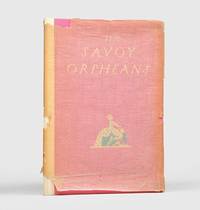
1924139822London: Published Privately at the Savoy 1924. First and only edition one of 1000 copies issued as a "first birthday" celebratory publication; scarce particularly so in the fragile glassine jacket. Loosely inserted in this copy is a slip printing soprano Luisa Tetrazzini's birthday wishes in green. The Savoy Orpheans were formed by former army bandmaster Debroy Somers in 1923 and were resident at the Savoy Hotel until contractual wrangles between W. F. De Mornys entertainments manager at the Savoy and the hotel company led to the orchestra disbanding on New Year's Eve 1927. During their four year tenure the Orpheans were among the cream of British dance bands and "patterned their instrumentation arrangements and classy presentations upon Whiteman's model" Baade p. 25. This attractive publication was printed at the Baynard Press which "employed highly skilled craftsmen. and printed many of London Transport's pictorial posters. the Baynard Press was amongst the largest and most technically accomplished printing firms in Britain" Science Museum. Library Hub locates only the British Library copy among British and Irish institutional libraries; WorldCat adding another copy at Rutgers University New Jersey. Square octavo pp. 16. With 3 tipped-in photogravures 2 showing the Orpheans the other the Savoy-Havana band all in situ in the Savoy Ballroom title page printed in green and pink decorative head- and tailpieces and occasional decorative sprays of notes in pink. Original white quarter cloth pink pictorial boards endpapers with musical notation in pink. With the glassine jacket Negligible rubbing to board edges faintest offsetting to endpapers; else a fine copy in the toned jacket with creasing and a couple of closed tears and chips to edges. Christina L. Baade Victory through Harmony: The BBC and Popular Music in World War II 2012. hardcover
192253307Beaver Dam WI: Malleable Iron Range Co. 1922-23. Three works in one. Oblong 4to. 38; 3-24; 34 pp. 35-39A leaves 39-66 i.e. 68 pp. 1st -- Colour-illustrated title in gray black orange & light blue printed and illustrated throughout with each black & white illustration of stove w/ orange & gray border; 2nd -- numerous plates in black & white black printed borders text illustrations diagrams; 3rd -- illustrated title numerous plates 5 linen-backed colour-tinted photographs w/ linen hinges text illustrations. Tan softcovers bound w/ two brass screw-posts at upper margin w/ Monarch Malleable range instructions cooking times and thermometer instructions preserved in original printed envelope laid-in minor shelfwear very minor thumbing rubbing still VG copy w/ ownership stamp of J.ohn Y. Hicks b. 1881 Malleable Iron Range sales rep who worked as railroad messenger and then machinist and salesman following World War I. First edition thus of these nicely illustrated salesman sample catalogues of Jazz Age electric stove appliances with electric cook tops insulating blocks an electric appliance plug-in on the side as well as automatic timer and temperature controls. These beautiful stoves could be purchased with enamel finish and as one oven cabinet ranges two oven cabinet ranges one oven square ranges one oven H type cabinet range with built-in kitchen heaters and more. The nicely executed colour-tinted linen-backed photographs showing Malleable stoves provide excellent contemporary visual documentation of the actual colours of the popular stoves folloowing World War I. Malleable Iron Range Company existed from 1896-1985 and at its height after World War I employed over 1200 employees producing a variety of stove and oven appliances which were coal & wood burning electric and gas. No copies located in Worldcat. Malleable Iron Range Co., paperback
192453221New York: The Charles William Stores Inc. 1924-1925. Two vols. 4to. 548 8; 518 8 pp. With numerous colour plates colour-tinted text illustrations over 1000 black & white text illustrations diagrams. Colour-illustrated softcovers minor soiling wear slight sunning front cover of vol. 1 creasing to spine; minor creasing shelfwear vol. 2 light uniform interior toning as usual still VG- set. First edition of the complete year of Jazz Age catalogues from the Charles William Stores which offered a treasure trove of everyday fashions work clothes and household and consumer goods during the Roaring 20s offering the glamour and style of New York to the rest of the country. Their fashions were intended for the average American with emphasis on the more “endowed†woman and “stout†man during the Jazz Age emphasizing chic styles and well-woven fabrics. These catalogues detail the high grade work pants riding breeches denim jeans corduroy work pants along with triple-sewed work denim overalls and coats which could be purchased as well as those made out of Wabash Stripe Stifel denim cloth noted for its durability. No copies located in Worldcat of Spring & Summer 1925; 3 copies located of Fall & Winter 1925 Henry Ford Harvard American Textile History Museum. The Charles William Stores, Inc., paperback
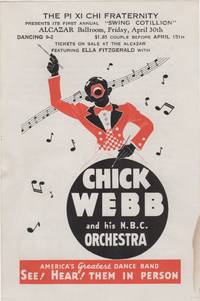
1937206792Philadelphia: Pi Xi Fraternity 1937. Small stain at edge otherwise fine and fresh. Double sided handbill 6 x 9 in. printed on both sides. Original advertising handbill promoting the event at Philadelphia's Alcazar Ballroom Friday April 30th 1937. A colorful flyer featuring the caricature picture of the drummer-bandleader clad in a red tuxedo and swinging his sticks against a backdrop of flying musical notes. On the verso is "An Open Letter to the Dance Lovers of this City" touting the group as "America's Greatest Rhythm Band." After winning first prize at the famed Apollo Theatre's Amateur Night in 1934 at the age of seventeen Ella Fitzgerald was soon introduced to Webb and joined his band the following year. By 1937 she had become a mainstay of the group with her name being prominently highlighted in promotions. After Webb's early death in 1939 she carried on as leader of the band. An excellent evocation of the height of the Swing Era. Pi Xi Fraternity unknown
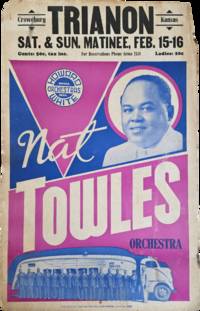
1930List2913Omaha Nebraska: The Metropolitan Press 1930. 14 x 21 ½ inch poster. Worn with marginal damage; very good plus. Nat Towles 1905–1963 was a jazz musician and bandleader from New Orleans. His band first called Nat Towles’ Creole Harmony Kings was a renowned territory band in Texas Oklahoma Kansas and Nebraska. They would later have residences in Omaha and Chicago and tour New York City. Offered here is a poster for the Nat Towles Orchestra at the Trianon Ballroom in Croweburg Kansas likely from the 1930s given the location and band name. Croweburg was a coal mining town—and a sundown town until 1912.1<br /> <br /> 1 “A.P.Roundtree Esq.†The Kansas Baptist Herald May 20 1912 1. The Metropolitan Press unknown
192645424Amherst MA: Samuel T. Dana & Harriet Dana 1926. Six volumes. 4to. 32; 38; 38; 27; 37; 34 leaves; an additional 16 leaves in manuscript in 3 of the albums written by Harriet Dana at age 10. Approx. 300 real photos of Harriet & George Ruth Dana Samuel Dana many street scenes numerous large studio photos tipped-in of sights in Rome Florence Dresden and other areas. Over 450 black & white tipped-in photo postcards many of them real photo postcards a few gold-tone photo postcards; approx. 75 tipped-in colour postcards; two letters of introduction from Yale University Secretary Robert Maynard Hutchins letter of introduction from U.S. Secretary of Agriculture William Marion Jardine who served under Presidents Coolidge and Hoover; printed invitations to the Congress World Forestry Congress credentials numerous programs to operas and theaters in European cities; menus to the S.S. President Harding; Menus for the S/Y Meteor; menus for the conferences; Children’s Tea Menu for the S.S. President Harding; Passenger lists for the United States Lines President Harding; tourist maps pictorial maps manuscript annotations and more. Uniformly bound in pebbled black cloth two-ring binders 1 of them with SS President Harding ribbon stretched around the binding wear & rubbing to the corners bumping to the spines a couple of the binders with hinges starting many of the leaves with wear and some loose at the gutter margin still a remarkable archive. An incredible Jazz Age archive of travel photos ephemera and documents assembled by Samuel T. Dana and his daughter Harriet during the family’s five month trip through Europe for the First World Forestry Congress held in Rome Italy. The albums are filled with documentation and souvenirs from their grand tour through Europe. Included are photos of the participants in the World Forestry conference two of them are of Dana’s subcommittee at the meeting many of the registration credentials letters of introduction as well as invitations to meetings and parties associated with the conference. The Dana family had an audience with the Pope in Rome saw Benito Mussolini visited the major sights of Venice with pictures of young George Dana feeding the pigeons in the Plaza in front of St. Mark’s Cathedral. They attended Verdi’s opera La Traviata featuring the soprano Violetta Valery. From there they traveled through France Switzerland Austria Czechoslovakia Germany Denmark Norway Sweden and Finland. They have included their brochures for visiting assorted museums folk festivals operas in Munich historical sights in Prague the beautiful city of Dresden tramped through all parts of Paris voyaged on the S/Y Meteor of the Norwegian Steamship Lines through Sweden Finland and Norway with the special treat of including their menus for breakfasts lunches dinners and children’s teas great photo of the children for the Captain’s tea on the SS President Harding. The photographs feature street scenes in assorted places views from the top of the Arc de Triomphe and the Eiffel Tower many of the people they met in their travels and more. Dana met with foresters and visited timber stands throughout northern Europe and Scandinavia.Of particular interest are the many leaves hand-written by the 10-year old Harriet Dana 1916-2011 describing the places they visited her impressions of the sights the many experiences she had as well as very charming notes from family friends tipped-in which were to be opened during their travels. She has annotated many of the postcards and photos. These albums and her impressions offer an invaluable cultural insight into travel during the Jazz Age for the well-to-do. In addition there are several leaves in manuscript written in both pencil and pen of the prices and types of souvenirs purchased throughout Europe including dolls pennants mosaics many lead soldiers a toy loom toy boat decks of cards clothing china and many different types of jewelry. Harriet Merrill Dana Carroll would later attend Swarthmore college graduate from Yale Nursing School in 1941 and eventually retire in Bethesda Maryland in 1986. Samuel Trask Dana 1883-1978 was a world renowned forestry expert who graduated from Yale in 1907 entered the U.S. Forest Service where he began groundbreaking studies in the culture of renewable white pine and paper birch forests. He established several forest experimental stations intended to further research and promote the economic value of forests. He served in World War I and from 1923 to 1927 was the director of the Northeastern Forest Experiment Station in Amherst Massachusetts where his most significant achievement was helping to organize the First World Forestry Conference. This Congress was significant because he succeeded in helping to establish an international body to compile and track forestry resources all over the world. Subsequently he became the first dean of the University of Michigan School of Natural Resources which pioneered many trends in modern forestry. He served as chairman of the U.S. Timber Conservation Board President of the Society of American Foresters was appointed in 1958 by President Eisenhower to serve on the National Outdoor Recreation Review Commission and also studied proposals to preserve California’s redwood forests. Samuel T. Dana & Harriet Dana, hardcover
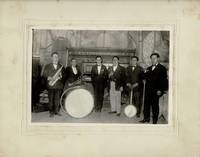
1930313Mexico City: Tacos Jazz Band 1930. <p dir="ltr">10" x 8" black and white photograph with matting 7.25" x 5" photograph alone; includes signatures of all band members on verso. The band name is likely "Tacos Jazz Band" – this is a rare and potentially only photo of this band as confirmed by a foremost Mexican jazz historian who also assisted with the name transcriptions “the photo is unique.†Inscription on the back in Spanish language translated to English: "For our dear and fine friend Mr. Eduardo M. as a loving memory of the Gorcos Jazz Band. México June 12-1926 / Roberto G. F. piano / Leopoldo Zavala saxophone / Juan Concha B. trumpet / Fernando Vazquez banjo / Pedro Plata violÃn / José G. Manrique drums" Photograph is slightly smudged; matting slightly creased and smudged. </p> . [Tacos Jazz Band] unknown
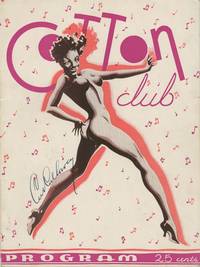
1938List3674New York City 1938. Small folio 12 x 9 inches 16 unnumbered pages. Signed boldly by Calloway on the front cover above the leg of the dancer in the illustration. Near Fine. An illustrated program for the Cotton Club from 1937/1938 with photographs of Cab Calloway the Nicholas Brothers and Mae Johnson in addition to information about the Club’s fifth edition of their Cotton Club Parade though this is a larger program. This copy documents the Midtown Manhattan iteration of the Cotton Club which moved from Harlem to Broadway and 48th Street in 1936 after the Harlem location closed following the Harlem riot of 1935. The new venue attempted to reproduce the earlier club’s formula of elaborate revues combining jazz orchestras chorus lines and specialty dancers in large-scale stage productions such as the Cotton Club Parade. While the performers remained overwhelmingly African American—including Calloway’s orchestra and many of the dancers—the audience at the club continued to be largely white reflecting the segregated entertainment culture of the period. This arrangement had long been criticized by Harlem writers and intellectuals; Langston Hughes writing during the Harlem Renaissance famously described the Cotton Club as a “Jim Crow club for gangsters and monied whitesâ€1 objecting to the racial restrictions placed on patrons even as Black musicians and dancers provided the entertainment. The Midtown Cotton Club continued presenting revues and broadcasts through the late 1930s but ultimately closed in 1940 bringing an end to one of the most famous nightclubs associated with the Harlem Renaissance and the swing era.<br /> <br /> Not in OCLC though see 951748496 for a shorter four page program for the fifth edition of the Cotton Club Parade published in 1938 and held at East Carolina University.<br /> <br /> 1 Langston Hughes “When the Negro was in Vogue†in The Big Sea Alfred A. Knopf 1940. unknown
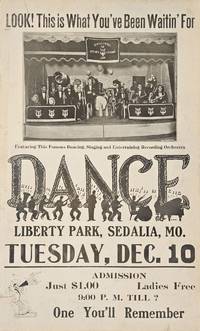
1929List2808Sedalia Missouri 1929. 11 x 18 inches heavy cardstock. Manuscript note verso reads “Flor Alpino Vals / Vanderbeckâ€. Some staining and tears mainly marginal. Overall very good to excellent. An advertisement for a performance by the Original Eleven Clouds of Joy likely an iteration—of which there were many—of the popular Kansas City-based swing jazz band Clouds of Joy. The group was formed in 1921 by trumpeter Terrence Holder 1897–1983 and in 1929 was led by saxophonist Andy Kirk 1898–1992 and found success largely due to the arrangements and playing of Mary Lou Williams. They would tour the US through 1948 playing Kansas City-style jazz had the top song on the Billboard chart in 1938 and the first single to hit number one on Harlem Hit Parade in its inauguration in 1942 with the song “Take It and Git.†Contemporary newspaper accounts list the band as performing under the name “The Original Eleven Dark Clouds of Joy†during this period though the banner in the photograph here omits the word ‘dark.’ This poster represents an uncommon relic of the band’s early days touring regionally roughly a decade before they enjoyed national success. unknown
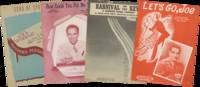
1949List3677New York City: Edwards Music Co. and others 1949. Ten pieces of sheet music see full inventory below. Overall Near Fine. A representative group of sheet music publications by Willie “The Lion†Smith one of the defining architects of Harlem stride piano and a central transitional figure between ragtime-era keyboard traditions and modern jazz performance. Active in New York during the formative decades of twentieth-century jazz Smith developed a powerful pianistic approach combining rhythmic authority harmonic sophistication and improvisational independence becoming widely regarded as a “musician’s musician†and an influential mentor to figures including Duke Ellington.1<br /> <br /> Emerging from the uptown New York scene shaped by pianists such as James P. Johnson and Luckey Roberts Smith helped define the stride style that grew from ragtime into a more expansive jazz idiom frequently performing at Harlem rent parties and participating in competitive “cutting contests†that tested virtuosity and improvisational skill. Smith also published sheet music producing piano solos novelty songs and popular compositions. Offered here are ten pieces reflecting the breadth of his printed output including collaborative songs and published folios issued by firms such as Leo Feist Edwards Music Co. Mills Music and Joe Davis. In his 1964 memoir Smith recalled hearing in everyday life “another weird but musical sound… that I can still hear in my head.â€2<br /> <br /> Uncommon on the market we find only four first edition copies of Smith sheets available at the time of writing with most of these not available. <br /> <br /> Titles include:<br /> <br /> “Between Sharps and Flats An Unusual Piano Soloâ€. Willie Lion Smith. New York: Edwards Music Co New York 1949. 5 pp. Fine condition. <br /> <br /> “Curfew Time in Harlem Novelty Songâ€. Willie The Lion Smith and Neil Laurence. New York: Joe Davis Inc New York 1938. 3 pp. Near fine with minimal wear. <br /> <br /> “Echo of Springâ€. Willie The Lion Smith. New York: Leo Feist Inc New York 1946. 6 pp. Fine condition. <br /> <br /> “How Could You Put Me Down†Willie The Lion Smith with James P. Johnson and Mitchell Parish. New York: Mills Music Inc 1945. 5 pp. Fine condition. <br /> <br /> “Karnival on the Keys A Modern Piano Fantasyâ€. Willie Lion Smith. New York: Edwards Music Co New York 1945. 5 pp. Fine condition. <br /> <br /> “Let’s Go Joeâ€. Cab Calloway Willie Lion Smith and Jack Palmer. New York: Rytvoc Inc 1942. 3 pp. Fine condition. <br /> <br /> “Let’s Mop It Mop! Mop!â€. Jack Edwards Fred Norman and Willie Lion Smith. New York: Edwards Music Co 1942. 3 pp. Fine condition. <br /> <br /> “Modern Piano Solos†folio. Willie The Lion Smith. New York: Leo Feist Inc 1939. 26 pp. Very good plus with a small chip to front wrap. <br /> <br /> “Rippling Watersâ€. Willie The Lion Smith. New York: Leo Feist Inc New York 1939. 5 pp. Fine condition. <br /> <br /> “Sneak Away Piano Soloâ€. Willie The Lion Smith. New York: Mills Music Inc 1937. 5 pp. Fine condition.<br /> <br /> 1 “Willie ‘The Lion’ Smith: Stride Piano Master†NPR’s ‘Jazz Profiles’ June 11 2008 https://www.npr.org/2008/06/11/91365108/willie-the-lion-smith-stride-piano-master.<br /> 2 Willie Smith Music on My Mind: The Memoirs of an American Pianist Doubleday: 1964. Edwards Music Co. and others unknown
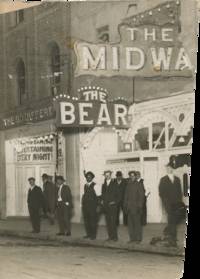
1910List2810San Francisco California 1910. Single photograph approximately 6 ½ x 9 inches manuscript verso reading “SF Barbary Coast 500 Block of Pacific â€THE SO DIFFERENT†now 550 Pacific Ave 1911â€. Appears to be trimmed from a larger photograph. Portion of image cut and pasted with editorial overpainting. Some damage to edges and corners with one tear at right middle some residue from pasting a now-missing object; overall very good. A photograph taken on Pacific Street in about 1910 showing a group of men standing by the curb in front of The Midway The Bear and The So Different nightclubs note that the sign for The Midway is pasted in. This block in Barbary Coast—â€Terrific Streetâ€â€”was home to a number of dance halls and early jazz clubs many of which like Purcell’s So Different Café were “black and tan†– catering to all races. Founded by former Pullman porters Lew Purcell and Sam King shortly after the neighborhood was rebuilt from the 1906 earthquake and fire Purcell’s was one of the better-known clubs. Influential ragtime and jazz pianist Sid LeProtti led the So Different Jazz band and King Oliver and Jelly Roll Morton are among the alleged guest performers. Patrons could buy twenty-cent vouchers for a quick dance with one of the girls who worked and sometimes lived at the venue. Around 1913 though police began to crack down on drinking and dancing in the neighborhood and by the 1920s the venues were gone. unknown
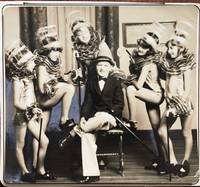
193058055Portland OR: Hollywood College of Music Dancing & Fine Arts Baker Studio Granada Studio La Vere Photo Shoppe Photo Craft Studios ca. 1930-1933. Oblong 4to. 24 original photographs all preserved in archival mylar sleeves sized 6.25 x 7 in. up to 8 x 10 in. some w/ photographer’s imprint w/in negative others w/ manuscript captions added a few w/ annotations and/or photographer’s instructions on versos all with bright strong contrast a few w/ offsetting from previous mounting on versos and one w/ very small pinholes at corners from prior mounting. Recent cloth binder stamping front cover excellent grouping. These photographs vividly document the dance and music studio operated by Annabelle Knowles reflecting the fast evolving costumes and aesthetics of the twilight of the Roaring 20’s as the U.S. descended into the Great Depression. These photos also clearly reflect the influence of Gus Edwards 1879-1945 vaudeville’s premier producer of kiddie acts and who had produced and released the shorts “Kiddie Revue†in 1930 and 1931. His influence was not only driven by his songs “By the Light of the Silvery Moon & “School Days†but also discovering such stars as Groucho Marx Eddie Cantor Mae Murray Sally Rand and many others. The images depict girls in two-piece outfits in front of Art Deco staging for “Body and Soulâ€; bare-backed girls in Flapper Era inspired costumes for chorus line “Kiddie Revueâ€; song and dance routines featuring Ronald Chetwood in top hat with Marcile Shillito Virginia Collins and chorus line in Jazz Age era costumes and canes; and several show Barbara Jane Wicks Shirley Jay Mulkey and Sunny Dentler in Spanish inspired costumes for “Baby Vanities.†Another shows adolescent boy and girl dance team in an “Apache†dance inspired costume number. The Hollywood College of Music Dance & Fine Arts offered classes and instruction in all ages with the last few photos showing teenage girls in chorus line with short hair coquettish expressions and teamwork or chorus line numbers. Annabelle Knowles 1900-1989 was a musician and dancer who founded the Hollywood College of Music Dancing & FIne Arts at 4112 NE Sandy Blvd. some time in the late 1920’s. Most of the street directory references focus on 1929-1932 and her British-America theatre-director husband at the time Vincent Knowles 1883-1944 worked at the studio as well. Baker 1882-1972 was a longtime commercial studio photographer in Portland OR who had initially begun as a photographer with noted tourist travel guide Howard Eaton photographing tours through National Pakrs. Beem 1892-1984 was founder and photographer at Granada Studio located in the 1930’s at 515 Swetland Building in Portland. Centlivere 1878-1964 owned and operated La Vere Photo Shoppe and Photo Craft Studios on Sandy Blvd. in Portland for nearly all of his career. We could find no similar collections or photographs or even references to Annabelle Knowles and very few examples of any of these three photography studios in institutional holdings. Hollywood College of Music, Dancing & Fine Arts, Baker Studio, Granada Studio, La Vere Photo Shoppe, Photo Craft Studios, hardcover
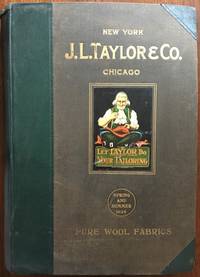
192658100New York & Chicago: J.L. Taylor & Co. 1926. Thick elephant folio 17 x 23.25 x 2.5 ins. 75 3 pp. printed on thick card stock each mounted on linen hinge. With 17 colour fashion plates illustrating Taylor styles of the period verso of almost all pages with 364 of 375 mounted textile samples in wool wool-rayon blends some felt backed silk moleskin corduroy cashmere waistband sample and more -- all samples clearly marked with prices and availability some of the 12 missing samples are indicated in pencil as being “Out†as well as a few present 1 additional pinned-in numerous illustrations throughout in blue-green colour tinting including Chicago & New York factories some diagrams charts and graphs. Original half-green cloth over gray green cloth corners gilt lettering on front cover colour plate w/ J.L. Taylor tailor mounted front cover some wear & minor bumping to fore-edges corners some minor soiling & occasional foxing to interior leaves -- some of it dust from the wool samples 10-15 samples with minor deterioration and evidence of old predation still a very good unsophisticated and remarkably complete example w/ original 9 x 21 in. double-sided stock list in red & black laid-in. First edition of this scarce and unusually complete salesman sample catalogue for Jazz era men’s suits in 1928-1929. J.L. Taylor maintained a huge tailoring operation in both Chicago and New York until after World War II employing hundreds of tailors and seamstresses to fill orders. The catalogues were very expensive to produce and so were most often found in department stores mercantiles and men’s stores which would have these catalogues on the sales floor for two years or more. The catalogue offers invaluable illustrated historical reference for the colours styles and fabrics during the era of F. Scott Fitzgerald and the Flappers. Most of the colour fashion plates illustrating the available styles have elegantly dressed women and settings in the background including with an emphasis on sporting in summer so golf tennis croquet canoeing boating and swimming all make an appearance. Of particular interest is the wonderful dress chart indicating styles needed clothes accessories and shoes which one would need for Day Wedding Matinee Reception Evening Dress and many others offering an excellent marketing opportunity for the store to sell the customer items to compliment his suits overcoats and other fashion wear ordered from J.L. Taylor. The final plate focuses on the lightweight “Palm Beach†& “Mohair†suits at the height of the 1920’s boom in Florida featuring snappily dressed models in Panama straw hats and a lightweight fedora. Worldcat locates 1 partial copy Preserved at the Library of Congress stripped of samples and used as scrapbook for Wilbur’s Drug Store prescriptions of Portland ME -- not an unusual occurrence. J.L. Taylor & Co., hardcover
19279883New York 1927. 4.5x3.5" photograph slightly trimmed down affecting the studio stamp on the bottom edge. Signed by Florence Mills in 1927. Mounted on an autograph album page with a signature card from Betty Blythe to verso. Few spots to photo some soiling to edges. Signature bright and clear. Very good. <br /> <br /> Rare signed photograph from one of the most celebrated Black performers of the 1920s Florence Mills 1896-1927 who died at the age of 31 from complications from tuberculosis and an appendectomy. <br /> <br /> Mills was a child performer in travelling Black stage productions with her sisters as well as "The Tennessee Ten." One of her early major roles was in the Broadway musical Shuffle Along in 1921 one of the defining productions marking the beginning of the Harlem Renaissance. She was a regular performer at the Plantation Club and later headlined the Palace Theatre before becoming internationally known starring in Lew Leslie's Blackbirds of 1926. While performing some 300 shows in London of that year she became ill with tuberculosis her death the following year shocking the entertainment world.<br /> <br /> A naturally scarce signed photo from the year of her death depicting one of the defining performers of the Harlem Renaissance. unknown
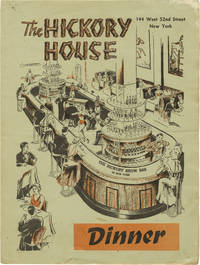
1940158584New York: The Hickory House 1940. Vintage three-color dinner menu from the renowned 52nd Street jazz club circa 1940s with a "Chef's Special" card stapled to the top outer corner of the second leaf.<br /> <br /> One of the longest running and premiere jazz clubs of "Swing Street" as 52nd Street between Fifth and Seventh Avenues was known in the 1930s through the 1950s Hickory House was opened shortly after the repeal of Prohibition in 1933 by impresario John Popkin. Featuring a huge oval music bar depicted on the cover of the menu on offer here Hickory House was both a swing venue and the spot to grab dinner and cocktails before a show. A musician's club Hickory House presented and served jazz luminaries for three decades. Among those known to perform or frequent the venue included Duke Ellington Louis Armstrong Benny Goodman Artie Shaw and Thelonious Monk among countless others many of whom were known to be found sitting in with the house band The Hickory House Trio Marian McPartland Bill Crow and Joe Morello on Sunday afternoons in the 1950s. In 1956 jazz pianist and composer Jutta Hipp released two acclaimed Blue Note albums recorded at the club "At the Hickory House Volume 1" and "At the Hickory House Volume 2." By the mid 1960s the venue was one of the last of the jazz clubs left on 52nd street and by the end of the decade closed. As noted on the back of the menu "Life! Life! From ten thirty until scrambled eggs there is always a popular swingy rhythm band to beat out tuneful and catchy syncopations in their own inimitable style."<br /> <br /> <br /> 10.75 x 14.25 inches bi-fold. Very Good plus with light soiling rubbing and edgewear overall and a faint horizontal crease. The Hickory House unknown
1960CAT206New York et al. 1960. Five 8 x 10 and two 5 x 7 inch gelatin silver prints with Bradley’s estate marks to versos. Excellent. Jack Bradley was a Cape Cod native who after graduating from the Massachusetts Maritime Academy fell in love with Jazz after seeing Louis Armstrong perform at the Boston Armory in 1956. In 1958 he moved to New York from Cape Cod and began dating Jeann Failows a member of Louis Armstrong’s inner circle. Through Failows Bradley gained access to Armstrong eventually becoming very close friends with the trumpeter and his inner circle. Bradley already had amassed a large collection of jazz material much related to Armstrong and he augmented his own collection by photographing Armstrong and his Jazz circle for the next decade. The bulk of Bradley’s collection now resides at the Louis Armstrong House Museum in Queens. <br /> <br /> This collection is of seven photographs of jazz musicians from Bradley’s estate showing a wonderful window into the tail end of the Classic Jazz era. <br /> <br /> Photographs as follows:<br /> <br /> Willie Cook. 5 x 7 inches. A portrait of Cook seated. Excellent condition. <br /> <br /> Count Basie and Duke Ellington. 5 x 7 inches. The two jazz greats are seated at their respective pianos during rehearsal. Excellent condition.<br /> <br /> Duke Ellington’s Empty Bandstand. 8 x 10 inches. The horns chairs and sheet music are laid out. Very good condition with some toning to margins and a faint scratch at outer edge of image. <br /> <br /> Duke Ellington Conducting his Band. 8 x 10 inches. Excellent condition. <br /> <br /> Ella Fitzgerald at the Apollo Theatre New York c. 1959. 8 x 10 inches. Excellent Condition.<br /> <br /> Count Basie Seated at a Table Smoking a Cigar. 8 x 10 inches. Excellent condition. <br /> <br /> Pee Wee russell Painting at his New York Apartment c. 1966. Good condition marginal tear affecting ½ inch of image. <br /> <br /> Overall a nice group and an example of a photographer whose work is not often available on the market. unknown
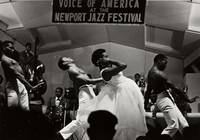
1958List1514New York 1958. Silver Gelatin Photograph measuring 8 ½ x 11 ½ inches with Schatt’s marks verso with his notation “Vintage ‘58†in ink. A fine example fine contrast. A striking image of Eartha Kitt and her band performing at the 1957 Newport Jazz Festival taken by the prolific photographer Roy Schatt perhaps best known for his photographs of James Dean. This is a vintage example likely printed in 1958 from the “1958†and “Vintage†marks to verso. We find no other record of this specific image only a similar image from Kitt’s performance taken by Schatt. unknown