15 résultats
19001269120517087RED FOLEYS SONGS OF INSPIRATION BOOK 1953 SHEET MUSIC FOLDER 525 1900-01-01. Sheet music. Very Good. Nice looking book has minor edge wear. RED FOLEYS SONGS OF INSPIRATION BOOK 1953 SHEET MUSIC FOLDER 525 unknown
1870018050Boston: Faust's Statue 1870. Book. NVG. Soft cover. 1st Edition. Softcover plain paper cover has marginal wear light soiling. Interior has uncut pages minor spot foxing thus near very good. While dated 1793 the paper and Sabin 70917 suggest this is the 1870 facsimile. . Faust's Statue Paperback
19002224180518049RED FOLEYS SONGS OF INSPIRATION BOOK 1953 SHEET MUSIC FOLDER 525 1900-01-01. Sheet music. Very Good. Nice looking sheets has minor edge wear. has name on cover. . RED FOLEYS SONGS OF INSPIRATION BOOK 1953 SHEET MUSIC FOLDER 525 unknown
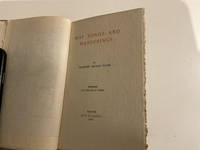
189792<p>"This is a very rare first edition of 'Way Songs and Wanderings' published in 1897 by Estes & Lauriat Boston. The book is in exceptional condition with no markings or highlighting. Given its scarcity it's a true collector's item. </p> Estes & Lauriat hardcover
188358068London: Kegan Paul Trench and Co 1883. Third illustrated edition. with sixteen plates. Green cloth with gilt decs to spine and front and black decs to rear AEG. Period owner name to front endpaper gutters cracked throughout pp clean and tidy plates bright. Cloth. Very Good Minus/No Jacket. Illus. by Chapman Geo. R. 4to. Kegan Paul Trench and Co Hardcover
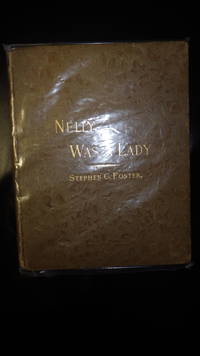
18892495<p>Boston Ticknor & Co 1889. HBNO DJ spine GOOD- condition former owner name1889 1st edtiion illustrated melody with written music on last pg VG- NODJ. First Separate. Hard Cover.</p> Boston, Ticknor & Co hardcover
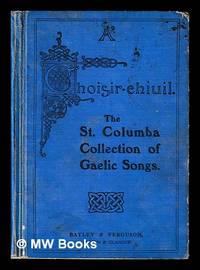
1900449010London : Bayley and Ferguson 1900. First Edition. Hardcover. Poor copy in the original title-blocked cloth. Spine bands worn; panel edges somewhat dust-toned and rubbed as with age. Stained and marked. Previous owner's marks. Missing front lining page. Physical description; 1 score 100 pages ; 25 cm. Notes; For voice and piano or chorus SATB. Chiefly arranged by Archibald Ferguson. Subjects; Songs Scottish Gaelic. Folk songs Scottish Gaelic. Part songs. Choral music SATB. Scottish music Collections. London : Bayley and Ferguson hardcover
182931521London: April 9 1829. 1829. Good. - 68 words penned in black ink on a sheet of cream stock 7 inches high by 4-1/2 inches wide. Signed "Yours truly / George Linley". The edges of the letter are slightly darkened & there is a tear to the bottom edge with a small piece out of the mid-section affecting 1 letter of the text. The blank verso is darkened and there are pieces of paper & tape adhering to it where the letter has been removed from an album. Good. <p>"I told you some while back that I had written a little piece 'The Trunkmaker' and which I intended for Mr. Keeley -- you then requested me to send it in to the theatre which I did through Mr. Peake about 10 days ago."<p>The verse writer and musical composer George Linley 1798-1865 wrote and composed several hundred songs between 1830 and 1865. Some of his most popular ballads of the period were "Thou art gone from my gaze" "Song of the Roving Gipsey" "Constance" "Minnie" and the music for Robert Burns' poem "The Jolly Beggars". He wrote the English words to "God Bless the Prince of Wales". [London]: April 9, 1829. unknown
1889HAY069031889. Lille L. Quarré Libraire-Editeur. brochés. Le dernier plat du volume 2 est absent le brochage est faible avec petits manques en têtes et pieds des dos les plats sont défaîchis et insolés il y a quelques rousseurs uniquement sur la tranche du premier volume ainsi qu'une signature et une mention à l'encre sur les pages de garde ; l'intérieur des deux volumes de préférence à relier est en très bon état. 2 vol. in-8. avec de nombreuses partitions musicales et une planche illustrée dépliante au premier volume ; orné de quelques bandeaux et lettrines. unknown
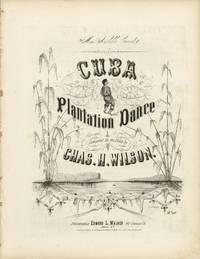
1855List3682Philadelphia: Edward L. Walker 142 Chestnut St. above 6th 1855. Folio sheet music pictorial lithographed cover approximately 13.5 × 10.5 inches. Light edge wear and minor toning; very good with a strong impression of the cover illustration. An antebellum piano dance reflecting the plantation imagery that circulated widely in mid-nineteenth-century American popular music. “Cuba Plantation Dance†was composed by Chas. H. Wilson a little-documented composer whose name appears chiefly in connection with this work and issued in Philadelphia during the early 1850s by Edward L. Walker the predecessor firm to the major publishing house Lee & Walker. A copy is recorded in the Levy Collection at Johns Hopkins which dates the publication to 1855.<br /> <br /> The cover presents a stylized plantation landscape framed by tall stalks of sugar cane with a small central vignette of a dancing Black figure. The use of Cuban plantation imagery reflects contemporary American fascination with the Caribbean sugar economy and with plantation life beyond the United States. During the 1850s Cuba was one of the largest slave societies in the Atlantic world. By the midcentury the island’s sugar plantations relied on hundreds of thousands of enslaved Africans and the enslaved population of Cuba was estimated at roughly 400000 people in the 1840s–1850s working primarily in the rapidly expanding sugar industry. Although Spain formally agreed to end the Atlantic slave trade in 1820 illegal importations of enslaved Africans into Cuba continued for decades supplying labor for the island’s plantations well into the 1850s. American publishers frequently borrowed such imagery for plantation-themed dance music marketed to the parlor trade. Pieces labeled “plantation dances†or “Ethiopian dances†formed part of the broader culture of minstrel and plantation entertainment. The title page bears a dedication to “Miss Arabelle Conrad†typical of mid-century sheet music addressed to amateur pianists. Along with the aforementioned copy in the Levy collection we find copies at Michigan and Temple. Edward L. Walker, 142 Chestnut St., above 6th unknown
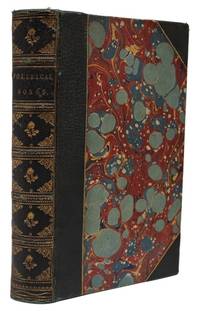
1884AQ25565Edinburgh: Privately Printed 1884. Limited edition of 275 small paper copies 'issued only to subscribers'. Four volumes bound as one. Contemporary gilt-tooled green half-morocco marbled boards T.E.G. A trifle rubbed. Marbled endpapers scattered foxing. An Edinburgh-printed revision of historian and antiquary Thomas Wright's 1810-1877 Political Songs of England London 1839 an anthology of English ballads composed in the thirteenth and fourteenth centuries. . 8vo. Privately Printed hardcover
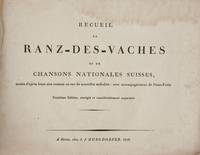
181841243Berne: J. J. Burgdorfer 1818. Oblong quarto. Original publisher's mid-green printed wrappers. 1f. recto title verso blank 1f. "Inhalt" v-x "Préface de la seconde édition" xi-xxiv "Avant-propos de la troisième édition" 126 music 127-131 "Worterklärungen" 132-133 "Traduction Interlinèaire du Ranz des Vaches d'Appenzell p. 24" 134-135 "Verbesserungen in der Musik." 136 "Verbesserungen." pp. <br /> <br /> 55 songs in German/Swiss dialects with the exception of those to pp. 107-122 in French. Preface by Johann Rudolf Wyss noted Swiss editor writer and scholar. Typeset throughout. With illustration of Alphorn player to upper and Swiss female figure to lower wrapper.<br /> <br /> "Articles de Fonds en livres et objects d'arts concernant la Suisse qu'on trouve aussi chez les principaux libraires de la Suisse" to verso of upper and recto of lower wrapper. <br /> <br /> Scored mainly for voice and piano with instrumental selections for piano and unspecified treble instrument. <br /> <br /> Wrappers worn with several small stains and tears to edges; upper nearly detached with lower margin of verso repaired with ivory tape. Light uniform browning; occasional minor foxing and small stains; signatures loose. Third edition. OCLC 20912723. <br /> <br /> A compilation of traditional Swiss folk songs and occasional instrumental selections including music for the Alphorn and solo piano compositions many arranged by Ferdinand Fürchtegott Huber. <br /> <br /> The alphorn was a "wooden trumpet of pastoral communities in the Alps. . The commonest length of the alphorn is about 185 cm in which case its range extends to the 5th or 6th harmonic as quoted by Beethoven at the end of the Pastoral Symphony. . Alphorns were known best as herdsmen's calling instruments serving also in some areas to summon to church and formerly to war. They may also be numinous: among the Mari of Russia the long wooden trumpet is made for the spring festival and afterwards sacrificially burnt or hidden in a sacred place. Overall likeness in making and using alphorns and their distribution suggest that they possibly may have originated among post-Celtic peoples of the Migration Era. There is no firm evidence of prior existence; 'cornu alpinus' in Tacitus is less than proof of a wooden trumpet of which the earliest specimen from the 9th-century Oseberg ship Oslo Vikingskiphuset supports iconographic suggestions that wooden trumpets of moderate size were used as summoning and military instruments in early medieval northern Europe in addition to their pastoral functions." Anthony C. Baines revised by Max Peter Baumann in Grove Music Online. Rossini evoked the Alphorn in his iconic 1829 William Tell Overture. <br /> <br /> Of great importance to the preservation of the oral heritage of Swiss alpine herders. J. J. Burgdorfer unknown
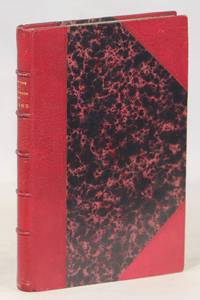
1865000014958Paris: Librairie Internationale A. Lacroix Verboeckhoven & Co 1865. Later edition. Hardcover. Near Fine. Small 8vo. 5 iv-x 6 17-293 5 pp. Half contemporary red artificially grained sheep over marbled paper boards spine in six compartments with gold lettering on the spine. Marbled endpapers and pastedowns. This edition not in Graesse. The Song of Roland portrays a French knight who fought for Charlemagne at the end of the eighth century. The poem is said to be the oldest surviving complete work of French literature. The epic poem is followed by "Chronique de Turpin" the Carolingnian work on Charlemagne's campaigns in early-medieval Spain. The Turpin Chronicle is based on military legends of early-medieval France but it is not in fact historical. Its composition is said to have taken place at the end of the eleventh century into the beginning of the twelfth century. Translated from the Anglo-Norman into modern French by Alex. De Saint-Albin; the Turpin Chronicle was originally written in Latin but is published here in French. A lovely edition of the epic poem integral to the French literary and historical canons. A bookplate from 1875 on the front pastedown the faint odor of tobacco to the leaves. Librairie Internationale A. Lacroix, Verboeckhoven & Co hardcover
184031505London December 18 1840. 1840. Very good. - sc - Over 100 words penned on a 4 inch high by 4 inch wide sheet of buff white paper. In his letter addressed to a distributor probably Chappell George Linley writes: "I forward you Nos 1 & 2 of a new work 'The English Ballad Singer' to be completed in 12 numbers which I am publishing on my own account". Hoping to promote sales of this new work Linley further writes: "I shall be very happy if you have it in your power to assist me in the sale of the same." Signed "George Linley". The left edge of the sheet indicates that it has been torn from a larger sheet. Darkened along the edges the letter is slightly soiled. Very good. <p>Together with two songs with words and music by G. Linley printed on both sides of four 10-1/4 inch high by 7-78 inch wide sheets of buff paper.The songs respectively titled "Oh! Where Are They" and "I Resign Thee Ev'ry Token" are each annotated as "Proof Sheet" in ink by George Linley at the top of the first page of each song. There is some minor foxing and minor wear to the top edges of the pages. There is light dampstaining to the bottom corner of one of the pages. Very good.<p>WorldCat locates only one of each of these songs identified as numbers 1 and 2 of the series entitled "English Ballad Singer". As identified by WorldCat the full title of the first work is: "Oh! Where are they the kind and true"<p>The verse writer and musical composer George Linley 1798-1865 wrote and composed several hundred songs between 1830 and 1865. Some of his most popular ballads of the period were "Thou art gone from my gaze" "Song of the Roving Gipsey" "Constance" "Minnie" and the music for Robert Burns' poem "The Jolly Beggars". He wrote the English words to "God Bless the Prince of Wales". London, December 18, 1840. unknown
181521633France 1815. 1 vols. Sm. 4to. Contemporary sheep gilt spine. Rubbed several leaves excised else a very good copy. 1 vols. Sm. 4to. The volume commences with three full-page pencil sketches and then begins the manuscripts of verses epigrams etc. The first part of the volume contains several verses that are addressed to Madame Sophie Arnould the famous actress and operatic singer. The latter portion appears to be a slightly later hand. Some pieces are dated including a piece entitled "A Ma Mére le 1er Janvier 1811" signed N. V. A. Loiseau which faced a page entitled "Envoi" which is addressed "A Mlle. Loiseau à l'age de 16 ans par Mr. S. Gautier." The verses pertain to many subjects one a "Vers pour l Portrait de l'Empereur" another"Air le vin de Bourgogne " and there is a piece at the back of the volume relating to Waterloo. An excellent collection providing a very interesting view of the France of this time. unknown