61 résultats
1888345681888. BKW 25/45. - Berlin August Hirschwald 1888 4° pp.901-920 feine Broschur. Erstdruck! Nach in der Gesellschaft für Psychiatrie und Nervenkrankheiten in Berlin am 9. Juli 1888 gehaltenen Vorträgen. unknown
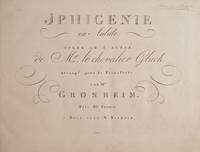
181241214Berlin: Schlesinger's Buch= und Musikhandlung Unter den Linden No. 34. PN 50 1812. Oblong folio. Contemporary dark brown mottled calf-backed marbled boards with oval label titled in manuscript to upper. 1f. recto title verso blank 3 "Personen" and incipits 4-123 i blank pp. <br /> <br /> Provenance<br /> Noted American harpsichordist Louis Bagger 1926-2024<br /> <br /> Binding worn rubbed and bumped. Very occasional minor soiling to blank lower margins; occasional minor showthrough; small stains to title with small circular publisher's handstamp to inner margin. Hopkinson 46Ca. <br /> <br /> Gluck's work is a tragedy in four acts to a libretto by Nicolas-François Guillard after Guymond de la Touche's Iphigénie en Tauride itself based on Euripides's work of the same name. <br /> <br /> "Iphigénie en Tauride was the crowning achievement of Gluck's career a result of the combination of his lifelong experience as an opera composer and a libretto which is arguably the best he ever set." Jeremy Hayes in Grove Music Online<br /> <br /> It was first performed in Paris at the Opéra on 18 May 1779 "with excellent singers; Rosalie Lavasseur sang Iphigénie Larrivée Oreste Legros Pylade and Moreau Thoas. . The opera had a great success immediately and even Grimm wrote of it - I do not know whether this is melody but perhaps it is something better. When I hear Iphigénie I forget I am at the opera; I seem to be listening to a Greek tragedy with music by Lekain and Mlle Clarion. It was the crowning point of Gluck's career. Guillard had provided an excellent libretto more classical than Goethe's poem less Christian and more ruthless; and Gluck had seized on the contrast between Scythians and Greeks upon the perfectly dramatic figures of Iphigenia and Orestes and had produced a work which both re-created a part of Greek tragedy and at the same time foretold a new world." Cooper: Gluck p. 258. Schlesinger's Buch= und Musikhandlung, Unter den Linden No. 34. [PN 50] unknown
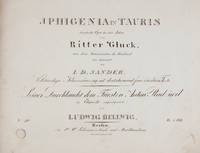
180940434Bonn: Chez N. Simrock PN 609 1809. Oblong folio. Quarter black leather with gilt rules mid-brown cloth boards spine in compartments gilt with titling gilt marbled edges. 1f. recto title verso cast list 3-149 pp. Text in French and German. Engraved throughout. <br /> <br /> With contemporary signature of former owner "Mappes" to upper outer corner of free front endpaper with handstamp of August Kuby in Munich below; "Amalie Mappes" to upper outer corner of title.<br /> <br /> Binding worn rubbed bumped and slightly stained. Occasional soiling; small ink stains browning and foxing to blank margins; small loss to lower outer corner of p. 27. First Edition. Hopkinson p. 41 40F. Wotquenne 40. RISM G2753 and GG2753 no copies in the U.S. <br /> <br /> Iphigenie en Aulide was first performed in Paris at the Opéra on 19 April 1774. <br /> <br /> "Judging from contemporary accounts such as the memoirs of Mannlich the several months of rehearsals for Iphigénie en Aulide must have been quite a spectacle with the irascible 60-year-old composer struggling to reform the bad habits of the singers and players of the Académie Royale to teach them his new opera. However the première of Iphigénie en Aulide in April 1774 was a triumph but the run of performances was interrupted by the death of Louis XV a month later. All the theatres closed and during the period of mourning Gluck quickly revised Orfeo ed Euridice and made a French version of the opera with a translation of the text by Pierre Louis Moline." Jeremy Hayes in Grove Music Online. Chez N. Simrock [PN 609] unknown
1900mon00000776101900-01-01. Unknown Binding. Acceptable. in x in x in. Paperback. Creased and torn cover. unknown
1899346621899. Verh. Dtsch. Ges. Chir. 28. - Berlin Verlag von August Hirschwald 1899 8° LVI 2 184 2; 815 1 pp. Holzschnitte Autotypien 11 Tafeln Halbeinenband. Erstdruck! unknown
1886345641886. BKW 23/14-16. - Berlin August Hirschwald 1886 4° pp.217-264 feine Broschur. Ebenso wie Hansmann "fixierte Gluck im serbisch-bulgarischen Kriege im winter 1885/86 eine Schußfraktur des Femur durch seitlich aufgeschraube Stahlschienen der Verwundete konnte das Bein wie das gesunde erheben die rampfhaften Zuckungen hörten auf." Friedrich Trendelenburg Die ersten 25 Jahre der Deutschen Gesellschaft für Chirurie 1923 p. 372 unknown
1882345871882. Arch. klin. Chir. 27. - Berlin Verlag von August Hirschwald 1882 8° IV 940 pp. zahlr. Holzschnitten 9 lith. Taf. Halbleinenband der Zeit. unknown
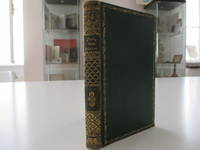
185017851AB1850. Pest Heckenast 1850. 175 : 11 cm. Faksimiliertre Brief Vortitel gestochener Titel 2 Blatt 258 Seiten. Grüner Lederband der Zeit mit reicher Rückenvergoldung Deckelfileten dreiseitiger Goldschnitt. Seltene erste Ausgabe. - Betty Paoli eigentlich Barabara Elisabeth Glück Wien 1814 - Baden bei Wien 1894 österreichische Lyrikerin Novellistin Journalistin und Übersetzerin. Paoli offiziell die Tochter des Militärarztes Anton Glück vertraulich wurde sie aber als die natürliche Tochter des Fürsten Nikolaus von Esterhazy gennant. Mit ihren einfühlamen Gedichten und kritischen Aufsätzen wurde Betty Paoli zu einer wichtigen Figur der frühen Frauenbewegung. Durch ihre Reisen hatte sie auch Kontakt zu Bettina von Arnim. - Sehr dekorativ gebundenes Exemplar mit dem eingebundenen Faksimile eines ihrer Gedichte womöglich Geschenk-Exemplar. unknown
1881346331881. DMW 7/49. - Berlin August Hirschfeld 1881 4° pp.659-674 Broschur. unknown
1859231958Ed Bote & G. Bock Berlin 1859. Hardcover Leinen Großformat Die Jahresangabe ist ungefähr. Zustand: keine Beschädigungen eine Namenseintragung. Rücken Ecken Kanten gut. Innen braunfleckig. Ed Bote & G. Bock, Berlin, hardcover
1895347491895. Zbl. Chir. 22/27 Bericht über die Verhandlung der Deutschen Gesellschaft für Chrirugie XXIV. Kongress. - Leipzig Verlag von Johann Ambrosius Barth 1895 8° pp.641-656; 154 pp. Halbleinenband. Erstdruck! Es "ist der Gedanke Elfenbeinstücke nicht nur zu vorübergehendem sondern zu dauerndem Einsatz von Knochendefekten und aus Elfenbein hergestellte künstliche Gelenke zum Einsatz zu benutzen von Gluck ausgegangen. Er berichtete darüber 1890 und ausführlicher in einem Vortrag im Jahre 1895 über Osteoplastik und einheilbare Prothesen der aber nicht in den gedruckten Verhandlungen aufgenommen ist. Ein Autoreferat findet sich im Zentralblatt für Chirurgie Bd. 22 pp.30 ff. Er hob darin den praktischen Nutzen von Implantation von Elfenbein und Knochen sowie vernickeltem Stahl Aluminiumbronze und dergleichen in Knochendefekten nochmals hervor. Wenn Elfenbein und Knochen auch allmählich von dem neuen sich bildenden Knochen umwachsen resorbiert substituiert würden so dienten sie doch als innere Schiene und als Reiz für die Knochenneubildung und erzwängen die Regeneration in der zweckmäßigen Bahn. Die anorganischen Fremdkörper auch künstliche Gelenke könnten für lange Zeit vielleicht dauernd einheilen und reizlos funktionieren. Dem Vortrag folgte eine reichhaltige Demonstration von Präparaten und Modellen von Elfenbeinmetallprothesen und Mittheilungen über klinische Beobachtungen. Einem großen Hunde war ein Metallscharnierapparat eingeheilt. Pean implantierte als Ersatz des resezierten Schultergelenkes ein Gelenk aus Platiniridium und Hartgummi das seit 2 1/4 Jahr tadellos funktionierte." Friedrich Trendelenburg Die ersten 25 Jahre der Deutschen Gesellschaft für Chirurgie 1923 p.163 unknown
1900347151900. Verh. Dtsch. Ges. Chir. 29. - Berlin Verlag von August Hirschberg 1900 8° LVIII 220 757 1 pp. Abbildungen Holzschnitte und Autotypien und 11 Tafeln Leinenband. Erstdruck! "Um die Konstruktion von Phonationsapparaten die bei vollständigem Abschluß zwischen Trachea und Naspharynx den Luftstrom und den Ton mittelst eines Gummirohrs von vorn ind die Nase oder zwischen den Lippen in die Mundhöhle leiten hat sich später besonders Gluck verdient gemacht 1900 I.178."Friedrich Trendelenburg Die ersten 25 Jahre der Deutschen Gesellschaft für Chirurie 1923 p.231 unknown
1864404171864. Height 26.75" 68 cms. With the artist's name "Francin" to truncation of left arm; integral base inscribed "Gluck."<br /> <br /> Some wear and soiling; age-toned. In quite good condition overall.<br /> <br /> Provenance<br /> Catalogue of the Collection Musicale André Meyer 1961 Vol. I p. 97 and plate 122. Auction catalogue of Pescheteau-Badin Godeau et Leroy Collection Musicale André Meyer et a divers Paris July 2 1998 Lot 101 including color photograph. Auction catalogue of Bonhams London The Roy Davids Collection London 3 October 2005 Lot 246 illustrated. Houdon: An Exhibition of Sculpture from the Collection of Michael Hall esq. Catalogue by Christine Defazio Karl Fugelso and Philip Mezzatesta. New York: Salander-O'Reilly Galleries 1998 pp. 12-15. Poulet et al.: Jean-Antoine Houdon - Sculptor of the Enlightenment. Exhibition Catalogue. The National Gallery of Art Washington D.C. 2003 pp. 102-108. Exposition du Centenaire de Houdon Paris: Galleries Buvelot 1928 pp. 40-41. Vitry: Une Liste d'oeuvres de J.-A. Houdon p. 9.<br /> <br /> The present sculpture exists in two versions: the present scarcer version with full shoulders and partial torso and a second version with partial shoulders and reduced torso<br /> <br /> "Following Houdon's plaster bust of Gluck shown in the Salon of 1775 . the marble was exhibited in 1777 . and destroyed in the fire at the Paris Opera 28-29 Oct. 1873. A faithful reproduction ordered in 1798 by Alexandre Lenoir for the Musée des monuments français and executed in marble by Guillaume Francin is in the Musée national du chateau de Versailles. The Louvre's plaster cast workshop distributed copies of this reproduction beginning in 1864." Poulet et al.: Jean-Antoine Houdon - Sculptor of the Enlightenment. Exhibition Catalogue. The National Gallery of Art Washington D.C. 2003 p. 107.<br /> <br /> "The present bust is probably one of the Louvre's copies. . It was in his depiction of Gluck that Houdon first showed the ravages of smallpox on a subject - it was a common affliction in eighteenth-century France but artists were expected to flatter their subjects in this respect at least." Bonhams catalogue<br /> <br /> "Gluck was an artist a great musician and therefore must be given the attributes of a genius. His face was deeply pockmarked and the sculptor used this fact to establish his theme. He clothed him in a heavy coat whose texture is an overall pattern of slashed grooves free and direct in their expressive impact. Here there was no attempt to stimulate the appearance of the actual material but rather in a manner almost Rodinesque to bring out the quality of the clay. The open shirt the unbuttoned vest the short disheveled hair and the alert titled pose of the head all emphasize the impact of genius." Arnason: The Sculptures of Houdon p. 34. unknown
1891346041891. BKW 28/25. - Berlin August Hirschwald 22. Juni 1891 4° pp.601-632 feine Broschur. Erstdruck! Freie Vereinigung der Chirurgens Berlin. 348.Sitzung am 12. Januar 1881 im Operationssaale der chirurgischen Klinik der Charité - Herr von Bergmann giebt vor der Tagesordnung folgende ihn zugegangene Erklärung des Herrn Gluck vom 4. Januar 1891 zu Protokoll. unknown
1896148051896. BKW 33/26-29. - Berlin August Hirschwald 1896 4° pp.577-664 feine Broschur. unknown
1892347501892. Verh. Dtsch. Ges. Chir. 21.Congress. - Berlin Verlag von August Hirschwald 1892 8° XXXII 137 544 pp. Abbildungen Leinenband. Erstdruck! "Es handelt sich um den Ersatz von Beugesehenen der Finger. Die vorgestellten Fälle wurden von Bergmann König Riedel nicht als beweisend angesehen." Friedrich Trendelenburg Die ersten 25 Jahre der Deutschen Gesellschaft für Chirurie 1923 p.161 unknown
1899mon0003335397Societe Universelle Lyrique 1899. Hardcover. Good. . Section 5 only. Cover shows minor wear and tear rubbing. Pages lightly tanned slightly shaken and chipped. Includes Orpheus and Eurydice A Sketch of Christoph von Gluck A Sektch of Giacomo Meyerbeer The Huguenots Il Trovatore Carmen A Sketch of Georges Zizet The Jewess and A Sketch of Jacques Francois Halevy. Societe Universelle Lyrique hardcover
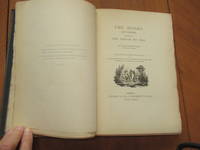
1890036339London: Vizetelly & Co. Circa 1890 1890. First Edition Thus . Hardcover. Very Good. Plates From Original Engravings After C. Eisen And C. P. Marillier Tissue Guards. 124 Pp Catalogs At Front And Rear. Brown Cloth Spine Gilt With Embossed Gold Boards Slate Green Endpapers."# 61 U. S." Of A Limited Edition Of 1500 Copies On Handmade Paper Of Which This Is One Of 400 For The United States. Gilt Bright But Some Rubbing To Cloth And Boards With Small Frays At Tips; Hinges Tight; Ornate Engraved Bookplate Of James Fraser Gluck. Gluck A Buffalo Lawyer And Collector Was Both Hero And Culprit In The Travels Of Mark Twain's Manuscript Of "Adventures Of Huckleberry Finn." A Century Ago He Was Responsible For The Preservation Of Twain's Heavily Corrected Text As Well As The Disappearance Of Half Of It. <br/> <br/> Vizetelly & Co. (Circa 1890) hardcover
1891013212New York: Banks & Brothers 1891 580 pp.; HB. Pages: clean ivory tight; eps toned a.e. tanned t.e. dusty front hinge starting. Cover: leather 5 raised bands gilt titles to the 1 remaining of 2 spine blocks; substantial shelfwear esp extremities leather scuffed and worn. The original real deal. Banks & Brothers hardcover
1894346151894. BKW 31/29. - Berlin August Hirschwald 1894 4° pp.663-682 feine Broschur. Erstdruck! unknown
1888346441888. Cbl. med. Wiss. 26/47-48 - Berlin A.Hirschwald 1888 8° pp.881-928 brosch. unknown
1886347091886. DMW 12/ 5. - Berlin Georg Reimer 1886 4° pp.69-84 Broschur. unknown
1883345911883. Arch. klin. Chir. 29. - Berlin Verlag von August Hirschwald 1883 8° IV 866 pp. Holzschnitte 25 lith. Taf. Halbledereinband. Erstdruck! unknown
1882345961882. Arch. klin. Chir. 26. - Berlin Verlag von August Hirschwald 1882 8° VI 1011 pp. Holzschnitte 16 lith. Taf. Portrait von B.v.Langenbeck Halbledereinband der Zeit. First Edition! "In 1881 Foulis reported on 27 recorded cases of total laryngectomy. Half of these patients died of pneumonia and other infections within the first week after surgery. Another 25% died of tumor recurrence within ten months. In the same year Gluck recommended that in laryngectomized patients the bottom of the pharynx be completely sewn up in order to obviate the greatest hazard of laryngectomy aspiration pneumonia. By the beginning of the 20th century Gluck reported the mortality of laryngectomy being just 8.5%. This is extremely low considering the major problems that occurred in those days with anesthesia wound infection and shock. For example in 1906 the mortality rate for radical neck dissections was still 13%." "Gluck's modification of the surgical technique of laryngectomy in 1881 - closure of the pharyngostoma in order to decrease the risk of aspiration pneumonia - ruled out internal reed mechanisms. After all the trachea was completely severed from the pharynx in these patients. Accordingly a pneumatic mechanical voice source was devised by Stork in l877 following Czermak's lead. It was based on a similar yet external metal reed connected by an external tube with the patient's tracheal cannula and the sound conveyed into the mouth by another external tube. Between 1892 and 1918 this external pneumatic mechanical voice source was further refined by Hochenegg Gluck Gottstein Tapia Onodi and Stockman. Respectively their modifications consisted of a pair of bellows for a patient that was unable to exhale with sufficient strength a reed concealed in the patient's nose or upper denture an inflatable cuff for the tracheal cannula a reed connected to the tracheal cannula by way of a side butt to make non-phonatory breathing easier and a battery-powered compressor as air supply for the reed. In the 1920s MacKenty together with two scientists of the Western Electric Company Fletcher and Lane developed an external pneumatic mechanical voice source that was soon superseded by the Western Electric No° 2 type larynx. It comprised a soft-rubber tracheal pad to strap over the tracheostoma a flexible tube a slightly curved bronze reed in a silver cylinder and a mouthpiece attachable to this reed box . It was successfully marketed from 1930 to 1959 by the Western Electric Company and the Bell Telephone Laboratories: 5500 No° 2 type larynges were sold." "The first electrolarynx was devised by Gluck in 1910 and comprised an Edison type portable phonograph connected with a telephone receiver in the patient's nose or mouth. On the cylinder of the phonograph a vowel produced by a singer had been recorded. The electric current from the phonograph was converted by the telephone receiver to sound which was propagated in the buccal cavity air. There the representation of the singer's voice was given the timbre belonging to the patient's vocal tract. For demonstration purposes Gluck not only used a recorded vowel but also a phonograph containing a Waltz." Marein van der Torn : A sound-producing voice prosthesis. ACADEMISCH PROEFSCHRIFT Utrecht 2005 See - Gluck T.: Flüstersprache und Phonationsapparate. Berliner klinische Wochenschrift 36 1899 pp.215-216. Gluck T.: Patienten mit Totalextirpation des Pharynx Larynx und Oesophagus denen eine künstliche Stimme durch einen automatisch arbeitenden Apparat geliefert wird. Berliner klinische Wochenschrift 47/1 1910 pp.33-35. Gottstein G.: Pseudo-Stimme nach Totalexstirpation des Larynx. Archiv für die klinische Chirurgie 62 1900 pp.126-46. Tapia A.: Presentacion de un laringuectomizado hablando con un sencillisimo aparato artificial. Revista Espanola de Laringologia 5 1914 pp.48-55. Onodi A.: Ergebnisse der Abteilung für Hör- Sprach- und Stimmstörungen und Tracheotomierte vom Kriegsschauplatz. Monatsschrift für Ohrenheilkunde 52 1918 p. 85. Riesz R.: Description and demonstration of an artificial larynx. Journal of the Acoustical Society of America 1 pp.273-9. unknown
1883345901883. Arch. klin. Chir. 28. - Berlin Verlag von August Hirschwald 1883 8° VI 931 pp. Holzschnitte 10 lith. Taf. Halbledereinband der Zeit. unknown