71 résultats
19432111902160305164Hokkaido Factory Bihoro Technical School 1943. Soft Cover. Fine. Number of pages: 36 pages Size: B5 size Hokkaido Factory Bihoro Technical School paperback
19792080202105600416Not Available 1979. Soft Cover. Fine. The book is in fine condition. Not Available paperback
19702090602128803214Takanawa insatsu-sha 1970. Soft Cover. Fine. Number of books: 1 book Takanawa insatsu-sha paperback
19282090502113701974Not Available 1928. Soft Cover. Fine. The book is in fine condition. Not Available paperback
192453007Rochester NY: Consolidated Machine Tool Corp. 1924-1953. Two vols. 4to. 147; 131 leaves all w/ 278 silver gelatin photos sized 8.5 x 11 in. all preserved in archival mylar sleeves and nearly all with typed captions dated and often pen & pencil annotations on versos most with hole punches at gutter blank margin from being bound originally in 3-ring factory binders. Uniformly bound in recent black cloth post-binders gilt lettering stamped on covers & spines NF set. This remarkable factory photo archive documents the durable and invaluable machine tools which built American industrial production through the 1920s and the post-World War II era. The Colburn drill presses turning lathes boring machines and boring mills were essential for such companies as Ford Motor Co. Maxwell Motorcar Co. John Deere Oakland Motor Car Co. Delco Light Co. International Harvester Nash Motors Co. Allis Chalmers Manufacturing Co. Caterpillar Tractor Co. Monarch Tractors Co. Hughes Tool Co. of Los Angeles part of Hughes Aviation Westinghouse and so many others. Many of the images show the connecting rods gears bearings engine blocks and other parts manufactured by these massive machines. A large number of the photos in the first volume show machines built and installed for the first National Machine Tool Builders’ Exposition which was held Sept. 19-23 1927 in the Cleveland Auditorium and attracted over 12000 attendees including Henry Ford the Dodge Brothers Durant George Westinghouse and many other automotive and industrial innovators and builders at the time. A number of these machines were also sold to Railroad companies including the Missouri Pacific the International & Great Northern Railway in Palastine TX the Chesapeake & Ohio Railway Co. in Huntington WV and more. The second volume includes Newton duplex milling machines cold saws and hot saws for metal especially aluminum and more. These photos show Newton machines being sold to Dodge Chrysler Buick General Motors Ford Bendix Wright Aeronautical Corp. ALCOA as well as photos showing engine blocks being milled and the internal works of many of the machines. Newton was originally founded in 1880 by Charles C. Newton who specialized as a twist drill manufacturer in Philadelphia and continued to expand operations until merged with Betts Machine Co. and Colburn Machine Tool Co. in 1922 to form the Consolidated Machine Tool Corp. of Rochester NY. Colburn Machine Tool Co. was founded sometime in 1890 by Henry J. Colburn and after his death in 1902 was run by his son Leslie who died in 1918. The Company which maintained a number of machinery patents for drill presses and table saws was merged later with Consolidated in 1922. Consolidated Machine Tool Corp. operated on Blossom Road in Rochester NY producing tools and machinery used in metal and plastics manufacturing. In 1951 they were acquired by the Farrel-Birmingham Co. operating until 1983 when they were sold to the Conlon Corp. See: Directory of American Toolmakers: Early American Industries Association 1999; Betts Machine Co. Manufacturers Index Vintage Machinery 2017; Colburn Machine Tool Co. Franklin PA Manufacturers Index Vintage Machinery 2017. Consolidated Machine Tool Corp., hardcover
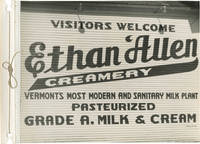
1930149350N.p.: N.p. 1930. Archive of six double weight borderless photographs of the Ethan Allen Creamery in Essex Junction VT circa 1930s. The photographs contain images of both the creamery buildings and interior of the facilities including the vats used to pasteurize milk at what the creamery's sign claims is "Vermont's most modern and sanitary milk plant."<br /> <br /> Photographs roughly 9.75 x 7.75 inches. Fine. Tipped onto linen on the left edge and bound with a string. Housed in a contemporary card folder with a vintage photography studio label to the rear pastedown. N.p. unknown
19812111902156001786Japan Confectionery Association etc. 1981. Soft Cover. Fine. The book is in fine condition. Japan Confectionery Association, etc. paperback
193148849Brooklyn NY: Consolidated Lithographing Corporation 1931-1962. Two vols. Thick oblong elephant folio 24 x 20 x 6 in. 206; 190 pp misnumbered in ink manuscript on corners of each page. With 2375 chromolithograph and colour lithographed cigar labels and cigar box labels most printed with elaborate embossed & gilt borders many with raised lettering & printing ranging in size from 3.25 x 3.5 in. up to 12 x 18 in. outer cigar box wrappers 25 printer’s proof sample pages -- mostly for Doubleday Books and Garden City Press largely 4to and Folio sized 3 Lotos Club menus 30 elaborately printed samples of Christmas wrap for Seagrams Avon Reader’s Digest & Revlon 1 giant Seagrams Christmas promotional banner 5 ft. 9 in. x 4 ft. 3 in. several uncut proof sheets for Paul Jones and Philadelphia Gold Label Whiskey Labels and even game box labels many with extensive manuscript ink annotations indicating lithograph stone No. production run and amount and date printed. Contemporary gray-green buckram over heavy boards rounded leather reinforced corners thick card stock leaves some of the labels creased w/ minor damage some paper-clipped in multiple batches tipped-in to each other minor tears some leaves cropped with samples taken out in which the stones were no longer some labels removed edgewear rubbing to covers still a remarkable set of factory sample catalogues including numerous in-house typed memos printer’s notes and more. These colossal and striking factory sample catalogues for cigar box labels wonderfully display a chromolithographic advertising archive by one of the largest commercial printing firms in the United States from the Great Depression until the Kennedy Administration. Jacob A. Voice formed the Consolidated Lithographing Corporation around 1925 by merging Wm. Steiner & Sons Lithographers the label producing division of American Lithographic Co. in 1929 as well as two other companies. So by 1935 Voice’s company was printing 6500 different labels for over 4000 million cigars. From the 1880s until the 1950s cigar manufacturers were one of the most competitive and lucrative industries in the United States and they employed raised lettering embossing and chromolithography of exceptional quality using printing processes which remained largely unchanged until the mid-20th century when photo-mechanical colour printing largely replaced traditional lithography. These samples provide incredible visual historical records of the cigar-box labels appearing on the ends top and sides of boxes serving as vital advertising display material in cigar stores and with the inner beautifully printed labels on the inside of the lid drawing the attention of the customers. In addition these provide an invaluable cultural archive of the influence of cigars produced from Cuban Puerto Rican and Floridan tobaccos in the 20th century. Over 150 different cigar company labels are preserved in varying states some with special holiday labels others with different colour schemes for varying markets and many over decades showing the changing tastes of the consumer and the advertising art. Included are such companies as Alcazar Judge Wright Ardova Phillies Stetson Wabon Faustino Rubens La Magnitaz Treaty Bond especially striking with images of Napoleon & Jefferson Famous Players White Owl Juan de Fuca White Heather Hauptmann’s National Speaker -- Joe Cannon Havana Ribbon Villa Reina Jockeys Benson & Hedges El Macco La Palina Paramount Admiration -- E. Regensburg & Sons Wm. Penn Panatelas Socrates Muriel Gato Donalda Jose Arango Van Dyck Optimo Dutch Masters Moonshine Crooks and many others. In addition there are product labels included for White Rock Orange Soda Ginger Ale Cola Root Beer Yuban Coffee Prest-of-Flex watch bracelets Champion Prest-o-Slide Buckles Flagstaff Jellys & Preserves Rubinstein & Revlon Cosmetics and much more. Consolidated also served as the colour printers for many of the Doubleday Books published in the 1950s including McCracken Hoofs Claws & Antlers; McCracken Charles Russell; Dare Wright Lonely Doll; Palazzo Don Quixote and many others. The beautifully printed Christmas wraps for cigar companies liquor companies such as Seagrams as well as Rubinstein Avon and Revlon are striking with colour embossing and gold work. The large Seagrams Christmas advertising Banner for 1954 at over 5 feet tall is visually impressive and offers a superb example of mid-Century advertising artwork and printing by Consolidated. The numerous memos blue-lines and proof sheets inserted throughout offer a historical record of how these labels wraps posters and books were produced at the time. See: Rickards Encyclopedia of Ephemera 2000 pp. 94-96; Twyman A history of chromolithography pp. 189-191. Consolidated Lithographing Corporation, paperback
19762092902141203189Chinese book office 1976. Soft Cover. Fine. Volume: 1 Chinese book office paperback
1940233861940. Marathon Paper Mills and later American Can Company industrial safety archive documenting workplace medicine accident prevention campaigns first-aid training and factory safety administration in Menasha Wisconsin from the 1940s-60s. The album records how Midwestern paper and graphic arts manufacturers attempted to reduce industrial injuries during a period when paper mills and printing plants remained physically hazardous workplaces filled with heavy rollers cutting machinery chemical exposure steam systems and high-speed industrial presses. During the postwar decades American manufacturers increasingly institutionalized safety committees plant nursing departments and employee first-aid instruction in response to rising workers' compensation costs union pressure and national workplace safety campaigns promoted by organizations such as the National Safety Council. Marathon Paper Mills was acquired by American Can Company in 1957 placing the Menasha Graphic Arts plant within one of the nation's largest packaging and industrial printing corporations.<br /> <br /> Photo and scrapbook archive of over 100 pieces with approximately 75 black-and-white photographs including twelve 8 x 10 inch prints with typed programs corporate memoranda newspaper clippings conference photographs official correspondence and safety-related ephemera Menasha Wisconsin 1940-1969. Group portraits identify attendees at the Fox River Valley and Lakeshore Safety Conferences of 1940 1941 and 1942. Numerous mounted photographs depict factory nurses treating workers administering oxygen equipment conducting examinations teaching first-aid procedures inspecting washrooms and sanitary facilities and leading emergency-response instruction for plant employees. Workers stand beside industrial presses and mechanical equipment while captions stress housekeeping sanitation accident reporting and machine safety. Several pages preserve newspaper coverage celebrating "one million safe man hours" and "three consecutive years of safe working without a disabling injury" alongside a 1969 letter signed by Wisconsin Governor Warren P. Knowles congratulating the American Can Graphic Arts Plant on its safety record. A 1953 letter from the National Safety Council thanks Marathon Corporation for photographs displayed at the Industrial Nursing Section exhibit during the National Safety Congress in Chicago directly tying the album to nationally circulated industrial safety programming.<br /> <br /> The album preserves a narrower glimpse into ground level industrial plants with the emergence of workplace medicine and safety management as formal corporate systems. The main photographs focus on the Marathon First Aid Department where nurses supervisors and workers collaborated in organized training programs intended to reduce accidents and standardize emergency response inside hazardous production environments. Captions repeatedly emphasize sanitation inspections accident prevention emergency transport and employee instruction demonstrating how industrial safety became both a managerial program and a public relations tool during the postwar era. Photographs mounted with corner tabs throughout; scrapbook pages retain mounted newspaper clippings letters and typed documentation; light toning occasional adhesive discoloration and minor edge wear present. Overall in very good condition. unknown
19782091202133209362Not Available 1978. Soft Cover. Fine. Volume: 1 Not Available paperback
19782091202133101534Sanseisha 1978. Soft Cover. Fine. Volume: 1 Sanseisha paperback
1998Q-3548362028Art Books Intl Ltd 1998-08-01. Paperback. New. In shrink wrap. Looks like an interesting title! Art Books Intl Ltd paperback
193596971American Seating Company Chicago 1935. Pamphlet. Used - Very Good. No date ca 1935. 79 halftone plates Identified churches interiors furniture carvings. 3 printed folders 9 x 11.5" Minor edge wear VG. American Seating Company, Chicago unknown
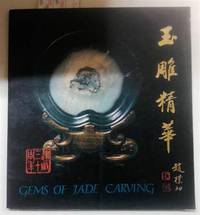
1988N1282Beijing: White Lotus Press 1988. Paperback. Good/no dj. 0.26. Gems of Jade Carving 1958-1988 White Lotus Press paperback
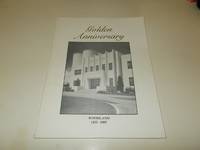
1987011747Woodland CA: Printer's Ink. SIGNED by both Walter Loewen and Skip Quinlan. Lightly bumped bottom corners rear cover has small chip on side edge. Clean copy. . Very Good. Soft cover. 1987. Printer's Ink paperback
19802090202118105882Asahishinbunsha 1980. Soft Cover. Fine. The book is in fine condition. Asahishinbunsha paperback
1967045802New York: McGraw-Hill/Factory Mutual System 1967. Second Edition . Hardcover. Near Fine/No Jacket. 4to - over 9¾" - 12" tall. chapt.pag.index; HB green w/gilt; slight rub w/PONinkstamps endpapers; cleantight pgs. "Recommended Practices for the Protection of Property and Processes against Damage by Fire Explosion Lightning Wind Earthquake" illus. <br/> <br/> McGraw-Hill/Factory Mutual System hardcover
19882091502135419339Not Available 1988. Soft Cover. Fine. Number of books: 1 Not Available paperback
19822092902138000093Ibaraki Factory Japan Specialty Sales Corporation 1982. Soft Cover. Fine. Volume: 1 Ibaraki Factory, Japan Specialty Sales Corporation paperback
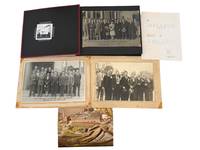
193946634Shanghai: Nishimura Company 1939. Edition not stated. Quarto 26.5cm; black simulated leather stamped in red and gilt in brown paper slipcover; unpaginated photo-illustrated plates w/ rice paper overlays. Wear minor scuffs and soiling to boards; toning and foxing intermittent throughout text especially on overlays; some overlays creased or torn. Slipcover worn and chapped with abrasions and two large one repaired tears across front panel. Photo-illustrated pastedowns and endpapers. Very Good in Good slipcover. All text in Japanese with some obsolete/antiquated kana/kanji oriented right to left. This is a privately-issued commemorative yearbook-type photo album shashin-cho published on behalf of the Imperial Japanese Army medical forces during the Second Sino-Japanese War 1937-1945. Specifically it was produced for those who served under military physician captains/commanding officers Nobuo Isa and Tetsuo Fukaya who were stationed in or near Shanghai at the time.<br /> <br /> By July 1939 the Imperial Japanese Army was beginning to feel the impact of its own mounting casualties and costs; the Chinese Red Army would launch a major offensive later that November. While the Japanese occupation of Shanghai was notably brutal there is little evidence of violence in this album. However some photographs do depict the aftermath of battle with ruined buildings and soldiers being treated for injuries. Other subjects are mundane in nature: Staff and group portraits hospitals and other facilities physicians at work company events and ceremonies. Also includes photographs of Shanghai and a fold-out map of the Hangzhou Bay area. Apparently not cataloged in OCLC or available commercially as of November 2019. Nishimura Company unknown
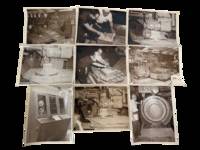
1960233821960. Industrial factory photograph archive documenting large scale machining systems automated tooling equipment and precision manufacturing processes during the height of postwar American industrial expansion circa 1960s. Several scenes feature Sundstrand branded machinery associated with the Sundstrand Corporation a major Rockford Illinois manufacturer of machine tools aerospace components and industrial automation systems during the Cold War industrial economy. By the 1960s American factories increasingly relied on massive numerically controlled machining equipment capable of producing aircraft parts turbine components and heavy industrial hardware with levels of precision unattainable in earlier manually operated machine shops. These photographs record the physical scale of that transition capturing the integration of computerized or semi automated production systems into factory environments that formed the backbone of aerospace defense transportation and heavy manufacturing industries during the period.<br /> <br /> Photo archive of 9 Large Silver Gelatin photographs each 8" x 10" circa 1960s. Interior factory scenes show enormous industrial machining centers occupying tiled production floors beneath overhead lighting and exposed structural systems. Multiple photographs depict large circular indexing tables rotary cutting assemblies suspended tooling heads and enclosed control units bearing visible "Sundstrand" identification. Engineers and machinists wearing shop coats and protective glasses appear adjusting tooling mechanisms calibrating machine components and servicing cutting assemblies surrounded by heavy cables hydraulic systems and banks of industrial controls. Several machines are shown actively engaged in metal cutting operations with curled metal shavings accumulating beneath rotating tooling heads and across surrounding platforms. One scene captures technicians removing or fitting a large machined component beneath a circular cutting apparatus while another documents reel based electronic control equipment integrated into the production system reflecting the growing use of automated process control in industrial manufacturing during the decade.<br /> <br /> The 1960s marked a decisive transformation in American manufacturing as industries shifted from conventional machining toward automated and numerically controlled production methods capable of supporting aerospace engineering military procurement automotive manufacturing and mass industrial output. Companies such as Sundstrand played a central role in supplying the specialized tooling and machine systems that allowed factories to machine increasingly complex metal components at industrial scale. Some curling scattered edge and surface wear as well as foxing to margins; images remain sharp with strong detail. Overall in good condition. The photographs preserve direct visual evidence of the machinery labor practices and production environments that defined late midcentury industrialization before many such facilities were modernized outsourced or dismantled during later waves of deindustrialization. unknown
19642083002116203140Dokdo Island 1964. Soft Cover. Fine. The book is in fine condition. Dokdo Island paperback
19312091502135410670Not Available 1931. Soft Cover. Fine. Number of books: 4 Not Available paperback
19582082402113503031Bungakudo 1958. Soft Cover. Fine. Volume: 1 Bungakudo paperback