153 résultats
19642091202133001949Chiku ma shobo 1964. Soft Cover. Fine. Number of books: 1 Chiku ma shobo paperback
197500001641Bulletin of the Atomic Scientists 1975. Reprint. Hardcover. good . r. 236 pages. Very rare book. Ex-library book . No dust jacket. Black boards with white text. <br/><br/> Bulletin of the Atomic Scientists hardcover
19751715<p>Good Softback Volume specifically designed for the undergraduate physics student. 357pp with index and appendicies ISBN 0471949310 ~ 102.95 ~ Rutherford X-Rays Electrons Hydrogen Atom Spectrometer ~ Physics</p> John Wiley & Sons Ltd paperback
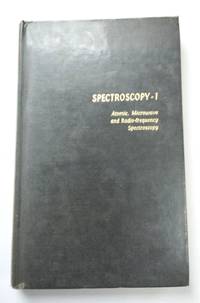
19661717<p>Volume One of a Two-Volume Work Good/VG 8vo Light Black Boards HB - gilt titles on front. No DJ but laminated adhesive cover. Previous owners sig on endpapers. 267pp with index & appendix.</p><p>Slightly chipped cover but tight binding</p> Chapman & Hall hardcover
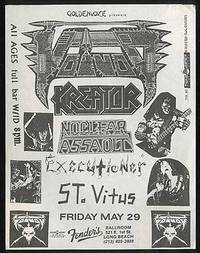
1980380846Long Beach California: TicketMaster 1980. Unbound. Near Fine. Photomechanically reproduced flyer on 8.5" x 11" paper. Slight toning else near fine. An original flyer promoting a hardcore punk show at Fender's Ballroom Los Angeles with Voivod Kreator Nuclear Assault Executioner and St. Vitus. TicketMaster unknown
19792606230018U.S. Nuclear Regulatory Commission 1979. First Edition. Paperback. Good. 0x0x0. Bound in publisher's wraps. Softcover. Good binding and cover. Clean unmarked pages. Minor shelf wear. Approximately 850 pages in various pagings : illustrations ; 28 cm. Investigative report no. 50-320/79-10 U.S. Nuclear Regulatory Commission paperback
198141371Washington DC: GPO 1981. First Edition. First Printing. good. Quarto approx. 325 wraps sections index tabbed tabs bent references fr cover stained and edge creased spine faded slight waviness to text. NUREG-0740. GPO paperback
199747957Arlington VA: Nuclear Waste Technical Bd 1997. First Edition. First Printing. very good. Approx. 100 wraps references glossary. This report was submitted in accordance with the requirements of the Nuclear Waste Policy Amendments Act of 1987 Public Law 100-123. It presents findings and recommendations. Congress created the Board to evaluate the technical and scientific validity of the Department of Energy's program to manage the permanent disposition of the nation's civilian spent fuel and high-level radioactive waste. Specifically the Board is charged with evaluating the DOE site-characterization activities at Yucca Mountain Nevada as well as activities relating to the design of the repository and to the packaging and transport of spent fuel and high-level radioactive waste. Nuclear Waste Technical Bd paperback
199946443Washington DC: U.S. Nuclear Regulatory Comm 1999. First Edition. First Printing. good. Approx. 100 wraps abbreviations chronology of correspondence glossary label with previous owner's name partially removed from fr cover. Covers somewhat worn and soiled distribution letter laid in. NUREG-1672. Project No. 697. U.S. Nuclear Regulatory Comm paperback
197845407Washington DC: GPO 1978. First Edition. First Printing. good. 24 cm 146 wraps. H.A.S.C. No. 95-62. GPO paperback
197850266Washington DC: GPO 1978. First Edition. First Printing. good. 24 cm 60 wraps table. H.A.S.C. No. 95-99. Hearings before the Panel on Indian Ocean Forces Limitation and Conventional Arms Transfer Limitation of the Intelligence and Military Application of Nuclear Energy Subcommittee. Sonny Montgomery was the panel chairperson. There are several places where text has been omitted presumably for classification/security reasons and the deletion noted. GPO paperback
198851088Washington DC: GPO 1988. very good. 148 wraps figures tables references index. Complete subtitle: Hearing on National Defense Authorization Act for Fiscal Years 1988/1989--H.R. 1748 and Oversight of Previously Authorized Programs Department of Energy National Security Programs. H.A.S.C. No. 100-13. GPO paperback
197849270Washington DC: GPO 1978. very good. 65 wraps figures appendix. H.A.S.C. No. 95-95. Topics covered include conclusions of the Panel SALT II status unresolved SALT II issues United States-Soviet Strategic Trends U.S. strategic requirements unilateral arms restraint and SALT II: no cause of euphoria. GPO paperback
196487717Livermore CA: U.S. Army Engineer Nuclear Cratering Group 1964. Presumed First Edition First printing. Wraps. Good. The format is approximately 8 inches by 10.5 inches. Various paginations approximately 120 pages. Illustrations figures tables tabular data. Ex-library copy with the usual library markings some blacked out. This is part of Plowshare--civil industrial and scientific used for nuclear explosives. The US Army Corps of Engineers Nuclear Cratering Group NCG program activities include: 1 cratering calibration of various geologic media and development of techniques designed to provide a desired crater geometry with chemical high-explosive detonations; 2 joint planning of and technical participation in AEC nuclear-excavation experiments; 3 development of data on the engineering properties of nuclear craters; 4 development of civil works nuclear construction technology; 5 accomplishment of engineering studies of nuclear construction feasibility; and 6execution of joint CE/AEC civil works nuclear-construction experiments. Four conceptual nuclear-construction applications have been identified as having a significant potential for accomplishment: 1 nuclear quarrying to produce rock fill or aggregate; 2 nuclear ejecta dam construction; 3 nuclear harbor construction; and 4 nuclear canal excavation. This inclosure described the design of the nuclear explosions required to excavate the channel for an Isthmian sea-level canal. The Columbian nuclear cue would use 262 devices with a total yield of 2709 megatons fired in 21 separate detonations. Project Plowshare was the overall United States program for the development of techniques to use nuclear explosives for peaceful construction purposes. The program was organized in June 1957 as part of the worldwide Atoms for Peace efforts. As part of the program 35 nuclear warheads were detonated in 27 separate tests. A similar program was carried out in the Soviet Union under the name Nuclear Explosions for the National Economy. Successful demonstrations of non-combat uses for nuclear explosives include rock blasting stimulation of tight gas chemical element manufacture unlocking some of the mysteries of the R-process of stellar nucleosynthesis and probing the composition of the Earth's deep crust creating reflection seismology vibroseis data which has helped geologists and follow-on mining company prospecting. The project's uncharacteristically large and atmospherically vented Sedan nuclear test also led geologists to determine that Barringer crater was formed as a result of a meteor impact and not from a volcanic eruption as had earlier been assumed. This became the first crater on Earth definitely proven to be from an impact event. Negative impacts from Project Plowshare's tests generated significant public opposition which eventually led to the program's termination in 1977. These consequences included tritiated water projected to increase by CER Geonuclear Corporation to a level of 2% of the then-maximum level for drinking water and the deposition of fallout from radioactive material being injected into the atmosphere before underground testing was mandated by treaty. Peaceful nuclear explosions PNEs are nuclear explosions conducted for non-military purposes. Proposed uses include excavation for the building of canals and harbors electrical generation the use of nuclear explosions to drive spacecraft and as a form of wide-area fracking. PNEs were an area of some research from the late 1950s into the 1980s primarily in the United States and Soviet Union. In the U.S. a series of tests were carried out under Project Plowshare. Some of the ideas considered included blasting a new Panama Canal constructing the proposed Nicaragua Canal the use of underground explosions to create electricity Project PACER and a variety of mining geological and radionuclide studies. The largest of the excavation tests was carried out in the Sedan nuclear test in 1962 which released large amounts of radioactive gas into the air. By the late 1960s public opposition to Plowshare was increasing and a 1970s study of the economics of the concepts suggested they had no practical use. Plowshare saw decreasing interest from the 1960s and was officially canceled in 1977. The Soviet program started a few years after the U.S. efforts and explored many of the same concepts under their Nuclear Explosions for the National Economy program. The program was more extensive eventually conducting 239 nuclear explosions. Some of these tests also released radioactivity including a significant release of plutonium into the groundwater and the polluting of an area near the Volga River. A major part of the program in the 1970s and 80s was the use of very small bombs to produce shock waves as a seismic measuring tool and as part of these experiments two bombs were successfully used to seal blown-out oil wells. The program officially ended in 1988. U.S. Army Engineer Nuclear Cratering Group paperback
198777065Fort Leavenworth KS: US Army Combined Arms Combat Developments Activity Nuclear and Chemical Directorate 1987. Coordinating Draft. Wraps. Good. Various paginations approximately 140 pages. Illustrations. Appendix A-F including acronyms. References. Glossary. Two lines of highlighting on distribution list. The Official Use Only distribution restriction is understood to have expired on 1 July 1990. This field manual was intended to provide a consolidated summary of procedural guidance training methods technical information and responsibilities of the initial response force IRF in preparing for a wartime or peacetime nuclear weapon accident or incident. It concentrated on IRF procedures and techniques for limiting radiation hazards to the public and response force personnel. FM 3-15 was intended to supplement DNA 5100.e Nuclear Weapon Accident Response Procedures NARP manual for peacetime NAIRA and expand on FM 100-50 for wartime NAIRA. FM 3-15 will also cover procedures for survey and monitoring decontamination casualty treatment fire suppression public affairs and security as it relates to the IRF and as outlined in AR 50-5. This field manual is a coordinating draft for the revision of Field Manual 3-15 Nuclear Accident Contamination Control Nov 1975 and is published in accordance with TRADOC Regulation 11-7 and TRADOC Pamphlet 310-6. FM 3-15 is intended for use by CONUS and OCONUS commanders staff and soldiers at corps level or below and by Army Depot personnel who respond to a nuclear accident or incident. It provides doctrine and training guidance for Nuclear Accident and Incident Response and Assistance NAIRA which will be applicable in wartime and peacetime. This FM will outline NAIRA processes necessary for the Initial Response Force IRF to prepare for and provide immediate safety security rescue and control at the accident scene to save lives and reduce exposure hazards. The IRF will be composed of available assets as determined by the commander of the army installation nearest to the accident site. US Army Combined Arms Combat Developments Activity, Nuclear and Chemical Directorate paperback
199367195Washington DC: United States. Naval Nuclear Propulsion Program 1993. Presumed first edition/first printing. Wraps. Good. iii 39 24 p. Includes diagrams. The environmental effect of disposal of radioactive wastes originating from U.S. Naval nuclear propulsion plants and their support facilities is assessed. This report confirms that procedures used by the Navy to control releases of reaidactivity from U.S. Naval nuclear-powered ships and their support facilities are effective in protecting the environment and the health and safety of the general public. United States. Naval Nuclear Propulsion Program paperback
197958526Washington DC: The Office: available from GPO Sales Program Division of Technical. 1979. Wraps. Fair. No dust jacket as issued. Cover shows damp signs. Some page rippling noted. All pages separate and text complete. 51 p. in various pagings; 28 cm. "NUREG-0632. " The Office: [available from GPO Sales Program, Division of Technical.. paperback
1980ZB1203795Natl Academy Pr 1980. 204 pp. Paperback spine and covers faded ex library else text clean & binding tight. - If you are reading this this item is actually physically in our stock and ready for shipment once ordered. We are not bookjackers. Buyer is responsible for any additional duties taxes or fees required by recipient's country. Photos available upon request. Natl Academy Pr paperback
19751100421.25United States Nuclear Regulatory Commission 1975. Second printing. Paperback. Good. 4to paperback. Good condition. 11 volumes bound as 7: Executive Summary and Main Report 10 of 11 Appendices: LACKS Appendix 6 which would have been the 8th volume to complete the set. Ex-lib set minimal institutional stamping to cover no interior marking labels or card pockets. Appendices VII-X bound as one have stressed and mended spine all vols. with binding still sturdy and tight. United States Nuclear Regulatory Commission paperback
197969168Washington DC: Nuclear Regulatory Commission 1979. Presumed first edition/first printing. Wraps. Good. Cover has some sunning/fading. Interior is very good. Various paginations approximately 300 pages. Illustrations. Diagrams. Maps. References. The NRC Authorization Bill for Fiscal 1979 directed the NRC to conduct a study of extending the Commisson's licensing or regulatory authority to include categories of existing and future Federal radioactive waste storage and disposal activities not presently subject to such authority. The report includes a complete listing and inventory of all radioactive waste storage and disposal activities now being conducted or planned by Federal agencies. The NRC study has attempted to present a general comparison of the relative hazards associated with defense-generated and commercial wastes. Options for extending the Commission authority were developed and analyzed. The implications of NEPA were analyzed in the context of these options. The national security implications of extending NRC's regulatory authority voer DOE programs are examined and evaluated. Costs and benefits are identified and assessed. The Commission's recommendations based on the study are to extend licensing authority over new DOE disposal activities involving transuranic wastes and non-defense low-level waste and to initiate a pilot program to test the feasibility of NRC playing a consultative role in the evaluation of existing DOE activities. Nuclear Regulatory Commission paperback
199959756Washington DC: Commission on Maintaining United States Nuclear Weapons Expertise 1999. Wraps. Very good. Includes illustrations. Various paginations approximately 120 pages. List of Documents. The Commission on Maintaining United States Nuclear Weapons Expertise hereafter referred to as the Commission was prescribed by the National Defense Authorization Act of FY 1997. The Congress identified the need for the Commission because of the substantial changes in the environment affecting nuclear weapons design production and testing since the end of the Cold War. In view of these changes the Commission was tasked with reviewing ongoing efforts of Department of Energy DOE to attract scientific engineering and technical personnel recommending improvements and identifying actions where needed and developing a plan for recruitment and retention within the DOE nuclear weapons complex.1 We have arrived at 12 recommendations in four areas: national commitment program management personnel policies and oversight. What the Commission proposed was not a classic plan in the narrow sense but a series of recommendations to assure that critical well-qualified personnel are available to execute the Stockpile Stewardship Program SSP and to assure the safety and reliability of the U.S. nuclear weapons stockpile today and in future years. The Commission was directed to "Develop a plan for recruiting and retaining within the Department of Energy DOE nuclear weapons complex such scientified engineering and technical personnel as the Commission determines appropriate in order to permit the Department to maintain over the long term a safe and reliable nuclear weapons stockpile without engaging in underground nuclear testing. " Commission on Maintaining United States Nuclear Weapons Expertise paperback
198562509Washington DC: United States 1985. Presumed first edition/first printing. Wraps. Good. No dust jacket as issued. Paperclip mark on front and first page noted. Cover has some wear and soiling. 3 x 15 p. The appendices were in separate volumes at least two were classified and are not present. William Clark was the Chairman of the Blue Ribbon Task Group. This report was submitted in compliance with Section 1632 of the Department of Defense Authorization Act 1985 Public Law 98-525 and Executive Order 12499 of January 18 1985. The Task Group addressed procedures used by the Departments of Defense and Energy in establishing requirements and providing resources for the research development testing production surveillance and retirement of nuclear weapons. Members of the Task Group included James Schlesinger Former Secretary of Energy and Defense Former Chairman of the Atomic Energy Commission Harold Agnew former Director of the Los Alamos National Laboratory Jeane Kirkpatrick Former Ambassador to the United Nations and William Perry Former Under Secretary of Defense for Research and Engineering. United States paperback
199668604Washington DC: United States Department of Defense 1996. Presumed first edition/first printing thus. Wraps. Very good. No dust jacket. Has slight wear and soiling. Tape bound. Various paginations approximately 125 pages. Figures. Acronyms. Chronology. The purpose of this Stockpile Management Information Handbook was to provide an overview of the Department of Defense DoD0 Acquisition Management System AMS; key organizations in that process; the joint nuclear weapons life cycle process between the DoD and the Department of Energy DOE; DOER organizations and production facilities; the documents used in the US nuclear weapons stockpile management process; and important events in the history of nuclear weapons. This handbook was intended to be both a training tool for persons without previous experience in the development acquisition and stockpile management of nuclear weapons as well as a reference book for persons on the job. This handbook was not intended to be a comprehensive reference source for program managers. United States Department of Defense paperback
199970684Washington DC: United States. Department of Defense 1999. First Edition stated. Presumed First Printing. Trade paperback. Very good. xviii 62 pages. Includes: Illustrations Diagrams. Acronyms and Abbreviations. Cover has slight wear and soiling. Nuclear weapons life extension and countering nuclear threats will continue to be a central concern for the United States and the Department of Defense. The Department has identified the dual missions of sustaining a safe secure and effective nuclear deterrent and countering the threat from nuclear terrorism and nuclear proliferation as among the most important for U.S. national security priorities. Nuclear Matters serves as the focal point for these missions within the Department of Defense. "To deter nuclear war and serve as last resort weapons of self-defense. In this sense U.S. nuclear weapons are fundamental to our nation's security and have historically provided a deterrent against aggression and security assurance to U.S. allies. A robust flexible and survivable U.S. nuclear arsenal underpins the U.S. ability to deploy conventional forces worldwide; provides the Commander-in-Chief with credible response options to strengthen deterrence; and supports U.S. nonproliferation goals by extending deterrence to allies thereby dissuading them from developing their own nuclear weapons." Secretary of Defense Mattis at his confirmation hearing January 2017 This was intended to be a basic reference on the nuclear hardening of military systems. This Guidebook was not intended to be a definitive document on the effects of nuclear weapons or a "how to" guide for Project Managers but rather it provides information to staff officers who require a basic understanding of nuclear hardening as it relates to the acquisition of nuclear survivable systems. The information is this Guidebook was current as of September 1999. Nuclear weapon system survivability is concerned with the ability of U.S. nuclear deterrent forces to survive against the entire threat spectrum that includes but is not limited to nuclear weapon effects. The vast range of potential threats include: · conventional and electronic weaponry; · nuclear biological and chemical weapons; · advanced technology weapons such as high-power microwaves and radio frequency weapons; · terrorism or sabotage; and · the initial effects of a nuclear detonation. Put simply nuclear weapon effects survivability refers to the ability of any and all personnel equipment and systems including but not limited to nuclear systems to survive nuclear weapon effects. Nuclear weapon system survivability refers to nuclear weapon systems being survivable against any threat including but not limited to the nuclear threat. Nuclear hardness describes the ability of a system to withstand the effects of a nuclear detonation and to avoid internal malfunction or performance degradation. Hardness measures the ability of a system's hardware to withstand physical effects such as overpressure peak velocities energy absorbed and electrical stress. This reduction in hardware vulnerability can be achieved through a variety of well-established design specifications or through the selection of well-built and well-engineered components. This appendix does not address residual nuclear weapon effects such as fallout nor does it discuss nuclear contamination survivability. United States. Department of Defense paperback
196159628Oak Ridge TN: Union Carbide Nuclear Company 1961. Presumed First Edition First printing thus. Wraps. Good. No dust jacket. vi 80 pages. Highlighting/underlining. Name of previous owner present. Ink notation on front cover. Cover has some wear and soiling. Underlining noted at one line of text. Report Number KOA-888. Marked UNCLASSIFIED. Prepared for the Atomic Energy Commission under U. S. Government Contract W7405 eng 26. There are mathematical formulae and a large number of numerical values presented. There is only a limited amount of text. K-25 was the codename given by the Manhattan Project during World War II for the project to produce enriched uranium for atomic bombs using the gaseous diffusion method. Over time it came to refer to the production facility located at the Clinton Engineer Works in Oak Ridge Tennessee the main gaseous diffusion building and ultimately the site. When it was built in 1944 the four-story K-25 gaseous diffusion plant was the world's largest building with over 1640000 square feet of floor space and a volume of 97500000 cubic feet . The highly corrosive uranium hexafluoride UF6 was the only known compound of uranium sufficiently volatile to be used in this process. Slightly enriched product from the S-50 thermal diffusion plant was fed into the K-25 gaseous diffusion plant. The enriched uranium was used in the Little Boy atomic bomb used in the atomic bombing of Hiroshima. In 1946 the K-25 gaseous diffusion plant became capable of producing highly enriched product. After the war four more gaseous diffusion plants were added to the site named K-27 K-29 K-31 and K-33. The K-25 site was renamed the Oak Ridge Gaseous Diffusion Plant in 1955. Production of enriched uranium ended in 1964. Union Carbide Nuclear Company paperback