115 résultats
1864DEMO016191ICleveland OH: Verleger ca. 1864. New 8th editioni. Hardcover. Fair. Woodcuts. 8vo 285 pages original embossed brown cloth rear hinge breaking <br/><br/>Baunscheidt invented a number of medical devices in Germany in the mid-19th century. None was more popular than his Lebenswecker a multi-needle device acclaimed for its healing properties when employed with his secret oil Oleum Baunscheidtii both in Europe and among the German community in America. Page 70 has a woodcut of this deived while facing p. 74 is a full-page acupuncture-like engraving showing where to use the device on the body. The Deutsche edition features an elaborate printed sticker on the title-page promoting the services of a Baunscheidt practitioner John Linden at Cleveland Ohio. The second part DAS AUGE " The Eye" has a separate title-page dated 1863. See the "Annotated Catalogue of the Edward C. Atwater Collection of American Popular Medicine and Health Reform no.s 236 - 238. Verleger hardcover
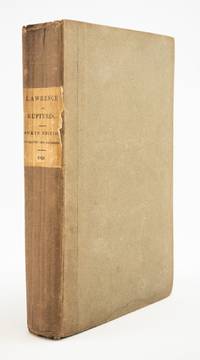
1824ST20601<p>London: Printed for Callow and Wilson 1824. Fourth Edition. 235 x 145 mm. 9 1/4 x 5 3/4". xvii 1 568 pp. <br />Publisher's gray paper boards flat spine with printed paper label leaves untrimmed. WITH TWO ENGRAVED PLATES one folding. Early ink ownership inscription of Jas. McKee on title page. Wellcome III p. 462; Garrison-Morton 3587 5th Edition; Heirs of Hippocrates 822 Second Edition. Spine and boards a bit darkened covers with a hint of soiling occasional light foxing a few closed tears not affecting text other trivial defects but AN EXTREMELY FINE COPY the insubstantial binding with nothing approaching a significant defect and the text remarkably bright clean and fresh.<br /><br />Still in its original boards and in lovely condition this extensive treatise on the causes and treatment of hernias was written by an English surgeon known as a radical precursor of Darwinian attitudes towards the nature and development of man. One of our author's earliest publications when it was first issued in 1807 as "A Treatise on Hernia" the present work won a prize at the Royal College of Surgeons. According to Heirs of Hippocrates William Lawrence 1783-1867 "contributed significantly to the understanding and management of ruptures" and his "Treatise" "remained for many years the standard work on the subject." Lawrence crossed swords with both the Church of England and the medical establishment with several lectures and publications that espoused his materialist views applauded France and the United States for their commitment to free scientific thought and even dared to question Old Testament narratives regarding the origins of man. DNB tells us that "Throughout the nineteenth century . . . he was often regarded as a martyr for the cause of science and of intellectual liberty. His lectures were even cited as precursors for such later works of scientific naturalism as Charles Darwin's 'Descent of Man' 1871 and Thomas Huxley's 'Man's Place in Nature' 1863." Various editions of the present work can be found on the market but it would be difficult to find one in better contemporary condition than ours.</p> Printed for Callow and Wilson
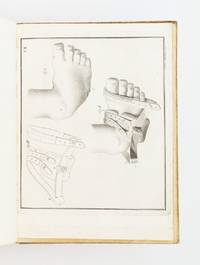
1803ST18718Pavia: Appresso Giuseppe Comini 1803. FIRST EDITION. 309 x 225 mm. 12 1/8 x 8 7/8". 42 pp. without the blank called for by Norman. <br/> Contemporary paper boards patterned to look like tree calf smooth spine. WITH FIVE ENGRAVED PLATES THREE OF THEM FOLDING BY FAUSTINO ANDERLONI. Norman 1900; Garrison-Morton 4308. See also: Heirs of Hippocrates p. 292; DSB XII pp. 136-39. ◆Two-inch dampstain to upper right corner of front cover also slightly affecting margins of first 10 leaves extremities a little worn but still a nearly fine copy--clean fresh and bright internally with excellent impressions of the plates in a sturdy contemporary binding.<br/> <br/> In excellent unsophisticated condition this is a rare copy of the first edition of what Garrison-Morton tells us is the "first accurate description of the pathological anatomy of congenital club-foot." In addition to correctly describing the anatomy of this common birth defect surgeon Antonio Scarpa also devised a brace for treating the malformation--detailed engravings of which are shown on the accompanying plates. A student of Morgagni Scarpa 1852-1932 quickly rose to prominence becoming a professor at the age of 20 and authoring several important works in the fields of otology cardiology ophthalmology and neuroanatomy among others. As DSB relates "his fame was so great that in 1805 he was personally complimented by Napoleon." According to Heirs of Hippocrates Scarpa was "a brilliant artist as well as a brilliant anatomist" who included his own anatomical drawings engraved by Faustino Anderloni in many of his published texts including the present work. The images here go beyond simply depictive to evoke an emotional response from the viewer who is invited to identify with the distress of the afflicted. Our first edition is a rare book: we could trace just two copies sold on RBH. Appresso Giuseppe Comini unknown
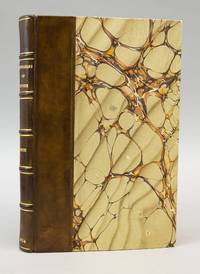
1826ST14206London: Burgess and Hill 1826. FIRST EDITION. 215 x 135 mm. 8 1/2 x 5 3/8". x 2 282 pp. 1 blank leaf lacking half title. <br/> Recent retrospective dark brown quarter calf over marbled boards raised bands gilt titling. Title page with ink library stamp of University College Hospital Medical School Library. The Founders of Child Neurology 1990 pp. 148-52. ◆Title a little foxed with a half-inch brown strip from older binding along gutter edge last two leaves with minor foxing otherwise a fine copy clean fresh and surprisingly bright in an unworn sympathetic binding.<br/> <br/> This is the first edition of the first monograph in English on the subject of convulsions in children by a man considered to be one of the founders of child neurology. One of 300 original Fellows of the Royal College of Surgeons and a renowned London practitioner specializing in midwifery and the diseases of women and children John North 1790-1873 was a forthright plain-spoken man whose obituary even noted that "he was occasionally too brusque to be pleasant." This candor was an asset in his writings. As "The Founders of Child Neurology" notes "Whereas most 18th- and early 19th-century medical authors were opaque verbose and interminable theorists North wrote simply and clearly avoided speculation admitted ignorance and actually dealt with practical matters such as distinguishing between types of convulsions and the extent of treatment required. Also perhaps in keeping with his character he did not hesitate to criticize other authors with whom he disagreed." One of his main targets was John Clarke who had declared that "every case of convulsion" resulted in "inevitable organic damage" to the brain. Consequently Clarke called for drastic treatment of every seizure whether caused by teething or serious illness often doing more harm than good with his purgatives clysters and bleeding. North saw convulsions as a disturbance in the brain but not as evidence of organic disease citing as evidence the lack of brain lesions found in autopsies of children who had died of convulsions. He distinguished epilepsy from other causes of seizures and was perhaps the first to note the association between rickets and convulsions. "Founders" concludes "his greatest gift to his contemporaries may have been his reiterated contention that most babies with convulsions need not be assaulted with calomel leeches and the lancet.". Burgess and Hill unknown
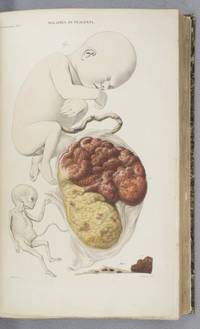
1829CJW1310Paris: J. B. Baillière 1829-42. FIRST EDITION IN BOOK FORM bound from the original parts. 486 x 337 mm. 19 1/8 x 13 1/4". Two volumes. <br/> Contemporary marbled boards backed with recent calf raised bands flanked by gilt fillets black morocco labels. WITH 231 LITHOGRAPHED PLATES two folding OF WHICH 167 ARE IN COLOR many heightened with gum arabic later tissue guards. Garrison & Morton 2286; "Heirs of Hippocrates" 863; Norman 538. ◆Corners and edges somewhat rubbed with some loss of paper as expected with large picture books text with variable foxing persistent but usually light never severe and principally confined to margins a handful of black & white plates with moderate spotting additional small defects internally otherwise quite a commendable copy of a book always found foxed browned and worse our volumes solidly restored now the spines unworn and the text and remarkable plates with no fatal condition problems.<br/> <br/> Garrison & Morton declares that "the fine illustrations of gross anatomy seen here make this one of the greatest works of its kind." The inaugural professor of pathological anatomy in Paris anatomist and pathologist Jean Cruveilhier 1791-1874 provided in the present work the first description of multiple sclerosis and an early identification of Cruveilhier's palsy. Hypertrophic pyloric stenosis and ulceration of the stomach due to hyperacidity were also detailed for the first time here. In "Doctrine of the Nerves" John A. Spillane called Cruveilhier "the prince of physician-pathologists" and this work a "treasure chest of neurology." "Heirs of Hippocrates" notes that "this atlas contains some of the finest illustrations of gross pathology ever made." The plates were done by anatomical illustrator Antoine Chazal 1793-1854 a French painter engraver art teacher at Muséum National d'Histoire Naturelle and great-uncle of Paul Gauguin. This work was originally issued in 40 parts at nine francs each over a period of 13 years. The parts were ultimately bound together into two volumes as here in a print run that based upon the subscriber's list was likely just more than 400 copies. While no stranger to auction rooms the book--a practical reference book heavily used by professionals--is all too often found with missing plates and/or parts and in condition that leaves much to be desired. J. B. Baillière unknown
18203738Berlin 1820. Soft cover. Very Good. Scarce and curious little book having to do with ressurection. 32 pp. Plain contemporary blue wraps. <br/><br/> paperback
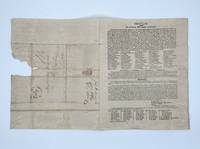
1819370363Baltimore 1819. 1p. letterpress circular letter. With a 2pp. autograph letter signed written to Anthony Kimmel on the verso and conjugate blanks ". the malignant fever is rather increasing on the point. There has been nearly one hundred new cases .". 4to. Usual folds. 1p. letterpress circular letter. With a 2pp. autograph letter signed written to Anthony Kimmel on the verso and conjugate blanks ". the malignant fever is rather increasing on the point. There has been nearly one hundred new cases .". 4to. The 1819 epidemic at Fell's Point Baltimore resulted in nearly 2300 deaths. The present handbill however signed in print by numerous businessmen and a committee of physicians downplays the rumor of danger to doing business in Baltimore as a whole. In part: ". We deem it proper further to inform you that the disease does not appear to be contagious and has not been communicated in any one instance to persons residing out of that atmosphere."<br /> <br /> Besides discussing the endemic the manuscript letter written on verso of the circular by J. Werdebaugh also touches on business matters and the 1819 Philadelphia Balloon Riot: "At Philadelphia they had a mob which tore & burnt down the beautiful spot the Pavilion Garden. It was a consequence of the non performance of the Balloon which was to have ascended from there. Baltimore is called mob town and Philadelphia mob ville. unknown
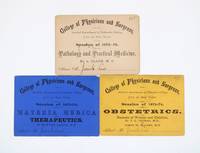
1874368828New York 1874. Each 3-1/4 x 4-3/4 inches. About fine. Each 3-1/4 x 4-3/4 inches. The cards admitted Luis to Pathology and Practical Medicine by Dr. A. Clark 1872-73 Obstetricts by Drs. T. G. Thomas and James McLane 1873-74 and Material Medica by Dr. Eward Curtis 1873-74. Luis 1848-1930 as a medical student participated in the Ten Years War for Cuban independence. He would graduate University Medical College of New York University in 1876 and practice in Brooklyn and later Philadelphia. Dr. Luis was arrested along with General Carlos Roloff Secretary of War of the Cuban Provisional Government in conjunction with a filibustering expedition in July 1895 on the steamer Woodall to supply arms and men to the Cuban insurgency before the Spanish American war. In the 20th century he would serve as a Cuban consul in the U.S. unknown
18253010London: John Knight & Henry Lacey 1825. Hardcover. Very Good. Three volume set. Small 8vos. Full contemporary greeen morocco gilt spines rather worn and rubbed. Internally nice and clean. Interesting essays on a wide range of medical topics. <br/><br/> John Knight & Henry Lacey hardcover
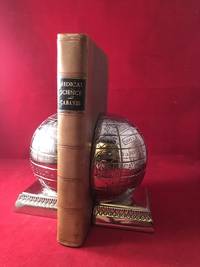
18063875London: J. Johnson 1806. First Edition. Hardcover. Very Good. 5 1/8 X 8 1/2 Inches. 420 PP. Rebound circa early 20th Century in half calf with leather tips. Contemporary ownership signature at top of title-page. Ink stamp on the title-page and on page one: "Ex Biblioth./Universitatis/Aberdonensis." Bookplate laid down on front pastedown: "Ex Libris / Illus. / Samuel. X / Radbill M.D." Honorary Librarian of the College of Physicians of Philadelphia and Curator of the Osler Library bookplate: "Gordon W. Jones M.D. / Falmouth / Virginia." Noted in pencil on FFEP First English Edition First published in French 1804. / Castiglion: History of Medicine p. 752". A very attractive copy with an interesting history. <br /> <br /> Cabanis was a French physician physiologist and materialist philosopher. One of the writings of P.J.G. Cabanis is listed in the "Catalogue of the Library of Thomas Jefferson" and notes of correspondence between Cabanis and Jefferson LOC. Translated from French by Alexander Henderson. <br /> <br /> NOTE: Last copy recorded as sold on Rare Book Hub was the The Property of The Royal Medical Society Edinburgh Sold at Sotheby's in 1969. J. Johnson hardcover
18263100861826. 37 ff. written on rectos only. 4to. Wrappers titled in manuscript. Covers worn and stained with some wear and chipping to the text. 37 ff. written on rectos only. 4to. Unpublished manuscript on the ancient Egyptian and Greek roots of medicine by the early American physician Charles Alfred Lee 1801-1872. Lee graduated from Williams College in 1822 and received his M.D. at Berkshire Medical College. He was connected with the Northern Dispensary of New York City chair of materia medica and general pathology at Geneva Medical College New York and taught at a series of eastern United States medical schools. Lee helped found the New York Journal of Medicine and the Collateral Sciences in 1843 and in 1850 he co-founded the Buffalo Medical School. His most famous work was the American edition of Dr. James Copeland's Dictionary of Practical Medicine 1848. He published several medical textbooks including the popular Human Physiology for the Use of Elementary Schools 1843. He also edited Bacchus: an Essay on the Nature Causes Effects and Cure of Intemperance 1840 by Ralph Grindrod.<br /> The present manuscript which appears to be unpublished is a survey of early Egyptian and Greek medicine and draws from sources quoted in the original Greek. unknown
1833557691833. Contemporary morocco. Very good. Two parts octavo 24.2 by 14.3 cm. 280 unnumbered leaves. Manuscript on polished cream paper. Persian text recto and verso in black and red ink; triple-ruled inner text borders 15.4 by 7.9 cm in red and blue single-ruled outer border 21.7 by 11.3 cm in blue. The second part of the manuscript opens with an illuminated full-page double suite composition Arab. unwan in polychrome and gilt; marginal illumination appears on two other leaves in this section. Contemporary paneled tan morocco lightly rubbed at extremities elaborately tooled in blind. Some marginal annotations in black ink at several early leaves. Intermittent mild smudges mostly marginal; bottom corner of first leaf excised resulting in loss of several words. Very good.<br /> <br /> Compendium of medical tracts used by prominent physicians of the Muslim world written in superb Persian calligraphy by 'Ali Muhammad in A.H. 1249 = 1833. Much of the work deals with herbal remedies used by famous Persian physicians including Avicenna 980-1037. A treatise on anatomy is included along with commentaries penned between the two sets of borders which discuss various matters including diagnosis from urine; hygienic practices drawn from the treatises of famous physicians; prescriptions and recipes derived from the book Tuhfat al-mu'minin a work on materia medica by Muhammad Muʼmin Husayni d.1698 dedicated to the Safavid ShÄh SulaymÄn. Husayni was considered the greatest herbalist of the Mazandaran region of Persia. Four pages in the second part present various alphabets in black ink; comments and correspondences with the Arabic/Persian alphabet are noted in red ink. <br /> <br /> Provenance: Stamps of "Mohd. Halim Salimi Library Kandahar-Afghanistan" in blue ink at opening and closing leaves. In the late 1950s Mohammed Halim Salimi of Kandahar worked in an administrative capacity for the International Cooperation Administration a United States government agency and precursor of the U.S. Agency for International Development USAID. A smaller elliptical owner's stamp in red with text beneath at blank recto of the opening leaf. unknown
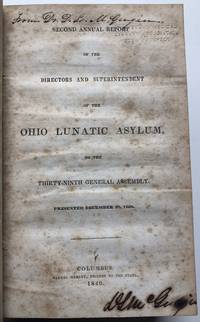
1849H4847Columbus OH: Samuel Medary / Chas. Scott / L. L. Rice et al. 1849. Hardcover. fair. Bound in half leather containing the first through eleventh annual reports presented to the Ohio State Assembly 1839-1849 gradually increasing in pagination to an average of 60-75 pp. per report original cover wraps not bound in evidence that they've been trimmed in that ownership signatures are sometimes cut off generally good condition moderate to heavy foxing and light wear stamp on title page of each of the Cleveland Medical Library Association with bookplate on pastedown -- no discard stamp sorry but we are confident that this was deaccessioned. Binding in worn condition with original leather spine quite deteriorated. Also includes 'Report No. 10 Report of the Trustees appointed to collect information relative to the education of the blind' ca. 1840s 26 pp. by Hoge Swayne and Awl and 'Report of the Benevolent Institutions of Great Britain and Paris including the schools and asylums for the Blind Deaf Dumb and the Insane.being supplementary to the Ninth Annual Report of the Ohio Institution for the Education of the Blind' by William Chapin Columbus 1846 61 pp. Title page of the first annual report stained by a newspaper clipping of a woodcut from an insane asylum pasted on its verso. Samuel Medary / Chas. Scott / L. L. Rice, et al. hardcover
188576458Chicago: Nervita Medical Co. ca. 1885. Counter display card with the original kickstand on the rear. The placard 7 1/2 x 9 3/4 inches bears the advertising text in blue and has a large chromolithographed spray of flowers and place behind a window in the center is a very detailed chromo of a very healthy woman vaguely Latino and with what appearss to be an odd take on the sombrero all to spice up the name of Liverita. Some odd likely paper quality of glue dark spots to the upper right side. A charming image.Liverita made all the usual claims; "We ill be the above reward $500 for any complaint of liver complaint dyspepsia sick headache indigestion constipation or costiveness we cannot cure with Liverita." Costiveness is a euphemism for constipation. [Nervita Medical Co.] unknown
18122111902160201413Kyoto Book Forest Naniwa Book Forest 1812. Soft Cover. Fine. Number of books: 3 Kyoto Book Forest Naniwa Book Forest paperback
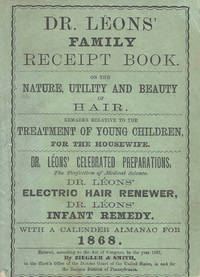
18677814Philadelphia: Ziegler & Smith Sole Proprietors 1867. Booklet stapled in wrappers 16.5 x 12 cm. 32 pages. Illustrated. FIRST & ONLY EDITION. While an almanac there is no evidence of other issues. A promotional almanac and recipe book for the patent medicines produced by Dr. Leon specifically his Infant Remedy and Electric Hair Renewer. The promotion of the remedies is interwoven with culinary and household recipes Soft Gingerbread Winter Herbs An Easy Method of producing Mushrooms Apple Fritters Lady Cake. Light edgewear otherwise near fine in publisher's printed pale blue wrappers. Scarce. OCLC locates just one copy and no copies of issues with other dates. Ziegler & Smith, Sole Proprietors unknown
189010187New York; Lockport N.Y.: Published by F.W. Kinsman & Co. apothecaries: Union Printing & Publishing Co 1890. Octavo stapled in wrappers 18.3 x 11 cm. 32 pages. Printed throughout in black and red. Calendars for 1890 and 1891 printed on rear panel of wrapper. Advertisements. Other titles: Kinsman's New York Cook Book. The third and final almanac promoting Adamson's Botanic Balsam and other nostrum's and remedies produced by F.W. Kinsman Apothecaries of New York. Previous issues of the almanac used New York in the title as here but the apothecary was located across the Hudson in Jersey City. Testimonials sprinkled throughout the selection of recipes. Age-toning throughout otherwise fine in typographically decorated wrappers. Scarce. OCLC locates three copies of this issue. Published by F.W. Kinsman & Co., apothecaries: Union Printing & Publishing Co unknown
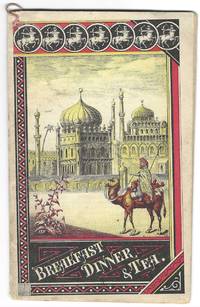
18808067New York: The Centaur Co 1880. Stapled booklet 16 x 10 cm. 32 pages. Illustrated. FIRST EDITION. A small promotional cookbook in the form of an almanac from the makers of Centaur Liniments with recipes testimonials and descriptions of the applications of this miraculous cure from lands far and wide. As is typical of these books the recipes are very brief and uncredited. Short closed tear to fold of wrappers decorated in black red and yellow depicting a Near Eastern landscape with buildings and camel. Tiny pink cord to hang the booklet in the kitchen. Near fine. The Centaur Co unknown
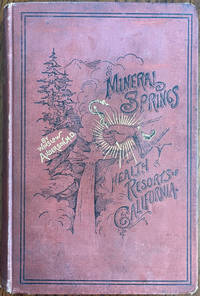
189263204San Francisco CA: The Bancroft Company 1892. Tall 8vo. xxx 384 pp. Woodcut engraved frontisp. bound-in after p. iv woodcut engraved plates & text illustrations throughout. Brick-red pictorial publisher’s cloth cover art illustration of waterfall and California mountains and hand wielding the Rod of Asclepius black ruling gilt lettering & ruling on spine some thumbing edgewear rubbing & minor wear to corners some slight scuffing still VG- bright copy from the libraries of Dr. James W. Yarbrough 1860-1927 longtime general practice physician in and around Obion TN ownership marking on ffep. and Rogers Clark Caldwell 1890-1968 w/ his historic Brentwood House armorial bookplate on front pastedown and trade card for the Geyser Hotel owned by William Moxley in Cloverdale Sonoma County California near the Geyser Springs. Second edition of this well-illustrated and relatively scarce work detailing the chemical composition and the therapeutic health and medical benefits from the wide variety of hot springs and mineral baths across California in the 19th-Century. Details are offered by the author on how the Arrowhead Hot Springs could cure rheumatism and syphilis; Bear Valley kidney & bladder infections Blodgett’s Springs constipation along with mentions of Native Americans finding cures in California mineral waters & geysers. Of additional interest are the several contemporary blue pencil checkmarks presumably made by Dr. Yarbrough of hot springs and mineral springs in Tennessee Kentucky and Arkansas. The majority of Dr. Anderson’s water analyses seem to have been completed by 1888 and often compared to assorted other previous studies. The Bancroft Company, hardcover
186954043Washington D.C.: Government Printing Office 1869. 4to. 9.75 x 11.25 in. 141 3 pp. With table of contents printed on verso of last leaf tipped-in errata slip. With 3 lithograph engravings taken from photographs by E.J. Ward and William Bell lithographed by Julius Bien 71 text engravings. Original printed softcovers very minor chipping head & foot of spine couple minor closed tears dustsoiling w/o rear wrapper still a G mostly uncut & unopened copy. First edition of this in-depth report on surgeries carried out during the Civil War on 270 Union and Confederate soldiers detailing the data and case histories collected by him while detailing the primary intermediate and secondary excisions. The two appendices include tables which summarize the various excisions by Otis as well as providing an extensive bibliography of similar hip surgeries. E.J. Ward and William Bell were photographers at the Army Medical Museum charged with documenting the injuries and results of surgeries by military personnel until 1869. This work is among the earliest examples of engravings taken directly from photographs in a surgical text. Bien 1826-1909 was an outstanding lithographer and cartographer responsible for 1000s of maps issued during the 19th-century as well as a pioneer in chromolithography. Rutkow History of Surgery in the United States Vol. I OR23; Treadwell & Darrah Photographers of the United States of America 2003. Government Printing Office, paperback
184531608Shelbyville Tennessee: m/a 1845. Letter. Good. Bifolium letter. 4 pages. Multiple folds creases and small edge tears to the paper. Signature at bottom is missing a couple of letters from a chip. <br /> <br /> First page used to to discuss subscription fee receipt etc. for the Journal of Medicine. Address for J. & H. G. Langley Astor House Broadway New York publishers of Medical journals and science periodicals and postal mark from Shelbyville Tennessee on the back page. From Rootsweb Ancestry dot com: DR. THOMAS LIPSCOMB one of Bedford County's oldest and best citizens was born in Louisa County Va. July 22 1808 to the marriage of William Lipscomb and Ann Day Cook natives of Spottsylvania and Louisa Counties Va. respectively. The father was killed by a falling tree in January 1829 having been a farmer. The mother attained the ripe age of ninety years and her old age was marked with great vitality. With her own hands she knit over 100 pairs of socks for the Confederate soldiers after she had passed eighty years of age. She lived nearly forty years a widow. The subject of this sketch was reared with his parents on a farm and received a common school education. At the age of twenty-one he went to Winchester Tenn. and began the study of medicine. Thence he attended the Medical University of Pennsylvania at Philadelphia whither he proceeded and returned the most of the way on horseback. After one course of lectures he returned to Franklin County Tenn. where his parents had moved in 1826. In 1831 he came to Shelbyville where he has spent a lifetime in the practice of medicine surgery and obstetrics and has attained eminence in his profession. He has been president of the Medical Society of Tennessee of the Bedford County Medical Society and of the Female Institute at Shelbyville. Since entering into the practice of his profession the honorary title of M. D. has been conferred upon him by the University of Louisville and by the University of Tennessee. He has been successful financially. Since 1855 he has carried on farming. He is the president and largest stockholder of the Victor Mills of Shelbyville and was the president of the Branch Bank of Tennessee at Shelbyville at the opening of the war. The advancement of the schools and churches is due greatly to him. For two years he held the Shelbyville post office the emoluments of which he allowed to the widow of a former postmaster. He is not now actively engaged in the practice but at the age of seventy-three he successfully performed the difficult ovariotomy operation for the first time in his life. He was married May 22 1832 to Rebecca Stevenson who bore him ten children all of whom were raised. This wife died December 6 1880 and he then wedded October 26 1882 Miss Mary A. Cowan. Dr. Lipscomb and wife are members of the Presbyterian Church as was his first wife. Politically he is a Democrat and wields large influence as a worthy citizen of the county. m/a unknown
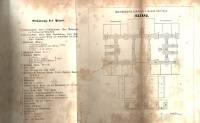
18478901Rastatt: W. Mayer 1847. First edition. Cloth over Boards with original spine gilt lettered. Very Good. Small Octavo pp. xii 236 w/ foldout plate inside back cover of this noted and early mental health facility's floorplan with corresponding index of the building's components. An extremely scarce and important document in mental health care. Gives fascinating insights into a facility which was quite progressive for its time with all the details in its day-to-day administration and its stewardship of those in need of psychiatric care. This is another volume from the library of Dr. Manfred S. Guttmacher a noted forensic psychiatrist and medical historian and one of the architects of the insanity plea. W. Mayer hardcover
187147582Rome: Forzani et C. 1871. First Edition. Folio 33cm.; publisher's tan printed card wrappers; 18pp. Wrapper lightly soiled faint vertical creasing a few tiny chips to spine ele Very Good internally fresh and fine save the crease. Polemical attack on the state of the French university system written in March 1871 two months after the end of the disastrous for the French Franco-Prussian War. As Pasteur argues whereas in Germany universities proliferated across the country France "stymied by revolution was always occupied with the sterile search for a better form of government giving only distracted attention to her institutions of higher learning" p. 9 our translation. At the root of all this was the regime of Napoleon I who in the early years of the 19th century neglected the country's twenty-eight extant institutions of higher learning in favor of his Université de France a disastrously centralized state-run institution that he established in 1808. The University suffered greatly during the Restoration and with it the quality of education so that by 1868 only £8000 were being spent for "true academic purposes" across the country cf. W. Chandler Roberts et al "Journal of the Society for Arts Vol. 32 no. 1655 August 8 1884 p. 905 creating a lacuna of learned and innovative thinkers to match Germany's. Perhaps in order to combat this downward trend Pasteur later founded the Pasteur Institute in 1887 serving as its director until his death in 1895. <br /> <br /> This appears to be the only separate appearance of Pasteur's tract published abroad and distributed to various foreign leading scientific figures among these "Darwin's Bulldog" Thomas Henry Huxley who makes mention of this work in an address delivered in October of that same year. The essay appeared again in print in 1947 following an even more disastrous encounter with Germany in a collection titled "Pour l'Avenir de la Science Française." This publication quite scarce with four physical copies noted in OCLC as of February 2020. COPAC adds one copy at the LEC Library UK. Forzani et C. unknown
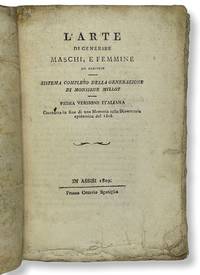
180939<p><strong>Very rare first Italian Edition</strong></p><p><strong>How to choose the gender of a newborn during procreation</strong></p><p><strong>Only 1 know existing copy of this issue recorded in WorldCat Italy</strong></p><p><strong>Untrimmed in its original printer paper binding</strong></p><p>Millot Jacques-André. <em>L'arte di generare maschi e femmine ad arbitrio : sistema completo della generazione / di monsieur Millot. Prima versione italiana corredata in fine di una Memoria sulla Dissenteria epidemica del 1808.</em>In Assisi: presso Ottavio Sgariglia 1809.</p><p>8° 205 x 140 mm contemporary printer paper binding small restorations paper pp. xiv 176 47 1.</p><p><strong>No copy on the market no copy at auction in last 40 years</strong></p><p>First Italian edition of this bizarre treatise dealing with the methods and techniques to choose the gender of the newborn during the procreation and on the formation of the Placenta.</p><p>The original work was translated by the Italian Giovanni Palmieri and dedicated to his friend Antonio Trevisani who was the inspirer of the translation. Upon learning that his friend's wife had given birth to yet another female Palmieri proposed to him the method devised by Jacques-André Millot surgeon-midwife of Marie-Antoinette and the Duchesses of Orleans and Bourbon with which they hypothesized techniques during the conception which would have guided in the choice of the genre of the unborn child and set about the translation with commentary of the work printed in its first absolute edition in Paris in 1800 with the title <em>L'Art de procreÌer les sexes aÌ€ volonteÌ ou SysteÌ€me complet de geÌneÌration par Jacques-AndreÌ Millot</em>.</p><p>The work however is not a mere translation. As stated by Palmieri in the introduction some parts of the original work have been summarized while an extended commentary and some revisions have been implemented.</p><p>In his treatise the author proposes natural methods to choose the gender of the unborn child avoiding the bloody ones suggested in the past such as the removal of a father's testicle before conception. The method in summary theorizes the specialization of the ovaries in the development of one gender rather than another proposing through precise positions during conception to fertilize one ovary or the other according to the desired gender.</p><p>In detail:</p><p>· In the first part of the text the historical theories on generation known at the time are retraced.</p><p>· The second part describes the Placenta its origin and formation the blood circulation in the foetus the phenomenon of superfetation the similarities and dissimilarities between new-borns and parents the ovaries and their functions the uterine tubes.</p><p>· Finally the third part is dedicated to the description of the methods proposed to pre-define the gender of the unborn child. In particular it discusses the way to choose the gender during procreation the experiences and proofs of the functioning of the method ending with the final conclusions.</p><p>The text then continues this is the missing part in the works recorded in WorldCat with the extensive notes and comments of the translator and with the final part dedicated to the<strong> <em>Memoria sulla Dissenteria epidemica del 1808.</em></strong></p><p>"<em>I do not believe I can render a greater service to humanity than to give it the mode of procreating the gender at will; this knowledge would also have its Moral goal: it is I believe the only means of increasing if it is possible the tenderness of the Fathers and Mothers and the attachment of the Children for them because the parents who will have only Children of their choice will see them with continual satisfaction</em> " Millon op. cit.</p><p>Census: University of Chicago Signature 2 xiv 160 pp. Cornell University Library New York Signature 2 xiv 160 pp. Pontificia Università Gregoriana Roma signature xiv 176 47 1.</p><p>World-Cat apparently records only three copies of this title. The two copies present in the United States are however characterized by a different reduced signature compared to the present copy and the one owned by the Gregorian library. The signature of the copies in the US is in fact <strong>pp. 2 xiv 160</strong> with respect to the signature <strong>pp. xiv 176 47 1</strong> of the present copy.</p><p>In fact they are missing the <em>Nota del Traduttore</em> translator's note pp. 161-176 and the first edition of the<strong> <em>Memoria sulla Dissenteria epidemica del 1808 </em>pp. 1-47 of the second part.</strong></p><p><strong>All the other libraries mentioned in WorldCat own an electronic copy of the book.</strong></p><p>Conditions: Small restoration at bindings. Internally an amazing copy with no defect untrimmed.</p> Ottavio Sgariglia
189356120New York & London: G.P. Putnam’s Sons 1893. 12mo. vi 101 1 pp. Brown publisher’s cloth gilt lettering stamped front cover & spine minor shelfwear rubbing NF copy. First edition in English of this scarce and insightful guide for Victorian patients seeking treatments and relaxation at the storied spa town of Carlsbad Karlovy Vary in western Bohemia now the Czech Republic. Kleen was a Swedish physician who believed in the uses of diet massage hydrotherapy and other therapeutic methods for treating patients. He details the different available baths the “terrain cure†through hiking and exercise massage for a therapeutical purpose while gymnastics was another branch of physical therapy. He does emphasize that long standing diseases can take weeks to help cure and that British and American patients arriving with little interest in pursuing the full length of extended time for treatment affect their possible cure. See: Judi Calvert The Relationship Between Doctors and Massage: A Look at the Past Massage Today 2019; Calvert The History of Massage 2002. G.P. Putnam’s Sons, hardcover