14 résultats
18155056Paris: Chez Migneret 1815. Fourth edition. Hardcover. Very Good. 8vo 451 pages untrimmed contemporary boards; x-library <br/><br/>This title was considered one of Boyer's two masterworks. As a surgeon he was appointed the imperial surgeon to Napoleon Bonaparte and family. This edition curiously lacks illustrations. Chez Migneret hardcover
183175811Carey & Lea Philadelphia Pennsylvania 1831. Hardcover. Used - Acceptable. Philadelphia: Carey & Lea 1831. 186 pages. 8.5 x 5.25" leather. 'H.B. Eisberg M.D. His Book' on blank. Leather dry worn upper hinge cracked loose endsheet detached toned G. Carey & Lea, Philadelphia, Pennsylvania hardcover
1869011666356 Strand London: Henry Renshaw 1869. First Edition . Cloth Bound Boards. Very Good/No Jacket. 16mo - over 5¾" - 6¾" tall. First Edition 16mo - over 5¾" - 6¾" tall Black cloth with blind stamp lines and titles to front and back covers gilt titles to spine page edges red. Condition Very Good corners rubbed. A few spots to end papers and half title pagepages slightly toned else good copy. With illustrations throughout. <br/> <br/> Henry Renshaw hardcover
186017483Van Voorst 1860. Book Hardcover. Good. Embossed cloth bumped at corners and spine ends. Frontispiece loose. Some damp staining to plates. Van Voorst hardcover
181245169London W. Bulmer and Co. 1812. 4to. No wrappers as extracted from "Philosophical Transactions" 1812 - Part II. Pp. 206-220 a. 4 engraved plates 1 large and folded showing a fine engravingof Squalus maximus. Faint foxing to plates. <br/><br/><em>A classical taxonomic study of the shark </em> unknown
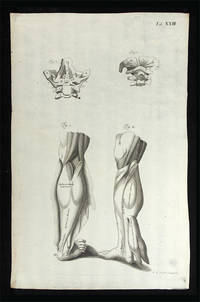
18601561AG1860. o.J. um 1860. Kupferstich. Bildformat: 39 x 25 cm. Blattformat: 43 x 28.5 cm. Leicht knitterfaltig fleckig. unknown
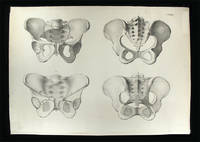
18601560AG1860. o.J. um 1860. Lithographie. Bildformat: 52 x 71.5 cm. Leicht knitterfaltig und fleckig. unknown
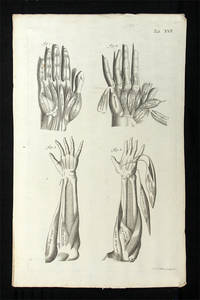
18601563AG1860. o.J. um 1860. Kupferstich. Bildformat: 39.5 x 24 cm. Blattformat: 44.5 x 28.5 cm. Leicht knitterfaltig Rand angestossen. unknown
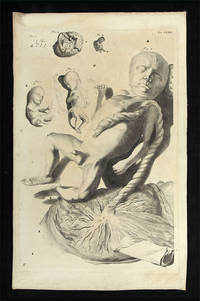
18601562AG1860. o.J. um 1860. Kupferstich. Bildformat: 39 x 25.5 cm. Blattformat: 44 x 28 cm. Leicht stockfleckig knitterfaltig. unknown
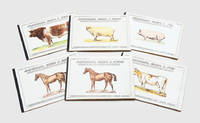
1900188515London: Vinton & Company Ltd c.1900. A set of elaborate moveable books depicting the anatomy of farmyard animals. Each includes five layers of folding colour diagrams showing the skeleton arteries and veins muscles and organs accompanied by a key. It was printed in Bavaria a prestigious centre of moveable books and home to skilled artisanal paper engineers such as Ernest Nister and Lothar Meggendorfer. This is the second edition of the set. Six works oblong quarto. Each 8 pp. and with folding chromolithographic illustration comprising two large overslips and multiple lift-the-flap tabs representing internal anatomy. Original printed boards black cloth backstrips wire-stitched as issued. Foxing toning and soiling to boards and contents wear to backstrips wire-stitches rusted but holding firm outer margins of contents with a few chips and damp stains a handful of neat repairs to folding stubs colours bright: in very good condition. hardcover
182840962London 1828. <p>Parliament. House of Commons. Report from the select committee on anatomy. Folio. 150pp. London: House of Commons 22 July 1828. 331 x 212 mm. 19th century boards rebacked and recornered in calf light edgewear. Very good copy. Old medical library stamp on title and first page.</p> <p>First Edition of this highly interesting and entertaining report on the British body-snatching crisis. Since the mid-eighteenth century obtaining cadavers for teaching purposes had been regulated in Britain by the Murder Act of 1752 which stipulated that only the corpses of executed criminals could be used for dissection. By the beginning of the nineteenth century however improvements in medical science coupled with a substantial drop in the number of executions caused the demand for cadavers to far outstrip the legal supply. This situation was ripe for exploitation by "resurrection men" criminals who robbed the graves of the newly deceased and sold their corpses to teachers of anatomy who of necessity turned a blind eye to the illegality of these transactions. Some grave-robbers even resorted to murder including the infamous William Burke who in December 1828 was arrested in Edinburgh for the murders of over a dozen victims whose corpses he and his partner Hare sold to an anatomical demonstrator connected to Edinburgh University.</p> <p>In the first half of 1828 in response to increasing calls for reform the British Parliament appointed a committee to "enquire into the manner of obtaining subjects for dissection by schools of Anatomy and the State of law affecting persons employed in obtaining and dissecting bodies." During the course of its investigation the committee heard testimony from a wide range of witnesses from eminent medical men to procurers of bodies for medical schools these last identified only by initials. The medical men included Sir Astley Cooper Benjamin Collins Brodie John Abernethy William Lawrence Herbert Mayo Granville Sharp Pattison who himself was indicted for body-snatching at the age of 23 Thomas Southwood Smith Henry Halford John Webster and Benjamin Harrison the treasurer of Guy's Hospital. The witness list can be found on page 13 of the committee's report. The testimony of these men reproduced in full in the report is followed by several appendices including tables of paupers' deaths broken down by parish; the committee was proposing legislation that would allow the state to seize unclaimed corpses from workhouses and sell them to surgical schools. The committee's efforts were successful: In 1832 Parliament passed the Anatomy Act granting licenses to teachers of anatomy and giving physicians surgeons and medical students legal access to corpses unclaimed after death. Wise The Italian Boy: A Tale of Murder and Body Snatching in 1830s London 2004. Garrison-Morton.com 7096.</p> . unknown
1830D7399Italy c. 1830. Hardcover. Very Good. Modern half morocco and marbled boards gilt-stamped lettering and ornament on spine; 430 x 560 mm; contains 26 anatomical drawings in red and grey chalk most of them full-page but also including double-page spreads tipped onto stubs. Spine tips and corners gently bumped; some faint dampstaining; a few leaves with repaired tears. Images of skeletal and muscular representations of arms legs feet torsos and heads. <br/><br/> hardcover
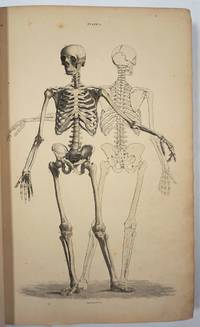
185729295Edinburgh: W.H. Lizars 3 St. James Square; S. Highley 32 Fleet St. London and W. Curry Junr & Co 9 Upper Sackville St. Dublin 1857. Hardcover book. Good overall. Large remarkable plates illustrating the human body skeleton organs circulatory muscular and nervous and lymphatic systems fetal respiratory eyes internal organs. The plates with tissue guards most hand colored engraved by W.H. Lizars. <br /> <br /> Owners signature on ffep "George Edward Rundle 30th September 1889" plus his bookplate on inside front cover. Rundle c. 1846 - 1906 was born in Hampshire England and received his education at the University College London and Edinburgh University qualifying in 1873. He first practiced at Hillston NSW and subsequently at Tenterfield and in Sydney by 1876. In July 1875 he was listed as enrolled on the list of medical practitioners of Tasmania in the Launceston Examiner 29 Jul 1875. He is listed in a government gazette with many degrees including a Fellow of the Royal College of Surgeons in Edinburgh in 1878. After retiring he became a trustee of the Sydney Museum and a member of the Zoological Society and for some time had been president. He died 16 Oct 1906 at 14 Wylde Street Potts Point. He is buried at Waverley Church of England cemetery. <br /> <br /> OCLC 338701549 cites 1 copy at the Univ. of York. <br /> <br /> Folio 26pp Contents 101 plates 241pp text xxxvi indices complete. Brown leather and cloth covers detached but present spine partially perished. Internally very clean. W.H. Lizars, 3 St. James Square; S. Highley 32 Fleet St. London, and W. Curry Junr & Co, 9 Upper Sackville St. Dublin hardcover
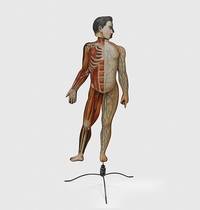
1890179459Peoria Illinois: American Manikin Company 1890. The bare bones of anatomy An educational model depicting male anatomy. It was positioned as a cheaper and more user-friendly alternative to Louis Auzoux's papier-mâché manikins themselves an accessible innovation from earlier wax models. The American Manikin represents a crucial step in the widening accessibility and popularization of anatomy and is a precursor to the mass-produced teaching models of the 20th century. The model is double-sided one face depicting muscles nerves tendons and the spinal column and the other showing muscles veins and bones. The latter face has alphabetically labelled hooks onto which illustrated steel attachments can be affixed. When all the plates are in place the model can be "dissected" by removing each layer in sequence eventually revealing the skeleton. Several of the attachments have additional diagrams on the reverse; for example the attachment illustrating the nerves of the brain also features a diagram of the inner ear on the other side. First produced in 1888 the manikin was designed by Elias Smith 1828-1913 who also published the Atlas of Colored Plates Illustrating Features of Anatomy 1889. Smith was an enterprising businessman who held patents for bicycle saddles and dental equipment. The accompanying advertisement booklet makes extensive reference to the American Manikin's superiority over Auzoux's French model. The attachment for the model's hand is illustrated with the company's calling card. The manikin was issued with 40 attachments of which 24 are present. An accompanying Teachers' Handbook was also produced not present. Wooden model approximately 1070 x 407 mm chromolithographic illustrations affixed to both faces one face with 27 metal hooks. With 24 steel attachments with similar illustrations metal stand comprising base and three attachable legs. Housed in original wooden case 1020 x 510 mm chromolithographic anatomical diagrams printed on inner panels instructional leaflet affixed to same. With 62-page advertisement booklet. Case with near-contemporary postage label of Lewis Bohnett 1880-1970 antique-collector and proprietor of "Trader Lew's Relic Museum" California; "fragile" label dated 1939 to same. Lightly worn from use lacking single hook cockling and a few chips to chromolithographic overlays colours bright; superficial wear to case: in very good condition standing firm. unknown