1 résultat
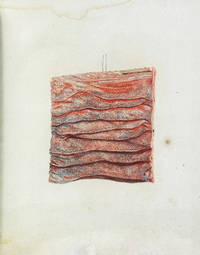
1789120<p>a new era for Anatomical Pathology: The raise of coloured illustrations</p><p>First edition of Bleuland's histological investigation of duodenal tissue</p><p>Bleuland Jan.<em>Icon tunicæ villosæ intestini duodeni juxta felicem vasculorum impletionem. </em><em>Ipsis coloribus qui in præparato conspiciuntur edita. </em>Trajecti ad Rhenum Utrecht: apud B. Wild et J. Altheer 1789.</p><p>4to 21 x 19 cm later paper wrapper pp. 10 2-last leaf blank missing signature AⴠB² B2 blank missing</p><p>1 coloured plate representing a sample of duodenal tissue</p><p>Jan Bleuland 1756-1838 was famous physician professor of Anatomy Physiology Obstetrics and rector of Utrecht University.</p><p>He became famous perfecting a technique of injecting fixatives and dyes into human body soft tissues structures to reveal previously invisible anatomical details. The printed illustrations of the results of his technique are unique in their precision in depicting microscopic information.</p><p>Among Bleuland's greatest achievements was his ability to visualize vascular systems making even the smallest blood vessels perfectly visible preserving in the same time the true colours and texture of the tissues.</p><p>The possibility to obtain detailed and realistic tissue images developed and improved by Bleuland togheter with the work of his colleague the Scottish pathologist Matthew Baillie 1761 – 1823 gave a significant boost to the innovation of anatomical pathology.</p><p>During his brilliant career he carried out more than two thousand preparations and his immense collection of anatomical specimens is now preserved at the Utrecht Medical University.</p><p>"Bleuland focused on the soft parts of human body which involved a much wider spectrum of organs and diseases and posed a different set of problems to technicians in the preparation of the specimens" Meli p.211 op. cit.</p><p>"During his career Bleuland published a number of illustrated anatomical works printed in color showing a special interest in the fine structure of healthy and diseased states of the organs and tunics of the digestive tract. Bleuland made a collection of over two and a half thousand anatomical preparations with the assistance of Petrus Koning whom he had trained as his attendant and as a surgeon from 1800" Meli op.cit.</p><p>Conditions: small restoration at lower margins in general a good copy.</p><p>Provenance: Ownership signature at title page.</p><p>References: Domenico Bertoloni Meli <em>The Rise of Pathological Illustrations: Baillie Bleuland and Their Collections</em> Bulletin of the History of Medicine Volume 89 Number 2 Summer 2015 pp. 209-242 Article; Florian Rodari <em>Anatomie de la couleur</em> 124; <em>James G. Mundies's Cabinet of Curiosite's </em>February 2008; Blake p. 50; not in Waller or Wellcome.</p> B. Wild et J. Altheer