57 résultats
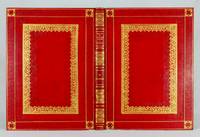
1819ST12549London: Published by Thomas McLean 1819. Second Edition. 368 x 273 mm. 14 1/2 x 10 3/4". 26 leaves of text including 3 pp. ads. Three parts in one volume. <br/> SPLENDID CONTEMPORARY ENGLISH RED STRAIGHT-GRAIN MOROCCO ELABORATELY TOOLED IN GILT AND BLIND covers with concentric filigree frames in alternating gilt and blind tooling raised bands spine panels intricately gilt with two large lozenges formed by rectangular and triangular tools surrounded by curling botanical ornaments turn-ins gilt all edges gilt. In an excellent recent matching morocco-lipped slipcase. WITH 36 VERY APPEALING ILLUSTRATIONS BEING 18 ENGRAVINGS six flowers six fruits six birds EACH IN TWO STATES monochrome and fully hand colored. Dunthorne 53-55; Sitwell "Fine Bird Books" p. 82. Text leaves with faint mottled foxing and minor browning and off-setting just a few plates with negligible faint spots or smudges otherwise A WONDERFUL COPY THE ORIGINAL SPARKLING BINDING IN AN AMAZING STATE OF PRESERVATION.<br/> <br/> This is a sumptuously bound copy of three manuals intended to teach the art of drawing to young persons written by the accomplished botanical painter who produced the renowned "Pomona Britannia." In an earlier career Brookshaw ca. 1751-1823 was a successful London cabinet-maker whose painted Neoclassical furniture attracted such titled enthusiasts as the Duke of Devonshire and the Prince of Wales but he suddenly abandoned this livelihood in the 1790s. Art historian Lucy Wood speculates that the sudden change was prompted by involvement in a financial or sexual scandal as he also parted company with his wealthy wife around this time. He spent a decade living under the name "G. Brown" teaching flower painting to refined young ladies before producing his first manual "A New Treatise of Flower Painting" which was finally issued under his real name in 1816. The three guides that make up the present volume were intended as a supplement to that work and they expand the subjects covered to fruit and birds. In the preface to this work Brookshaw observes that flower painting is a "peculiarly appropriate" accomplishment that may be obtained "without the expense of a Master a few elementary instructions and good copies being sufficient." The plates here are more highly finished than the examples in his original "Treatise" in order to "lead the young artist onward in a progressive line of improvement." Fruits and birds are added to offer a new challenge for the pupil and Brookshaw notes that while avian subjects lack the variety of botanical ones they compensate with "the inifinite number of attitudes they assume." Our elaborate and immaculately preserved binding is testament that our volume was never used as a drawing manual but was more likely enjoyed for its own merits as an attractive object. Published by Thomas McLean unknown
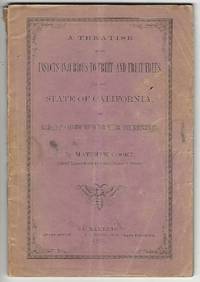
188120560Sacramento: State Office 1881. 72 pp illustrated with small wood engravings in original lavender printed wrappers. Some chipping to spine old tears and tape repairs to back wrapper else very good. Matthew Cooke was in the business of manufacturing fruit boxes in the 1870s when California's apple crop was devastated by Codlin moths. He began studying entomology to find defense against the moths and ensure the security of his business and quickly became an expert on a range of pests affecting California's fruit crops. He was appointed Chief Executive Horticultural Officer of California in 1881. This report prepared at the request of the State Board of Horticultural Commissioners describes the life cycles of the major insects damaging fruit crops moths scale insects mites caterpillars borers aphids etc. and recommends remedies for dealing with each. It also includes the text of new legislation intended to protect and promote the horticultural interests of the State of California. State Office unknown
1847278321847. Very good condition. Shipment of 1789 Pine apples shipped by Samuel Johnson from the Harbour Islands Bahamas to Philadelphia via the British Schooner Magnet with R. Roberts as its master.<br /> <br /> 7 1/2 x 12" 4pp manuscript with signatures and red Customs stamp. unknown
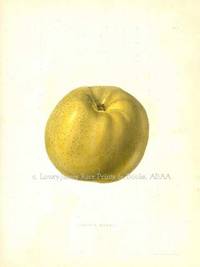
18693545London:: Journal of Horticulture 1869. First printing. Harrison's Annie Elizabeth Apple. A Fine original hand-colored nineteenth century lithograph by botanical artist James Andrews 1801-76. London c. 1869. Archivally matted in Ivory rag mat with gilt French line decoration. Sized to 12 x 15 inches. James Andrews also produced a fine botanical drawing botanical book: Lessons in Flower Painting 1835 and contributed the plates for a popular sentimental flower book of the nineteenth century: Flora's Gems c. 1839. Journal of Horticulture, unknown
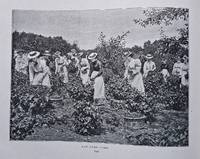
18950218519 Eastcheap London: Sir Joseph Causton & Sons 1895. Very well illustrated very large horizontal octavo pp iv 260 a little age-toned internally a few corners creased otherwise very clean internally re-bound fairly recent in plain brown cloth slightly marked. RARE Despite the opening words of the title the whole book is devoted to an account of the business endeavours of Whiteley. Inspired by an early visit to Crystal Palace he was determined to create a shop where absolutely everything could be purchased and thus eventually was born London's first department store - "Whiteley's" of Bayswater. The book is a detailed account of the model farms created at Hanworth to provide jams potted meats pickles etc for the shop. It is an unsurpassed social and commercial record. Whiteley was shot dead in his shop in 1907. Part of the fortune left in his will was used to create Whiteley retirement village. RARE . First Edition. Cloth. Good. Sir Joseph Causton & Sons Hardcover
1817742London:: Longmans Hurst Rees Orme & Brown 1817. First edition. Fine with original hand-coloring. Fine original hand-colored stipple engraving.Pl. XXIII Smith's Early Newington Buckinghamshire Minion & Barrington Peaches. Large Quarto Edition 11 x 13.5 inches. Pomona Britannica is considered one of the most distinguished pomologies ever produced and is described as "one of the finest colour-plate books in existence." Prideaux. Named for Pomona the Roman Goddess of Fruit and Fruit Trees a pomology is simply a treatise on fruit culture. However there was nothing simple about the intent and execution of this fine work. In an effort to educate the landed country gentleman on the cultivation of fruit George Brookshaw 1751-1823 rendered and described the finest fruit under cultivation in the most esteemed gardens in London and the Royal Gardens particularly around Hampton Court and Kensington. Very little is known about the early years of Brookshaw's life and education. He was born in Birmingham and died an undistinguished death in London. However during the late 18th Century Brookshaw enjoyed significant notoriety as a talented cabinetmaker distinguished by royal patronage. Receipts from the Prince of Wales dating 1783 document the finely painted furniture commissioned from G. Brookshaw. Elegant cabinets tables and chimney pieces were painted with exquisite allegorical scenes bouquets of flowers and abundant cornucopias offering a glimpse into what was to become the hallmark of Brookshaw's talent; elegant and fluid renditions of fruit and flowers. George's talent as an engraver was perhaps influenced by Richard Brookshaw brother an established and talented mezzotint engraver in Paris during the 19th Century. Richard Brookshaw engraved several of the plates for the Folio edition of Pomona Britannica c.1812 however as the last of Richard's engravings are dated 1804 we conclude every one of the plates in this large Quarto edition were engraved by George Brookshaw himself. This edition should not be considered a miniature version of the Folio edition where the fruit is set on dark mezzotint grounds. This large Quarto edition features beautifully hand-colored stipple engravings which float on soft ivory backgrounds. Ref. Dunthorne 55 Christie's 4-97. Longmans, Hurst, Rees, Orme, & Brown, unknown
1817746London:: Longmans Hurst Rees Orme & Brown 1817. First edition. Fine with original hand-coloring. Fine original hand-colored stipple engraving. Pl. XXVII Duke of Marlborough's & Rumbullion Peaches. Large Quarto Edition 11 x 13.5 inches. Pomona Britannica is considered one of the most distinguished pomologies ever produced and is described as "one of the finest colour-plate books in existence." Prideaux. Named for Pomona the Roman Goddess of Fruit and Fruit Trees a pomology is simply a treatise on fruit culture. However there was nothing simple about the intent and execution of this fine work. In an effort to educate the landed country gentleman on the cultivation of fruit George Brookshaw 1751-1823 rendered and described the finest fruit under cultivation in the most esteemed gardens in London and the Royal Gardens particularly around Hampton Court and Kensington. Very little is known about the early years of Brookshaw's life and education. He was born in Birmingham and died an undistinguished death in London. However during the late 18th Century Brookshaw enjoyed significant notoriety as a talented cabinetmaker distinguished by royal patronage. Receipts from the Prince of Wales dating 1783 document the finely painted furniture commissioned from G. Brookshaw. Elegant cabinets tables and chimney pieces were painted with exquisite allegorical scenes bouquets of flowers and abundant cornucopias offering a glimpse into what was to become the hallmark of Brookshaw's talent; elegant and fluid renditions of fruit and flowers. George's talent as an engraver was perhaps influenced by Richard Brookshaw brother an established and talented mezzotint engraver in Paris during the 19th Century. Richard Brookshaw engraved several of the plates for the Folio edition of Pomona Britannica c.1812 however as the last of Richard's engravings are dated 1804 we conclude every one of the plates in this large Quarto edition were engraved by George Brookshaw himself. This edition should not be considered a miniature version of the Folio edition where the fruit is set on dark mezzotint grounds. This large Quarto edition features beautifully hand-colored stipple engravings which float on soft ivory backgrounds. Ref. Dunthorne 55 Christie's 4-97. Longmans, Hurst, Rees, Orme, & Brown, unknown
1817744London:: Longmans Hurst Rees Orme & Brown 1817. First edition. Fine with original hand-coloring. Fine original hand-colored stipple engraving. Pl. XXV Montauban Grosse Mignonne & Old Royal George Peaches. Large Quarto Edition 11 x 13.5 inches. Pomona Britannica is considered one of the most distinguished pomologies ever produced and is described as "one of the finest colour-plate books in existence." Prideaux. Named for Pomona the Roman Goddess of Fruit and Fruit Trees a pomology is simply a treatise on fruit culture. However there was nothing simple about the intent and execution of this fine work. In an effort to educate the landed country gentleman on the cultivation of fruit George Brookshaw 1751-1823 rendered and described the finest fruit under cultivation in the most esteemed gardens in London and the Royal Gardens particularly around Hampton Court and Kensington. Very little is known about the early years of Brookshaw's life and education. He was born in Birmingham and died an undistinguished death in London. However during the late 18th Century Brookshaw enjoyed significant notoriety as a talented cabinetmaker distinguished by royal patronage. Receipts from the Prince of Wales dating 1783 document the finely painted furniture commissioned from G. Brookshaw. Elegant cabinets tables and chimney pieces were painted with exquisite allegorical scenes bouquets of flowers and abundant cornucopias offering a glimpse into what was to become the hallmark of Brookshaw's talent; elegant and fluid renditions of fruit and flowers. George's talent as an engraver was perhaps influenced by Richard Brookshaw brother an established and talented mezzotint engraver in Paris during the 19th Century. Richard Brookshaw engraved several of the plates for the Folio edition of Pomona Britannica c.1812 however as the last of Richard's engravings are dated 1804 we conclude every one of the plates in this large Quarto edition were engraved by George Brookshaw himself. This edition should not be considered a miniature version of the Folio edition where the fruit is set on dark mezzotint grounds. This large Quarto edition features beautifully hand-colored stipple engravings which float on soft ivory backgrounds. Ref. Dunthorne 55 Christie's 4-97. Longmans, Hurst, Rees, Orme, & Brown, unknown
1817745London:: Longmans Hurst Rees Orme & Brown 1817. First edition. Fine with original hand-coloring. Fine original hand-colored stipple engraving. Pl. XXVI Late Admirable Double Mountain & Red Magdalen Peaches. Large Quarto Edition 11 x 13.5 inches. Pomona Britannica is considered one of the most distinguished pomologies ever produced and is described as "one of the finest colour-plate books in existence." Prideaux. Named for Pomona the Roman Goddess of Fruit and Fruit Trees a pomology is simply a treatise on fruit culture. However there was nothing simple about the intent and execution of this fine work. In an effort to educate the landed country gentleman on the cultivation of fruit George Brookshaw 1751-1823 rendered and described the finest fruit under cultivation in the most esteemed gardens in London and the Royal Gardens particularly around Hampton Court and Kensington. Very little is known about the early years of Brookshaw's life and education. He was born in Birmingham and died an undistinguished death in London. However during the late 18th Century Brookshaw enjoyed significant notoriety as a talented cabinetmaker distinguished by royal patronage. Receipts from the Prince of Wales dating 1783 document the finely painted furniture commissioned from G. Brookshaw. Elegant cabinets tables and chimney pieces were painted with exquisite allegorical scenes bouquets of flowers and abundant cornucopias offering a glimpse into what was to become the hallmark of Brookshaw's talent; elegant and fluid renditions of fruit and flowers. George's talent as an engraver was perhaps influenced by Richard Brookshaw brother an established and talented mezzotint engraver in Paris during the 19th Century. Richard Brookshaw engraved several of the plates for the Folio edition of Pomona Britannica c.1812 however as the last of Richard's engravings are dated 1804 we conclude every one of the plates in this large Quarto edition were engraved by George Brookshaw himself. This edition should not be considered a miniature version of the Folio edition where the fruit is set on dark mezzotint grounds. This large Quarto edition features beautifully hand-colored stipple engravings which float on soft ivory backgrounds. Ref. Dunthorne 55 Christie's 4-97. Longmans, Hurst, Rees, Orme, & Brown, unknown
1817747London:: Longmans Hurst Rees Orme & Brown 1817. First edition. Fine with original hand-coloring. Fine original hand-colored stipple engraving. Pl. XXIX Bourdine Nivette or Belle de Vitry Peaches. Large Quarto Edition 11 x 13.5 inches. Pomona Britannica is considered one of the most distinguished pomologies ever produced and is described as "one of the finest colour-plate books in existence." Prideaux. Named for Pomona the Roman Goddess of Fruit and Fruit Trees a pomology is simply a treatise on fruit culture. However there was nothing simple about the intent and execution of this fine work. In an effort to educate the landed country gentleman on the cultivation of fruit George Brookshaw 1751-1823 rendered and described the finest fruit under cultivation in the most esteemed gardens in London and the Royal Gardens particularly around Hampton Court and Kensington. Very little is known about the early years of Brookshaw's life and education. He was born in Birmingham and died an undistinguished death in London. However during the late 18th Century Brookshaw enjoyed significant notoriety as a talented cabinetmaker distinguished by royal patronage. Receipts from the Prince of Wales dating 1783 document the finely painted furniture commissioned from G. Brookshaw. Elegant cabinets tables and chimney pieces were painted with exquisite allegorical scenes bouquets of flowers and abundant cornucopias offering a glimpse into what was to become the hallmark of Brookshaw's talent; elegant and fluid renditions of fruit and flowers. George's talent as an engraver was perhaps influenced by Richard Brookshaw brother an established and talented mezzotint engraver in Paris during the 19th Century. Richard Brookshaw engraved several of the plates for the Folio edition of Pomona Britannica c.1812 however as the last of Richard's engravings are dated 1804 we conclude every one of the plates in this large Quarto edition were engraved by George Brookshaw himself. This edition should not be considered a miniature version of the Folio edition where the fruit is set on dark mezzotint grounds. This large Quarto edition features beautifully hand-colored stipple engravings which float on soft ivory backgrounds. Ref. Dunthorne 55 Christie's 4-97. Longmans, Hurst, Rees, Orme, & Brown, unknown
1817748London:: Longmans Hurst Rees Orme & Brown 1817. First edition. Fine with original hand-coloring. Fine original hand-colored stipple engraving. Pl. XXX Chancellor Catherine & Old Newington Peaches. Large Quarto Edition 11 x 13.5 inches. Pomona Britannica is considered one of the most distinguished pomologies ever produced and is described as "one of the finest colour-plate books in existence." Prideaux. Named for Pomona the Roman Goddess of Fruit and Fruit Trees a pomology is simply a treatise on fruit culture. However there was nothing simple about the intent and execution of this fine work. In an effort to educate the landed country gentleman on the cultivation of fruit George Brookshaw 1751-1823 rendered and described the finest fruit under cultivation in the most esteemed gardens in London and the Royal Gardens particularly around Hampton Court and Kensington. Very little is known about the early years of Brookshaw's life and education. He was born in Birmingham and died an undistinguished death in London. However during the late 18th Century Brookshaw enjoyed significant notoriety as a talented cabinetmaker distinguished by royal patronage. Receipts from the Prince of Wales dating 1783 document the finely painted furniture commissioned from G. Brookshaw. Elegant cabinets tables and chimney pieces were painted with exquisite allegorical scenes bouquets of flowers and abundant cornucopias offering a glimpse into what was to become the hallmark of Brookshaw's talent; elegant and fluid renditions of fruit and flowers. George's talent as an engraver was perhaps influenced by Richard Brookshaw brother an established and talented mezzotint engraver in Paris during the 19th Century. Richard Brookshaw engraved several of the plates for the Folio edition of Pomona Britannica c.1812 however as the last of Richard's engravings are dated 1804 we conclude every one of the plates in this large Quarto edition were engraved by George Brookshaw himself. This edition should not be considered a miniature version of the Folio edition where the fruit is set on dark mezzotint grounds. This large Quarto edition features beautifully hand-colored stipple engravings which float on soft ivory backgrounds. Ref. Dunthorne 55 Christie's 4-97. Longmans, Hurst, Rees, Orme, & Brown, unknown
1817749London:: Longmans Hurst Rees Orme & Brown 1817. First edition. Fine with original hand-coloring. Fine original hand-colored stipple engraving. Pl. XXXIV Murry & Newington Nectarine. Large Quarto Edition 11 x 13.5 inches. Pomona Britannica is considered one of the most distinguished pomologies ever produced and is described as "one of the finest colour-plate books in existence." Prideaux. Named for Pomona the Roman Goddess of Fruit and Fruit Trees a pomology is simply a treatise on fruit culture. However there was nothing simple about the intent and execution of this fine work. In an effort to educate the landed country gentleman on the cultivation of fruit George Brookshaw 1751-1823 rendered and described the finest fruit under cultivation in the most esteemed gardens in London and the Royal Gardens particularly around Hampton Court and Kensington. Very little is known about the early years of Brookshaw's life and education. He was born in Birmingham and died an undistinguished death in London. However during the late 18th Century Brookshaw enjoyed significant notoriety as a talented cabinetmaker distinguished by royal patronage. Receipts from the Prince of Wales dating 1783 document the finely painted furniture commissioned from G. Brookshaw. Elegant cabinets tables and chimney pieces were painted with exquisite allegorical scenes bouquets of flowers and abundant cornucopias offering a glimpse into what was to become the hallmark of Brookshaw's talent; elegant and fluid renditions of fruit and flowers. George's talent as an engraver was perhaps influenced by Richard Brookshaw brother an established and talented mezzotint engraver in Paris during the 19th Century. Richard Brookshaw engraved several of the plates for the Folio edition of Pomona Britannica c.1812 however as the last of Richard's engravings are dated 1804 we conclude every one of the plates in this large Quarto edition were engraved by George Brookshaw himself. This edition should not be considered a miniature version of the Folio edition where the fruit is set on dark mezzotint grounds. This large Quarto edition features beautifully hand-colored stipple engravings which float on soft ivory backgrounds. Ref. Dunthorne 55 Christie's 4-97. Longmans, Hurst, Rees, Orme, & Brown, unknown
18674848Columbus OH: Printed for the Author 1867. First edition. Fair. Duodecimo xvi 80 pages 21 cm; very edgeworn lacks most of spine light tidal mark. <br/><br/>Covers Health Farming Gardening Fruits and Flowers. Not in Bitting. Printed for the Author unknown
1832020438Dublin: William Curry Jun & Company et al 1832. Second editions revised and enlarged of both works 1832; 1834. 12mo pp iv 86; 4 111 both half-titles are present a little age-toning but generally quite clean internally modern black half-leather and marbled boards in very good condition. Gren Lucas' copy with presentation inscription and manuscript letter from the Honourable Katherine Bruce. The Reverend William Hickey better known by his pen name Martin Doyle wrote books and pamphlets mostly aimed at helping poor Irish farmers. Second edition. Half-Leather. Very Good. William Curry Jun & Company (et al) Hardcover
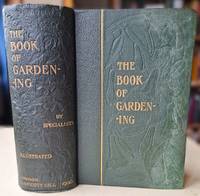
1900023265London: L. Upcott Gill 1900. Well illustrated with over 700 text engravings very thick octavo pp viii 1198 13 pages publisher's advertisements top edge gilt very slight age-toning several pages have been clumsily opened leaving slightly rough edges and occasional very minor loss of page margin page 159/160 has a tear into the text without loss the front hinge is cracked and there is weakness through to page vi due to the extreme weight of the book original publisher's embossed cloth a little bleached on both covers towards the front edge otherwise very good. An amazing book with a great deal of information on just about every aspect of late-Victorian horticulture. SCARCE. A heavy book - extra postage may be necessary. First Edition. Cloth. Good. L. Upcott Gill Hardcover
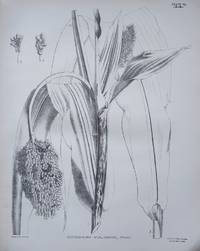
1882020198Roorkee: Department of Agriculture and Commerce 1882. Published 1882 - 1883. Two volumes quarto illustrated with 69 fine botanical line drawn plates by the artist H. Hormusji numbered 1 - 64 5 bis plates including 7 double-page plates pp 87; 63 duplicates from Museum of Science and Art Edinburgh with their small stamp on the title pages and also the stamp of the Cleghorn Memorial Library and the front endpaper and neat stamps on the verso of the plates otherwise clean internally original cloth-backed boards a little worn the spines do not match but they are original. RARE. A third volume was published later but this seems even more elusive. The plates are impressive drawn by H. Hormusji a Parsee artist who apparently trained at Bombay School of Art. First Edition. Cloth-backed boards. Good. Illus. by H. Hormusji. Department of Agriculture and Commerce Hardcover
18782222005<p>Small octavo. illustrations; charts; index. Original green cloth gilt stamped. No dust jacket. Very good short tear head of spine. 128 pages. No signatures or bookplates.</p><p>Includes: A short history of fruits and their value. Instructions as to soils and locations - how to grow from seeds how to bud and graft the making of cuttings pruning best age for transplanting etc.</p> D. M. Dewey hardcover
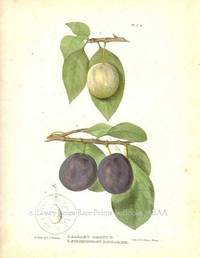
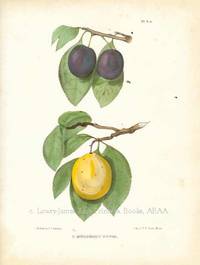
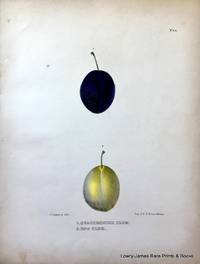
18515027New York:: D. Appleton & Co. 1851. First edition. Fine. A Fine original hand-colored lithograph. Folio 11.25 x 9 inches. Archivally matted to 14 x 17 inches and suitable for framing. Drawn from nature by E. Emmons Jr. drawn on stone by F. J. Swinton and printed by R. H. Pease Albany early depiction of one such variety of the useful and not strictly ornamental fruit being cultivated in national soil during Nineteenth Century America. Single sheet matted in rag board D. Appleton & Co., unknown
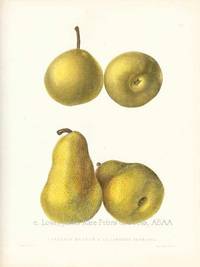
18515032New York:: D. Appleton & Co. 1851. First edition. Fine. A Fine original hand-colored lithograph. Folio 11.25 x 9 inches. In Ivory rag mat and suitable for framing; sized to14 x 17 inches. Drawn from nature by E. Emmons Jr. and engraved and printed by J.I. & R. H. Pease a finely colored early depiction of one such variety of the useful and not strictly ornamental fruit being cultivated in national soil during Nineteenth Century America. Single sheet matted in rag board D. Appleton & Co., unknown
18517005New York:: D. Appleton & Co. 1851. First edition. Fine. A Fine original hand-colored engraving. Folio 11.25 x 9 inches. In Ivory rag mat and suitable for framing; sized to14 x 17 inches. Drawn from nature by E. Emmons Jr. engraved and printed by Gavit & Duthie a finely colored early depiction of one such variety of the useful and not strictly ornamental fruit being cultivated in national soil during Nineteenth Century America. Single sheet matted in rag board D. Appleton & Co., unknown
18515028New York:: D. Appleton & Co. 1851. First edition. Near Fine. A Near Fine original hand-colored lithograph. Folio 11.25 x 9 inches. Archivally matted to 14 x 17 inches and suitable for framing. Drawn from nature by E. Emmons Jr. drawn on stone by F. J. Swinton and printed by R. H. Pease Albany an early depiction of one such variety of the useful and not strictly ornamental fruit being cultivated in national soil during Nineteenth Century America. Single sheet matted in rag board D. Appleton & Co., unknown
18517144New York:: D. Appleton & Co. 1851. First edition. Near Fine. A Near Fine original hand-colored lithograph. Folio 11.25 x 9 inches. Archivally matted to 14 x 17 inches and suitable for framing. Drawn from nature by E. Emmons Jr. drawn on stone by F. J. Swinton and printed by R. H. Pease Albany an early depiction of one such variety of the useful and not strictly ornamental fruit being cultivated in national soil during Nineteenth Century America. Single sheet matted in rag board D. Appleton & Co., unknown
18517007New York:: D. Appleton & Co. 1851. First edition. Fine. A Fine original hand-colored lithograph. Folio 11.25 x 9 inches. In Ivory rag mat and suitable for framing; sized to14 x 17 inches. Drawn from nature by E. Emmons Jr. engraved and printed by Gavit & Duthie a finely colored early depiction of one such variety of the useful and not strictly ornamental fruit being cultivated in national soil during Nineteenth Century America. Single sheet matted in rag board D. Appleton & Co., unknown
18517006New York:: D. Appleton & Co. 1851. First edition. Fine. A Fine original hand-colored lithograph. Folio 11.25 x 9 inches. In Ivory rag mat and suitable for framing; sized to14 x 17 inches. Drawn from nature by E. Emmons Jr. engraved and printed by Gavit & Duthie a finely colored early depiction of one such variety of the useful and not strictly ornamental fruit being cultivated in national soil during Nineteenth Century America. Single sheet matted in rag board D. Appleton & Co., unknown
18515044New York:: D. Appleton & Co. 1851. First edition. Near Fine. A Fine original hand-colored stipple engraving. Folio 11.25 x 9 inches. In Ivory rag mat and suitable for framing; sized to14 x 17 inches. Drawn from nature by E. Emmons Jr. and engraved and printed by J.I. & R. H. Pease a finely colored early depiction of one such variety of the useful and not strictly ornamental fruit being cultivated in national soil during Nineteenth Century America. Single sheet matted in rag board D. Appleton & Co., unknown