Leclerc, Georges-Louis de BuffonBiblio.com

183 résultats
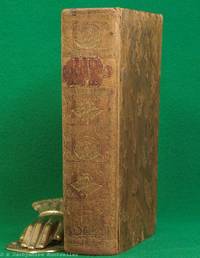
179988102BB1799 . Paris: F. Dufart An VIII 1799. Gr.-8°. 388 S. 1 Titelblatt-Vignettenstempel. 22 Kupfertaf. Pappband. Auf Bütten. Einband rötlich gemustert. Gedrucktes Rückenschild aufgeklebt. Bibliotheksex.; Stempel auf Titelblatt; altersmässig gebräunt; etwas stockfleckig; Seitenränder und Schnitt angestaubt; durchwegs am Rande alte Wasserflecken; Einband beschabt; Kante vorne etwas verletzt und berieben; Einband beschabt; Ecken bestossen; Rücken nachgedunkelt mit leichten Kniffspuren; Kapital oben rechts verletzt unten mit schmaler Fehlstelle Georges-Louis Leclerc de Buffon 1707-1788 französischer Naturforscher. Aus dem Inhalt: Giraffe - Faultiere - Hamster - Känguru - Lama - Maki - Mangusten - Ratten - Wüstenspringmäuse. unknown
179988103BB1799 . Paris: F. Dufart An VIII 1799. Gr.-8°. 387 2 S. 1 Titelblatt-Vignettenstempel. 19 Kupfertaf. Pappband. Auf Bütten. Einband rötlich gemustert. Gedrucktes Rückenschild aufgeklebt. Bibliotheksex.; Stempel auf Vorsatz und Titelblatt; Besitzervermerk auf Vorsatz; altersmässig gebräunt; Schnitt angestaubt; wenig stockfleckig; Einband beschabt; Rücken nachgedunkelt und etwas abgeplatzt; Kapital oben und unten mit kleinen Läsuren Georges-Louis Leclerc de Buffon 1707-1788 französischer Naturforscher. Aus dem Inhalt: Axishirsche - Büffel - Dromedar - Kamel - Schafe - Tapir - Yak - Zebra - Zebu unknown
179988094BB1799 . Paris: F. Dufart An VIII 1799. Gr.-8°. 369 2 S. Titelblattvignette. 20 gestochene Taf. Pappband. Auf Bütten. Einband rötlich gemustertes Papier. Gedrucktes aufgeklebtes Rückenschild. Bibliotheksexemplar; Stempel auf Vorsatz; Gedrucktes Besitzerschildchen auf Vorsatz; altersmässig gebräunt und etwas stockfleckig; Seitenränder angestaubt; Einband beschabt: Kanten berieben; Ecken bestossen; Fehlstelle Kapital unten; Kapital oben mit kleinen Läsuren; Scharnier vorne etwas gelöst Georges-Louis Leclerc de Buffon 1707-1788 französischer Naturforscher zur Zeit der Aufklärung. Folgende Tiere sind in diesem Band beschrieben und abgebildet: Dachs - Damwild - Eichhörnchen - Feldhase - Fuchs - Hirsch - Kaninchen - Katze - Marder - Otter - Wolf unknown
179988104BB1799 . Paris: F. Dufart An VIII 1799. Gr.-8°. 350 S. 1. 1 Titelblatt-Vignettenstempel. 9 Kupfertaf. Pappband. Auf Bütten. Einband rötlich gemustert. Gedrucktes Rückenschild aufgeklebt. Bibliotheksex. Stempel auf Vorsatz und Titelblatt; Eingeklebter Besitzervermerk auf Vorsatz; Schnitt angestaubt; angegraut durch alten Wasserschaden von Buchdeckel innen bis S. 56; altersmässig stark gebräunt und wenig stockfleckig; Einband vorne stark beschabt; Rücken nachgedunkelt. Kapital unten verletzt oben mit kleiner Läsur; Kanten berieben; Ecken bestossen; 1 Ecke vorne rechts fehlt Georges-Louis Leclerc de Buffon 1707-1788 französischer Naturforscher. Aus dem Inhalt: Elefant - Erdferkel - Krallenaffen - Nashorn - Opossum. unknown
1791DBZ1024<b>The System of Natural History written by the celebrated Buffon carefully abridged; with additional extracts from other writers. By M. de Buffon. Perth: R. Morrison 1791 <i>bound with</i> The Natural History of Insects compiled from Swammerdam Brookes Goldsmith &c. Perth: R. Morrison 1792. </b><br /><br /><b>Leather over boards. pp vol I 2 blank frontispiece i title page iii-x 211 with 16 numbered and 6 un-numbered plates; vol. II 1 title page 184 with 23 numbered plates; 1 title page 2 contents 210 with 20 numbered plates. 8.5 x 5.5 inches approx. 217mm x 136mm. </b><br /><br /><b><i>Bears the armorial bookplate of John Jeane Coney. </i></b><br /><br /><b>Later full leather binding with gilt decoration to spine and gilt tooling to edges. Binding somewhat worn cracking to hinges front hinge split to lower and upper but holding firm; partial loss of label. Front free endpaper holed to upper margin; occasional light foxing but generally pages and plates remarkably clean throughout. </b><br /><br /><b>Overall showing wear to binding but otherwise a nice clean copy.</b><br /><br /><b>International shipping rates are estimated and may incur an extra charge prior to order fulfilment. Books are despatched via Royal Mail International Tracked/Signed; please enquire for an accurate shipping quote to your country.</b><br /> R. Morrison hardcover
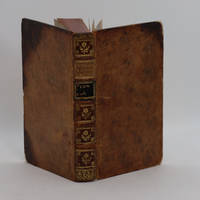
1774FB640 /6A<p>Full leather binding black title plate. Gilt floral design on the spine. The <strong><em>Histoire Naturelle générale et particulière avec la description du Cabinet du Roi</em></strong> English: <em>Natural History General and Particular with a Description of the King's Cabinet</em> is an encyclopaedic collection of 36 large quarto volumes written between 1749–1804 initially by the Comte de Buffon and continued in eight more volumes after his death by his colleagues led by Bernard Germain de Lacépède. The books cover what was known of the "natural sciences" at the time including what would now be called material science physics chemistry and technology as well as the natural history of animals. <strong>Georges-Louis Leclerc Comte de Buffon</strong> 7 September 1707 – 16 April 1788 was a French naturalist mathematician cosmologist and encyclopédiste. His works influenced the next two generations of naturalists including two prominent French scientists Jean-Baptiste Lamarck and Georges Cuvier. Buffon published thirty-six quarto volumes of his <em>Histoire Naturelle</em> during his lifetime with additional volumes based on his notes and further research being published in the two decades following his death. Ernst Mayr wrote that "Truly Buffon was the father of all thought in natural history in the second half of the 18th century". Credited with being one of the first naturalists to recognize ecological succession he was later forced by the theology committee at the University of Paris to recant his theories about geological history and animal evolution because they contradicted the Biblical narrative of Creation. Buffon held the position of <em>intendant</em> director at the Jardin du Roi now called the Jardin des Plantes. Buffon's <em>Histoire naturelle générale et particulière</em> 1749–1788: in 36 volumes; an additional volume based on his notes appeared in 1789 was originally intended to cover all three "kingdoms" of nature but the <em>Histoire naturelle</em> ended up being limited to the animal and mineral kingdoms and the animals covered were only the birds and quadrupeds. "Written in a brilliant style this work was read . by every educated person in Europe". Those who assisted him in the production of this great work included Louis-Jean-Marie Daubenton Philibert Guéneau de Montbeillard and Gabriel-Léopold Bexon along with numerous artists. Buffon's <em>Histoire naturelle</em> was translated into many different languages making him one of the most widely read authors of the day a rival to Montesquieu Rousseau and Voltaire. In the opening volumes of the <em>Histoire naturelle</em> Buffon questioned the usefulness of mathematics criticized Carl Linnaeus's taxonomical approach to natural history outlined a history of the Earth with little relation to the Biblical account and proposed a theory of reproduction that ran counter to the prevailing theory of pre-existence. The early volumes were condemned by the Faculty of Theology at the Sorbonne. Buffon published a retraction but he continued publishing the offending volumes without any change. In the course of his examination of the animal world Buffon noted that despite similar environments different regions have distinct plants and animals a concept later known as Buffon's Law. This is considered to be the first principle of biogeography. He made the suggestion that species may have both "improved" and "degenerated" after dispersing from a center of creation. In volume 14 he argued that all the world's quadrupeds had developed from an original set of just thirty-eight quadrupeds. On this basis he is sometimes considered a "transformist" and a precursor of Darwin. He also asserted that climate change may have facilitated the worldwide spread of species from their centres of origin. Still interpreting his ideas on the subject is not simple for he returned to topics many times in the course of his work. Buffon considered the similarities between humans and apes but ultimately rejected the possibility of a common descent. He debated with James Burnett Lord Monboddo on the relationship of the primates to man Monboddo insisting against Buffon on a close relationship. At one point Buffon propounded a theory that nature in the New World was inferior to that of Eurasia. He argued that the Americas were lacking in large and powerful creatures and that even the people were less virile than their European counterparts. He ascribed this inferiority to the marsh odours and dense forests of the American continent. These remarks so incensed Thomas Jefferson that he dispatched twenty soldiers to the New Hampshire woods to find a bull moose for Buffon as proof of the "stature and majesty of American quadrupeds". In <em>Les époques de la nature</em> 1778 Buffon discussed the origins of the solar system speculating that the planets had been created by a comet's collision with the sun. He also suggested that the Earth originated much earlier than 4004 BC the date determined by Archbishop James Ussher. Basing his figures on the cooling rate of iron tested at his Laboratory the Petit Fontenet at Montbard he calculated that the age of the earth was 75000 years. Once again his ideas were condemned by the Sorbonne and once again he issued a retraction to avoid further problems.</p> De L'Imprimerie Royal. Paris. hardcover
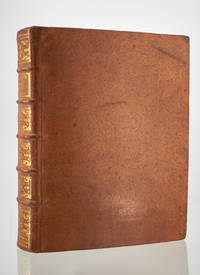
173574286Paris & Genève Geneva: Chez Debure l'aînéChez les héritiers Cramer et Frères Philibert 1735. Fine. Chez Debure l'aîné Chez les héritiers Cramer et Frères Philibert Paris & Genève Geneva 1735 et 1744 19 x 25 cm 2 ouvrages reliés en un volume First edition of the French translation of these two texts by Stephen Hales. The translation of the first work originally entitled Vegetable Staticks published in 1727 is the first text published by Buffon. The translation of the second work originally issued under the title Haemastaticks in 1733 is by François Boissier de Sauvages. Our copy is complete with its 20 engraved figures on 10 folding plates for the first text and its folding plate at the end for the second. Contemporary full speckled blond sheep spine in five raised bands richly decorated with gilt compartments rolls and fleurons with a havana morocco title label marbled endpapers all edges speckled red. Headcap and two corners skilfully restored. A few leaves slightly browned. Rare French first editions of these two texts by Hales founder of modern experimental physiology. The Statique des végétaux describes one hundred and twenty-four experiments on plant physiology. Buffon precedes it with an important préface du traducteur in which he praises not only Hales Je ne connais rien de mieux dans son genre et le genre par lui-même est excellent. but above all scientific experiment emblematic of the emergence of modern science: Amassons-donc toujours des expériences et éloignons nous s'il est possible de tout esprit de système du moins jusqu'à ce que nous soyons instruits . c'est cette méthode que mon auteur a suivie ; c'est celle du grand Newton ; c'est celle que Messieurs de Verulam Galilée Boyle Sthall Stahl ont recommandée et embrassée c'est celle que l'Académie des Sciences s'est fait une loi d'adopter . The plates executed with great finesse depict the machines devised notably his famous water apparatus and the processes used by Hales to demonstrate the circulation of sap and the production of gases in the plants he studied. The second treatise following the research of William Harvey and Marcello Malpighi deals with blood circulation. It is in this work that Hales recounts his experiment on arterial pressure using one of his inventions a precursor of the sphygmomanometer. Chez Debure l'aînéChez les héritiers Cramer et Frères Philibert hardcover
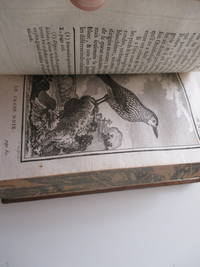
177514583AB1775. Volume 5 and 6. Paris L'Imprimerie Royale 1775 17 : 95 cm. With 30 engraved plates. Contemorary calf spine richly gilt back label. The plates show birds in their natural invirement at the river at the sea in the countryside etc. - Some minor stains otherwise fine. unknown