287 résultats
1842022833Paris: L. Curmer 1842. 1842 - 1843. Two volumes large thick octavo very well illustrated with many fine engraved portraits plans and plates including 32 coloured plates of a very fine quality pp xxiv416; 462 ii one plate is foxed otherwise very clean internally apart from the endpapers which are a little marked becoming a little weak internally; the fore-edge uneven contemporary publisher's green pebble cloth gilt decorated spines very slightly worn. With the book label of the Sussex historian Lindsay Fleming Aldwick Grange. . Cloth. Good. L. Curmer Hardcover
1843000000000005373New York: Herald Buildings 1843. Limited First Edition . Soft cover. Very Good. 4to - over 9¾" - 12" tall. Two soft bound volumes atttached to leather boards. Faint agriculture bulletin on spine This consists of two volumes First being Manures: a Prize Essay Published by the Massachusetts Society for the Promotion of Agriculture 1843 Boston Samuel N Dickinson Written by Samuel L Dana 56-38p. True first not 1844 as listed by others The Bommer book is 56-86pErrata No of Register 3884 to John W Lincoln Worcester signed by Bommer Also has a yellow cover at front "New Edition" Improved and Greatly Enlarged of the Bommer Method of Making Manure by Professor Eli Ives M. D. This has a 1843 date <br/> <br/> Herald Buildings paperback
18637358Naples:: Napoli Presso 1863-79. First Edition. Fine. Fine original hand-colored lithograph by Raimondo Petraroja after drawing by A. di Lorenzo. Folio. Sheet: 16 3/8 x 11 3/4 inches. Image size: 10 x 9 inches. Sheet: 16 3/8 x 11 3/4 inches. Image size: 10 x 9 inches. Publisher's blind stamp lower center under caption as issued. Archivally double matted in sage green/gilt French mat sized to 16 x 20 inches. An whimsical scene displaying the reproductive habits of the female Common Surinam toad or star-fingered toad. Set on leafy shore in pursuit of a fluttering butterfly overhead multiple fully-formed toads emerge from honeycombed crevices on the mother's back. While little is known of the artist or lithographer the editor Giovanni Boschi 1863-79 biographer of the famed French Naturalist Georges Louis LeClerc Comte de Buffon was clearly inspired by Buffon's encyclopedic knowledge and imaginative presentation of the natural world as well as the work of artists such as John James Audubon in the creation of his own naturalists' compendium; a massive 8 volume popular zoological atlas; a work compiled from the most recent works of Italian and foreign zoology; all set in their native surroundings. Single sheet matted in rag board Napoli Presso, unknown
1895171321895-1930. Hardcover. Very good end paper name stamps some pages lightly toned. The title on the spine is descriptive only and was added by the binder. A unique book in dark green boards with gilt spine lettering containing articles bulletins etc. 700 pages total. The contents are from 1895 to 1930. A list of contents handwritten on the pastedown. Contents are The technology of New York State Timbers; Timber: An Elementary Discussion of the Characteristics and Properties of Wood; The Identification of Furniture Woods; The Identification of Important North American Oaks; Guidebook for the Identification of Woods used for Ties and Timbers; Mechanical Properties of Woods Grown in the U. S. ; Utilization of Black Locust. A heavy book additional postage may be required. ; Photographs graphs charts drawings. . hardcover
1888DEMO016381IParis: E. Plon Nourrit et Cie ca. 1888. First edition. Hardcover. Good. Oblong octavo 47 pages pictorial cloth occasonal spotting to leaves margin tear. Quite Scarce. <br/><br/>Crafty specialized in horses and coaches. He wrote and illustrated his books. He was also the first major poster artist to draw directly on lithographic stones. One of his earlier books. E. Plon Nourrit et Cie hardcover
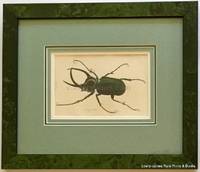
18356926Edinburgh:: WH Lizars 1835. First edition. Fine. A fine original hand-colored steel engraving with bright original hand-coloring. 6.75 x 4.25 inches 10.8 x 17.15 cm. Beautifully framed in Malachite burl frame with deep turquoise blue-green french matting. This engraving is classified as one of the finest natural history miniatures produced during the mid-nineteenth century. A refined and intelligent work The Naturalist's Library was created for everyone with an interest in the natural world. Sir William Jardine 1800-1847 noted Scottish Ichthyologist and Ornithologist combined the talents of his colleagues; Edward Lear Prideaux John Selby William Swainson to contribute to The Naturalist's Library. The intention of the series was to create a fine yet affordable work describing and illustrating all elements of the natural world save botany. In addition several plates were engraved after noted artists: John James Audubon John Gould and Maria Sibylla Merian. The success of the publication was apparent by the production of forty subsequent volumes. The engraver of the work was William H. Lizars who at the time produced the first ten plates of John James Audubon's magnum opus the Double Elephant Folio Edition of The Birds of America. For The Naturalist's Library Lizars engraved the miniature plates in steel opposed to copper to render meticulously detailed settings for each described species. Traditionally only the major subject either bird animal insect or fish was individually painted with watercolor the background remained uncolored. This work has withstood the test of time and continues to be a fine and affordable option to the lavish engraved work of many natural history masters. Archivally Framed WH Lizars, unknown
1864019589London: Dulau & Co 1864. Quarto pp 20 60 plates of which one is coloured clean internally original printed soft cloth bruised wrinkled and marked the spine fraying and lacking a portion at the base with a small hand-written totle label. The Hartland Library copy with labels and manuscript notes attached to the front endpapers and stamp on the verso ot the title page. RARE and equally rare to be found in any better condition than this. The Library was formed by Edwin Sydney Hartland and was a diverse but major collection of herbals archaeology and anthropology. It was donated to Gloucestershire County Council in 1936 and was eventually dispersed around 2010. Philibert Charles Berjeau 1845-1927 was a natural history illustrator and lithographer active in London in the late Victorian era. His subjects varied widely including mammals reptiles and especially birds as well as fossils. Berjeau's father was an author editor and engraver. He followed in his father's footsteps with a skill in engraving. He started to publish his own engravings at an early age about 17 with a book of drawings of dogs 1863 soon followed by another on horses 1864. In 1866 he collaborated with his father on Beggars Rogues and Vagabonds: he made the drawings and his father engraved them. Philibert Charles Berjeau made illustrations for the British Museum of Natural History and for the journal of the Geological Society of London. He made a sketch of the Sumatran rhinoceros which gave birth in Charles William Rice's stables on Commercial Road in December 1872. He worked as an illustrator for Robert Falcon Scott's S.S. Discovery expedition of 1901-1904 and the National Arctic Expedition of 1907-1912. First Edition. Soft Cloth. Good. Dulau & Co Paperback
1850BOOKS075221ILeipzig: Arnoldische Buchhandiung 1850. HC. good- paper covered boards spine repair hardcover SEE NOTES. 20 lithograph plates. First published in 1832 discusses fossil plants with illuatrations and descriptions including some new species. Images available - ask for link. 89pp. Arnoldische Buchhandiung unknown
186116662London: John Murray 1861. Hardcover. Good. Author left America for Africa in 1855 and spent four years studying the animals and people of the equatorial regions. xviii & 479 numbered pages 74 illustrations listed including fold-out map at end and fold-out gorilla illustration facing the title page. Bound in 3/4 leather with five raised bands gold decoration and title on spine marbled boards green endpapers. The 15x19" map laid in at the end has an 8" tear and part of the margin on one side is missing. Light foxing on several pages crease on front free endpaper. and rubbing on board edges. Book is straight and tight with no markings. Included is a one page handwritten and SIGNED letter from du Chaillu dated April 51896 accepting an invitation to dinner on the 7th at the Booksellers League meeting in New York. The Booksellers League was begun in 1895. Not available for international shipping. <br/><br/> John Murray hardcover
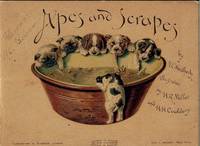
1890009939London & New York: Hildesheimer & Faulkner / Geo. C. Whitney 1890 16 pgs including covers unpaginated. Color printed card covers with string binding light edge wear faint owner's name on cover a few finger marks but clean overall. Contains the verses Kittens' Lesson and Apes and Scrapes. I believe the cover and one illustration of kittens is by H H Couldery and the rest are by H R Miller possibly early work by H R Millar The artwork for both verses is amusing featuring humanized animals all in color. Not in Necker. One copy located on Worldcat at Princeton University. . Card Covers. Very Good/No Jacket. Illus. by H H Couldery Henry Horatio & H R Miller Harold Robert Millar. Oblong 16mo. Hildesheimer & Faulkner / Geo. C. Whitney hardcover
18898149z1889. Hardcover. Good. Gd. condition - pages unmarked some wear to cover solid binding Splendid full and part page monochrome illustrations throughout. A manual upon the scoring of exhibition fowls: Intented to meet the wants of the general breeder and the exhibitor as well as the professional judge . A98149z hardcover
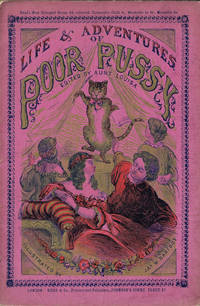
1867011099<p>London: Read & Co. 1867 Circa 1867. Color pictorial covers with illumination printed on violet paper mounted on linen spine worn some loss to lower cover occasional marks but clean overall. A cat recounts the troubles of her life and how she eventually came to her present pleasant situation. The tale is told in verse and illustrated with and-colored engravings. Rare with only two institutional copies located. Not in Necker. Date based on publisher's name and address they operated as Read & Co until 1867 having merged with Brooks in 1868 to become Read & Brooks. . Pictorial Wraps. Good Plus/No Jacket. Illus. by Jas W Barfoot. Small 4to.</p> Read & Co.
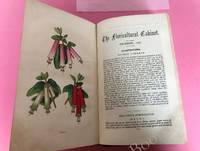
1856035042London: Simpkin and Marshall 1856. Book. Illus. by C.W. Harrison. Very Good. Hardcover. First Edition. 8vo 13 X 21cm. Two volumes handsomely bound by Sotheran Sackville Street London years 1855 and 1856. pp332 Volume 1855 with 12 highly attractive hand-coloured plates all with tissue guards very clean slight toning to just a few pages no inscriptions or annotation. pp 372 and bound to the back the pp33 Gardener's and Naturalist's Almanack 1856. Half leather bindings by Sotheran gilt decoration and lettering to spine title label to each volume some loss of colour to the spines but with lustre and strong no cracking. A very good pair with fine bright plates and some in text diagrams. Simpkin and Marshall Hardcover
18094805London:: George Shaw and E. Nodder 1809. First edition. Fine condition with original bright hand-coloring. . A Fine and rare original hand-colored copperplate engraving by Frederick Polydore Nodder and/or his son Richard Polydore Nodder from The Naturalist's Miscellany. Octavo 6 x 9.5 inches 15.24 x 24.13 cm. Includes the original text in both English and Latin by George Shaw MD FRS. The Naturalist's Miscellany distinguished by the refined hand-colored copperplate engravings and astute naturalists' observations was aptly named as a diverse naturalists' compendium of the birds mammals reptiles insects fish and crustacean identified by seventeenth and eighteenth century naturalists spanning the globe particularly around the South Seas. Many of nature's most fascinating and unusual creatures were discovered during this period several of which were introduced through The Naturalist's Miscellany. Doctor George Shaw 1751-1813 Fellow of the Royal Society cofounder of the Linnaean Society as well as Zoologist of the British Museum contributed the text. Publication of the Naturalist's Miscellany ceased with his death in 1813. Upon the death of the artist FP Nodder 1770-1800 his wife Elizabeth and their son Richard Polydore Nodder 1793-1820 contributed artistically and editorially to the publication. Indeed a family affair both Frederick Polydore Nodder and his son Richard produced every one of the plates. A gifted and distinguished naturalist Frederick P. Nodder was the preferred Botanical Painter to Her Majesty Queen Charlotte. His early skills as botanical and animal draughtsman and engraver were honed from his association with Sir Joseph Banks who employed Nodder to complete and engrave the drawings from the sketchbooks of the late Sydney Parkinson. Parkinson accompanied Banks as botanical draughtsman aboard Captain James Cook's The Endeavor in 1771. Parkinson died on the return of this South Seas Voyage. These engravings along with the natural history collections of the British Museum were the basis for the mastery of the Naturalist's Miscellany. Frederick's son Richard P. Nodder a gifted animal painter in his own right was distinguished as botanic painter to King George III. At the time of its creation The Naturalist's Miscellany was highly coveted as a definitive natural history offering and as was the custom the work was issued in installments between 1790 and 1813. Each volume was dedicated by permission and dutifully inscribed to the most devoted patrons and contributors of the natural historical pursuits of eighteenth and early nineteenth century Britain: Queen Charlotte Sir Joseph Banks Thomas Pennant Esq. The Universities of Oxford and Cambridge The Trustees of the British Museum to name a few. Andrews1986 Blunt 151Coats 25 Sitwell FBB 142 Wood 482. Copyright: Lowry-James Rare Prints & Books 1/09. Archivally matted in jasmine green rag mat sized to 12 x 16 inches. George Shaw and E. Nodder, unknown
18094457London:: George Shaw and E. Nodder 1809. First edition. Fine condition with original bright hand-coloring. . A Fine and rare original hand-colored copperplate engraving by Frederick Polydore Nodder and/or his son Richard Polydore Nodder from The Naturalist's Miscellany. Octavo 6 x 9.5 inches 15.24 x 24.13 cm. Includes the original text in both English and Latin by George Shaw MD FRS. The Naturalist's Miscellany distinguished by the refined hand-colored copperplate engravings and astute naturalists' observations was aptly named as a diverse naturalists' compendium of the birds mammals reptiles insects fish and crustacean identified by seventeenth and eighteenth century naturalists spanning the globe particularly around the South Seas. Many of nature's most fascinating and unusual creatures were discovered during this period several of which were introduced through The Naturalist's Miscellany. Doctor George Shaw 1751-1813 Fellow of the Royal Society cofounder of the Linnaean Society as well as Zoologist of the British Museum contributed the text. Publication of the Naturalist's Miscellany ceased with his death in 1813. Upon the death of the artist FP Nodder 1770-1800 his wife Elizabeth and their son Richard Polydore Nodder 1793-1820 contributed artistically and editorially to the publication. Indeed a family affair both Frederick Polydore Nodder and his son Richard produced every one of the plates. A gifted and distinguished naturalist Frederick P. Nodder was the preferred Botanical Painter to Her Majesty Queen Charlotte. His early skills as botanical and animal draughtsman and engraver were honed from his association with Sir Joseph Banks who employed Nodder to complete and engrave the drawings from the sketchbooks of the late Sydney Parkinson. Parkinson accompanied Banks as botanical draughtsman aboard Captain James Cook's The Endeavor in 1771. Parkinson died on the return of this South Seas Voyage. These engravings along with the natural history collections of the British Museum were the basis for the mastery of the Naturalist's Miscellany. Frederick's son Richard P. Nodder a gifted animal painter in his own right was distinguished as botanic painter to King George III. At the time of its creation The Naturalist's Miscellany was highly coveted as a definitive natural history offering and as was the custom the work was issued in installments between 1790 and 1813. Each volume was dedicated by permission and dutifully inscribed to the most devoted patrons and contributors of the natural historical pursuits of eighteenth and early nineteenth century Britain: Queen Charlotte Sir Joseph Banks Thomas Pennant Esq. The Universities of Oxford and Cambridge The Trustees of the British Museum to name a few. Andrews1986 Blunt 151Coats 25 Sitwell FBB 142 Wood 482. Copyright: Lowry-James Rare Prints & Books 1/09. Archivally framed in green mat w/ silver neoclassical frame conservation glass sized to 13 x 17 inches. George Shaw and E. Nodder, unknown
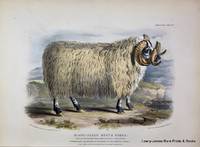
18426997London:: Longman Brown Green & Longman 1842. First edition. Near Fine condition in original color. Supplementary Pl. III. Black-faced Heath Breed. Ram 3 years old bred by Mr. Thomas Robertson Broomlea. County of Peebles. A scarce original hand-painted lithograph; drawn & printed on stone by Fairland from a drawing by Mr. Nicholson R.S.A. Member of the Royal Scottish Academy after a painting by Mr. Sheils R.S.A Folio 16.75 x 12 inches. Professor David Low 1786-1859 was a Professor of Agriculture at the University of Edinburgh who created this series to document the pure bred domestic animals of the British Isles in an effort to educate both the landed gentry and common breeders on the importance of selective breeding of animals in their natural environment. Unlike the traditional nineteenth century animal paintings- which often accentuated the useable portions of the beast to glorify the breeder- Professor Low 's animal portraits of the prized breeds were accurately rendered in their actual and appropriate environment as an attestment to fine animal husbandry. In addition the animals are set in lovely nineteenth century British pastoral or mountain settings thus making the appeal of the work twofold: as a fine work of animal portraiture as well as a fine classic landscape. Wood 442 H. Buchanan Nature into Art. Matted in Rag Board Longman, Brown, Green & Longman, unknown
186186513New York: Derby & Jackson. Very Good; Heavy 2 Volume Set. 1861. First Edition. Leather. GORGEOUS DECORATIVE BOARDS WITH NEW LOVELY LEATHER SPINE STRIPS WITH RAISED BANDS AND GILT LETTERING! . Derby & Jackson hardcover
1879244697Paris: Au Siege De La Societe 1879. First Edition. Softcover. Good copies all in original stiff card wrappers with some wear and tear as with age. Remains well preserved overall; bright and clean. Physical description; 30 volumes; Contents; Janvier 1879 Février-Mars 1879 Avril 1879 Mai 1879 Juin 1879 Juin-Juillet 1879 Aout 1879 Décembre 1879 Janvier 1878 Février 1878 Mars 1878 Avril 1878 Mai 1878 Juin 1878 Juillet-Aout 1878 Septembre-Octobre 1878 Janvier 1876 Fevrier 1876 Mars 1876 Avril 1876 Mai 1876 Juin 1876 Juillet 1876Aout 1876 Septembre 1876 Octobre 1876 Novembre 1876 Décembre 1876. Janvier 1880 Février-Mars-Avril 1880 Mai 1880 Juin 1880.Subjects; Société Protectrice des Anumaux Reconnu. Bulletins. 19th century. Paris: Au Siege De La Societe paperback
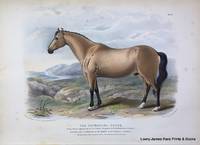
18406998London:: Longman Orme Brown Green & Longmans 1840. First edition. Near Fine condition in original color. Minor foxing. . Folio 16.75 x 12 inches. Plate IV The Connamara Horse. Gelding 13 1/2 hands high from the County of Galway the property of Mr. John Bindon Scott of Cahircon. A scarce original hand-colored lithograph by Fairland from a drawing by Mr. Nicholson R.S.A Member of the Royal Scottish Academy after a painting by Mr. Sheils R.S.A. The Connamara Horse or Pony originates from Ireland and is known as an excellent show horse due to its versatility athleticism and good disposition. Professor David Low 1786-1859 was a Professor of Agriculture at the University of Edinburgh who created this series to document the pure bred domestic animals of the British Isles in an effort to educate both the landed gentry and common breeders on the importance of selective breeding of animals in their natural environment. Unlike the traditional nineteenth century animal paintings- which often accentuated the useable portions of the beast to glorify the breeder- Professor Low 's animal portraits of the prized breeds were accurately rendered in their actual and appropriate environment as an attestment to fine animal husbandry. In addition the animals are set in lovely nineteenth century British pastoral or mountain settings thus making the appeal of the work twofold: as a fine work of animal portraiture as well as a fine classic landscape. Buchanan Nature into Art; Nissen ZBI 2564; Wood 442. Matted in Rag Board Longman, Orme, Brown, Green & Longmans, unknown
18417000London:: Longman Orme Brown Green & Longmans 1841. First edition. Near Fine condition in original color. Minor foxing. . Plate IX. The Polled Suffolk Breed. Cow 6 years old bred by Mr. Richard England Binham Abbey from the stock of Mr. Reeve Weighton Norfolk. A scarce original hand-colored lithograph drawn on stone and printed by Fairland from a drawing by Mr. Nicholson R.S.A. Member of the Royal Scottish Academy after a painting by Mr. Sheils R.S.A. Folio 16.75 x 12 inches. Professor David Low 1786-1859 was a Professor of Agriculture at the University of Edinburgh who created this series to document the pure bred domestic animals of the British Isles in an effort to educate both the landed gentry and common breeders on the importance of selective breeding of animals in their natural environment. Unlike the traditional nineteenth century animal paintings- which often accentuated the useable portions of the beast to glorify the breeder- Professor Low 's animal portraits of the prized breeds were accurately rendered in their actual and appropriate environment as an attestment to fine animal husbandry. In addition the animals are set in lovely nineteenth century British pastoral or mountain settings thus making the appeal of the work twofold: as a fine work of animal portraiture as well as a fine classic landscape. Buchanan Nature into Art; Nissen ZBI 2564; Wood 442. Matted in Rag Board Longman, Orme, Brown, Green & Longmans, unknown
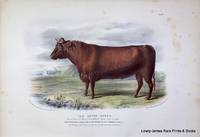
18416999London:: Longman Orme Brown Green & Longmans 1841. First edition. Near Fine condition in original color. Minor foxing. . Plate X. The Devon Breed. Bull aged 2 years and 9 months bred by Mr. Denny Egmoor County of Norfolk. A scarce original hand-colored lithograph drawn on stone and printed by Fairland from a drawing by Mr. Nicholson R.S.A. Member of the Royal Scottish Academy after a painting by Mr. Sheils R.S.A. Folio 16.75 x 12 inches. The Devon- known as Devon Ruby or Red Ruby is an ancient breed of cattle from the western English county of Devon. Professor David Low 1786-1859 was a Professor of Agriculture at the University of Edinburgh who created this series to document the pure bred domestic animals of the British Isles in an effort to educate both the landed gentry and common breeders on the importance of selective breeding of animals in their natural environment. Unlike the traditional nineteenth century animal paintings- which often accentuated the useable portions of the beast to glorify the breeder- Professor Low 's animal portraits of the prized breeds were accurately rendered in their actual and appropriate environment as an attestment to fine animal husbandry. In addition the animals are set in lovely nineteenth century British pastoral or mountain settings thus making the appeal of the work twofold: as a fine work of animal portraiture as well as a fine classic landscape. Buchanan Nature into Art; Nissen ZBI 2564; Wood 442. Matted in Rag Board Longman, Orme, Brown, Green & Longmans, unknown
18427001London:: Longman Orme Brown Green & Longmans 1842. First edition. Near Fine condition in original color. Minor foxing. . Folio 16.75 x 12 inches. Plate XV- The Fifeshire Breed. Cow 6 years old the Property of Mr. B. Ferney of Kilmux bred by Mr. Anderson Kiuglassie. A scarce original hand-colored lithograph drawn on stone and printed by Fairland from a drawing by Mr. Nicholson R.S.A. Member of the Royal Scottish Academy after a painting by Mr. Sheils R.S.A. Folio 16.75 x 12 inches. Fifeshire Breed was a Scottish breed not surpassed by any other in the kingdom in the properties of grazing and yeilding milk. Professor David Low 1786-1859 was a Professor of Agriculture at the University of Edinburgh who created this series to document the pure bred domestic animals of the British Isles in an effort to educate both the landed gentry and common breeders on the importance of selective breeding of animals in their natural environment. Unlike the traditional nineteenth century animal paintings- which often accentuated the useable portions of the beast to glorify the breeder- Professor Low 's animal portraits of the prized breeds were accurately rendered in their actual and appropriate environment as an attestment to fine animal husbandry. In addition the animals are set in lovely nineteenth century British pastoral or mountain settings thus making the appeal of the work twofold: as a fine work of animal portraiture as well as a fine classic landscape. Buchanan Nature into Art; Nissen ZBI 2564; Wood 442. Matted in Rag Board Longman, Orme, Brown, Green & Longmans, unknown
18513380Boston: C. C. Little & Jas. Brown and Hovey & Co 1851. First Edition . Half-Leather. Very Good. 4to - over 9¾" - 12" tall. Marbled boards with gilt trim Gilt title on spine 7viii-xii4100pdepilluscolorribbed. Hinge pulling page 57. 1851 date copyright page Subscribers list page ix and x. 48 color plates with tissue guard. Thin split on spine with exposed leather No other date on copy right page <br/> <br/> C. C. Little & Jas. Brown, and Hovey & Co hardcover
18407002London:: Longman Orme Brown Green & Longmans 1840. First edition. Near Fine condition in original color. Minor foxing. . Plate 8- Galloway Breed. Heifer 3 years old the property of the Right Honourable the Countess of Selkirk. Bull 4 years old bred by Mr. Marshall. St. Mary's Isle Kircudbrightshire. A scarce original hand-colored lithograph drawn on stone and printed by Fairland from a drawing by Mr. Nicholson R.S.A. Member of the Royal Scottish Academy after a painting by Mr. Sheils R.S.A. Folio 16.75 x 12 inches. Originating in seventeenth century Scotland the Galloway is a long established breed of beef cattle. Professor David Low 1786-1859 was a Professor of Agriculture at the University of Edinburgh who created this series to document the pure bred domestic animals of the British Isles in an effort to educate both the landed gentry and common breeders on the importance of selective breeding of animals in their natural environment. Unlike the traditional nineteenth century animal paintings- which often accentuated the useable portions of the beast to glorify the breeder- Professor Low 's animal portraits of the prized breeds were accurately rendered in their actual and appropriate environment as an attestment to fine animal husbandry. In addition the animals are set in lovely nineteenth century British pastoral or mountain settings thus making the appeal of the work twofold: as a fine work of animal portraiture as well as a fine classic landscape. Buchanan Nature into Art; Nissen ZBI 2564; Wood 442. Matted in Rag Board Longman, Orme, Brown, Green & Longmans, unknown