DARWIN, CharlesBiblio.com

881 résultats
187169501London: John Murray 1871. Full Description:<br> <br> DARWIN Charles. The Descent of Man and Selection in Relation to Sex. With illustrations. London: John Murray 1871.<br> <br> First edition first issue with "transmitted" appearing as the first word on p. 297 of Volume I with printer's imprint on the verso of the half-title of Volume II and with twenty-five errata seventeen for Volume I and eight for Volume II on the verso of the title leaf to Volume II and with the leaf pp. ix-x containing Darwin's note on "a serious and unfortunate error" tipped in leaf after p. viii in Volume II. Two small octavo volumes 7 1/2 x 4 15/16 inches; 191 x 126 mm Volume II is 5 mm shorter than volume I. viii 423 1 printer's imprint 16 publisher's ads; viiiix-x "Postscript" 475 1 printer's imprint 16 publisher's ads pp. The 16 pages of publisher's advertisements at the end of each volume are both dated January 1871 . Wood-engraved text illustrations.<br> <br> Original green cloth with covers stamped in blind and spines stamped and lettered in gilt. Black-coated endpapers. Head and tail of spines with some minor shelf-wear. Corners slightly bumped. Some very light rubbing to board edges. Some minor bubbling to cloth of front board of volume II. Front inner hinge of volume I with a mostly closed crack holding firm. Previous owner's armorial bookplate on front pastedown of volume II. Some minor pencil markings to volume I otherwise very clean inside. Overall an exceptional set.<br> <br> The first issue of 2500 copies was published on February 24 1871 and the second of 2000 copies in March. "The book in its first edition contains two parts the descent of man itself and selection in relation to sex. The word 'evolution' occurs for the first time in any of Darwin's works on page 2 of the first volume of the first edition that is to say before its appearance in the sixth edition of The Origin of Species in the following year. The last chapter is about sexual selection in relation to man and it ends with the famous peroration about man's lowly origin the wording of which differs slightly in the first edition from that which is usually quoted" Freeman p. 129.<br> <br> "In the Origin Darwin had avoided discussing the place occupied by Homo sapiens in the scheme of natural selection stating only that 'light will be thrown on the origin of man and his history.' Twelve years later he made good his promise with The descent of man in which he compared man's physical and psychological characteristics to similar traits in apes and other animals showing how even man's mind and moral sense could have developed through evolutionary processes. In discussing man's ancestry Darwin did not claim that man was directly descended from apes as we know them today but stated simply that the extinct ancestors of Homo sapiens would have to be classified among the primates; however this statement as misinterpreted by the popular press caused a furor second only to that raised by the Origin" Norman Library. This title created almost as much sensation as his Origin of Species. In it he elaborated further on his views adding sexual selection and using the word 'evolution' for the first time.<br> <br> Milestones of Science 48. Freeman Darwin 937. Garrison-Morton 170. Norman Library 599.<br> <br> HBS 69501.<br> <br> $5500. John Murray unknown
186016363London: John Murray 1860. Third edition 1st printing 10th Thousand. With 14 text woodcuts. Original publisher’s cloth front cover a bit worn; interior very good. Second edition later issue tenth thousand with new preliminaries and a postscript at the end of the preface the final definitive text with extensive revisions from its first appearance of Darwin’s first published work which chronicles his historic five-year voyage on the Beagle to Brazil Argentina Tierra del Fuego Chile Peru the Galapagos Islands New Zealand Australia and other countries and islands along the way. This journey was the most important event in Darwin’s intellectual life. The appearance of this record was a turning point in the history of biological science and marked the beginnings of a whole new conception of the origin of the various species of life on earth.<br /> <br /> Freeman 20. John Murray unknown
186255642Paris Guillaumin et Cie Victor Masson et Fils 1862. 8vo. Bound partly uncut with the original wrappers in a very nice later full calf pastiche binding with four raised band and richly gilt spine. Gilt boarders to boards. Small repair to upper right corner of title-page not affecting text. An exceptionally fine and clean copy. LXIV incl. half-title I-XXIII 24- 712. pp. and 1 folded plate between pp.160 a. 161. <br/><br/><em>The scarce first edition of the controversial first French translation - bound partly uncut and with the original wrappers - of Darwin's masterpiece one of the most important books ever printed. This famed translation - done by self-taught female scholar - ended up causing quite a stir and adding to the theory of evolution some for Darwin quite unforeseen interpretations. Because of this the translator Clémence Royer gained notoriety as one of the leading eugenicists of the time. Darwin was very eager to have his work published in French. It is not known exactly how he happened on Royer as the translator but as she was familiar with the works of Lamarck and Malthus immediately realized the importance of Darwin's work and also had close connections to the French publisher Guillaumin she must have seemed perfect for the job. She had a naturalist help her with the biologically technical parts and made an excellent job of the translation. There was one big problem however - she went well beyond her role as a translator and added a 60-page preface and numerous explanatory footnotes that Darwin had not seen before publication. In the preface she challenged the belief in religious revelation she discussed the application of natural selection to the human race and she presented a pure eugenic theory explaining the negative consequences of protecting the weak and the infirm. She also promoted her concept of progressive evolution which had more in common with the ideas of Lamarck than with those of Darwin. Right after having seen the translation Darwin wrote in a letter to the American botanist Asa Gray: "I received 2 or 3 days ago a French translation of the Origin by a Madelle. Royer who must be one of the cleverest & oddest women in Europe: is ardent deist & hates Christianity & declares that natural selection & the struggle for life will explain all morality nature of man politicks &c &c!!!. She makes some very curious & good hits & says she shall publish a book on these subjects & a strange production it will be."After some reflection however Darwin began having more serious doubts and about a month later he wrote to the French zoologist Armand de Quatrefages: "I wish the translator had known more of Natural History; she must be a clever but singular lady; but I never heard of her till she proposed to translate my book." He had now also read the footnotes and wrote to Joseph Hooker: "Almost everywhere in Origin when I express great doubt she appends a note explaining the difficulty or saying that there is none whatever!! It is really curious to know what conceited people there are in the world."Freeman No 655 Freeman does not mention the plate which is present here. </em> hardcover
1865185092St Petersburg: Prince A. S. Golitsyn 1865. Russian evolution Scarce first edition in Russian of Darwin's first published book celebrated as the genesis of his theory of evolutionary biology. Among the earliest translations of the Voyage in any language this edition attests to Darwin's popularity in Tsarist Russia. Like Britain and France Russia was a centre of pre-Darwinian research on evolutionary theory. The Darwinian evolution proved immediately popular as young scientists and radical social philosophers employed it to establish their independence from religious conservatives in the traumatic aftermath of the Crimean War. The Voyage of the Beagle was originally published in 1839. This translation was produced by Andrei Beketov 1825-1902 the botanist and evolutionary theorist who had also produced the first Russian translation of the Origin in 1864. Beketov's wife Elisaveta 1834-1902 was a prolific translator in her own right and it is now widely accepted that she collaborated with her husband on this translation. A variant of the famed diagram of the Galapagos finches is on page 206 of Volume II. 2 vols small octavo 160 x 106 mm pp. viii 540 2; iv vi 466. Engraved portrait frontispiece to vol. I wood-engraved illustrations in the text. Recent blue quarter calf spines lettered and ruled in gilt marbled paper sides and endpapers edges sprinkled blue. Later blue ink library marks to final leaf verso of vol. II. Japanese tissue repair to upper inner corner of frontispiece. Light rubbing minor foxing and damp staining to contents: a very good copy. Freeman F2383.1-2. unknown
1871TS381London: John Murray 1871. 1st Edition . Hardback. Fine. 8vo. half-title with printers imprint to the verso viii ii postscript 475 i pp 16pp John Murray cataloge dated January 1871 the first issue. A really fine binding with no wear fading bumping or marks The gilt titles are fine with no rubbing or loss. The end-papers are fine with no cracking marks or labels. The verso of the title-page has the errata list as called for in the first issue. The preliminaries are heavily foxed as are the last pages of the rear catalogue. The text block is tight and clean with just an occasional small blemish. PLEASE EMAIL FOR PHOTOS. The boards are 195mm. Foxing to the adverts is often found in this volume which lower quality paper being used than the text block. <br/> <br/> John Murray hardcover
1860758605<p>This is a first American edition second state from 1860. Three Reviews. Some staining to pages and spine. Some light damage to edges. P/O's name on first page otherwise No Markings to text. Happy to provide more pictures or answer in questions!.</p> D. Appleton and Company hardcover
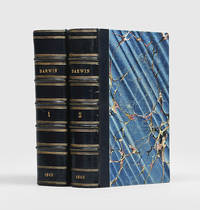
1871006663London: John Murray 1871. First edition first printing. Quarter leather. This is the first edition first impression of Charles Darwins The Descent of Man and Selection in Relation to Sex his first book to apply the term evolution - in a striking contemporary fine binding. <br /> <br />The binding features quarter calf over marbled paper-covered boards with blind tooled transitions between the boards and calf corners and spine. The spine features raised gilt-decorated bands framed by double gilt rules a black title panel and gilt devices adorning undecorated compartments. The boards endpapers and page edges are all marbled in a matching nonpareil combed pattern creating a compelling aesthetic consistency. <br /> <br />First impression of the first edition is confirmed by issue points; in Volume I transmitted is the first word on p.297; Volume II has errata on the title page verso seventeen errata for Volume I and eight for Volume II and a tipped-in Postscript at unpaginated pp. ix-x referring to errors which were reset for the second issue. The sixteen pages of advertisements for Murrays standard works are not present removed when the book was rebound as were the half-title leaves. <br /> <br />Condition is very good overall. Despite overall toning the calfs original red mostly settling to brown and scuffing the exceptional contemporary bindings are square clean tight and original with no sign of repair restoration or hinge failure. The first impression contents are bright with light spotting primarily confined to the first and final leaves. The sole previous ownership mark is the same name and date of January 1878 inked on the upper right corner of each blank leaf recto preceding the title page. Given that the subject blank leaves were added when the book was finely bound it follows that the binding was commissioned during or before January 1878. <br /> <br />On the Origin of Species 1859 fomented a reorientation that would eventually supplant dogmatic creationist hierarchy with rationalistic naturalist biology. But in Origin Darwin had said little about how his ideas applied to human beings. In The Descent of Man and Selection in Relation to Sex Darwin argued that all creatures are subject to the same natural laws. Man still bears in his bodily frame the indelible stamp of his lowly origin. And in Descent the cause was finally given its enduring name. On page two of Volume I Darwin wrote these great classes of facts afford as it appears to me ample and conclusive evidence in favour of the principle of gradual evolution. This is the first time the word evolution is thus applied in his published work. Descent posited the theory Darwin called sexual selection and attempted to set forth a naturalistic explanation for the mind and for moral behavior. That Darwins conceptions continue to both fuel rational debate and fervid ire testifies to their fundamental impact. That many of his concepts are settled theory testifies to their empirical insight and veracity. <br /> <br />This particular set is not only an artifact of landmark scientific thought but also testimony to Victorian era bibliophilic history craft and sensibilities. "BOUND BY MUDIE is printed on the lower front free-end paper versos. Charles Edward Mudie 1818-1890 founded a circulating library that served a wide middle-class audience who could not afford the exorbitant price of new books making literature significantly more accessible to the public. By 1852 he had over 25000 subscribers. Between 1853 and 1862 Mudie is said to have added almost 960000 volumes to his stock in hand thus becoming one of the major distributors of fiction in Britain at the time. His business also serviced readers overseas shipping tin trunks of books to India Cape Colony Egypt and other British colonies. The glee occasioned by the arrival of Mudie's shipments was playfully commented upon by W. S. Gilbert in Bab Ballads when he wrote: 'New boxes come from across the sea / from Mr. Mudie's Libraree'. ODNB. <br/><br/> John Murray hardcover
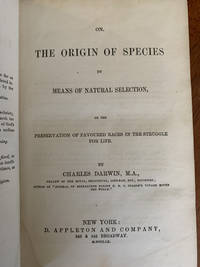
186068677New York: D. Appleton and Company 1860. Full Description:<br> <br> DARWIN Charles. On the Origin of Species by Means of Natural Selection or the preservation of favoured races in the struggle for life. New York: D. Appleton and Company 1860.<br> <br> First American edition third issue. "Revised Edition" on title-page and three quotations to verso of half-title. Octavo 7 11/16 x 4 7/8 inches; 196 x 125 mm. 1-432 pp. With folding chart.<br> <br> Original pebbled brown cloth with covers decoratively stamped in blind. Spine lettered in gilt. Green-coated endpapers. A very slight bit of fraying to top and bottom of the spine. Spine lightly sunned. Previous owner's pencil signature on front free endpaper. And an old ink gift inscription dated 1895 on front flyleaf. Some intermittent light foxing. Housed in a custom full black morocco clamshell. Overall a very good unrestored copy.<br> <br> One of the most influential scientific works of the nineteenth century On the Origin of Species was and still is one of the most controversial. The book caused an uproar immediately upon its publication and many early copies were burned in protest of its author's ideas. In it "Darwin not only drew an entirely new picture of the workings of organic nature; he revolutionized our methods of thinking and our outlook on the natural order of things. The recognition that constant change is the order of the universe had been finally established and a vast step forward in the uniformity of nature had been taken" Printing and the Mind of Man.<br> <br> Although published the same year as the second English edition the text of the first American edition with the two stereo reprints of the same year is identical to the first English edition Freeman 373 with the whale-bear story surviving intact.<br> <br> Freeman 376 "the most important biological book ever written". Grolier/Horblit 23b "the most influential scientific work of the nineteenth century"; Printing and the Mind of Man 344b first edition.<br> <br> Freeman Darwin 379. Printing and the Mind of Man 344.<br> <br> HBS 68677.<br> <br> $6000. D. Appleton and Company unknown
1871889P6London: John Murray 1871. First edition. Leather. Good. 7" by 5". Not Stated. The first edition of one of the most important scientific works to ever be published Charles Darwin's introduction to his theory of evolution. The first edition Volume I is the first issue with 'transmitted' as the first word to page 297 in Volume I changed to 'when' in later issues. Volume II is the second issue with titles to the verso of the title pages rather than errata. In two volumes.Illustrated with in-text engravings.Collated both volumes have been rebound without the half-titles errata leaf to Volume II and publisher's adverts.One of the most important scientific works to ever be published 'The Descent of Man' lays out Charles Darwin's theories on sexual selection and human evolution. It was this work which first broached Darwin's theory of evolution also being the first time the word was in print in any of his works on page 2 of Volume I. In a half calf binding with marbled paper to the boards. Externally rubbed. Light bumping to the extremities with a small amount of loss of leather to the head and tail of the spine. A few minor marks heavier to the front joint of Volume I. Small crack to the rear joint of Volume I. Front hinges are starting but firm. Internally firmly bound. Pages are bright and clean with the occasional scattered spot and handling mark including spots to the endpapers. Good John Murray hardcover
1896189921New York: D. Appleton and Company 1896-97. A finely bound set of the first collected edition The Authorized edition. This was the first serious attempt towards a uniform collection an idea that was not comprehensively achieved until the late 20th-century. There was no collected edition published during Darwin's lifetime. Together 12 works in 15 vols octavo 196 x 133 mm. Illustrated with photographic half-tone plates folding maps line drawings and diagrams. 20th-century red half morocco by Asprey spines lettered in gilt red cloth sides marbled endpapers top edges gilt the rest uncut. In fine condition. hardcover
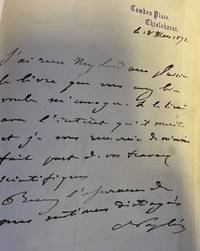
1862176464Paris: Guillaumin et Cie Victor Masson et Fils 1862. With an autograph letter signed by the woman Darwin judged "one of the cleverest" in Europe First edition in French translated and edited by the self-taught theorist feminist and author Clémence Royer 1830-1902 together with a loosely inserted autograph letter signed by her. Her lengthy preface and extensive footnotes pre-staged the rise of social Darwinism and anticipated several of the issues Darwin himself would later consider in the Descent of Man 1871. After reading Royer's edition Darwin judged her "one of the cleverest & oddest women in Europe" Darwin Correspondence Project. The French philosopher Renan went further deeming her "almost a man of genius". Although Royer had no scientific training she worked closely with the naturalist René-Édouard Claparède 1832-1871 to ensure that her translation of Darwin's biology was technically accurate. However Royer transcended the typically passive role expected of female translators and took a considerably more active engagement in the final text - a move seen at the time as a distinctly masculine one. Assuming an editorial capacity she outlined her own interpretation of Darwinian science bullishly exploring consequences that Darwin had carefully left out and adding a Lamarckian slant to his theories. In this she was among the first to publicly draw eugenicist conclusions from Darwin's work. France had been particularly resistant towards Darwinian science in part because of Lamarck's continuing grip on its biological thought. By positioning Darwin as a defender of Lamarckian inheritance Royer became a prominent albeit unsystematic champion of Darwinian ideas in France. Darwin later chose to retain Royer for the second edition indicating she claimed that she understood the thrust of his thought better than most. In the enclosed autograph letter Royer writes to Alphonse de Calonne 1818-1902 the founder of the Revue Contemporaine to arrange a meeting regarding the publication of her novel Les Jumeaux d'Hellas 1864. Together 2 items: i octavo 175 x 111 mm. Folding lithographed plate facing p. 160; ii bifolium 130 x 105 mm written across 16 lines on the first page with Royer's embossed initials at the head. Contemporary black pebble-grain calf spine lettered in gilt and ruled in blind marbled endpapers. Near-contemporary critical pencil annotation to outer margin of pp. 107 and 341. Light rubbing moderate browning and foxing to contents two central gatherings a little proud: a very good copy. Freeman 655. unknown
1866155699London: John Murray 1866. The extensively revised Origin Fourth edition of "the most important biological book ever written" Freeman one of 1500 copies. The text was significantly altered from previous editions representing the second largest increase in the Origin. The fourth edition also corrects the date of the Origin's initial publication given on the verso of the half-title from 1 October to 24 November 1859. Octavo. Folding diagram facing p. 130. With 32 pp. publisher's advertisements dated April 1867 at rear. Original green pebble-grain cloth spine lettered and decorated in gilt covers blocked in blind Freeman's variant c no priority dark green endpapers Edmond & Remnants binder's ticket on rear pastedown. Contemporary ownership signature of Samuel Oldham Lees on half-title likely the landowner 1832-1879 later bookplate on front pastedown A. Oldham Lees of Strathspey. Head of spine and inner hinges restored. Spine ends and corners bumped extremities rubbed cloth clean a few leaves creased from reading book block cracked at pp. 432-33. A very good copy. Freeman 385. hardcover
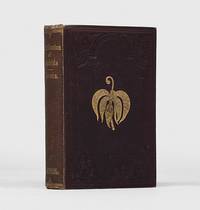
1862167295London: John Murray 1862. In support of natural selection First edition of Darwin's first book following the Origin of Species. This monograph on the structure and function of orchid flowers was "the first of the volumes of supporting evidence" for natural selection Freeman. The print run is estimated at no more than 2000 copies and it is the only Darwin title issued by Murray between 1859 and 1910 not bound in the characteristic green cloth. Orchids is "a methodological masterclass in the scientific use of history showing how homologies between flower parts - these had been elucidated by previous botanists - allow us to model past evolutionary events. Throughout the book Darwin showed how natural selection can create exquisite co-adaptations between plants and animals and in so doing it founded the science of pollination ecology. He was even able to make predictions based on understanding that the extraordinary morphology of orchid flowers is co-adapted to the morphology and behavior of their pollinating species. Orchids was the first of the botanical books which Darwin published from 1862 all of which 'exalted' plants and showed how closely linked to animals they are. It appeared in May 1862 and there were probably only 2000 copies printed. Although highly praised by botanists at the time it never sold well" Freeman the public remaining more interested in the controversy of evolution than the details. Octavo. Folding woodcut plate of the Orchis mascula facing p. 18 33 woodcuts within text. With 32 pp. publisher's advertisements dated September 1871 at rear. Original plum fine diaper-grain cloth Freeman's variant b spine lettered and decorated in gilt covers ornamentally panelled in blind front cover with centrally gilt-stamped orchid motif brown coated endpapers. Cloth entirely unrestored and binding tight and square spine sunned extremities gently rubbed inner hinges tender but holding firm contents clean: a very good copy indeed. Freeman 800; Norman 595. hardcover
1892142075Cambridge: Privately Printed 1892. Hardcover. Very good. Folio. Cloth-backed boards. Four illustrations drawn within the text in pencil; text printed only on the rectos. Original owner's inscription to the title page: "Joseph A. Daniel/Christ's College/Cambridge". Minor amount of wear to the edges of the boards. Ex-libris of Richard Freeman bibliographer of Charles Darwin initialed by him with notes of cost on ffep. An exceptionally rare item with fantastic provenance. COPAC lists three copies at Cambridge the Natural History Museum and the Royal Botanic Gardens Kew; no copies have come up at auction. It is unclear as to who has done the illustrations in this copy; the copy held at Cambridge has similar drawings with some variations. Perhaps the illustrations were all done by hand by the authors though this isn't explicitly stated anywhere in the book. There are references to Charles Darwin throughout this work most notably on f.42 where a letter from Charles Darwin to Joseph Hooker is quoted. 1892 Privately Printed hardcover
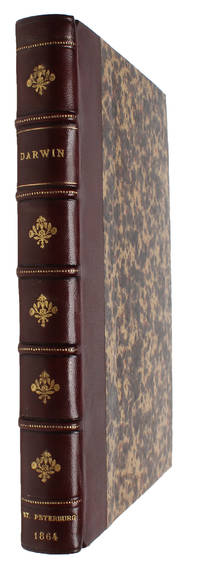
186460791S.-Peterburg 1864. 8vo. Bound in a beautiful half calf recent pastiche-binding with marbled papers over boards and elegant gilding to spine. End-papers renewed. Stamp to half-title title-page and first leaf of text. First leaves evenly browned and dampstain to outer margin affecting last 50 ff. A few occassional brownspots throughout. XIV 399 1 pp. 1 plate with genealogical tree between pp. 92/93. <br/><br/><em>First edition of the first Russian translation of Darwin's "Origin of Species" a main reason for the widespread effect of Darwinism in Russia where the theory met less resistance in the 1860'ies than it did in Western Europe. In Russia Darwinism had a profound influence not only upon the different sciences but also on philosophy economic and political thought and the great literature of the period. For instance both Tolstoy and Dostoevsky referenced Darwin in their most important works as did numerous other thinkers of the period."In 1864 S.A. Rachinsky professor of plant physiology at St. Petersburg University produced the first Russian translation of the "Origin". Although not a masterpiece of translation art the book sold out so quickly that in 1865 it went through a second printing. By this time Darwin's ideas were discussed not only by scientists but also by such popular writers as Dmitri Pisarev and M. A. Antinovich." Glick p. 232. Rachinsky began translating the "Origin" in 1862 and wrote an important article on the theories presented in it while working on the translation. This article and the translation of the "Origin" into Russian were responsible for the great success and rapid widespread knowledge of Darwinian theory of evolution in Russia. "Darwin was concerned that the "Origin of Species" reach naturalists across the world but translations of that complicated work raised problems for Darwin. If he found it difficult to make the reader "understand what is meant" in England and America at least in those two countries he and the reader were discussing the "Origin of Species" in the same language. Foreign language editions raised not only the thorny question of translating Darwinian terms but also the problem of translators who often thought it proper to annotate their editions to explain the "significance" of Darwinism. The first Russian translation of the "Origin of Species" 1864 appeared however without any comment whatever by the translator Sergei A. Rachinsky professor of botany at the University of Moscow. Rachinsky had begun the translation in 1862 and published an article on Darwinism while continuing work on the translation in 1863." Rogers p. 485. In the year of publication of the translation 1864 Pisarev wrote a long article in "The Russian Word" which purports to be a review of this translation; the critic complains about the absence of notes and commentaries by the translator. Pisarev furthermore points to several errors in the translation and to numerous infelicities of expression. Acknowledging the importance of the work however and of the spreading of Darwinism in Russia he goes on in his own essay to provide a much more popular account of Darwin's theory and to impress upon his readers its revolutionary significance.Nikolai Strakhov also reviewed the translation immediately upon publication acknowledging the effect it would have. Strakhov however recognized potential dangers inherent in the theory and expressed them in his review of Rachinsky's translation. He praised the work for its thoroughness and rejoiced in the evidence that man constituted the highest stage of organic development; but then he went on to argue that by moving into questions of philosophy and theology the Darwinists were exceeding the limits of scientific evidence. Like Pisarev Tolstoy enthusiastically embraced Darwinism. "The first mention of Darwin in Tolstoy's literary "Nachlass" is found in one of the drafts to "War and Peace". There Darwin is listed apparently quite favorably among leading thinkers "working toward new truth" . Thus by the late 1860's the name of Darwin as a leading scientist was already familiar to Tolstoy and duly respected." McLean p. 160. A fact which is often overlooked is that Tolstoy actually knew Rachinsky quite well. Interestingly it was in a letter to Rachinsky in reply to a question about the structure of "Anna Karenina" that Tolstoy made the famous statement that all Tolstoy scholars and lovers know by heart: "I am proud of the architecture - the arches are joined in such a way that you cannot discover where the keystone is". Like Strakhov however Dostoevsky acknowledging the significance of the "Origin" saw the dangers of the theory. In the same year as the publication of Rachinsky's translation he lets the narrator in "Notes from Underground" 1864 launch his attack on Darwinism beginning: "As soon as they prove you for instance that you are descended from a monkey then it's no use scowling you just have to accept it."In "Crime and Punishment" two years later 1866 the Darwinian overtones inherent in Raskolnikov's theory of the extraordinary man are unmistakable. He describes the mechanism of "natural selection" where according to the laws of nature by the crossing of races and types a "genius" would eventually emerge. In general Darwinian themes and Darwin's name occur in many contexts in a large number of Dostoevsky's works.Freeman 748. See: James Allen Rogers: The Reception of Darwin's Origin of Species by Russian Scientists. In: Isis Vol. 64 No. 4 Dec. 1973 pp. 484-503.Thomas F. Glick: The Comparative Reception of Darwinism. 1974.Hugh McLean: In Quest of Tolstoy. 2008. </em> hardcover
186859981St. Petersburg 1868 but in fact 1867-1869. 8vo. In contemporary half calf with renewed spine. Inner hindges with repairs and boards with soiling and a few marks and holes to volume 1. Light foxing throughout primarily affecting margins and plates. Overall a good copy. IV 443 1: ill; V.2: 462 I-VI pp. <br/><br/><em>The very first publication of Darwin's 'Variation under Domestication' in any language. The title-page states 1868 but they two volumes were in fact published respectively in November 1867 and 1869."In August 1867 Darwin wrote to Lyell that he was visited by a young Russian "who is translating my new book into Russian.". The book was the 'Variation of Animals and Plants under Domestication' and the youngRussian was Vladimir Kovalevsky who subsequently became a well-known evolutionary palaeontologist. At that time the 'Variation' was not yet published and it seems most probably that the translation was made from a set of proofs given to Kovalevsky by Darwin. Thanks to Kovalevsky's rapid work the first section of the Russian translation of the Variation was published several months prior to the publication of the English original." Glick The Comparative Reception of Darwinism p. 235"The first Russian edition which is dated 1868 on the volume title page is of particular interest. It is the only work in his lifetime of which any part appeared in foreign translation before it appeared in English. Correspondence at Cambridge shows that the translator was sent copies of corrected proofs as they were ready. It was published in seven parts of which four perhaps to the end of Chapter XV appeared in 1867; the next two appeared in 1868 and the last not until 1869 because he had been away in Russian Asia. The title is given in full in English translation under No. 925 and has been discussed above" Freeman.Vladimir Kovalevsky 1842-1883 the translator of this book was a Russian biologist and the founder of evolutionary palaeontology. His own scientific works were printed between 1873 and 1877 and according to Henry Osborn Osborn H. The rise of Mammalia in North America // Proc. Amer. Assoc. Sci. 1894. vol. 42 pp. 189-227 they ''dare away'' all traditional and dry European paleontology. That was mainly because Kovalevsky was a devoted Darwinist and adapted Darwin's ideas to palaeontology. Luis Dollo the Belgian palaeontologist a contemporary of Kovalevsky's described him thus: ''No palaeontologist embodies so perfectly our epoch as the brilliant and miserable Vladimir Kovalevsky friend and guest of the immortal Charles Darwin''. Indeed Kovalevsky was a friend of Darwin's and they corresponded extensively. When visiting Darwin in 1877 the Russian botanist Timiryazev asked Darwin about his views on Russian science and Darwin surprised him with an answer that Vladimir Kovalevsky little known at the time was the bright hope of palaeontology.Kovalevsky was very eager to translate Darwin into Russian as soon as possible so he asked Darwin to send him the proofs of his book chapter by chapter as soon as Darwin finished them. Kovalevsky translated with great speed the complete book contains 900 pages and he began to print the chapters from July 1867 the first English edition appeared on 30th January 1868. The chapters were printed one after another as the translation went on. It is unclear whether any part of it appeared before the English edition.Vladimir Kovalevsky translated another of Darwin's books The Expression of the Emotions in Man and Animals O vyrazhenii emotsyi u cheloveka I zhyvotnikh that appeared the same year as the English edition 1872.Kovalevsky committed suicide at the age of forty after the breakdown of his marriage to the celebrated mathematician Sophia Kovalevskaya who became the first female professor of mathematics in the world.OCLC finds only three complete copies worldwide Cornell American Philosophical Society US and Thomas Fisher Library Canada. Freeman 925 </em> hardcover
188157971Tokyo Nishimura Tomijiro Fukuda Eizo Meiji 21 1881. 8vo. In the original cloth binding with printed front board depicting a monkey reading a newspaper. Light wear and soiling to extremities and end papers soiled otherwise in fine condition. 285 pp. 3 plates. <br/><br/><em>The rare first Japanese translation of W. P. Lyon's anti-evolutionary text ' Homo versus Darwin'. It constitutes the very first publication in Japanese to reject Darwin's theory. A year after the publication the book was banned for 'corrupting public morals'.The present work is Lyon's reply to the publication of Darwin's The Descent of Man. Here he sees Darwin being charged by Homo of denying him from being a creature made by a God and declaring man to be merely some kind of animal. The author is recorded as being 'Eisa Gurei' Asa Gray but in 1986 a study confirmed the text to be a translation of Lyon's work.'Saru no Saiban' is an important work in the history of the reception of Darwinism in Japan. Darwin's theories had a profound influence on Japan and Japanese culture but in a slightly different way than in the West: Darwinism was marked as social and political principles primarily embraced by social thinkers philosophers and politicians to advocate the superiority of Japanese culture and society and military and not by biologists and zoologists. "It was as if Darwin's famous oceanic journey and the meticulous research into the animal and plant kingdoms that he spent his life undertaking had all been staged as an elaborate excuse for composing a theory whose true object was Victorian society and the fate of the world's modern nations." Golley Darwinism in Japan: The Birth of Ecology. </em> hardcover
1871013873London: Published by the author printed by Spottiswoode & Co 1871. 1st Edition. Hardcover. Very Good. Nobleman author's vanity binding of his ant-Darwin treatise with complimentary ALS from Darwin's publisher John Murray PM Gladstone Napoleon III Times publisher John Walter and 37 others bound-in. 8vo custom contemporary binding likely commissioned by the Baron himself in polished grey full leather gilt ruled covers front hinge recently repaired 137 pages of text followed by 41 ALS bound-in and in the rear 6 pages one-sided of a pasted-in newspaper review of the book from an unidentified publication. The review observes that Sir Walsh "found it necessary in drawing a parallel between astronomy and geology to allude to Darwin and Buckle Lord Ornathwaite makes their theories the subject of severe criticism." The ALS's bound-in are from peers and public figures variously complimenting Sir Walsh on his work many agreeing with the intellectual aspersions that Sir Walsh heaps on Darwin. Gladstone admits to not being particularly familiar with Darwin's work but posits nevertheless that evolutionary theory tears away at the "fabric of belief". But it is John Murray Darwin's own publisher who is shameless in criticizing the most famous author he will have published: "Although I happen to publish the works both of Buckle & Darwin I do not hesitate to myself a sceptic in the theories of both & I hope one day to see these fallacies exploded & should not be sorry to aid in this result." Most of the letters are on baronial estate or residential letterhead and bound-in chronologically from the end of 1871 through July 1872. Published by the author, printed by Spottiswoode & Co hardcover
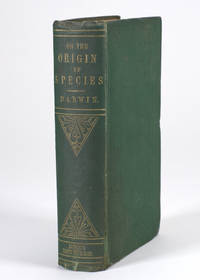
186142820878<p>THIRD EDITION published on April 1861. Two thousand copies were printed. This edition "was extensively altered and is of interest for the addition of a table of differences between it and the second edition a table which occurs in each subsequent edition and also for the addition of the historical sketch. The sketch which was written to satisfy complaints that Darwin had not sufficiently considered his predecessors in the general theory of evolution had already appeared in a shorter form in the German edition as well as in the fourth American printing where it is called a preface" Freeman.</p><p><strong><em>On the Origin of Species</em></strong><strong> is "certainly the greatest biological book ever written</strong>" Freeman and "<strong>the most important single work in science</strong>" Dibner.</p><p>Darwin's theory of the origin of species by means of natural selection arose out of his studies in the 1830s during and after the voyage of H.M.S. <em>Beagle</em>. From 1831 to 1836 Darwin sailed around the world on the <em>Beagle</em>. During this five-year voyage Darwin and the <em>Beagle</em> visited the Galapagos Islands Brazil Argentina Tierra del Fuego Chile Peru Tahiti Australia New Zealand and other islands and countries finally returning to England by sailing around the Cape of Good Hope. Darwin observed "It appears to me that nothing can be more improving to a young naturalist than a journey in distant countries."</p><p>The voyage of the <em>Beagle </em>was "the most important event in Darwin's intellectual life and in the history of biological science. Darwin sailed with no formal scientific training. He returned a hard-headed man of science knowing the importance of evidence almost convinced that species had not always been as they were since creation but had undergone change. … The experiences of his five years … and what they led to built up into a process of epoch-making importance in the history of thought" DSB.</p><p>Over the coming thirty years Darwin refined the ideas that had germinated aboard the <em>Beagle </em>and finally published them in <em>On the Origin of Species</em>. Darwin concluded his book "There is grandeur in this view of life with its several powers having been originally breathed into a few forms or into one; and that whilst this plan has gone cycling on according to the fixed law of gravity from so simple a beginning endless forms most beautiful and most wonderful have been and are being evolved."</p><p><strong>Darwin's ideas about evolution and natural selection are the underpinnings of modern biological science. Moreover they have given us a new way of viewing and talking about the world. </strong>"Darwin not only not only drew an entirely new picture of the workings of organic nature; he revolutionized our methods of thinking and our outlook on the order of natural things. The recognition that constant change is the order of the universe had finally been established" Printing and the Mind of Man 344b.</p><p>Freeman 381.</p><p>Original green cloth. Foot of spine and lower front joint neatly restored. A very good copy.</p> John Murray hardcover
1865A35100London: Longman Green Longman Roberts & Green and Williams and Norgate 1865. 2 118 13 woodcuts to text. 8vo. HB. 8vo 219x140mm recent half calf marbled boards gilt title to spine. Occasional pencil marginalia. Fine copy. Rare first edition offprint issue of Darwin's work on climbing plants. An exceptionally scarce survival in this offprint form seldom encountered on the market. An item for the discerning collector of Darwiniana.The first edition of this work was published on June 12 1865 and occurs in three forms - all from the same setting of type. The first makes up most of a double part Nos 33 and 34 of Vol. 9 of the 'Journal of the Linnean Society of London Botany'. It was also issued simultaneously as an offprint which occurs in two distinct forms. Both have tipped in title leaves which differ in the note on the source of the original and the publisher's imprint. The copy offered here is Freeman's first form 834 with the note on the source of the original given as From the JOURNAL OF THE LINNEAN SOCIETY and the imprint the same as that of the part except that it has been reset and there is no comma after Roberts. This is the commercial offprint which was offered for sale by the Linnean Society at 4s. The second form of the offprint is assumed to be the author's offprint of which Freeman had only seen one copy. Freeman Journal of the Society for the Bibliography of Natural History 1973 64: 293. The two forms of the offprint also differ in the wrapper this copy is bound without the wrapper.The second edition of this work was later published in book form by John Murray in 1875 and is a revised and enlarged version of this paper.Freeman 834. Longman, Green, Longman, Roberts & Green, and Williams and Norgate hardcover
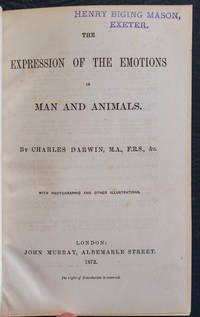
18726655London: John Murray 1872. First edition second issue. Very Good. Octavo 19 cm; vi 374 pages including 21 text illustrations and seven photogravure plates three of them folding . Lacks half title and ads. In custom prize binding for the London School of Dental Surgery polished red calf ruled in gilt with gilt emblem of the school on upper board gilt-tooled spine in six compartments with green leather title label; marbled edges and endleaves by Bickers and Son. Ownership autograph and ink stamp of Henry B. Mason 1855-1923. About fine. <br /><br />Seen by some as the origin of modern understandings of emotion and incidentally the first English Language science book to be illustrated with photographs. John Murray hardcover
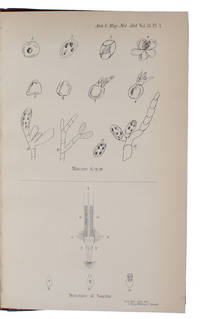
184456990London Taylor and Francis 1844. 8vo. In a nice later half morocco binding with five raised bands and gilt lettering to spine. Blind stamped to upper outer corner of first leaf of table of contents. In "The Annals and Magazine of Natural History" volume 13. A very fine and clean copy. Darwin's paper pp. 1-6 1 plate. Entire volume: viii 1 - 528 14 plates 4 hand-coloured. <br/><br/><em>First edition of Darwin's paper on marine arrow worms collected by him on his voyage on the Beagle. It is one of Darwin's early papers on invertebrates which was originally intended for publication in The Zoology of the Voyage of HMS Beagle. Described by Darwin as "one of the most anomalous animals in the world" the origin of these strange carnivorous animals which Darwin found highly interesting is still unresolved. These early works are rarely seen on the market. The plate drawn by Darwin is based on his drawings made during the Beagle Voyage.Darwin arrived back in England from his voyage around the world on the Beagle in October 1836. He immediately set about writing up the results of the expedition-first his general account the Journal of the Beagle and then publishing the scientific observations and collections he had made while on the Beagle. The majority of these were published in the Zoology-including parts on mammals fish birds and reptiles but Darwin ran out of funds beforehe could bring out the volume on invertebrates:"Darwin undertook to provide a comprehensive programme for the publication of the zoological results of the Beagle voyage - he obtained a Treasury grant to pay for the necessary engravings and having enlisted the leading taxonomical specialists in the several fields he superintended the publication of the Zoology of the voyage of H.M.S. Beagle from February 1838 to October 1843 - The work comprises five parts: Fossil Mammalia by Richard Owen; Mammalia by G. R. Waterhouse; Birds by John Gould; Fish by Leonard Jenyns; and Reptiles by Thomas Bell-a total of nineteen quarto issues. Darwin contributed a substantial portion of the text drawing uponhis field notes for geological and geographical data and for the descriptions of the habits and habitats of the species - Darwin had originally planned to include descriptions of invertebrates in the Zoology but the exhaustion ofthe government grant forced him to abandon the idea. Instead he decided to publish his own observations and descriptions of the specimens that he considered to be important new discoveries and did so in articles on Sagitta finished during the autumn of 1843 and Planariae described in 1844" Burkhardt 1986 p. xv.PROVENANCE: From the collection William Pickett Harris Jr. 1897 - 1972 pencil note on p. iii. American investment banker and biologist. Following a career in banking Harris was appointed Associate Curator of the Museum of Zoology at the University of Michigan in 1928. "Harris played a highly important role in developing mammalogy and systematic collections of mammals at the University of Michigan" Hooper p. 923.Freeman 1664. </em> hardcover
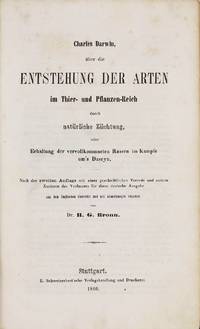
1860feb02669<p>1860. German First Edition - On the Origin of Species by Means of Natural Selection or the Preservation of Favoured Races in the Struggle for Life by Charles Darwin<br />Über die Entstehung der Arten im Thier- und Pflanzen-Reich durch natürliche Züchtung oder Erhaltung der vervollkommneten Rassen im Kampfe um's Daseyn</p><p>Used book For more details and availability please contact me</p> E. Schweizerbartsche hardcover
1871008464London: John Murray 1871. First edition first printing. Hardcover. This is the first edition first impression of Charles Darwins The Descent of Man and Selection in Relation to Sex in the publishers original green cloth bindings. Herein on page 2 of Volume I is his first use of the term evolution. <br /> <br />First impression of the first edition is confirmed by issue points; in Volume I transmitted is the first word on p.297; Volume II has errata on the title page verso seventeen errata for Volume I and eight for Volume II and a tipped-in Postscript at unpaginated pp. ix-x referring to errors which were reset for the second issue. The sixteen pages of advertisements for Mr. Murrays List of Popular Works are present in each volume following the text following the lengthy Index in Volume II. Of note the tipped-in Postscript reoccurs between pages 14 and 15 of the advertisements in Volume I. <br /> <br />Condition is very good. We note that the bindings have been skillfully and unobtrusively reinforced at the gutters leaving the original black endpapers intact. Consequently the bindings are not only unusually bright and clean but also square and tight. Shelf presentation is noteworthy; while the spines show a little wrinkling and light wear to the ends the gilt remains vividly bright the green hue uniform with no appreciable color shift between the covers and spine. The covers show only light superficial scuffing and blemishes and minor shelf wear to extremities. The contents are bright with only modest age-toning to the text block edges. Spotting is mild primarily confined in Volume I to the front free endpaper the publishers rear catalogue following the text and the text block edges. In Volume II spotting is primarily confined to the front free endpaper and half title the text block edges the final page of the Index and the publishers catalogue. A few of the Volume II index signatures remain unopened. The sole previous ownership name is an armorial bookplate affixed to the Volume I front pastedown. <br /> <br />On the Origin of Species 1859 fomented a reorientation that would eventually supplant dogmatic creationist hierarchy with rationalistic naturalist biology. But in Origin Darwin had said little about how his ideas applied to human beings. In The Descent of Man and Selection in Relation to Sex Darwin argued that all creatures are subject to the same natural laws. Man still bears in his bodily frame the indelible stamp of his lowly origin. And in Descent the cause was finally given its enduring name. On page two of Volume I Darwin wrote these great classes of facts afford as it appears to me ample and conclusive evidence in favour of the principle of gradual evolution. This is the first time the word evolution is thus applied in his published work. Descent posited the theory Darwin called sexual selection and attempted to set forth a naturalistic explanation for the mind and for moral behavior. That Darwins conceptions continue to fuel both rational debate and fervid ire testifies to their fundamental impact. That many of his concepts are settled theory testifies to their empirical insight and veracity. <br/><br/> John Murray hardcover
18731858Budapest: Kiadja a Természettudományi Társulat Könyvkiadó Vállalata 1873. First Hungarian edition. In publisher’s green cloth bound into two volumes gilt-stamped spine titles panels with blindstamped device. Contemporary ownership signature on half-titleOccasional light foxing throughout in both volumes. Overall in fine condition. First Hungarian edition. In publisher’s green cloth bound into two volumes gilt-stamped spine titles panels with blindstamped device. 2 v. XIV 2 303 1 p. and 1 folding plate; VII 1 361 3 p. and a plate with Darwins portrait protected with tissue paper. <p><br /> First Hungarian edition of Darwin’s opus magnum the On the Origin of Species 1859 the foundation of evolutionary biology.<br /> <p><p><br /> A fajok eredete was Darwin’s first book to be translated into Hungarian. The translator László Dapsy 1843–1890 was a gymnasium teacher in Budapest who studied at the New College in The University of Edinburgh. While in Scotland Dapsy was introduced to Darwin’s scientific theories and back in Hungary he became a pioneer advocate of Darwinism.<br /> <p><p><br /> As a member of the Hungarian Society of Natural Sciences Dapsy urged the publication of Darwin’s works in Hungarian and translated the present book On the Origin of Species. While working on the text he was in correspondence with Darwin who besides authorized the publication provided the photograph after which the portrait illustrating this edition has been made.<br /> <p><p><br /> The translation was revised by another progressive Hungarian scientist and early Darwinist Tivadar Margó 1816–1896 who was the author of the first Hungarian zoological book based on Darwin’s theories and the first biography of Darwin written in Hungarian. Margó held the memorial lecture after Darwin’s death at the Hungarian Academy of Science of which Darwin was an honorary fellow since as early as 1872 wherein he recollected the memories about his personal encounter with Darwin in 1875.<br /> <p><p><br /> Provenance: Ownership stamp of Dr. János Garán 1847–1911 country doctor in Székelyhíd today: Săcueni Romania.<br /> <p><p><br /> Scarce WorldCat locates seven complete copies worldwide of which only two are held in the US Huntington; NLM<br /> <p>. Kiadja a Természettudományi Társulat Könyvkiadó Vállalata unknown