881 résultats
18506543London: Unpublished 1850. Hardcover. Very Good. Manuscript notebook by a committed poultry breeder reader and customer of Darwin's poulterer and dealer in live birds John Baily with a letter from Baily about 'confinement' of birds. In this fascinating work W Stone keeps copious notes of John Baily's published observations on poultry most dated to the early 1850s as well as inserting a letter from Baily and a fine printed broadside advertisement. At the other end of the manuscript is a lengthy fair copy of David Ramsay Hay's study of colour theory. Quarto-sized notebook half calf over brown marbled boards lacking backstrip binding perfectly sound 1834 fleur de lys watermarked paper. Writing from one end of the manuscript Stone begins with brief notes on 'Baileys Reg.d Poultry Fountain' and one of Baily's published works The Dorking Fowl. This is followed by 56 pages of legal 'Articles of Agreement' between 'R.B.' and 'E.B.' apparently pre-Victorian. The meat of the manuscript comes in the 'Miscellaneous' section dated to 1852 which begins with a brief entry on 'Food for silk worms' a series of inserted printed pages on poultry breeding some annotated followed by a fine illustrated broadside advertisement for a 'Poultry House' built by Robert Richardson of London 38x23cm folded across a double spread. In manuscript there follows 'The Poultry-yard by Boswell review of' and lengthy commonplace notes many initialled 'John Baily' and dated on aspects of poultry manure breeding hybrids 'Descriptive Points &c. Dorking' and other ducks 'Incubation Natural and Artificial' the hatching of 6 emus 'at Knowsley in 1851 by Cautelo's hydro incubator. bought by the Antwerp Zoological Soc.y' 'Sale and Produce of Eggs' and a note of the values achieved by ducks in Dorking. There is a manuscript article from 1839 on the 'Eccaliobion' with the comment 'Dr. P of M. told me that in his country Wales they put eggs under ducks in preference.' with around 15 pages of manuscript explanation of Natural Incubation with tipped in steel engravings of incubating chicks which cites various sources including 'Mr William Yarrell' whom Darwin credits in one of his letters for introducing him to Baily and a section on 'Disease prevention and cure'. The letter from Baily to 'W Stone' is written on headed paper 'Baily 113 Mount Street' and explains a misapprehension on the part of Stone about an article published by Baily on the 'confinement' of foul in London 'The atmosphere of London is counted not so good as that of the country.' and is signed 'John Baily' with further notes below. Starting from the other end of the manuscript there is a 46 page fair copy of the introduction and first four chapters of the 1838 edition of David Ramsay Hay's The Laws of Harmonious Colouring with hand drawn renderings of the printed diagrams that are interspersed through the text most showing colour combinations. John Baily is referred to by Darwin in several of his letters; Darwin's accounts reveal that he bought frequently from Baily though he complained about Baily's reluctance to sell Darwin 'dead birds'. Collates: pp66 poultry; pp46 colour theory; pp57 legal Very Good Please contact Christian White Rare Books Ltd for more information or images of this item 1850 Unpublished hardcover
1873141586London: Henry S. King & Co 1873. First edition association copy of famed English philosopher Herbert Spencer's classic work on the evolution of society; presented and inscribed by him to Charles Darwin. Octavo original publisher's cloth with gilt titles to the spine dark green endpapers. Association copy inscribed by the author on the title page "Charles Darwin with the Author's kind regards." English philosopher biologist sociologist and anthropologist Herbert Spencer invented the expression "survival of the fittest" which he coined in his Principles of Biology 1864 after reading Charles Darwin's On the Origin of Species 1859. A description of the mechanism of natural selection in Principles of Biology Spencer drew parallels between his own economic theories and Darwin's biological ones: "This survival of the fittest which I have here sought to express in mechanical terms is that which Mr. Darwin has called 'natural selection' or the preservation of favoured races in the struggle for life." Darwin responded positively to Alfred Russel Wallace's suggestion of using Spencer's new phrase "survival of the fittest" as an alternative to "natural selection" and adopted the phrase in The Variation of Animals and Plants Under Domestication published in 1868. In On the Origin of Species he introduced the phrase in the fifth edition published in 1869 intending it to mean "better designed for an immediate local environment" Gould. Darwin wrote on page 6 of The Variation of Animals and Plants Under Domestication published in 1868 "This preservation during the battle for life of varieties which possess any advantage in structure constitution or instinct I have called Natural Selection; and Mr. Herbert Spencer has well expressed the same idea by the Survival of the Fittest. The term 'natural selection' is in some respects a bad one as it seems to imply conscious choice; but this will be disregarded after a little familiarity." He defended his analogy as similar to language used in chemistry and to astronomers depicting the "attraction of gravity as ruling the movements of the planets" or the way in which "agriculturists speak of man making domestic races by his power of selection." Spencer and Darwin were occasional correspondents and would regularly send each other copies of their latest works. Accompanied by an autograph letter signed by Charles Darwin's great grandson Edward Darwin gifting the book to a relative dated November 27th 1969. In very good condition. Housed in a custom half morocco clamshell box by the Harcourt Bindery. Books from Darwin's library are very rare to the market. Spencer developed an all-embracing conception of evolution as the progressive development of the physical world biological organisms the human mind and human culture and societies. “It is a function that no one has performed since†DSB. During his lifetime he was considered "the single most famous European intellectual" Eriksen 37. "The only other English philosopher to have achieved anything like such widespread popularity was Bertrand Russell and that was in the 20th century" Richards. Spencer's philosophies were heavily influenced by Darwin he cites Darwin several times in this book and references On the Origin of Species as "one of the most influential scientific publications of recent times." Given the primacy which Spencer placed on evolution his sociology might be described as social Darwinism mixed with Lamarckism. However despite its popularity this view of Spencer's sociology is mistaken. While his political and ethical writings had themes consistent with social Darwinism such themes are absent in Spencer's sociological works which focus on how processes of societal growth and differentiation lead to changing degrees of complexity in social organization. The evolutionary progression from simple undifferentiated homogeneity to complex differentiated heterogeneity was exemplified Spencer argued by the development of society. He developed a theory of two types of society the militant and the industrial which corresponded to this evolutionary progression. Militant society structured around relationships of hierarchy and obedience was simple and undifferentiated; industrial society based on voluntary contractually assumed social obligations was complex and differentiated. Society which Spencer conceptualised as a 'social organism' evolved from the simpler state to the more complex according to the universal law of evolution. Moreover industrial society was the direct descendant of the ideal society developed in Social Statics although Spencer now equivocated over whether the evolution of society would result in anarchism as he had first believed or whether it pointed to a continued role for the state albeit one reduced to the minimal functions of the enforcement of contracts and external defense. Henry S. King & Co hardcover
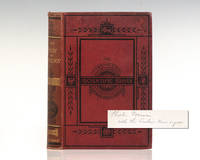
1884s00027291New York: D. Appleton and Company 1884. First printing. Hardcover. Good. First edition 1884. Cloth hardcover--seems like it might be a rebind as the endpapers are very clean 351 pp. ads. clean unmarked text Good copy some soiling or age-toning to the pages and page-edges light soiling and discoloration to the covers wear to the edges of the book's covers including fraying or loss to the tips no dust jacket. Uncommon book. D. Appleton and Company hardcover
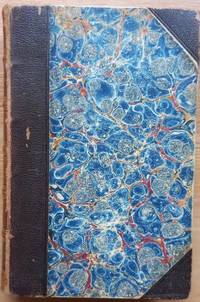
1885007309London: Kegan Paul Trench & Co 1885. 2nd UK Ed. 1st-1883 . Hardcover. VG. 14 Cms x 22 Cms. unf.chart411pastedowns and inner sides of endpapers all edges marbled; 'bound by Mudie' logo bottom verso front end-paper vertical shallow creases to t.p. offset from chart folds as usual otherwise internally clean tight & unmarked end-gutters good one gathering very slightly proud for no apparent reason. Half leather and marbled boards covers clean but all extremities slightly rubbed as are board surfaces gilt-lettered paneled spine. An extremely attractive copy of this important sought ofter work in contemporary private binding. Note: quoted shipping rates are calculated for 500-700 gram net weight cost will be modified up or down as appropriate outside this range. <br/> <br/> Kegan Paul, Trench & Co hardcover
188354398London: Kegan Paul Trench Trubner. Very Good with no dust jacket. 1883. First Edition. Hardcover. Original gilt-titled brown cloth black eps. Points lightly bumped spine and top upper board sunned. Mild scattered foxing. Foldout frontis chart erratum slip by page 15. Solid copy. ; Large 8vo 9" - 10" tall; 41132ads pages . Kegan Paul, Trench, Trubner hardcover
1858066A70J.B. Lippincott & Co. Philadelphia: . 1858 pp. xxvii 586 Color chromolithographed frontispiece 23 tinted scenic plates eight monochrome geologic sections and profiles some folding; and 136 in-text figures Errata slip. Large 4to. 310 mm. Original full cloth binding decorated in blind with a gold gilt seal of the state on the front board. Front board detached; spine chipped and laid down. Henry Darwin Rogers 1808-1866 was one of the great geologists of the 19th century. Among other governmental and academic duties he was the State Geologist and head of the PA Geological Survey. Begun in 1836 and lasting until 1842 the first Pennsylvania Geological Survey would not publish its results until 1858 due to budget problems and other delays. In the end Rogers'"was an epoch-making work and beyond question the most important document on the geology of America that had appeared up to date with the exception of the final reports of the New York Survey." These geologic maps accompanied the final report and were the first such maps prepared for the state. They contain impressive cultural and topographical detail including cities towns street grids county names and boundaries roads railroads mills ferrys springs water salt and oil! and more. The presentation accentuates the complex folded structure of the Appalachian Mountains. He and his brother William were the first to work out the folded nature of the Appalachians. Uncommon. PA6. Hardcover. J.B. Lippincott & Co., Philadelphia: . hardcover
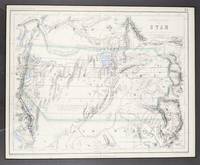
185757211London and Edinburgh: John Murray; W. & A. K. Johnston 1857. A well-executed beautifully engraved map. Hand-colored. 16 x 13 inches 25 x 22 inches in mat and frame. Faint vertical center fold line else fine. Wheat 934. Not in Moffat. From the rare Atlas of the United States. 1857 by Rogers and Johnston. This is the only commercial atlas map of its time to show the Utah Territory on a single map and it is in its own right one of the rarest maps of the territory. In addition to county boundaries and information from Fremont's report the map provides a good deal of detail on springs Indians topographical features forts early roads and more. Portions of Nevada Colorado Arizona and New Mexico are included.<br /> <br /> The first separately printed map of Utah. This map was published at the time of the Utah War 1857-58 and depicts Brigham Young's original view of the large Deseret Territory. Fillmore City is shown as the capitol.<br /> <br /> The map includes a note from Fremont's report which states "The Great Basin is elevated above the sea between 4000 and 5000 ft. it is surrounded by lofty mountains and is believed to be filled with rivers and lakes which have no communication with the sea deserts and oases which have never been explored and savage tribes which no traveller has seen or described. John Murray; W. & A. K. Johnston unknown
1871013873London: Published by the author printed by Spottiswoode & Co 1871. 1st Edition. Hardcover. Very Good. Nobleman author's vanity binding of his ant-Darwin treatise with complimentary ALS from Darwin's publisher John Murray PM Gladstone Napoleon III Times publisher John Walter and 37 others bound-in. 8vo custom contemporary binding likely commissioned by the Baron himself in polished grey full leather gilt ruled covers front hinge recently repaired 137 pages of text followed by 41 ALS bound-in and in the rear 6 pages one-sided of a pasted-in newspaper review of the book from an unidentified publication. The review observes that Sir Walsh "found it necessary in drawing a parallel between astronomy and geology to allude to Darwin and Buckle Lord Ornathwaite makes their theories the subject of severe criticism." The ALS's bound-in are from peers and public figures variously complimenting Sir Walsh on his work many agreeing with the intellectual aspersions that Sir Walsh heaps on Darwin. Gladstone admits to not being particularly familiar with Darwin's work but posits nevertheless that evolutionary theory tears away at the "fabric of belief". But it is John Murray Darwin's own publisher who is shameless in criticizing the most famous author he will have published: "Although I happen to publish the works both of Buckle & Darwin I do not hesitate to myself a sceptic in the theories of both & I hope one day to see these fallacies exploded & should not be sorry to aid in this result." Most of the letters are on baronial estate or residential letterhead and bound-in chronologically from the end of 1871 through July 1872. Published by the author, printed by Spottiswoode & Co hardcover
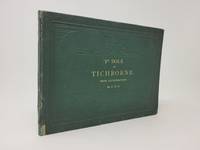
1871627197London: Bemrose and Sons 1871. 9 pp. 16.5 x 22 cm. Green cloth covered boards with decorative stamping in blind and gilt titling to cover; illustrated with nine plates and one folded plate as frontispiece. Rubbing to spine ends with a 14 x 5 mm chip to tail of spine edge of front cover. Starting to front joint at both head and tail but it appears that the tail split has been repaired with glue. Light bumping and light wear to corners of boards. Splitting along both front and rear hinges. Dampstaining along tail of front and rear endpapers but not to text or plates. Some foxing to initial and final pages. All plates intact with two of them still possessing their tissue guards. Overall a fairly decent copy of a scarce telling of the story of the Dole of Tichborne which has been illustrated by the half-cousin of Charles Darwin. . Hard Cover. Good. Bemrose and Sons Hardcover
18834300020Macmillan 1883. Cloth boards octavo. internally good. .This book has hardback covers. Ex-library With usual stamps and markings In fair condition suitable as a study copy. Please note the Image in this listing is a stock photo and may not match the covers of the actual item1400grams ISBN: Macmillan hardcover
18799263EB1879. London J. Murray 1879. 8°. Porträt-Frontispiz 2 ganzseitige Holzschnitte im Text IV 216 S. Grüner Original-Leinenband mit goldgeprätem Rückentitel leicht berieben. Buchblock nach S. IV wenig angeplatzt. Stellenweise Bleistiftmarkierungen oder -anmerkungen im Text. Durchgehend schwach gebräunt. Sonst in schöner Erhaltung. Dieses Exemplar wurde mit zahlreichen maschinengeschriebenen Fußnoten sowie einem selbst angelegten Index in deutscher Sprache versehen die sauber eingeklebt in den Buchblock integriert wurden. unknown
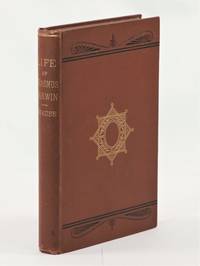
188022990New York: D. Appleton and Company 1880. First American Edition. Hardcover. Very good. Title on spine: The Life of Erasmus Darwin. 8vo pp. iv 216 publisher's ads bound in publisher's brown cloth decorated in gilt and black. Previous owner's signature on front flyleaf; paper over front hinge is cracked and hinge is slightly wobbly otherwise clean and sound with slight wear to extremities. A scientific biography of Erasmus Darwin by Krause a German biologist with a prefatory note by Darwin's grandson Charles. Freeman #1320. D. Appleton and Company hardcover
1880121686New York: D. Appleton and Co 1880. First U. S. Edition. Hardcover. Ex library-good. iv 216 8 p. 20 cm. Frontispiece portrait and two b&w drawing. Brown cloth hardcover with gold and black impressing. Repaired spine ends newer endpapers. Ex lib with ink stamps on text block edges and blind stamps on title and two following leaves. <br/><br/>A biography of Erasmus Darwin 1731-1802 by his grandson Charles Darwin and the German biologist Ernst Krause first published in 1879. Ernst Krause wrote a paper on the scientific works Erasmus Darwin which was published in the German language journal Kosmos in February of that year. This was translated into English by William Sweetland Dallas as "The Scientific Works of Erasmus Darwin" beginning on p. 130 of this edition. Charles Darwin added a "preliminary notice" based on material that was in the possession of his family. D. Appleton and Co hardcover
186605098THE NOVELS OF GEORGE ELIOT in Atlantic Monthly for October 1866 first edition slight wear to the spine extremities some scattered foxing else a vg copy or better in wraps. This most uncommon individual issue also contains PASSAGES FROM HAWTHORNE'S NOTE-BOOKS by of course Nathaniel Hawthorne THE DARWINIAN THEORY by Charles Sprague USURPATION by George Boutwell which is a most important anti-Slave document and a denouncement of President Johnson et.al. The James contribution is among his earliest publications. Atlantic Monthly paperback
1828Stephens10of12<p>Ten of 12 volumes: Haustellata volumes 1-4 Mandibulata 1-6 lacking volume 7 and supplement. First editions by Baldwin and Cradock London. 1828-1835. Overall good condition. Complete with all plates and pages. Bindings are mixed. Seven volumes light tan full leather goat with Yapp style bindings. Marbled endpapers and edges. Then two half leather marbled board bindings and one museum library rebind ~75 years old. The interiors are excellent except for vol. 6 Mandibulata which has water toning upper outer corner affecting last quarter of volume and final two plates. Haustellata volume 4 has museum library stamp on title page and plates are in a back pocket; has interesting old scientific marginalia. The value here is in the matching 7 volumes Haustellata 1-3; Mandibulata 1-4. First appearance of Darwin's work in print. See Freeman pages 19-20. A note on the Yapp bindings: These are clearly 19th century bindings. I find no clues to identify the binder. The leather is limp. When I got this set all edges were curled but over time I have been able to flatten all the bottom edges and some of the front edges; so I believe all edges could be flattened to their original intention with some determination. Feel free to inquire in fact you probably should. Please see scans of the volumes you will receive. Shipping will be calculated at time of purchase. Buyer will pay actual shipping cost only.</p> Baldwin and Cradock hardcover
18591293943London: John Murray 1859. Third Edition. Hardcover. Octavo 429 pages with two fold outs and pages of advertisements. In Good plus condition. Rebacked in green cloth with gilt lettering to spine with original boards and preserved and parts of original spine laid on. Boards show wear along the edges; corners bumped and beginning to fray. Pages are age toned as is typical with some minor spotting mostly at the beginning and on the fold outs. Interior otherwise clean and free of marking. An ex-library copy with usual markings including a bookplate from the Royal Navy on front paste down and faded ink stamp on title page. <br /> <br> <br /> <br> <br /> Darwin's contribution present and corrected on page 268. The first edition of 1849 had a transposition error in Darwin's essay some later states included a corrected text in a rear pocket. The second edition was issued in 1851 with no offprint of Darwin's article. This is the third edition complete. Fold out maps are present with some slight tears to the rear map. Shelved in Case 10. 1293943. Shelved Dupont Bookstore. John Murray hardcover
18831123968London: Macmillan 1883. Hardcover. Very Good/No Jacket. Cloth. One signature pp. 579-590 is loose but still attached. Macmillan hardcover
1885996R4London: Kegan Paul Trench & Co. 1885 . Cloth. Very Good Indeed. 9" by 6". None. A good copy of a fascinating work on animal minds from notes left by Darwin to Romanes with an essay on instinct by the former and illustrations. Written by George John Romanes Darwin's protégé. With black and white illustrations and folding charts. This work explores animal minds building off notes left by Darwin to Romanes with a posthumous essay on instinct by Darwin himself. In the publisher's original cloth. Externally smart with shelf wear and slight bumping to spine and extremities. Internally firmly bound. Pages clean and bright with light scattered spotting to first and last few leaves. Very Good Indeed Kegan Paul, Trench & Co. hardcover
18912301130027D. Appleton and Company 1891. hardcover. Very Good. 0x0x0. Bound in publisher's cloth. Hardcover. Good binding and cover. Smithsonian stamps and markings. 411 pages 1 leaf of plates : folded chart ; 21 cm. D. Appleton and Company hardcover
1887111111113801John Murray 1887. First Edition. Hardcover. Very Good. John Murray; London 1887. Hardcover. First Edition. Volume 2 Only. A Very Good green cloth binding with gilt lettering on spine binding intact starting hinges sunned spine some crimping to spine edges bit of age toning to text block mild scattered foxing to front and back matters some handling/scuffing to board soiling bottom rear board small abrasions to board corners dent bottom rear board edge bumped bottom front board corner top text block edge dusty spine buckram starting to separate from backing material without Dust wrapper. A nice overall clean and unmarked copy. 8vooctavo or approx. 6 x 9 inches. 393pp. We pack securely and ship daily with delivery confirmation on every book. The picture on the listing page is of the actual book for sale. Additional Scans are available for any item please inquire. John Murray hardcover
1887111111113802John Murray 1887. First Edition. Hardcover. Very Good. John Murray; London 1887. Hardcover. First Edition. Volume 3 Only. A Very Good green cloth binding with gilt lettering on spine binding intact starting hinges sunned spine some crimping to spine edges bit of age toning to text block mild scattered foxing to front and back matters some handling/scuffing to board small abrasions to board corners top text block edge dusty spine buckram starting to separate from backing material without Dust wrapper. A nice overall clean and unmarked copy. 8vooctavo or approx. 6 x 9 inches. 418pp. We pack securely and ship daily with delivery confirmation on every book. The picture on the listing page is of the actual book for sale. Additional Scans are available for any item please inquire. John Murray hardcover
1896mon0002882818D. Appleton and Company 1896. Hardcover. Good. . Half red leather with marbled boards. Scuffing to leather general shelf wear. Backstrip of vol. II beginning to peel off. A few age stains overall clean. Bindings sturdy. D. Appleton and Company hardcover
1897267594D. Appleton 1897. Hardcover. Very Good. Two volumes 8vo in 3/4 burgundy morocco on marbled paper spine title in gilt t.e.g. Bindings tight and square hinges firm corners rubbed through very shallow chipping at the spine ends. D. Appleton hardcover
1897271436D. Appleton 1897. Hardcover. Very Good. Two volumes 8vo in 3/4 burgundy morocco marbled boards. Bindings tight and square hinges firm corners rubbed through rubbing and shallow chipping at the spine ends p.o. bookplates on the front pastedowns rubber stamps on the title pages. D. Appleton hardcover
18886779New York: D. Appleton & Co 1888. Decorative Cloth. Collectible; Very Good. A handsome example of the 1888 2nd American edition complete in 2 volumes and edited by Darwin's son Francis. Both volumes solid and VG in their russet cloth with very light wear at the spine crowns. Gilt-lettering along the spines and decorative rule to the front panels still crisp and bright. 12mos 1120 pgs. all told. Armorial bookplates at each front pastedown. D. Appleton & Co unknown