Cuvier, Georges; Griffith, E; Pidgeon, EBiblio.com
79 résultats
1833A38373London: Whittaker Treacher and Co. 1833. viii 540 60 fully or partly hand-col plates. . HB. 8vo recent buckram leather title piece. Fine clean copy. Fine hand-coloured engraved plates.Nissen ZBI 1015; BMNH 410. Whittaker, Treacher, and Co. hardcover
183244684London: Whittaker Treacher and Co 1832. First edition in English 2 volumes in 3 4to 137 engraved plates 4 hand colored; slight spotting and staining extremities a little scuffed else an about fine set in contemporary 1/2 green morocco handsomely gilt. Volumes XIV and XV of the complete work. Whittaker, Treacher and Co unknown
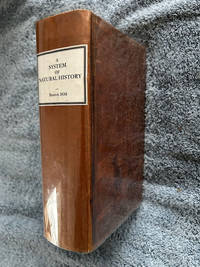
1832011028New York: G. & C. & H. Carvill 1832. Ex-Library. Good-VG. Cloth. First Thus. 8vo - over 7¾" - 9¾" tall. Early American edition of "Règne animal distribué d'après son organisation" 1817 abridged into one volume following the four-volume edition published by Carvill in 1831. This copy printed in the year of the author's death 1832 by James Kay Jun. & Co. Philadelphia printers to the American Philosophical Society. Deaccessioned from non-circulating museum research library nominally marked/stamped. Brown swirled cloth over boards rubbed with some exposure along fore- and bottom edges rounded/exposed corners lacking spine panel mended by black cloth tape. Front board is detached from text block but still attached by the cloth tape. 532 pp. This edition is not illustrated. Text block is firmly bound with the exception of a few loose or detached blanks at rear showing scattered foxing mostly light ranging to moderate with many leaves showing none. Endpapers are considerably foxed. Embossed library stamp on lower title page a few scattered internal stamps. Bottom corners of most leaves show slight dampstaining in margins only. 1870 presentation inscription on front blank. Fair to Good exterior solid VG to VG interior would be significantly improved simply by rebacking. From Wikipedia: "None of Cuvier's works attained a higher reputation than his Règne Animal distribué d'après son Organisation pour servir de base à l'Histoire Naturelle des Animaux et d'Introduction à l'Anatomie Comparée the first edition of which appeared in four octavo volumes in 1817 and the second in five volumes in 1829-30. In this classic work Cuvier embodied the results of the whole of his previous researches on the structure of living and fossil animals. The whole of the work was his own with the exception of the section on Insecta in which he was assisted by his friend Latreille. It was translated into English many times often with substantial notes and supplementary material updating the book in accordance with the expansion of knowledge.". G. & C. & H. Carvill Hardcover
18341240326.04<p>Peck & Wood Brattleboro 1834. Hardcover. Good. 8vo hardcover. No dj. Good condition. Full leather recased with new leather spine new paper title label affixed. Previous owner's bookplate on inside front cover. Missing contents page. Scattered foxing throughtout no writing or marking. Binding square and tight. 880 pp. illustrations in the text.</p> Peck & Wood, Brattleboro hardcover
182525929London: G. B. Whittaker 1825. Very good condition. An appealing hand colored copper engraving depicting a red platypus from 'The Animal Kingdom' by Baron Cuvier. The hind limb of this male platypus clearly showing the venomous spur. English zoologist George Shaw wrote in 1799 of a specimen sent to England that it had an extraordinary "conformation" appearing to have the beak of a duck grafted on to the head of a quadruped. <br /> <br /> Engraved by Edward or Harriet Griffith and signed "Griffith" in the image. 5 1/4 x 8 1/4" on paper 5 7/8 x 9 1/4" full impression mark visible. G. B. Whittaker unknown
186118429Paris: Firmin Didot Frères 1861. LATER EDITION. Contemporary gilt green morocco-backed embossed green cloth. A fine set. Later edition of this important chronological collection of biographies in praise of French scientists. Composed by the secretary of the Academy of Sciences these festschrifts were read aloud during public sessions. The speeches address such famed scholars as Pierre Lassus Antoine-François de Fourcroy Henri Cavendish Nicolas Desmarets and André Thouin. The first volume covers the years 1800-1813 the second 1815-1826 and the third 1827-1832. Firmin Didot Frères unknown
181935267Strasbourg: F.G. Levrault 1819. Fine. F.G. Levrault Strasbourg 1819 12 x 20 cm relié First edition a sequel would appear in 1827 then another until 1832. Contemporary half sheep binding in brown. Smooth spine with fillet and roulette. Yellow edges. Permanent Secretary of the Academy of Sciences it was Cuvier's responsibility to compose these biographies of celebrated scientists who had been members. These were read during public sessions; the first volume brings together the speeches delivered from 1799 to 1810 the second from 1810 to 1819. The work also contains Cuvier's reception speech at the Academy as well as a preface on the future of sciences. F.G. Levrault unknown
182557403Paris: Dufour et E. D'Ocagne 1825. Third edition. Quarto 32cm. Seven volumes complete in modern half black morocco green cloth over boards titled in gilt on spines and fronts; modern marbled endpapers; vol. I: vi194340pp; vol. II part I: ivIV2371229-232pp; vol. II part 2: iv239-648pp; vol. III: iv412pp; vol. IV: iv514pp; vol. V part 1: iv4051pp; vol. V part 2: iv 5471pp; 277 engraved plates including frontispiece one plate with hand color and 2 maps 1 letterpress folding table. Straight and sound with occasional scattered browning and soil a few page corners neatly restored one plate margin trimmed close to image area but largely clean and bright: Very Good. Third edition of the work in which Cuvier demonstrated the reality of extinction through detailed examination of fossils; a cornerstone work in paleontology biology and geology. Earlier editions appeared in 1812 and 1821-24. When Cuvier began his research in the late eighteenth century it was generally believed that no species had ever gone extinct. "Taking for his field the little-known fossil quadrupeds and applying to them the principles of comparative anatomy Cuvier astonished the world by reconstructing prehistoric forms of animal life whose existence had never been suspected" Glass Temkin & Straus Forerunners of Darwin 253. He established extinction as a fact demonstrated that the age of the earth was greater than six thousand years and did much to establish the fields of comparative anatomy and paleontology. <br /> <br /> However Cuvier forcefully opposed pre-Darwinian theories of evolution. In the introduction to Ossemens Fossiles later published separately as Discours sur les révolutions de la surface du globe 1826 Cuvier argued in favor of catastrophism-the theory that violent catastrophes like the Biblical flood had caused extinction events and shaped geological features. This theory left room for contemporaries to infer a divine force that caused catastrophes and created new species; thus his research "provided a safety valve . . . between the push of geology and the drag of theology" Forerunners 255. His theories were in part disproven by Darwin and Lyell who demonstrated that both species and geological formations undergo gradual change over time; but Cuvier's ideas about catastrophism were vindicated by more recent research into mass extinction events caused by volanic eruptions and asteroids. This edition not in Ward/Carozzi. Dufour et E. D'Ocagne unknown
1812A37982Paris: Chez Deterville 1812. 157 engraved plates some folding including a large folding hand-coloured map. . HB. 4 vols 4to 283x215mm orig. paper covered boards heavily rubbed/worn spines chipped gilt rules and leather title labels to spines; wide margins with edges uncut; some foxing and browning a few short marginal tears; one folding plate damaged - creased and torn with loss to several figures; 6cm tear to inner margin of another large folding plate.Pagination: Vol. I: 8 vi 120 20 viii 278 2 23 1; Vol. II: 4 10 12 21 1 33 1 30 24 20 6 140 43 1 20 4; Vol. III: 4 3 1 8 174 21 1 14 75 1 20 7 1 8 2 16 21 1 4 20; Vol. IV: 7 1 5 3 66 38 10 2 72 18 20 30 9 1 27 1 43 1 40 2 59 1 26 38 32 37 1 16. Scarce first edition of a work which laid the foundation of vertebrate paleontology Horblit One Hundred Books 20b. The separately paginated memoirs many of which first appeared in 'Ann. Mus. Hist. Nat. Paris' are here reissued in revised form prefaced by the important 'Discours preliminaire'. Georges Cuvier 1769-1832 was an outstanding French naturalist who helped to found the fields of vertebrate paleontology and comparative anatomy. He was professor of comparative anatomy at the Mus�um d�Histoire Naturelle Paris. As Martin J. S. Rudwick states 'It is difficult to overestimate the huge impact of Cuvier on zoology paleontology and geology.' Significant and highly influential results of Cuvier's palaeontological and geological research were presented in a series of essays published in these four volumes Recherches sur les ossemens fossiles de quadrupe`ds Paris 1812. Rudwick notes that Cuvier �called himself �a new species of antiquarian� who was using fossil bones instead of human artifacts as historical evidence. He therefore argued that naturalists such as himself could and should aspire to �burst the limits of time� � just as astronomers such as Pierre-Simon de Laplace to whom he dedicated his Ossemens fossiles had already �burst the limits of space". Vol. 1 includes Discours pr�liminaire in which Cuvier introduced the idea of geological �revolutions� to explain mass extinctions of prehistoric species. Other papers include an essay on an Egyptian ibis mummy brought from Thebes during Napoleon's campaign in Egypt; and with Alexandre Brogniart 1770-1847 an updated version of Cuvier's important stratigraphical memoir of 1810 Essai sur la G�ographie Min�ralogique des Environs de Paris which contributed to the concept of faunal succession in rock strata of different periods. In Vol. 2 Cuvier describes species of pachyderms found in recent alluvial deposits including elephants mastodons rhinoceros hippopotamus and tapir. In Vol. 3 Cuvier's recalls the challenges of reconstruing fossils of different species. Vol. 4 concerns fossil horses and pigs bears hyenas and big cats and concludes by describing fossil sloths crocodiles turtles and marine dinosaurs.Nissen ZBI 1011; BMNH Cat. I p. 409. Chez Deterville hardcover
1812154897Paris: Chez Deterville 1812. hardcover. very good. 4 volumes. Illustrated with 154 splendid copperplates many folding and and an additional folding hand-colored geognostical map of Paris and vicinity. Each volume several parts with distinct pagination. 4to bound in early calf-backed boards with red leather labels spines are brittle and somewhat damaged at edges uncut edges. Paris: Chez Deterville 1812. First edition. Internally excellent copy with wide- margins and only faint scattered foxing.<br/> <br/> Through the method of reconstruction of what ancient mammals must have looked like on the basis of bone and other fossil remnants "Cuvier created the science of paleontology in the modern sense. At the same time he largely reformed the system of zoological classification by introducing fossil animals into it" Nordenskold. "His concept of geological revolutions which he believed to be a regular and natural part of earth's history was used to explain the mass extinction of species from previous opochs" Norman 566. "A landmark in the history of science" Horblit 20b.<br/> <br/> Chez Deterville unknown
1828156631828. A Paris chez VerdiÂre et Ladrange 1828. Un vol. au format in-8 217 x 139 mm de 1 f. bl. vi - 364 pp. et 1 f. bl. brochÂŽ sous couverture d'attente de l'ÂŽpoque de plein papier taupe. ''On espÂre que le respect pour les savants ˆ qui nous devons tant de dÂŽcouvertes et le dÂŽsir de rendre justice ˆ leurs travaux et d'en faire sentir l'utilitÂŽ aussi bien que les difficultÂŽs s'y montreront ici partout'' Table : Chimie - MÂŽtÂŽorologie - Hydrologie - MinÂŽralogie - GÂŽologie - Physiologie - Anatomie - Botanique - Zoologie - MÂŽdecine - Agriculture - Technologie. Louandre et Bourquelot III La LittÂŽrature franÂaise contemporaine p. 121. LÂŽgÂres marques d'usage affectant dos et plats. Manque en tÂte du dos. InÂŽglaes rousseurs dans le texte. Du reste bonne condition. b42961 unknown
1810241880Paris: Imperiale 1810. paperback. very good. xvi 299pp. 4to wrappers. Paris: L'Imprimerie Imperiale 1810. Large Paper edition. Very good.<br/> <br/> Report on zoology chemistry meteorology and medicine by the noted zoologist and scientist.<br/> <br/> Imperiale unknown
181079759Paris: Imperiale 1810. First Edition. hardcover. very good. xvi 394 1 pages. 8vo 1/2 brown calf rubbed. Paris: L'Imprimerie Imperiale 1810. Very good.<br/> <br/> Report on zoology chemistry meteorology and medicine by the noted zoologist and scientist.<br/> <br/> Imperiale unknown
1810015392Paris: L'imprimerie Imperiale 1810. Book. Very Good. Rebound. First Edition. Book has been rebound in a light grey cloth. Interior is ocassionally foxed. L'imprimerie Imperiale Hardcover
182821573Paris: Verdière & Lagrange 1828. Fine. Verdière & Lagrange Paris 1828 13.50 x 21.50 cm broché New edition. Some light foxing joints slightly cracked at head and foot. Copy presented in its original wrappers spine sunned with label bearing the author's name title and publication date of the work. Verdière & Lagrange unknown
180547764Paris: De L'Imprimerie Impériale 1805. First complete French edition. Hardcover. vg- to vg. Quartos. Vol.1: xcvii 528pp 31pp. Vol.2: 460pp 84pp. Black leather over dark blue marbled paper boards. Gilt lettering and ruling on the spines. The first full French translation of compiled research from the Asiatic Society of Bengal originally published in English as the periodical journal "Asiatick Researches" from 1788- 1839. <br /> <br /> The text throughout contains a vast array of information in various realms of scientific historical philosophical religious and/or cultural topics from different authors. Volume 1 contains a total of 33 plates of copperplate engravings including 2 fold-out while volume 2 contains 11 plates plus 2 folding tables one one which a table of Persian grammatical influence on North India printed on blue-toned Arches papers measuring 22 1/4 x 28". Some of these plates contain illustrations while others contain geometric figures mathematical calculations astrological charts and samples of texts in various Asian scripts including Sanskrit Arabic and Chinese. In addition to the numbered plates there are many other un-numbered examples in-text as well as statistical tables some full page. The text throughout is accompanied by copious scholarly footnotes. Of special note is a sections of beautifully rendered plates containing images of various Hindu deities. Also includes a large fold out steel-plate engraved Hindu Zodiac with 27 images. The final section of volume one contains corrections and additions followed by tables of meteorological data also included in vol.2. <br /> <br /> This French edition notably has been revised and supplemented with various additional notes from a number of distinguished French scholars and scientists of the era including zoologist Georges Cuvier 1769 – 1832 mathematician and astronomer Jean Baptiste Joseph Delambre 1749 – 1822 naturalist Jean-Baptiste Lamarck 1744 -1829 and entomologist Guillaume-Antoine Olivier 1756-1814. <br /> <br /> Text in French.<br /> <br /> Bindings with some light rubbing and/or bumping to extremities. Light scratches to the covers. Interiors with minor sporadic foxing and/or water stains to the margins of a few pages throughout although in general the pages are surprisingly clean and vibrant. Book blocks quite tight. Bindings in very good- interiors in very good condition overall. About the society:<br /> The "The Asiatic Society of Bengal" now simply known as the Asiatic Society was founded in Calcutta in 1784 by British scholar philologist and civil civil Sir William Jones 1746-1794 in the early years of the British Raj. Its purpose as set forth was the furthering of Oriental research of all kinds as well as the collection of manuscripts and other relevant materials. It began publishing the work and research of its members all distinguished scholars in its periodical journal "Asiatick Researches". A museum set up to house and display its holdings as well as act as a hub or research was established in 1814. At first only Europeans could become members but starting in 1829 Indian were allowed to join as well. De L'Imprimerie Impériale hardcover
184042750London: George A. Doo 1840. George A. Doo unknown
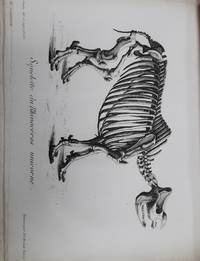
1804815London: Alexander Tilloch 1804. 1st Edition. BOUND FIRST EDITION OF A LETTER ON THE ATOMIC THEORY IN CHEMISTRY FROM JOHN DALTON to Alexander Tilloch founder of the journal in which this paper is published. Also included are papers of import by Gay-Lussac Biot and Cuvier.<br /> <br /> John Dalton 1766-1844 was an English chemist meteorologist and physicist best known for his pioneering work in the development of modern atomic theory the atomic theory in chemistry.<br /> <br /> "Dalton applied the Laws of Conservation of Mass and Definite Composition to explain his Atomic Theory. He developed the chemical theory in 1803 and told Thomas Thomson University of Edinburgh about it in 1804" Greenberg A Chemical History 172. <br /> <br /> This paper is Dalton's response to a conclusion the chemist and professor Thomas Thomson leveled regarding Dalton's Atomic Theory; specifically: in the 2nd edition of his influential A System of Chemistry Thomson wrote "that air is a chemical compound"; he then offered four reasons for his conclusion. <br /> Dalton believed that he had already well-proven "the absurdity of the notion of atmospherical air being a chemical compound of azotic and oxygens gases" Dalton On the Supposed 19 1804 p. 79. The object of the Dalton paper offered here then is to show the "insufficiency" of Thomson's four reasons; to do so Dalton debunks each of Thomson's four ‘reasons' one by one.<br /> <br /> ALSO INCLUDED: An exceedingly rare first edition in English of Jean-Baptiste Biot's paper "Account of an Aerostatic Voyage" describing his landmark balloon ascent with Louis-Joseph Gay-Lussac. The scientific readings that Biot and Gay-Lussac took during their ascent established that the Earth's magnetic field extends into the atmosphere. "The ascent was notable in that it was undertaken entirely for scientific purposes. The primary purpose was to find whether the magnetic intensity of the earth decreased at great altitudes as had been suggested by Horace de Saussure's experiments in the Alps. From their experiments in which they timed the oscillations of a magnetized needle at various altitudes Biot and Gay-Lussac concluded that up to 4000 meters there was not change" DSB II p. 134-135. <br /> <br /> ALSO INCLUDED: "Osteological Description of the one-horned Rhinoceros" is the first English edition of the first part of an important paper by the celebrated zoologist and naturalist Georges Cuvier on the one-horned rhinoceros one-horned Indian rhinoceros; Rhinoceros unicornis. It has been said that Georges Cuvier possessed one of the finest minds in history. Almost single-handedly he founded vertebrate paleontology as a scientific discipline and created the comparative method of organismal biology an incredibly powerful tool. It was Cuvier who firmly established the fact of the extinction of past life forms. CONDITION & DETAILS: London: Alexander Tilloch. Complete volume. 8vo. 8.25 x 5.25 inches. 4 400 pages. Illustration: Nine copper-engraved plates with light to moderate age toning and foxing. Tightly and very solidly bound in contemporary quarter calf over marbled boards. Gilt-lettered and ruled at the spine. The leather on spine is a bit scuffed and the spine tips are rubbed. Binding is tight and sturdy and overall in very good condition. Interior: Title page is moderately foxed. Light to moderate foxing from preliminaries through page 20; moderate foxing on the final few plates. The remainder of interior including all papers of import is very clean. Very good condition. Alexander Tilloch hardcover
1833H5151Paris: H. Fournier 1833. First printing. Hardcover. Very Good. First edition 1833 bound in somewhat later deep red morocco backed red cloth boards 369 pp with half title frontispiece and single page table at rear. Very good moderate foxing throughout. Rare on the market. H. Fournier hardcover
182740223Paris 1827. <p>Cuvier Georges 1769-1832. Letter signed to Samuel H. Christie 1784-1865. Paris 29 October 1827. 1 sheet on letterhead of the Académie Royale des Sciences. 222 x 169 mm. Trimmed at head affecting printed letterhead but not the manuscript text. Very good.</p> <p>From the great French naturalist and zoologist Baron Cuvier whose work helped to establish the modern sciences of paleontology and comparative anatomy to British mathematician and physicist Samuel Hunter Christie who made important contributions to the study of magnetism. Cuvier was perpetual secretary of the Académie des sciences and his letter to Christie acknowledging Christie's donation of several of his papers on magnetism to the Académie is written in that capacity. "L'Académie Monsieur a reçu les ouvrages que vous avez bien voulu lui adresser extraits des transactions philosophiques . . . J'ai l'honneur de vous offrir les remerciemens de l'Académie et de vous témoigner en son nom tout le prix qu'elle attache à ces publications . . ." The Academy Sir received the books that you kindly send him excerpts from Philosophical Transactions. . . I am pleased to offer the thanks of the Academy and to express to you on its behalf of all the value it attaches to these publications . . . </p> . unknown
1802003258London: T.N. Longman & O. Rees 1802. Ink shelf numbers on spines; bookplates; several ink stamps; tears in two tables partly repaired with archival tape; lacking half-titles. First Edition in English. Buckram. Good. T.N. Longman & O. Rees Hardcover
18461948<p>Paris: Crochard et Cie 1846. Second expanded edition.</p><p><strong>PIONEERING ESTABLISHMENT OF THE SCIENCE OF COMPARATIVE ANATOMY.</strong></p><p>Eight volumes in 9 bindings 8 1/2 inches tall Vol. 4 is in 2 parts. Green quarter leather binding with gilt titles and compartments marbled paper covered boards patterned endpapers bookplate of NSR Maluf to each volume Vol. I i-xxxiii lithographic facsimile of letter from Cuvier 587 pp 1; Vol. II i-viii 726 pp; Vol. III 4 i-iv 760 pp; Vol. IV pt 1 i-xxvii 618 pp 4; Vol. IV pt 2 i-iv 691 pp 1; Vol. V i-viii 503 pp folding table; Vol. VI i-vii 557 pp 1 folding table; Vol. VII i-vii 1 656 pp; Vol. VIII i-xii. 848 pp. Covers corners spine ends worn light browning to pages the first blank and usually the half title of each volume have top edge corners clipped presumably to remove a signature not affecting text. Bindings tight pages unmarked very good in custom archival mylar covers. <strong>CONTENTS:</strong> Vol. I contains the principal discussion of Cuvier's famous theory of the correlation of parts- the functional relationship of each bodily organ to every other organ. Also considered are the organs of movement of vertebrate animals; Vol. II addresses the organs of movement of invertebrate animals and the osteology of the head; Vol. III considers the nervous system and sense organs; Vol. IV reviews the organs of mastication salivation and swallowing in vertebrate animals; Vol. V reviews the feeding organs of invertebrate animals; Vol. VI explores the nutritive fluid its reservoirs and the organs that set it in motion in the four types of the animal kingdom; Volume 7 the description of the organs of elaboration and purification of the nutritive fluid through respiration and urinary secretion; and Volume 8 the organs of generation and secretions the swim bladder of the fish and the organs of vocalization.</p><p><strong>GEORGES CUVIER </strong>1769 – 1832 was a French naturalist and zoologist sometimes referred to as the "founding father of paleontology". Cuvier was a major figure in natural sciences research in the early 19th century and was instrumental in establishing the fields of comparative anatomy and paleontology through his work in comparing living animals with fossils. He expanded Linnaean taxonomy by grouping classes into phyla and incorporating both fossils and living species into the classification. He laid the foundations for a method of analysis and comparison applied to the entire animal kingdom and a new branch of natural history was born thanks to his scientific collaboration with Geoffroy Saint-Hilaire. This was based on the theory that anatomical and physiological characteristics of animals are molded by their environment. He established four major families: vertebrates mollusks arthropods and radiates. He was the first to apply the concept of an ecosystem viewing it as a vast network in which species interact with one another.</p><p><strong>GARRISON-MORTON </strong>No. 311 "Cuvier played a leading part in the development of paleontology and stimulated the study of comparative anatomy. He ranks with von Baer as one of the founders of modern morphology. The posthumous second edition offered here revised and expanded by Georges Cuvier's younger brother Georges-Frédéric Cuvier to 8 vols. appeared from 1835-1846."</p> Crochard et Cie hardcover
183910877<p>Crochard et Cie Libraires 1839 Book. Good. Hardcover. 3/4 leather. Marbled boards with 3/4 leather all rubbed red spine label with gilt trim. Binding and hinges quite secure no repair or noted no splitting or cracking of the leather. Foxing throughout - from light at times to quite heavy at others but pages are quite supple and easily handled. Brief notes in pencil on ffep. Text in French.</p> Crochard et Cie Libraires hardcover
1817elala537Paris: Deterville 1817. 1817. 4 Volumes. 8vo. pp. xxxvii 540; xviii 532; xxix 653; viii 255. with half-titles. 15 engraved plates by Pierron after Laurillard. 10 folding engraved plates from another work bound in at end. contemporary quarter sheep gilt backs spines somewhat worn several joints cracked scattered foxing. bookplate 1825 ownership entry 1834 & rubberstamp on title of A.Chambion on titles. First Edition of Cuviers most comprehensive work which embodied the whole of his previous researches on the structure of living and fossil animals and laid the foundations of modern comparative anatomy. Here Cuvier introduced his famous classification system according to which the animal kingdom is divided into four main groups vertebrata mollusca articulata insects lobsters and radiata all remaining types. "This type theory is Cuviers greatest contribution in the sphere of systematization and represents although in a somewhat modified form the basis of all subsequent animal classification." Nordenskiöld Opposing the current view that the structure of an animal determined its functions and habits Cuvier maintained that an animals structure was due to its functions and habits. Throughj the exact study of the anatomy of living and fossil species he could reconstruct extinct forms from a few surviving bones. At the end of Volume IV pp. 95-170 is an important annotated bibliography of zoological literature. Brit. Museum Cat. of Natural History I 410. Brunet II 457 incorrectly citing date 1816. Casey Wood 307. Dibner Heralds of Science 195. Nissen 1013. Nordenskiöld History of Biology pp. 339-41. Printing and the Mind of Man 276. Sparrow Milestones of Science 42 Plate 134 pp. 31-32. Waller 11796. Wellcome II 423 incomplete. cfGarrison & Morton 327. 1st Edition. Hardcover. Paris: Deterville , 1817. Hardcover
182918430Paris: Déterville and Crochard 1829. SECOND EDITION. With 20 full-page etched plates. Contemporary gilt green sheep-backed marbled boards. Ownership stamps of J.E. van der Dussen. A fine set. Second edition enlarged of this landmark in the history of zoology and comparative anatomy the most comprehensive biological work since Linnaeus. “Cuvier’s valuable work represented the fruits of a lifetime’s study of living and fossil animals. In his day Cuvier exerted an enormous influence on science. He played a leading part in the development of the science of palaeontology and stimulated the study of comparative anatomy†G&M. <br /> “It is in his classification of the animal kingdom into four main groups Vertebrata Mollusca Articulata and Radiata that he is so notably succeeded in giving a lead that has been followed by all his successors. . .Cuvier was the first to apply analyses and comparison to the entire animal kingdom. He also saw that this homogeneity in an individual should enable a competent naturalist to reconstruct a complete animal from any significant part of its anatomy†PMM.<br /> See PMM 276; Garrison-Morton 327; Dibner 195. Déterville and Crochard unknown