Ray, JohnBiblio.com
5 résultats
1673017309The Bell in St Paul's Churchyard: John Martyn 1673. Illustrated with three engraved folding plates an engraved portrait one engraving within the text small thick octavo pp xiii i 499 i title to the Catalogus Stirpium v i 115 with the errata leaf lacking the title page which is supplied in an old-style photo copy the plates are a little browned and creased and one is splitting along the fold some age-toning and signs of use throughout signs of damp damage to the lower margins throughout with some pages frayed and flaking very slight loss of text to about fifteen pages bound in a recent very simple full calf no title to the spine. A good working copy of a very scarce title. John Ray FRS 1627 - 1705 was an English naturalist widely regarded as one of the earliest of the English parson-naturalists. His classification of plants in his Historia Plantarum was an important step towards modern taxonomy. Ray rejected the system of dichotomous division by which species were classified according to a pre-conceived type system and instead classified plants according to similarities and differences that emerged from observation. He was among the first to attempt a biological definition for the concept of species. In the spring of 1663 Ray started together with Willughby and two other pupils Philip Skippon and Nathaniel Bacon on a tour through Europe from which he returned in March 1666 parting from Willughby at Montpellier whence the latter continued his journey into Spain. He had previously in three different journeys 1658 1661 1662 travelled through the greater part of Great Britain. But from this Continental tour Ray and Willughby returned laden with collections on which they meant to base complete systematic descriptions of the animal and vegetable kingdoms. Willughby undertook the former part but dying in 1672 left only an ornithology and ichthyology for Ray to edit; while Ray used the botanical collections for the groundwork of his Methodus plantarum nova 1682 and his great Historia generalis plantarum 3 vols. 1686 1688 1704. The plants gathered on his British tours had already been described in his Catalogus plantarum Angliae 1670 which formed the basis for later English floras. . First Edition. Full Leather. Fair. John Martyn Hardcover
1700D19585Paris 1700. Hardcover. Very Good. 4to. 250 Plates. Heavily annotated throughout. The set was originally 3 volumes with 1 text volume and 2 plate volumes. This is the first plate volume volume two in the set. Although an odd volume the density of the annotations from beginning to end make it an interesting book in itself worthy of further study. <br/><br/> hardcover
1684r2781Stockholm: Strängääs. G : in Good condition. Cover rubbed and bumped with corner wear. Spine top chipped and scuffed at joints. Manuscript notes in Swedish on eps. Fraying to fore edge of title page and rear ep corner missing. Darkening to pages. Overall contents tight. 1684. First Edition. Leather cover. 155mm x 95mm 6" x 4". 416pp 16pp index. Woodcuts around title and numerous woodcut illustrations of plants in the text. Seventeenth century edition of Palmberg's Swedish Herbal. Index has three separate sections covering Swedish German and Latin. . Strängääs hardcover
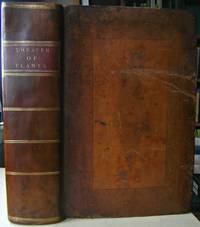
1640015181London: Thomas Cotes 1640. First edition. Large thick folio title page dedication page preface two pages author's tributes ten pages then ii 1734 but actually slightly less as there are several errors of pagination illustrated with over 2100 woodcut figures lacking the extra engraved title page the 20-page addenda at the rear and the errata leaf but otherwise complete and very sound. The contents are extremely clean and tight there is the odd crease and an occasional tiny corner missing but overall in impressive condition. The front and rear endpapers are a little browned and marked both front and rear hinges are cracked and showing a little silver-fish damage but there is no weakness at all. Full panelled calf probably eighteenth century but possibly earlier a little rubbed a little worn at the edges scuffed on the upper cover rebacked fairly recently with a leather spine and red morocco label. Blanche Henrey 286. Very heavy - extra postage will be required. John Parkinson 1567 - 1650 was both the last of the great English herbalists and one of the first of the great English botanists. He was apothecary to James I and a founding member of the Worshipful Society of Apothecaries in December 1617 and was later Royal Botanist to Charles I. The Theatrum was the most complete and beautifully presented English treatise on plants of its time. One of the most eminent gardeners of his day he kept a botanical garden at Long Acre in Covent Garden today close to Trafalgar Square and maintained close relations with other important English and Continental botanists herbalists and plantsmen. . First Edition. Full-Leather. Very Good. Thomas Cotes Hardcover
165093TCL8LKTV6YNetherlands 1650. Framed. Drawings 48.8 x 28.9-29.2 cm. Black chalk drawings occasionally heightened with white chalk including some light brown watercolours on grey 17th-century handmade paper without watermark. In manuscript 'Martagon' in brown ink. In lower right corner in manuscript the number '3' in ink. We have not succeeded in identifying the artist of these beautiful drawings. We know no other drawing that is clearly from the same hand. Two artists are mentioned as possible candidates Govert Flinck Cleves 1615-1660 Amsterdam and Gerbrand van den Eeckhout 1621 - Amsterdam - 1674. The present drawings are probably made around the middle of the 17th century in Holland. The composition is similar to some papers in florilegia such as Theodor de Bry 1611/1612 to 1641 and later but they never show so many species and the flowers on a sheet. This study could be a sketch for a painting not necessarily a floral still life possibly a landscape. In fine condition.l Cf. Bernt Die niederländischen Maler und Zeichner des 17. Jahrhunderts vol. 4 nr. 209 München 1979; Schatborn 'Een toeschrijving aan Govert Flinck' in: Bulletin van het Rijksmuseum 22 nr. 2/3 1974 pp. 111-121. unknown