Pluche (Abbe Noel-Antoine).Biblio.com
25 résultats
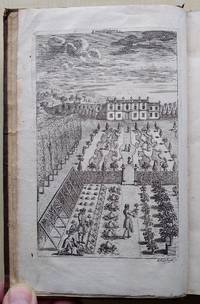
1735020847Autrecht: Etienne Neaulme 1735. Illustrated with an engraved frontispiece 17 charming engraved plates a vignette title page printed in red and black 12mo pp xviii 214 a little age-toned and a few blemished internall;y but otherwise in good condition contemporary panelled sprinkled calf sympathetically re-backed with a recent spine. A multi-volume work of which this is devoted to various garden plants and garden plans. An attractive copy with the armorial bookplate of Lord Viscount Montague. Full Leather. Very Good. Etienne Neaulme Hardcover
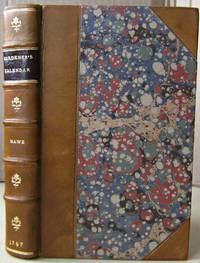
1767016073London Norwich Chelmsford & York: W. Griffin; W. Chase; T. Toft & E. Etherington 1767. FIRST EDITION BUT LACKING ONE PAGE. Small octavo pp 422 one page bookseller's catalogue. The title page is mounted lacking a few small pieces around the margins; the preface page is a bit worn with a torn corner; otherwise contents generally a little used and dog-eared some staining and marking of which the worst is pages 190/191 see illustration; LACKING page 1/2 otherwise complete tight and sound; bound in a fairly recent half calf and marbled boards raised bands and title label. Blanche Henrey 1052. The true rare first edition. There were two printings in 1767 with differences in pagination - this is the first . First Edition. Half Leather. Good. W. Griffin; W. Chase; T. Toft & E. Etherington Hardcover
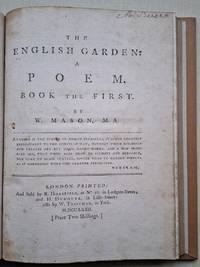
1772021679London & York: R. Horsfield & H. Dunover; W. Tessyman & J. Todd 1772. 1772 - 1781. Four parts each with title page. Book the First 1772 pp 2 30 advertisement leaf; Book the Second 1777 with the half-title pp 34 advertisement leaf; Book the Third 1779 with the half-title pp 32; Book the Fourth 1781 with the additional general title page for the whole work pp 54. Some age-toning and light marking throughout an early signature on the first title page - M. Berens a closed tear to the general title page but otherwise very sound and generously margined bound in a simple modern quarter calf and boards. Blanche Henrey 1036 1040 1042 1043. William Mason 724 - 1797 was an English poet divine amateur draughtsman author editor and gardener. "Mason was both a good horticulturist and an effective landscape gardener. As well as giving directions for gardening the poet traces the history of the art through the writings of Bacon Spenser Milton Temple and Addison and the garden work of Southcote Shenstone and Capability Brown.". First Edition. Quarter leather. Good. R. Horsfield & H. Dunover; W. Tessyman & J. Todd Hardcover
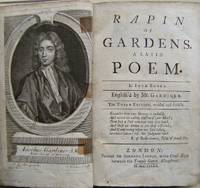
1728015566The Cross-Keys between temple Gates Fleet Street: Bernard Lintot 1728. Third edition. An engraved portrait frontispiece four engraved allegorical plates one folding engraved garden plan small octavo pp liii i 200 8 a two-page publisher's list the frontispiece is a little marked in the inner margin possibly from sellotape residue and both this and the title page are a bit age-toned the verso of the frontispiece has some late Victorian inscriptions otherwise the contents are quite clean bound in fairly recent boards with a paper spine label the upper boards a little marked. Blanche Henrey 1255 devoting a page of text and three illustrations to it - "long remained popular and quotations from it are to be found in many 17th and 18th century books on English gardening". This third English editiuon is the only one to include the extra plate. It was originally published in France in 1665. The translator was Subdean of Lincoln Cathedral and Switzer describes him as "a great lover of gardening". Boards. Good. Bernard Lintot Hardcover
178558346Paris: Chez Debure 1785. 12mo 17cm; contemporary sprinkled calf page edges dyed red; xliv1-5585pp; engraved frontispiece 5 folding plates following text. Page 490 is mis-numbered "390"; p.516 mis-numbered "116." A complete sound copy the text quite fresh and the folding copperplates in excellent condition. The leather spine is cracked vertically weak at the joints and has lost a tiny portion of its spine label; overall complete and Good. Embossed blindstamp of a previous collector to the title page. <br /> <br /> Originally published in 1771 reissued in an expanded format in 1774 of which this appears to be a reprint. There was a companion volume Pratique du Jardinage which appeared in 1770. HUNT 403 citing the 1774 edition and providing the editor's identity. Chez Debure unknown
1796017752London: G. Nicol; G.G.& J. Robinson; J. Debrett 1796. Two volumes octavo pp xxxii 408 8; xx454 4 2 page publisher's advertisement some age-toning throughout otherwise tight and sound contemporary half calf and boards rubbed the boards a bit spotted and marked the second volume has been neatly recased with the original spine laid down. John Whitehall Dod's copy with his engraved crest label in each book. Two neat later signatures also on the endpapers. Published anonymously. Blanche Henrey 1229. "An eminent writer on agriculture and rural economy. This enlarged edition contains additional information on the laying out of grounds and descriptions of some noted estates visited by the author together with his critical remarks and suggested improvements. Second edition. Half Leather. Good. G. Nicol; G.G.& J. Robinson; J. Debrett Hardcover
1799018021Edinburgh: Printed for the author 1799. First edition. Octavo not illustrated pp xii 430 some age-toning throughout a little foxing otherwise sound and tight internally marbled edges contemporary half calf and marbled boards rubbed the spine-head frayed. One of the scarcer of Nicol's works and the first edition seems particularly elusive. Walter Nicol 1769 - 1811 was a Scottish garden and hothouse designer who wrote several books on practical horticulture. An advertisement leaf in this books mentions his terms for garden design and advice at One Guinea per day. He was born in Niddrie. He was employed at a number of estates in Scotland and improved the design and layout of gardens and glasshouses. Nicol is in particular responsible for the walled garden layout at Dalhousie Castle in Midlothian."His works which were of a very high standard became exceedingly popular" - Blanche Henrey 1178. First Edition. Half-Leather. Good. Printed for the author Hardcover
1726023086Half-moon over against St Dunstan's Church: Tho. Woodward 1726. Folio with a very striking engraved frontispiece three very small text illustrations but lacking the two other plates which seem never to have been bound in pp 22 456 with slight makes to page 161/2 273/4 and 292-3 a tiny tear to the top margin of page 167/8 a minute marginal wormhole running through 199 to 248 otherwise really extremely clean and bright internally an unpressed copy so slight waves to the pages. full contemporary panelled calf with new leather spine and red morocco label. A striking copy. With the bookplates of the Victorian traveller Frances Louisa Swayne the earlier book label of Reveerend Peter Gunning Farmborough and the later bookplate of the Society of the Sacred Mission Kelham. Blanche Henrey 945. . Full Leather. Very Good. Tho. Woodward Hardcover
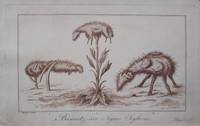
1791018460Bath: S. Hazard 1791. Latin text with some Greek; a few of Clayton's notes are in English. Engraved frontispiece of the Agnus Scythicus pp 138 very clean internally the hinge at the frontispiece crackig but no weakness bound in a ater unlettered cloth-backed marbled boards rubbed and chipped at the edges but otherwise sound. RARE. The Vegetable Lamb of Tartary Latin: Agnus scythicus or Planta Tartarica Barometz is a legendary zoophyte of Central Asia once believed to grow sheep as its fruit. It was believed the sheep were connected to the plant by an umbilical cord and grazed the land around the plant. When all accessible foliage was gone both the plant and sheep died. Underlying the legend is the cotton plant which was unknown in Northern Europe before the Norman conquest of Sicily. The Hunt Library Catalogue - Number 474 - devotes four pages to the earlier printings of this work - "One of the most curious little books in the Collection or even in the demesne of bibliography". This copy has an article bound in at the rear entitled Botany; it has 127 pages is probably late-Victorian and I have not traced its source. First Edition. Cloth-backed boards. Good. S. Hazard Hardcover
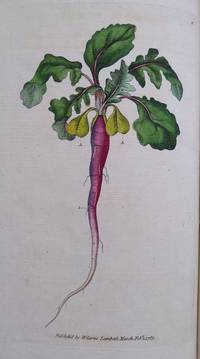
1788019842The Botanic Garden Lambeth-Marsh: Published by the author 1788. Octavo pp 33i eight hand coloured engraved plates with slight age-toning the last twoplates with slight foxing also each plate has a descriptive explantikon page opposite twentieth century boards with cloth spine the upper cover a little faded but otherwise very good. RARE. Designed to illustrat a series of public lectures given by Curtis at his Botanic Garden only two parts each of four plates were ever published. The garden was in Lambeth Marsh near to what is now Waterloo Station. First Edition. Cloth-backed boards. Good. Published by the author Hardcover
1794021678Fleet Street: B. & J. White 1794. Illustrated with an engraved portrait frontispiece small thick quarto pp xxxviii 435 with the blindstamp of The Faversham Institute on the title page an ink name and address on the verso of the frontispiece has been cross-hatched out with the result thet the marking shows through to the plate the title page is a little age-toned the dedication leaf a little toned from an early insertion of a piece of paper otherwise this a remarkably clean and wide-margined copy bound in a recent full calf which has just slight signs of use. RARE. The subscribers' list accounts for just sixty copies. First English edition. Full Leather. Very Good. B. & J. White Hardcover
1797021414Pater-noster Row & Strand London: G.G. & J. Robinson; T. Cadell & W. Davies 1797. Second edition "carefully revised corrected and very much enlarged and improved". Very thick quarto not paginated but probably 1200 pages or more with 11 engraved plates one of which is folding the plates are rather foxed and toned the text is slightly age-toned and foxed though not consistently so the hinge at the title page is cracked but in no way weak and the front endpaper IS loose and indeed the firmness and lack of damage to the pages throughout is remarkable; bound in contemporary speckled calf with marginal gilt lining the spine with gilt decoration and morocco label slightly worn overall very neatly re-backed at some time the original endpapers retained. At some time this copy found its way to the United States as it contains the tiny label of the notable horticultural bookseller Elisabeth Woodburn. Balnche Henrey 1087. One of the most comprehensive and detailed descriptions of horticultural practices at the end of the eighteenth century. Authorship is generally attributed to Abercrombie only. Second edition. Full-Leather. Very Good. G.G. & J. Robinson; T. Cadell & W. Davies Hardcover
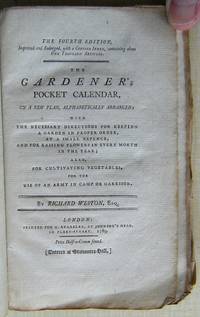
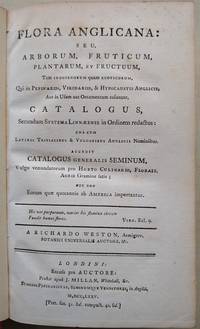
1789014961London: G. Kearsley at Johnson's Head in Fleet Street 1789. Fourth edition. 12mo measires 168mm x 105mm pp xii 5 - 164 uncut and unopened hinge at pages 32/33 cracked but sound otherwise extremely clean internally original grey paper covers slightly marked and soiled. An outstanding copy - unpressed and in its original state - of a very scarce book. As this was a book designed solely for almost daily use by working gardeners a copy in this condition is a remarkable survival. Blanche Henrey 1489. "Weston appears to have had an excellent knowledge of nursery gardening and nurseryman's sales catalogues. The book was originally written as the result of Weston being requested by a seedsman of London to write a few short directions for the proper time of sowing seeds which could be given to customers". Paperback. Very Good. G. Kearsley, at Johnson's Head in Fleet Street Paperback
1755019284Whitehall New Bond Street St Paul's Churchyard : Printed for the author 1755. the title continues " with the Latin trivial and common English names and an English index referring to the Latin names. Also a general catalogue of seeds for the kitchen-garden flower-garden grass-land etc usually raised for sale and those imported from America". First edition. Latin title two-sided advertisement leaf for the author's works English title 12 259 advertisement leaf; Supplement 1780 - Latin title English title pp 8 120 octavo a little age-toning with a small marginal piece missing from page 8/9 and very slight damage to the next page also otherwise remarkably clean and firm a later binding of red cloth perhaps early twentieth century a good sound copy of a scarce and important work. Our copy includes both Latin title pages which are oftern missing; it also has the extra advertisement leaf also uncommon. BLANCHE HENREY 1483 - "Weston appears to have had an excellent knowledge of nursery gardening and nurseryman's sales catalogues. He was interested in agricultutr and all forms of horticulture and he also made a study of horticultural and botanical literature." HUNT LIBRARY 647 - "This in its time was a standard handbook used by botanists gardeners nurseries seedsmen. It lists trees and shrubs herbaceous plants greenhouse plants stove plants and seeds according to their Linnaean binomial and English names." . First Edition. Cloth. Very Good. Printed for the author Hardcover
1731018259Paternoster Row & St Paul's Churchyard London: J & J Knapton; A Bettesworth & C. Hitch; J. Pemberton & D. Browne 1731. Sixth edition. The title pages to parts II and III are dated 1730 as is Hereforshire Orchards;the title page to the appendix is 1731. Thick octavo pp xiv 608 25 with an engraved frontispiece and thirteen engraved plates of which eight are folding several plates are folded awkwardly and several have frayed margins but only one has very slight loss of the engraved surface and it is this one which protrudes slightly from the fore-edge some age-toning occasional small splash marks a little wear throughout light early manuscript notes on the front endpapers contemporary full calf a bit worn and marked but perfectly sound lacking tiny pieces at head and tail of the spine the remains of a contemporary manuscript label on the spine. A reasonably good copy of one of the most influential of eighteenth century gardening books. Blanche Henrey 503. Little is known about Bradley's childhood aside from an early interest in gardening and the fact that he lived in the vicinity of London a city at the time with many amateur naturalists. Though Bradley lacked a university education his first publication Treatise of Succulent Plants gained him traction with influential patrons like James Petiver and later Hans Sloane. With their support he was proposed and elected a Fellow of the Royal Society in 1712 at the age of 24. Two years later Bradley visited the Netherlands and took an interest in horticulture. He spent the next decade back in England writing treatises on topics related to this central interest like weather fertiliser productivity and plant hybridisation. In recognition of his work in the field and with the thereafter unfulfilled promise that he would found and fund a university botanical garden the University of Cambridge named Bradley its first professor of botany in 1724 a position he would hold until his death. As Bradley was not a wealthy man in his later life and as this was an unsalaried position the newly minted academic continued to focus most of his efforts on making a living through publishing. According to his rival and successor John Martyn as well as his successor son Thomas Martyn Bradley did this at the expense of his students whom he reportedly neglected to even lecture to. Bradley made notable innovations and discoveries across a wide array of disciplines. For example this work included directions for the making and use of a rudimentary kaleidoscope to aid in formal garden design and layout. He also wrote about cooking and was the first to publish recipes in the English language using the then-exotic pineapple as the main ingredient. His History of Succulent plants was the seminal treatise on the topic and his studies of tulips and auriculas helped further accurate theories of plant reproduction. Bradley was also a pioneer in the examining of fungal spore germination and the pollination of plants by insects. His publications additionally contained information on how to build and use greenhouses early theories regarding agricultural productivity and pond ecology. . Sixth edition. Half-Leather. Fair. J & J Knapton; A Bettesworth & C. Hitch; J. Pemberton & D. Browne Hardcover
1750015882Leyden & Amsterdam: Samuel Luchtmans & Meynard Uytwerf 1750. Illustrated with 13 finely engraved plates one with a tear and one with tears along the folds one full page plan within the text small quarto pp xxiv 6 412 32 contents a little age-toned but otherwise remarkably clean pages unpressed lacking the half-title contemporary full calf rather worn particularly at the corners joints cracked lacking the lower panel of the spine and a small piece at the head original marbled endpapers. LACKING one plate. "French edition of the first treatise in Dutch to provide a theoretical basis for garden design. It also addressed various practical issues including the cultivation of plants propagation and stove and hothouse technology the latter presumably embodying the knowledge held within the family - the author's father having grown the first pineapple at Meerburg in 1658" - Patrick Taylor . Full-Leather. Good. Samuel Luchtmans & Meynard Uytwerf Hardcover
1764019061Edinburgh: A. Kincaid & J. Bell; R. Fleming 1764. Octavo pp iv 443 7 some age-toning throughout a little soiling here and there pages 331-362 stained in the lower margin otherwise firm and tight internally with no tears contemporary calf rubbed and a little worn and creased neatly rebacked with a new spine raised bands and green title label new endpapers. Blanche Henrey 883 mentioning that not all copies of this edition have the two plates and ours does not. In effect the third edition though the preceeding two have the title "The Scots Gardiners Director". Sir James Justice 1698 - 1763 was a Scottish horticulturalist/gardener. His works on gardening were distributed in much of Britain and Ireland. He reportedly had a passion for botanical experiments which he pursued at the expense of his finances and family. Indeed the later miniaturist John Kay wrote that tulipomania was the cause of him parting with his estate at Crichton and the purchase of a smaller one. His divorce and expulsion from the Fellowship in the Royal Society has been blamed on the expenses he put into greenhouses and soil mixtures. He is nevertheless a noted figure in Scottish gardening with a claim to be the father of it. The genus Justicia is named for him. Full-Leather. Good. A. Kincaid & J. Bell; R. Fleming Hardcover
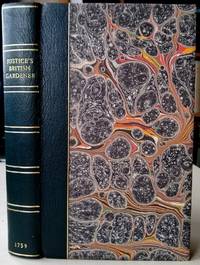
1759019062Edinburgh: R. Fleming 1759. Octavo pp iv 412 some age-toning throughout the title page and the final page rather foxed otherwise extremely firm and tight internally with no tears rebound in a very smart dark green quarter morocco and marbled boards. Blanche Henrey 878. Sir James Justice 1698 - 1763 was a Scottish horticulturalist/gardener. His works on gardening were distributed in much of Britain and Ireland. He reportedly had a passion for botanical experiments which he pursued at the expense of his finances and family. Indeed the later miniaturist John Kay wrote that tulipomania was the cause of him parting with his estate at Crichton and the purchase of a smaller one. His divorce and expulsion from the Fellowship in the Royal Society has been blamed on the expenses he put into greenhouses and soil mixtures. He is nevertheless a noted figure in Scottish gardening with a claim to be the father of it. The genus Justicia is named for him. First Edition. Quarter leather. Very Good. R. Fleming Hardcover
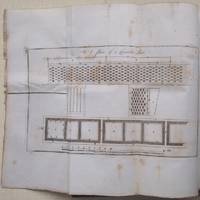
1795017372The Strand London & Edinburgh: T. Cadell & W. Davies; Bell & Bradfute 1795. Second edition. Illustrated with a folding plan of a cucmber bed a little foxed and browned slightly frayed at the fore-edge octavo pp xvi 312 fore-edge and bottom edge untrimmed a little foxed and age-toned throughout a neat early signature on the title page bound by Spink & Thackray of Leeds in a brown half buckram and boards slightly worn and with an armorial crest at the base of the spine. Blanche Henrey 1000. RARE - a good wide-margined copy. Second edition of the work which brought MacPhail's forcing frame and controversial method of cultivation to the public view. McPhail was gardener to Lord Hawkesbury at Addiscombe Place in Surrey. The brick frame was of his own design and a notable feature of this book is the detailed weather observations covering a complete year together with the precise treatment given to the plants on each day. The frame proved immensely popular and within 40 years Rogers 1839 was to state " an excellent invention that has certainly rendered the forcing of this vegetable more simple.there are few gentleman's gardens and few principal market gardens without them". . Second edition. Half cloth and boards. Very Good. T. Cadell & W. Davies; Bell & Bradfute Hardcover
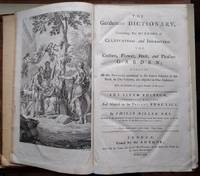
1752019969The Bible & Crown St Paul's Churchyard: John & James Rivington for the author 1752. Sixth edition carefully revised and adapted to the present day. Folio an engraved allegorical frontispiece and nine engraved plates a light marginal staining at the bottom inner corner of the first ten pages repeated a couple of times later a tear to the last page of the preface and another on a later page both without loss the title page a little creased the hinge between the dedication page and the preface is cracking but without any weakness otherwise quite clean and sound internally full contemporary calf very rubbed and scuffed with surface abrasion but still sound rebacked with a later calf spine probably nineteenth century torn at the spine head with a morocco title label. Bound in at the front is a second frontispiece - The Genius of Botany - drawn by S. Hale and engraved by C. Grignion; this is smaller in format than the book and the only reference I can find is that it acts as the frontispiece to Hill's "Eden" though it seems too small for that work. It is a little creased and lacking part of it's margin. Blanche Henrey 1110. An important edition as it is the last to contain pre-Linnean nomenclature. Includes the Index latinus the lengthy catalogues of plants The Gardeners Kalendar and the Appendix. Sixth edition. Full-Leather. Good. John & James Rivington for the author Hardcover
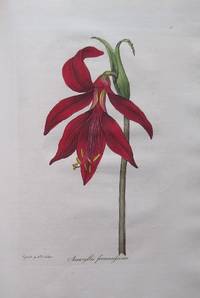
1791017068St Paul's Churchyard London: J. Johnson 1791. Two volumes bound in one. Volume 1 - Second edition 1791. Volume 2 - Third edition 1791. Blanche Henrey 470 . Illustrated with two engraved allegorical frontispieces 18 engraved plates one of them folding - the Cypripedium plate which is often lacking - and two hand-coloured quarto pp xii 214 126 ii; x 197 both frontispieces and title pages browned and with some offsetting from plate to title the plates of the Portland Vase and the Fertilisation of Egypt similar this last plate by Blake after Fuseli; the remaining botanical plates clean lacking the corner of page 171/2 a relevant pencilled note at the base of one page a few pages with foxing but otherwise very clean and sound internally with the armorial bookplate of the Dowdeswell family Pull Court Worcestershire on the front endpaper together with a shelf label and a small newspaper clipping; the hand-colouring on the two plates is particularly attractive and there is also an extra engraved plate fixed to the verso of the first titlepage - a portrait of Darwin engraved by Haughton after Rawlinson - this has caused a little waving of the paper; contemporary full calf a little rubbed and scuffed rebacked the old spine laid down and with some wrinkling. Still a good sound copy. The first poem The Economy of Vegetation celebrates technological innovation scientific discovery and offers theories concerning contemporary scientific questions such as the history of the cosmos. The more popular Loves of the Plants promotes revises and illustrates Linnaeus's classification scheme for plants. One of the first popular science books the intent of The Botanic Garden is to pique readers' interest in science while educating them at the same time. By embracing Linnaeus's sexualized language which anthropomorphizes plants Darwin intended to make botany interesting and relevant to the readers of his time. Darwin emphasizes the connections between humanity and plants arguing that they are all part of the same natural world and that sexual reproduction is at the heart of evolution ideas that his grandson Charles Darwin would later turn into a full-fledged theory of evolution. This evolutionary theme continues in The Economy of Vegetation which contends that scientific progress is part of evolution and urges its readers to celebrate inventors and scientific discoveries in a language usually reserved for heroes or artistic geniuses. Darwin's attempt to popularize science and to convey the wonders of scientific discovery and technological innovation through poetry helped initiate a tradition of popular science writing that continues to the present day. Full Leather. Good. J. Johnson Hardcover
1760047649Paris: Chez Charles-Antoine Jombert Libraire du Roi pour le Genie & l'Artillerie a l'image Notre Dame 1760. Fourth Edition . Hardcover. Very Good/No Jacket. Folio - over 12 - 15" tall. Quarto. 8 482 6 pages. Hardcover bound in original speckled calf with raised bands on the spine. The binding is worn but sound. Splitting to the front hinge running up about 3 inches from the foot to the lowest band. Spine a bit dry with some flaking and nicks to the leather. The binding is rubbed and has some scuffs. A sound copy. All edges red. Marbled endpapers. Text is generally clean. Collates complete with 49 copperplate engravings most which are folding. A decent example. First published in 1709 this is the Fourth edition and is the most expansive and heavily illustrated editions of this work. Text is in French. <br/> <br/> Chez Charles-Antoine Jombert, Libraire du Roi pour le Genie & l'Artillerie, a l'image Notre Dame hardcover
1773015679London: S. Hooper 25 Ludgate-Hill 1773. Second edition greatly improved. Illustrated with one plate foxed octavo pp xxxii 298 2 136 slight age-toning and blemishes heavier spotting and foxing between pages 77 and 98 possibly caused by the different paper of the plate otherwise very sound and tight contemporary half calf and marbled boards rubbed and slightly worn rebacked at some point with the old spine laid down the spine now slightly worn at head and foot. With armorial bookplate of Peter Clutterbuck and a slightly odd offset on the facing blank. RARE. Weston was originally a thread-hosier of Leicester but in some of his anonymous works describes himself as "a country gentleman". In 1773 he was living at Kensington Gore but later was living at Leicester where he was secretary of the local agricultural society. From the number of his published works it is evident he had a very wide knowledge of plants and plant literature. Blanche Henrey 1490 - "Richard Weston 1733-1806 appears to have had an excellent knowledge of nursery gardening and nurserymen's sale catalogues. He was interested in agriculture and all forms of horticulture and he also made a study of horticultural and botanical literature.Weston's first important published work appeared in 1769 anonymously. This was his Tracts on practical agriculture and gardening. At the end of this volume and in subsequent editions of the work is a very useful 'Catalogue of English authors.on husbandry gardening botany and subjects relative thereto''. This catalogue is greatly extended in this rare second edition. Second edition. Half-Leather. Good. S. Hooper, 25 Ludgate-Hill Hardcover
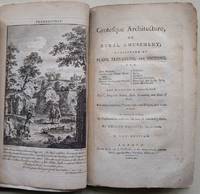
1790018728The Architectural Library: I. & J. Taylor 1790. Illustrated with an engraved frontispiece 28 engraved plates octavo pp 14 two-page publisher's catalogue at the rear age-toning and some signs of use internally though this is usually restricted to the margins with the contemporary signature of V. Owen Smythe of Condover Park and loosely inserted is the later armorial bookplate of Reginald Cholmondeley of Condover Hall also loosely inserted is a further publishers' catalogue of 16 pages uncut and partially unopened the first page of which is detached; finely bound in full red crushed morocco with ornate gilt decoration on both covers the spine gilt with raised bands and a small black morocco label contained in a custom-made box of marbled paper over boards a red calf spine and cloth lined; the binder is not known but the inked initials "T.A.B. 1974" on the rear endpaper may identify them. From the library of the gardening historian Anthony Huxley with his stamp on the front endpaper. RARE. First published in 1767 the Sir John Soane Library suggests this is probably the third edition of this pattern book although the second could also be possible. Apparently highly influential though nothing seems to be known of its author. New Edition. Full morocco in box. Very Good. I. & J. Taylor Hardcover
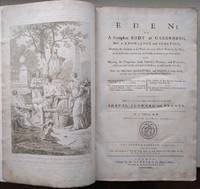
1773019039London: Printed for the author 1773. Second edition "corrected and enlarged". Folio pp iv ii 716 with an engraved frontispiece 60 engraved plates plates 66 - 80 in the appendix i.e. LACKING five plates in the appendix some age-toning internally the odd blemish here and there the frontispiece with two earlier minor repairs a partly unpressed copy which has resulted in a horizontal crease to the last sixty pages or so see illustration and a slight depression to earlier ones bound in a recent half calf with very slight signs of use with marbled endpapers. Plate 31 is bound slightly out of order and plate 59 has a small ink scribble in the margin and has the plate number corrected in ink. Blanche Henrey 805 mentioning a portrait as well as an allegorical frontispiece; the portrait is not present in our copy. Sir John Hill was an English composer actor author and botanist. He contributed to contemporary periodicals and engaged in literary battles with poets playwrights and scientists. A controversial figure John Hill's often provocative and scurrilous writings involved him in many quarrels both in the field of science and that of literature. Nevertheless his general approval of Linnaeus resulted in many of Hill's publications using the Linnean system for the first time. Second edition. Full Leather. Good. Printed for the author Hardcover