Von Puckler-Muskau, Hermann FurstBiblio.com
75 résultats
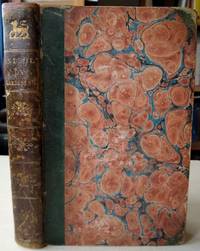
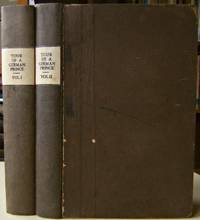
1832016730London: Effingham Wilson 1832. Two volumes small octavo pp xxii 358; 304 with both half-titles slight age-toning and foxing but otherwise sound throughout original brown boards slightly marked and worn neatly re-backed with bew spines and paper labels. This copy is from the Circulating Library English College Lisbon with their small blind-stamp on the title pages and a label and number on the front endpapers. As a landscape gardener Puckler-Muskau is considered of European importance. As a writer of books of travel he holds a high position his powers of observation being keen and his style lucid animated and witty. First British edition. Boards. Very Good. Effingham Wilson Hardcover
1896018101Royal Exotic Nursery Chelsea: Printed for Private Circulation 1896. With signed presentation inscription to J. Hollingsworth head gardener at Tredegar Park followed by Margam Park. Illustrated with a large folding map frontispiece with as usual tears and creases at the upper join now neatly repaired nine large full-page plates on heavy card. many small text images from photographs quarto pp 219 slight age-toning and marking some inner joints rather cracked and weak the last third of the book has rather damp-wrinkled pages with light staining on the last few pages original decorated cloth with paper inlay bevelled edges a bit rubbed and marked the spine dull and age-toned andpulled at the head and tail the upper cover slightly unevenly age-toned. In October 1891 Veitch embarked on a tour of inspection of the great Botanic and Public Gardens maintained by governments in various countries as well as visiting many private horticultural establishments to decide whether the Veitch gardens and nurseries might be enriched by further additions. He set off by way of Rome and Naples to Ceylon thence overland from Tuticorin to Lahore. He continued to Calcutta and on to the Straits Settlements. In Penang he visited the Botanic Gardens whose curator Charles Curtis was formerly employed by James Veitch & Sons as a plant collector before moving on to Singapore where he visited the Botanic Gardens. He then visited Johore before returning to Singapore in February 1892 when he climbed Bukit Timah the highest point on the island with Walter Fox curator of the Gardens. He then travelled to Buitenzorg West Java where he visited the Botanical Gardens. He also explored the crater of Kawah Papandajan volcano and visited Lake Bagendit near Garoet. His travels then took him to Japan where he met Charles Sprague Sargent of the Arnold Arboretum and they undertook a joint plant collecting expedition including ascending the Hakkoda Mountains together. After visiting Korea he reached Australia in 1893. However he found Australia disappointing and wrote that it was easier to collect seed in Japan where there was cheap labour; in Australia "no one will help". He complained that the seeds of many plants "were so tiny he did not know if he was collecting seed or dust". He sent to Kew a collection of dried specimens of 250 species from Western Australia. Later he visited the North Island of New Zealand before returning to England in July 1893. . Signed by Author. First Edition. Cloth. Fair. Printed for Private Circulation Hardcover
1896018100Royal Exotic Nursery Chelsea: Printed for Private Circulation 1896. Illustrated with a large folding map frontispiece with as usual a slight tear at the upper join nine large full-page plates on heavy card. many small text images from photographs quarto pp 219 slight age-toning and marking a little foxing on the last few pages slight marking along the top of the title page original decorated cloth with paper inlay bevelled edges a bit rubbed and marked the spine dull and age-toned the upper cover unevenly age-toned recently re-cased with new endpapers. In October 1891 Veitch embarked on a tour of inspection of the great Botanic and Public Gardens maintained by governments in various countries as well as visiting many private horticultural establishments to endeavour whether the Veitch gardens and nurseries might be enriched by further additions. He set off by way of Rome and Naples to Ceylon thence overland from Tuticorin to Lahore. He continued to Calcutta and on to the Straits Settlements. In Penang he visited the Botanic Gardens whose curator Charles Curtis was formerly employed by James Veitch & Sons as a plant collector before moving on to Singapore where he visited the Botanic Gardens. He then visited Johore before returning to Singapore in February 1892 when he climbed Bukit Timah the highest point on the island with Walter Fox curator of the Gardens. He then travelled to Buitenzorg West Java where he visited the Botanical Gardens. He also explored the crater of Kawah Papandajan volcano and visited Lake Bagendit near Garoet. His travels then took him to Japan where he met Charles Sprague Sargent of the Arnold Arboretum and they undertook a joint plant collecting expedition including ascending the Hakkoda Mountains together. After visiting Korea he reached Australia in 1893. However he found Australia disappointing and wrote that it was easier to collect seed in Japan where there was cheap labour; in Australia "no one will help". He complained that the seeds of many plants "were so tiny he did not know if he was collecting seed or dust". He sent to Kew a collection of dried specimens of 250 species from Western Australia. Later he visited the North Island of New Zealand before returning to England in July 1893. . First Edition. Cloth. Good. Printed for Private Circulation Hardcover
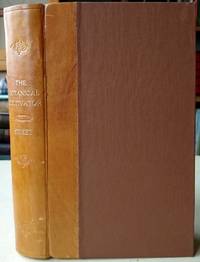
1821017740London: James Ridgway 1821. Octavo pp ii 528 slight age-toning but otherwise surprisingly clean internally bound in a recent brown quarter calf and cloth very slightly rubbed. Later editions of the book were published under the title 'A Hothouse and Greenhouse Manual Or Botanical Cultivator' but this first edition is very scarce. Sweet was a prominent botanist and gardener of his day. He published both expensive colour plate works and also practical manuals such as this. This is one of the earliest books to contain so much specific information on propagation. First Edition. Quarter calf and cloth. Very Good. James Ridgway Hardcover
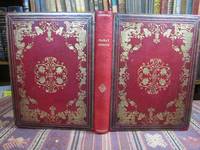
1851048979New York: Green & Spencer 1851. Leather Bound. Very Good. 4to - over 9¾ - 12" tall. Quarto. 138 6 iv pages. Bound in original full red leather with ornate cover designs embossed in gilt. The binding shows rubbing bumping and wear but is quite sound. Rebacked in modern red leather with a largely plain spine bearing the title and a gilt roll at the headcap and foot and a small central device in the middle of the spine. Corners rebuilt with leather. All edges gilt. Modern faux marbled paper endpapers. Text is a bit toned and there is foxing on the plates. Most if not all of the plates have their tissue guards. No volume number at the front of the book but the general text ends on page 137 with "End of Vol. I" at the bottom of the page. An attractive sturdy work. <br/> <br/> Green & Spencer hardcover
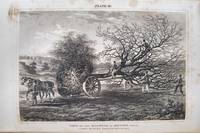
1828017561Edinburgh and London: John Murray 1828. Second edition greatly improved and enlarged. Illustrated with six engraved plates octavo pp xxxviii 527 sadly the plates are heavily foxed which has also affected the neighbouring page howver the remainder of the text is remarkably clean and very tight and sound; bound in a contemporary half calf rubbed rebacked sympathetically with a new calf spine. lightly tipped-in at the first page is a small advertisement leaf warning of 'sundry ignorant and uneducated persons' attempting to pass themselves off as having been trained by Henry Steuart - this seems to be scarce. Steuart 1759 - 1836 was a Scottish landowner agricultural improver soldier and classical scholar. Owing to bad health Steuart abandoned most of his literary work and experiments in arboriculture became the chief interest of his life. In September 1823 a deputation from the Highland and Agricultural Society which included Sir Walter Scott and Lords Belhaven and Corehouse visited Allanton and reported on the improvements effected there by Steuart's system of transplanting large trees. Though he had had to contend with an unfavourable soil and an exposed position he attained at no extraordinary expense the power so long desired of anticipating the slow progress of vegetation and accomplishing within two or three seasons those desirable changes in the face of nature which he who plants in early youth can in ordinary cases only hope to witness in advanced life. From this time Steuart frequently corresponded with Sir Walter who imitated several of Steuart's experiments at Abbotsford. When in 1828 Steuart published this work Scott reviewed it enthusiastically in the Quarterly March. When Scott visited Allanton in January 1829 in company with Lockhart he noted in his journal: Sir Henry is a sad coxcomb and lifted beyond the solid earth by the effect of his book's success. But the book well deserves it. The book was also favourably reviewed by Southwood Smith in the Westminster Review by Professor Wilson Christopher North in Blackwood's Magazine April 1828 and in the Edinburgh Review March 1829. It had a large circulation in America. In his preface to the second edition Steuart claims to have made the first attempt to apply the principles of physiology to practical arboriculture and to have created the new science of phytology. Second edition. Half Leather. Good. John Murray Hardcover
1816017034Paternoster Row London: Longman Hurst Rees Orme & Brown 1816. Two volumes. Illustrated with a folding plan in the first volume 12mo measures 180mm x 108mm the first volume is partly unpaginated the second volume is 4 211 i slight age-toning and the occasional blemish the frontispiece is awkwardly folded and along with the title page a bit browned but otherwise clean and sound internally half calf and boards rubbed lacking most of the spine labels with the tiny armorial bookplate of William Booth Grey - the son of George Harry Grey 1737 MP for Staffordshire in 1761 and succeeded as the 5th Earl of Stamford 30 May 1768. He is considered to be the artist of two plant collages in the style of Mary Delany acquired by the British Museum in 2008. RARE. William Salisbury botanical nurseryman has been erroneously described as a brother of Richard Anthony Salisbury. In the preface he states that from 1791 he was employed by the Board of Agriculture in conducting experiments on the growth of plants ; he may have been previously engaged as a nurseryman. In 1797 he was gardener to J. Symmons F.R.S. at Paddington House Paddington and in the same year entered into partnership with William Curtis at his garden at Queen's Elm Brompton. After Curtis's death in 1799 he removed the garden to Cadogan Place Sloane Street where he held botanical classes. He died in 1823. The site is now the private gardens of Cadogan Place. First Edition. Half-Leather. Good. Longman, Hurst, Rees, Orme & Brown Hardcover
18435054Rostock: G. B. Leopold's Universitaets-Buchhandlung 1843 1844. Hardcover. Very Good. 8vos 160 296 pages contemporary pastepaper boards chipped leather spine label chipped spine; x-library with perforations. <br/><br/>1 folding plate. G. B. Leopold's Universitaets-Buchhandlung hardcover
1883021951London: John Murray 1883. Third edition. Very well illustrated with many engravings large thick octavo pp xxiv 548 the final index page is foxed occasional light foxing here and there otherwise clean and sound internally very tight and firm original brown cloth with just slight suggestions of use the spine head very slightly frayed. Third edition. Cloth. Very Good. John Murray Hardcover
1878018020London: John Murray 1878. Second edition revised. Very well illustrated with many engravings large thick octavo ppxxiv 548 the frontispiece title page and index pages a little foxed occasional light foxing here and there otherwise very clean and sound internally very tight and firm original blue cloth slightly worn and scuffed faded slightly marked here and there a few very small bubbles to the cloth the spine head with slight tears. Second edition. Cloth. Good. John Murray Hardcover
1826016704Thames Street London: C. Andrews 1826. Volumes II and III only small 12mo pp vi 185; vi ii 203 uncut very clean and tight internally original boards with paper labels slightly worn and creased one board with a slightly crushed corner. From the library of Norman Douglas Simpson with his executors label on the front endpapers. Funereal flowers shrubs and small trees flowers and plants of the fields etc. First Edition. Boards. Very Good. C. Andrews Hardcover
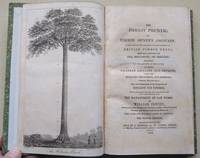
1808020196St James's Street Fleet Street & Poultry London: J. Harding; J. White & J. Mawman 1808. Second edition. Illustrated with an engraved frontispiece of the Woburn Beech seven other plates of which three are tinted and folding octavo pp 4 6-277 an advertisement page extremely clean internally recently bound in green quarter morocco and marbled boards. A very smart copy. Pontey was a Yorkshire nurseryman and planter and tree-pruner to the Duke of Beford. Second edition. Quarter leather. Very Good. J. Harding; J. White & J. Mawman Hardcover
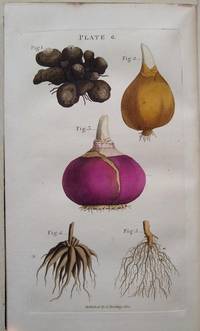
1824018396London & Edinburgh: E. Lloyd & Son; Archibald Constable & Co. 1824. The title continues. to which are added the most approved methods of cultivating bulbous and other plants as practised by the most celebrated florists of England Holland and France. Two volumes octavo pp lii 354; xii 484 slight age-toning otherwise very clean internally contemporary half-leather and marbled boards rubbed in the first volume the spine has been damaged and neatly re-laid however the upper cover complete with endpapers and title page is nearly detached. First Edition. Half-Leather. Good. E. Lloyd & Son; Archibald Constable & Co. Hardcover
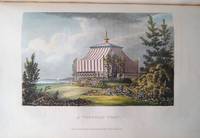
1823019868101 Strand London: J. Diggens for R. Ackermann 1823. First edition. Illustrated with 26 fine hand coloured plates of 27 - lacking one plate and a tinted aquatint plan with overlay slip large octavo pp 110 ii with the half-title a little age-toning and occasional light marking the half-title frontispiece and title page have light and faint crease page 69/70 has a paper fault crease to the margin which has left a faint imprint on the surrounding pages otherwise this is clean and sound internally half calf and marbled boards lightly rubbed. From the library of Alan Roger of Dundonnell House and Garden with his signature on the front endpaper. The missing plate is "A Picturesque Dairy". One of the most charming of estate improvement books of this period. First Edition. Half-Leather. Good. J. Diggens for R. Ackermann Hardcover
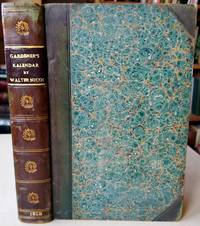
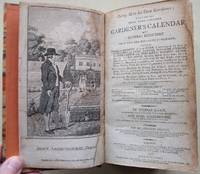
1802018429Edinburgh and London: William Creech; T. Cadell jnr & W. Davies J. Scratcherd and T. Hurst 1802. Third edition "with large editions". Illustrated with 6 engraved plates very foxed and browned octavo pp xvi 427 i marbled edges some sporadic foxing and browning thoughout heavier on a few pages but otherwise very firm and tight contemporary half calf and marbled boards rubbed and a little worn. VERY SCARCE. Walter Nicol 1769 - 1811 was a Scottish garden and hothouse designer who wrote several books on practical horticulture. He was born in Niddrie. He was employed at a number of estates in Scotland and improved the design and layout of gardens and glasshouses. Nicol is in particular responsible for the walled garden layout at Dalhousie Castle in Midlothian."His works which were of a very high standard became exceedingly popular" - Blanche Henrey 1182. Third edition. Half-Leather. Good. William Creech; T. Cadell jnr & W. Davies, J. Scratcherd, and T. Hurst Hardcover
1810018182Edinburgh: Archibald Constable & Co Ltd 1810. Firtst edition. Octavo pp xxiv 648 a very fine clean wide-margined copy untrimmed and unpressed in original boards with original spine label; the boards are slightly rubbed and marked with the corners a little worn the spine slightly worn with the joints chipped but no weakness. Occasional light foxing and age-toning. Walter Nicol 1769 - 1811 was a Scottish garden and hothouse designer who wrote several books on practical horticulture. He was born in Niddrie. He was employed at a number of estates in Scotland and improved the design and layout of gardens and glasshouses. Nicol is in particular responsible for the walled garden layout at Dalhousie Castle in Midlothian."His works which were of a very high standard became exceedingly popular" - Blanche Henrey 1173 listing only the Rothamsted copy. First Edition. Boards. Very Good. Archibald Constable & Co Ltd Hardcover
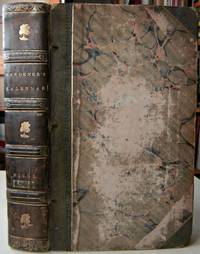
1812018201Edinburgh: Archibald Constable & Co Ltd 1812. Second edition. Octavo pp xxii 646 faintly marbled edges rather strong age-toning on many pages no real foxing apart from a little on the title page the joint at the first blank slightly cracked but not weak otherwise very tight and sound internally contemporary half calf and marbled board rubbed and slightly worn the spine head slightly pulled and a tiny piece missing the upper joint just beginning to wear. Walter Nicol 1769 - 1811 was a Scottish garden and hothouse designer who wrote several books on practical horticulture. He was born in Niddrie. He was employed at a number of estates in Scotland and improved the design and layout of gardens and glasshouses. Nicol is in particular responsible for the walled garden layout at Dalhousie Castle in Midlothian."His works which were of a very high standard became exceedingly popular" - Blanche Henrey 1174. Second edition. Half-Leather. Good. Archibald Constable & Co Ltd Hardcover
1822015170Edinburgh: Archibald Constable & Co Ltd 1822. Fourth edition. Octavo pp xx 646 faintly marbled edges rather strong age-toning on many pages some foxing but otherwise very tight and sound internally marbled endpapers contemporary half calf and marbled board srubbed and slightly worn spine with raised bands upper joint beginning to wear. With the bookbinder's ticket of John Cain the outspoken Manx preacher on the front endpaper. Not in Blanche Henrey though the first three editions are; it would appear to be unchanged from the third edition of 1814. Half-Leather. Good. Archibald Constable & Co Ltd Hardcover
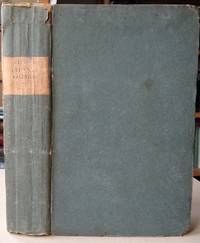
1814014918Edinburgh and London: Archibald Constable & Co. 1814. Third edition. 12mo half-title title page pp xiv 398 uncut slight age-toning slightly uneven fading of the title page and opposing page otherwise exceptionally clean and sound internally very neatly and recently rebound in grey boards with paper label on the spine. A superb copy uncut and unpressed in a very sympathetic binding. Walter Nicol 1769 - 1811 was a Scottish garden and hothouse designer who wrote several books on practical horticulture. He was born in Niddrie. He was employed at a number of estates in Scotland and improved the design and layout of gardens and glasshouses. Nicol is in particular responsible for the walled garden layout at Dalhousie Castle in Midlothian."His works which were of a very high standard became exceedingly popular" - Blanche Henrey 1187. Third edition. Boards. Very Good. Archibald Constable & Co. Hardcover
1823018905Edinburgh and London: Bell & Bradfrute; Longman Hurstm Rees Orme & Brown 1823. Illustrated with seven engraved plates of which two are folding a few small text illustrations also octavo pp xvi 574 ii contemporary half morocco rebacked fairly recently with a modern plain calf spine and black label. The plates are foxed and there is some offsetting on to the adjacent text pages otherwise the contents are in remarkably good condition. The original binder's ticket is on the front endpaper - Bates of Hexham. A very detailed account of north European horticulture. First Edition. Half-Leather. Very Good. Bell & Bradfrute; Longman, Hurstm Rees, Orme & Brown Hardcover
18953688St. Louis MO: Missouri Botanical Garden. 1895. First edition. Hardcover. Good. 8vo 134 pages blue cloth bevelled split at head of spine; x-library but tight <br/><br/>Scientific papers on North American species of Sagittaria and Lophotocarpus Leitneria Floridana leaf reflexion of Yucca alofolia and the mound flora of Atchison County Missouri by Jared G. Smith William Trelease Herbert J. Webber B. F. Bush. Illustrated with 56 plates. Missouri Botanical Garden. hardcover
1892016586Albany New York: Weed Parsons & Company 1892. Illustrated with a frontispiece an allegorical plate and a facsimile letter from Victor Hugo small octavo pp xii 200 11 rather age-toned but otherwise very clean and tight original maroon pebble cloth slightly worn and rubbed. SCARCE. The title is about as direct as the rest of the book. The ramblings of this "crazy Frenchman at Albany" shed very little light on the actual events of his life but give an incredible sense of the energetic character of Louis Menand. There are exuberant paeans to his wife Adelaide whom he calls "Phanerogyne" meaning "remarkable woman" who died in 1890. There are rambling thoughts on the various revolutions and republics in France a scathing appraisal of his arrival in a free land "where slavery was flourishing as carnations" and tales of intrigues at flower exhibitions all told in the least linear style imaginable. He was the son of a gardener in Burgundy France. As early as he could remember he was fascinated by horticulture. "I was eight or nine years old" he later wrote "when I began to try to grow plants from cuttings. I have always been fond of cutting properly or figuratively speaking except cutting my fingers." Eventually Louis became an estate gardener in Paris and later in the Champagne region. In 1837 he came to New York and went to work at nurseries in Halett's Cove which would later become Astoria. There he met a young piano teacher from Albany named Adelaide Jackson. They fell in love and were married in her family home on Park Place in Albany and soon took up residence in what they called "the haunted house" on the Albany-Troy Road Broadway. Louis began selling plants. After a rough first year "more than modest that is to say meagre I might say miserable!!" things began to pick up. Menand had a fair collection of "hardy perennial plants" which had become pretty popular in the Albany/Troy area. Later he sold Norway spruces balsam firs and other popular trees and shrubs. In 1847 he was able to buy several acres of land on what is now Menand Road where Ganser-Smith Park is now located for his greenhouses and nursery. He cultivated plants that no doubt had never before been seen in this old Dutch town -- camellias palm ferns cacti and orchids among others. He was noted for importing exotic plants from Europe and commanded an impressive price for his best camellias: "a little plant four inches high would sell for $25." Menand won significant awards for his plants through the years and continued to grow. He bought 31 acres near the entrance to Albany Rural Cemetery where he set up his son with a half dozen hot houses devoted to growing cut flowers roses carnations pansies geraniums and "an almost endless variety of other species suitable for cemetery decoration." These included all manner of shrubs which no doubt still influence the scenery in the cemetery. His greenhouses were so popular that the Albany and Northern Railroad added a stop there in 1856 named "Menand's Crossing" which the succeeding Delaware and Hudson Railroad renamed "Menand's Station." . First Edition. Cloth. Good. Weed, Parsons & Company Hardcover
1828018900London: Thomas Kelly 1828. Two volumes 1828 - 1830. Thick octavo an engraved frontispiece an extra engraved title page thirty plain engraved plates pp xxviii 1120 142 directions to the binder and an advertisement leaf a further advertisement page is placed after the second title page some foxing and age-toning throughout a bookseller's small label on each front endpaper Kempson - Chertsey later brown half calf and green cloth very slightly worn. a little faded the cloth a little marked in the second volume. One of the most important works of late Georgian horticulture. McIntosh made important contributions to the designs of Taymouth Castle Stratton Park Pengethley Claremont Laeken and Dalkeith. He never set out to emulate such figures as Lancelot Brown or Humphry Repton but remained at the cutting edge of contemporary horticultural techniques about which he wrote extensively; perhaps his greatest area of expertise being that of hot-house design and heating seen to great effect in this work . A landmark work in the history of practical horticulture. Some copies have the plates coloured - they are plain in this set. First Edition. Half-Leather. Good. Thomas Kelly Hardcover
1803020863London: J. Johnson; G & J Robinson et al 1803. Seventeenth edition. Very thick 12mo pp viii 758 index 96pp some age-toning light staining and marks throughout but not serious the engraved frontispiece is stained and with closed tears - it has been repaired at some time; neatly rebound in quarter leather and marbled boards the spine is un-lettered. A serviceable rebind which has left the contents extremely firm tight and accesable. Blanche Henrey 1069. An immensely popular work. Abercrombie who was really the sole author was an extremely successful gardener and nurseryman. Quarter leather. Good. J. Johnson; G & J Robinson (et al) Hardcover
1810017753St James's Street London: John Harding 1810. A new edition improved by Samuel Curtis. Illustrated with eight hand-coloured plates octavo pp viii 271 very light occasional foxing or age-toning but overall very clean internally the printing of the title page slightly faint in places half calf and marbled boards rubbed the spine dull with faint lettering slightly worn at its head. Bookplate of Sir Edward W. Watkin. Covers the Hyacinth Tulip Ranunculus Anemone Auricula Carnation Polyanthus and Bulbous-rooyed Plants. Blanche Henrey 1003. Limited edition. Half Leather. Good. John Harding Hardcover