LCBM L C B MBiblio.com
3 résultats
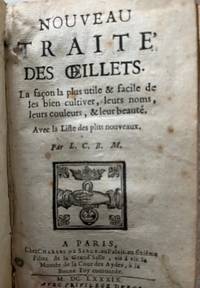
168910715Paris: Charles de Sercy 1689. 2nd Edition . Hardcover. Very Good. 12mo - over 6¾" - 7¾" tall. La facon la plus utile & facile de les bien cultiver leur noms leurs coleurs & leur beaute avec la liste des plus nouveuax. Paris Charles DeSercy 1689. 12mo. 4 162 2 pages. Contemporary vellum. The first hundred pages are mainly cultural and historical notes the remaining is an extensive reference on varieties at the time. <br/> <br/> Charles de Sercy hardcover
16764626London: George Marriott 1676. 2nd Edition . Hardcover. Very Good. Folio - over 12" - 15" tall. 2nd corrected impression in 3 books Flora Ceres Pomona - all bound together. London 1676. Folio. 231 pages with 8 engraved plates. Small wormholes in margins. Damp-staining to lower edges. Rebacked with original spine laid on. Wilfrid Blunt's copy "Wilfrid Blunt May 1948 Eton" later in 1985 given to Ray Desmond with best wishes by Blunt. ' The most important English treatise on gardening to be published during the second half of the seventeenth century'-Henrey page 195. Hundreds of flowering plants and fruit trees are described with instructions on how to construct a garden. <br/> <br/> George Marriott hardcover
165528459First or early editions. Various places and publishers 1655-1897 1655. See Beverly Seaton The Language of Flowers A History. University Press of Virginia 1995. A detailed description of the collection is available via pdf on our website on the catalogues page. The Language of Flowers phenomenon flourished for almost eighty years beginning in France in the early 19th century. As both potent and subtle symbols in Western culture flowers are found in religious texts poetry heraldic and emblematic literature from the classical period and early Christianity through medieval literature and the enlightenment. In the early 19th century books were written and published for the first time under titles such as Abécédaire de Flore ou Langage des Fleurs 1811 Oracles de Flore 1816 Emblemes de Flore et des Végéaux 1819 and Le Langage des Fleurs 1819. With those publications the language of flowers and its exploration of floral symbolism in communication - usually as a language of love and romance - gained acceptance and popularity. During its nascent years in France the language of flowers had a relatively limited affluent audience but once publishers saw the potential for profit and obtained the ability to print and illustrate books on a large scale they began to publish language of flowers texts in the popular formats of literary annuals gift books and almanacs. By 1830 the genre was widely available to a new world of fervent book buyers and readers in the working and middle classes. The vogue for language of flowers books was so prevalent that it became the subject of parodies and satires by among others Frederick Marryat and J. J. Grandville. Herman Melville was a devotee of symbolic flower language and referred to it in Mardi and Pierre and poems written to his wife Lizzie. The core of this collection of language of flowers titles was assembled by Doris Ann Elmore a French teacher in San Francisco and lifelong Francophile. The collection is unusual for its scope. The collection is for sale en bloc. First or early editions. Various places and publishers, 1655-1897 unknown