1 427 résultats
18198322Wien, Strauss, 1819. 13 S. 80 größtenteils kolorierte (vereinzelt auch in Farben gedruckte) Kupfertafeln. Fol. HLdr. der Zeit mit Rückentitel (etw. fleckig und beschabt).
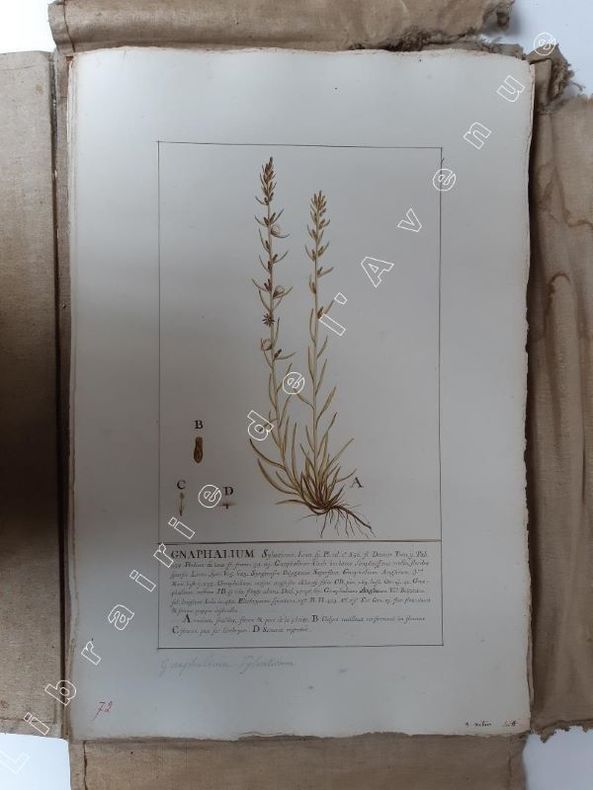
182018284slnd. 1820 In-folio 55 x 36 cm. sous chemise toilée à recouvrements. Un descriptif manuscrit se trouve dans un encadrement au bas de chaque planche. La numérotation des planches en rouge correspondant à une table se trouvant au début de l'ensemble. Quelques pâles rousseurs éparses, plus soutenues pour une dizaine de planche avec lég. gondoles en pied, quelques marges poussiéreuses et petites hum. en tête. Une planche plus gravement atteinte forte hum. angulaire. Exceptionnel ensemble de très belle exécution, datant de la première moitié du XIXe siècle.
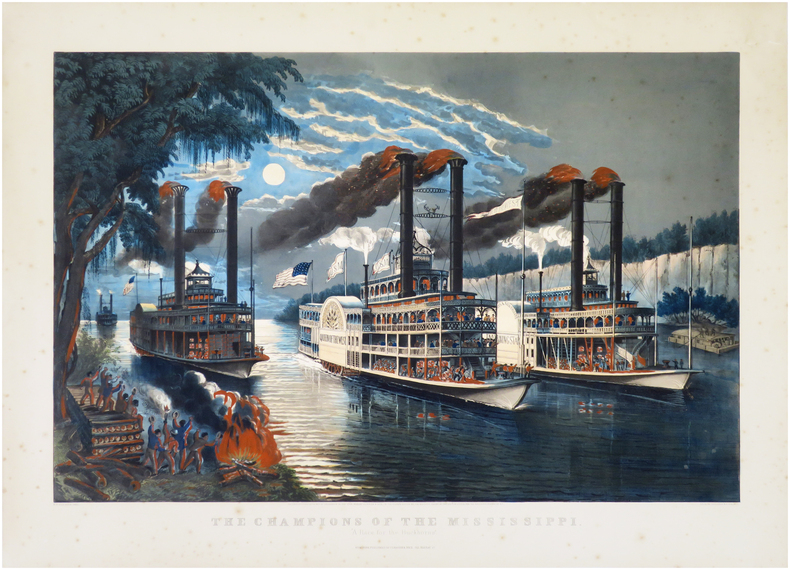
186357141New York: Currier & Ives 1863. Hand-colored lithograph approx. 30¼" x 22" by sight not examined out of frame; fine example with strong coloring; attractively matted and in a curly maple frame. Currier & Ives New Best Fifty no. 23; Reilly Currier & Ives A Catalogue Raisonné Detroit 1984 pp. 737 758; no. 7326. Provenance: from the collection of the Minnesota tycoon James J. Hill Saint Paul Minnesota. One of Currier & Ives most famous and dramatic images depicting the steamboat Princess as firewood is loaded onto the ship to power its steam engines. The artist Frances Flora Bond Palmer 1812-1876 often referred to as Fanny Palmer was an English artist who became successful in the United States as a lithographer for Currier and Ives between 1849-1868. She is credited with producing around two hundred lithographs for them during this time. <br/><br/> Currier & Ives unknown books
186357141New York: Currier & Ives 1863. Hand-colored lithograph approx. 30¼" x 22" by sight; fine example with strong coloring; attractively matted and in a curly maple frame. Currier & Ives New Best Fifty no. 23; Reilly Currier & Ives A Catalogue Raisonné Detroit 1984 pp. 737 758; no. 7326. Provenance: from the collection of the Minnesota railroad tycoon James J. Hill Saint Paul Minnesota. One of Currier & Ives most famous and dramatic images depicting the steamboat Princess as firewood is loaded onto the ship to power its steam engines. The artist Frances Flora Bond Palmer 1812-1876 often referred to as Fanny Palmer was an English artist who became successful in the United States as a lithographer for Currier and Ives between 1849-1868. She is credited with producing around two hundred lithographs for them during this time. Currier & Ives unknown
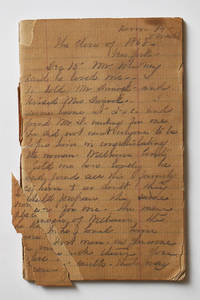
1864221802Rome 1864. 260 pp. written in ink on versos and rectos with 14 pictures engravings etc. some captioned in her hand. Included are some sheets in other hands in French and German. 1 vols. 8vo. Disbound with water damage. 260 pp. written in ink on versos and rectos with 14 pictures engravings etc. some captioned in her hand. Included are some sheets in other hands in French and German. 1 vols. 8vo. Flora Payne Whitney's Italian Travel Diary 1864. Flora Payne was a Cleveland heiress whose marriage to William Collins Whitney three years after this diary was written formed the basis of one of America's legendary families. Flora Payne herself "was an anomaly among the young ladies of her time. At eighteen she had betaken herself from Cleveland to Cambridge Massachusetts to attend the seminary for young ladies that was being conducted there by Professor Agassiz the naturalist . Flora had traveled widely abroad even to places such as North Africa with which few sophisticated New Yorkers of William Whitney's circle had firsthand acquaintance . " - Kahn JOCK p. 11. unknown books
1864221802Rome 1864. 260 pp. written in ink on versos and rectos with 14 pictures engravings etc. some captioned in her hand. Included are some sheets in other hands in French and German. 1 vols. 8vo. Disbound with water damage. 260 pp. written in ink on versos and rectos with 14 pictures engravings etc. some captioned in her hand. Included are some sheets in other hands in French and German. 1 vols. 8vo. Flora Payne was a Cleveland heiress whose marriage to William Collins Whitney three years after this diary was written formed the basis of one of America's legendary families. Flora Payne herself "was an anomaly among the young ladies of her time. At eighteen she had betaken herself from Cleveland to Cambridge Massachusetts to attend the seminary for young ladies that was being conducted there by Professor Agassiz the naturalist . Flora had traveled widely abroad even to places such as North Africa with which few sophisticated New Yorkers of William Whitney's circle had firsthand acquaintance . " - Kahn JOCK p. 11. unknown
183212847Chez l’auteur, 1828 1832 3 volumes in-4 demi-basane, dos lisse orné de filets noir & or, pièces de titre et de tomaison, VIII- 528 planches hors-texte couleurs, ch. 1 à 528 sur 544 accompagnées de leur notices. Il manque les 17 dernières livraisons. Les 6 tomes sont réunis en 3 volumes, mais les titres portent : Tome premier 1828, second 1829, troisième 1830. Quelques rousseurs, légères pour les planches. Bon exemplaire.
1838167701Paris: Ladvocat 1838. The most important French socialist-feminist of the 1830s and 1840s Second edition published the same year as the first of the radical philosopher's only novel vividly articulating her goal of social revolution through female emancipation. Méphis is uncommonly met with; we trace only one previous auction listing for any edition. The philosophy of Flora Tristan 1803-1844 linked the nascent socialist theories of class struggles with the contested position of women in contemporary society. Following the mixed reception of her previous political works in Méphis she employs the conventions of the novel to visualise her conception of social reform. The work centres on the titular protagonist's relationships with two aristocratic women and the tensions implicit therein - both in his proletariat origins and in the broader patriarchal conventions weighing on them. Tristan draws several "vivid evocations of feminist role models" Cross & Gray p. 2 thereby winning the novel "a secure place in French Romantic literature" Puech quoted in Cross & Gray p. 2. The work gained further notoriety due to the events surrounding its publication. In 1838 Tristan's estranged husband - a failed artist enraged by her literary success - shot her in the street in broad daylight. Miraculously she was not seriously injured and the resulting trial boosted her sales considerably. Tristan's socialist-feminist philosophy anticipates several aspects of Marx and Engels: she most notably coined the term "Workers of the world unite" a full five years before they deployed it in the Communist Manifesto. She is consequently considered "the most important French socialist-feminist of the 1830s and 1840s" Collins & Weil-Sayre p. 229. The second volume includes two of Tristan's articles on the history of western art which had formerly appeared in L'Artiste. 2 vols octavo 209 x 131 mm pp. iv vii 1 365 1; pp. iv 390 2. Wood-engraved vignette to title pages. Contemporary red quarter sheep spines lettered ruled and elaborately decorated in gilt red marbled sides marbled endpapers edges sprinkled black blue silk bookmarkers. Moderate rubbing faint sunning to spines light sporadic foxing and marginal damp staining to contents: a very good copy. Marie M. Collins and Sylvie Weil-Sayre "Flora Tristan: Forgotten Feminist and Socialist" Nineteenth-Century French Studies vol. 1 no. 4 1973; Màire Cross and Tim Gray The Feminism of Flora Tristan 1992. unknown
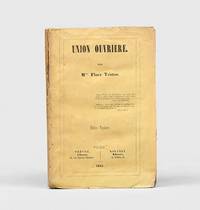
1843150437Paris: Prévot and Rouanet 1843. Coining the slogan "workers of the world unite!" five years before the Communist Manifesto First edition of the revolutionary French socialist's most famous work urging the working class to unite a call for international emancipation which appeared five years before the Communist Manifesto. Tristan is "perhaps the most celebrated of all 19th-century French feminists" Moses p. 107. Tristan's struggles as both the poverty-stricken illegitimate daughter of a Peruvian noble and as the wife of a violently abusive husband forced her to travel at various points in her life to England as a ladies' companion and Peru in the hopes of re-establishing her family ties. Upon returning to Paris in 1835 Tristan fought her husband André Chazal for custody of her two surviving children and succeeded in regards to her daughter. It was not until 1836 after Chazal shot Tristan that she was granted legal separation and the right to take back the name Tristan. Both as respite from and because of this domestic turmoil Tristan became enthusiastically involved in a number of feminist and socialist groups and activities - she published pamphlets on female immigration petitioned in favour of divorce and for the abolishment of capital punishment attended meetings of the Gazette des femmes group and engaged with the utopian socialism of the Fourierists. "In Union ouvrière Tristan rallies the French working class urging them to create a national organization that would be financed by subscriptions from the twenty-five million workers. She believed that any change among the working class must be initiated by the workers themselves: 'Now the day has come when one must act and it is up to you and only you to act in the interest of your own cause'. Despite her call to action Tristan maintained a firm stance against violence and called only for passive resistance; she believed that destructive acts would only heighten workers' problems. She tried to enlist the bourgeoisie in her plan on the basis that it would help prevent begging and theft. The second part of Tristan's crusade was her attempt to improve the position of women within the workplace and society. She argued that all classes of women should participate in the Workers' Union to lobby simultaneously for feminism and socialism. Her third chapter entitled 'Why I Mention Women' aims to establish continuity between the desires of the workers and those of women" Orlando. Unable to find a publisher willing to print the unorthodox tract she funded the book's publication herself through donations from friends acquaintances and public appeal. From these donations 14000 copies of this first edition were printed stated as "Edition populaire" which she sold for 50 centimes each. In Lyons the fundraising efforts of her working-class followers underwrote a further printing of 10000 copies. Such circulation was very high for the time: the print run of the Communist Manifesto in 1848 by contrast was 2000 copies. "Increasing scholarly attention is revealing her as a pivotal figure in the shift from early nineteenth-century utopian to Marxist economic socialism. Her insistence on the inextricability of class and gender oppression makes her a foundational socialist feminist theorist" ibid. Duodecimo. Uncut in original yellow wrappers printed in black. Housed in quarter calf chemise and slipcase. Slight split to front joint but holding wrappers and contents clean a very good well-preserved copy. Claire Goldberg Moses French Feminism in the Nineteenth Century 1984. unknown
188335676Kjøbenhavn, Carl Lunds Bogtrykkeri, 1883. Folio. 39x27 cm. Contemp. hcalf. Richly gilt back and gilt borders on covers. Light wear to corners and a few scratches to binding. Titlepage. 5,(1) pp. (Index , Corrections and Addenda). With 171(of 175 ) Flora Danica-plates of Scandinavian trees and bushes. All plates engraved and in fine handcolouring, plates in near mint condition.
188335676Kjøbenhavn Carl Lunds Bogtrykkeri 1883. Folio. 39x27 cm. Contemp. hcalf. Richly gilt back and gilt borders on covers. Light wear to corners and a few scratches to binding. Titlepage. 51 pp. Index Corrections and Addenda. With 171of 175 Flora Danica-plates of Scandinavian trees and bushes. All plates engraved and in fine handcolouring plates in near mint condition. <br/><br/><em>Scarce re-issue of Flora Danica in exquisite handcolouring restricted to its trees and bushes. In this work the last editor of Flora Danica Joh. Lange selected all the original copper-plates which depicted trees and bushes from the whole work - in fact 9 of the earliest plates were damaged by fire and as such not useable for a print to be taken - and made this re-issue done with the original copper-plates as a separate issue of Flora Danica. Under his auspices all the prints were carefully hand-coloured with greatest care and often surpassing the original colouring. The paper used for the re-issue is of the same quality used for the last volumes of the original issue of Flora Danica of which the last volume vol. 17 came out the same year as this extract 1883. - Carl Christensen II p.257 No 119 - Nissen BBI: 1133 - Not in BMC NH. </em> unknown
1866LBW-8672New York, Currier & Ives, [1866]. 515 x 715 mm ; sur papier fort.
189846402690Paris, Librairie Centrale des Beaux-Arts, s.d. [1898] ; album in folio , Sous chemise de percaline rouge fermée par trois attaches. PREMIER TIRAGE des 48 planches en couleurs réunies sous leur portefeuille d’éditeur portant en lettres dorées sur le premier plat « La Plante 48 planches ». Rarissime publication Art Nouveau de planches d’inspiration florale publiées sous les auspices du peintre suisse Eugène Grasset (1841-1917). Cette publication fait suite à un premier ouvrage du même titre paru en 1896 et comportant 72 planches. Toutes les planches sont nouvelles. Le principe en est le même: tous les modèles de décoration ou de mobilier sont appuyées d’une planche de botanique dessinée d’après nature avec la plus rigoureuse exactitude. Chacun pouvant, en comparant l’étude et l’interprétation, tenter de créer son propre modèle. Pour Grasset, considéré comme un des pionniers du décor Art Nouveau, « l’art décoratif loin de chercher le trompe-l’œil doit interpréter la nature pour en faire un ornement. Cette interprétation varie suivant les ressources offertes par la matière employée. » (Paul Berthon). Sont ainsi interprétés vigne, navet, butome, gui, soleil, sorbier, ricin, persil, ronce, céleri, pommier, groseiller, poireau, chèvrefeuille, bryone et vigne vierge. La majorité des planches sont signées par Maurice Pillard Verneuil (19). Les autres sont l’œuvre de J. Milesi, E. Hervegh, Georges Bourgeot (peintre verrier et céramiste élève de Grasset), Anna Martin, Marcelle Gaudin, Ch. Dozoul et Gorain. Quelques rousseurs pâles, petites décolorations sur la chemise. Bel exemplaire.
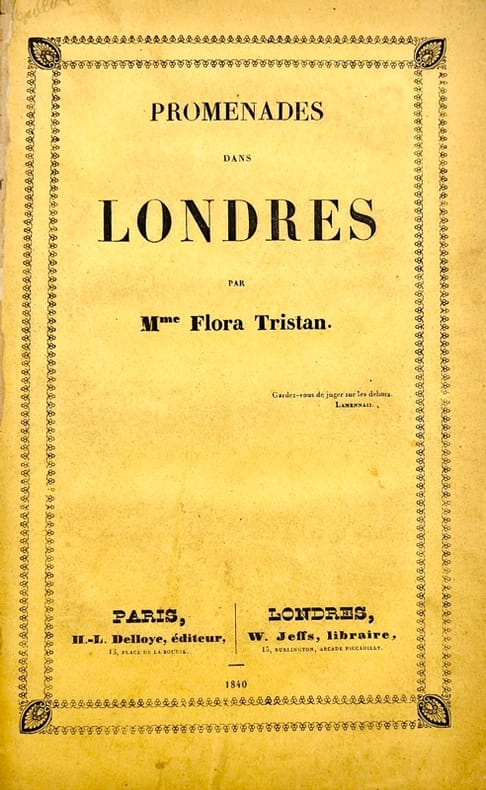
184044426Paris ; Londres, H.-L. Delloye, éditeur ; W. Jeffs, libraire, 1840. In-8 de LI-(3)-412 pp., demi-toile verte, dos lisse orné de filets à froid, couverture jaune imprimée conservée (relié vers 1870).
180945865ABParis, Chez l'Auteur 1808-1809. 3 Bde. 4°. Mit 402 Farbstichen. Leder. Rückenschilder, vergold. Rückentitel u. Rückenvergold. Leather. Label, gilt title and images on spine. Ber. u. best., Rü. fachmännisch restauriert. Minimal gebr. bzw. stockfl., frisches Ex. Rubbed and bumped, professionnally repaired back. Very slightly browned and foxed respectively.
182812529Budapest, Landerer, 1828. 2 Bll., 84 S., 6 Bll. 41 lithograph. Tafeln und 1 lithograph. gefalt. Plan. Fol. HLdr. der Zeit mit Rückentitel (fleckig, leicht berieben und bestoßen).
1830568801830 Paris, Imprimerie de C. L. F. Panckoucke, 1830-32, 6 volumes grand in 8° reliés plein veau marron, dos lisses ornés d'un décor rocaille, plats estampés à froid ; taches et rousseurs, essentiellement sur les serpentes ; des frottis, dos légèrement éclaircis avec les ors fanés ; mors du plat inférieur du tome premier largement fendu.
18682210931868. 1 vols. 12mo. Disbound. Wear. 1 vols. 12mo. unknown books
18682210931868. 1 vols. 12mo. Disbound. Wear. 1 vols. 12mo. unknown
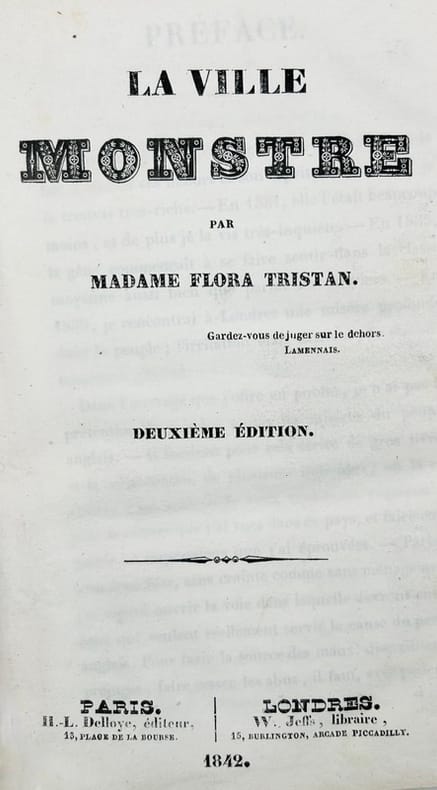
18423983Paris ; Londres, H.-L. Delloye, éditeur ; W. Jeffs, libraire, 1842. In-8 de LI-(3)-412 pp., demi-basane havane, dos lisse orné de filets dorés (reliure de l'époque).
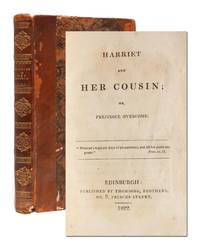
18225548Edinburgh: Thomsons Brothers 1822. First edition. Contemporary half calf over marbled boards with gilt to spine. Measuring 140 x 80mm and collating complete including frontis and publisher's catalogue to rear: vii 1 blank 199 1 errata 8 1 blank. A Near Fine copy with some scuffing to boards and joints and small chip to foot of spine. Contemporary ownership inscription to front endpaper: "Margaret Jane Palliser. Dublin 1824." A scarce work of juvenile fiction aimed at young women it is unrecorded in OCLC and Sadleir though there is mention of a later 1824 "fourth edition" and an American edition from 1827. <br /> <br /> Simple on its surface each new chapter of Harriet and Her Cousin unfolds a new layer of prejudice that all too commonly prevents young women from finding meaningful connections with each other. Raised in a rural religious household young Harriet has a spiritual awakening that leaves her soul altered. More excited about the world and the people around her and more capable of subtle observations she undertakes a journey to Edinburgh both to visit her soon-to-be-wed best friend Maria as well as to visit her grandfather and cousin Julia. On arrival Harriet is shocked by Julia's coldness and initially assumes it is prejudice against her own Christianity. Introduced to the sparkling and accomplished ladies of Julia's circle she then begins to suspect it is prejudice against her simple country nature. Only over time does Julia feel comfortable opening up to Harriet about her loneliness -- an isolation born out of the high society expectations that women reserve warm feelings and engage instead in gossip back-biting and flirtations that make them untrustworthy. As she has witnessed Harriet's refusal to conform to these behaviors Julia bonds with Harriet as an intimate friend capable of deep and meaningful conversation. Indeed Harriet learns that even with her awakened spirituality she too has much to learn about dismantling her own prejudices. Thomsons Brothers unknown
181957455Charkow, Typis Academicis, 1808-1819. Gr.-8°. 1 Bl., VI, 428 S., 2 Bll. (das letzte weiß); 1 Bl., 477 (1) S.; 1 Bl., IV S., 1 weißes Bl., 654 S., 1 Bl., Spätere HLwd.-Bde. m. Rückenverg. u. goldgepr. Rückentiteln.
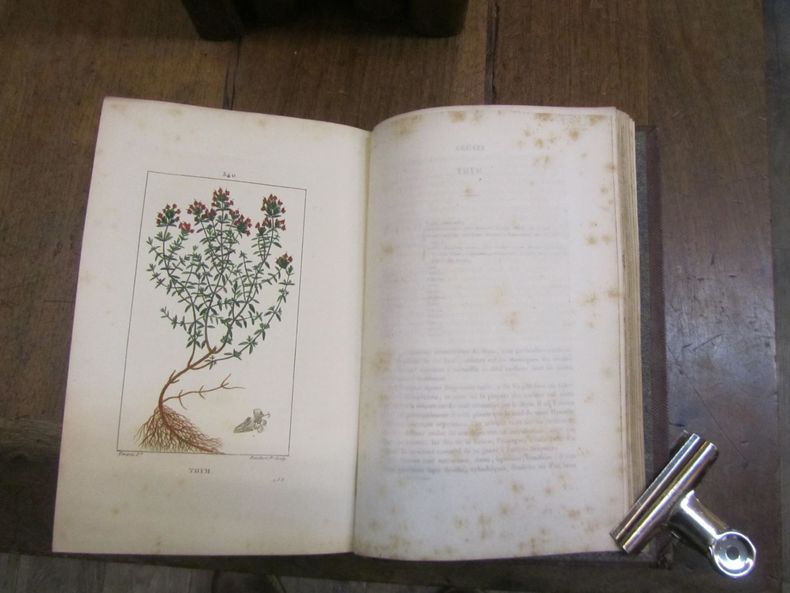
1818WOC-1477Illustrée de 360 planches hors-texte en couleurs d'après les dessins de Pierre-Jean- François Turpin, lui-même Botaniste, et de Mme. Pankoucke, élève de van Spaendonck et de Redouté, femme de l'éditeur. Paris, C. L. F. Panckoucke, Éditeur, du Dictionnaire ses Sciences Médicales, Rue et hôtel Serpente, n°,16. 1814-1818. 6 volumes in-8 (21x13cm) reliés veau d'époque, reliures très fatiguées avec manque le dos du tome 4.
187323050Leipzig, Baensch, ca. 1873-75. Neunte durchaus neu bearbeitete Auflage. 2 Bll., 224 SS., XXI SS. Register, 500 kolorierte Kupfertafeln. Tafel 426 nach Tafel 432 gebunden und einige weitere Tafeln in der Reihenfolge verbunden. 4°. - 28:19,5 cm. Schwarze Halblederbände der Zeit mit goldgeprägten Rückentiteln. Einbände etwas berieben und bestoßen. Vorderes Gelenk des Textbandes etwas brüchig, oberes Kapital mit schwarzem Lederstreifen verstärkt, Leder am Kapital von Band 2 mit kl. Schaden.
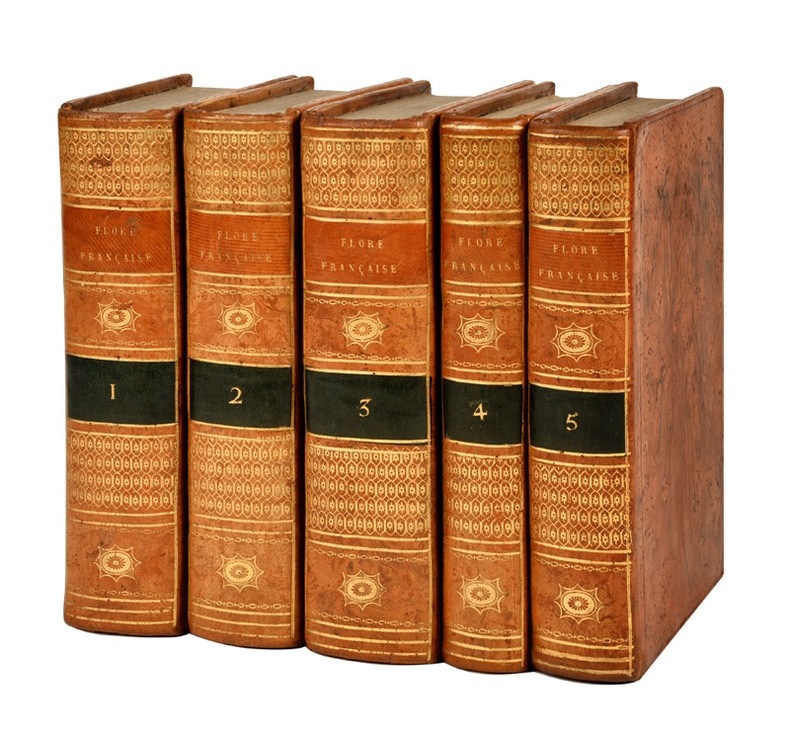
180521684Paris, H. Agasse, Imprimerie de Stoupe, an XIII (1805); 4 tomes reliés en 5 volumes in-8 ; veau fauve raciné, dos lisse à décor de style “Bozérian” (reliure de Napoléon), pièces de titre fauve et de tomaison vert empire (reliure de l’époque) ; XVI, 224, (Discours préliminaires et Principes de Botanique), 388 pp., 1 tableau dépliant et 11 planches dépliantes par De Sève ; XII (explication de la carte botanique), 600 pp., très grande carte botanique de la France en couleurs dépliante ; 731 pp. ; (4), 384 pp. ; pp. 385-944, (2) pp.