Whitney, Flora PayneBiblio.com

57 résultats
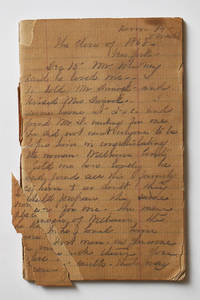
1864221802Rome 1864. 260 pp. written in ink on versos and rectos with 14 pictures engravings etc. some captioned in her hand. Included are some sheets in other hands in French and German. 1 vols. 8vo. Disbound with water damage. 260 pp. written in ink on versos and rectos with 14 pictures engravings etc. some captioned in her hand. Included are some sheets in other hands in French and German. 1 vols. 8vo. Flora Payne was a Cleveland heiress whose marriage to William Collins Whitney three years after this diary was written formed the basis of one of America's legendary families. Flora Payne herself "was an anomaly among the young ladies of her time. At eighteen she had betaken herself from Cleveland to Cambridge Massachusetts to attend the seminary for young ladies that was being conducted there by Professor Agassiz the naturalist . Flora had traveled widely abroad even to places such as North Africa with which few sophisticated New Yorkers of William Whitney's circle had firsthand acquaintance . " - Kahn JOCK p. 11. unknown
18682210931868. 1 vols. 12mo. Disbound. Wear. 1 vols. 12mo. unknown
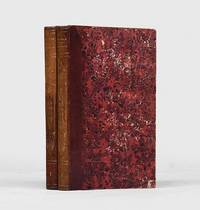
1838167701Paris: Ladvocat 1838. The most important French socialist-feminist of the 1830s and 1840s Second edition published the same year as the first of the radical philosopher's only novel vividly articulating her goal of social revolution through female emancipation. Méphis is uncommonly met with; we trace only one previous auction listing for any edition. The philosophy of Flora Tristan 1803-1844 linked the nascent socialist theories of class struggles with the contested position of women in contemporary society. Following the mixed reception of her previous political works in Méphis she employs the conventions of the novel to visualise her conception of social reform. The work centres on the titular protagonist's relationships with two aristocratic women and the tensions implicit therein - both in his proletariat origins and in the broader patriarchal conventions weighing on them. Tristan draws several "vivid evocations of feminist role models" Cross & Gray p. 2 thereby winning the novel "a secure place in French Romantic literature" Puech quoted in Cross & Gray p. 2. The work gained further notoriety due to the events surrounding its publication. In 1838 Tristan's estranged husband - a failed artist enraged by her literary success - shot her in the street in broad daylight. Miraculously she was not seriously injured and the resulting trial boosted her sales considerably. Tristan's socialist-feminist philosophy anticipates several aspects of Marx and Engels: she most notably coined the term "Workers of the world unite" a full five years before they deployed it in the Communist Manifesto. She is consequently considered "the most important French socialist-feminist of the 1830s and 1840s" Collins & Weil-Sayre p. 229. The second volume includes two of Tristan's articles on the history of western art which had formerly appeared in L'Artiste. 2 vols octavo 209 x 131 mm pp. iv vii 1 365 1; pp. iv 390 2. Wood-engraved vignette to title pages. Contemporary red quarter sheep spines lettered ruled and elaborately decorated in gilt red marbled sides marbled endpapers edges sprinkled black blue silk bookmarkers. Moderate rubbing faint sunning to spines light sporadic foxing and marginal damp staining to contents: a very good copy. Marie M. Collins and Sylvie Weil-Sayre "Flora Tristan: Forgotten Feminist and Socialist" Nineteenth-Century French Studies vol. 1 no. 4 1973; Màire Cross and Tim Gray The Feminism of Flora Tristan 1992. unknown
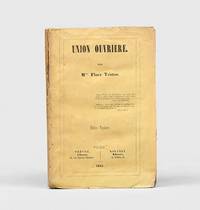
1843150437Paris: Prévot and Rouanet 1843. Coining the slogan "workers of the world unite!" five years before the Communist Manifesto First edition of the revolutionary French socialist's most famous work urging the working class to unite a call for international emancipation which appeared five years before the Communist Manifesto. Tristan is "perhaps the most celebrated of all 19th-century French feminists" Moses p. 107. Tristan's struggles as both the poverty-stricken illegitimate daughter of a Peruvian noble and as the wife of a violently abusive husband forced her to travel at various points in her life to England as a ladies' companion and Peru in the hopes of re-establishing her family ties. Upon returning to Paris in 1835 Tristan fought her husband André Chazal for custody of her two surviving children and succeeded in regards to her daughter. It was not until 1836 after Chazal shot Tristan that she was granted legal separation and the right to take back the name Tristan. Both as respite from and because of this domestic turmoil Tristan became enthusiastically involved in a number of feminist and socialist groups and activities - she published pamphlets on female immigration petitioned in favour of divorce and for the abolishment of capital punishment attended meetings of the Gazette des femmes group and engaged with the utopian socialism of the Fourierists. "In Union ouvrière Tristan rallies the French working class urging them to create a national organization that would be financed by subscriptions from the twenty-five million workers. She believed that any change among the working class must be initiated by the workers themselves: 'Now the day has come when one must act and it is up to you and only you to act in the interest of your own cause'. Despite her call to action Tristan maintained a firm stance against violence and called only for passive resistance; she believed that destructive acts would only heighten workers' problems. She tried to enlist the bourgeoisie in her plan on the basis that it would help prevent begging and theft. The second part of Tristan's crusade was her attempt to improve the position of women within the workplace and society. She argued that all classes of women should participate in the Workers' Union to lobby simultaneously for feminism and socialism. Her third chapter entitled 'Why I Mention Women' aims to establish continuity between the desires of the workers and those of women" Orlando. Unable to find a publisher willing to print the unorthodox tract she funded the book's publication herself through donations from friends acquaintances and public appeal. From these donations 14000 copies of this first edition were printed stated as "Edition populaire" which she sold for 50 centimes each. In Lyons the fundraising efforts of her working-class followers underwrote a further printing of 10000 copies. Such circulation was very high for the time: the print run of the Communist Manifesto in 1848 by contrast was 2000 copies. "Increasing scholarly attention is revealing her as a pivotal figure in the shift from early nineteenth-century utopian to Marxist economic socialism. Her insistence on the inextricability of class and gender oppression makes her a foundational socialist feminist theorist" ibid. Duodecimo. Uncut in original yellow wrappers printed in black. Housed in quarter calf chemise and slipcase. Slight split to front joint but holding wrappers and contents clean a very good well-preserved copy. Claire Goldberg Moses French Feminism in the Nineteenth Century 1984. unknown
189724760New York: The Macmillan Company 1897. First edition. Hardcover. Orig. blue cloth front cover and spine lettered and decorated in gilt. Teg. Near fine. 155 pages. 17 x 12 cm. The book set in Calcutta India delves into the intricate dynamics of personal relationships and societal expectations. She lived in British India for 22 years. Bright clean interior. The Macmillan Company hardcover
1896110464The Macmillan Company 1896. Hardcover. Very good. The Macmillan Company c1896 1897 printing. 475pp. 6pp. publisher's catalog. 8vo. Decorative green cloth with red and gold titles on front cover and spine upper edge gilt. Previous owner's name stamped on title-page "B. Wyeth". Inscription on first page "Maud Wyeth Wyndham with the compliments of J.H.S. March 1897" B. Wyeth stamped on the lower edge of textblock. from the estate of Stuart Wyeth Campbell. Spine somewhat darkened Very Good attractive hardcover. The Macmillan Company hardcover
1897Y339London: William Heinemann 1897. 1st edition first issue . Hardback. V.g. rubbed/No Jacket. 8vo. viii 432pp 32 pub. reviews and adspp. A story and history of the Indian Rebellion 1857. Attractive decorative green cloth with black titles and a cover depicting a river and trees with birds blocked in silver and black. LACKS FRONT F.E.P. 8pp appendix at the rear of the text. Please email for photo. No print numbers so presumed a first edition 1st issue <br/> <br/> William Heinemann hardcover
189477151London:: Macmillan and Co. 1894. publisher's cloth with printed paper label on spine. . Some light foxing; spine label tanned with tiny chips at edges; lower corners bumped. Tight and sound. 8vo. With Illustrations by J. Lockwood Kipling. Notes by R. C. Temple. Macmillan and Co., hardcover
190021243New York: The Macmillan Company. Very Good- with no dust jacket; Spine darkened ink front endpaper & . pencil on half-title page 2 pages stained. 1900. First Edition. Hardcover. A novel of India.; 8vo; 418 pages . The Macmillan Company hardcover
1894914151894. Rebound in new grey boards with paper title lable pp 137-165 complete. Lightly pencilled annotation to top of one page. Near-fine condtion. An address to the Royal Colonial Institute by Flora Louisa Shaw later Lady Lugard; appointed Dame Commander in 1918. In the 1890s Shaw was the Colonial Editor for the Times and in 1892 was sent out to Australia to study conditions there. Describes the interest of Australia's future. hardcover
18814523bx120<p>First Edition. HC/ndj in Mustard cloth black floral decoration gilt. Wear at tips pencilled 1886 gift inscr else unmarked. 340pp 4pp Roberts Bros illustrated ads. 6 3/4" tall</p> Roberts Brothers hardcover
1869611800New York: Ivison Blakeman & Company 1869. 1st. Hardcover. Very Good/None. 57 pages. Cloth covered flexible covers. Black & white illustrations. Title in gilt on cover. Features music lyrics and exercise instructions. Light rubbing to cover corners. Clean unmarked copy. Record # 611800 Ivison, Blakeman & Company hardcover
187015474New York:: Ivison Phinney Blakeman & Co. 1870. original cloth. Gutter break at the Preface leaf; a little shaken; old ownership inscription on front free endpaper. Oblong 8vo. Ivison, Phinney, Blakeman & Co., hardcover
1869D6743New York & Chicago: Ivison Blakeman Taylor & Co 1869. First. Cloth. Very Good Plus. First printing. Oblong octavo in limp dark brown cloth covered boards lettered in gilt; 68 pps. plus index; illustrated throughout with woodcut diagrams of children doing calisthenic exercises. An unusal songster comprised of music for children to sing and to exercise by. Most of the songs contained herein printed with lyrics and music are accompanied by several small woodcuts of boys and girls performing calestenic exercises and detailed instructions as to how to perform them properly. A solid very good or better copy gilt nearly complete; occasional foxing throughout. <br/><br/> Ivison, Blakeman, Taylor & Co hardcover
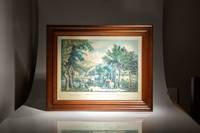
186414589New York: Currier & Ives 1864. Lithograph. Lithograph. Near fine. From Currier & Ives The Old Oaken Bucket by Frances Flora Palmer published in 1864. Lithographed and published by Currier & Ives at 152 Nassau St. New York. Short closed tear along top edge archival tissue repair. Printed on wove paper. Includes 2 stanzas and 4 lines of verse by Samuel T. Woodworth. Original artwork by Frances Flora Bond Palmer. Image measures 15 15/16 x 23 3/8. Conningham 4576 In wood frame not examined outside of frame. An attractive work. "When Frances "Fanny" Flora Bond Palmer moved to New York from England in 1844 she was thirty-two and an accomplished artist and printmaker. Initially Fanny and her husband Seymour operated a small print-shop in lower Manhattan similar to one they had run in Leicester United Kingdom. In 1849 the couple moved to Brooklyn after the business closed. Nathaniel Currier recognized Palmer's talent and began to buy her drawings to use as print designs. After Currier & Ives was established in 1857 she became a staff artist. As a designer able to transfer images to lithographic stones for printing Palmer produced more than 200 prints for the firm and today is regarded as a leading woman lithographer of the period." - Met Museum 2023. <br /> Currier and Ives was a prominent American printmaking firm that operated from 1834 to 1907. They are best known for their lithographs which depicted a wide range of subjects including landscapes historical scenes portraits and everyday life in 19th-century America. Their prints were widely popular and affordable making them accessible to a broad audience. Some of the famous lithographs produced by Currier and Ives include: American Homestead Winter Clipper Ship 'Flying Cloud' The Life of a Fireman The Four Seasons of Life: Middle Age and American Railroad Scene. Currier & Ives unknown
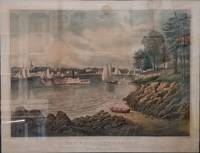
186223656New York: Currier & Ives 152 Nassau St. 1862. First printing. Print. Good overall. Attractive scene the fore shore a rocky beach with a rowboat. Looking across the water the steamboat the "Sylvan Grove" is visible as well as many masted ships. Large homes are visible on the opposite shore.<br /> <br /> Fanny Palmer designed over 200 prints of American life and captured the nation’s imagination. Today Palmer’s scenes of country living outdoor recreation national progress and newsworthy events continue to rank among the most popular lithographs produced by Currier & Ives. <br /> <br /> Lithograph original color couple of foxing spots in the sky and the top margin of the print. Somewhat tanned overall "F.F. Palmer del." printed in lower right corner. Currier & Ives, 152 Nassau St. unknown
186357141New York: Currier & Ives 1863. Hand-colored lithograph approx. 30¼" x 22" by sight; fine example with strong coloring; attractively matted and in a curly maple frame. Currier & Ives New Best Fifty no. 23; Reilly Currier & Ives A Catalogue Raisonné Detroit 1984 pp. 737 758; no. 7326. Provenance: from the collection of the Minnesota railroad tycoon James J. Hill Saint Paul Minnesota. One of Currier & Ives most famous and dramatic images depicting the steamboat Princess as firewood is loaded onto the ship to power its steam engines. The artist Frances Flora Bond Palmer 1812-1876 often referred to as Fanny Palmer was an English artist who became successful in the United States as a lithographer for Currier and Ives between 1849-1868. She is credited with producing around two hundred lithographs for them during this time. Currier & Ives unknown
1886405690Boston: D. Lothrop and Company 1886. Hardcover. Good. First edition. Pictorial papercovered boards. Illustrated. Faint dampstain on page edges and on boards extremities worn and frayed thus a fair to good only copy. Containing thirteen juvenile short stories: "A district messenger boy" by James Otis "Wagon-Tire Camp" by Kate Foote "The Gypsies" by Mary Hartwell Catherwood "Hunted by a wild stallion" by J.E. Collins "Wild horses" by Ernest Ingersoll "How Walter found his father" by Flora Haines Apponyi "After the buffalo" by C.E.S. Wood "Osito" by F.L. Stealey "Jap" by Ellen Olney Kirk "The rich man of the mountains" by Helen E. Sweet "One way to be brave" by Alice Wellington Rollins "The Gypsy's prophecy" by Anna Leach "Plum blooms" by Mary Hartwell Catherwood. Scarce. D. Lothrop and Company hardcover
185850343kjöbenhavn Bianco Luno 1858. 4to. Uncut in orig. blue boards. Offprint from "Videnskabernes Selskabs Skrifter" Nat.Vid. og Math. Afd. Femte Række Bd.5". 78 pp. and 11 fine engraved plates with many figs. and 1 map. Clean and fine. <br/><br/><em>First edition. - Stafleu & Cowan: 7019. </em> hardcover
18799154NY: Trow's Printing and Bookbinding Co. Very Good with no dust jacket. 1879. Decorated Cloth. Some edgewear & corner bumping but very attractive and the gilt is still bright. 358pp. Al the hinges are tight & undamaged. Slight loosining between two signatures in the center. Copyright page says 1878 and the title page says 1879. May be a first edition by I can't be sure.; 5x7 1/2" . Trow's Printing and Bookbinding Co. hardcover
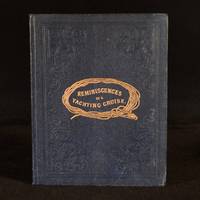
18521005Y26London: Ackerman & Co. Strand 1852. First edition. Cloth. Good. 8.5" by 6.5". T. G. Dutton; N. M. Condy . A scarce series of yachting anecdotes arranged and narrated by the wife of British maritime painter Nicholas Matthews Condy with his sketches. First edition. Scarce. The Subscribers List accounts for 149 copies only 74 of which were sold to Plymouth residents.Dedicated to the memory of the author's husband maritime painter Nicholas Matthew Condy who died the year prior to this publication. A slim volume offering a charming account of a yachting cruise including a description of a frightening thunderstorm. In the publisher's pebbled blind stamped cloth binding with gilt to front cover. With a portrait frontispiece and four lithographic plates from Condy's sketches. Collated complete. In the publisher's pebbled blind stamped cloth binding with gilt to front cover. Externally smart with mild rubbing and bumping to extremities and light damp stain to the front board upper corner. Internally generally firmly bound with front free endpaper and frontispiece working loose the latter being at risk of detaching with further handling. Pages are bright with light scattered spotting throughout. Short closed tear to margin of signature B1. Good Ackerman & Co., Strand hardcover
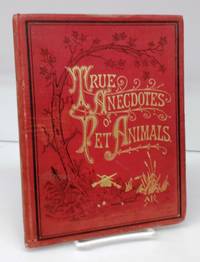
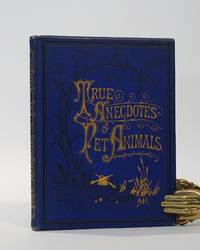
1882150124Toronto: Printed by C. Blackett Robinson 1882. Hardcover. Fair. 135 p. 25 cm. 4 colour plates and numerous b&w illustrations. Red cloth with black and gold impressing. All edges gilt. Corners bumped small holes in hinges lettering wearing off spine a bit small tears in spine ends. Front free endpaper missing. Ink inscription from 1899 on rear of frontispiece. Foxing and thumbing. <br/><br/>Brief intro by Jas. C. Smith Minister of St. Andrew's Church Guelph who states this book is "Eminently healthful in its moral tone tastefully illustrated and happily free from the too common defect of unnaturalness ." These animals do not talk or behave like humans. Printed by C. Blackett Robinson hardcover
188245289Toronto: C. Blackett Robinson 1882. First Edition. Hardcover. Near Fine. Small 4to. Pp. 135 4 coloured illustrations with tissue guards 1 frontis and black and white full-page and in-text illustrations. Previous owner's name and address to the front endpaper. Publisher's royal blue cloth decorated and stamped in gold and black with gilt titles and gilt lettered spine. All edges gilt corners and spine ends with light wear. Overall an excellent copy. Scarce. C. Blackett Robinson hardcover
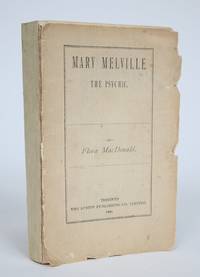
1900002883Toronto: The Austin Publishing Co. Limited 1900. 1st Edition. Soft cover. Good. 12mo. 6 267 p.p. Original tan paper wraps with black titling to front cover spine lacking sewn and glued binding. Covers have several chips creases and short tears to edges bumping to corners a few spots of damp staining wear to joints. Front cover is detached but the binding otherwise remains tight. A bright copy of the author's partly-fictional account of her eldest sister's death and return; published privately by expelled Methodist minister Benjamin Fish Austin. The Austin Publishing Co. Limited unknown
188561652Tyrone Pa.:: Press of the Tyrone Herald 1885. First edition. publisher's blue gilt-lettered cloth. A few minor spots and light overall rubbing to cloth; tight and sound. 8vo. Press of the Tyrone Herald, hardcover