395 résultats
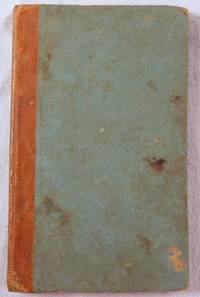
1859mon0003916986Ticknor and Fields 1859T. hardcover. Good. . green cloth cover shows minor wear and tear pages clean. Ticknor and Fields hardcover
18873171887. Wood-engraving with later hand-colouring. 170mm by 260mm image. Engraving from late 19th century illustrated work 'Australasia'. Text on the reverse. unknown
18692110502150902697Bunkeido other storehouse 1869. Soft Cover. Fine. Number of books: 10 Bunkeido other storehouse paperback
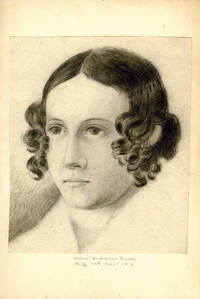
18508901850. Graphite and crayon on cream wove paper 6 3/8 x 5 1/4 inches 162 x 143 mm mounted to a sheet of heavy wove paper which is inscribed in pencil. unknown
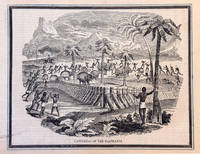
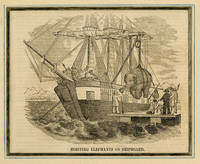
18511380Boston: Frederick Gleason 1851. Engraving with hand-drawn borders on cream wove paper laid down to board. 7 3/4 x 10 inches 197 x 255 mm trimmed margins lacking text. Scattered light soiling and toning with a dog-eared lower left corner. An illustration from the June 21 & 28 1851 edition of Gleason's Pictorial Drawing Room Companion. The Pictorial featured artists such as Winslow Homer and authors such as: Giddings H. Ballou Susan H. Blaisdell Alice Carey Sylvanus Cobb Jr. Sophronia Currier Mrs. S.P. Doughty Francis A. Durivage Aglaus Forrester Mrs. H.C. Gardner Joseph Holt Ingraham Grace Lee Mary A. Lowell Mary L. Meany Ellen Alice Moriarty Arthur Morton Frances P. Pepperell Mary E. Robinson M.V. St. Leon Frederick Ward Saunders Sue M. Scott Maurice Silingsby Frederick Stanhope Horace B. Staniford John Thornberry Winnie Woodfern and Joseph Wolf. <br /> <br /> The accompanying text added below for context. <br /> <br /> Mr. Stebbings June and Mr. Nutter of Boston who undertook the voyage to Ceylon for the purpose of procuring elephants for Mr. Barnum's Traveling Menagerie have furnished us with some curious descriptions of their adventures in the interior of the island. On their arrival at Point de Galle early in October last they were disappointed in their expectations of procuring tame elephants either from the government authorities or from the temples which own large numbers of them. They then proceeded to Columbo the maritime capital of Ceylon on the western coast and afterwards to the city of Kany in the interior but without succeeding in their object. Very heavy rains had fallen just before their arrival and the elephants were required to assist in mending the roads. In this dilemma the elephant seekers determined to go into the jungles among the wild herds and endeavor to capture a ship load of the animals. This was considered a dangerous undertaking as the rainy season had just set in and the country necessary to be traversed was a dense tropical wilderness with no other roads than the foot-paths from one native village to another. Ceylon is divided nearly into two equal parts by a range of mountains running north and south which divide the periodical rains so that the rainy season changes from one side of the island to the other and the elephants follow it. Mr. June captured the greatest number of his elephants in the northern part of the island near the town of Anarajahpoora. The first process toward capturing the elephants is accurately represented in the engraving below. The natives having ascertained the spots most frequented by the herds construct in the neighborhood a kraal or pen. This is shaped like three sides of a square having an aperture on the fourth side for the entrance of the elephants from each side of which extends a long palisade slanting outwards like the mouth of a funnel. The kraal is made of heavy upright posts planted at a short distance from each other and lashed together by withes. To make them more secure they are stayed by slanting posts set against them on the outside. When the kraal is finished the natives surround a heard and by shouts and the firing of muskets alarm the animals who are urged forward toward the entrance and at last are all secured within the enclosure. In capturing these animals the natives evince much skill and tact. Our artist had thrown much life and spirit into this scene. Another way of taking elephants is sometimes practised. The animals during the heat of the day will sometimes rest himself against a tree and take an hour's doze with great satisfaction. Some of the natives are daring enough at this time to creep through the jungle till they reach his very feet. Provided with a rope the other end of which is made fast to a tree the hind leg of the animal is touched gently and being very sensitive he lifts his foot to shake off the supposed fly and a noose is instantly slipped under. This is repeated with the other foot and the elephant waking up finds himself caught. -Gleason's Pictorial Drawing Room Companion June 21 & 28 1851. Frederick Gleason unknown
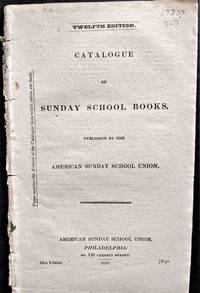
1832812Philadelphia: ASSU 1832. 12mo. 180 x 110 mm. 7 x 4 ¼ inches. 29 pp. Removed from pamphlet volume wrappers missing; good and sound copy. Call the "Twelfth Edition" on the title-page this catalogue was produced by the Committee for Publications. It describes a short-title list with prices of twenty-eight series of books and pamphlets issued by the Union. This is followed by lists of books in German school books Sunday school books books for infants bibles and testaments periodicals and miniature books. . ASSU unknown
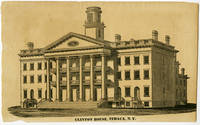
18311424Philadelphia: Wilmer Atkinson 1831. Wood engraving on cream wove paper 5 3/8 x 8 3/4 inches 145 x 222 mm right margin trimmed. General age tone uneven margins and some minor skinning at the sheet edges. An image removed from an edition of the Farm Journal. The Clinton House was built in 1828-1829 as an upscale hotel and Ithaca's first professional office building with 150 rooms an immense undertaking for the then 4000-person population of Ithaca. It was named for DeWitt Clinton governor of New York from 1817 to 1822 and again from 1824 to 1827. Upon its opening Clinton House was reputed to be "the most imposing hotel" between New York and Buffalo. At least four U.S. presidents have stayed in its rooms as well as numerous film actors from Ithaca's brief heyday as a center for the film industry.<br /> -A Guide Book To Cornell University and Ithaca. Silver Burdett & Company 1904. Wilmer Atkinson unknown
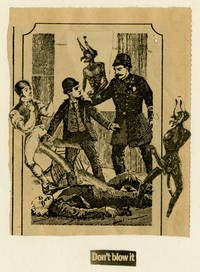
188014181880. Newsprint collage on paper 3 2/4 x 2 1/2 inches 95 x 63 mm. Uniform age tone. The scene is set with a policeman interrupting three men a footballer a man in a bowler and an unconscious gentleman who resembles Alexander Hamilton in flagrante with exposed phalluses while two devils one with a phallus look on. The title below reads "Don't Blow It." The police uniform is extremely similar to those of the Maryland US police of the mid 1800s. unknown
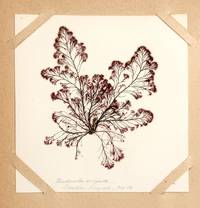
188423391884. A unique quarto 15 x 12 1/2 inches 382 x 318 mm; 30 double-sided sheets containing approximately 80 preserved specimens of seaweed and sea mosses which are individually dried mounted to card stock and tipped-in; each with the genus in Latin and the date and location of collection handwritten in pencil in the lower mount. Approximately 1 to 5 specimens per page. Binding is broken and significantly worn with some pages loose. Specimens are intact and separated by blotting paper and remain in very good to excellent condition with some exhibiting only minor losses. <br /> <br /> While seaweed collecting was a popular Victorian pastime in Britain this rare herbarium is filled with a profusion of north American specimens primarily from Bay Ridge Brooklyn to Nantucket island as well as some from California and Bermuda. In the Victorian era seaweed collecting or algology was far more than a casual beach activity; it was a massive cultural trend that married scientific curiosity artistic expression and social freedom. While the Victorians were obsessed with all things natural history a trend called "natural theology" seaweed held a unique appeal especially for women. While studying animal anatomy was seen as "unladylike" at the time collecting seaweed was considered a genteel and healthy outdoor activity. As a result several women used the opportunity to make significant scientific contributions.<br /> <br /> Often called "Ocean Flowers" or "Sea Mosses" these specimens became the focus of elaborate scrapbooks and pioneered some of the world's first photographic techniques Anna Adkins's Produced Photographs of British Algae: Cyanotype Impressions 1843 was the first book ever illustrated with photographs. Today these Victorian albums are more than just relics of a cultural fad; they are vital biological records. Scientists utilize the DNA from these 150-year-old pressed samples to track how ocean temperatures and species distributions have changed since the Industrial Revolution.<br /> <br /> Creating a seaweed album was a meticulous process. Collectors didn't just dry the weeds; they "resurrected" them to look alive on the page. This album demonstrates the incredible skill of the maker. unknown
18511325Frederick Gleason 1851. Engraving with hand-drawn borders on cream wove paper laid down to board. 7 3/4 x 10 inches 197 x 255 mm trimmed margins lacking text. Scattered light soiling and toning with a dog-eared lower left corner. An illustration from the June 21 & 28 1851 edition of Gleason's Pictorial Drawing Room Companion. The Pictorial featured artists such as Winslow Homer and authors such as: Giddings H. Ballou Susan H. Blaisdell Alice Carey Sylvanus Cobb Jr. Sophronia Currier Mrs. S.P. Doughty Francis A. Durivage Aglaus Forrester Mrs. H.C. Gardner Joseph Holt Ingraham Grace Lee Mary A. Lowell Mary L. Meany Ellen Alice Moriarty Arthur Morton Frances P. Pepperell Mary E. Robinson M.V. St. Leon Frederick Ward Saunders Sue M. Scott Maurice Silingsby Frederick Stanhope Horace B. Staniford John Thornberry Winnie Woodfern and Joseph Wolf. Frederick Gleason unknown
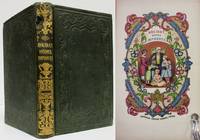
185017143Philadelphia: American Sunday School Union. Good. 1850. First Edition. Hardcover. Green embossed cloth with gilt decorated spine. All edges gilt. Illustrated with a color plate and engravings. Pages printed within a border. Interior of text is tight clean & intact. Prior owners inscription on front endpaper. Top edge rubbed. Top corner of rear endpaper has been removed. Various authors. Short religious children stories ; Engraved illustrations; 12mo 7" - 7½" tall; 223 pages . American Sunday School Union hardcover
1830035239Philadelphia: American Sunday School Union 1830. Undated ca. 1830. Blue hardcover with brown leather spine frontis engraving and two additional engravings in the text 6.75" tall 35 pages. Covers rubbed and spotted binding sound pages foxed and a little grubby looking but with no chips or tears no names or other markings. Hard Cover. Fair. 16mo - over 5¾" - 6¾" tall. American Sunday School Union Hardcover
18808871880. Wood engraving on tissue-thin Japon paper 5 1/4 x 1 3/4 inches 133 x 45 mm full margins. Scattered light spots of yellow discoloration throughout as well as some edge tears and corner damage from a former mount all outside of image area. Signed illegibly in the image by an unknown artist along with an acorn motif moniker. unknown
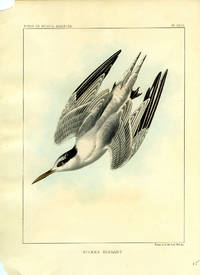
1860885Philadelphia: J.B. Lippincott & Co 1860. Lithograph and engraving with handcoloring in watercolor on white wove paper 11 1/2 x 9 inches 290 x 230 mm Sheet full margins. Chip at each of the corners and at the left sheet edge all well outside of image area. A single plate from The Birds of North America; the descriptions of species based chiefly on the collections in the Museum of the Smithsonian Institution / by Spencer F. Baird; with the cooperation of John Cassin and George N. Lawrence. With an atlas of one hundred plates Philadelphia: J.B. Lippincott & Co.1860. J.B. Lippincott & Co unknown
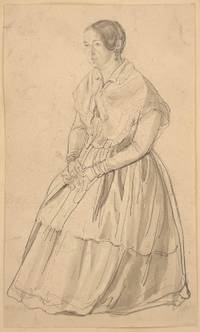
185025171850. Graphite and ink wash on cream wove paper 7 1/8 x 4 14 inches 180 x 118 mm the full sheet. Some minor surface soiling and uniform toning otherwise in good condition. The sitter wears a dress consistent with mid-Victorian fashion. The dropped shoulders wide sleeves and the large flat collar pelerine are hallmarks of the 1840s and early '50s style in America and abroad. Her hair parted sharply in the middle and slicked down over the ears is the quintessential "Madonna" style of that era popularized by Mary Todd Lincoln. unknown
18401201170025Philadelphia: American Sunday School Union 1840. Hardcover. Acceptable. Philadelphia: American Sunday School Union circa 1840. Collected works of morality tales for Children published by the American Sunday School Union.<br><br> 48mo. This is a set four of the volumes published. Each volume has several stories. All books have marbled boards with read leather binding. Chipping to spines with loss. Wear to each volume.<br> Volume three: stain to interior pages of second half of book endpapers; pencil inscription on front end page. Volume six gutters cracked; pencil notations on rear pastedown. Volume seven binding loose pencil inscriptions on front end page; first title loose. Drowning Boy pp.56 bottom corner torn with loss. Drowning Boy 78pp and Be Neat 12pp. loose. Volume forty-four pencil inscriptions on endpapers and front and rear pastedowns. Overall an interesting collection of Sunday School Stories from the early 19th Century. Ships daily. <br> Philadelphia: American Sunday School Union hardcover
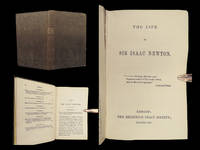
186028020<p><strong>1860 Life of Isaac Newton Science Mathematics Principia Philosophy Tract Society</strong></p><p>"<em>I can calculate the motion of heavenly bodies but not the madness of people.</em>" </p><p>― Isaac Newton</p><p>Few names throughout history are as synonymous with science as Isaac Newton. Known for his studies in physics math and astronomy Newton was one of the most influential scientists during the scientific revolution. His contributions to optics and physics are still foundational in the scientific process.</p><p>This small 19th-century sketch of the life of Newton was collected and published by the American Sunday School Union. </p><p>Item number: #28020</p><p>Price: $499</p><p>American Sunday School Union</p><p><strong><em>The Life of Sir Isaac Newton</em></strong></p><p>London: The Religious Tract Society ca. 1860.</p><p><u>Details</u>: </p><p><!-- if !supportLists-->· <!--endif-->Collation: Complete with all pages </p><p><!-- if !supportLists-->o <!--endif-->4 iv 5-192</p><p><!-- if !supportLists-->· <!--endif-->Provenance: Handwritten – <em>John More Nisbett</em></p><p><!-- if !supportLists-->o <!--endif-->John More Nisbett 1826-1904 of Cairnhill. He was married to Lady Agnes Dalrymple daughter of North Hamilton Dalrymple 9th Earl of Stair.</p><p><!-- if !supportLists-->· <!--endif-->Language: English </p><p><!-- if !supportLists-->· <!--endif-->Binding: Hardcover; secure</p><p><!-- if !supportLists-->o <!--endif-->Brown cloth</p><p><!-- if !supportLists-->· <!--endif-->Size: ~5.75in X 3.75in 14.5cm x 9.5cm</p><p>Our Guarantee:</p><p>Very Fast. Very Safe. Free Shipping Worldwide.</p><p>Customer satisfaction is our priority! Notify us with 7 days of receiving and we will offer a full refund without reservation!</p><p><u>Photos available upon request. </u></p> The Religious Tract Society hardcover
1855GEN35-C-22Philadelphia : American Sunday School Union 1855. Cloth. Very Good. 6" by 4";. None. A charming collection of moral and evangelical stories for children. Illustrated with several full page plates and vignettes. Authorship is not attributed to anybody however the verso to title page states that the books published by the American Sunday School union must be sanctioned by the committee of publication. The committee seats fourteen members from the following denominations of Christians viz. Baptist Methodist Congregational Episcopal Presbyterian Lutheran and Reformed Dutch. Of these denominations no more than three of those on the committee can be of the same denomination and texts are only published if nobody objects to them. Several of the plates have been neatly coloured. Signature to front pastedown indicates one prior owner to be Lavinia E Dimmick. Direct from the library of the late Hugh Selbourne MD 1906-1973 a noted book collector and diarist. In a blind stamped cloth binding. Externally smart. Small loss to head of spine. Bumping to the tail of spine and to extremities. Prior owner's inscription to front pastedown Lavinia E Dimmick April 15th 1880. Internally firmly bound. Thin tidemark to top edge of pages due to water damage does not affect text. Frontispiece has been hand coloured by prior owner. Pages are generally bright with scattered spots throughout. Very Good American Sunday School Union hardcover
182698470American Sunday School Union Philadelphia 1826. Pamphlet. Used - Good. I. Ashmead & Co. 1826. 144 pages. 4 Scripture Lesson woodcuts. 8.75 x 5.5" wrapper woodcut advertisements Agents Agencies. Shoemaker American Imprints 23498. Publications distribution libraries state activities officers constitution depositories members. Lower wrap final leaf detached soiled edge chips minor foxing sewing broken G. American Sunday School Union, Philadelphia unknown
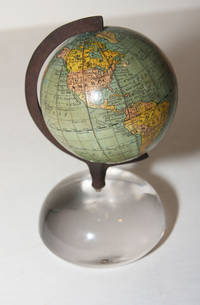
189110008Seneca Falls NY 1891. No Binding. Near Fine. 3-inch diameter globe anchored in magnifying glass as issued; 5 ½ inches total height. Color-printed wax-engraved gores; some fading of place names a few repair in extreme southern portion but overall remarkably little wear; overall excellent condition. An unrecorded delightful cartographic curiosity: a very good quality miniature globe with a magnifying paperweight as its base. Only two other globes by the American Globe and Supply Company are known: a six-inch terrestrial recorded by Rumsey dated 1892 and an eight-inch terrestrial cited in Rittenhouse dated 1891; see below. This Seneca Falls New York company was one of several for which Rand McNally supplied gores for the globes it produced. Rand McNally did not issue its first globe until 1887. Very nice condition for an object of this kind. Cf. Rumsey 5120; Rittenhouse Vol. 2 No. 1 p. 23. unknown
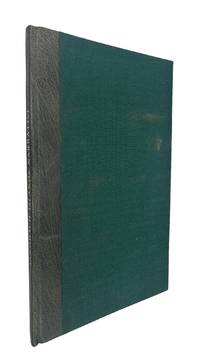
1816271<p>New York: J. Seymour American Board of Commissioners for Foreign Missions Agents Appointed to Establish a School for Heathen Youth 1816. first edition. modern 1/4 niger morocco. Good. Inspiration for the First Mission to Hawaii. <br /><br />Rare in commerce most copies have been acquired by American institutions. Few copies have come to documented auction in the past 100 years. Of those made available about half are decommissioned library copies including a copy that sold for over $15000 at a 2006 Sotheby's auction.<br /><br />Condition: Very Good<br /><br />IMPORTANCE & BACKGROUND<br /><br />A biographical account of the lives of five Hawaiian youths who would come to form a core of initial students enrolled at the new Foreign Mission School established at Cornwall Connecticut in 1816. The vivid accounts of Captain Cook's and others explorers' voyages to the Sandwich Islands Hawaii and other Pacific islands generated interest in the U.S. to properly educative Hawaiians in both academic and Christian teachings. The school formed under the direction of the American Board of Commissioners for Foreign Missions ABCFM would serve to educate foreign students in preparation for missionary work in their native lands and elsewhere. <br /><br />A Narrative of Five Youth from the Sandwich Islands was the first of many publications intended to raise funds and stir up popular support for the new school as well as for the first Christian mission sent to the Hawaiian Islands three years later. The publications were a great success leading to the significant funding and public support critical to early efforts to fold Hawaii within the cultural and commercial influence of the United States.<br /><br />BOOK INFO<br /><br />Published in 1816 in New York by J. Seymour under the direction of ".agents appointed to establish a school for heathen youth" e.g. American Board of Commissioners for Foreign Missions. First edition first printing. Bound in modern 1/4 green niger morocco with gilt spine lettering over finely woven green cloth backed boards. Refreshed endpapers. Thin Octavo 8 1/2" x 5 1/8". Collated and complete: 3 4-44 p. <br /><br />ABOUT THE WORK & HISTORICAL CONTEXT<br /><br />By the early 1800s Hawaii had become a key aspect of America's growing trade with China. It was a critical resupply port for American ships on the trade route to China and a lucrative source for sandalwood. American merchants saw commercial possibilities that could be expanded. Protestant missionaries saw heathens in need of salvation via Christian conversion.<br /><br />This is a biographical account of and strong bit of fundraising propaganda on how five Hawaiian youths were saved from their heathen ways and savage pasts through a civilized education and Christian conversion. While the backgrounds of the youth vary - one was the son of a chief and another the survivor of brutal inter-tribal warfare for example-- the stories of these five youths share a number of common elements. All had spent time as sailors on American trade ships. Three had served at sea in the War of 1812. Most had experienced periods of extreme hardship after reaching New England. All found sponsors teachers and spiritual guides who helped them on their path to converting to Protestantism.<br /><br />CONDITION INFO<br /><br />The book is Good to Very Good by early 19th century American imprint standards.<br /><br />Binding is tight. Leather is supple. Areas of dust and light soiling to cloth. Lightly toned pages overall with light foxing. Some abrasion to paper along gutter margins of first few pages. Browning to first and last page with some brittleness and chipping. The paper used by the printer was quite thin so the text block background is darkened a bit by opposing page text on the same leaf as in all copies. No writing ex libris marks or library markings. Slight loosening at the head of the first few leaves where binding cords are exposed. A few smudges marginal paper nicks and other signs of light handling.<br /><br />.</p> J. Seymour, American Board of Commissioners for Foreign Missions (Agents Appointed to Establish a School for Heathen Youth)
1845051426F.G. Fish 1845. Book. Very Good-. Hardcover. 1st Edition. In stamped brown cloth with chipping to cloth at spine ends and wear to cloth at corners. Small piece of paper with description of book glued to front pastedown. F.G. Fish Hardcover
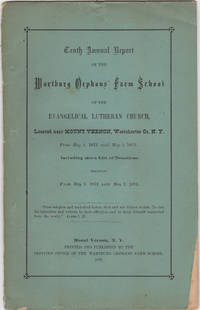
187938680Mount Vernon: Printing office of the Wartburg Orphans' Farm School 1879. First edition. Stitched paper wrappers. Overall very good copies with some chips to wrappers. Tenth report has tear along spine. 8vo. Tenth Report includes a "Compliments of G.C. Holls" card as well as a typed letter laid in loose. Thirteenth Report contains a typed letter laid in loose from the same. Holls was the Director of the Institution and on the Board of Managers. Reports cover from May 1 1875 to May 1 of each of the following years through 1879. The Wartburg Orphans' Farm School was founded in 1866 serving children who had lost parents during the Civil War. Over time the facility shifted to serving the elderly and is currently known as the Wartburg Adult Care Community. OCLC shows four locations: Huntington Trinity Yale NYHS. Printing office of the Wartburg Orphans' Farm School unknown
1855102999New York; Carlton & Phillips For The Sunday-School Union 200 Mulberry Street 1855. First Edition. Hardback. Very good copy in the original gilt-blocked and embossed cloth. Professionally recased with the original spine laid back; very impressively finished. Remains particularly well-preserved overall; tight bright clean and strong. ; 159 pages; Added t. P. Engraving text with borders. Form/Genre: Juvenile/Sunday school literature --New York State --New York --1861. Didactic/instructional literature. Engravings for other Sunday-School & Carlton works of this specific period are attributed to Felter after E. J. Whitney. New York; Carlton & Phillips For The Sunday-School Union, 200 Mulberry Street hardcover
183332993New York: Published by B. Waugh and T. Mason. J. Collard Printer 1833. Hardcover. Fair. 16mo. 215 pages 1. Frontispiece illustration and illustrated half title page. Marbled paper covered boards with red leather spine. Gilt title on the spine. Small chip to the leather spine. Scuffed marbled paper on the front cover. Some edge wear to the boards. Moderate toning and scattered foxing to the contents. Old pencil inscription of J H sp. Parkers Book" at the top of the right front flyleaf. Below the first inscription is a later pen inscription - "Presented to David H Aurally by Mrs. Sara Graves Reeves from the library of the Graves family at Mount Pleasant their home near Covington in Newton County Georgia 1956." On the front paste down is a yellow store label "Bailey's Shoe Shop 142 Sycamore St. Dr. 3-0172- Decatur Ga." From RootsWeb Ancestry<br /> <br /> Mt. Pleasant Georgia is named for the plantation that was built by Solomon Graves beginning in 1819. His land holdings totaled over 7500 acres at one point. The original plantation home which still exists was built in 1835. The land remained in the Graves family until the final 426 acres were sold in 1958. In the early 1980s 450 acres of the former plantation not including the 22 acres immediately surrounding the original plantation home were sold to a speculator/developer who had been assembling land at Interstate 20 interchanges east of Atlanta. By the late 1980s the land had been rezoned to a mix of industrial multi-family highway commercial and residential.<br /> <br /> See also: Perkerson Madora Field. White Columns in Georgia. New York: Rinehart & Co. Inc. 1952. Print.<br /> <br /> Covington Newton County Georgia: Mt. Pleasant Plantation - Off Hwy. 278 - 1820 plantation now a working Christmas tree farm. December 2011. Published by B. Waugh and T. Mason. J. Collard, Printer hardcover