395 résultats
18742081002108700741Not Available 1874. Soft Cover. Fine. Size: Small Japanese paper Number of books: 4 Not Available paperback
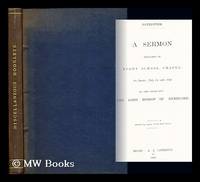
1896275544Rugby: A. J. Lawrence 1896. First Edition. Hardcover. Good copy in original gilt-blocked cloth with some wear and tear as with age. Remains well-preserved overall; bright and clean. Physical description; multiple pagings. Contents; Patriotism: a sermon preached in Rugby School Chapel by the Lord Bishop of Hereford. ; God and Caesar: a sermon preached in Rugby School Chapel by the Rev. H.A. James. ; Contentment and Discontent: a sermon preached in Rugby School Chapel by the Rev. H.A. James. ; A Sermon preached in Rugby School Chapel by Rev. James Robertson. ; Beast and Man: a sermon preached in Rugby School Chapel by the Rev. H.A. James. ; Hope: a sermon preached in Rugby School Chapel by The Rev. A.A. David. ; A Sermon preached in Rugby School Chapel by Rev. R. Waterfield. ; The Greatness of Humanity: a sermon preached in Rugby School Chapel by Rev. H.A. James.; Fellowship: a sermon preached in Rugby School Chapel by Rev. W.H. Payne Smith. ; The Bonds of Union Between School Fellows: a sermon preached in Rugby School Chapel by Rev. H.A. James. ; ""A Charge to Keep I Have"": a sermon preached in Rugby School Chapel by the Rev. H.A. James. ; God's Ambassadors: a sermon preached at the ordination in Wells Cathedral by Rev. H.L. Goudge. ; The Years That Are Past: a sermon preached in the Cathedral Church of Christ in Oxford by Francis Paget. ; Memorial Sermon on the death of Mr. John Penn delivered by Rev. Samuel Bickersteth. Subjects; Collected Sermons. Rugby School. Rugby: A. J. Lawrence hardcover
18712111902160200126Kihei Yanagihara 1871. Soft Cover. Fine. Size: 25cmx18cm Number of books: 15 Kihei Yanagihara paperback
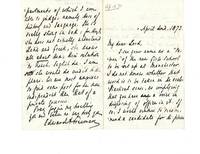
1873160861873. Edward Freeman. Autograph Letter Signed. April 2 1873 Somerleaze Wells Somerset England. 4 pages on a single sheet folded. To "My Dear Lord" possibly a Bishop About a teacher who is too talented to be a governess whose name he puts forward as a candidate for headmistress of a new girls' school.<br /> <br /> Stating in part "I see your name as a "Patron of the new Girls School to be set up at Manchester." I do not know whether that word is to be taken in the ecclesiastical sense as employing that you have a voice in disposing of offices in it. If so I would venture to recommend a candidate for the place of Head Mistress which I hear that the Committee are going about to fill one whom I am sure you will find it a great gain to put at the head of the new institution. This is Miss Macarthur who has been governess in my house for nearly five years and who is just now leaving us because all my daughters are now grown up. She is in correspondence with Miss Vernon to whom Mrs. Kitchener first spoke of her and she has asked me to say what I can for her to any of the Committee. I think the best witness of my opinion of her is that I have set her to write one of my series of small histories a History of Scotland which I hope will soon be out. She is a woman of powers far above the common and I can witness that she has practiced them well in the only two departments of which I am able to judge namely those of History and language. She is really strong in both; for though she does not actually understand Latin and Greek she knows all about them their relation to French English etc. I am sure she would do credit to the place. We are most anxious to find some post for her more independent than that of a private governess."<br /> <br /> Unfortunately Miss Macarthur was not appointed; there being far better qualified candidates competing for this sought after position. She was Margaret A.R. Macarthur born in Scotland in 1842 and was the author of 'History of Scotland' in Freeman's Historical Course for Schools. It would be interesting to find out what happened to her. In fine condition. unknown
1891052601Istanbul: K. Bagdadliyan Matbaasi. Ah 1308 1891. 1st Edition . Leather. Good. 12mo - over 6¾ - 7¾" tall. Modern very decorated full leather bdg. Tear and missing on imprint page; also first two pages however only two words are missing slightly toned on pages. Foolscap 8vo. 175 x 115 cm. In Ottoman script and Armenian. 8 94 p. Talîm-i lisân-i Ermeni. The Tanzimat reforms from 1839 stimulated Armenian cultural activity in Constantinople and the port city of Smyrna now Izmir. The number of Armenian titles printed in the Ottoman capital grew exponentially throughout the next few decades. By the mid-nineteenth century Constantinople had regained its status as "the World Capital of the Armenian Book" for a new span of 40 years. Thereafter the fortunes of Armenian book publishing in Constantinople became hostage to political developments in the Ottoman Empire. Armenian printing stagnated during the repressive regime of Sultan Abdülhamid II but rebounded immediately after the 1908 Revolution. It almost ground to a halt during the First World War yet it was rejuvenated immediately after the Ottoman defeat. After Constantinople renamed Istanbul in 1930 was integrated into the Turkish Republic established by Mustafa Kemal Atatürk Armenian cultural freedoms were curtailed the total number of Armenian books published declined although the city still remains an important center of Armenian-language book printing outside Armenia. This is a small and extremely rare Armenian linguistic book printed for the Ottoman / Turkish learners. OCLC: 1004312309 / 780182928.; Özege 19657. First and Only Edition. <br/> <br/> K. Bagdadliyan Matbaasi., [Ah 1308] hardcover
18802082402113510042Not Available 1880. Soft Cover. Fine. The book is in fine condition. Not Available paperback
18922110502151100923Sekizenkan 1892. Soft Cover. Fine. Number of books: 15 Sekizenkan paperback
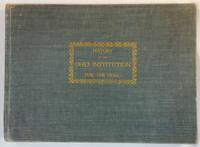
1898039979Columbus OH: C. C. Johnston 1898. First edition 1898. Illustrated in black and white. Includes a history of the institution current programs various departments biographical sketches of representative alumni etc. Oblong format blue cloth with gilt lettering to the front cover 192 pages no dustjacket. Includes some local advertising. The book has edgewear and rubthrough at the corners hinges internally cracked but secure very faint old transparent stain to the inner bottom margins not affecting printed areas pages otherwise clean no names or other markings. First Edition. Hard Cover. Fair. Oblong 4to. C. C. Johnston Hardcover
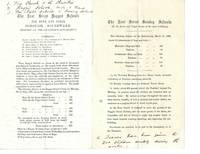
1868160851868. Early Women Education. Autograph Letter Signed on verso of a Handbill regarding Ragged Schools April 13 1868. Rev. H. Newton-Vicar of St. michael's Mission Schools Lant Street writes to a donor about the work of the Ragged schools. Verso is a broadside for "The Lant Street Ragged Schools for Boys and Girls Borough Southwark." Reading in part "These Ragged Schools are placed in the midst of the poorest populationin Southwark in are the largest with about 850 attendances daily and the most important in South London." Attendance shows girls far outnumbered boys in the school "Boys in the Lower School Room.167 Girls in the Upper School Room.243.Afternoon Boys.162 Girls.233. The attendants at the Evening School in which more grown persons of both sexes are taught to read and write number about.65." He has made notes in his hand on the broadside portion in part "Ragged Schools male & female." At the time that this description is being written no copies are recorded in American institutions. OCLC search results are at best an estimate and can vary over time. This rare handbook is considerably more interesting for the first-hand manuscript content regarding the coeducational activities of the school. unknown
188429652Various places 1884-1958. Fine original condition. 73 letters from 43 correspondents including Lore Crewe Lord Curzon F. S. Kenyon Prince Louis of Battenberg Edward Lyttleton Lord Napier Lord Roseberry Sir Charles Trevelyan and others mostly pertaining to school events. unknown
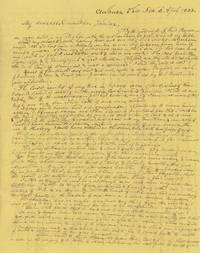
1832List3436Auburn New York 1832. Single four-page letter measuring 7 ¾ x 9 ¾ inches. Folded with very small tears at folds. Excellent to Near Fine. A letter written from the Auburn Theological Seminary in 1832 from the soon-to-be Reverend Thomas Reed Rawson 1803-1877 to his soon-to-be wife Louisa W. Dawes 1810–1849. Dawes who lived in Cummington Massachusetts was the older sister of Senator Henry Laurens Dawes best known for the 1887 Dawes Act.<br /> <br /> Rawson opens by commenting on the death of one of his students and his time spent in Oswego “visiting in the most fashionable familiesâ€; he felt this taught him a great deal about “human nature†which in Oswego is “peculiarâ€. He seems to have been particularly perplexed by the spiritual character he encountered in upstate New York a locus of the Christian revival movement now called the Second Great Awakening:<br /> <br /> “You know I expected that the spirit of the west was a more active . spirit than what was seen in the N.E. states & hoped by breathing this pure atmosphere to enjoy great spiritual health. How erroneous was the impression! How greatly have I been deceived! . I acted as though it was so – as though man was man only in certain latitudes. I acted as though face answered to face only when seen in the waters of N.E. & consequently that the heart of a N.E. man had no analogy to what beats in the bosom of one born in a more western longitude.â€<br /> <br /> Not only is Rawson nonplussed by New Yorkers’ religious qualities he is vehemently opposed to some of the new practices that arose from the religious revival there:<br /> <br /> “The state of things here I mean in all this country at the west is very peculiar. You have heard of ‘Old & New Measures’ I suppose. For myself I cannot approve of the latter. I find not a spirit in me to Fellowship them. Have been exceedingly tried by them as I have been in the midst of ‘new measures’ all winter. You can form but a faint idea of the excitement which is in this country in the religious community. In Oswego Co. the lay-men are going through the Co. holding meetings once a month in praying exhorting dispensing the duties of Clergymen &c. &c.; & it seems that the present state of things must result in a wide division in the churches. ‘A house divided against itself cannot stand.’ . As near as I can find out very sinister is the spirit that knows the new measures to that wild-pine which ran so extensively in the time of Edwards. The effects of it are seen in your town to this day.â€<br /> <br /> The “New Measures†were novel practices for American Christianity that came about during the Second Great Awakening mainly due to Presbyterian minister Charles Finney. These include very lengthy meetings public naming of sinners and public confessions of sin and were controversial with those who preferred a more orthodox and restrained service. Rawson accurately predicts that the new practices would lead to a schism; starting in 1837 the Old School-New School Controversy split the Presbyterian church along these lines. He later worries that such a division in the church would allow “Catholicism to take the advantage†and that “Satan is bringing this about as rapidly as possibleâ€. The appeal of a strong hierarchical Catholic church as opposed to a weak and divided Protestant one was a common worry among Protestants at the time.<br /> <br /> Rawson traces the “sinister spirit†of the new measures back to “the time of Edwardsâ€: Jonathan Edwards a key figure in the First Great Awakening of the 1730s and 40s. Given his reference to “your townâ€â€”Cummington Massachusetts—Rawson is probably referring to the so-called “New England theology†that arose from the First Great Awakening. Among other things New England theology proposed new views on man’s free will and responsibility; similar views would create controversy in Rawson’s time as he explains:<br /> <br /> “I see my own heart to be depraved & wicked beyond all observation but the fruits of the spirit I think I do love & hope they are sweeter & more sweet to my taste. I say taste the New measure-men are not taste-men but believe in the ‘motive scheme’ — By taste is meant the implantation of a new principle – love to God & is affected by the Holy Spirit. The ‘motive scheme’ implies that the sinner turns himself about in by motive merely.â€<br /> <br /> He is objecting to the idea that a sinner could redeem himself through an act of his own will—by his own ‘motives.’ Old School Presbyterianism holds a more orthodox Calvinist view wherein the redemption of the sinner is not up to the sinner’s will at all. Rawson makes an interesting comparison between New School views on the matter and states’ rights in the context of the then-ongoing nullification crisis:<br /> <br /> “The signs of the times declare most plainly to him who has wiped up his eyes that ‘the end has come upon the four corners of this earth’ i.e. the end of peaceful days for the present. Never was our Republic brought to a crisis like this. Nullification in the Political world is the same with Denunciation in the Religious world. This is my opinion; don’t know as have heard others say so.â€<br /> <br /> The nullification crisis arose when South Carolina declared that several import tariffs were unconstitutional and thus nullified them under the states’ rights doctrine of state nullification. Rawson seems to be drawing a parallel between the revivalists’ idea of the role of one’s motives in salvation and states’ rights advocates’ idea of the relationship between the states’ wills and the federal government’s. Of course the states’ rights issue would soon reach an apotheosis.<br /> Rawson closes with some affectionate lines for Dawes and advice about her own teaching job; the crossed text updates her on the Christian conversions within his family. Overall the letter provides detailed insights into the views of a more conservative theology student on the Presbyterian controversy that was soon to come to a head. unknown
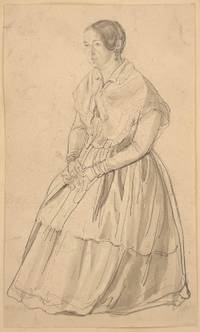
185025171850. Graphite and ink wash on cream wove paper 7 1/8 x 4 14 inches 180 x 118 mm the full sheet. Some minor surface soiling and uniform toning otherwise in good condition. The sitter wears a dress consistent with mid-Victorian fashion. The dropped shoulders wide sleeves and the large flat collar pelerine are hallmarks of the 1840s and early '50s style in America and abroad. Her hair parted sharply in the middle and slicked down over the ears is the quintessential "Madonna" style of that era popularized by Mary Todd Lincoln. unknown
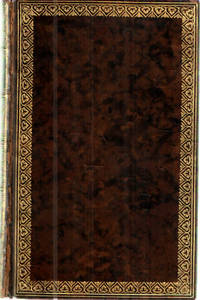
182543545London: William Cole 1825. Full Leather. vg. 24mo. 296pp Bound in full brown leather with gilt design and lettering to spine. Five raised bands. AEG. Marble endpapers. RIbbons.Leather title label. Vertical wear to spine front cover. Signed binding of Baynton Binders Bath. William Cole unknown
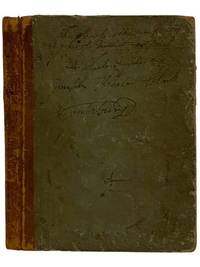
18302324134Canterbury New Hampshire: S.N 1830. Hard Cover. Good/No Jacket. Boards rubbed and soiled ink note from district clerk on front board ink owner name on front endpaper evidence that leaves were once pressed between some blank pages. 1830 Hard Cover. Unpaginated ruled pages as one would expect to see in a ledger. Leather spine olive paper over boards. A manuscript book detailing board elections budget votes and other administrative matters related to the operation of Canterbury New Hampshire's School District No. 4 written in the hands of several different clerks. S.N hardcover
182315369New York: D. Fanshaw Printer No. 1 Murray-Street 1823. Broadside octavo decorated borders untrimmed. Lightly foxed and dustsoiled Good. <br /> <br /> A rare broadside hymn of New York's Reformed Dutch Church. OCLC records a single copy at the New York Historical Society as well as single copies of this title printed in three other years. <br /> OCLC 58786086 1- NYHS as of December 2016. Not in AI Sabin Eberstadt Decker NUC Library of Congress Broadside Catalog. D. Fanshaw, Printer, No. 1 Murray-Street unknown
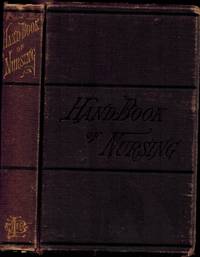
1882111007Philadelphia: J. B. Lippincott Co. 1882 Book. Good. Hardcover. One of the first nursing texts in America! Published under the direction of the Connecticut Training School for Nurses at the State Hospital in New Haven CT. Three major sections are on medical and surgical nursing with 8 chapters; directions for monthly nursing with 6 chapters and family hygiene. 266 pages with index. Moderate edge wear light exterior rub marks name on front endpaper. J. B. Lippincott Co. hardcover
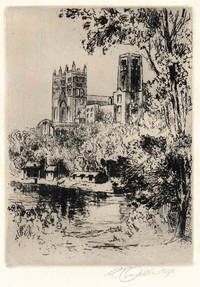
19005131900. Etching with aquatint on cream laid paper with a partial Arches watermark 5 3/8 x 4 inches 135 x 100 mm full margins. Signed illegibly in pencil in the lower right margin. unknown
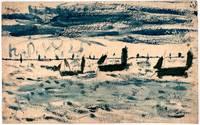
187922081879. Watercolor on watercolor paper 5 1/8 x 8 1/4 inches 130 x 210 mm the full sheet. Initialed "H.D.W.L." in watercolor in the left image area in the area of the sky and titled and dated in pencil on the verso. In good condition with scattered light spots of minor foxing and with the lower right corner lightly dog-eared. unknown
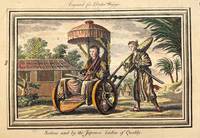
18601967London 1860. Engraving with hand coloring in watercolor on cream laid paper; 7 1/2 x 10 3/4 inches 190 x 272 mm platemark; 8 5/8 x 13 3/4 inches 217 x 348 mm sheet. Significant toning and handling wear edge wear including a missing left corner outside of image area and an expertly repaired vertical edge tear in the center top margin outside of image area and two tabs of archival mending tape at the top corners on the verso. unknown
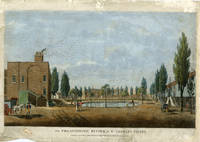
1814956London: James Whittle & Richard Holmes Laurie 1814. Engraving with hand coloring in watercolor on wove paper 11 1/2 x 17 1/4 inches 290 x 437 mm. Condition issues include significant creasing toning surface soiling and multiple paper tape repairs on the verso. Hand coloring is extensive and well saturated. James Whittle & Richard Holmes Laurie unknown
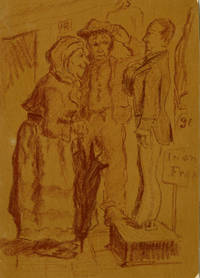
186014021860. Red crayon on brown light-wove paper 6 3/4 x 4 3/4 inches 172 x 121 mm. Light toning and extremely minor small losses at the very extreme top right and left corners 1/8-inch. unknown
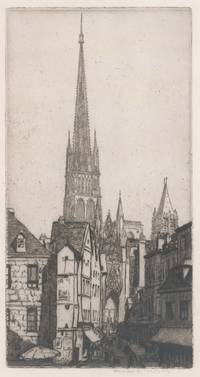
19002771900. Etching in brownish black ink on cream laid paper 8 1/4 x 4 1/4 inches 209 x 111 mm full margins. Signed illegibly in pencil lower right margin. In good condition with a printing defect along lower right margin beneath the platemark resulting in a thinning of the paper. unknown
18902090202122801530Matsunosuke Inokuchi 1890. Soft Cover. Fine. Number of books: 4 Matsunosuke Inokuchi paperback
18942091502135202387Shibata Genzaburo 1894. Soft Cover. Fine. Size: 20cm Number of books: 1 Shibata Genzaburo paperback
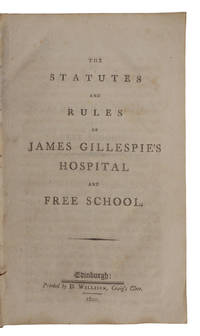
18026725Edinburgh: Printed by D. Willison 1802. FIRST EDITION 8vo pp. 37 i. Extracted from a volume. Lightly foxed some soiling at front and rear short tear to title-page. A rare account of the will of the wealthy tobacco merchant James Gillespie of Spylaw 1726-1797 who left a substantial bequest some £2700 to establish a school for poor boys and a further amount for a hospital for the elderly. The hospital later became workshops for the blind and was demolished in the 1970s but the school remains in operation though having moved premises several times as one of Edinburgh’s highest-ranking state high schools with alumni including Muriel Spark Ronnie Corbett and Alastair Sim. Printed by D. Willison unknown