English School, 19th centuryBiblio.com
395 résultats
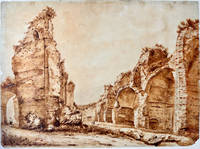
185212381852. Ink wash in brown ink on cream wove paper 9 7/8 x 13 inches 250 x 330 mm titled and dated in brown ink lower right. In fair condition with minor scattered soiling uniform age tone and edge 'nics;' all consistent with age. Laid down to archival mat board. unknown
189235864Paris France: Ecole Nationale Des Beaux-Arts. As New. 1892. Paperback. FREE UPGRADE to Courier/Priority Shipping Upon Request IN STOCK AND IMMEDIATELY AVAILABLE FOR SHIPMENT - Near mint condition. Text in French; 255 works catalogued none illustrated. Includes photo of Pelouse as frontispiece. Rare. -- with a bonus offer-- . Ecole Nationale Des Beaux-Arts paperback
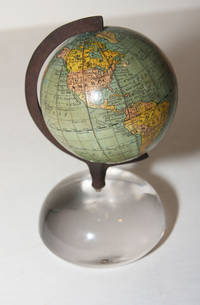
189110008Seneca Falls NY 1891. No Binding. Near Fine. 3-inch diameter globe anchored in magnifying glass as issued; 5 ½ inches total height. Color-printed wax-engraved gores; some fading of place names a few repair in extreme southern portion but overall remarkably little wear; overall excellent condition. An unrecorded delightful cartographic curiosity: a very good quality miniature globe with a magnifying paperweight as its base. Only two other globes by the American Globe and Supply Company are known: a six-inch terrestrial recorded by Rumsey dated 1892 and an eight-inch terrestrial cited in Rittenhouse dated 1891; see below. This Seneca Falls New York company was one of several for which Rand McNally supplied gores for the globes it produced. Rand McNally did not issue its first globe until 1887. Very nice condition for an object of this kind. Cf. Rumsey 5120; Rittenhouse Vol. 2 No. 1 p. 23. unknown
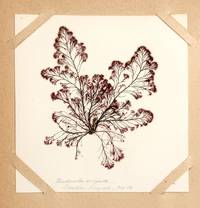
188423391884. A unique quarto 15 x 12 1/2 inches 382 x 318 mm; 30 double-sided sheets containing approximately 80 preserved specimens of seaweed and sea mosses which are individually dried mounted to card stock and tipped-in; each with the genus in Latin and the date and location of collection handwritten in pencil in the lower mount. Approximately 1 to 5 specimens per page. Binding is broken and significantly worn with some pages loose. Specimens are intact and separated by blotting paper and remain in very good to excellent condition with some exhibiting only minor losses. <br /> <br /> While seaweed collecting was a popular Victorian pastime in Britain this rare herbarium is filled with a profusion of north American specimens primarily from Bay Ridge Brooklyn to Nantucket island as well as some from California and Bermuda. In the Victorian era seaweed collecting or algology was far more than a casual beach activity; it was a massive cultural trend that married scientific curiosity artistic expression and social freedom. While the Victorians were obsessed with all things natural history a trend called "natural theology" seaweed held a unique appeal especially for women. While studying animal anatomy was seen as "unladylike" at the time collecting seaweed was considered a genteel and healthy outdoor activity. As a result several women used the opportunity to make significant scientific contributions.<br /> <br /> Often called "Ocean Flowers" or "Sea Mosses" these specimens became the focus of elaborate scrapbooks and pioneered some of the world's first photographic techniques Anna Adkins's Produced Photographs of British Algae: Cyanotype Impressions 1843 was the first book ever illustrated with photographs. Today these Victorian albums are more than just relics of a cultural fad; they are vital biological records. Scientists utilize the DNA from these 150-year-old pressed samples to track how ocean temperatures and species distributions have changed since the Industrial Revolution.<br /> <br /> Creating a seaweed album was a meticulous process. Collectors didn't just dry the weeds; they "resurrected" them to look alive on the page. This album demonstrates the incredible skill of the maker. unknown
1895223921Paris: Gauthier-Villars et Fils 1895. First. hardcover. fine. Illustrated throughout with nicely printed portraits and other historical reproductions. 3 volumes. lxviii 519; 572; 646pp. Very thick short 4tos beautifully rebound by Stroobants in older 3/4 tan morocco over marbled boards; ornate gilt-stamped spines with burgundy leather labels; uncut edges t.e.g. original wrappers bound-in marbled board slipcase worn. Paris: Gauthier-Villars et Fils 1895-1897.<br/> <br/> Fore-edges foxed and also some light foxing throughout the first volume otherwise a fine copy in a lovely binding.<br/> <br/> Gauthier-Villars et Fils unknown
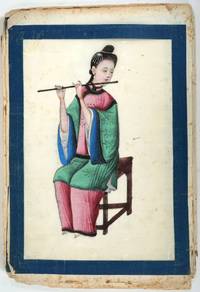
1870279111870. Finely executed portraits of women and their musical instruments larger and more detailed than many other albums. From the school of Youqua. The portraits have no background painting. 8 images mounted with dark turquoise border silk some with cracks; 3 images are mounted on card at a later date. All images loose in papered boards which open Western style and are disbound and very rubbed. Most images are in lovely and larger than most. Besides some small cracks they are in very good condition. 4to 11 1/2 x 8 unknown
18912092902143300143Mono fumei 1891. Soft Cover. Fine. Number of pages: 26 Size: 32cm Mono fumei paperback
18972092902144200899Not Available 1897. Soft Cover. Fine. The book is in fine condition. Not Available paperback
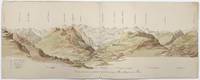
184023481840. Watercolor graphite and grayish ink on two sheets of cream laid paper with an 1836 M and smiling sun watermark 10 1/4 x 25 7/8 inches 260 x 658 mm the full sheet. Titled in ink in French on the recto. In very good condition with minor edge wear including creasing and nicks. A splendid panorama with each of the major peaks and point of interest labeled and identified in French. The iconic symbol of the Swiss resort the "Sun of St. Moritz" was adopted from early European heraldic marks and rebranded around 1930 by graphic designer Walter Herdeg. The image was patented in 1937 by spa director Walter Amstutz becoming the world's first visual trademark for a tourist destination. unknown
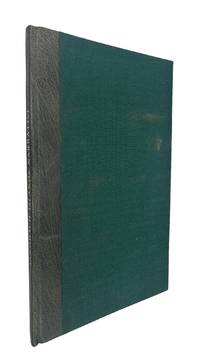
1816271<p>New York: J. Seymour American Board of Commissioners for Foreign Missions Agents Appointed to Establish a School for Heathen Youth 1816. first edition. modern 1/4 niger morocco. Good. Inspiration for the First Mission to Hawaii. <br /><br />Rare in commerce most copies have been acquired by American institutions. Few copies have come to documented auction in the past 100 years. Of those made available about half are decommissioned library copies including a copy that sold for over $15000 at a 2006 Sotheby's auction.<br /><br />Condition: Very Good<br /><br />IMPORTANCE & BACKGROUND<br /><br />A biographical account of the lives of five Hawaiian youths who would come to form a core of initial students enrolled at the new Foreign Mission School established at Cornwall Connecticut in 1816. The vivid accounts of Captain Cook's and others explorers' voyages to the Sandwich Islands Hawaii and other Pacific islands generated interest in the U.S. to properly educative Hawaiians in both academic and Christian teachings. The school formed under the direction of the American Board of Commissioners for Foreign Missions ABCFM would serve to educate foreign students in preparation for missionary work in their native lands and elsewhere. <br /><br />A Narrative of Five Youth from the Sandwich Islands was the first of many publications intended to raise funds and stir up popular support for the new school as well as for the first Christian mission sent to the Hawaiian Islands three years later. The publications were a great success leading to the significant funding and public support critical to early efforts to fold Hawaii within the cultural and commercial influence of the United States.<br /><br />BOOK INFO<br /><br />Published in 1816 in New York by J. Seymour under the direction of ".agents appointed to establish a school for heathen youth" e.g. American Board of Commissioners for Foreign Missions. First edition first printing. Bound in modern 1/4 green niger morocco with gilt spine lettering over finely woven green cloth backed boards. Refreshed endpapers. Thin Octavo 8 1/2" x 5 1/8". Collated and complete: 3 4-44 p. <br /><br />ABOUT THE WORK & HISTORICAL CONTEXT<br /><br />By the early 1800s Hawaii had become a key aspect of America's growing trade with China. It was a critical resupply port for American ships on the trade route to China and a lucrative source for sandalwood. American merchants saw commercial possibilities that could be expanded. Protestant missionaries saw heathens in need of salvation via Christian conversion.<br /><br />This is a biographical account of and strong bit of fundraising propaganda on how five Hawaiian youths were saved from their heathen ways and savage pasts through a civilized education and Christian conversion. While the backgrounds of the youth vary - one was the son of a chief and another the survivor of brutal inter-tribal warfare for example-- the stories of these five youths share a number of common elements. All had spent time as sailors on American trade ships. Three had served at sea in the War of 1812. Most had experienced periods of extreme hardship after reaching New England. All found sponsors teachers and spiritual guides who helped them on their path to converting to Protestantism.<br /><br />CONDITION INFO<br /><br />The book is Good to Very Good by early 19th century American imprint standards.<br /><br />Binding is tight. Leather is supple. Areas of dust and light soiling to cloth. Lightly toned pages overall with light foxing. Some abrasion to paper along gutter margins of first few pages. Browning to first and last page with some brittleness and chipping. The paper used by the printer was quite thin so the text block background is darkened a bit by opposing page text on the same leaf as in all copies. No writing ex libris marks or library markings. Slight loosening at the head of the first few leaves where binding cords are exposed. A few smudges marginal paper nicks and other signs of light handling.<br /><br />.</p> J. Seymour, American Board of Commissioners for Foreign Missions (Agents Appointed to Establish a School for Heathen Youth)
18306526London 1830. Aquatints coloured by hand. A fine complete series of four anonymous prints of hunting scenes possibly after the Alkens.<br/> <br/> The style and naming of these prints suggests an Alken origin for the series. Siltzer records a number of series by the Alken family in which the first plate is titled "Unkennelling." This title appears to be unique to them and supports the supposition that the present series are after the Alkens. Henry Thomas Alken was born into what became an artistic dynasty. He studied under the miniature painter J. T. Barber and exhibited his first picture a miniature portrait at the Royal Academy when he was sixteen. From about 1816 onwards he "produced an unending stream of paintings drawings and engravings of every type of field and other sporting activity. He is best remembered for his hunting prints many of which he engraved himself until the late 1830s.To many sporting art is "Alken" and to describe his work or ability is quite unnecessary." Charles Lane British Racing Prints pp. 75-76<br/> <br/> Cf. Siltzer pp.57-76. unknown
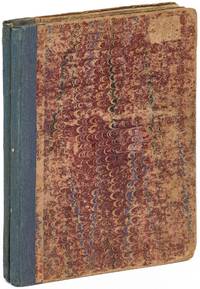
1890460264Fredonia New York 1890. Hardcover. Good. Two notebooks with printed title: Normal Rhetorical Exercise Correction Book. Fredonia N.Y.: F.C. Chatsey Publisher Copyright 1886. Small quartos. Bound in quarter cloth and marbled paper over boards. Covers are rubbed and worn one front cover has some staining good overall. Both notebooks contain several book reports and essays on special topics written by Walter Pettit when he was a teenage student at the Fredonia Normal School.<br /> <br /> Both notebooks date from the late 1890s. In addition to reports on The House of the Seven Gables Gulliver’s Travels The Merchant of Venice Oliver Twist and other books; the notebooks include both fictional essays such as “My Flying Machine†and “A Trip to the North Pole†and personal essays on special topics. Here for example is an excerpt from an essay titled: “Should Lynching be Suppressedâ€:<br /> <br /> “One of the greatest evils in existence is lynching. That it should be abolished is evident. Many innocent people have met their death by this means and it still is in existence in the Southern States. Perhaps some person … suspected of a crime is imprisoned. A crowd collects and is excited by somebody over the crime … the jailor gives up the suspected criminal to the mob who immediately carry the poor man to the nearest tree … This incident is kept from the newspapers and the suspected criminal dies unmourned unknown. With hanging by authorities … the criminal has a chance for his life; he may plead his case before unprejudiced men. His death is not embittered by the taunts of an unfeeling multitude of men women and children many of whom are as bad as the criminal. The wretches who are the leaders in such a mob are far worse than the victim …â€<br /> <br /> Also included is a travelogue from Sitka Alaska to Dawson City then at the height of the gold rush written in the form of a letter:<br /> <br /> “Feb. 18 1898: Dawson City Canada / Dear Friend … We started from San Francisco … arrived at Sitka … the town consists of a number of Indian huts a few Russian and American residences … we accompanied an excursion party to the Yukon. This river is one of the largest in the world … upon its banks are a few Indian villages … and here and there ‘Totem poles’. These totem poles … are made of wood grotesquely carved with figures of men beasts and birds. Upon them are kept the records of the Indian’s ancestors. These Indians are a half civilized sneaking dirty race short in stature with small eyes. They act as guides around the settlements … While at Sitka we bought a large stock of groceries … We carried these with us when we went to Dawson. Our party consisted of ten Indians my partner and I. Our journey took three weeks … we reached this city in October and immediately rented the only vacant building in town … I wish you where here to wait on some of our customers. They bring in a bag of gold dust and we weigh out enough to pay for the groceries they buy. This city is in the midst of the gold fields. It is composed principally of saloons dancing halls theaters and gambling houses. The miners sleep in tents … we have rows nearly every night and thieves are as thick as mosquitos …â€<br /> <br /> A graduate of the Class of 1901 Pettit had quickly shed such early external prejudices against indigenous peoples and gold miners. He taught high school in the Philippines 1901-09 attended Teacher’s College at Columbia and served as a U.S. Government Special Relief Assistant in Russia during World War I. As Director of the New York School of Social Work Pettit won international acclaim for his work on the “interdependence of peoples and the strengthening of international relationsâ€.<br /> <br /> A compelling pair of notebooks that sheds light on Pettit’s early education in upstate New York. American Sociological Review December 1961 pp. 959-60. hardcover
18072092902144201822Not Available 1807. Soft Cover. Fine. The book is in fine condition. Not Available paperback
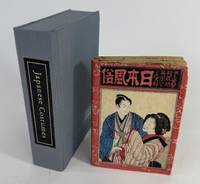
18902044Osaka: Poole Women's College 1890. <p>A delicate and magnificent Japanese rarity in fine condition: 3 volumes contained within a printed wrap-around band together in a single pictorial sleeve each volume approx. 4½ x 3¼" printed and bound in the Japanese manner in decorative paper wrappers each with a double-page folding color woodblock panorama The Daimyos Procession The Procession of the Mikado and The Bridal Procession of the Common People and each followed by 26 for a total of 78 color woodblocks of samurai court officials nobles servants merchants girls of high and low station nurses weavers cooks soldiers courtiers fishermen etc. - the entire panoply of Japanese society. "Every page has color woodcuts showing people of all classes and professions each with caption in English and Japanese. The books were written by an English teacher at the 'Pool' School for Girls." - Miles.</p> <br /> <p>From the Preface "These books are not only designed to please children but to show the manners and customs of the ancient and modern people of Nippon. The fine illustrations afford an important aid in this respect. It is through the eye that the understanding itself is most quickly reached." </p> . Poole Women's College unknown
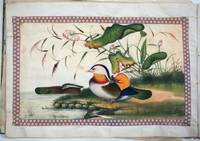
183027903Canton: SunQua Studio 1830. Silk covered boards. The 12 bird images are full page finely done with grass rocks and flowers with shrubs or trees. Unusually the half page images are mounted on the verso of the sheets of bird images. The half page images include collections of shells 4; women playing musical instruments 8; men sitting a scribe man smoking butcher melon fish and vegetable sellers and a few of the punishment images. <br /> <br /> Oblong 4to 8 1/4 x 13 1/4". Leaves mounted with to paper leaves with an unusual paper border with a purple circle pattern on pale background paper. Chinese style binding opening from the back of the album. Bound in a green gold blue and red silk woven in a daisy pattern which sometimes appears with a Sunqua stamp. Without background painting. The first image with some cracking but not affecting the characters some slight browning. Most in very good condition. SunQua Studio unknown
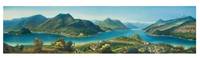
185042495Italy 1850. Gouache over faint etched line black gouache border. Period gilt and faux bois frame. A splendid panoramic view of Lake Como.<br/> <br/> Catering to the foreigners flocking to the region on The Grand Tour this hand-painted print beautifully depicts the famed picturesque lake with rich bands of blue highlighting the water and sky with the surrounding hills and mountains dotted with luxurious villas. The view looks north up the lake towards Switzerland from above Bellagio which occupies the point at which the lake divides in two. unknown
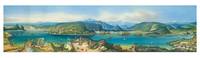
185042496Italy 1850. Watercolour over faint etched line black gouache border. Period gilt and faux bois frames. A splendid panoramic view of Lake Maggiore.<br/> <br/> Catering to the foreigners flocking to the region on The Grand Tour this hand-painted print beautifully depicts the famed picturesque lake with rich bands of blue highlighting the water and sky with the surrounding hills and mountains dotted with luxurious villas. In this view of Lake Maggiore we see from a very high vantage point the Borromean Islands: Isola Bella Isola Madre and Isola dei Pescatori with their extraordinary gardens. unknown
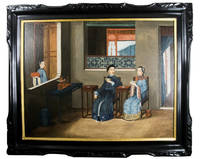
1820ABC_45805China 1820. 47 x 61 cm. picture; 61 x 74.5 cm. frame. Oil painting on canvas in a black lacquered Chinese export frame. An elegant interior scene from a Chinese Mandarins home in the early nineteenth century: a Manchu Mandarin and his consort taking tea in a domestic setting. He wears non-official semi-formal winter attire including rank badge sitting beside ahis beautiful Chinese lady surrounded by fine furniture and fittings. The whole scene reflects his good taste and social standing.Whilst tea had been the driving force of the China Trade since the early eighteenth century giving rise to export paintings illustrating its cultivation and production process the style and subject of the early export paintings was firmly rooted in traditional Chinese art and culture as in this delightful painting.l Cf. Choi Kee Il Tea and design in Chinese export painting in: The Magazine Antiques vol. 154 no. 4 October 1998. unknown
18792111902160201405Oseido Noriaki Ushiki Awajicho Kanda District 1879. Soft Cover. Fine. Number of books: 8 books Oseido Noriaki Ushiki (Awajicho, Kanda District) paperback
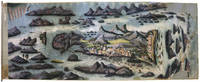
1849ABC_50166Macao 1849. Painting 350 x 150 cm. Watercolour on paper on contemporary wooden roll. A massive view of Macao from above painted in watercolours sometime in the second half of the nineteenth century during the era in which much of the trade in the area was beginning to shift from the old Portuguese colony to Hong Kong. The peninsula clearly labelled with the Mandarin toponym Àomén "Bay Gate" is very much the focus of the piece: it is depicted effectively as an island with the Chinese mainland across the isthmus abstracted away into just one of many rocks in the surrounding ocean.Macao is shown as mountainous and settled mainly on the western and southern shores with groups of white blue and yellow buildings. Many are labelled in Chinese or have yellow banners with Chinese writing on them flying above. Similarly the rocks in the surrounding waters are dotted with settlements and fortresses labelled in the same way.The seventeenth-century church of St Paul's stands in ruins at the heart of the settlement indicating that this piece was painted after 1835 when the building was gutted by a fire reducing it to its impressive frontage which remains one of the emblems of Macao to this day. Furthermore the Portas do Cerco Border Gate built in 1849 clearly appears in the northern wall across the isthmus. However none of the ships depicted are motorised suggesting that this view was still painted before the founding of the Hongkong Canton & Macao Steamboat company when steamships would have become a more common sight.The centring of Macao in what looks like a vast ocean littered with menacing rocks gives this painting an almost mythological aspect but the style is clear and realistic with the landmarks of the colonial settlement clearly depicted.Macao's strategic position on a peninsula connected to the mainland only by a narrow isthmus made it an attractive site for controlling trade in the Pearl River delta and in the region more broadly. Although initially founded as a commercial port by the Chinese in 1535 by 1557 the Portuguese had successfully negotiated a long-term lease of the island from the Ming dynasty and begun to settle there. Macao thus became the first enduring European colonial settlement in China and moreover was destined to become the last one as well being handed back to China in 1999.A beautiful monument to Macao's history in the days of its swansong as a Portuguese trading colony.Provenance: from an Italian private collection. The paper is brittle fragments have come away at the end some of these are gathered in a bag. A few larger tears down the painting however with minimal loss to contents. The painting is still clear and vivid. unknown