French School, 18th centuryBiblio.com
44 résultats
17101320Paris 1710. Etching on cream laid paper with a heraldic watermark with a fleur-de-lys 5 7/8 x 3 1/4 inches 147 x 81 mm wide margins. On the verso is what appears to be a printed passage discussing Jean Barbeyrac Baron perhaps from De Pufendorf's 4 volume commentary on natural law The Law Of Nature And People 1712. unknown
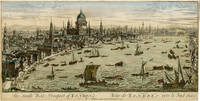
17601226London 1760. Copper plate engraving with hand coloring in watercolor on cream laid paper with a large circular watermark bearing a heart and arrow along with several Roman numerals and letters including II and S 8 1/4 x 16 3/ 8 x inches 208 x 423 mmimage area margins trimmed. Color slightly attenuated with some age tone mat tone and light scattered discoloration. Paper tape repair with in-painting at top right extreme corner paper tape support along the top sheet edge. Condition issues are consistent with age. This optic view of London and the Thames shows the north bank of the river from where Somerset House now stands in the east down to London Bridge and the Tower in the west. Also visible is the dome of St. Paul's Cathedral. Published in London circa 1760 this engraving is one of a series of images that were called optical views or perspectives. They originated in the early eighteenth century as part of the thriving topographical print market in cities such as Paris and London. As monied tourists traveled Europe these views became increasingly popular as souvenirs. After a trip abroad it was common practice among the wealthy denizens of London and Paris to produce "perspectives" after a dinner party. The views were enjoyed with the aid of a device known as a zograscope while the hosts regaled their company with travel tales. unknown
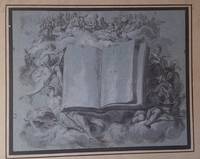
1750762Augusburg 1750. Original Drawing for Book Illustration. 160 x 197 mm. 6 ¼ X 7 ¾ inches. Drawn on blue paper laid down on 19th century paper. Black double fillet ink border. Shows some light wear but otherwise in very good condition. An attractive and well executed drawing in brown and white ink which illustrates the Book of Life surrounded by figures which probably illustrate the four seasons. This motif is crowned by a chorus of angels and saints also drawn in fine detail. Originally thought to be an Italian drawing the small-scale figures and the delicate pen strokes suggest the Augsburg School of the mid-18th century. Artists like Johann Wolfgang Baumgartner Joseph Christ and Godfried Göz all painters of considerable skill and reputation who also worked closely with local publishers creating designs for prints and book illustrations. The choice of blue paper and the application of white ink to heighten the image is typical of Augsburg style of the 1750's. For further information see Thomas Kaufmann's monograph Central European Drawings 1680-1800. Princeton 1989 and an essay by Peter Stoll in OPUS "Empire of Prints. The Imperial City of Augsburg and the Printed Image in the 17th and 18th Centuries" 2016. Both works are well illustrated and show examples of the drawings and prints from Augsburg artists during the period. unknown
1796Pa578London: J.S. Jordon 1796. 1st Edition . Paper. Fine. 8vo. . or a few words en passant: occasioned by his two letters on a regicide peace. From a tyro of his own school but of another Class.ii half-title 63 i pp. Dis-bound copy from a nonce volume. Printed 'A Tyro' at the end. Lacking covers. Rare item 4 copies only Copac. ESTC- T110091 <br/> <br/> J.S. Jordon unknown
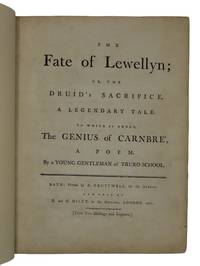
1777AQ30003Bath: Printed by R. Crutwell for the Author 1777. 6 5-55pp 1. Modern green wrappers. Book-label of J. O. Edwards to verso of upper wrapper. Small marginal worm-track running throughout blank lower margin of leaf F1 shaved ink-stamps of Merton House to terminal leaf scattered spotting. The sole edition of the first published work of historian and poet Richard Polwhele 1760-1838. Born at Truro Cornwall Polwhele began to write poetry when about twelve years old. His juvenile production received praise most notably from satirist John Wolcot bap. 1738 d. 1819 then a resident of Truro. The flattery of friends encouraged him to publish The Fate of Lewellyn under the moniker of 'a young gentleman of Truro School' whereupon a critic for the Monthly Review quipped that the master of the school should have kept it in manuscript. The volume did nothing to further his career indeed it gave him the reputation of an unpromising poet - a reputation he was fortunately able to shake off with later efforts. ESTC T109007. First edition. Quarto. Printed by R. Crutwell, for the Author unknown
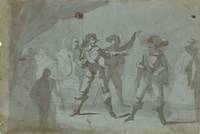
18002841800. Graphite and grayish ink wash on bluish wove paper 7 x 10 1/2 inches 177 x 265 mm matrix. Scattered surface soiling adhesive residue dog-eared corners and scattered edge tears along left margin outside of image area. Paper is braced on the verso with two pages from a mid 19th century book with illustrations by C.Perrin. One image depicts a scene of a group of soldiers representing the Holy Roman Empire causing a ruckus in a tavern named for King Richard the Lionhearted. Soldiers in what appears to be 18th century uniform bicker one drawing his sword in defense a lady appearing at his side the other standing at the foot of an empty throne. Perhaps a then modern depiction of King Richard refusing to show deference to the Holy Roman Empire. unknown
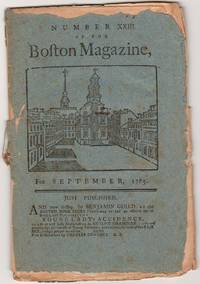
17853784<b><i>Founding of Harvard Medical School</i></b><br /><br /><i>The Boston Magazine</i> was published from October 1783 to December 1786 and was the first magazine to be published in Boston in the aftermath of the American Revolution. A major attraction of this issue is the presence of the front and rear printed wrappers although they are frayed and detached. The front wrapper features a large woodcut of the State House and surrounding buildings in Boston.The first 3 1/2 pages of the<i> Magazine</i> are Harvard's announcement from September 1783 of the creation of "the Medical Institution" now known as Harvard Medical School. This is followed by about two pages of an address "to the students in physic" i.e. the medical students reflecting upon the first two years of the medical school and outlining the requirements for a medical degree. About two pages are devoted to the sailing directions into and out of Plymouth Harbour. A brief news item in the "Monthly Chronology" reports a meeting to be held in October in Falmouth in the District of Maine on creating a "separate government" for the eastern counties -- a very early report on a separation that would not happen for another 35 years. Issues of <i>The Boston Magazine</i> in the original wrappers are extremely uncommon.<b>References</b>: Mott<i> A History of American Magazines 1741-1850</i>: Vol. I p. 28. Richardson <i>A History of Early American Magazines 1741-1789</i>: pp. 212-227. Lomazow <i>American Periodicals</i>: 15. <br /><br /><br /><b>Condition:</b> Signatures loose. Front and back wrappers present but frayed and detached; top 1/2" or so of front wrapper lacking. Occasional spotting. Interior pages very good. ICN 2933. Printed and published by Edmund Freeman
17822091202133203456Kihei Kashiwaya and others 1782. Soft Cover. Fine. Number of books: 3 books in total Kihei Kashiwaya and others paperback
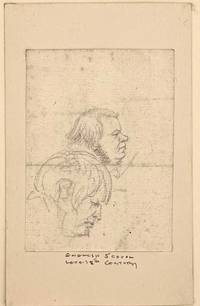
178825021788. Pencil on white laid paper 3 1/4 x 2 3/8 inches 83 x 60 mm the full sheet. In good conditon with minor scattered surface soiling and two soft horizontal folds unobtrisive and consistent with age. Lightly adhered at all four corners to a paper matrix. unknown
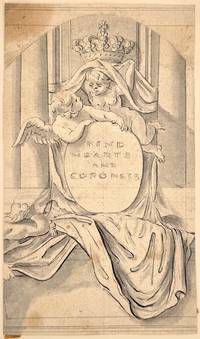
175025101750. Graphite ink and wash on cream laid paper with an extensive yet partial and illegible series of alphabetic watermarks. 7 1/4 x 4 1/2 185 x 115 mm the full sheet. With an contemporary support adhered to the top sheet edge. 19th century text in graphite added to the shield held by the putti. The image has been cropped to exclude the top portion of a recumbent figure whose legs are covered by a shroud and whose left hand remains visible in the left-center image area propped upon an pillow holding a heart. While this drawing appears to have been completed in the mid-18th century given the Neoclassical style media and paper the text "Kind Hearts and Coronets" comes from the poem Lady Clara Vere de Vere by Alfred Lord Tennyson. The poem was pubished in 1842 indicating that the pencil inscription in the image was added later. unknown
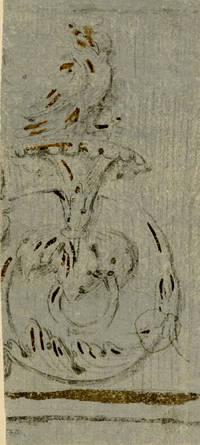
180014101800. Graphite and pen and ink on bluish-gray laid paper 4 1/4 x 2 inches 118 x 50 mm. The ink is slightly attenuated and there is uniform age tone. The bottom two corners are adhered to a paper mount with archival adhesive. On the verso there is some gray ink wash spatter and several light pin-point sized spots of discoloration otherwise in good condition. unknown
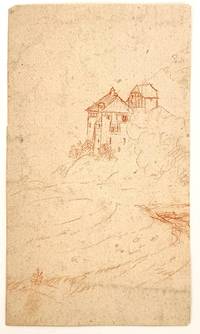
178025051780. Red crayon on cream laid Japon paper 6 3/4 x 3 7/8 inches 171 x 97 mm the full sheet. In very good condition with some light scattered surface soiling unobtrusive and consistent with age. unknown
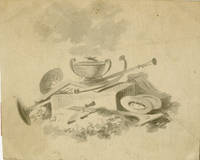
179014091790. Ink and wash in gray ink on cream laid paper 4 1/2 x 5 1/2 inches 115 x 140 mm. Scattered light surface soiling and areas of residue from a former mount on the verso. Scattered inscriptions in pencil on the verso. All condition issues are consistent with age. A classic Grand Tour composition. unknown
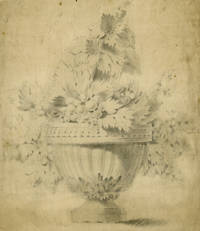
179014061790. Pencil on cream laid paper 10 x 8 3/4 inches 254 x 222 mm. Uniform age tone scattered surface soiling and handling wear. One pea-sized area of skinning in the top-center sheet area. Repaired 3-inch horizontal edge tear at the right sheet edge mended on the verso with 19th century paper tape. Light horizontal fold across the sheet center and paper tape remnants on the verso. unknown
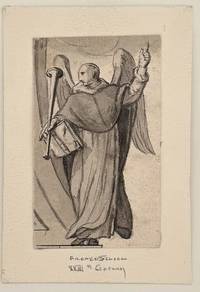
175024971750. Ink and wash on laid paper laid down to a wove paper matrix 3 1/4 x 2 inches 83 x 50 mm the full sheet. In good condition with uniform toning that is consistent with age. St. Vincent is traditionally shown with wings because he was likened to the angel who flies through the heavens proclaiming the Last Judgment in Revelation 14:6. The figure's left hand is raised with a pointed finger a classic "Vincentian" gesture symbolizing his constant preaching and warning of the coming Judgment "Fear God and give Him honor.". unknown
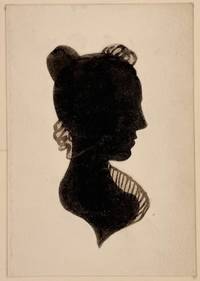
179024991790. Brownish black ink and collage on cream wove paper 5 3/4 x 4 inches 146 x 102 mm the full sheet. In good condition with light toning. The matrix is adhered at each of the four corners to a sheet of non-archival wove paper. In the 18th century silhouettes were considered scientific tools for analyzing character. While the term "silhouette" named after the French finance minister Étienne de Silhouette eventually became the standard name in 18th-century Germany they were more commonly referred to as Schattenrisse literally "shadow-outlines". unknown
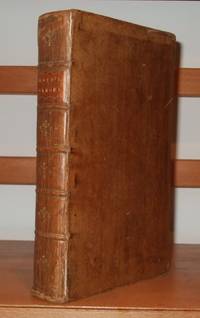
1765098733London: Printed for the Author 1765. Book measures 23 x 14.5 cm. Collation xxxix379pp. Bound in full period calf raised bands gilt lines and fluer-de-lis. Calf lightly rubbed top hinge joint split but board firmly attached some light fading. Anice clean attractive binding. Internally occasional light spotting. Pages in good clean condition. A very nice copy in a very nice period binding. . First Edition. Full Period Calf. Very Good. 8vo. Printed for the Author Hardcover
17412110502150907058Tokyo Printing Company Edition 1741. Soft Cover. Fine. Number of books: 7 Tokyo Printing Company Edition paperback
171144322Ratisponæ regensburg Joh. Z. Seidel 1711. 12mo.Contemp. full vellum. Light wear. Old name on titlepage. 3250610 pp. Internally clean. <br/><br/><em>Waller Nos 7810-48 but not this edition. - Wellcome IV pp. 493-94 but not this edition. The work includes the famous poem "Regimen Sanitatis." with commentaries. </em> hardcover
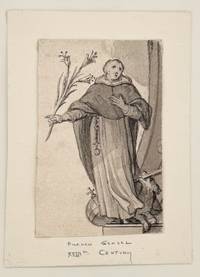
175024931750. Ink and wash on laid paper 3 3/8 x 2 1/4 inches 87 x 58 mm the full sheet. In very good condition adhered to a slip of archival paper at the top and bottom sheet edges. St. Anthony is seen here holding a spray of lilies representing purity and his struggle against temptation. unknown
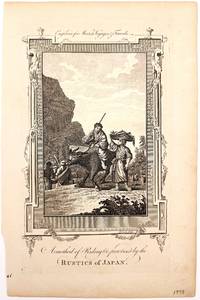
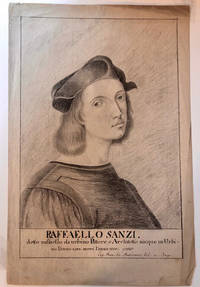
17781974London 1778. Engraving on cream laid paper 11 1/2 x 7 1/2 inches 290 x 190 mm sheet full margins. In good condition with minor age tone and an unevenly trimmed left sheet edge. Ink inscription in the left margin recto and pencil inscription in the right margin recto both well outside of the image area. unknown
17801481780. Graphite and ink on handmade watermarked C & I Honig laid paper 8 15/16 x 6 3/4 inches 226 x 170 mm. Signed illegibly in ink lower margin. Scattered light creasing and surface soiling minor areas of rubbing all consistent with age. unknown
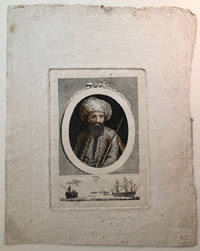
17701201770. Steel engraving with hand coloring in brown ink on thick handmade laid paper. 150 x 104 mm; 6 x 4 1/8 inches full margins. Scattered light staining age tone light tone and light foxing.<br /> <br /> Appointed as Admiral of the Ottoman Navy in 1769 by 1770 Mandalzade Husamaddin Pasha had risen to the rank of High Admiral. On the heels of the longest period of peace with Europe 1747-1768 the first Russo-Turkish was raging and despite the fact that Husamaddin had inherited a weak and depleted Navy he was able to command his ships into a series of victories by capitalizing on Russia's deep financial strain. The forward progression wouldn't last long. Despite the fact that the Russian Navy had been in a lot of ways inferior to the Ottoman Navy and the Turkish forces had shorter supply lines and the ability to levy troops from their vassel state the Crimean Khanate the Russian Navy eventually opted to employ British officers to resolve their shortcomings. In addition relentless Russian destabilization of the area and brute action to undermine the government eventually destroyed the effectiveness of the Ottoman Navy. In 1774 the Ottoman Empire ceded two key seaports to Russia Azov and Kerch allowing the Russian Navy and merchant fleet direct access to the Black Sea. This war comprised but a small part of the continuous process of expansion of the Russian Empire which continued to bleed southwards and eastwards throughout the 18th and 19th centuries. unknown
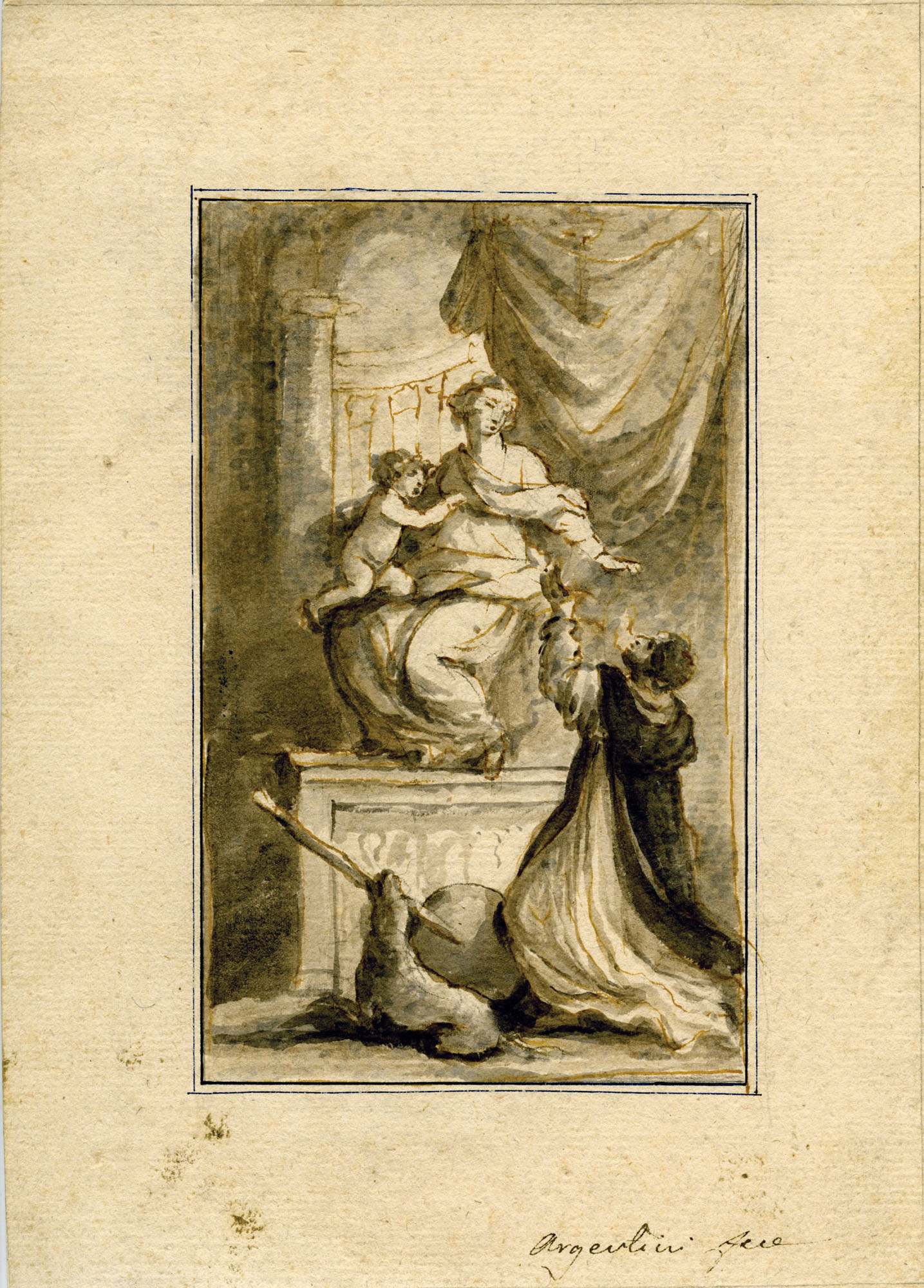
17508801750. Ink wash in gray and black with heightening in brown pen and ink on cream laid paper laid down to an archival matrix 9 3/4 x 7 inches 247 x 178 mm. In good condition with some minor surface soiling and slight attenuation especially visible in the areas with brown ink. Adhesive residue on the verso at the top corners and bottom center margin does not effect the recto. The name "Argentini." appears in ink on the recto in the lower right margin. unknown
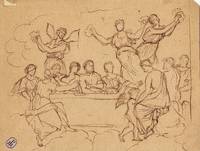
17503281750. Brownish black ink on dark cream handmade laid paper 8 1/4 x 10 1/4 inches 208 x 260 mm. Uniform age tone with several scattered unobtrusive spots of brown discoloration consistent with age. Right top corner loss evenly trimmed paper tape remnants at top left corner recto. With an unknown collector's stamp in blue ink "PRB" lower left corner recto. On the verso of this lovely drawing is a neoclassical graphite and brown ink study of a procession. The composition shows a woman being carried in a birthing sedan chair. The woman is seated backwards with putti and horn players leading her up an embankment across a river. In her wake we see a crowned man in mourning being comforted by his handservants. Perhaps an allegory to death during childbirth. unknown