302 résultats
19822110502150414026Heibonshuppan 1982. Soft Cover. Fine. Volume: 1 Heibonshuppan paperback
19842110502150414672magazine house 1984. Soft Cover. Fine. Volume: 1 magazine house paperback
19742090502113717752Not Available 1974. Soft Cover. Fine. The book is in fine condition. Not Available paperback
19762110502150415265plastic swage 1976. Soft Cover. Fine. Volume: 1 plastic swage paperback
19752110502150415368plastic swage 1975. Soft Cover. Fine. Volume: 1 plastic swage paperback
19792110502150415174plastic swage 1979. Soft Cover. Fine. Volume: 1 plastic swage paperback
19852090202118202648Fukutakeshoten 1985. Soft Cover. Fine. The book is in fine condition. Fukutakeshoten paperback
192554342Philadelphia PA: Otto F. Schumann Philadelphia Textile School ca. 1925. Small 4to. 8.25 x 9.2 in. 75 leaves unnumbered including 32 leaves with detailed colour charts on weave formations producing various kinds of cloth 3 tipped-in textile samples together w/ weaving instructions in manuscript. Original limp leather 3-ring binder gilt lettering stamped on front cover ink lettering & association of Otto F. Schumann on front cover some soiling dustsoiling edgewear still VG exemplar. This Jazz Age weaving manuscript notebook complete with weave formation design plates fabric samples and instructions offer a remarkable and invaluable artifact of how a young American textile designer and weaver received training at the famed Philadelphia Textile School now Philadelphia University during the 1920s. These course books were judged on completeness and the aspiring weaver’s skill in presenting the details about the instruction as well as their abilities in running the machinery required to produce the cloth. This manuscript notebook includes Schumann’s detailed plates and notes on producing color effect on the plain weave creating Broken Twills Crowfoot Satins Checked & Figured Broken Twills Entwining Twills Basket Weaves and Broken Satins. The extensive manuscript notes detail the loom instructions how many lines are required composition and more in producing the assorted effects. Because of the poor quality of United States textiles exhibited at the Centennial Exhibition in 1876 the Philadelphia Textile Manufacturers pushed for a formalized vocational school to train weavers designers and textile workers. In 1884 it became part of the Pennsylvania Museum and School of Industrial Art with 81 students enrolled by 1885 and by 1894 the School of Textiles added a Department of Wool Carding & Spinning and a Department of Cloth Finishing and Design. By the 1920s the Philadelphia Textile School was offering extensive three-year textile courses chemistry and dyeing courses as well as design courses in cottons woolens worsteds silks Jacquard design and more. Schumann 1906-1967 was the son of Hugo Schumann founder and owner of the Maid Hosiery Mills in Reading PA through the opening decades of the 20th century for whom he worked with until after World War II as designer and sales executive. Otto F. Schumann, Philadelphia Textile School, hardcover
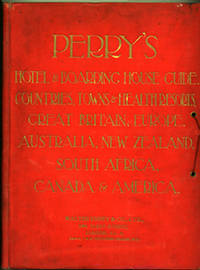
19315466London. Walter Perry and Co. Ltd. 1931. Gilt titled crimson cloth. 4to. Edition for 1931. Profusely illustrated with photographs drawings and period advertisements. An absolute treasure depicting the grand and elegant days of travel. A complete guide to Hotels and boarding houses in Great Britain Europe Australia New Zealand South Africa Canada and the USA. Charming period advertising allows one to travel back to the heady romantic days of Somerset Maugham and the Orient Express. Indexed and tabbed this is a true gem of nostalgia. A Very Good copy Walter Perry and Co. Ltd. hardcover
197620827021146105477500 Yen Medical Dental Medicine Publishing Co. Ltd. 1976. Soft Cover. Fine. Number of books: 1 7,500 Yen Medical Dental Medicine Publishing Co., Ltd. paperback
192251291Chicago: Olson Rug Company 1922. 8vo. 32 pp. Colour-illustrated throughout numerous black & white text illustrations. Colour-illustrated softcovers slight shelfwear NF copy. First edition of this lavishly illustrated and scarce Jazz Age flooring catalogue for the famed Chicago rug manufactuer. Found in 1874 by Walter E. Olson this beautiful catalogue includes a number of interior designs showing the rugs fitted into Arts & Crafts homes and Flapper Era homes with decor window treatments and furnishings. The Olson Rug Company was a pioneering recycling firm detailing how they used old carpets rugs and old clothing to produce velvety rugs which would rival in appearance and wearing high grade Wiltons and Axminsters. The Olson Company is perhaps best remembered for the Olson Park and Waterfall which was a popular local tourist attraction located outside the factory until sold to Marshall Field in 1965 which subsequently plowed the gardens under and created a parking lot. Olson Rug Company, paperback
1984N2-1L1X-8LRP1984. Hardcover. Good. 1st ed MIT 1984. Good plus. Jacket has average wear small tears. Book has moderate wear some of spine text rubbed away some foxing to textblock edges; pages lightly yellowed with an occasional minor blemish; binding firm. hardcover
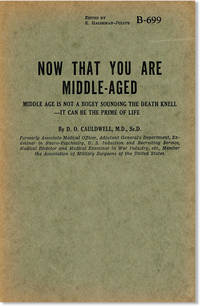
194846590Girard KS: Haldeman-Julius Publications 1948. First Edition. Octavo 21cm.; publisher's green printed staplebound card wrappers; 32pp. Wrapper extremities toned else Ner Fine. Big Blue Book no. B-699. From the introduction: "Middle age is not heralded by an increasing waistline a few gray hairs a double chin a spot of baldness lines in the face or crowsfeet under the eyes." p. 3. The author a former Associate Medical Officer for the U.S. Induction and Recruiting Service goes on to cover such topics as "Men at 40 and the Prostate Myth" "Fallacies About the Menopause" and the age-old question "Are Middle-Aged Women Less Attractive Than Men" The latter seventeen pages reprint letters seeking advice from Cauldwell with headings like "A Failure at 35" and "Unwanted Wife." OCLC locates four separately catalogued copies as of November 2019 at UC Davis the Smithsonian Northwestern and Kansas with an additional copy at the Huntington catalogued as part of a larger collection. Haldeman-Julius Publications unknown
194628530<p>Duell Sloan and Pearce~ New York 1946. HBDJ 1946 1ST EDITION 1ST PRINTING NO PHOTOGRAPHS JUST HER DRAWINGS VG-/ DJ Is GOOD AS-IS Green Cloth Cover Boards Nice & Bright with slight scuff rub & tiny chips Extremities & few Light Stains 77 pgs 7 1/4 X 8 inches in Bright green & black pictorial with squirrel on front in white . COVER: Hardcloth cloth with print in black and illustration in black and white. Light wear on edges/corners/bottom of spine. Heavier wear on spine EDGES . Structurally sound. <br /></p><br /> Duell, Sloan, and Pearce~ New York hardcover
194628523<p>Duellsloan & Pearce 1946. HBDJ 1946 1ST EDITION 1ST PRINTING NO PHOTOGRAPHS JUST Her Drawings VG/ DJ Is GOOD AS-IS Green & black pictorial Cloth Cover Boards with squirrel on front in white Nice & Bright with slight scuff rub & tiny chips Extremities & few Light Stains 77 pgs 7 1/4 X 8 inches Some DJ extremities chips and small "bites & CREASE smallchip ON BACK DJ while working at MGM Includes photographs of Elizabeth Taylor with Nibbles and in her motion picture National Velvet starring with Mickey Rooney. 1st Edition. Hardcover. Very Good/Good. Illus. by Elizabeth Taylor.</p><br /> Duell,sloan & Pearce, hardcover
19468745<p>Duellsloan & Pearce NY 1946. HBDJ 1946 on copyright 1st edition EARLY ISSUE with eight pages of photographs NF/GOOD- AS-IS Plain Green Cloth Cover Nice & Bright with title on front Color DJ shows minor rub & Wear back DJ has slight SoilDJ tiny chips & few pieces missing on spine affects word Nibbles & at base of spine & back book piece missing approx 2 or so Inches Inner DJ Flap priceclipped but $2 & Printed Library Edition with eight pages of photographs Frontispiece back blank free flyleaf mended tear. 1st Edition. Hardcover. Very Good/Good. Illus. by Elizabeth Taylor.</p><br /> Duell,sloan & Pearce, NY hardcover
1986x-0897890639Bergin & Garvey 1986. Hardcover. New. 325 pages. 9.21x6.14x0.75 inches. Bergin & Garvey hardcover
192659638Chicago IL: Crane Co. 836 S. Michigan Ave. 1926. 4to. 47 1 pp. With over 150 of colour illustrations & blueprint floor plans throughout Gray printed boards w/ black & blue lettering on front cover minor shelfwear very slight chipping at foot of spine faint rust to staples at gutter margin of text block still VG copy. First edition of this scarce catalogue emphasizing the importance of colour and the latest modern crane fixtures valves and fittings mixing their compact and graceful gleaming white enamel on iron units with fine marbles and flawless crystal. Each of the individual designs includes elevation drawings along with each wall illustrated as it would appear on the blueprints on the facing page for the floor plans. Some feature Greco-Roman or Pompeian design elements while others show vivid Art Deco influences. Worldcat locates 6 copies The Strong DLC Hagley MO Hist. Mus. Cincinnati Carnegie. Crane Co., 836 S. Michigan Ave., hardcover
19952080502106915606Not Available 1995. Soft Cover. Fine. The book is in fine condition. Not Available paperback
194376693Los Angeles: New Age Press 1943-47. Edited by Corinne Heline. Monthly and later quarterly. Twelvemo. 50 disparate issues with the last seven being quarterlies. A few stains and dog-ears but overall in very good condition. OCLC locates no copies.This potpourri of New Age occult and Alt-Biblical articles was the work predominantly of Corinne Dunklee Heline. Born in 1875 or 1882 she was an enthusiast of matters outre quite early and even before the first World War was communicating with “Inner Plane Immortals†with the Virgin Mary being amongst them. Sometime before 1900 Corinne moved to Southern California and became a follower of Max Heindel 1865-1919 at his Rosicrucian Fellowship in Oceanside California. She met her husband John Theodore Heline there in the 30s and they moved to New York City and together they ran the Three-Eleven Rosicrucian Fellowship on West 80th in New York City while he was editing Rays for the Rosy Cross for Heindel's widow. After they returned to Los Angeles John started the New Age Press in 1936 and published a number of pamphlets presenting an occult view of America’s role in the world. Together they ran New Age Interpreter for many decades covering the whole panoply of New Age subjects. Corinne Heline is best remembered for her “Occult Anatomy and the Bible†and much of it was excerpted in this periodical. She died in 1975. Complete list of issues available. New Age Press unknown
1990G0933963017I3N00New Age Bible & Philosophy Center 1990. Hardcover. Good. Disclaimer:A copy that has been read but remains in clean condition. All pages are intact and the cover is intact. The spine may show signs of wear. Pages can include limited notes and highlighting and the copy can include previous owner inscriptions. At ThriftBooks our motto is: Read More Spend Less.Dust jacket quality is not guaranteed. New Age Bible & Philosophy Center hardcover
19861132047New Age Bible & Philosophy Center 1986. Hard cover. Good/No jacket. Spine lightly shaken but all pages secure. Some wear on corners and scuffing on covers. Clean and unmarked inside. New Age Bible & Philosophy Center unknown
19162082702114600504Mokuro Bookstore 1916. Soft Cover. Fine. Number of books: 1 Mokuro Bookstore paperback
19832082702114608912Kitakyushu Museum of History 1983. Soft Cover. Fine. Number of books: 1 Kitakyushu Museum of History paperback
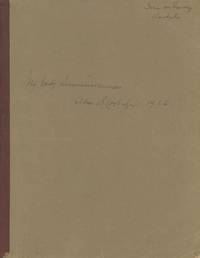
1926List3141Quincy Massachusetts: unpublished 1926. 201 pp cardstock wraps. Normal wear to wraps; overall Near Fine. Alice Brackett White Coolidge 1864–1927 was a Boston socialite of the prominent Richardson family; her grandfather was merchant and Massachusetts State Legislator Jeffrey Richardson. Coolidge was also the author of three children’s books: The Bunnies of Evergreen Village 1917 The Refugees in Evergreen Village 1918 and Evergreen Village to the Rescue 1922. Offered here is Coolidge’s unpublished memoir of her early life written in 1926 titled My Early Reminiscences.<br /> <br /> The memoir recalls Coolidge’s childhood and teen years spent mainly in Massachusetts New Hampshire and Maine. Her recollections typically involve extensive descriptions of the houses at which her family stayed the scenery around them and the various families they met and visited with. Given her position in society her acquaintances are sometimes quite influential people: Princeton president John Grier Hibben enjoys Coolidge’s fishcakes; Trinity Church rector Phillips Brooks gives her grandfather an “excellent pew†in the newly-finished church; pioneering doctor Alfred Worcester mistakes red pepper for mercury in a scientific demonstration at her school; and she recalls brief correspondences with John Greenleaf Whittier and William James.<br /> <br /> Coolidge also took dance lessons from Augustus Papanti whom she describes as “one of the thinnest men I ever saw†who was “very melancholy. I hardly remember his ever smilingâ€; and remembers Judge Charles Devens for “his great stature his charming face his courtliness of manner and his really boyish simplicity in entering into our evening games†including a game of “mind reading†which Devens played “with zest.â€<br /> <br /> One of her longtime friends was Rear Admiral John E. Pillsbury. She recalls:<br /> <br /> “Mr. Pillsbury as a young naval man a brother-in-law of my uncle Dr. Richardson used to take me out in the swan-boats on the Public Garden Pond. Later he went through all the ranks up to being retired as a Rear Admiral but time and circumstances never changed him. We always met at Thanksgiving and Christmas dinners and always talked at great length. . He was a wonderfully interesting lovable man and very modest and unassuming and shy. I always considered him one of my best friends though older by many years than I.â€<br /> <br /> Another interesting New England figure Coolidge encountered was Joseph Lee. She describes Lee’s hotel in Newton:<br /> <br /> “The house where we stayed was kept by a remarkable man named Joseph Lee. He was a mulatto much above many of his kind and his wife was a handsome woman partly Indian. They did the cooking and he waited on table with a colored maid to help him. In fact there were no white women in the house. The cooking was delicious.â€<br /> <br /> Lee was born enslaved in South Carolina freed in 1865 and went on to invent the automatic bread kneading and bread crumbing machines.<br /> <br /> Though nearly all of her childhood was spent in New England she also remembers being invited to visit Charles Joseph Bonaparte in Baltimore:<br /> <br /> “We had never been so far south except to Washington and I felt a curious feeling of being in a different atmosphere from any I had known. . We were met at the station by Mrs. Bonaparte in a large roomy covered vehicle with two horses. The coachman and footman were in the Bonaparte colors -- a deep wine color. The footman I well remember. He was a light-colored young negro very handsome and smiling and excited over having young ladies from the North. . All the servants were colored and lived in cabins near the house. . I never knew Mr. Bonaparte in public life so my memories of him are quite intimate and I fancy I saw much of his real self. . His mind was very active. He used to talk or listen as he walked and he moved his head in a curious way from one side to the other with a slightly rolling motion which was distinctly individual. . I never saw him irritated or excited and he was always very simple. In the group picture we had taken at the Maplewood he sat down cross-legged on the piazza floor like a boy. That was in about 1887. I suppose in public life or in law he was different but he was very equable and charming as we met him in his home and at the mountains. Most of all I admired his sweet tender ways with his flower-like wife.â€<br /> <br /> This was not too long after the end of Reconstruction and Coolidge remarks on the tense atmosphere:<br /> <br /> “Mrs. Bonaparte had warned me to be careful about questions regarding the North and South as the ‘feeling’ had not yet died away. I was so glad she had warned me. A gentleman slipped in and sat down beside me to watch a parade and whispered in my ear as the bands had been playing ‘Dixie’ how glad he was to meet a Northerner. I was glad to meet him too although I remember neither his name nor face but I felt I breathed freer in his sympathetic locality. . I had no idea that this feeling still remained as far North as Baltimore and of course I remembered how our Massachusetts troops had been fired upon in Baltimore at the outset of the war but I was admonished and very wise and only returned my unremembered neighbor’s greeting with a sympathetic word and look.â€<br /> <br /> Besides individuals Coolidge does cover a few historical events including the Great Boston Fire of 1872:<br /> <br /> “Oh! a horrible sight met our eyes. Back of the opposite houses in Park Square was a background of sheets of red flames and heavy black smoke rising high into the air. . On the Parade Ground all was in confusion and the sight was very sad and never-to-be-forgotten. It was literally covered with boxes and bales of furniture and sad forlorn desperate looking people crouching or sitting or standing amidst what they had saved from their homes . At night . the whole city was in darkness as there was no gas.â€<br /> <br /> The family also frequently stayed at hotels in the White Mountains of New Hampshire and Coolidge recalls the “overwhelmingly tragic†effects of the 1867 sale of this land to logging companies; she writes that looking out from the Flume House in Franconia “all about were brown scarred places marking the woodchoppers’ work which was cutting away our beautiful trees for lumberâ€.<br /> <br /> In this memoir Coolidge supplies detailed remembrances of the private personalities of influential figures of Gilded Age New England. We find two copies of My Early Reminiscences on OCLC. Of interest to historians of the era especially as told through the perspective of a young woman. unpublished unknown