625 résultats
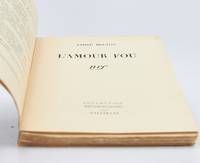
193787781Paris: Gallimard 1937. Fine. ""Convulsive beauty will be veiled-erotic fixed-explosive magic-circumstantial or it will not be"" Gallimard Paris 1937 14.50 x 19.50 cm Relié First edition one of 9 numbered copies on japon only deluxe issue aside from 35 copies on pur fil and a few on coloured paper. Full black morocco binding flat spine authors name palladium-stamped title stamped lengthwise in palladium and blind grey long-grain shagreen inlays to boards with author and title stamped lengthwise in palladium and in blind turn-ins framed in morocco light plum suede pastedowns and flyleaves three palladium decorated deckled edges outstanding custom binding by Thomas Boichot. Illustrated with 20 photographs including 7 photographs by Man Ray 4 by Brassaï one each by Dora Maar Henri Cartier-Bresson and Rogi André as well as artworks by Max Ernst and the statue of a female character by Giacometti in which the writer saw the very emanation of the desire to love and to be loved in search of its real human object in its painful ignorance. André Breton offers a meditation on love at first sight and passion drawn from his fateful first encounter in 1934 with his future wife Jacqueline Lamba this woman was scandalously beautiful. Recalling the beginnings of their romantic relationship he reflects on chance and embarks on a rereading of their love story detecting all sorts of phantasmagoric signs analysing his experiences and feelings. He concludes with an open letter to their daughter Aube born in December 1935 which ends with these words: I want you to be madly loved. A masterpiece of Surrealist literature both an extension and opposite of Nadja which was published nine years earlier also considered an objectbook in the classic surrealist style interleaved with photographs by Cartier-Bresson Brassaï and Man Ray . It proves its own startling kind of existence in the real world being not just a book not just the record of an extraordinary love that between André Breton and the artist with whom he shared his life but an object inserted madly and really now in our world Mary Ann Caws Translators note Mad Love University of Nebraska Press 1987. Gallimard hardcover
193787781Gallimard | Paris 1937 | 14.50 x 19.50 cm | Relié sous étui
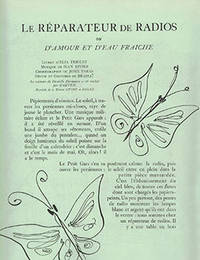
51-1017Paris: Théâtre des Champs-Elysées 1949. Seven original drawings by Brassaï who did the décor for the ballet together with the typescript with the author's manuscript annotations as well as the printed publication.Louis Aragon Elsa's husband described the performance in Les Lettres françaises n° 1096 915 septembre 1965.Ça me rappelle cette soirée aux Champs Elysées à la première d'un ballet d'Elsa musique de Jean Rivier chorégraphie de Boris Kochno décors de Brassaï le réparateur de radios avec le déchaînement de la salle les sifflets à roulettes parce que l'on voyait danser les gens du monde dans une boîte de nuit et qu'est-ce que vous voulez tout de suite tout Paris se sentait visé !Dessins originaux à l'encre de Chine sur 7 feuillets environ 246 x 159 mm représentant des bouquets de muguet 3 ou des papillons 4 destinés à illustrés le texte de présentation d'Elsa Triolet "Le Réparateur de radios" publié dans le programme du Théâtre des Champs-Elysées de 1949-1950.On joint :- Triolet Elsa. Le Réparateur de radios ou d'amour et d'eau fraîche. Tapuscrit corrigé 3 p. et épreuves corrigées 3 p. signées.Le livret du Réparateur de radios d'Elsa Triolet sera mis en musique par Jean Rivier avec une chorégraphie de John Taras au Théâtre des Champs-Elysées.- Programme du Théâtre des Champs-Elysées 1950 n° 10.In-4 324 x 346 mm en feuilles cordelette. Dirigé par Boris Kochno textes de Paul Eluard et Elsa Triolet dessins de Balthus Cecil Beaton Brassaï etc. Paris: Théâtre des Champs-Elysées, 1949. unknown
193348496Neuilly-sur-Seine. 1933. Original publisher's printed white glossy wrappers reproduction of a Man Ray photograph to front cover of each issue with titles and contributors in red against a white background taking the form of a lighthouse with revolving light later cream morocco-backed black card board chemise with title in red to spine and matching slipcase. 4 vols. in 3. Small 4to. 252 x 182 mm. 4to. 284 x 194 mm. Printed text in French with reproductions of monochrome photographs throughout nos. 1 & 2 with printed 'Bulletin d'Abonnement' sheets on orange paper tipped-in issue with advertisements on various coloured stock see below. An excellent complete set of Lise Deharme's very scarce 'Le Phare de Neuilly' with the final number in the even scarcer large paper édition de tête format.The third number i.e. 'Numéro 3 - 4' is a large paper copy one of 20 nominatif examples issued on papier couché mat spécial printed for 'Monsieur et Madame Raoul Fernandez'; only the third volume was issued in this format.Although each title page of 'Le Phare de Neuilly' suggests that ten issues were to be published 'Dix numéros par an' only these four were achieved. A mixture of the literary and artistic the illustration is of monochrome photographs throughout with Lee Miller contributing to each issue; Man Ray's work also features - the covers are his work - as well as Nadar Dora Maar Brassaï Pierre Keffer Eli Lotar Lloyd Sloane and others.The literary contributors - all listed on the covers of each issue - are extremely varied and include Georges Ribemont-Dessaignes who also wrote the record reviews in the first two numbers Robert Desnos two poems in no. 1 Céline Arnauld Jacques Baron Hans Arp as a poet translated from the German by Georges Hugnet Paul Dermée Lise Hertz i.e. Lise Deharme Nathalie Barney Stendhal the unpublished 'Le lac de Genève' writen under Stendhal's pseudonym 'Henri Martineau' James Joyce see below Thérèse Aubray Jacques Lacan the poem 'Hiatus Irrationalis' Marcel Jouhandeau Ilarie Voronca the poem 'Foules' translated from the Romanian by M. de Boully D. H. Lawrence a translation of 'The Man Who Died' Claire Goll Eugène Jolas 'Gyroscope' Raymond Queneau 'Fragments d'un Roman' and many others.Of particular note in terms of content not to mention innovation are the following: - Alejo Carpentier's 'Images et Prières Nègres' illustrated with a series of photographs - the negatives were burnt in the presence of the Cuban sorceror 'Taita José' - of ritualistic objects shrines and saints; - Le Phare de Neuilly's presumably Deharme herself writing under the eponymous psudonym 'Manifeste du Désarmement Psychique'; - James Joyce's poem 'Ecce Puer' written on the birth of his grandson Stephen in 1932 translated into French by Yvan Goll and printed on the right of a sheet of transparent crystal paper; beneath on a sheet of glossy paper is a photographic reproduction of Joyce's manuscript for the poem and at left is a portrait of both Joyce and his grandson by Robert H. Davis; - Lloyd Sloane's extraordinary 'Monsieur Sépulcre Agent d'Assurances Présente . ' a Surrealist photographic collage novella; - no. 1 with the advertisements at the front of the issue printed in black on monochrome sheets of burgundy blue and pink paper that on pink with text reproducing Deharme's manuscript those at rear on cream newsprint paper advertising Jose Corti''s publishing house 'Corti / 6 Rue de Clichy' and announcing Deharme's own 'Cahier de Curieuse Personne / Poèmes / par / Lise Hirtz' to be published by Corti as appearing 'dans trois mois' this advertisement also reproducing Deharme's manuscript and Roger Vitrac's 'Le Coup de Trafalgar'.Lise Deharme the editor of 'Le Phare de Neuilly' published in the Paris suburb of Neuilly was a salonnière a prolific poetess and a novelist. A muse and patron to the Surrealists - she encountered them as a group in the 1920s - her first published work was 'Images dans le Dos de Cocher' of 1922 although her collaboration with Miró 'Il était une petite pie' of 1928 is cited more usually as her first publication both were issued under her maiden name Ilse Hirtz. Deharme was immortalised by Breton in Nadja as 'la dame au gant' and she can be regarded in many ways as being 'Le Phare de Neuilly' herself.'Page de couverture identique pour les trois fascicules : photographie de Man Ray contient de nombreuses reproductions photographiques de Man Ray Lee Miller Nadar Brassaï Pierre Keffer Dora Maar'. Destribats. Le Fonds Paul Destribats 339; not in Ades. unknown
1966112218Cannes 1966. Unpublished and heavily corrected manuscript of Brassai's account of his visit to Picasso A superb unpublished and heavily corrected manuscript in French in which Brassaï recounts his visit to Picasso a long-standing friend at his home near Cannes. Brassaï who photographed much of Picasso's work in the 1940s had published Conversations with Picasso in 1964 in which he created an intimate portrait of Picasso covering their friendship and artistic collaboration and recording each of their meetings with minute detail. Picasso said of the volume "Read this book if you want to understand me". This account is written in a similar style and during the course of the afternoon Picasso speaks about his nostalgia for his old studios his health his enthusiasm for the recently invented felt-tip pen his opinion of his own writings his relationship with his wife Jacqueline and his views on feminism. Though unmarked as such it is from the collection of Brassaï's close friend and colleague photographer Stefan Lorant who founded Picture Post the pioneering pictorial magazine. Quarto 285 x 233. 20 typed sheets in French rectos only legibly hand-corrected throughout by Brassai in black ink. Housed in a black cloth album with each sheet in a separate clear plastic file. In excellent condition the final page a little creased and with minor loss to right-hand side affecting one letter. Overall fresh and clean. hardcover
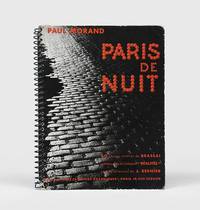
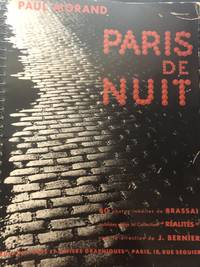
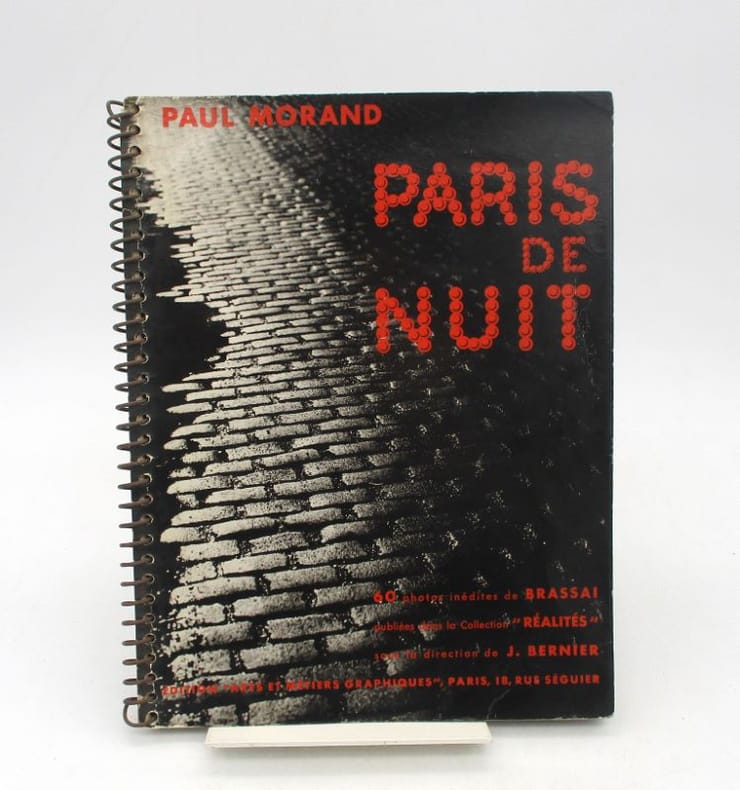
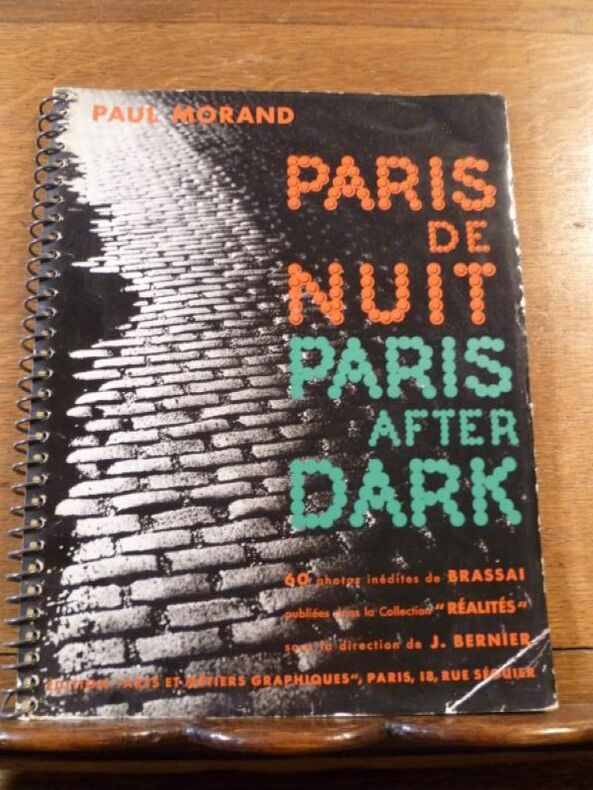
1932162876Paris: Édition Arts et Métiers Graphiques 1933 1932. A superb copy inscribed by author and photographer First edition of the photographer's first publication double presentation copy inscribed by Morand on the first page of text "à Pierre Cot Voici un joli décor pour La Patriouille etc. Chut! chut! chut! tres fideliement P. Morand Paris fev. 32" and further inscribed by Brassaï across the following two pages "Pour Christian-Vincent Matorasso ce Paris de Nuit perdu et retrouvé avec toute ma sympathie Brassai Ete Village le 7 mai 1965". The first recipient Pierre Cot 1895-1977 was a politician central to the establishment of the French Air Force and later of Air France. Morand's inscription alludes to La Patriouille a display wing of the air force the French equivalent of the British Red Arrows. Pasted below Morand's inscription is a small photograph of Brassaï in later life which probably relates to the photographer's subsequent inscription. This is a superb copy of the work in which Brassaï showcases his mastery "at drawing luminosity from the darkness. The swaths of wet paving stones featured on the covers and endpapers of Paris de Nuit gleam like pale beacons in the streetlight. Inside Brassaï explores the city beginning with its broad vistas and grand public spaces and gradually moving into the demimonde he knew so intimately" Roth p. 76. It remains one of the most influential photobooks; signed copies are rare and copies inscribed by both author and photographer rarer still. Quarto. Illustrated with 62 full-page gravure plates and 2 double-page plates as endpapers. Spiral bound monochrome photographic wrappers front cover lettered in red. Housed in a custom black quarter morocco solander box by the Chelsea Bindery. A few punch holes slightly worn covers lightly creased and rubbed at extremities a few pages faintly soiled. A very good copy of a notoriously fragile book. Parr & Badger I p. 134; Roth p. 76. unknown
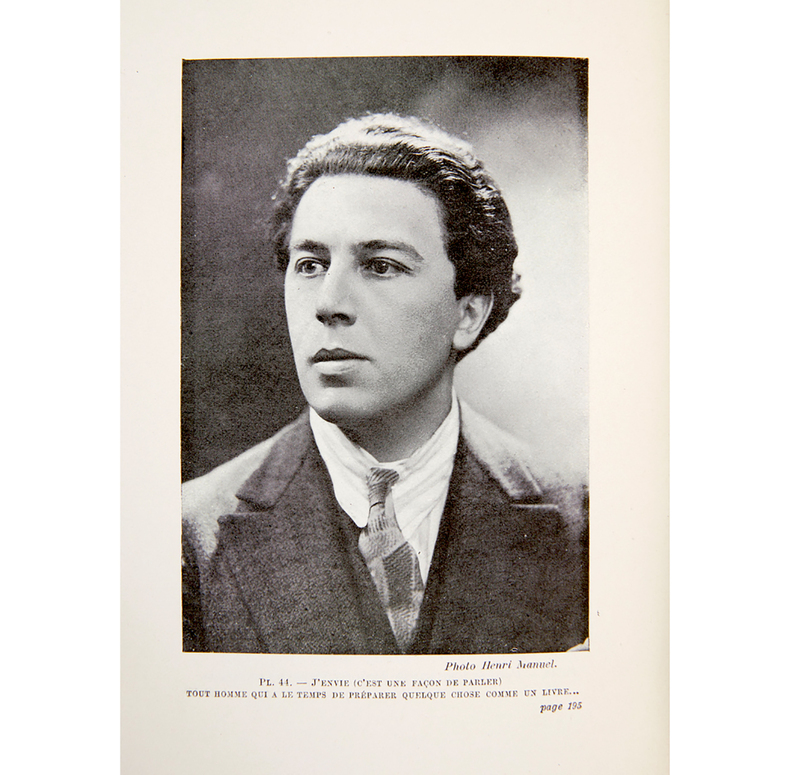
19282129Paris, Éditions de la Nouvelle Revue Française, 1928. Un vol. in-4° (210 x 162 mm). Reliure décorée de Georges Leroux. Plein maroquin mosaïqué, doublures et gardes de maroquin noir, tête et tranches argentées à l'œser, couvertures et dos conservés, chemise et étui. ÉDITION ORIGINALE du plus célèbre écrit d'André Breton. L’UN DES 109 PREMIERS EXEMPLAIRES SUR PAPIER LAFUMA-NAVARRE AU FILIGRANE NRF, RÉIMPOSÉS DANS LE FORMAT IN-4 TELLIÈRE. Celui-ci nominatif, imprimé pour M Ozanne, secrétaire général de la Compagnie P.L.M. - Note bibliographique : Ce roman fut inspiré à André Breton par sa rencontre, au hasard d'une de ses fréquentes promenades parisiennes, avec une jeune femme à l'aspect enchanteur et mystique. Entraperçue le lundi 4 octobre 1926 près d'Opéra, Nadja, de son vrai nom Léona Camille Ghislaine Delcourt (1902-1941), fut, pendant quelques semaines, l'objet de sa curiosité passionnée. Le comportement erratique de la jeune femme mit bientôt fin à leurs rencontres, mais l'idéal qu'elle incarna brièvement, ce rejet des conventions de l'existence et sa réceptivité à l'extraordinaire et à l'intuition, ne cesseront désormais d'obséder Breton. Les deux tiers du livre furent écrits huit mois plus tard, en août 1927, au manoir d'Ango, à Varengeville-sur-Mer. La première partie, qui sert de préambule, retrace les épisodes les plus marquants de la vie de l'auteur, ses rencontres et les curiosités qu'il observe et consigne. La deuxième, centrale, est le « récit minutieux des dix jours passés » avec Nadja et de « la fin de leurs relations ». La troisième enfin, rédigée dans les derniers jours de 1927, constitue la partie théorique du texte ; elle fut perçue comme le premier manifeste du surréalisme. L’ouvrage s’achève sur cette formule devenue célèbre : « La beauté sera convulsive ou ne sera pas. » Breton y prône une conception de la beauté qui inspirera tous ses compagnons de route, qu’ils soient peintres ou poètes. AVEC 44 PLANCHES DE PHOTOGRAPHIES : L'usage révolutionnaire que fit l'auteur de ces clichés contribua pour beaucoup au rayonnement de Nadja. Pour la première fois dans l'histoire littéraire, un auteur fait l'économie de la description narrative, en substituant au texte lui-même une reproduction des lieux, personnes, lettres, documents, dessins ou tableaux cités. Les vues de Paris furent confiées à Jacques Boiffard, capable « d'accompagner la prose sans ornement de Breton de paysages étrangement déserts », les portraits d'amis et les rencontres sont de Man Ray, photographe officiel des dadaïstes, et la photo du gant de bronze (p. 67) est due à Lise Deharme. Quant au portrait de Nadja, que Breton érige en symbole, il est significativement absent du corpus.
1933vC1123<p>SIGNED by Paul Morand atop his 8-page preface. Paris: Edition Arts et Métiers Graphiques 1933. First Edition. Spiral bound quarto sixty-four gravure plates. The highest celebrated most iconic of the great Paris photobooks printed in a luscious gravure so tactile "that after handling the book one expects to find sooty deposits all over one's fingers. One should think of it as amongst the best produced and influential photobooks ever" The Photobook Vol. I. Roth 101. Whereas most night photography of the period celebrates electric light speed and metropolitan life Brassai's portfolio expresses a different urban narrative. The Paris he shows his "little boxes of night" is tawdry intimate dark and full of mystery as though nighttime were its natural hue. As a young man prefacer Paul Morand bathed in Parisian artistic circles and the high public service. Appointed at the age of 24 attached to the French Embassy in London he began a career at the Quai which took him all over Europe. He entered literature in 1921 with his first prose work Tendres Stocks a collection of short stories prefaced by Marcel Proust. During the 30s he published numerous books travelogues novels short stories; he also practiced journalism notably for Le Figaro. A lovely collectible copy signed by Paul Morand. Book #vC1123. $4850. We specialize in Rare Ayn Rand history and science.</p> Edition "Arts et Metiers Graphiques"
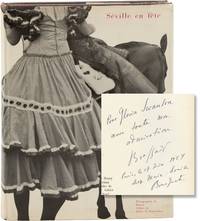
1954165639Paris: Robert Delpire 1954. First Edition. Hardcover. First Edition. INSCRIBED by Brassaï to legendary actress Gloria Swanson in the year of publication at the home of fashion journalist and "Harper's Bazaar" editor Marie-Louise Bousquet: "Pour Gloria Swanson / avec tout mon admiration / Brassai / Paris le 17 Juin 1954 / chez Marie-Louise Bousquet." <br /> <br /> Bousquet and her husband the playwright Jacques Bousquet hosted regular Thursday night gatherings at their apartment in Paris 3 Place du Palais-Bourbon inviting the brightest creative luminaries of the period.<br /> <br /> Near Fine in in a Very Good plus dust jacket with some brief chipping at and around the crown. Robert Delpire unknown
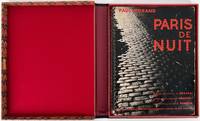
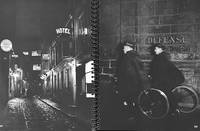
19332311Paris: Arts et Métiers Graphiques 1933. First Edition. Near fine. Spiral-bound Quarto 9 7/8 x 7 1/2 inches 248 x 191 mm 12 pp 62 photogravure plates after photographs by Brassaï each numbered in lower outer corner. Spiral bound stiff card covers without jacket as issued; housed in a custom clamshell case lined in red felt covered in red cloth with morocco spine gilt title. Two-notch chip at bottom of spiral extending into first leaf and one notch at top of spiral; pages lightly toned at the edges but photogravures in excellent condition. 8 pages of text in French by Paul Morand plus a 4 page index with detailed captions for each of the photographs. As beautifully stated in the first line of Paul Morand's introduction to this exceptional collection of photographs: Paris at night is not the negative of the day; the surfaces not not stop being white to become black: in reality they are not even the same images." The 62 photographs by Hungarian-born photographer Brassaï Gyula Halász capture nocturnal scenes throughout Paris - from glowing wet pavement and empty streets to bars cafés and the denizens of Paris at night. This was Brassaï's first published photo book and the work that established his reputation as a master of night photography showcasing his ability to extract light and atmosphere from darkness. A collector's treasure scarce in good condition this is one of the most influential photo books ever produced and is admired not just for its content but for the its productions values: the deep and velvety gravure printing and the evocative layout make it an object of intense tactile and visual appeal. The photogravures are in exceptional condition-richly inked with deep velvety blacks luminous highlights and a striking tonal range that preserves the full atmospheric subtlety of Brassaï's nocturnal vision. The plates retain remarkable clarity and contrast with a vividness and depth seldom found testifying to both the high production standards of Arts et Métiers Graphiques and the care with which this copy has been preserved. Arts et Métiers Graphiques unknown
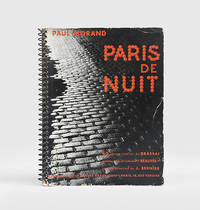
1932189332Paris: Édition Arts et Métiers Graphiques 1933 1932. The city of light by night First edition of the photographer's first publication an exploration of the nocturnal life of Paris. Brassaï showcases his mastery "at drawing luminosity from the darkness. The swaths of wet paving stones featured on the covers and endpapers of Paris de Nuit gleam like pale beacons in the streetlight. Inside Brassaï explores the city beginning with its broad vistas and grand public spaces and gradually moving into the demimonde he knew so intimately" Roth p. 76. Quarto. Illustrated with 62 full-page gravure plates 2 double-page. Original spiral bound photographic wrappers front cover lettered in red. Wrappers creased and rubbed a few spots of wear short closed tear to head of front wrapper a few marks to rear wrapper: a very good copy. Parr & Badger I p. 134; Roth p. 76. unknown
This is a near fine copy of the rarest of Brassai's books, which has been bound into a hardcover binding from the period, in handsome red and black marbled paper-covered boards, and a linen cloth spine with red leather label, gilt title. The original binding of this book was a spiral plastic ring type. The spiral binding was taken off and the book with its original red-orange covers with the title printed in large white letters, was bound in whole. Covers are bright and clean, in very good condition, (small closed tear to bottom corner of back cover), inside completely clean. There is no date on the colophon page (inside back cover) and there apparently were two editions. The first edition was published in 1930, but Brassai was reportedly unhappy with the selection of images and because he was not credited. In our copy he is credited as the photographer and so we assume this is the second edition from ca.1934. It is unpaginated. There are 40 pages, with 38 black and white photographs of ladies of the night, strippers, models, night clubs and balls like the Bal Tabarin, shots of tough streetwalkers in Les Halles, many shots of men and women in costume, sometimes drag, also a lesbian couple in a club "strictement Feminine", shots of lovers in parks, on streets, playful shots of men looking into a lingerie shop window with elaborately garbed mannequins at night, 1 shot of Kiki in a Montparnasse night club, an amazing shot in " La Cage a Femmes d'un Grand Music-Hall Parisien" which shows a cage or pit, viewed from above with women on stools, like lions, in various states of undress and performing "acrobatic" feats. Finally tipped in at the very end on the collophon page a half-page size shot in color of a nude woman in profile, we assume not by Brassai. Large 4to, 11" high X 8" wide. The original book was not cut down when re-bound, it is in its' intended size, and because of the re-binding, it has been kept in near fine condition. A beautiful copy of a true rarity. This book will be securely wrapped and packed in a sturdy box and shipped with tracking.
194969445Paris: Les éditions du point du jour 1949. Fine. Les éditions du point du jour Paris 1949 12.50 x 16.50 cm broché First edition one of 126 numbered copies on Alfa paper with the original etching by Brassaï which he signed ours one of the 26 lettered copies reserved for the friends of the author deluxe copies ""tirage de tête"". Foreword by Henry Miller. Beautiful copy. Rare autograph dated and signed by Brassaï to Janine and Raymond Queneau: "". these alms sic made by Marie . very little Claudelian. With Brassaï's friendship."" Les éditions du point du jour unknown
19333087Wraps spiral bound. Intro. by Paul Morand. Brassai's first book. He used Kertesz' camera. Illus. cover. Important 20th century photo book! Metiers Graphiques paperback
002510Paris: Paris-Publications This is a near fine copy of the rarest of Brassai's books which has been bound into a hardcover binding from the period in handsome red and black marbled paper-covered boards and a linen cloth spine with red leather label gilt title. The original binding of this book was a spiral plastic ring type. The spiral binding was taken off and the book with its original red-orange covers with the title printed in large white letters was bound in whole. Covers are bright and clean in very good condition small closed tear to bottom corner of back cover inside completely clean. There is no date on the colophon page inside back cover and there apparently were two editions. The first edition was published in 1930 but Brassai was reportedly unhappy with the selection of images and because he was not credited. In our copy he is credited as the photographer and so we assume this is the second edition from ca.1934. It is unpaginated. There are 40 pages with 38 black and white photographs of ladies of the night strippers models night clubs and balls like the Bal Tabarin shots of tough streetwalkers in Les Halles many shots of men and women in costume sometimes drag also a lesbian couple in a club "strictement Feminine" shots of lovers in parks on streets playful shots of men looking into a lingerie shop window with elaborately garbed mannequins at night 1 shot of Kiki in a Montparnasse night club an amazing shot in " La Cage a Femmes d'un Grand Music-Hall Parisien" which shows a cage or pit viewed from above with women on stools like lions in various states of undress and performing "acrobatic" feats. Finally tipped in at the very end on the collophon page a half-page size shot in color of a nude woman in profile we assume not by Brassai. Large 4to 11" high X 8" wide. The original book was not cut down when re-bound it is in its' intended size and because of the re-binding it has been kept in near fine condition. A beautiful copy of a true rarity. This book will be securely wrapped and packed in a sturdy box and shipped with tracking. Hard Cover. Near Fine. Paris-Publications Hardcover
194969445Les éditions du point du jour | Paris 1949 | 12.50 x 16.50 cm | broché
1933204269Paris: Arts et Métiers Graphiques 1933. First edition. Softcover. First printing. Text by Paul Morand in French. A collection of 62 full bleed photogravures that represent the height of printing and imagery of France at night. A likely unique copy that includes two examples of the front cover. A close to near fine copy in spiral binding with some of the usual minor rubbing and edge wear to the front and rear covers but with the second front cover much brighter and largely free of wear. Internally a clean copy. A very nice copy of one of the true high spots of 20th century photography books and on virtually every best of lists. Parr & Badger v1 134 Roth 76. Arts et Métiers Graphiques unknown
22690Paris, Éidition "Arts et métiers graphiques", [1933]. In-4, 62 pp., broché à la spirale en métal, couverture illustrée (frottements).
193426971Paris: Paris-Publications N.d. c. 1934. Lacking spirals most copies with intact spiral bindings are not original; a very good copy creased at the top edge with soiling to the distinctive orange wrappers. Presumed second issue of Brassai's first book disavowed due to contractual conflicts. Thin quarto spiral-bound. With 38 photographs of Parisian nightlife that while chaste now were deemed to racy for inclusion in "Paris de Nuit". SIGNED by Brassai and inscribed to publisher Nicholas Callaway: "Pour Nicholas / Callaway / un livre / à hion insu / bien amicalement / le 3 mai 1981. Brassai." Very uncommon signed. Paris: Paris-Publications unknown
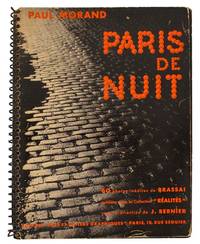
193324569Paris: Edition Arts et Metiers Graphiques 1933. First edition. Stiff Wraps. Original spiral binding front cover lettered in red. Very good. Unpaginated. Six leaves. 25 x 19 cm. 62 photogravure plates after Brassai. Printed by Draeger with exceptional photogravure plates this series of nocturnal Parisian views with its evocative text by Morand is something of an Art Deco classic. PHOTOBOOK I p. 134: “a ravishing book object in a purely physical sense. The printing represents arguably the most luscious gravure ever seen the blacks being so rich and deep that after handling the book one expects to find sooty deposits all over one’s fingers. The gradation of tones is wonderfully subtle describing an apparently infinite range of black and near-black tones. The layout with its characteristic full-page bleeds never more felicitously employed takes us from image to image from page to page and across night-time Paris with effortless panache. One should think of it as amongst the best produced and influential photobooks ever†HASSELBLAD. 110. PARR/BADGER. I 134. ROTH. 76. Slight crease front cover. Edition Arts et Metiers Graphiques unknown
194687665Paris: Gallimard 1946. Fine. Gallimard Paris 1946 17.50 x 22 cm broché sous étui First edition one of 324 numbered copies on laid paper the only deluxe copies after 10 on madagascar. Folded cover decorated with a graffiti photograph by Brassaï. Handsome copy complete with its slipcase also illustrated with a photograph by Brassaï. Gallimard unknown
1933CLL-660Paris, Arts et métiers graphiques, 1933 Petit in-4 (250 x 195 mm), reliure éditeur à spirale métallique sous couverture illustrée, 6 pp. de texte et 62 planches photographiques.
12671 Superbe impression en héliogravure réalisée par Draeger des photographies de nuit réalisées par Brassaï (quelques usures et défauts à la couverture). Livret à spirales sous couvertures imprimées, 25,0 x 20,0 cm. Paris, Arts et Métiers Graphiques, [1933].
12671 Superbe impression en héliogravure réalisée par Draeger des photographies de nuit réalisées par Brassaï (quelques usures et défauts à la couverture). Livret à spirales sous couvertures imprimées, 25,0 x 20,0 cm. Paris, Arts et Métiers Graphiques, [1933].
193316129Paris, Editions "Arts et metiers graphiques", o. J. (1933). 48 Bll. (6 Bll. Text und 62 nummerierte Fotografien von Brassai in Kupfertiefdruck). Kl.-4°. OKart. mit Spiralbindung (etw. bestoßen, untere Ecken mit Knickfalten). [6 Warenabbildungen]