Andre BRETONBiblio.com
548 résultats
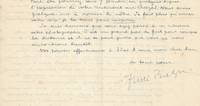
194875175Antibes 1948. Fine. Antibes 9 mars 1948 21.80 x 27 cm 2 pages sur un feuillet Unpublished autograph letter signed by André Breton addressed to Gaston Puel; two pages on one leaf written in blue ink with fine and careful handwriting numerous underlinings. Foxing and marginal adhesive traces. A very fine letter imbued with benevolence in which the Pope of Surrealism shares his numerous and time-consuming occupations with his young correspondent while reassuring him about his talent and future. Gaston Puel began corresponding with André Breton at the Liberation. They had never met at the time of this letter written four years later: « Je suis heureux que vous ayez pensé à m'adresser votre photographie. C'est un grand pas de fait pour rompre la distance et il ne se peut guère que nous ne nous rencontrions bientôt. » ""I am happy that you thought to send me your photograph. It is a great step towards breaking the distance and it can hardly be that we will not meet soon."" The two writers seem very close as evidenced by Breton's paternal and reassuring tone: « Ne parlez pas comme à regret de ceux qui avancent : vous en êtes et j'en sais bien peu qui soient si loin que vous déjà. Ce que vous m'écrivez - pas seulement cette fois - est toujours pour moi de haute importance. » ""Do not speak regretfully of those who advance: you are among them and I know very few who are already as far along as you. What you write to me - not just this time - is always of great importance to me."" A tireless worker Breton here shares his frustration and weariness with Puel: « Mais il faut continuer à vivre et pour cela se réserver une part de solitude qu'avec angoisse aussi je vois diminuer chaque jour. » ""But one must continue to live and for that reserve a share of solitude which I also see diminishing each day with anguish."" Gaston Puel then 24 years old had been participating for some time in the activities of the surrealist group around Joë Bousquet André Breton and René Char. His mentor here predicts a clear future for him: « Mon cher Ami je souhaite très vivement que vous preniez une part active à la rédaction de « Néon ». Il suffirait d'une très légère transposition de ton pour que les pages que vous m'adressez puissent y trouver place et en constituer un des éléments primordiaux. Il en va naturellement de même pour « Supérieur inconnu » si cette revue peut voir le jour. » ""My dear Friend I very much wish that you would take an active part in the editing of 'Néon'. It would only require a very slight transposition of tone for the pages you send me to find their place there and form one of its primordial elements. The same goes naturally for 'Supérieur inconnu' if this magazine can see the light of day."" This latter review meant to reconcile and unite the conservatives and innovators of surrealism would only come to light forty-eight years later under the impetus of Sarane Alexandrian. Gaston Puel would indeed join the editorial team of Néon but would eventually turn away from the surrealists - while maintaining his friendship with Breton - in 1950. unknown
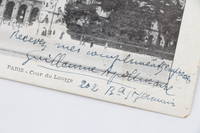
191382418Paris 1913. Fine. Paris 1913 13.30 x 21 cm une carte Unpublished autograph signed postcard by Guillaume Apollinaire addressed to the Dijon art historian Marcel Mayer. Two pages written in black ink on a photographic postcard depicting the courtyard of the Louvre. Charming letter praising the attachment to their roots of the "".fameux Flamands-Espagnols Hollandais et Bourguignons que j'admire tant"" ""famous Flemish-Spanish Dutch and Burgundians whom I admire so much"" and informing his correspondent of the writing and forthcoming publication of a ""petit livre sur Rude"" ""little book on Rude"" that Guillaume Apollinaire will not fail to send him. Fine autograph signature with the autograph address of 202 Boulevard Saint-Germain. unknown
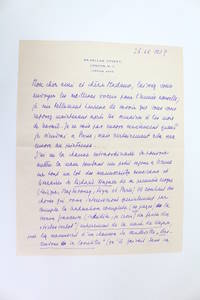
193770612Londres London 1937. Fine. Londres London 26 décembre 1937 17.90 x 22.90 cm une feuille Signed autograph letter to Alfred Cortot and his wife about Richard Wagner's manuscript collection: ""I was lucky enough to be able to acquire the entire lot one day before Bayreuth sent a trusted buyer"". London 26 December 1937 17.9x22.9cm one leaf. Autograph letter signed by Stefan Zweig to Alfred Cortot two pages on one sheet written in violet ink. An outstanding autograph letter in which the avid collector informs his friend Alfred Cortot of his acquisition of unpublished manuscripts of Wagner. Alfred Cortot himself owes his career as a conductor to his early discovery of the German composer. Cortot shared with Zweig his ""almost tyrannical bewitchment suffered with as much intoxication as fervor"" for the composer. Zweig who spoke of his collection as ""more worthy of surviving me than my own works"" The World of Yesterday: Memories of a European 1942 recounts for his friend the details of this incredible discovery of hundreds of forgotten leaflets including Wagner's intimate correspondence handwritten scores and excerpts from opera librettos including The Flying Dutchman The Sublime Fiancée or Bianca and Giuseppe Die Feen Das Liebesverbot The Ban on Love and a lost orchestral version of Rule Britannia. In December 1937 as he fled the Nazi regime and settled in London Zweig became fascinated by the archives of a time when intellectual Europe was living in perfect syncretism. The writer takes a nostalgic look at the manuscripts of Wagner who like him spent his youth travelling through the capitals of Europe: ""I was extraordinarily fortunate to be able to get my hands on a whole lot of Richard Wagner's musical and literary manuscripts from his early period Leipzig Magdeburg Riga and Paris during a short stay in Vienna"". Among these precious manuscripts is the extremely rare orchestral arrangement of the patriotic song Rule Britannia which had been missing for more than sixty years. Sharing his passion for Wagner with his friend the pianist Cortot Zweig announced his discovery with the wonder so familiar to collectors when faced with an exceptional find: "". the manuscript is the only one of its kind in the world that has been preserved. It contains things that will be of special interest to you for example the complete translation 60 pages of the French version unpublished I believe of the text of the ""Liebesverbot"" entirely in Wagner's hand as well as the manuscripts of a vaudeville song ""Descendons la Courtille"" which he performed in his darkest moments . almost thirty pieces of the highest interest and precisely from the rarest period. All this was hidden for 50 years in a private collection and I was lucky enough to be able to acquire the entire lot one day before Bayreuth sent a buyer"". The letter is a fascinating account of Zweig's parallel life which had earned him a reputation as an accomplished collector. His collection also inspired one of his most beautiful short stories The Invisible Collection die Unsichtbare Sammlung and a pioneering essay in the Deutscher Bibliophilen Kalender The Autograph Collection as an Art. His hundreds of historical musical and literary autographs from the Middle Ages to the 20th century were carefully catalogued and collected in the library-museum of his house in Kapuzinerberg: ""In this library a 'place of worship' he also exercises a real activity as an expert in autographs . . The library will attract a number of distinguished scholars sometimes accompanied by their assistants who will not hesitate to return to work there quietly for days or even weeks at a time"" Stefan Zweig le voyageur des mondes Serge Niemetz. With this acquisition Zweig sees the dream of every collector come true. After two years of exile in England Zweig returned to Vienna in time to purchase these exceptional documents from Bayreuth's emissaries who had already built up unknown
1926028728Chicago / Bishop Ca: Laird And Lee 1926. Original Manuscript . Hardcover. Very Good. Manuscript Guest Book Full Of Autographs And Greetings From Guests At The Home Of William And Aurelia Mclean Of Bishop California 1931-1939. The Mcleans Had An Outstanding Collection Of Early Native American Baskets Which Their Guests Frequently Refer To In Their Messages. <br/> <br/> Laird And Lee hardcover
1968009199Wien: Wilhelm Frick. Signed by Maria von Trapp. Hard cover. Text in german. Published Wien: Wilhelm Frick 1968. Oblong 8vo. cloth and laminated boards xiii132pp. plus 9pp. recto printed foldout of song lyrics in English illustrations by Agathe Trapp. Signed by Maria von Trapp on flyleaf. Very good. . Very Good. Hard. 1968. Wilhelm Frick unknown
19894110bx105<p>Signed and inscribed by the author on bookplate taped to ffep Dec 1989 first printing. P/o name stamp else unmarked. 9 1/4" tall 133 pages</p> Mary Corson hardcover
1923035290Athens GA: Athens Book Co 1923. Second Edition. Pictorial Paper Covers. Very Good. 215pp; 10 plates from photographs. 7.5" x 5.5" Presentation copy inscribed on the front free-endpaper: "Presented to / Senator Peter Horbeck / by the author / Frank Attolda / Athens Ga. March 24 1924." The author served as 2nd Lieutenant in the 328th Infantry 82nd Division in World War I. Athens Book Co unknown
19321482Washington DC: Original Letter 1932. Original Letter. Single Sheet. Near Fine. 8 X 10 1/2 Inches. November 23 1932 Typed Letter Signed TLS from US Senator Cordell Hull to "Skull and Bones" member Diplomat and Wall Street Banker Samuel Reading Bertron. Bertron was a noted Presidential advisor of several administrations. This letter is of particular interest as Tennessee Senator Cordell Hull expresses without disguise his view of America and the trouble her citizens are in. In the third year of the great depression that lastest more than a decade Hull writes:<br /> <br /> "Many large groups of American people are in a frightful condition. They are not able to pay one half of their taxes for the past year. They are in in a most ugly state of mind. Without going into details I shall hope to see you and talk out with you some of the more important and pressing phases which are uppermost in our minds."<br /> <br /> On Official United States Senate stationery. Fold-marks. A very nice remnant that clearly exhibits the concern the future Secretary of State has for his country during the height of the Great Depression. Original Letter unknown
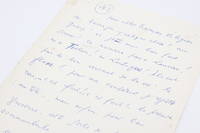
195483969Meudon 1954. Fine. Meudon 1954 21.20 x 26.10 cm une page sur un feuillet Autograph manuscript signed by Louis-Ferdinand Céline written in blue ballpoint pen on a sheet of white paper numbered 243 in the left corner. Some stains as well as a central fold of no consequence. A tiny lack of paper at the lower right margin of the sheet. Some pinholes in the upper margin evidence of the organization of Céline's manuscripts in ""bundles"". ""pour aller traverser les lignes des barrages quelque chose !. au galop ! et je me suis bien fait sonner ! ça arrivera pas à Lauriac ! ni à Tartron ! ni Larengue !. Ils ont pris le bon versant de la vie : le flan !. pour ma concerne je regrette rien . c'est fait ! c'est fait ! la preuve ma tête. mais enfin pour la griserie cette sorte de bravoure somnambule j'admire les doués. je les respecte. j'arrive moi que par le stoïcisme le sang froid là ! hop !"" ""to go cross the lines barricades something!. at a gallop! and I really got myself beaten up! that won't happen to Lauriac! nor to Tartron! nor Larengue!. They took the right side of life: the flank!. as for me I regret nothing. it's done! it's done! the proof my head. but finally for the intoxication this sort of sleepwalking bravery I admire the gifted ones. I respect them. I only achieve it through stoicism cold blood there! hop!"" The passage from our sheet referring to Mauriac Sartre and Aragon conforms to the published version. Published in 1954 Normance is a direct sequel to Féérie pour une autre fois published two years earlier. The two parts were written during Céline's years of exile and imprisonment in Denmark. Upon his return to France in 1951 Céline undertook a work of ""polishing"" and published these two titanic texts independently originally conceived as one. ""Céline while working on it thought of this novel as a second Voyage au bout de la nuit capable twenty years later of astonishing the public as much as the 1932 novel."" Henri Godard unknown
194128256Croton-on-Hudson 1941. Brief 1-pp TNS on Eastman's personal Croton-On-Hudson notepaper addressed to a "Miss Mendham" dated March 30 1938. Old folds; holograph additions in Eastman's hand; Very Good. "I shall be delighted to have you use some of my poems in your Verse Speaking Festival.perhaps the poem called "Battle Fields" in my volume "Kinds of Love" would be appropriate." Adds three further suggestions in holograph beneath signature: "The Sing Sing Alarm" "Isadora Duncan" "To Live in Summer" unknown
194528254New York 1945. Brief TNS on Eastman's personal W. 13th St. letterhead addressed to "Josephine" dated November 25 1945. Old folds else Fine with bright clear autograph: "Dear Josephine: Thanks so much for the news -- sad as it all was -- in your letter. It was nice to hear from you. I hope the autobiography may live up to your expectations." The recipient is likely the American proletarian novelist and essayist Josephine Herbst 1892-1969; the "sad news" to which Eastman refers may well have been Herbst's ongoing battles with her former husband and fellow novelist John Herrmann. unknown
194128255Croton-on-Hudson 1941. Brief 1-pp TLS on Eastman's personal Croton-On-Hudson letterhead addressed to a "Mr. Simon" dated November 14 1941. Single holograph correction in Eastman's hand. Mailing folds; slightly toned at margins; Very Good. Regarding the recipient's letter to the Reader's Digest of September 24 Eastman had been hired as an editor for the conservative publication earlier in the same year. The subject appears to be the institution of the death penalty in the Soviet Union: ".Nobody questions the fact that the death penalty was decreed for theft of 'socialist property' and the extension of all penalties to children twelve years old automatically extends that one. I am sorry to say I can not tell you offhand when the previous decree was issued but I think it was the Spring of 1934. unknown
1986047134Stratford Upon Avon: Celandine Press 1986 Book. Illus. by Robert Tilling. As New. Quarter Leather. Signed by Author & By Artist. 1st UK Edition. "Among the English poetry of the last half century Charles Causleys could well turn out to be the best loved and most needed " Ted Hughes. This limited edition contains a selection of his poems with 6 tipped in illlustrations by Robert Tilling. From the Colophon : 300 copies set in Monotype Bembo and printed for the Celandine Press on Arches mould made paper made by Gleen Storhaug at Five Seasons Press. Bound in quarter leather at Smith Settle & Co. Illustrations printed at the Senecio Press This copy is number 62 of the first 75 copies signed on the colophon by both the poet and he artist. Celandine Press hardcover
193064419Paris 1930. Fine. Paris 23 janvier s. d. 1936 13.50 x 21 cm en feuillets Three autograph letters signed by Emmanuel Mounier 7 pages in black ink on headed paper with the address of the headquarters of the journal Esprit. Corrections of the author's hand. Folds inherent in envelopes. unknown
1956029282Caldwell Idaho: The Caxton Printers 1956. Reprint . Cloth. Near Fine/Very Good DJ. Xvii 441 Pp. Beige Cloth Stamped In Red. A Clean Tight Example Without No Wear In A Lightly Used Dj With Wear At Corners And Some Fading To Background Color On Spine Previous Owner's Name Under Front Flap. <br/> <br/> The Caxton Printers hardcover
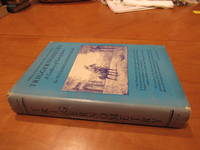
1934020156New York: The Press of the Pioneers 1934. First Edition 1st Printing. Cloth. Very Good /No Dust Jacket. Xvii 441 Pp. Blue Cloth Gilt. A Clean Tight Example. Hinges Tight. Cover Gilt Bright. Bookplate Of Previous Owner To Whom Is Addressed A 28 Line Tls From The Author Dated May 28 1937 In El Paso On His Letterhead With A Branding Iron Across The Top Providing A Courteous Reply. Cunningham Discusses The Probably False Photo Of Billy The Kid Which Had Recently Come To Light; Acknowledging That The Photo Of Sam Bass In The Book Is Not Sam Bass After All; Making A Comment On Connelley's Writing On Wild Bill Hickok Etc. Letter In Fine Condition Folded With Mailing Envelope Neatly Attached To Rear Endpaper. Also With The Old Newspaper Clipping Regarding The Billy The Kid Photo And A Prospectus For The Upcoming Caxton Reprint Of This Book. Shallow 1" Long Bump To Top Of Front Board With 1/8" Tear To Cloth. <br/> <br/> The Press of the Pioneers hardcover
196970552Sommières 1969. Fine. Sommières 3 janvier 1969 14.60 x 10.20 cm une carte postale Signed autograph postcard from Lawrence Durrell addressed to Jani Brun written in purple felt-tip pen on the verso of a humorous illustration by Lassalvy. The writer sends his wishes for the year 1969 to his young French lover and prepares to follow the filming of the movie adapted from his novel ""Justine"" first volume of his Alexandria Quartet: ""Je vais à Londres samedi pour un mois de 'filmage'. Amuse toi bien mais sagement !"" ""I'm going to London Saturday for a month of 'filming'. Have fun but wisely!"" After many years spent in Greece Egypt and Rhodes the traveling writer Lawrence Durrell was forced to flee Cyprus following popular uprisings that led the island to independence from the British crown. Rich only with a shirt and a typewriter but crowned with the success of his novel Bitter Lemons of Cyprus he arrived in France in 1956 and settled in the Languedoc village of Sommières. In the ""maison Tartès"" his large house surrounded by trees he wrote the second part of his work his monumental Avignon Quintet devoted himself to painting and received his illustrious friends including the couple Henry Miller and Anaïs Nin violinist Yehudi Menuhin London publisher Alan G. Thomas and his two daughters Penelope and Sappho. Among the olive trees and under the Mediterranean sun he met in the mid-1960s the young and vivacious ""Jany"" Janine Brun a woman from Montpellier in her thirties with devastating beauty who worked in the Antiquities department at the Sorbonne in Paris. She was nicknamed ""Buttons"" in memory of their first meeting where the young woman wore a dress covered with buttons. Henry Miller also fell under the spell of ""Buttons"" praising her beauty and eternal youth in exceptional unpublished letters. The three companions spent memorable Parisian evenings of which we preserve precious autograph traces through their epistolary exchanges. Recommended by Durrell she made numerous trips particularly to England from where she received extensive correspondence from the writer as well as original works of art signed with his artistic pseudonym Oscar Epfs. unknown
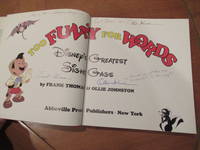
1987049880Abbeville Press 1987. 1st Edition 1st Printing. Hardcover. Fine/Fine. 223 Pp. Red Cloth Gilt Yellow Endpapers. First Printing No Additional Printing Indicated. The Scarcest Of The Illustrated Disney Books By Thomas And Johnston. Fine In Fine Jacket. Signed By Both Illustrators Beneath The Title Additionally Signed At Top "Aug 12 1999 - & Still Going Strong- Frank Thomas & Ollie Johnston" With The Comment In The Later Hand "How Did You Get To Sign This Is This A Gag" Also Adding "This Is No Laughing Matter" Atop Of Half Title Page And "This Book Really Belongs To ------". <br/> <br/> Abbeville Press hardcover
1933030514New York: Covici Friede 1933. 1st Edition 1st Printing. Hardcover. Very Good/No Jacket. 480 Pp.Yellow Cloth Printed In Green.First Printing 1923 Date On Title Page. Light Wear Tiny Split/Fry At Bottom Of Front Spine Edge Spine Browned Endpapers Browning Mostly In 1" Strip Along Gutter Edges Hinge Cracking Before Title Page Binding Solid. Inscribed At Length By Fowler "To My Friend Gil Gilbert Emery With The Polite Proviso That He Read It In Silence And A Hundred Miles Away From Champagne Breakfasts. I Pound With The Forehead Gene Fowler Nov-1933". Emery Was A Minor Hollywood Actor For Decades Usually As A Tall Aristocratic Character. <br/> <br/> Covici Friede hardcover
19605559bx123<p>Chicago: Reilly & Lee. VG- in Good dust jacket. 1960. First Edition. Hardcover. 1st printing. Gift inscription to Pauline signed by co-authors Sayles and Stevens and illustrator Wright. Blue cloth orange illus boards. Edgewear mottling to boards. p/o name fep. Map illus endpapers. dj flaps tapered price 3.75 intact with edge chipping. Gorgeous illustrations.; 9 1/4" tall; 142 pages. bx133</p> Reilly & Lee hardcover
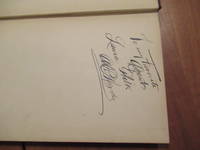
1928050277New York City Ny: Samuel French 1928. 1st Edition 1st Printing. Hardcover. Very Good /No Jacket. 144 Pp. Black Cloth Stamped In Red. First Printing. Very Good Light Usage. Inscribed By Producer A. H. Woods "To My Favorite Agent" Laura Wilk. Wilk Was A Very Well-Connected Broadway Agent At The Time. Albert Herman Woods Born Aladore Herman; 1870 -1951 Was A Hungarian-Born Theatrical Producer Who Spent Much Of His Life In The Usa. He Produced Over 140 Plays On Broadway Including Some Of The Most Successful Shows Of The Period Sometimes Under The Name Of The Production Company 'Al Woods Ltd. Woods Was Born In Budapest Hungary To A Jewish Family But His Family Brought Him To The United States As An Infant. He Grew Up On The Lower East Side Of Manhattan. As A Child He Would Skip School To Go To Theatrical Shows Where He Developed The Goal Of Becoming A Producer Himself. Woods Formed An Early Partnership With Sam H. Harris And Paddy Sullivan Running Tour Companies Of Popular Melodramas Starting With The Bowery After Dark. His First Broadway Production Was The Evil That Men Do In 1903. His Work On Broadway Escalated After The Popularity Of The Touring Melodramas Declined. Woods Had A Stable Of Favorite Playwrights Most Notably Owen Davis Who He Worked With For Several Years On Melodramas Such As Nellie The Beautiful Cloak Model. When Woods Turned To Producing Regular Broadway Shows He Focused On Bedroom Farces Starting With The Girl From Rector's In 1909. During A Trip To Europe In 1911 He Bought The Us Rights To The World's First Full-Color Feature Film The Miracle Which Eventually Premiered In New York 1913. Also In 1911 He Starting Building The Eltinge Theatre On 42Nd Street Named For One Of His Most Successful And Profitable Stars The Female Impersonator Julian Eltinge. By May 1911 A Run Of The Fascinating Widow Starring Eltinge At The Boston Theatre Was Expected To Have Receipts Of $500000 By The Time It Finished. From C1912 He Took Over The Leases Of A Large Number Of Berlin Theatres Including What Became The Ufa-Palast Am Zoo To Put On 'Kino-Vaudeville' Shows A Mix Of Variety Acts Imported From The Us Interspersed With Silent Films. He Was Also Involved With The American Millionaire Joe Goldsoll In The Building Of The German Capital's First Free-Standing Purpose-Built Cinema The Ufa-Pavillon Am Nollendorfplatz. When He Became Successful Woods Continued To Emphasize His Humble Roots And Was Known For His Folksy Manner With Everyone. He Greeted Patrons At The Eltinge As "Sweetheart". Upon Being Introduced To King George V Woods Addressed The Monarch Who Was Older Than Him As "Kid" And Took The Opportunity To Promote One Of His Productions Declaring It To Be "A Regular Show". Woods Was At His Peak In The 1920S Producing Such Hits As Ladies' Night 1920 The Demi-Virgin 1921 The Green Hat 1925 The Shanghai Gesture 1926 Filmed In 1941 And The Trial Of Mary Dugan 1927. However He Lost Most Of His Fortune In The Early 1930S And Never Fully Recovered. In The 1930S His Only Major Hits Were Five Star Final 1930 And Night Of January 16Th 1935. When Woods Staged The Sheldon Davis Comedy Try And Get It In August 1943 Critics Expressed Hope That It Would Revive His Flagging Career But It Closed In Less Than A Week. It Was His Final Production. Although Woods Continued To Read Scripts And Attempt To Generate Interest He Was Unable To Stage Any Productions After 1943. He Died On April 24 1951 In His Residence At The Hotel Beacon In New York. The Once Wealthy Former Producer Ended His Life Bankrupt. After A Memorial Service Attended By Many Prominent Theater Personalities His Remains Were Cremated. Woods Produced A Number Of Bedroom Farces Which Critics And Local Authorities Often Saw As Pushing The Boundaries Of Propriety. In Several Instances Woods Encountered Legal Troubles As A Result. <br/> <br/> Samuel French hardcover
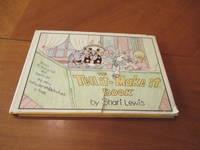
1972021603New York: Hawthorn Books Inc 1972. First Edition First Printing . Yellow Illustrated Boards. Near Fine/Very Good DJ. Illustrated Throughout in Yellow By Boze. 113 Pp. Book Is Bright And Clean With A Little Loss Of Yellow Paper Cover In Some Small Areas Along Edges And In A 1/4" Chip At Lower Front Tip Ele Clean And Bright With Almost No Wear. Dj Has Light Wear 2" Closed Tear At Bottom Of Front Panel 1/4' Open Tear At Bottom Of Front Flap Fold A Few 1/16" Closed Edge Tears. Long Personal Inscription By Author Extending Over Two Pages To A Member Of Troop 90 Of The Girl Scouts Of Beverly Hills With Whom Lewis Developed These Projects And To Whom The Book Is Dedicated Page 2 Of Her Inscription Is On The Dedication Page And Is Addressed To This Member Of The Troop <br/> <br/> Hawthorn Books, Inc hardcover
1932045102Nw York: W. W. Norton & Company 1932. 1st Edition 1st Printing. Hardcover. Near Fine/Very Good. 38 Pp. Grey Cloth Spine Black Cloth Covers Stamped In Gilt And Red. First Printing Near Fine In Very Good Dust Jacket Priced $1.50. Inscribed From Actor Francis Lederer " Dearest Mrs. Lasky To Find An Artistic Soul As Yours Touched By A Tale Like This Is Greatest Thrill To The Interpreter Francis Lederer". Francis Frantisek Lederer 1899- 2000 Was A Czech-Born American Film And Stage Actor With A Successful Career First In Europe Then In The United States. Lederer Started Acting When He Was Young And Was Trained At The Academy Of Music And Academy Of Dramatic Art In Prague. After Service In The Austrian-Hungarian Imperial Army In World War I He Made His Stage Debut As An Apprentice With The New German Theater A Walk-On In The Play Burning Heart. He Toured Moravia And Central Europe Making A Name For Himself As A Matinee Idol In Theaters In Czechoslovakia Hungary Austria And Germany. Notable Among His Performances Was A Turn As Romeo In Max Reinhardt's Staging Of Romeo And Juliet. In The Late 1920S Lederer Was Lured Into Films By The German Actress Henny Porten And Her Husband. He Worked With G.W. Pabst In Pandora's Box Starring Louise Brooks And Atlantic Both 1929. Lederer Billed As "Franz" At This Time Made The Transition From Silent Films To Sound Films. In 1931 Lederer Was In London To Perform On Stage In Volpone And The Next Year In Autumn Crocus By Dodie Smith Which He Then Performed On Broadway - Using The Name "Francis" - Where It Played For 210 Performances In 1932 And 1933. He Also Performed The Play In Los Angeles. Lederer's First American Movies Were Man Of Two Worlds 1934 Romance In Manhattan 1934 With Ginger Rogers The Gay Deception 1935 With Frances Dee And One Rainy Afternoon 1936. He Was Cast As The Lead With Katharine Hepburn In The 1935 Film Break Of Hearts But The Producers Replaced Him With Charles Boyer. It Was Irving Thalberg's Plan To Make Lederer The Biggest Star In Hollywood But The Death Of Thalberg Ended This Possibility. Although He Continued To Play Leads Occasionally - Notably When He Was A Playboy In Mitchell Leisen's Midnight With Claudette Colbert And John Barrymore - In The Late 1930S Lederer Began To Expand His Character Parts Even Playing Villains. Throughout His Career Lederer Who Studied With Elia Kazan At The Actors Studio In New York City Continued To Take Stage Acting Seriously And He Performed Often Both In New York And Elsewhere. He Appeared In Stage Productions Of Golden Boy 1937 Seventh Heaven 1939 No Time For Comedy 1939 In Which He Replaced Laurence Olivier The Play's The Thing 1942 A Doll's House 1944 Arms And The Man 1950 The Sleeping Prince 1956 And The Diary Of Anne Frank 1958. Although He Took A Break From Making Films In 1941 In Order To Concentrate On His Stage Work He Returned To The Silver Screen In 1944 Appearing In Voice In The Wind And The Bridge Of San Luis Rey And In Films Such As Jean Renoir's The Diary Of A Chambermaid 1946 And Million Dollar Weekend 1948. During The 1950S He Served As Honorary Mayor Of Canoga Park. He Would Continue To Make Television Appearances For The Next 10. In His Later Life Lederer Who Had Become Very Wealthy Invested In Real Estate Especially In The Canoga Park Community Part Of Which At One Time Included West Hills In 1987. He Was Active In Local And Los Angeles Civic Affairs Philanthropy And Politics. He Served As Recreation And Parks Commissioner For The City Of Los Angeles Received Awards For His Efforts To Beautify The City And Was The Honorary Mayor Of Canoga Park For Quite A Time. He Became Involved With Peace Movements Taught Acting And Was One Of The Founders Of The American National Academy Of Performing Arts And The International Academy Of Performing Arts. Jesse Louis Lasky 1880 - 1958 Was An Important Pioneer Film Producer Who Made A Few Films With Lederer. <br/> <br/> W. W. Norton & Company hardcover
1923003175New York 1923: Harcourt Brace & Co. 1923. First American Edition . Blue Cloth. Very Good. 314 Pp. First Printing. This Is Andrade's First Book Originally Published In England In 1923 Intended As An Introduction To Atomic Structure For The "Serious Student". Andrade Was Quain Professor Of Physics At The University Of London 1928-1950 And A Highly Honored Historian Of The Physical Sciences. This Copy Signed By Robert F. Bacher And Dated In April 1925 While Bacher Was A Student. Bacher Later Followed Hans Bethe To Cornell In 1935 Where He Started Doing Experimental Work In Nuclear Physics With Bethe And Left Theoretical Work Behind. He Was Quickly Promoted To Full Professor And Director Of The Laboratory Of Nuclear Studies. Early On He Had Felt That The United States Needed To Start Doing War Work And When Lee Dubridge Head Of The Radiation Lab Working On Radar At Mit Summoned Him There In 1941 He Went. Then Late In 1942 Oppenheimer Who Had Been One Of Bacher's Instructors Earlier At Caltech Approached Bacher About A New Lab For Nuclear Weapons Work That Was Just Starting Up And The Following Spring Asked Him To Join The Manhattan Project. Bacher Declined Initially Telling Oppenheimer That What He Needed Was Engineers. Ultimately When Oppenheimer Made A Commitment To Hiring More Engineers And Made Him Head Of The Experimental Physics Division Bacher Signed On. From The Beginning Bacher Was Firmly Opposed To Making Los Alamos A Military Lab And Persuaded Oppenheimer Who Had Agreed To Take A Commission As Lieutenant Colonel And Had Already Ordered His Uniforms To Keep It Under Civilian Control At Least Until They Had Enough Fissionable Material For A Bomb. When The Project Was Reorganized In July 1944 To Speed Work On Implosion Bacher'S Experimental Physics Division Was Split And He Was Put In Charge Of The G For "Gadget" The Code Name For The Bomb Division. Bacher Personally Escorted The First Bomb To The Test Site In July Of 1945. In 1946 He Was Awarded The President'S Medal For Merit For His Work On The Manhattan Project. Bacher Returned To Cornell Hoping To Get Back To High-Energy Physics But The Bomb'S Aftermath Continued To Involve Him. He Felt Strongly That There Should Be Some Sort Of International Control Of Atomic Weapons And Worked Hard On Negotiations With The Soviet Union. He Admitted In His Oral History That This Was Perhaps Idealistic But Thought That Getting This Technology Out In The Open Might Have Avoided The Subsequent Cold War. When The Atomic Energy Commission Was Established Bacher Served As The Only Scientist Among Its Members; He Had Tried To Decline The Post But Took It On When He Learned That There Would Be No Scientist At All If He Didn'T Accept. While A Member Of The Aec He Pushed For The Development Of Nuclear Submarines And Breeder Reactors For Commercial Power. In The Meantime Lee Dubridge Now President Of Caltech Offered Him A Position As Chairman Of The Division Of Physics Mathematics And Astronomy Or As Just A Professor Whichever He Preferred. "The Decision I Came To Was A Fateful One And Probably Illustrates A Major Failing In My Makeup" Bacher Said In The Oral History. What He Saw As A Major Failing In His Makeup Was In Fact A Superb Talent For Envisioning The Future And Leading The Institute Into It. After Getting A Commitment That The Institute Would Support A Program In High-Energy Physics Both Theoretical And Experimental Bacher Arrived In 1949. One Of His First Hires In High-Energy Physics Was Robert Walker Whom He Had Known At Los Alamos And Cornell. Another Of Bacher'S Early Recruits Was Richard Feynman Who Was Reportedly Feeling "Unsettled" At Cornell; Bacher Persuaded Him To Sign On At Caltech With A Sabbatical Year In Brazil In Between. Feynman Then Settled In Pasadena In 1951 For The Rest Of His Career. Now With Feynman And Robert Christy Who Had Come In 1946 Bacher Felt He Had The Two Most Outstanding Theorists From Los Alamos. Then In 1955 He Also Hired Murray Gell-Mann. <br/> <br/> Harcourt Brace & Co. hardcover
1997006561Roselle NJ: Art Press. SIGNED first edition. Oblong softcover. Published Roselle NJ: Art Press 1997. Oblong 4to. wrappers 10 7/8" x 8 1/4" unpaginated. Full page line drawings preface and bio in English and russian. Inscribed by Hollerbach on title page to artist Diana Kan: "To Diana Kan with congratulations and my very best wishes -- Fondly Serge Hollerbach 4/18/97 New York". Fine. . Fine. Soft cover. 1st. 1997. Art Press paperback