[Cartographic Game]Biblio.com

827 résultats
1794114610London: John Wallis 1794. First Edition. Hardcover. Very Good. London John Wallis 24 December 1794. Overall dimensions 520 × 663 mm dissected into 16 panels and mounted on linen comprising a hand-coloured map engraved by McIntyre printed surface 380 × 530 mm with extensive letterpress text on either side. Paper slightly tanned with a few small marks including some inkspots creases tiny chips and scattered light foxing; top right-hand corner trimmed close with the text lightly shaved; cloth a little foxed and discoloured on the verso; overall in very good condition. An attractive Georgian board game with the winner being the first player to reach London. The letterpress gives rules for playing the game and details of the history and manufactures of the 117 towns mentioned. It is not necessarily accurate; for instance Henry VI not Henry IV was captured at Northampton by the Yorkists. <p>We have traced several reissues of the game using the same plate but with some variation to the letterpress and this error appears in several of them. A spinner 'Totum' and counters were available for separate purchase and are not present in this instance. John Wallis hardcover
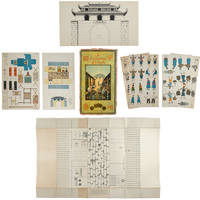
1900159678London.: Church of England Zenana Missionary Society. No date. circa1900. Nine printed sheets each printed with people or items and showing the cut lines. Original chromolithograph card box archivally repaired along seams. Some occasional light foxing on sheets card covers browned and worn in places a few other minor signs of wear but generally very good. 43 x 24cm. Rare. We have found no other copies of this game. The first two sheets show Chinese people in clothes appropriate to their age occupation etc. Those illustrated include The Opium Smoker School-master The General Shopkeeper Native Biblewoman etc. Other sheets show furniture and fittings a coloured illustration of the street a black and white image of the city gate and a much larger sheet 50 x 87.5cm which is an illustration of the street and onto which the other cut-outs when coloured and cut out are placed. . Church of England Zenana Missionary Society. hardcover
195263021Paris: Imprimeurs L.I.E.S.A. 174 Quae de Jemmapes 1952. Oblong 4to. 9.25 x 7.75 in. 2 24 pp. colour-lithograph illustrations throughout 10 leaves unnumbered. consisting of 4 colour lithograph boards to cut out alphabet letters for playing 2 black & white lithograph letter pages for colouring cutting out themselves and playing word games 1 thick instruction leaf 3 printed leaves on blue- salmon- and green-tinted thin paper instruction sheets. Flexible boards colour-lithographed front cover rear board with model figures on verso to be cut out to create paper-engineered toys spiral metal comb binding as issued minor edgewear age toning still a VG and complete copy. First edition of this wonderfully illustrated and charming alphabet game/book featuring anthropomorphic letters in the “Kingdom of the Alphabet†set against the adventures of a Medieval/Renaissance Country of Vowels and the Isle of Consonants uniting over a banquet ball to form an alphabet. Marquet 1892-1984 and Desnoyer 1901-1988 were illustrators and miniaturists noted for their inventive games and illustrations who had originally designed this game/book in 1939. They were married to the well known painters Albert Marquet and Francois Denoyer respectively. Desnoyer a Russian-Ukrainian emigre from Kiev had originally landed in Bohemia by 1906 where she learned the Western alphabet and later settled in France. This particular copy not only features the four colour lithograph boards for children to cut out and play the suggested alphabet game but also the 2 additional boards for an adult word game and back board to create toys which are typically missing as are often the colour-tinted instruction sheets. Worldcat locates 4 copies U of WA & Princeton Incomplete Bibliotheque Nationale FR & Bibliotheque des Chiroux BE -- complete; See: Robert Bolick Books on Books Collection -- Souza Desnoyer and Marcelle Marquet Il etait une fois un alphabet 1951-2009 Dec. 22 2022. Imprimeurs L.I.E.S.A., 174, Quae de Jemmapes, hardcover
187027855France 1870. Board game. Fine. A French childrens' board game complete with the folding board 10 number disks 6 wooden pieces the instruction sheet and box. The box is papered in apricot & gold spotted paper with an image on the cover of clowns ascending a pyramide and one tumbling down. The box measures 11 x 8". All in very good condition. unknown
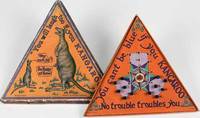
191520568New York: Kangaroo Corporation; Gray Lith. Co. 1915. A large laughing female kangaroo with a joey in her pouch who says "Be Happy at Home!" to another young kangaroo asking "Why such joy" decorates the triangular box lid of this amusing bright orange and purple 1915 peg board game. The playing board itself is framed with the text "You can't be blue if you KANGAROO. No trouble troubles you."<br /> <br /> The unusual triangular box features three kangaroos on the top lid with edges decorated with horse shoes and shamrocks on a purple ground. The instructions are printed on the under side of the top lid including the offer of a $500 reward. The Kangaroo Corporation offered the prize for any correct solution to the game which involves landing the King in Goal No. 14. "The above prize to be awarded January 15 1916." <br /> <br /> 25 numbered holes on the board with 12 small wooden pegs. The object of the game was to jump holes so that only the King remained in hole number 14 in the manner of Chinese checkers.<br /> <br /> Each side of the triangular box measures 9 1/4". The box printed by Gray Lith. Co. N.Y.;1915 copyright by the Kangaroo Corporation. The top lid with little scratch in the lower edge corners repaired with sticky tape. Previous owner signature verso of lower box. The board interior with color more vivid just a bit of wear around numbered peg holes. Not found on Trove. Kangaroo Corporation; Gray Lith. Co. unknown
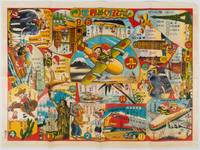
1960215411Japan.: No publication details. Circa1960. Very colourful folding sugoroku game sheet 45 x 61.4cm a little very light browning at margins very good copy. This vibrant sugoroku game sheet showcases playful illustrations of landscapes and cultures from around the world. The game begins in Japan where a boy and girl embark on an adventurous journey. Their first stop is the United States followed by rafting along the Amazon River. Along the way they explore Africa Europe India Australia and Sumatra. The journey concludes with their return to Japan by small plane. Through the game players experience a sense of global travel and gain insight into world geography. . No publication details. unknown
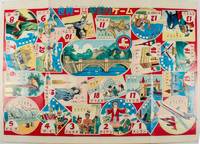
1960171593No publication details. Circa1960. Colourful folding sugoroku game sheet 55 x 79cm a fukuwarai game on reverse does not include face pieces. This is brightly coloured post-war sugoroku is a "round the world" game and this together with the fukuwarai game printed on the reverse would have been enjoyed by Japanese families during the new year celebrations. The game which is colourfully illustrated covers East Asia Southeast Asia New Guinea Africa Europe and North and South Americas with the final goal being returning to Japan and visiting the Royal Palace in Tokyo. The game was probably printed in the 1960s when overseas travel by jet plane was regarded as a possible dream for many Japanese people. On the reverse is a fukuwarai happy-laughter game where a blind-folded player places eyes nose mouth and other pieces on the faces outlined. . No publication details. unknown
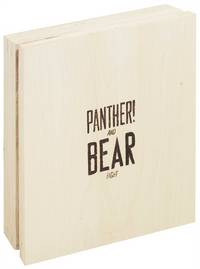
201226660Pasadena CA: Deeply Game Productions 2012. Hardcover. Near Fine. Hardcover. Number 1 of 7 copies. Signed and numbered by the book artist. Sara Press is a photographer printer and book artist whose work addresses science nature and the intricacies of our culture. This is a suite of four etchings by Ms. Press that depict contemporary mixed-martial-arts fighters. The accompanying text has been appropriated from a panther / bear fight advertising poster from the 1850s. The text describing animal fights is juxtaposed with the prints of human fighters to make an important statement on violence. The typeface is designed by Dan Mayer. Letterpress printed on a Vandercook No. 3 Proof Press. The loose prints and text pages are housed in a solid maple box with title burnt into the lid. Unpaginated. ARTISTSBOOKS/030613. Deeply Game Productions hardcover
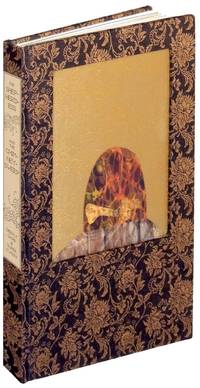
201232906San Francisco: Deeply Game Publications 2012. Hardcover. Fine. Hardcover. Number 45 of 55 copies. Signed by the author and book artists. Book artist Sara Press collaborated with Andrew Rottner to create this exquisite tribute to printing's golden age. "The story by Christina Lauritsen mis-remembers H.C. Andersen's classic tale of the same name transforming it into a story of revelation and madness. The visual progression of the book mirrors the plot pitting the beauty of the decorative arts against the intense and unpredictable messiness of human experience. This book confronts the inevitability of loss and bows to intellectual freedom and its attendant risks." artists' statement. The book is printed in Garamond and Bembo types on Moab Entrada paper. It features two 26 inch wide foldouts with illustrations by Rottner. The striking cover is done from a cut-marbled-paper and brocade. The book measures 7 x 9 inches. It is unpaginated. Deeply Game Productions creates and distributes the art works of Sara Press and her collaborators. Sara L. Press is a photographer printmaker and book artist based in the San Francisco Bay Area. Many of her projects examine peculiar areas of overlap between nature and culture for example: dog fighting feral children and our co-evolution with snakes. Sara has also wrestled with the relationship between creativity and the scientific method. Recently Sara has turned to constructions of masculinity and femininity in our culture such as human bloodsports and altered fairy-tales. Her work can be seen in public collections around the country and are also in many library and private collections. A lovely book in fine condition. PRI/021919. Deeply Game Publications hardcover
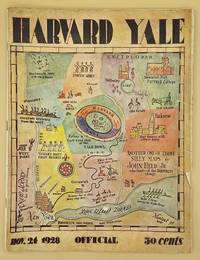
66643Yale University Athletic Association. Good. 160pp. Thin quarto 31 cm The front wrap is detached but present. The rear wrap is absent. Two small closed tears to the fore-edge of the front wrap. Scarce. Cover art by Utah artist John Held Jr.<br /> <br /> Utah Artist John Held Jr. 1889-1958 was a prominent illustrator of the 1920s and 1930s. He began by drawing sports and political drawings for The Salt Lake Tribune when he was just 16 years old. Held moved to New York City in 1910 where he went on to gain notoriety for his drawings in the popular magazines "Life" "The New Yorker" "Vanity Fair" "Judge" and "College Humor." His work epitomized the Jazz Age. He is most recognized for creating the short-haired "flapper."<br /> <br /> The cover of this publication features one of Held's maps. Held's maps illustrate the diversity of his art while at the same time serving to demonstrate Held's interpretation of various notable places and things. Kori Alexander writes in his article entitled Relevant Magic in the Art of John Held Jr. "While it was Held's caricatures of the young college chaps and flapper girls that earned him public notoriety it was his linoleum cuts and pen and ink maps that fortified his legitimacy as a social commentator." Virginia Commonwealth University website. Yale University Athletic Association unknown
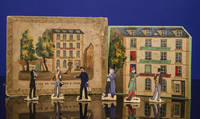
04338Paris: H. Duru 1840. A Remarkable Survival<br /> <br /> FRENCH BOARD GAME. Le Jeu Du Portier The Doorman's Game Par H. Duru. France ca. 1840. <br /> <br /> Original hand colored lithographed board depicting 'The Five Story House" 8 3/4 x 6 3/4 inches; 222 x 172 mm. with the right hand top corner beveled as issued. Six original hand colored lithographed figures each on a wooden base average size 3 1/8 x 1 1/4 inches; 80 x 32 mm. Complete in the original card box with the top showing a hand colored lithograph of "the Five Storey House". The Board and the Figures in near fine condition the box a little soiled on the top and the corners strengthened with cloth tape.<br /> <br /> The Board is lettered from top to bottom: "No. 6 "/ "No. 5 / Locart Fnt Lunetier au 3 mp" / "No. 4 / F. Sonnet M.De Dentelles" / "No.3 Clagmann Et Cie. Banquiers" / "No. 2" / "No. 1 Loge du Portier." The lid of the box is titled "Le Jeu Du Portier Par H. Duru."<br /> <br /> The six figures are titled: Le Portier The Doorman; "2 Proprietaire" Owner; "3 Banquier" Banker; <br /> "4 Marchand" Trader; "5 Fabricant" Maker and "6 Ouvrier" Worker.<br /> <br /> A remarkable survival. We have searched OCLC and can find no records of this game in any libraries and institutions worldwide - not surprising!!!<br /> <br /> H. Duru was an early to mid-nineteenth century Parisian publisher of children's books games toys and movable books. <br /> <br /> According to OCLC their other publications include:<br /> <br /> Nouvelle méthode de lecture progressive ou Lecture apprise en quarante jours <br /> 3 editions published between 1841 and 1851.<br /> Syllabaire universel en action 2 editions published between 1840 and 1857.<br /> Progressive Spelling Book illustrated in French and English published 1810<br /> Les homonymes illustrées published in 1835.<br /> Grammaire illustrée published in 1841.<br /> Quelques mots sur l'organisation du travail published in 1848.<br /> Alphabet chantant no date. Paris: H. Duru, 1840 unknown
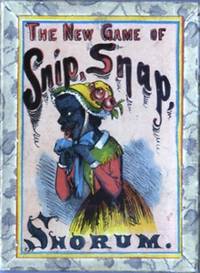
1890510171890. Deck of 20 illustrated playing cards 3 5/8 x 2 9/16 inches hand-colored with 2 card with printed game instructions. All housed in the original box with color printed label on the lid. A few cards have light soiling or foxing as does the blank paper of the box. Near fine. The game or Snip Snap Snorum has its roots in the late 18th century and was popular throughout the 19th century. It is basically a stops game in which cards are played in ascending sequence in suit. This version has five suits each containing four cards. Of these two suits depict stereotyped images of blacks with ridiculous racist names. unknown
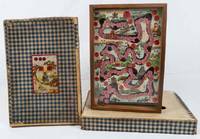
1915218485東京. Tokyo. Circa1915. Very attractive framed glass-topped wooden board depicting the route of the Tōkaidō Railway between Tokyo and Kobe. A metal ball is guided along the printed course with numerous holes into which the ball may fall before reaching the end of the line. The coloured lithographed surface shows key stations and landmarks along the route. 24.4 x 16.4 x 2.7cm presented in its original quite worn cardboard box with title label 25 x 17 x 3.4cm. Original box present though very worn with washi repairs a prior owner's details inside in the lid of the box. The game itself is in excellent bright condition. A charming early 20th-century Japanese tama korogashi ball-rolling or bagatelle-style game combining amusement with geography. These games were popular in the Taishō and early Shōwa eras and represent a forerunner to later mechanical pinball and educational map games. <br> <br>In this hand-held game the player travels from Tokyo to Kobe on the Tokaido Railway line via a small ball which is contained in the box. It is a game of skill with several traps holes which need to be avoided before reaching to the final destination of Kobe. The railway line this game depicts first opened in 1889 between Shinbashi and Kobe and the line was extended to Tokyo Station in 1914. The line which mainly followed the traditional Tokaido Road became the major transportation line in Japan. . unknown
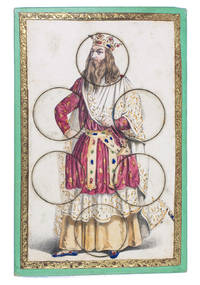
184017799Paris 1840. 19.5 x 13 cm. R. Lacouchin With 3 finely lithographed plates mounted on 3 thick green paperboard cards. The lithographs are framed with a gold-coloured ornamental border. The images on the cards are all beautifully hand coloured and the 3 cards depict respectively a crowned king in ornate robes a beautiful young lady in a green dress and a young man or possibly a court jester in an extravagant yellow and green outfit. Each card has 6 large circular movable pieces to be removed or inserted as the game demands in various circumstances. 3 puzzles. Three beautiful and complete puzzle cards with round movable pieces for example for a game of metamorphosis or lotto. While no rules are present or other specific indications given the cards with their beautiful coloured illustrations are quite intriguing by themselves.The illustration of the young man in the yellow and green outfit is signed "R. Lacouchin". Slightly foxed otherwise in very good condition. unknown
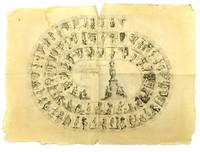
118195Berlin Simon Schropp c. 1790. Engr. broadsheet. Large folio 400x505 mm. Uncut with wide margins 465x635 mm folded. Small tears in foldings and in the outer margins. Stain in upper part. Rare version of this board game with the main title and the individual ones in four languages; French German English and Polish. cf V & A Museum MISC.124-1989.Based on the English version published in 1790 as â€The New Game of Human Life†by John Wallis and Newbury the Berlin publisher Simon Schropp published one version with French text only and this one in four languages. They all go back to Crépy’s â€Le Nouveau Jeu de la Vie Humaine†from ca. 1775.The aim of the game is to reach immortality and the end space nr 84 of the game is the Immortal Man. This version contains no printed rules but the game is so similar to that published by John Wallis that it will be played the same way:The game is played with two dice. Each tile on the playing field has instructions to follow. For instance: â€The Studious Boy at 7 shall receive a Stake and shall proceed to 42 the place of the Oratorâ€. â€The Negliant boy at 11 shall pay a Stake and shall remain two rounds without spinningâ€. â€The Married Man at 34 shall receive two Stakes for his Wife’s Portion and go to be a Good Father at 56â€. â€The Romance Writer at 40 shall pay two Stakes and go back to the Mischievous Boy at 5â€. Etc.â€The Immortal Man who has existed 84 years seems worthy by his Talents and Merit to be a Model for the Close of Life which can end only be Eternity. When we arrive at the No. 84 we shall have gained all we can by this Game but if we exceed this number we must go back as many points as we have proceeded beyond it. The Age of Man is divided in seven periods of twelve years viz. Infance to Youth Manhood Prime of Life Sedate Middle-age Old age Decreptitude and Dotageâ€. Some famous people are depicted. As philosoper nr 62 is Voltaire the poet nr 41 is Alexander Pope and the geographer nr 47 is Captain Cook pointing at a map. The final end space Immortality in the Berlin version shows a monument to Leopold of Brunswick Prince of Brunswick-Wolfenbüttel 1752-85. His charity as a general towards his soldiers made him famous and he drowned while trying to save his soldiers lives in the great flood of the River Oder. unknown
AQ20891s.i. Dorset: s.n. 1798 Single leaf broadside. Uncut but for gutter margin. Old folds and slight marginal creasing soiling to verso else a fine copy completed in manuscript. With three embossed tax stamps totalling 3 Guineas to upper margin. Leading Anglo-Catholic Thomas Weld of Lulworth Castle's 1750-1810 certified permit for the killing of game endorsed by William Burnet Clerk of the Peace for Dorset. The Game Acts of 1784 1785 and 1791 made possession by of an annual game killing certificate for compulsory under pains of a £20 fine for both 'Gentlemen' and Gamekeepers wishing to engage in such activities. Registers of those who had paid Game Duty were kept by local Clerks of the Peace transmitted to the Commissioners of Stamp Duty and in many cases published in local newspapers. Weld is better known for his philanthropic activities - notably with the Society of Jesus - and his famous library at Lulworth Castle which at one point housed both the Lutrell Psalter and the Bedford Hours. . Dimensions 330 x 200 mm. [s.n., 1798] unknown
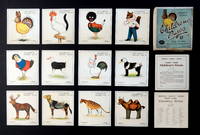
19303220291<p><em>Complete with 12 coloured and numbered cards; 11.5 x 11 cm; 6 double page score cards each with instructions mostly filled in with answers in pencil; and a a 'Key' card containg the corect answers; contained in the original box 11.5 x 13 x 1.8 cm the lid with coloured title label some dust marks minor damp stain affecting two edges.</em></p><p>A party game where the illustrated cards are placed around a room and each of the children given a score card then trying to recognise the four different birds animals and toys combined into a composite picture. Assorted head body legs and tails of rabbits chickens giraffes elephants hens camels etc. are combined together. The toys including a clown doll and 'golliwog' but this is chiefly a semi-educational game as the majority of the Nuzoo creatures are real.</p><p>E. T. W. Dennis and Sons principal productions were postcards - including novelty topographical and latterly saucy types - commercial art greeting cards and tourist guides etc. Party games seem to have been a small offshoot of their business with other titles including Guessit Pintail Pinnet and Jumbles.</p> [Scarborough: E. T. W. Dennis and Sons. Ltd.],
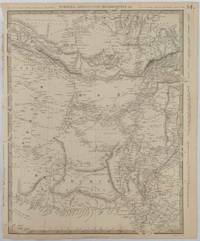
1852224152London.: Society for the Diffusion of Useful Knowledge; Charles Knight. 1852. Engraved map 39 x 30.5 cms; 41 x 34 cms sheet relief throughout shown by hachures publisher's or binder's numeric stamp 94A the margins a little browned and chipped with loss to the two keys at the inner edge marking Indian and Persian distances but the map in very good condition. A highly detailed example of political and military cartography from the height of the Victorian era capturing the Central Asian frontier at the dawn of the "Great Game". <br> <br>The map covers the expanse of Central Asia stretching from the deserts of modern-day Uzbekistan and Turkmenistan down through Afghanistan and Pakistan to the Arabian Sea. It maps out the Emirate of Bukhara in the north and the Desert of Khiva. It explicitly references the "Nomadic Tribes of Turkomans" roaming the steppes. Afghanistan is centred on the map and displays the fractured geography of the Afghan kingdom. It details the treacherous mountain passes of the Hindu Kush alongside the major strategic cities of Kabul Kandahar and Herat. Beloochistan Balochistan & Sinde Sindhanchor the southern third of the sheet it routes down toward the coastline showing the vast desert paths tribal domains and the mouth of the Indus River. . (Society for the Diffusion of Useful Knowledge); Charles Knight unknown
193559984Birmingham & London UK: St. Mary’s Row 40 Pall Mall ca. 1935. Two pieces. 8vo. 37 1 pp. plus 2 pp. publisher’s ads. With numerous photo & text illustrations throughout. Textured green softcovers raised gilt lettering front cover yapp fore-edges slight shelfwear NF copy; 4 pp unpaginated. printed on gold-tinted paper photo & text illustrations self-printed softcovers NF. First edition of these exceedingly scarce Depression-era gun catalogues issued by the W.W. Greener William Wellington firm which had first developed the breach-loader gun as well as inventing the famous cross-bolt and an effective system of choke boring. This Greener Gun catalogue includes Greener’s Presentation Guns which could be chiseled and gold ornamented along with Side Lock Hammerless Ejector Guns miniature models trap models featherweith models and even the Greener Light Model Harpoon Gun. The second piece opens with long endorsement from Yeta III Paramount Chief of Barotseland who would rule from 1916-1945 and was an avid hunter who shot with Greener Rifles and Shot Guns noting here that three-quarters of his hippopotamus trophies had been made with the Greener .375 Double first purchased in 1904. No copies of either in Worldcat. St. Mary’s Row, 40, Pall Mall, paperback
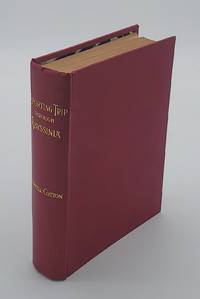
190268475London: Rowland Ward Limited 1902. First edition. Hardcover. Good. 531; 12pp. Large octavo 23 cm Bound in plain red cloth over boards with a gilt stamped title on the spine. Blue and white animal-patterned endpapers. Covers a bit cocked. Text block has dropped. Endpapers cracked along the hinges and hinges going. Text block just starting to crack at p. 177. Bookbinder's small ticket on the rear pastedown. With folding map loose and tucked in with a 10" closed tear along the horizontal center fold. Major Percy Horace Gordon Powell-Cotton 1866-1940 was an explorer big game hunter naturalist and anthropologist and founder of the Quex Museum Birchington the Powell-Cotton Collection. He spent most of his life exploring and traveling throughout the world as well as undertaking multiple overseas collecting expeditions. In total Powell-Cotton undertook 27 expeditions spanning half a century. From the early 1880s he was very much concerned with taking and developing his own photographs.<br /> <br /> Signed by the author's son Christopher on the half title. Rowland Ward, Limited hardcover
192753798New York: Frederick A. Stokes Co. 1927. 8vo. xi 3 239 1 pp. Colour-tinted frontisp. 7 colour-tinted plates. Orange cloth silver lettering front cover & spine very minor shelfwear very slight bumping to corners w/ d.j. vivid Art Deco cover art of stalking Tiger silhouette on front cover by Reynolds in black silver and orange slight chipping head of spine minor creasing edgewear still NF/VG- copy. First edition of this anthology of big game stories of the Indian jungle set on the North Eastern frontier near Bhutan. Casserly 1869-1947 joined the 22nd Bombay Infantry in 1892 served in China during the Boxer Rebellion and later with the 120th Rajputana Infantry with about 200 sepoys in a small fort in Cooch Behar. Frederick A. Stokes Co., hardcover
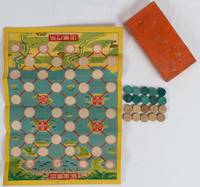
1940216804Japan. Circa 1940. Colour folding game sheet 36.5 x 26cm 10 wooden playing pieces each with embossed images in beige and blue complete original box 15.5 x 7.6 x 2.3cm considerably worn and soiled and corners reinforced the game itself is in very good bright condition. This is a two-player board game where air planes and war ships fight against each other. Fascinatingly the game sheet illustration shows the battle ground is in the Pacific where islands with palm tree are dotted. Consequently the game might be produced at the early stage of the Pacific War. The players attack each other after starting from a naval base and an air base. There are two islands each where they are safely protected from their enemies. The playing pieces are made out of paper with embossed images of war ships and air planes in beige air power and blue sea power colours. . unknown
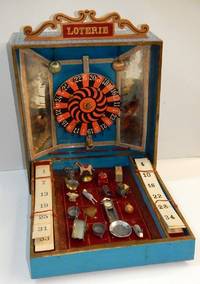
19002210013<p><i>Wooden box 32 x 26 x 8 cm with light blue patterned paper covering; the lid with a label lettered 'Loterie' and a hinged pierced wooden sign with the words 'Loterie' lettered in gilt paper on red; the lined paper interior with a central mounted wheel between mirrored sides and two hanging silk balls; the fall front where the prizes are held with two spaces left and right containing six lottery cards one from another set together with 16 toy prizes as listed below.</i></p><p>Lottery or carnival wheels games became popular at the end of the nineteenth century. Their construction was more complicated than heretofore with the addition of a rotating wheel with pins with a 'clack' mechanism sounding as the wheel is spun. The numbers on the wheel are randomly arranged from 0 through to 25 in white on alternating in black and red ground - clearly based on the 'single zero' form of roulette wheel that became the norm in Europe from the middle of the nineteenth century. The design has a second purpose as the box is hinged so that open it is given the form of a fairground entertainment with an assortment of prizes laid out in a display on squares below the wheel that each have a number too. </p><p>The idea of the game is twofold firstly as the wheel is spun and numbers called out the player who first completes a card of numbers is the winner. In the second game when the numbers 1 to 16 are called out and a player has the number on one of the cards they can then claim one of the small toy prizes. The sixteen twenty assorted of toy prizes include: a handcart wall clock bracelet scales pram wooden top bracelet fairground horse two rabbits a chicken a dish a parcel a metal top metal puzzle pair antimony jardinieres and a heart broach.</p><p>There is no makers name and the design although of a solid construction is nevertheless probably a bespoke production possibly made in order to be sold through fairgrounds and market stalls rather than the more salubrious emporia for children. The interior is lined in turquoise paper with bevelled mirrored silvered card sides and although simple the idea was glittery enough to catch any passing child's attention.</p>
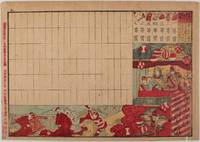
1892215726大野栄吉. Ōno Eikichi. Meiji 25 1892. Colour woodblock print 22.8 x 32.5cm evenly browned few chips in margins but overall very good. This colourful woodblock print serves as a point sheet for a horse racing board game. While the game rules are unclear the print vividly captures an exciting race scene featuring three horses and their jockeys. The race unfolds in a festive atmosphere complete with blossoms and lanterns while the spectators appear to include the Meiji Emperor and Empress along with their entourage. The Emperor is depicted in full military uniform and the Empress is shown in a traditional kimono. The print also displays the prizes for first through seventh place which include a silver cup a trophy a riding cap a scarf a shoe and a whip. Western-style horse racing began in Japan in the mid-19th century following the arrival of Westerners and became a high-class social event during the Meiji period. . 大野栄吉. [Ōno Eikichi]. unknown
191557029Helena MT: Independent Publishing Co. 1915. 8vo. 88 pp. Photo illustrations tables historiated vignettes at upper fore-edges of text pages throughout. Beige-printed softcovers salmon-coloured outline map of Montana on front cover border in burgandy minor chipping head & foot of spine & to couple corners minor dustsoiling still VG- copy. First edition of this exceedingly scarce original and well illustrated report. The Montana Legislature in 1913-1914 codified a number of fish and game laws and established the Game and Fish Commission in order to adjust hunting seasons bag limits license hunters and fishermen who were rapidly decreasing the numbers of game animals and fish as well as try and legislate against water pollution through cyanide and other pollutants introduced by mining interests in the State. Montana had established a number of fish hatcheries to feed many of the small landlocked lakes & ponds which were rapidly being depleted by intrepid sportsmen dynamiting the habitats and harvesting the fish. There are descriptions of hunting bear in Flathead County with a photo of the “Famous Lady Hunter†standing over her trophy; descriptions of deer hunting and remonstrations against poachers especially with those continuing to kill the “Bull Moose†which had been barred by State law. Of additional interest are the photos and detailed description of the Montana State “Fish Car ‘Thymallus’†featuring banks of specially fitted aerated aquariums for transporting hatchery fish for license paying sportsmen followed by tables of the 10s of 1000s of fish released. Also included are statistics on poaching arrests jail sentences and fines. Worldcat locates copies UCLA NOAA Woods Hole Yale holds an edition issued in 1914 for the Northern Pacific Railway with 75 pp.; See: Diann Ericson The Legislative and Political Development of the Montana Department of Fish Wildlife and Parks 1895-1921: A Case of Cultural Heritage 1994. Independent Publishing Co., paperback