SAMURAIBiblio.com
225 résultats
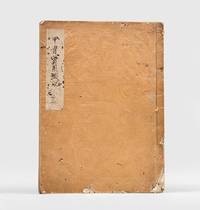
1840122137Japan: c.1840s. A samurai's armour was a map of his spiritual power A colourful and intricately painted explanation of the complex steps samurai followed to don their famous warrior armour and required undergarments. The sequential illustrations show the fitting of a loincloth shirt and cord belt. The figure puts on trousers slippers leggings sandals greaves and thigh guards followed by the external armoured vest belt and shoulder guards. A couple of paintings show the warrior jumping and moving to test the fit of the armour and the security of the knots. Finally he straps on his swords and secures his mask helmet and arm guards completing a fearsome appearance. This manuscript was brushed on the cusp of the major changes in the status of the samurai. After the Meiji Restoration imperial decrees began to curtail their privileges and elite social standing - changes which transformed works like the present example into valuable historical documents. Quarto 267 x 197 mm ff. 15. With 30 original colour illustrations. Contemporary brown wrappers early 20th-century green thread yotsume toji stitching manuscript title label on front cover. Red ownership seal of the artist Hitomi Yuuichi Gyokuransai d.1968 on first leaf. Losses at foot of spine stitching split but still sturdy worming to wrappers and contents illustrations generally unaffected inner rear cover with old paper repair: a good example attractively illustrated. Antony Cummins & Yoshie Minami eds Samurai Arms Armour & the Tactics of Warfare: the Collected Scrolls of Natori-Ryu 2018. hardcover
18842080302106807452Chichizando 1884. Soft Cover. Fine. The book is in fine condition. Chichizando paperback
1800305220Nara 1800. 152 woodcut illustrations some double-page across several bifolia on mulberry paper. Folio 380 x260 mm. With a small stain on the opening pages thicker paper covers slightly soiled the upper cover with a few worm holes not affecting illustrations. upper cover title label not present. Stitched. Ownership chop of Sato Takekicho. 152 woodcut illustrations some double-page across several bifolia on mulberry paper. Folio 380 x260 mm. Woodcut book of the samurai armor at the Kasaga Shrine Nara Prefecture <br /> <br /> "A fine illustrated text on an important collection of ancient samurai armor. The Kasaga shrine in Nara was the shrine of the Fujiwara family first built in 768 and rebuilt several times over the centuries and is now one of the more important in Japan and a Unesco World Heritage Site. The family armor which came to be placed in the Shrine includes pieces dating from the 12th century such as a special helmet with a sparrow motif said to have been dedicated by Minamoto no Yokishitsune dating form the Kamakura period 1185. The shrine is famous for its bronze lanterns. unknown
1820305224Edo 1820. 200 woodblock illustrations of crests some light soiling to margins. 208 pp. small oblong 8vo 110 x 155 mm. blue paper wrappers worn stitched. 200 woodblock illustrations of crests some light soiling to margins. 208 pp. small oblong 8vo 110 x 155 mm. Japanese woodcut book on the crests and symbols of the Samurai families.<br /> <br /> WITH: <br /> A series of 99 small manuscript information cards on for ceremonial use for Samurai families denoting their crests and banners pen ink and colors. First half of 19th century each card 70 x 55 mm some affected by worm tracks. unknown
1969230704052059ybvkTokyo, Kodansha, Showa 42-43 (1968-1969). Each volume with few pages Introduction, some 100 glossy-paper colour-plates tipped-on cardboards, ca. 20 glossy black-and-white plates, ca. 40 pages commentary. - Heavy gilt-titled raw-cloth (silk?) bindings in thick cloth-folders with wings and bone-clasps, protected by publisher's illustrated (clan-signs) matted thick cardboard-boxes; Folio (overall ca. 45 x 32 x 22 cm; ca. 21 kg.)!
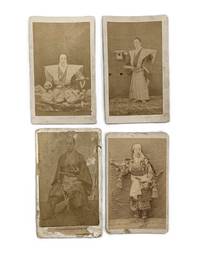
1860231401860. Meiji JapanSamuraiKabuki Theatre Samurai identity in the late 19th century photo archive documenting kabuki depictions of warrior masculinity in Japan during the early Meiji period made after the abolition of the samurai class when images of warriors continued to shape popular understandings of military tradition and masculinity in Japan. These four photographs preserve samurai imagery as presented in popular theatre at a time when Japan's military identity was changing under rapid political transformation. The archive is especially strong for showing how kabuki performance sustained martial ideals in visual form after the social foundations of hereditary warrior status had been dismantled.<br /> Photo archive of 4 albumen carte-de-visite photographs approximately 2.5 x 3.5 inches Japan circa 1860s-1880s. The images show male sitters posed in studio interiors against plain backdrops and atop patterned floor coverings each dressed as a samurai or warrior character. One figure stands in full armor with a sword at his side and a striped staff or bow-like prop in hand his costume built from lamellar armor tassels shin guards and layered protective dress that stress the ceremonial weight of warrior costume. A second sitter tentatively identified as kabuki actor Jitsukawa Enjaku appears seated frontally in voluminous robes with sharply extended shoulder forms flanked by swords and posed on a textile-covered platform in a deliberately formal composition. A third stands holding a small prop structure in one hand with a sword tucked at the waist while a fourth in a more lightly defined but heavily worn image sits in traditional dress with topknot hairstyle and blades visible at the sash. Across the group the repeated use of swords stylized posture and exaggerated makeup grounds the archive in theatrical samurai iconography rather than ordinary portraiture.<br /> These photographs belong to the decades in which photography popular prints and theater recoded samurai visuals as a national historical image rather than a living class identity. Kabuki played a central role in that process preserving warrior narratives and masculine ideals for mass audiences while early commercial photography made those images widely distributable and accessible. For institutions building Japanese photography theater or military history holdings the archive offers direct evidence of how samurai identity was presented popularized and circulated in the first generation of Japanese photography. Heavy fading staining edge wear and mount losses to several cards most notably one with substantial abrasion and corner loss; overall fair to good condition. A group exemplifying the presentation of samurai imagery in popular theatre and photography in Meiji Japan. unknown
18892110502150412978Not Available 1889. Soft Cover. Fine. Number of books: 3 copies Not Available paperback
18832090502126803273Hakumon Head Office Ginza Tokyo 1883. Soft Cover. Fine. Number of books: 2 Hakumon Head Office (Ginza, Tokyo) paperback
19262092902140304933Daekoku Hongan-ji Temple 1926. Soft Cover. Fine. Number of books: 1 Daekoku Hongan-ji Temple paperback
18792090502128300510Not Available 1879. Soft Cover. Fine. Number of books: 3 Not Available paperback
19162080202102705284Foreign sugar industry 1916. Soft Cover. Fine. Page size: 267 pages Size: A5 size Foreign sugar industry paperback
18822080302106807364Ryuundo Temple Osaka Prefecture 1882. Soft Cover. Fine. Number of books: 4 Ryuundo Temple, Osaka Prefecture paperback
18782090502128301145Not Available 1878. Soft Cover. Fine. The book is in fine condition. Not Available paperback
18842090502128300007Not Available 1884. Soft Cover. Fine. The book is in fine condition. Not Available paperback
18852090502128300123Not Available 1885. Soft Cover. Fine. The book is in fine condition. Not Available paperback
189090romanzo storico giapponse AFFICHE ORIGINALE éditée vers 1880-1890 format : 76 x 112 cm (plus un bandeau de 8 cm de haut annonçant une représentation à Turin collé en bas) Mise en scène sous forme d'opéra d'un roman du japonais TAMENAGA SHOUNSHOUI dessin de TAVIO Lithographie de E. PERINO marques de plis et d'un cachet de taxe sinon bel état de fraicheur des couleurs pas de déchirure, pas de manque pour cette très rare affiche. l'affiche n'est pas entoilée
19822080202104503633Kashiwashobo 1982. Soft Cover. Fine. Number of books: 4 Kashiwashobo paperback
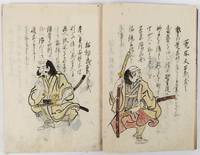
218340Japan. No date. Late Edo. Seven attractive colour manuscript ink and watercolour images 23.5 x 17cm 55 double-folded leaves 4-hole string binding paper title label upper cover. A little occasional worming contents paper on card covers insect damaged particularly on lower cover. This manuscript likely made in the late Edo period is a collection of samurai tales of revenge loyalty and self-sacrifice. The first story features Watanabe Kazuma 渡邊数馬 who avenged his brother Gentaro's death by pursuing and killing Kawai Matagorō. The book includes manuscript colour illustrations of the seven main figures involved in this vendetta—a story widely revered as a testament to loyalty and tenacity often portrayed in stage performances for the public. <br><br>Another account in the collection details Ikeda Tsuneoki also known as Shōnyū and his son who perished in the Battle of Nagakute near Nagoya. . unknown
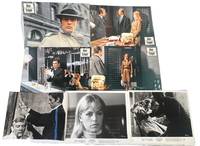
1967197201967. Film Alain Delon in Le Samourai aka The Godson in the US directed by Jean-Pierre Melville. Archive of 7 original vintage lobby cards. Artists International 1967 and 1972. All are about 8" x 11". Three are silver gelatin photogaphs in black and white four are in color. Le Samourai is a noir crime film about the intersecting paths of a professional hitman trying to find out who hired him for a job and then tried to have him killed and the Parisian commissaire trying to catch him. It was a massive success in France selling 1.9 million tickets which led to an English dubbed version released in the US in 1972. With aesthetic emphasis placed on being "cool" the film is seen as a direct ancestor to films like No Country for Old Men Road to Perdition and Pulp Fiction. Photos feature action sequences and close ups of stars Delon Nathalie Delon and Francois Perier. Two have the US title as well as production information in lower white margin. Four color images have the German title with actor and directors names in corners. Roger Ebert gave the film four out of four stars writing: "Like a painter or a musician a filmmaker can suggest complete mastery with just a few strokes. Jean-Pierre Melville involves us in the spell of Le Samourai 1967 before a word is spoken. He does it with light: a cold light like dawn on an ugly day. And color: grays and blues. And actions that speak in place of words." Scarce and in very good condition. unknown
18822111902160200608Hiro-rei-sha 1882. Soft Cover. Fine. Number of pages: 114 pages Size: 18.5cmx12.5cm Number of books: 1 Hiro-rei-sha paperback
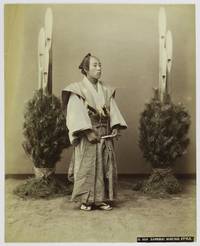
73414Japan ca. 1890. Albumen print 26.5 x 21.2 cm with additional colouring. = A nice large photo captioned B 1159 Samurai Waking Style. This photograph shows a studio portrait of a samurai full-length standing between two potted conifers and bamboo. Samurai were the hereditary military nobility and officer caste of medieval and early-modern Japan from the 12th century to their abolition in the 1870s. They were the well-paid retainers of the daimyo the great feudal landholders. They had high prestige and special privileges such as wearing two swords. They cultivated the bushido codes of martial virtues indifference to pain and unflinching loyalty engaging in many local battles. During the peaceful Edo era 1603 to 1868 they became the stewards and chamberlains of the daimyo estates gaining managerial experience and education. In the 1870s they were 5% of the population. The Meiji Revolution ended their feudal roles and they moved into professional and entrepreneurial roles. Their memory and weaponry remain prominent in Japanese popular culture. Wikipedia. The word waking is peculiar perhaps watching or warding is meant. The same photo framed is according to their website present in the Library of Congress. Weak pencilled annotation on verso. Mildly creased more so towards the margins; print strong. A very attractive item. unknown
197750726Galerie Robert Burawoy 1977 édition originale. Tirage limité à 300 exemplaires. In-4, reliure de l’éditeur pleine toile beige, sous jaquette illustrée en couleurs, 80 pp., 137 illustrations en noir et en couleurs. Il manque 7 cm en pied du premier plat de la jaquette, autrement exemplaire impeccable.
99069701Tokyo 1870 Tohsendoh. Stitched orange wrs. very good 8.5 x 12 cm. 19 double folded leaves 50 pages of steel or copper engraved illustrations two large fold-outs opens to be a double set with 4 illustrations on both sides 8 in all. This work shows the courage & heroism Yamanaka Shikanosuke one of the bravest who served his Shogun Amago in the Sannin district. It was during the 16th century that Yamanaka became a wellknown legend for his bravery. This work outlines his deeds & escapades as a warrior. It shows various scenes in the life and actions of Yamanaka a women who threw off male attackers young people listening to the tales of recited by Yamanaka. Views of his early childhood as he rode a deer while his mother was protected by a monkey. Suppressing the Inoshishi wild boar how he protected his Lord Amago from attackers while traveling in a palanquin as he fends off attackers. His sword duels in full armor protection of unarmed Buddhist priests suppression of animal monsters capture of enemies &c. Fascinating graphic representations of true stories from Japan's rich Samurai past. The theme of courage loyalty and honor is clearly delivered and has become legendary. Expertly executed etchings drawn by Bai-Doh Kunimasa. FORMAT: The book is a very small size easily put in the pocket. The kind of a book people carried around and read. Nicely done profusely illustrated work capturing the imagination of the reader. BIBLIOGRAPHY: Not in Kerlen. . unknown
19772081502112100155Not Available 1977. Soft Cover. Fine. The book is in fine condition. Not Available paperback
18762080502106504344Shosei shoin 1876. Soft Cover. Fine. Number of books: 3 Shosei shoin paperback