777 résultats
186125613<p>An unusual and possibly unique Lincoln portrait above patriotic banners and a quotation from his first inaugural address.</p> <b>ABRAHAM LINCOLN. GABRIEL KAEHRLE.</b>Print. "Abraham Lincoln" with excerpt from First Inaugural Address ca. 1861-1864. 9¾ x 12 in.<p><b><br /></b></p><p><b>Complete Transcript</b></p><p> <i>ABRAHAM LINCOLN</i></p><p><i> SIXTEENTH PRESIDENT OF THE UNITED STATES</i></p><p><i>"In your hands my dissatisfied fellow-countrymen and not in mine is the momentous issue of Civil War. You have no oath registered in heaven to destroy the Government while I have the most solemn one to 'preserve protect and defend it.' The mystic chords of memory stretching from every battle-field and patriot-grave to every living heart in this broad land will swell the chorus of the Union when again touched as surely they will be by the better angels of our nature."</i></p><p><i>Extract from the closing paragraph of Lincoln's Inaugural Message March 4 1861.</i></p><p>A lithograph of this same Lincoln image retaining Kaehrle's signature was used in a jugate 1864 campaign illustration of Lincoln and Andrew Johnson published by H. H. Lloyd & Co. in New York.</p><p><b>Gabriel Kaehrle</b> is listed in an 1857 New York directory as an engraver and he illustrated books which were published in New York in 1860 and 1862.</p><p>Very rare and possibly unique. None in OCLC and no other examples traced.</p><p><b>Condition</b></p><p>Staining to edges shadow of former matting; professionally conserved.<br /></p> books
19042550New York: King Memorial Committee of The Century Association by G.P. Putnam's Sons 1904. First Edition. Leather bound. Near fine. Letter from Secretary of State John Hay to General James Grant Wilson regarding a lock of President Lincoln's hair. Octavo. vii 429pp. Three quarter green morocco title in gilt on spine decorative compartments. Frontispiece portrait with issue cover. Marbled endpapers. Bookplate affixed to front endpaper. Top edge gilt. Letter affixed to front endpaper from Secretary of State John Hay to Gen. James Wilson Grant dated November 8 1902 in response to an inquiry over whether he still possessed a lock of Lincoln's deathbed hair. Includes envelope. Letter notes that he "greatly regrets that I am not the possessor of a lock of Lincoln's hair. I had a little of it for a year or two after his death but in some unaccountable way it was lost." John Hay's search for locks of Lincoln's hair would be a lifelong passion for the friend of the slain president. In 1893 Hay wrote to Doctor Charles Sabin Taft a bystander physician who attended to President Lincoln after being shot at Ford's Theater asking if the doctor had any strands of hair in his possession. Doctor Taft declined to barter for his memento but in 1905 his son found the original letter and contacted Hay. In a hurry the hair was purchased by Hay and promptly encased in a yellow ring. This yellow ring was sent to President Theodore Roosevelt on the occasion of his inauguration. He wore the ring to his inauguration and it remains in the Theodore Roosevelt collection at Sagamore Hill. Mearns 1959. King Memorial Committee of The Century Association by G.P. Putnam's Sons unknown books
186525618<p>Frank Leslie published this print as a premium for his new family magazine <i>Frank Leslie's Chimney Corner</i> and copyrighted it on April 8 1865 just a week before Lincoln's death. The image created by engraver Henry B. Major and lithographer Joseph Knapp portrays Lincoln flanked by the First Lady and Vice President Andrew Johnson greeting Julia Dent Grant wife of Lieutenant General Ulysses S. Grant who stands nearby.</p><p>According to a notice printed at the bottom right corner "<i>Every Person who pays Ten Cents each for numbers 1 and 2 of Frank Leslie's Chimney Corner The New Family Paper is entitled to a copy of this PLATE without extra charge</i>" or individuals could purchase the print for $3.</p> <b>ABRAHAM LINCOLN.</b>Lithograph. "Grand Reception of the Notabilities of the Nation at the White House 1865" New York: Frank Leslie April 1865. 1 p. 19 x 23¾ in.<p><br /></p><p>In the first issue of <i>The Chimney Corner</i> Leslie described the "Grand Reception" image as "the most costly gift plate ever presented by any publisher in the United States having been produced at an expense of $10000."</p><p>"Every family should possess this truly national picture and carefully preserve it" Leslie continued "as it will transmit to future generations the men who have restored our great national unity. It is especially valuable as it contains an excellent likeness of our late lamented President introducing General Grant and his wife to Mrs. Lincoln." The picture contains "nearly 100 portraits of our most celebrated Generals Statesmen and Civilians also of many of our most distinguished American ladies. The likenesses are admirable having been taken from photographs by Brady."</p><p>The key giving the names of each individual portrait was published in issue number 4 of the <i>Chimney Corner</i> on June 24.</p><p>Included in the image are Generals Ulysses S. Grant John G. Foster William T. Sherman Hugh J. Kilpatrick Nathaniel P. Banks Philip H. Sheridan Winfield S. Hancock John A. Logan Joseph Hooker Benjamin F. Butler Oliver O. Howard John A. Dix and Henry W. Slocum. Admirals David Farragut and David Dixon Porter represent the Navy. Members of the cabinet include Secretary of War Edwin M. Stanton Secretary of State William H. Seward and Secretary of the Navy Gideon Welles. Members of Congress include Senator Henry B. Anthony of Rhode Island Senator William P. Fessenden of Maine Senator Charles Sumner of Massachusetts and Speaker of the House Schuyler Colfax of Indiana. Chief Justice Salmon P. Chase represents the U.S. Supreme Court. New York newspaper editors Horace Greeley Henry J. Raymond and James Gordon Bennett are also present. Prominent women include First Lady Mary Lincoln Ann S. Stephens dime novelist and magazine editor Miriam Folline Squier wife of Leslie's former editor-in-chief and Leslie's future wife Julia Dent Grant wife of Ulysses S. Grant Kate Chase Sprague daughter of Chief Justice and wife of Rhode Island Senator and Adele Cutts Douglas widow of Stephen A. Douglas. Others identified in the key include Ephraim G. Squier Leslie's former editor-in-chief archaeologist and U.S. commissioner to Peru Governor Andrew G. Curtin of Pennsylvania and Ambassador to Russia Cassius M. Clay of Kentucky.</p><p>Despite Leslie's copyright Anton Hohenstein created a very similar image entitled "Lincoln's Last Reception" which also featured Lincoln's meeting General Ulysses S. Grant's wife Julia. Published by John Smith in Philadelphia in 1865 and hand-colored "Lincoln's Last Reception" also included more than thirty military and political leaders and a few prominent women among the onlookers in the ballroom.</p><p><b><i>Frank Leslie's Chimney Corner</i></b> 1865-1884 was a weekly family newspaper published "every Tuesday" in New York by Frank Leslie. Each illustrated issue of sixteen pages contained serial fiction short stories poetry biographies history travel sketches natural history anecdotes and other subjects. According to the prospectus the newspaper would be "a welcome messenger of instruction and amusement to the young and old in the family and by the fireside—that altar around which cluster our holiest and most cherished recollections." Leslie had copyrighted the title in 1861 but "the great Rebellion now happily closing intervened to put a stop to the enterprise."</p><p><b>Frank Leslie</b> 1821-1880 was born in England as Henry Carter but he adopted the pseudonym of Frank Leslie to keep his artistic activities a secret from his relatives who disapproved. He came to the United States in 1848 and settled in New York in 1853 to engrave woodcuts for P. T. Barnum's <i>Illustrated News</i>. When that publication failed Leslie began work on his own series of illustrated publications including <i>Frank Leslie's Illustrated Newspaper</i> <i>The Budget of Fun</i> <i>Frank Leslie's Chimney Corner</i> and others. At his death he was deeply in debt but his second wife Miriam Folline Squier 1836-1914 continued his publications and again made them profitable even legally changing her name to Frank Leslie in 1881.</p><p><b>Condition</b></p><p>Spot-mounted to modern board mat toning moderate foxing minor edge wear. Would benefit from conservation.</p> Frank Leslie books
186423516Boston: Wright & Potter 1864. First Thus. Octavo 23.5cm.; publisher's drab printed wrappers; 88cxpp.; large folding map of Gettysburg bound in. Some shallow chipping and small losses to wrapper extremities none approaching text dampstaining most heavily so to rear cover title page and preliminary leaves else Near Very Good. Includes the third or fourth earliest appearance in book-form of Lincoln's Gettysburg Address printed here on p. lxxii simply as "Dedicatory Speech." See MONAGHAN p. 48. Wright & Potter unknown books
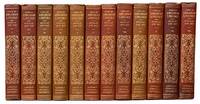
18942311448Harrogate Tennessee: Lincoln Memorial University 1894. Limited Edition. Full-Leather. Very Good/No Jacket. Limited edition #399 of an unspecified limitation this set 'especially prepared for Harry J. Williams.' Signed by John Wesley Hill opposite limitation page. Copyright page states 1894 but this is clearly reproduced from the plates of the original - this set is circa 1905. Volume 1 has very minor discoloration to edges of cloth on rear board minor wear to corners spine a bit faded. Complete in twelve hardcover volumes. Red full leather gilt titles & decorations top edges gilt decorative endpapers. A complete collection of Abraham Lincoln's works including speeches letters biographical writings etc. with an introduction by John Wesley Hill and special articles by various other contributors. The editors were Lincoln's private secretary and assistant secretary and also served in various other governmental roles Hay going on to become Secretary of State under McKinley and Roosevelt. Nicolay and Hay are perhaps best known for their ten-volume biographical history of Lincoln's administration originally published serially in The Century Magazine beginning in 1886 -- it remains one of the more exhaustive and personal accounts of the life of the 16th President of the United States and is notable for the inclusion of facsimiles of original drafts of important documents most importantly the Emancipation Proclamation. This set includes facsimiles of original correspondence and documents reproductions of contemporary photographs and engravings etc. Lincoln Memorial University hardcover books
18942283609Lincoln Memorial University 1894. Limited Edition. Full-Leather. Near Fine/No Jacket. Limited edition #212 of an unspecified limitation this set 'especially prepared for Ann Emerson Strong to whom it was presented by her father Pritchard H. Strong. Copyright page states 1894 but this is clearly reproduced from the plates of the original - this set is circa 1905. Small chip from spine head of volume 7 1/4 inch tear to spine head of first volume otherwise an excellent set small bookplate with initials A.E.S. on front endpaper of first volume. Complete in twelve hardcover volumes. Red full leather gilt titles & decorations top edges gilt decorative endpapers. A complete collection of Abraham Lincoln's works including speeches letters biographical writings etc. with an introduction by John Wesley Hill and special articles by various other contributors. The editors were Lincoln's private secretary and assistant secretary and also served in various other governmental roles Hay going on to become Secretary of State under McKinley and Roosevelt. Nicolay and Hay are perhaps best known for their ten-volume biographical history of Lincoln's administration originally published serially in The Century Magazine beginning in 1886 -- it remains one of the more exhaustive and personal accounts of the life of the 16th President of the United States and is notable for the inclusion of facsimiles of original drafts of important documents most importantly the Emancipation Proclamation. This set includes facsimiles of original correspondence and documents reproductions of contemporary photographs and engravings etc. Lincoln Memorial University hardcover books
186625617.02<p>An engraving by Alexander Hay Ritchie commemorates the moment Lincoln first presented the Emancipation Proclamation to his Cabinet.</p> <b>ABRAHAM LINCOLN.</b>Print. <i>The First Reading of the Emancipation Proclamation Before the Cabinet</i>. Engraved by Alexander Hay Ritchie after 1864 painting of Francis Bicknell Carpenter. New York: Alexander H. Ritchie 1866. 36 x 24 in.<p><b><br /></b></p><p><b>Francis Bicknell Carpenter</b> 1830-1900 a New York artist was so impressed with Lincoln's bold act that he recruited Illinois Congressman and abolitionist Owen Lovejoy to arrange a White House sitting. Carpenter met Lincoln on February 6 1864 and was allowed to set up a studio in the State Dining Room. Carpenter set his painting in Lincoln's office which also served as the Cabinet Room. Lincoln reportedly told Carpenter where each person was seated on the day he read them the preliminary Emancipation Proclamation. The artist was delighted that their placement was "entirely consistent with my purpose." To the left of Lincoln were Secretary of War Edwin M. Stanton and Secretary of the Treasury Salmon P. Chase the most radical members of his cabinet. A portrait of former Secretary of War Simon Cameron is also on the left of the painting. To the right of Lincoln around the table are Secretary of the Navy Gideon Welles Secretary of the Interior Caleb Smith Secretary of State William H. Seward Postmaster General Montgomery Blair and Attorney General Edward Bates the more conservative members of Lincoln's advisers. Lincoln sat at the head of the table between the two groups "but the uniting point of both" according to Carpenter.</p><p>After a temporary exhibit in the White House and Capitol in 1864 the fifteen-foot wide painting toured the country. Carpenter offered the painting to Congress which refused to make an appropriation for it. In 1877 Elizabeth Thompson of New York purchased the painting for $25000 and offered it to the nation. Congress formally accepted the gift on the sixty-ninth anniversary of Lincoln's birth. It hangs in the U.S. Senate. In 1866 book Carpenter also published a book <i>Six Months at the White House with Abraham Lincoln</i>.</p><p>This lithographic print by Scottish-born <b>Alexander H. Ritchie</b>1822-1895 captured and popularized Carpenter's painting before Carpenter made a series of alterations to the original most significantly in revising Lincoln's head and moving the quill pen from near Seward to in Lincoln's hand.</p><p>The National Portrait Gallery has a ledger page signed by Lincoln Stanton Chase Seward Wells and other members of Lincoln's administration ordering proof copies of Ritchie's print.</p><p><b>Historical Background</b></p><p>On July 22 Lincoln read a draft of his preliminary Emancipation Proclamation to his entire cabinet. In contrast to the Confiscation Acts of 1861 and 1862 the Emancipation Proclamation addressed only property in slaves and liberated all slaves in areas in rebellion not only those of rebellious masters. At Seward's urging Lincoln agreed to withhold announcing it until the Union forces had achieved a victory so that it did not appear especially to European observers to be the desperate act of a losing war effort.</p><p>Two months later when Union troops stopped Confederate General Robert E. Lee's invasion of Maryland at Antietam Creek Lincoln finally had his opportunity. On September 22 1862 Lincoln issued his Preliminary Emancipation Proclamation giving the South 100 days to end the rebellion or face losing their slaves. On both sides of the Mason-Dixon Line Lincoln's order was condemned as a usurpation of property rights and an effort to start racial warfare.</p><p>When the South failed to acquiesce Lincoln as promised issued the final Emancipation Proclamation on January 1 1863. With this Executive Order he took a decisive stand on the most contentious issue in American history redefined the Union's goals and strategy and sounded the death knell for slavery. The full text of his proclamation reveals the major issues of the Civil War: slave labor as a Confederate resource; slavery as a central war issue; the status of African Americans who escaped to Union lines; courting border states; Constitutional and popular constraints on emancipation; hopes of reunion; questions of Northern acceptance of black soldiers; and America's place in a world moving toward abolition. The President took the action "sincerely believed to be an act of justice" knowing that it might cost Republicans in the fall 1862 elections.</p><p>The final Proclamation showed Lincoln's own progression on the issue of slavery and eliminated earlier references to colonizing freed blacks and compensating slave owners for voluntary emancipation. It also added provisions for black military enlistment. Pausing before he signed the final Proclamation Lincoln reportedly said: "I never in my life felt more certain that I was doing right than I do in signing this paper."</p><p><b>Condition</b></p><p>Toned and slightly cropped.</p> books
1865228501865. No binding. Fine. Broadside. The Nation's Loss. A Poem on the Life and Death of the Hon. Abraham Lincoln. 1865. 1 p. 9 3/4 x 15 1/4 in. 1/2 inch loss at top not affecting text. Headed by an engraving of Lincoln Reverend Peter W. Brister's mourning poem occupies the first two columns and Lincoln's Emancipation Proclamation is printed in full in the third column. Brister's poem addressed what Lincoln meant to the nation during the Civil War how he saved the Union and freed the slaves. Below the image of Lincoln it reads ""Late President of the United States Who departed this life in Washington D.C. April 15 1865."" unknown books
15858Lincoln Abraham Montgomery County Presidential Ticket Election November 8 1864 for President Abraham Lincoln of Illinois. For Vice President Andrew Johnson of Tennessee. At head: "The Union:--It must and shall be Preserved." Dayton OH 1864. <br/><br/>Small multi-colored broadside 4.5" x 8.5" inches. Printed with blue and red inks on waxed cardstock. With a dramatic illustration of the Screaming Eagle wings spread sitting atop crossed flags with drums bugle cannons weapons and other military motifs. The text centered beneath the illustration is flanked on either side by an American flag; an eagle in red is beneath the text. Some spotting small chip to lower left margin with no loss of text. A very good memento of Lincoln's first successful presidential campaign. unknown books
1864WRCLIT85064Baltimore: Cushings & Bailey 1864. xi2001pp. Quarto. Polished plum-colored cloth stamped in gilt and blind. Lithographed manuscript facsimiles and illustrations. Spine a shade sunned with shallow chips at crown and toe slight edge-wear a bit of foxing early and late old French bookseller's description in corner of verso of front free endsheet offset through tissue to upper blank portion of title old offset from an ancient and absent floral specimen in gutters of pages 42-3 generally a very good copy. First edition of this considerable undertaking to raise funds contemporary with the Baltimore Sanitary Fair to support relief for the aid of soldiers and their families. Includes faithful facsimiles of the contributors' works and includes the first facsimile of Lincoln's handwritten Address Delivered at the Dedication of the Cemetery at Gettysburg. Other facsimiles of works by other important 19th Century authors include: Francis Scott Key Edward Everett Washington Irving Harriet Beecher Stowe Nathaniel Hawthorne John Audubon Oliver Wendell Holmes Henry Wadsworth Longfellow Herman Melville Ralph Waldo Emerson Henry David Thoreau William G. Simms J.J. Audubon and many many others. Melville's "Inscription to the Slain at Fredericksburg" was not collected in book form until 1947. BAL 2418 13672 etc. Cushings & Bailey hardcover books
18293922Hartford: H. and F.J. Huntington 1829. First edition. Contemporary tree calf with morocco label to spine. Gentle bumps to corners; slight bowing to upper front board. Internally with some light scattered foxing as is common in imprints of the era with some dampstaining to the inner margins of the first fifty pages; else clean and unmarked. Collating x 11-335 1 errata 4: complete including thirteen plates. The most popular botany textbook of its time and the first book by education activists Phelps the present is surprisingly scarce in trade. It last appeared at auction in 1989 and this is presently the only copy on the market.<br/><br/>A pioneer in American women's education Almira Phelps began her career tutoring students of the all-male Middlebury College in science mathematics and philosophy. "This experience illustrated the disparity between education available for men and for women and Almira spent the rest of her life fighting for more educational opportunities for females" History of American Women. Joining forces with her sister Emma Willard the founder of the Troy Female Seminary in New York Phelps began to teach rigorous humanities and science courses in addition to lecturing publicly on behalf of women's rights for equal education. Phelps established herself as a frontrunner in the field publishing ten books on the education of women. The present work is the first of these and it brought her into dialogue with earlier British women citizen-scientists such as Priscilla Wakefield and Jane Marcet. Like her predecessors Phelps wanted to make the study of botanical science accessible to readers bringing them into contact with the field's vocabularies and practices and encouraging them to find opportunities for study in the areas around them. Yet her book pushed this movement to the next level as it was designed specifically for the use of advanced schools. To this end it is designed for classroom instruction includes a note To Teachers and provides at rear sections on Vocabulary Analysis and a functional index. Ultimately Familiar Lectures on Botany made it possible for instructors -- especially women -- to improve the method and practice of their lessons by referring to Phelps' own tried and true methods. And it made botanical education of a more rigorous kind available to a new generation of students.<br/><br/>Ogilvie's Women in Science 147. History of American Women. H. and F.J. Huntington unknown books
186522935<p><b>ABRAHAM LINCOLN.</b>Print. <i>Abraham Lincoln. The Nations Martyr. Assassinated April 14th. 1865.</i> Currier & Ives New York N.Y. 1865. 1 p. 13½ x 18 in. Light toning. </p>By recycling stock images Currier & Ives could issue "rush" prints of important 19th century events thus providing Americans with graphic depictions of current events. Based on Anthony Berger's famed photograph taken in February 1864 this is a fine example of a "rush" print of Lincoln following his assassination to hang in the homes of Americans mourning the loss of their president.<br /> books
186520323<p><b>ABRAHAM LINCOLN.</b>Currier & Ives. Lithograph New York 1865. In 24 x 29 in. hand-gilt frame. </p><p>From the hairs on Lincoln's head to the fabric of his suit this lithograph is a beautifully detailed rendering and remains even with a few areas of foxing a commanding showpiece.</p><p><b>Historical Background</b></p><p>The copyright date of <i>"1865"</i> along the bottom edge suggests that this oversized portrait was created to honor either Lincoln's second presidential term or his untimely death.</p><p>Lithographer <b>Nathaniel Currier</b> 1813-1888 and artist <b>James Merritt Ives</b>1824-1895 formed Currier & Ives in New York City in 1857 to publish art prints. The company closed in 1907 after the deaths of its founders when business had declined due to new printing technologies and changing artistic tastes.</p><p><b>Condition</b></p><p>There are a few areas of light age toning. It is displayed in a vintage frame not contemporary to 1865 as we bought it so it is not guaranteed to be archival.</p> books
95124Rare caste metal relief portrait of President Abraham Lincoln in profile. Housed in a custom circular frame with gilt decorative floral reliefs. The entire piece measures 16 inches by 16 inches. A handsome example. Abraham Lincoln served as the 16th President of the United States from March 1861 until his assassination in April 1865. He led the United States through its Civil War and in doing so preserved the Union of the United States of America abolished slavery and strengthened the federal government. Lincoln sought to create a Presidential cabinet that would unite the Republican party. His eventual cabinet would include his primary rivals for the Republican nomination and although his appointees held differing views on economic issues all were opposed to the expansion of slavery into the territories of the United States. The most senior cabinet post of Secretary of State was appointed to William Seward who had recently failed to win the 1860 Republican presidential nomination and Lincoln's choice for Secretary of the Treasury was Ohio Senator Salmon P. Chase Seward's primary political rival and the leader of a radical faction of the Republican party that sought the immediate abolition of slavery. unknown books
1518100999Newspaper disbound 23" x 16" 8 pp. Probably removed dbd minor staining and browning a little creasing and fading; otherwise very good.This is an early report under the heading "Important Assassination of President Lincoln." This is the second morning edition with the 3 a.m. update from Edward Stanton the Secretary of War which indicates Lincoln was still alive but in very bad shape. The article describes John Wilkes Booth "the actor" as the alleged assassin of the president. It describes how Booth entered Lincoln's box and after shooting him stating "Sic semper tyranis" before he leaped on to the stage. This report gives considerable detail about the how Washington reacted to the news and the scene at Lincoln's deathbed. There is also a good deal of coverage of the assassination attempt on Secretary of State William Seward. This paper represents an important piece of American history. books
18871002385New York City 1887. Invitation to Walt Whitman's private reception after his celebrated lecture "The Death of Abraham Lincoln" at Madison Square Theatre on April 14 1887. Whitman had given public readings of his Lincoln lecture variously edited since 1879; one version was published in Specimen Days in 1882-1883. Scheduled on the twenty-second anniversary of Lincoln's assassination the 1887 event was staged as a benefit for the ailing Whitman who remained seated throughout his sold-out tribute to the Union's "Martyr Chief": "there is a cement to the whole people subtler more underlying than any thing in written constitution or courts or armies - namely the cement of a death identified thoroughly with that people at its head and for its sake." As William Pannapacker notes Whitman's passionate public identification with Lincoln was central to his emergence as "The Good Gray Poet" a national treasure: "Whitman's experiments in self-creation finally succeeded with a major segment of the public when he enclosed his persona within the halo encircling the martyred President" Revised Lives 22. The New York audience for Whitman's performance included Mark Twain John Hay Augustus St. Gaudens James Russell Lowell and Charles Eliot Norton; Andrew Carnegie could not make it but purchased a box for $350. At the end of his performance Whitman was surprised by a gift of lilacs from poet E.C. Stedman's young granddaughter a reference to his great elegy for Lincoln "When Lilacs Last in the Dooryard Bloom'd." In New York City for a single night Whitman hosted a reception in his rooms at the Westminster Hotel after the lecture; this invitation was printed for the occasion. The evening was an important one for New York literary society a celebration "at least as spectacular as the event itself" according to the New York Sun. Looking "like a painting of Jove" Whitman entertained a constant stream of admirers relieved only by the performance of the Afro-Cuban violinist Claudio Brindis de Salas Garrido "El Paganini Negro" who serenaded Whitman on a seventeenth-century Ruggeri violin: "Walt was mightily pleased with the music." A surprising survival a near-fine artifact of the nineteenth-century American literary scene. Ivory card measuring 2.75 x 3.75 inches printed recto only: "Walt Whitman / At Home -- Thursday Evening / April 14th 1887 / Westminster Hotel Irving Place and 16th St. New York." Penciled bookseller note to verso: "April 14 1887 for his most famous lecture Lincoln / WW in NY for only one 1 night." Card lightly toned; half-inch closed tear to head expertly repaired. Housed in envelope fragment with penciled inventory number bookseller note and collector's note: "Whitman card / gift from Capt. Cohn -- / House of Books / Aug 7 1950.". unknown books
186421371<p><i>Report of the Select Committee Relative to the Soldier's National Cemetery Together with the Accompanying Documents as Reported to the House of Representatives of the Commonwealth of Pennsylvania March 31 1864.</i></p> <b>ABRAHAM LINCOLN.</b>Book. Includes a foldout map of the planned cemetery and a copy of Lincoln's dedication. Published in Harrisburg 1864. Fair condition. <br /> hardcover books
1935622051935. Darrow at Banquet in Honor Of Lincoln Steffens. Darrow at Banquet in Honor Of Lincoln Steffens. Darrow Attends a Banquet in Honor Of Lincoln Steffens Darrow Clarence 1857-1938. Steffens Lincoln 1866-1936. 12" x 20" Photograph of a Banquet Honoring Steffens Party Includes Clarence and Ruby Darrow New York: Standard Flashlight Company 27 April 1931. With 11" x 6" Printed List of People Who Attended the Banquet. And Darrow Clarence. Filene Edward A. 1860-1937. Autograph Letter Signed To Filene On the Letterhead of the Murray Hill Hotel New York New York April 17 1931. Single 9-1/2" x 6" sheet. Some edgewear to photo upper left corner of image repaired light toning and fold lines to list early annotations to photograph a few chips and nicks to edges of both. Items mounted on 16" x 32" foam-core board. Letter which is not mounted has some toning two horizontal fold lines a few light pencil lines offsetting from another document and glue residue to verso probably from mounting in an album otherwise fine. Three items in all. $1750. There are two captions at the foot of the image. One identifies the photography company the other reads "Dinner to Lincoln Steffens and Characters in His Book Given by Edward A. Filene. Ritz Carlton Hotel April 27 1931." The list which includes several media people social reformers and reform-minded politicians such as Ida Tarbell and Bernard Baruch is captioned: "Cast of Characters from "The Autobiography of Lincoln Steffens" and from his next book present at the dinner given to the author and his characters by Edward A. Filene Ritz-Carlton Hotel April 27 1931." Some of the attendees are identified in a contemporary hand. Darrow is seated at the center of the main table next to Steffens; Ruby Darrow is sitting at the right end. Darrow in his letter thanks Filene for the invitation to the event "which I am very glad to accept" and adds: "Mrs. Darrow is here with me. May I bring her along" This late request may be the reason why Ruby Darrow is seated several places away from Clarence. unknown books
1864109547Cincinnati: E.C. Middleton 1864. Rare oloegraphic portrait of Abraham Lincoln by E.C. Middleton. With Middleton's Warranted Oil Colors imprint to the verso of the frame dated 1864. Between 1861 and 1873 E.C. Middleton of Cincinnati published a series oval oleographic portraits intended to have the appearance of oil paintings including thirteen "Portraits of American Statesmen and Heroes." Middleton invented the method of oleography which used the process of chromolithographic printing with oil based inks mounted on canvas. The portraits were exclusively sold in frames directly through agents by subscription. In fine condition. Framed. The portrait measures 17 inches by 14 inches. The entire piece measures 22 inches by 19 inches. Rare and desirable. Abraham Lincoln served as the 16th President of the United States from March 1861 until his assassination in April 1865. He led the United States through its Civil War and in doing so preserved the Union of the United States of America abolished slavery and strengthened the federal government. Lincoln began constructing his cabinet on election night and sought to create a cabinet that would unite the Republican party. His eventual cabinet would include his primary rivals for the Republican nomination and although his appointees held differing views on economic issues all were opposed to the expansion of slavery into the territories of the United States. The most senior cabinet post of Secretary of State was appointed to William Seward who had recently failed to win the 1860 Republican presidential nomination and Lincoln's choice for Secretary of the Treasury was Ohio Senator Salmon P. Chase Seward's primary political rival and the leader of a radical faction of the Republican party that sought the immediate abolition of slavery. E.C. Middleton unknown books
1860662048<p><b>Campaign Biography-1860 THE WIGWAM EDITION. THE LIFE SPEECHES AND PUBLIC SERVICES OF ABRAHAM LINCOLN. TOGETHER WITH A SKETCH OF THE LIFE OF HANNIBAL HAMLIN. New York: Rudd & Carleton 1860. 1st ed. 117p. frontis. port. illus. front wrap. Monaghan 92; Wesson 1.</b> <b>Bookplate: copy of Joseph B. Oakleaf Lincoln collector and bibliographer. </b></p><p>The publishers were one of a number who announced on May 19 the day after the Lincoln's nomination for the presidency that they had a life of him "in press." The unknown author of "The Wigwam Edition" relied upon newspaper articles and chose the wrong first name. But this was by far <i>the</i> most popular "life" issued during the campaign and it rightfully remains <i>the keystone</i> to any collection of Lincolniana. </p><p>Bound in ½-leather and marble boards scuffed. Front illustrated wrapper only which is chipped at edge; otherwise very good and clean. <br /></p> Rudd & Carleton paperback books
1864WRCAM45849Boston 1864. 88110pp. plus folding map. Antique-style three-quarter calf and marbled boards. 19th-century ink stamp on titlepage contemporary inscription on second leaf. Internally clean. Very good. Devoted almost entirely to the Massachusetts war effort published early in January 1864. The folding map shows the Soldier's National Cemetery at Gettysburg dedicated Nov. 19 1863 with the long speech of Edward Everett of Massachusetts and the short "Dedicatory Speech by President Lincoln" better known as the Gettysburg Address. Also printed is the "Programme of Arrangements" of that day a list of Massachusetts soldiers killed at Gettysburg and buried there and details of the cemetery. Monaghan notes this as an early printing of the Gettysburg Address. MONAGHAN 48. hardcover books
186463146NP: np 1864. Broadside 11 1/2 x 9 1/4 in. printed in two columns. Some toning and scattered foxing and uneven edges with shallow chipping not affecting text. The platforms of the Union Democratic Party and the Republicans for what would become Lincoln's re-election. Some of the resolutions in his party's platform printed here: "That as Slavery was the cause and now constitutes the strength of this rebellion and as it must be always and everywhere hostile to the principles of republican government justice and the national safety demand its utter and complete extirpation from the soil of the republic; and that we uphold and the acts and proclamations by which the Government in its own defense has aimed a death-blow at this gigantic evil. We are in favor furthermore of such an amendment to the Constitution to be made by the people in conformity with its provisions as shall terminate and forever prohibit the existence of Slavery within the jurisdiction of the United States.Resolved That the foreign immigration which in the past has added so much to the wealth and development of resources and increase of power to this nation the asylum of the oppressed of all nations should be fostered and encouraged by a liberal and just policy." OCLC lists 19 copies of this broadside. <br/><br/> np unknown books
186022476Columbus OH 1860. Hardcover. Fine. Book. Political Debates Between Hon. Abraham Lincoln and Hon. Stephen A. Douglas in the Celebrated Campaign of 1858 in Illinois. Columbus Ohio: Follett Foster and Co. 1860. 3rd edition with publisher's advertisements bound in. 268 pp. 6 1/2 x 9 1/2 in. Historical BackgroundLincoln's debates with incumbent Illinois Senator Stephen Douglas earned him national prominence. Slavery was the pressing national issue especially regarding its expansion into the western territories. Douglas authored the Kansas-Nebraska Act 1854 which effectively repealed the free-slave dividing line set by the Missouri Compromise 1820 at 36° 30' north latitude. Instead of banning slavery north of the line and banning south of it new states would instead decide on slavery's status within their borders by ""popular sovereignty."" On its surface Douglas's bill appeared to offer the nation a middle path on the contentious issue of slavery. Instead it would only muddy the waters on slavery.The Kansas-Nebraska Act was only one of a long list of compromises in the middle decades of the nineteenth century. Despite these attempts the slavery debate only became more heated throughout the 1850s. Northerners seeing the hypocrisy of ""states rights"" advocates chafed when a new Fugitive Slave Act 1850 required the use of federal marshals to return escaped slaves. An unintended consequence of Douglas's bill resulted in fraudulent elections and violence in Kansas in 1855 and 1856. South Carolina Representative Preston Brooks bludgeoned Massachusetts anti-slavery Senator Charles Sumner on the Senate floor after an 1856 speech. In 1857 the Supreme Court handed down the Dred Scott decision which decreed that African Americans could not be citizens and based on one's right to bring property across state lines effectively erased the division between free and slave states. Slavery unspoken but protected in the Constitution and mitigated by antebellum compromisers was a tinderbox about to roar to fire.Lincoln recognized the problems slavery presented for the nation and in his debates with Douglas focused his attention on the nationalization of slavery both West and North. After he was nominated as the Republican candidate for the Senate he spoke to the convention famously asserting that ""a house divided against itself cannot stand."" The House Divided speech delivered at Springfield Illinois on June 17 1858 is the opening piece of this book. Though he would lose the Senate race the rest of the book details Lincoln's intellectual combat with Douglas over slavery. This book is a third edition identified by the line over publisher's imprint on the back of the title page the numeral ""2"" at bottom of page 13 and publisher's advertisements bound in at head.Harrison Yerkes 1841-1899 enlisted as soon as the Civil War erupted but since he was under 21 years of age in 1861 his father removed him from service. As soon as he reached the age of majority he enlisted in the 31st Michigan Infantry Company and remained in the Army for the remained of the war. He returned to Michigan purchased two tracts of land which he farmed until retiring in 1891. He was a lifelong Republican though never held office.ConditionLight green boards faded blind stamped gilt lettering on spine ""Harrison Yerkes Northville Mich 1860"" erased from free front endpaper same present minus date on verso of ffep bep and back paste down. Very minor scattered foxing. Publishers advertisements bound into headmatter Minor shelf wear. Tight.SourcesPaul Leake History of Detroit Volume II Chicago: Lewis 1912 pp. 765.http://books.google.com/booksid=ZkUOAQAAMAAJ&pg=PA765&lpg=PA765&dq=harrisonyerkes&source=bl&ots=B-C-cmyauC&sig=gYKZ0sLD9AIMK2XCYuUZOEFn6eA&hl=en&ei=Wq7oTpO-CsLx0gHdisX-Bg&sa=X&oi=book_result&ct=result&resnum=8&sqi=2&ved=0CEwQ6AEwBw#v=onepage&q=harrison%20yerkes&f=false hardcover books
186037152New York: Currier & Ives 1860. Lithograph broadside 13-1/2" x 18." Several closed tears two of them repaired with old tape on verso tear line affecting Seward's midsection. Good.<br/><br/> This scarce lithograph is a detailed humorous "parody on the field of presidential candidates and their supporters in the 1860 campaign." Bell and Everett for the Constitutional Union Party are there: Bell a muscle man holds Everett aloft on a barbell. Horace Greeley's "political ambitions are mocked by the artist who shows him vainly attempting to climb up a horizontal bar." Lincoln is at the center: he has "successfully mounted a balance beam constructed of wooden rails." The New York Courier's James Watson Webb's does a backward somersault in the foreground. <br/> The broadside evidently issued after the parties' nominating Conventions because Seward is depicted as a cripple "on crutches and with bandaged feet." Breckinridge and Douglas "the two sectional Democratic candidates compete in a boxing match."<br/>Reilly 1860-34 quotations are from Reilly. Weitenkampf 123. OCLC records copies at AAS Clements and Lincoln Pres. Lib. under three accession numbers as of October 2020. Currier & Ives unknown books
1864WB163441864. Hardcover. Very Good. Rare broadside tipped into a copy of The Early Life of Abraham Lincoln: Containing many unpublished documents and unpublished reminiscences of Lincoln's early friends. TARBELL Ida M. Assisted by James McCann Davis. Published by McClure New York 1896. The broadside printed in two columns presents the platforms of the Republicans who in June in Baltimore nominated Lincoln and the Democrats who in August in Chicago nominated McClellan. <br/><br/> hardcover books