Lincoln, UlrichAntiquariat.de

11 339 résultats
2000163166Berlin & New York: de Gruyter 2000. XII, 516 Seiten. Gr. 8° (22,5-25 cm). Orig.-Leinenband mit goldgeprägtem Titel auf Deckel und Rücken. [Hardcover / fest gebunden].
2000__3110167301Walter De Gruyter Inc 2000. Hardcover. New. 516 pages. German language. 9.00x6.00x1.25 inches. Walter De Gruyter Inc hardcover
ria9783110167306_inpHardcover. New. New Book; Fast Shipping from UK; Not signed; Not First Edition; N/A hardcover
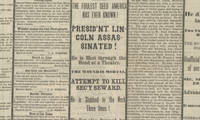
15042913315/04/1865. <blockquote><p>The Assassination:<strong><br /></strong></p></blockquote><p>Abraham Lincoln continues to stand as America’s most beloved President. Of our nation’s historical icons Lincoln is the quintessential embodiment of American possibility in his mythic-like rise from rail-splitter to Chief Executive and Emancipator of the oppressed. The admiration felt by Americans for Lincoln’s humble integrity his performance in office his noble statesmanship and his keen sense of justice is enduring. Lincoln is not given the highest marks just for character but for the transformation of the nation that he left behind which was both profound and long-lasting.</p><p>Polls of historians generally show their belief that Lincoln faced the hardest job of any president. He had to define the issues inspire the people be steadfast in the face of losses win the Civil War free the slaves and lay the groundwork to reunite the nation. All that in the face of determined opposition. He accomplished all this in four years but was assassinated on April 14 1865 and his death left him unable to finish the job a job that quite likely he was the only one with a chance to get completed in a way that would truly bring the nation together.</p><p>The end of the Civil War left the nation with two overwhelming questions: what to do with and do for the millions of freed slaves; and how to reintegrate the South into the Union. On the first point Lincoln was focused on African American access to land economic prosperity and legal rights and had just approved Gen. William T. Sherman’s order distributing parcels of former slave plantations to the slaves themselves. Lincoln wanted black Union veterans to have the right to vote which was a step to ultimately embracing full suffrage for African American males. In what proved to be his final speech three evenings before his death Lincoln had become the first president ever to support black voting. Lincoln’s successor Andrew Johnson was a Southerner uninterested in fair treatment of the liberated slaves. He opposed plans designed to guarantee the civil rights of black Americans and cancelled Sherman’s order granting land to slaves. Johnson accepted the draconian post-Civil War Black Codes which limited the rights and liberties of African-Americans something Lincoln would never have done.</p><p>On the second point the readmission of the Southern states Johnson felt that once Southern states returned their loyalty to the national government they could manage their own affairs. This meant they could pass any Jim Crow laws they liked. He opposed the Republican plan for Reconstruction of the South including provisions designed to guarantee the civil rights of black Americans. The Republican Congress had no rapport with Johnson and the initial four years era of Reconstruction which was a disaster to the nation was essentially a bitter battle between a North and South that remained locked in contention presided over by a weak President Johnson and a Congress at loggerheads with him. Lincoln had enormous power and influence some of which extended into the South. He saw the end of the war as an opportunity to not simply celebrate victory but an opportunity to move the country forward. Johnson had no such feeling. Lincoln would have been much better placed to direct moderate and ease the contentions of Reconstruction.</p><p>John Wilkes Booth was a member of a famous acting family and he enjoyed a phenomenally successful stage career during the Civil War: By 1864 he earned $20000 a year at a time when the average Northern family earned around $300 annually. A Marylander by birth Booth was an open Confederate sympathizer during the war. A supporter of slavery Booth believed that Lincoln was determined to overthrow the Constitution and to destroy his beloved South. After Lincoln’s reelection in November 1864 Booth devised a plan to kidnap the president and spirit him to Richmond where he could be ransomed for some of the Confederate prisoners languishing in northern jails. That winter Booth and his conspirators plotted a pair of elaborate plans to kidnap the president; the first involved capturing Lincoln in his box at Ford’s Theater and lowering the president to the stage with ropes. Booth ultimately gave up acting to focus on these schemes. Neither of the kidnapping plans bore fruit. On the evening of April 11 the President stood on the White House balcony and delivered a speech to a small group gathered on the lawn. Two days earlier Robert E. Lee had surrendered the Army of Northern Virginia at Appomattox Court House and after four long years of struggle it had become clear that the Union cause would shortly emerge from the war victorious. Lincoln’s speech that evening outlined some of his ideas about reconstructing the nation and bringing the defeated Confederate states back into the Union. Lincoln also indicated a wish to extend the franchise to some African-Americans—at the very least those who had fought in the Union ranks during the war - and expressed a desire that the southern states would extend the vote to literate blacks as well. Booth stood in the audience for the speech and this notion seems to have amplified his rage at Lincoln. “That means nigger citizenship†he told Lewis Powell one of his band of conspirators. “Now by God I’ll put him through. That is the last speech he will ever make.â€</p><p>Three days later Booth made good on his promise. Upon learning that Lincoln and his wife intended to see the play “Our American Cousin†at Ford’s Theater Booth used his actor’s connections there to gain access to the President’s box. He shot Lincoln at about 10 pm on April 14 1865 and Lincoln died about after 7 am on the 15th.</p><p>Dr. Charles Leale was in the audience. Leale leapt over theater seats got to the president’s box and announced that he was a doctor. As he entered the President was sitting in a chair with his eyes closed and head slumped. He already looked dead Leale recalled. He felt Lincoln’s right arm for a pulse but couldn’t find one. He and some others eased Lincoln to the floor and Leale began searching for the wound. “I quickly passed the separated fingers of both hands through his blood-matted hair…and I discovered his mortal wound†Leale recalled. “The president had been shot in the back part of the head behind the left ear.†Leale stuck the little finger of his left hand into the hole in Lincoln’s skull. “I then knew it was fatal and told the bystanders†he wrote later. Leale knew he had to get Lincoln out of the theater to treat him. But he believed a carriage ride back to the White House would kill him. He and several other men lifted the president and with Leale holding Lincoln’s head they began to maneuver him outside. Across the street from the theater was the house of William Peterson and Lincoln was taken there. Lincoln was carried to a small back room stripped of his clothes and covered with blankets. His 6-foot-4-inch frame had to be placed diagonally to fit on the bed. Leale ordered the window opened and the wait began. A parade of anguished government officials and family members came and went. The President sank steadily his breathing labored and his pulse nearly undetectable. At 7:22 am on April 15 President Lincoln breathed his last. Leale smoothed the contracted muscles of Lincoln’s features placed two coins over his eyes and pulled a sheet up over his face. Famously Secretary of War Stanton saluted the fallen President and uttered “Now he belongs to the ages.†Stanton further eulogized Lincoln with the apt observation “There lies the most perfect ruler of men the world has ever seen.â€</p><p><strong>Original report</strong> on the assassination printed the very day he died</p><p>The public was hungry for information and the newspapers equally hungry to report the momentous news. One of these was the Binghamton Daily Republican and this is its issue of April 15 1865 with black mourning columns.</p><p>The front page as was routine at the time was taken up by ads. The news then began on page two. There at top left is the headline <em>“The Assassination of President Lincoln! A Nation in Mourning!!!â€</em> It begins <em>“We feel too unfitted by this awful event to allude to the calamity in terms becoming its solemnity and importance! LINCOLN IS DEAD! Struck down by the hands of a brutal assassin in the midst of the triumphs which were commemorating his salvation of the country. A great man indeed has fallen! The foremost man of his time is no more…We dare not contemplate what may follow this sad and inscrutable providence.â€</em> This was followed by a proclamation of the governor of New York. On page three were dispatches from 12:30 AM to noon to 3:00. An early dispatch reports that<em> “the President was shot… and is not expected to liveâ€</em> and told of the events of the assassination then available in detail. It mentioned <em>“The screams of Mrs. Lincoln first disclosed the fact to the audience that the President had been shot.â€</em> Later it reported of Lincoln <em>“At midnight the Cabinet…a few personal friends with Surg. Gen. Barnes and his immediate assistants were beside his bedside…The parting of his family with the dying president is too sad for description.â€</em></p><p>At noon the newspaper had more news and reported <em>“Later concerning the President. He died this morning at 7:20. Two villains engaged in the horrible crime. The murder planned before March 4th.â€</em> At the bottom of the column is a report on the progress of the army of General William T. Sherman saying that in response to Grant’s hope Sherman would pursue the remaining Confederates Sherman said <em>“I think we’ll do it.â€</em> At 3:00 the paper printed the latest from Washington. It contained <em>“Full particulars of the Death of Abraham Lincolnâ€</em> plus <em>“Inauguration of President Johnsonâ€</em> and Johnson’s statement on taking office.</p><p>Original newspapers reporting Lincoln’s assassination have become very scarce this being our first in over a decade. This one is comprehensive and with its black borders and large headlines is evocative of the moment and would be perfect for display.</p><p><img class=""alignnone wp-image-25018 size-post-window"" src=""https://cdn.raabcollection.com/wp-content/uploads/20231204144051/Folder-site-11-1600x1327.jpg"" alt="""" width=""1600"" height=""1327"" /></p> hardcover
1877239161877. No binding. Fine. Autograph Quote Signed from Lincoln's Cooper Institute speech given on February 27 1860. Sept 10 1877. Schuyler Colfax U.S. representative from Indiana and vice president under Ulysses S. Grant pens a famous quote from Lincoln's Cooper Institute speech. Transcript""Let us have faith that Right makes Might; and in that faith let us to the end dare to do our Duty."" Lincoln's Cooper Institute speech Feb. '60. Yrs truly Schuyler Colfax / Sept 10 1877Schuyler Colfax 1823-1885 born in New York City moved with his family to Indiana when he was an adolescent. Colfax pursued a career in journalism serving as legislative correspondent for the Indiana State Journal and becoming part-owner of the Whig organ of northern Indiana the South Bend Free Press renamed the St. Joseph Valley Register in 1845. Colfax was a member of the 1850 state constitutional convention and four years later was elected as a Republican to Congress where he served until 1869. An energetic opponent of slavery Colfax's speech attacking the Lecompton Legislature in Kansas became the most widely requested Republican campaign document in the 1858 mid-term election. In 1862 following the electoral defeat of Galusha Grow Colfax was elected Speaker of the House. In that capacity Colfax announced the passage of the Thirteenth Amendment on January 31 1865: ""The constitutional majority of two thirds having voted in the affirmative the Joint Resolution is passed."" Colfax considered February 1 1865 the day he signed the House resolution the happiest day of his life. ""Fourteen years before among a mere handful of kindred spirits in the Constitutional Convention of his State he had said: 'Wherever within my sphere be it narrow or wide oppression treads its iron heel on human rights I will raise my voice in earnest protest.' He had kept his word and well earned his share in the triumph."" Hollister 245. Colfax next served as Vice President under Ulysses S. Grant 1869-1873. He lost a re-nomination bid in 1872 as a result of his involvement in the Crédit Mobilier of America scandal. Hollister Ovando James. Life of Schuyler Colfax 1886. books
2003160812San Francisco: Chronicle Books 2003. Paperback. 131p. wraps 8.5x11 inches profusely illustrated with color reproductions very good condition. Chronicle Books paperback books
1985BMB#177<p>WHITE LIMBO - The First Australian climb of Mt Everest - Lincoln Hall 1st edn. 1985 Kevin Weldon Sydney VG in VG dustjacket - richly illustrated account of the 1984 ascent of the Tibetan North face without oxygen still unrepeated 39 years on. - signed by four expedition members author Lincoln Hall Greg Mortimer Andi Henderson & Colin Monteath . THE IMAGE SHOWN ON BIBLIO IS THE ACTUAL BOOK BEING PURCHASED</p> Kevin Weldon, hardcover
205660Port Lincoln: Printed by D. Drysdale Recorder Office: 1915 First Edition. Pictorial wrappers that is paper covers pp. 127 concluding with a page of printed Errata. Illustrated. First Edition. A few small marks to wrappers neat repair to foot of spine internally near fine. unknown
2012ABE-1516552534107IDW Publishing 2012 RARE signed hardback limited edition in a slipcase. New and unread. Signed by most of the contributors upon a specially inserted limited edition page. This is particularly hard to find in the UK. A magnificent edition. Language: eng. Limited Edition. Hardcover. New. IDW Publishing hardcover
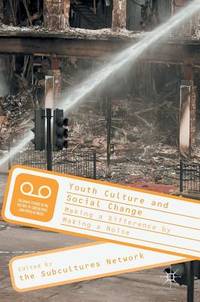
2017x-1137529105Palgrave Macmillan 2017. Hardcover. New. 1st edition. 289 pages. 8.50x6.00x1.00 inches. Palgrave Macmillan hardcover
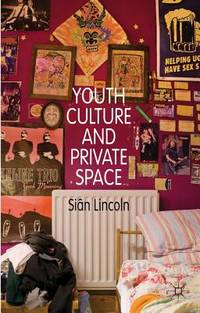
2012x-0230233260Palgrave Macmillan 2012. Hardcover. New. 2012 edition. 272 pages. 9.00x6.00x1.00 inches. Palgrave Macmillan hardcover
16093631-nnew. unknown
16093631like new. unknown
2012DADAX0230233260MACMILLAN 2012-06-26. 2012. hardcover. New. 6.00x1.00x9.00. Buy with confidence. Excellent Customer Service & Return policy. MACMILLAN hardcover
0230233260.Ghardcover. Good. Access codes and supplements are not guaranteed with used items. May be an ex-library book. hardcover
1349313327.Gpaperback. Good. Access codes and supplements are not guaranteed with used items. May be an ex-library book. paperback
2014x-1349313327Palgrave Macmillan 2014. Paperback. New. 254 pages. 8.50x5.51x0.62 inches. Palgrave Macmillan paperback
2012SONG0230233260MACMILLAN 2012-06-26. 2012. hardcover. Used: Good. 6.00x1.00x9.00. Buy with confidence. Excellent Customer Service & Return policy. MACMILLAN hardcover
ria9781349313327_inpPaperback. New. New Book; Fast Shipping from UK; Not signed; Not First Edition; Siân Lincoln considers the use role and significance of private spaces in the lives of young people. Drawing on extensive ethnographic research she explores the place of 'the private' in youth cultural discourses both historically a paperback
63849103MacMillan pp. xiii 254 . Hardback. New. MacMillan hardcover
1953209565Harper & Brothers 1953. First Edition. Hardcover. Very Good/Very Good. First Edition First Printing. Not price-clipped $2.75 price intact. Published by Harper & Brothers 1953. Octavo. Hardcover. Book is very good. Dust jacket is very good with edgewear. A very scarce copy of this vintage health and science title. 100% positive feedback. 30 day money back guarantee. NEXT DAY SHIPPING! Excellent customer service. All books packed carefully and ship with free delivery confirmation/tracking. All books come with free bookmarks. Ships from Sag Harbor New York. Harper & Brothers hardcover
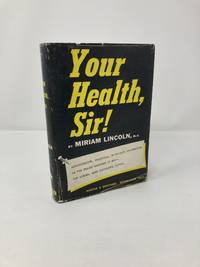
19532549<p>From the Preface: "This book was begun during Jess's funeral. He is the third close friend to be struck down by a fatal heart attack in the last few months.Each has died at a time when he was a most valuable citizen. for coronary heart disease is a prejudiced killer. It does not kill just anyone. It selects men of extra ability drive civic-mindedness and it kills them when they have most to contribute to the communities in which they live."</p><p>This book addresses health issues for that time period.</p><p>Good condition. Yellow coated cloth over boards faded gold gilt on black spine. Slight edge/corner wear. End papers have some glue discoloration. Text is clean. Binding is very good.</p> Harper & Brothers, Publishers hardcover
2004Q-0711211140Frances Lincoln 2004-06-01. Paperback. New. In shrink wrap. Looks like an interesting title! Frances Lincoln paperback
1849531641.Ghardcover. Good. Access codes and supplements are not guaranteed with used items. May be an ex-library book. hardcover
1341001504.Ghardcover. Good. Access codes and supplements are not guaranteed with used items. May be an ex-library book. hardcover