2 886 résultats
80344Paris, Albin Michel, 1983. 13 x 21, 156 pp., nombreuses figures, broché, très bon état.
192231577Leipzig [u.a.] : Internationaler Psychoanalyt. Verl., 1922. IV, 501 S. Kl. 8°. Taschenausg. - 2., durchges. Aufl. OLwd mit Goldpräg. u. Lesebändchen.
Rilegatura in tutta tela editoriale, scurita dal tempo, con fioritura, alcune macchie, ombrature, danni alle punte, strappetti al piede ed alla cima, pagine ingiallite ai bordi, con alcune fig.in nero nei testi, scritte alla guardia anteriore, lungo pensiero del vecchio proprietario alla guardia anteriore. Numero pagine 235 USATO
ISBN : 2866650883. Hermé. 1989. In-8 Carré. Broché. Bon état. Couv. convenable. Dos satisfaisant. Intérieur frais. 211 pages. Illustré de nombreux dessins et photos en noir et blanc. Les techniques de relaxation. L'hypnose et l'autohypnose; le training autogène, le yoga et la méditation. Couverture de Puig Rosado.
1989RO40126055Hermé. 1989. In-8. Broché. Bon état, Couv. convenable, Dos satisfaisant, Intérieur frais. 211 pages. Illustré de nombreux dessins et photos en noir et blanc.. . . . Classification Dewey : 181-Yoga
in-12, 219 pp, broché, couv. Bon état général (traces de mouillures). [CA-9]
br. Secondo Sharon Gannon, la parte più importante della vostra pratica yoga è lo stretto rispetto di una dieta vegetariana, una dieta priva di inutile crudeltà, dolore e ingiustizia. Sharon Gannon offre verità e saggezza da una tradizione di pratica spirituale vecchia di migliaia di anni e spiega come applicare queste pratiche all'interno del nostro stile di vita moderno. Utilizzando i suoi studi della tradizione Vedica, Sharon Gannon spiega come le pratiche yoga siano storicamente e strutturalmente legate ad uno stile di vita etico e vegetariano. Parti integranti l'uno dell'altro, sia lo yoga sia il vegetarianismo formano una struttura per il bilanciamento fisico e spirituale e quando sono praticati insieme spianano la via non solo alla salute fisica, ma anche all'illuminazione spirituale.
ill., br.
Panzironi, Adriano Vivere 120 anni. Le verità che nessuno vuole raccontarti. , Welcome Time Elevator 2018-11-01, Copertina un pò sporca e leggermente rovinata ai margini, tagli un pò sporchi Buono (Good) . <br> <br> Copertina flessibile <br> 720<br> 9788890955501
in 8° br. pp.224, ben tenuto
br. Il maestro B.K.S. lyengar, fondatore del metodo d'insegnamento yoga che porta appunto il suo nome, invita sia i neofiti che i praticanti esperti di yoga a intraprendere un viaggio interiore destinato ad aumentare stabilità fisica, vitalità emotiva, chiarezza mentale, saggezza spirituale e beatitudine spirituale. In questo libro, dallo stile chiaro e brillante, il maestro lyengar esamina il ruolo che le posizioni e le tecniche di respirazione dello yoga giocano nella nostra ricerca dell'interezza, gli ostacoli esterni ed interni che ci impediscono di avanzare lungo il cammino, e il modo in cui lo yoga può aiutarci a vivere in armonia con il mondo circostante. Utilizzando storie di vita personale, esempi presi dalla vita moderna e il suo innato umorismo, ci dimostra che la consapevolezza offerta dallo yoga può migliorare le nostre vite in maniera concreta e profonda.
ill., br. La felicità è davvero a portata di mano, è questo il leitmotiv del libro. Calando la pratica e la visione dello Yoga nella nostra vita quotidiana, possiamo creare spazio per un autentico benessere fisico, mentale ed emotivo. La condizione è che ci si renda disponibili a rileggere la vita di tutti i giorni con la lente dell'apertura al cambiamento. Lavoro, amore, famiglia, fede, stili di vita e di alimentazione, e molti altri aspetti dell'esperienza personale, vengono smontati e rimontati in una prospettiva che fa della condizione umana, di per sé, la più grande opportunità dell'essere. Se riusciamo a intercettare la nostra innata grandezza, non potremo che vivere in un armonioso e costante stato di grazia, alti e bassi inclusi. È il risultato di un processo, di una fantastica avventura di esplorazione che rende la vita un terreno fertilissimo di sperimentazione e scoperta. Con il supporto di una buona pratica Yoga, che agisce contemporaneamente sul corpo fisico, sulla mente, sui sentimenti e sulle emozioni, ce la possiamo fare tutti, a qualunque età e in qualunque condizione. Ci vogliono motivazione e impegno, ma il risultato è certo: lo Yoga rende felici.
Rapisarda Sassoon Cristina Vita da Yogi : perchè lo yoga può rendere più felici. Milano, Red! 2017 italian, 159 SC227L Brossura editoriale, volume come nuovo, copertina e interno in condizioni eccellenti, legatura salda 159 pagine circaCopertina come da foto
Adams Patch Visite a domicilio. Come possiamo guarire il mondo una visita alla volta. , Apogeo 2003, libro complessivamente in buono stato ma nelle prime pagine si trovano sottolineature e segni a matita. Buono (Good) . <br> <br> <br> 130<br> 8873034934
2007DADAX0893892904Himalayan Institute Press 2020-07-07. paperback. New. 5.61x1.80x8.51. Buy with confidence. Excellent Customer Service & Return policy. Himalayan Institute Press paperback
ill., br. Il libro è un'opera poetica che rivela il senso profondo della quotidianità attraverso un'immersione nella filosofia tantrica. Christian Pisano segue da trent'anni con sincerità e devozione lo yoga del suo unico maestro B.K.S. Iyengar, e arricchisce con questo volume la sua visione della pratica attraverso le colorazioni del pensiero tantrico. Un pensiero che lo ha segnato nel profondo per la sua visione non-duale della nostra natura (tutto è riconducibile a un unico principio ontologico, Shiva, perciò c'è identità tra individui, universo e Dio. Ogni parola, ogni frase di questo testo contiene spunti di riflessione nell'approccio contemplativo degli asana: l'autore suggerisce al praticante una via che conduce alla fonte originale degli asana, quale invito per scongiurare il pericolo di una pratica sempre più votata alla standardizzazione. Introduzione di Mark Dyczkowski.
Thakar, Vimala Vimala commenta la Bhagavadgita. Capitoli 1-12. , Edizioni Mediterranee 2008-06-26, Ottimo (Fine) . <br> <br> Copertina flessibile <br> 296<br> 9788827219874
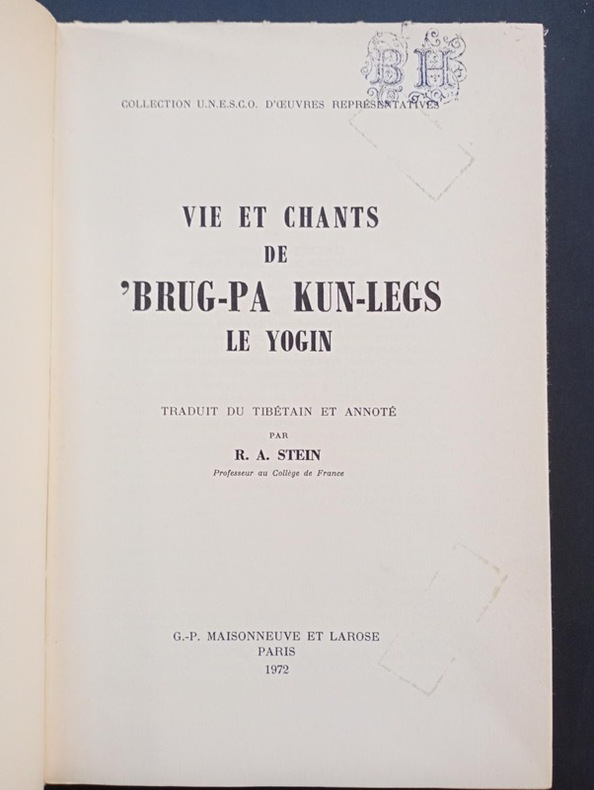
1972133931Paris, G.-P. Maisonneuve et larose 1972 In-8 broché 25,2 cm sur 16,6. 446 pages. Bon état d’occasion.
ISBN : 2855662060. Prosveta. 1982. In-12 Carré. Broché. Etat d'usage. Couv. légèrement passée. Dos fané. Intérieur frais. 146 pages. Revêtement plastifié de la couverture se détachant. Collection Izvor n° 201.
1982RO40129889Prosveta. 1982. In-12. Broché. Etat d'usage, Couv. légèrement passée, Dos fané, Intérieur frais. 146 pages. Revêtement plastifié de la couverture se détachant.. . . . Classification Dewey : 181-Yoga
198017903Frankfurt am Main, Verlag Bruno Martin, 1980. 141 S. 8° (21cm), OKart.
Mario Gianoli d'Artogna Venture di mare. , Nistri - Lischi Pisa 1969, IL TAGLIAMARE N. 4 Copertina flessibile ombrata e pagine leggermente ing Buono (Good) . <br> <br> <br> 217<br>
About The Book : It teaches that desires and wants are in man, that the power of supply is also in man; and that whatever and whenever a desire, a want, a prayer, has been fulfilled, it was out of this infinite magazine that the supply came, and not from any supernatural being. The idea of supernatural beings may rouse to a certain extent the power of action in man, but it also brings spiritual decay. It brings dependence; it brings fear; it brings superstition. It degenerates into a horrible belief in the natural weakness of man. There is no supernatural, says the Yogi, but there are in nature gross manifestations and subtle manifestations. The subtle are the causes, the gross the effects. The gross can be easily perceived by the senses; not so the subtle. The practice of Raja Yoga will lead to the acquisition of the more subtle perceptions. All the orthodox systems of Indian philosophy have one goal in view, the liberation of the soul through perfection. The method is by Yoga. The word Yoga covers an immense ground, but both the Sdnkhya and the Veddntist Schools point to Yoga in some form or other. The subject of the first lectures in the present book is that form of Yoga known as Raja Yoga. The aphorisms of Patanjali are the highest authority and text book on Raja Yoga. Our knowledge is based upon experience. What we call inferential knowledge, in which we go from the less general to the more general, or from the general to the particular, has experience as its basis. In what are called the exact sciences. About The Author : Swami Vivekananda (12 January 1863 – 4 July 1902), born Narendranath Datta was an Indian Hindu monk, philosopher, author, religious teacher, and the chief disciple of the Indian mystic Ramakrishna. He was a key figure in the introduction of Vedanta and Yoga to the Western world; and is credited with raising interfaith awareness, and bringing Hinduism to the status of a major world religion. Vivekananda became a popular figure after the 1893 Parliament of Religions in Chicago, where he began his famous speech with the words, "Sisters and brothers of America...," before introducing Hinduism to Americans.He was so impactful at the Parliament that an American newspaper described him as: “an orator by divine right and undoubtedly the greatest figure at the Parliament”. After great success at the Parliament, in the subsequent years, Vivekananda delivered hundreds of lectures across the United States, England and Europe, disseminating the core tenets of Hindu philosophy, and founded the Vedanta Society of New York and the Vedanta Society of San Francisco (now Vedanta Society of Northern California), both of which became the foundations for Vedanta Societies in the West. Vivekananda's success led to a change in mission, namely the establishment of Vedanta centres in the West. Vivekananda adapted traditional Hindu ideas and religiosity to suit the needs and understandings of his western audiences, who were especially attracted by and familiar with western esoteric traditions and movements like Transcendentalism and New thought. An important element in his adaptation of Hindu religiosity was the introduction of his "four yogas" model, which includes Raja yoga, his interpretation of Patanjali's Yoga sutras, which offered a practical means to realise the divine force within which is central to modern western esotericism.In 1896, his book Raja Yoga was published, becoming an instant success; it was highly influential in the western understanding of yoga, in Elizabeth de Michelis's view marking the beginning of modern yoga.
117888aafNew York, The Baker and Taylor Company, MCMIX, 1909, sm. in-8vo, frontispiece-portrait + 140 p., clothbound. Fine copy.