3 188 résultats
9761Paris (8, rue de Nesle). Directeur-éditeur : Jean-Jacques Pauvert. In-4° agrafé. 5 numéros ont paru en 5 livraisons, d'avril 1971 à mai 1972. (Destribats, 768) // N° 1 : " Le Tarot ", par Jean-Marie Lhôte. N° 2 : " Position politique du surréalisme ", par André Breton, suivi de " Discours au Congrès des écrivains, et " Du temps que les surréalistes avaient raison " (tous ces textes datent de 1935). N° 3 : " Les Nouveaux dessinateurs " (Béringer, Bonnaffe, Boogaerts, Cousin, Cauquil, Guitton, Henich, Nicoulaud, Zim). N° 4 : " A-t-on lu Rimbaud ? ", par Robert Faurisson, suivi de " L'Affaire Rimbaud ". N° 5 : " La Mort des Halles ou la Destruction des Pavillons Baltard ".
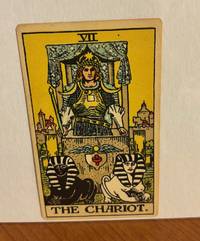
192016446London:: William Rider & Son c1920-1940. 70 x 118 mm. 2.75 x 4.75 inches. Single card. Original Rider Waite Tarot deck card. The Chariot. Card VII. from the Major Arcana. From the original early editions of William Rider & Sons printing of A.E. Waites tarot deck. Excellent condition. Full color. Brown crackle backed design. A rare and beautiful card from the most famous tarot deck ever printed. At time of description we locate no other comparable singles for sale. We find only one complete deck of Pam C printing for sale at five thousand dollars. 70 x 118 mm. 2.75 x 4.75 inches. The Rider-Waite tarot is likely the most popular and famous tarot card reading deck ever printed. It was first printed and published by William Rider & Son in 1909 printed 1910 after the instruction of well known occultist and academic mystic A. E. Arthur Edward Waite. It was illustrated by Pamela Colman Smith. It is estimated that over 100 million copies of the Rider-Waite deck have circulated over the last century. The symbols and imagery were influenced by the 19th-century magician and occultist Eliphas Levi as well as teachings of the Hermetic Order of the Golden Dawn. The first printing was extremely limited. The Pam A deck was published from 1910-1920. Pam C was published 1920-1928. Pam B published 1931-1940. The deck was not printed again until much later in the 1970s. The difference between the early editions are distinct by outline artwork colors and lettering. The letters A B. C. and D were given at random and do not always refer to the order of publication. The easiest way to clarify which edition is by the ÒThe SunÓ card in each deck it is a bit more distinct in each edition. However because our deck was incomplete in the first place and missing ÒThe SunÓ card we could only match by color and design. Our strong belief backed by experience and reference is that our cards for sale are from the PAM C 1920-2928 or PAM B 1931-1940 decks. The colors designs and brown crackled backs support this. Please see The World of Playing Cards Rider Waite Tarot Early Editions for reference. William Rider & Son, unknown
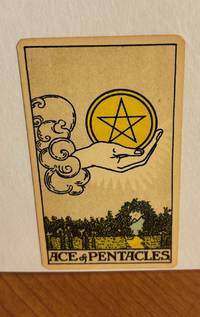
192016449London:: William Rider & Son c1920-1940. 70 x 118 mm. 2.75 x 4.75 inches. Single card. Original Rider Waite Tarot deck card. Ace of Pentacles. from the Minor Arcana. From the original early editions of William Rider & Sons printing of A.E. Waites tarot deck. Excellent condition. Full color. Brown crackle backed design. A rare and beautiful card from the most famous tarot deck ever printed. At time of description we locate no other comparable singles for sale. We find only one complete deck of Pam C printing for sale at five thousand dollars. 70 x 118 mm. 2.75 x 4.75 inches. The Rider-Waite tarot is likely the most popular and famous tarot card reading deck ever printed. It was first printed and published by William Rider & Son in 1909 printed 1910 after the instruction of well known occultist and academic mystic A. E. Arthur Edward Waite. It was illustrated by Pamela Colman Smith. It is estimated that over 100 million copies of the Rider-Waite deck have circulated over the last century. The symbols and imagery were influenced by the 19th-century magician and occultist Eliphas Levi as well as teachings of the Hermetic Order of the Golden Dawn. The first printing was extremely limited. The Pam A deck was published from 1910-1920. Pam C was published 1920-1928. Pam B published 1931-1940. The deck was not printed again until much later in the 1970s. The difference between the early editions are distinct by outline artwork colors and lettering. The letters A B. C. and D were given at random and do not always refer to the order of publication. The easiest way to clarify which edition is by the ÒThe SunÓ card in each deck it is a bit more distinct in each edition. However because our deck was incomplete in the first place and missing ÒThe SunÓ card we could only match by color and design. Our strong belief backed by experience and reference is that our cards for sale are from the PAM C 1920-2928 or PAM B 1931-1940 decks. The colors designs and brown crackled backs support this. Please see The World of Playing Cards Rider Waite Tarot Early Editions for reference. William Rider & Son, unknown
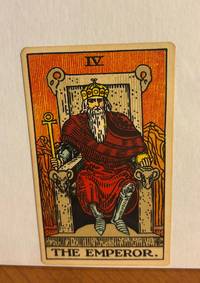
192016447London:: William Rider & Son c1920-1940. 70 x 118 mm. 2.75 x 4.75 inches. Single card. Original Rider Waite Tarot deck card. The Emperor. Card IV. from the Major Arcana. From the original early editions of William Rider & Sons printing of A.E. Waites tarot deck. Excellent condition. Full color. Brown crackle backed design. A rare and beautiful card from the most famous tarot deck ever printed. At time of description we locate no other comparable singles for sale. We find only one complete deck of Pam C printing for sale at five thousand dollars. 70 x 118 mm. 2.75 x 4.75 inches. The Rider-Waite tarot is likely the most popular and famous tarot card reading deck ever printed. It was first printed and published by William Rider & Son in 1909 printed 1910 after the instruction of well known occultist and academic mystic A. E. Arthur Edward Waite. It was illustrated by Pamela Colman Smith. It is estimated that over 100 million copies of the Rider-Waite deck have circulated over the last century. The symbols and imagery were influenced by the 19th-century magician and occultist Eliphas Levi as well as teachings of the Hermetic Order of the Golden Dawn. The first printing was extremely limited. The Pam A deck was published from 1910-1920. Pam C was published 1920-1928. Pam B published 1931-1940. The deck was not printed again until much later in the 1970s. The difference between the early editions are distinct by outline artwork colors and lettering. The letters A B. C. and D were given at random and do not always refer to the order of publication. The easiest way to clarify which edition is by the ÒThe SunÓ card in each deck it is a bit more distinct in each edition. However because our deck was incomplete in the first place and missing ÒThe SunÓ card we could only match by color and design. Our strong belief backed by experience and reference is that our cards for sale are from the PAM C 1920-2928 or PAM B 1931-1940 decks. The colors designs and brown crackled backs support this. Please see The World of Playing Cards Rider Waite Tarot Early Editions for reference. William Rider & Son, unknown
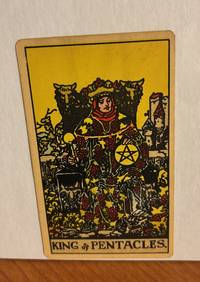
192016451London:: William Rider & Son c1920-1940. 70 x 118 mm. 2.75 x 4.75 inches. Single card. Original Rider Waite Tarot deck card. King of Pentacles. from the Minor Arcana. From the original early editions of William Rider & Sons printing of A.E. Waites tarot deck. Excellent condition. Full color. Brown crackle backed design. A rare and beautiful card from the most famous tarot deck ever printed. At time of description we locate no other comparable singles for sale. We find only one complete deck of Pam C printing for sale at five thousand dollars. 70 x 118 mm. 2.75 x 4.75 inches. The Rider-Waite tarot is likely the most popular and famous tarot card reading deck ever printed. It was first printed and published by William Rider & Son in 1909 printed 1910 after the instruction of well known occultist and academic mystic A. E. Arthur Edward Waite. It was illustrated by Pamela Colman Smith. It is estimated that over 100 million copies of the Rider-Waite deck have circulated over the last century. The symbols and imagery were influenced by the 19th-century magician and occultist Eliphas Levi as well as teachings of the Hermetic Order of the Golden Dawn. The first printing was extremely limited. The Pam A deck was published from 1910-1920. Pam C was published 1920-1928. Pam B published 1931-1940. The deck was not printed again until much later in the 1970s. The difference between the early editions are distinct by outline artwork colors and lettering. The letters A B. C. and D were given at random and do not always refer to the order of publication. The easiest way to clarify which edition is by the ÒThe SunÓ card in each deck it is a bit more distinct in each edition. However because our deck was incomplete in the first place and missing ÒThe SunÓ card we could only match by color and design. Our strong belief backed by experience and reference is that our cards for sale are from the PAM C 1920-2928 or PAM B 1931-1940 decks. The colors designs and brown crackled backs support this. Please see The World of Playing Cards Rider Waite Tarot Early Editions for reference. William Rider & Son, unknown
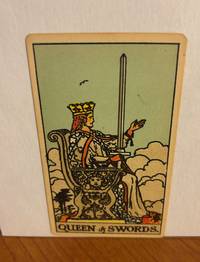
192016462London:: William Rider & Son c1920-1940. 70 x 118 mm. 2.75 x 4.75 inches. Single card. Original Rider Waite Tarot deck card. Queen of Swords. from the Minor Arcana. From the original early editions of William Rider & Sons printing of A.E. Waites tarot deck. Excellent condition. Full color. Brown crackle backed design. A rare and beautiful card from the most famous tarot deck ever printed. At time of description we locate no other comparable singles for sale. We find only one complete deck of Pam C printing for sale at five thousand dollars. 70 x 118 mm. 2.75 x 4.75 inches. The Rider-Waite tarot is likely the most popular and famous tarot card reading deck ever printed. It was first printed and published by William Rider & Son in 1909 printed 1910 after the instruction of well known occultist and academic mystic A. E. Arthur Edward Waite. It was illustrated by Pamela Colman Smith. It is estimated that over 100 million copies of the Rider-Waite deck have circulated over the last century. The symbols and imagery were influenced by the 19th-century magician and occultist Eliphas Levi as well as teachings of the Hermetic Order of the Golden Dawn. The first printing was extremely limited. The Pam A deck was published from 1910-1920. Pam C was published 1920-1928. Pam B published 1931-1940. The deck was not printed again until much later in the 1970s. The difference between the early editions are distinct by outline artwork colors and lettering. The letters A B. C. and D were given at random and do not always refer to the order of publication. The easiest way to clarify which edition is by the ÒThe SunÓ card in each deck it is a bit more distinct in each edition. However because our deck was incomplete in the first place and missing ÒThe SunÓ card we could only match by color and design. Our strong belief backed by experience and reference is that our cards for sale are from the PAM C 1920-2928 or PAM B 1931-1940 decks. The colors designs and brown crackled backs support this. Please see The World of Playing Cards Rider Waite Tarot Early Editions for reference. William Rider & Son, unknown
11616Apt. Nouvelle Société Morel. Collection " L'Encyclopédie du Tarot ". 1977. In-8° oblong broché. 87 pages. E.O. Pas d'indications de tirage.
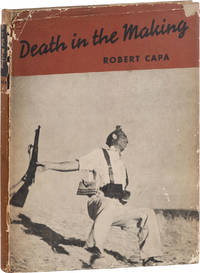
193881496New York: Covici-Friede 1938. First Edition. First Printing. Quarto 28cm; taupe cloth blocked and titled in black on spine and front cover; dustjacket; unpaginated 96pp; photographically illustrated. Gently spine-sunned lightly shelfworn with foxing to spine joints board edges and upper edge of textblock; pronounced offsetting to gutters at endpapers from binder's glue though text and illustrations are mostly clean; triangular loss to upper right corner of p.50-51 3.5" x 3.25" x 1 5/8" with the torn corner loosely laid in; just Very Good. Dustjacket is unclipped priced $2.50 spine-sunned showing moderate wear several chips tears and attendant creases with a half-dozen or so tears archivally reinforced on verso; Good or better. <br /> <br /> One of the definitive photobooks of the 20th century and an essential title in any collection of books on the Spanish Civil War. The untitled jacket image capturing the moment of death of a militiaman on the Cordoba front established Capa's reputation as one of the great battlefield photographers of all time and remains one of the most recognizable photographs of the Twentieth Century. PARR-BADGER I:139. 81496. Covici-Friede unknown
2081002109001663Taro Tanaka 60th Birthday Commemorative Work Support Association N.A. Soft Cover. Fine. Number of pages: 1 book Size: 26cm Taro Tanaka 60th Birthday Commemorative Work Support Association paperback
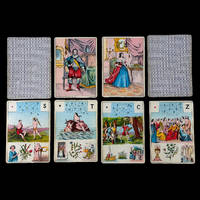
1845121<p>Original complete divination card deck</p><p><em>Grand Jeu de Mlle Le Normand</em></p><p>The most used divination deck beside Tarots</p><p>Card Deck<em>. </em><em>Grand Jeu de Mlle Le Normand</em>. Paris B.P. Grimaud c.a. 1845.</p><p>Complete deck 128 x 9 cm 54 chromolithographic cards printed on thick cardboard with French suit-marks. Each card except for the Querent cards includes a variety of zodiacal classical and modern images. In addition there is a miniature playing card illustration in the top left corner and a letter of the alphabet in the top right. The two Querent cards representing a man and a woman depict figures dressed in 17th-century clothing. The backs of the cards are adorned with violet geometric designs with rounded corners.</p><p>The <em>Grand Jeu de Mlle Lenormand </em>takes its name from the famous French bookseller necromancer fortune-teller and cartomancer Marie Anne Lenormand although there is no definitive evidence that these cards were used by Lenormand herself.</p><p>Her deck was later reprinted in English-speaking countries under the name: <em>Grand Jeu Lenormand Astro Mythological Cards</em>.</p><p><em>The Grand Jeu de Mlle Lenormand </em>is known for its intricate and intellectual iconography featuring complex scenes based on Greek mythology. Each card includes multiple layers of symbolism including references to astrology alchemy and divination.</p><p>Each card features:</p><p><!-- if !supportLists-->· <!--endif-->A playing card reference</p><p><!-- if !supportLists-->· <!--endif-->An astrological reference/constellation</p><p><!-- if !supportLists-->· <!--endif-->A letter of the alphabet</p><p><!-- if !supportLists-->· <!--endif-->A central image which is a particular scene from Greek mythology</p><p><!-- if !supportLists-->· <!--endif-->Two further smaller scenes depicted on the bottom left and bottom right of the card</p><p><!-- if !supportLists-->· <!--endif-->A particular flower bottom centre.</p><p>The primary elements for divination are the central image and the two smaller scenes at the bottom with the other symbols providing additional context and meaning.</p><p>The 52 all but the Querent cards cards can be divided in 5 categories :</p><p><!-- if !supportLists-->· The Conquest of the Golden Fleece which represents Business 6 cards</p><p><!-- if !supportLists-->· <!--endif-->The Trojan War representing the Right of the Strong over the Weak 9 cards</p><p><!-- if !supportLists-->· <!--endif-->Hermetic Knowledge based on alchemy which represents Marriage and more generally relations between people. 7 cards</p><p><!-- if !supportLists-->· <!--endif-->The Zodiac Cards representing an amount of Time. 12 cards</p><p><!-- if !supportLists-->· <!--endif-->The Unexpected. 18 cards.</p><p>Marie Anne Adelaide Lenormand 1772–1843 also known as Marie Anne Le Normand was a renowned French bookseller necromancer fortune-teller and cartomancer especially famous during the Napoleonic era. It is said that notable figures such as Marat Robespierre and Saint-Just sought her counsel and received ominous predictions of their deaths. She is also reputed to have had connections with Empress Joséphine and Napoleon Bonaparte as well as Talleyrand the French minister who navigated France through the Congress of Vienna. Lenormand is widely regarded in France as the greatest cartomancer of all time instrumental in the rise of French cartomancy that began in the late 18th century.</p><p>An identical deck can be found in the collection of the Bibliothèque Nationale de France BNF: <u>https://gallica.bnf.fr/ark:/12148/btv1b10510163j/f7.item</u>;</p><p>Conditions: Light marks of use overall in excellent condition.</p><p>References: Catherine Perry Hargrave <em>A History of playing cards</em> Dover publications 2021; Peter Endebrock 2021; Henry Rene D'Allemagne <em>Les cartes à jouer du XIV au XX siècle </em>Paris : Librairie Hachette 1906; W. GURNEY BENHAM History of the Pack and Explanations of Its Many Secrets Read Books 2019;</p> B.P. Grimaud
Jeu de cartes + livret de 85 pages Très bon état . [BU-1]
Hardcover in-8, 447 pages + Jeu de cartes. Bon état . [NV-1]
200808160Niedernhausen, Falken verlag, 1985 ; in-8, 288 pp., cartonnage de l'éditeur. Kartenlegen mit Skat-Lenormand-und Zigeunerblattern.
1996058336Abbeville Press 1996. Book. Fine. Paperback. Still sealed in shrinkwrap. Decorative pack of gift wrap sheets consisting of 4 tarot deck patterns 12 sheets & 12 gift tags. Each perforated sheet unfolds to 19" x 30". A gem of an item. Abbeville Press Paperback
2020062480Fulgur Press 2020. Book. Fine. Hardcover. 1st Edition. Fine hardcover in shimmering white cloth with paper art and silver lettering. Folio 12.2" tall. Fully illustrated with 59 color images 1 black and white. Text in English. Fulgur Press Hardcover
2091502133700018Greater Japan Junior High School Society N.A. Soft Cover. Fine. The book is in fine condition. Greater Japan Junior High School Society paperback
199420129ABBindlach, Gondrom Verlag, 1994. 21 cm, 400 Seiten, mit vielen Abbildungen, kartoniert. Leseknicke im Rücken, Einband etwas berieben, gut erhalten.
1971057250U. S. Games Systems Inc. 1971. Book. Very Good. Tarot Deck. Outer box is rubbed with repaired tears to corners contents excellent with 64 card deck plus several instructional cards and set of three I Ching Coins. 1971 edition. U. S. Games Systems, Inc. unknown
199913442Art Tower Mito Tokyo 1999. paperback. fine. Art Tower Mito, Tokyo unknown
19812090202118102251Shinchosha Shincho Sensho 1981. Soft Cover. Fine. The book is in fine condition. Shinchosha Shincho Sensho paperback
19832080202105600379Kadokawashoten 1983. Soft Cover. Fine. The book is in fine condition. Kadokawashoten paperback
19672090202120101211Published by Kitaura Elementary School 1967. Soft Cover. Fine. Volume: 1 Published by Kitaura Elementary School paperback
19672090202120301210Published by Kitaura Elementary School 1967. Soft Cover. Fine. Volume: 1 Published by Kitaura Elementary School paperback
19842092902138201622Futami shobo 1984. Soft Cover. Fine. Number of pages: 282 pages Size: Shinsho format Number of copies: 1 volume Futami shobo paperback
19352110502150310462Aki Moritsune Taro 1935. Soft Cover. Fine. Volume: 1 Aki Moritsune Taro paperback