16 résultats
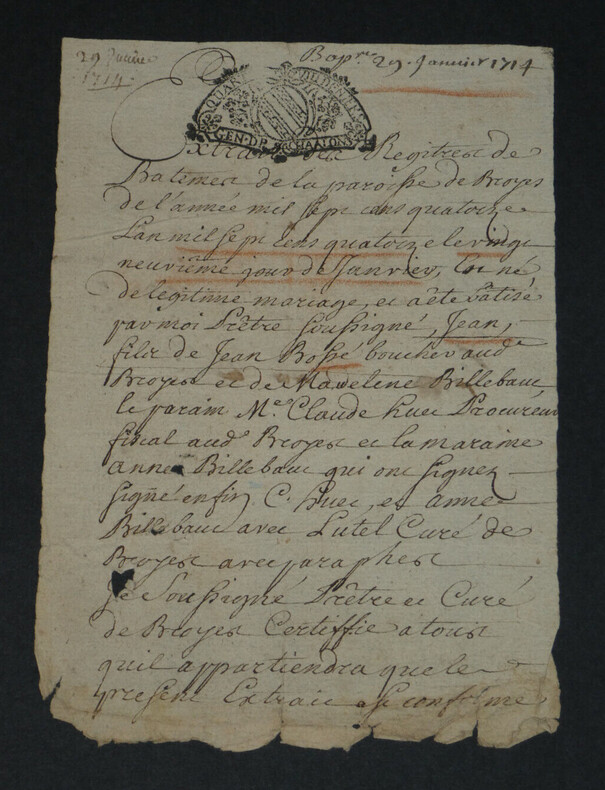
1714boz_004110TIMBRE FISCAL SUR LETTRE DE 1714 - Extrait des registres de Baptême - BROYES Salonnière française TIMBRE FISCAL SUR LETTRE DE 1714, Extrait des registres de Baptême de la paroisse de BROYES de l'année 1714. Dimensions : 12,6 x 18,7 cm État : Voir photos pour plus de détails. Nombre de pages : 2 pages
1766WRCAM54455London 1766. 27-8pp. Dbd. Folio. Light tanning a couple of faint fox marks. Very good. A scarce official Parliamentary printing of an act that amended the Stamp Act repeal. The original repeal still restricted the export of goods to Europe outside of Great Britain. This amendment allowed for export to Ireland as well. Only a handful of copies located by ESTC and OCLC. ESTC N54684. unknown books
175324336A Paris Chez Pissot Libraire Quai De Conti a La Defcente Du Pont-neuf 1753. HARDBAck NODustJacket ISSUED 1st Edition MDCC LIII 1753 EARLY Printing VG/GOOD AS-IS NOJACKET Small Full Brown mottled tan calf LEATHER With Raised Spine Bands & Burgundy Label with Tears Wear chips with Gold Gilt Rubbed 446 Pgs Cover Rub wear & tiny Chips Tears Edges Extremities Interior Nice Tight very light Wrinkling FOX Wear Cover small separation at Bottom spine & light Cracking along Edge but Still Tight small 8vo with Ribbon Bookmark. First Edition. Hard Cover. A Paris Chez Pissot, Libraire, Quai De Conti, a La Defcente Du Pont-neuf hardcover
176637760Paris: Chez J.W. Imprimeur 1766. 8vo. 2 18pp. Small repair to verso of titlepage light occasional foxing. Lacks half title. Late 19th-century three-quarter maroon morocco and marbled boards spine gilt decorative gilt rules on boards marbled endpapers.<br/> <br/>Provenance: William L. Clements bookplate<br/> <br/>William Pitt argues against the Stamp Act from the library of William Clements.<br/> <br/>The second edition published the same year as the first of a scarce work containing extracts from William Pitt's speeches in the House of Commons arguing against the Stamp Act an important entry in the debate. Pitt begins his address to the House of Commons with this question: "There is an idea in some minds that the colonies are virtually represented in the house. I would fain know by whom an American is represented here" Pitt concludes his remarks with "Upon the whole I will beg to leave to tell the house.that the Stamp Act be repealed absolutely totally and immediately.because it was founded on an erroneous principle.that of taking their money out of their pockets without their consent!" This copy once belonged to renowned book collector William L. Clements who gave his collection to the University of Michigan along with the funds to build its rare book library.<br/> <br/>Sabin 63761; American Independence 41b; American Controversy 66-14b. Chez J.W. Imprimeur unknown books
1766WRCAM7151Paris: Chez J.W. Imprimeur 1766. 418pp. Half title. Original blue paper wrappers. Spine somewhat chipped else a very good crisp copy untrimmed. The second edition published the same year as the first of a scarce work containing extracts from William Pitt's speeches in the House of Commons arguing against the Stamp Act an important entry in the debate. Pitt begins his address to the House of Commons with this question: "There is an idea in some minds that the colonies are virtually represented in the house. I would fain know by whom an American is represented here" Pitt concludes his remarks with "Upon the whole I will beg to leave to tell the house.that the Stamp Act be repealed absolutely totally and immediately.because it was founded on an erroneous principle.that of taking their money out of their pockets without their consent!" SABIN 63761. AMERICAN INDEPENDENCE 41b. AMERICAN CONTROVERSY 66-14b. Chez J.W. Imprimeur unknown books
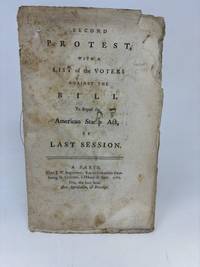
1766WRCAM44802Paris i.e. London: J.W. Imprimeur i.e. J. Almon 1766. 24pp. Modern paper boards printed paper label. Modern bookplate on front pastedown. Very minor soiling and foxing. Very good. In a green half morocco and cloth case. Prints the arguments made by those members of the House of Lords who opposed a repeal of the Stamp Act. The main reason seems to be not that the tax is just but that repealing it would set a bad precedent. This pamphlet also lists the Lords who spoke and voted against the repeal. Their votes would prove to be in vain however as the bill passed both houses and received royal assent on March 18 one week after the Lords' vote. Adams notes an eight-page list of the minority in the House of Commons who voted against the bill to repeal the Stamp Act bound at the end but it seems that format is the exception and that most copies simply contain the TWO PROTESTS. AMERICAN CONTROVERSY 66-27. GOLDSMITHS 10220. HIGGS 3728. SABIN 16839. ESTC T34189. J.W. Imprimeur [i.e. J. Almon] hardcover books
1766246135Paris i.e. London: Chez J.W i.e. Almon 1766. First edition thus first issue with single pagination. 24 pp. 8vo. Later marbled wrappers. First edition thus first issue with single pagination. 24 pp. 8vo. First edition thus incorporating the previously issued Protest and Second Protest against the repeal of the Stamp Act. According to Adams the previously issued A List of the Minority was bound at the rear but it is not present here. Howes C 785; Sabin 16839; Adams Tha American Controversy 66-27 under Great Britain House of Lords; Goldsmiths' 10220; Higgs 3728 Chez J.W [i.e. Almon] unknown books
1766WRCAM44816Paris i.e. London 1766. 16pp. Modern paper boards printed paper label. Minor foxing. Very good. In a green half morocco and cloth case. Scarce separately published issue of this pamphlet usually issued together with the SECOND PROTEST. This work represents the hard-line position of those who wished to retain the Stamp Act despite the American protests. Only eleven copies listed by ESTC. ESTC N63493. AMERICAN CONTROVERSY 66-28b. HOWES C785 "aa." SABIN 66103. hardcover books
1766WRCAM44836Paris i.e. London 1766. 15pp. Modern three-quarter morocco and marbled boards spine gilt. Modern bookplate on front pastedown. Very minor foxing and soiling. Very good. Prints the arguments made by those members of the House of Lords who opposed a repeal of the Stamp Act. The main reason seems to be not that the tax is just but that repealing it would set a bad precedent. This pamphlet also lists the Lords who spoke and voted against the repeal. Their votes would prove to be in vain however as the bill passed both houses and received royal assent on March 18 one week after the Lords' vote. This work was also issued as part of CORRECT COPIES OF TWO PROTESTS AGAINST THE BILL TO REPEAL THE AMERICAN STAMP ACT. the same year. In this issue the first paragraph incorrectly reads: "Declaration Bill." Only a handful of copies in ESTC. ESTC T47360. AMERICAN CONTROVERSY 66-29a. HOWES C785 "aa." hardcover books
176683817Paris: Chez J.W. Imprimeur Rue du Colombiere Fauxbourg St. Germain a l'Hotel de Saxe 1766. Stitched Pamphlet. Fair. Octavo. 9 in. x 5 1/2 in. Good thick laid bond. Nibbling to top quarter outer edge of first several pages with no text loss. Soiling smudging wrinkling and two small raisin-size holes to front cover. Speakers on this issue were: 1 Against the Repeal of The Stamp Act: Lord Lyttelton Earl of Bute Earl Gower. 2 For the Repeal: Duke of Newcastle. The 15-page pamphlet concludes with a three- page LIST of the ".LORDS who Voted and Protested against the Repeal of the American Stamp Act March 11 1766"<br /> <br /> Denounces "the growing mischiefs" in America.<br /> <br /> This important legislative record last sold at auction in 1957. Chez J.W. Imprimeur, Rue du Colombiere Fauxbourg St. Germain, a l'Hotel de Saxe unknown
1766WRCAM38951London: J. Almon 1766. 86pp. plus 2pp. of advertisements. Half title. Modern plain blue wrappers paper label. Moderate age-toning else internally clean. Very good. Argues the questions of England's right to tax its dependencies and addresses the issue of the Stamp Act with reference to America. Attributed to one Mr. Gretrix a Dublin lawyer. AMERICAN CONTROVERSY 66-7. HOWES A297. SABIN 1849. J. Almon unknown books
176630356London: Printed by Mark Baskett Printer to the King's Most Excellent Majesty. 1766. Folio. 2 823-826 pp as issued. Lightly toned spine expertly reinforced. Very Good. <br/><br/> This Act remitted the penalties imposed on persons who had violated the just-repealed Stamp Act which had sparked defiance and civil disorder in the Colonies. It also validated all documents which had been issued in violation of the Stamp Act. Many Colonists had violated the Act because they were unable "to procure Paper Vellum or Parchment duly stamped as required by the said Act; and that such Persons for want of the same and other Persons residing elsewhere by reason thereof may have committed many Offences contrary to the Directions and true Intent and Meaning of the said Act." They are thus restored to the good graces of the Crown.<br/>ESTC N56936 5- Lincoln's Inn Newberry U NC U VA John Carter Brown as of December 2018. Printed by Mark Baskett, Printer to the King's Most Excellent Majesty... unknown books
176635807Boston: Edes & Gill 1766. Broadsheet newspaper extra. 2pp. Disbound.<br/> <br/>Provenance: Hannibal Hamlin inked stamp<br/> <br/>News of the repeal of the Stamp Act and the celebrations in Boston.<br/> <br/>Although news of the repeal of the Stamp Act had first reached Boston on May 16 1766 subsequent issues of Edes and Gill's Boston Gazette were devoted to the event. In this June 2 newspaper extra the first column and a half of the first page is given over to a lengthy critique of Governor Francis Bernard written anonymously by Dr. Joseph Warren under the pen name Paskalos under the above headline. During the Stamp Act controversy Bernard had written letters to the London Board of Trade which were deemed by the Sons of Liberty as unsympathetic to the American position. This harsh letter by Warren would be the first of many in a tirade against the colonial governor eventually leading Bernard to attempt and arrest Edes and Gill for libel. Also included in this newspaper extra are reports from the various Stamp Act celebrations in the colonies most notably in Philadelphia New York Charleston South Carolina and Boston. An extract from a Hartford letter however reports that a celebration with fireworks had caused a school house to explode resulting in significant casualties. Edes & Gill unknown books
1766WRCAM54982London: Printed for R. Dymott.and J. Almon 1766. 3-42pp. plus 1p. advertisement for "Richard Dymott Book-Binder." Lacks half title. Antique-style three-quarter calf and marbled boards spine gilt raised bands gilt leather label. Mild toning and foxing. Very good. An anonymous pamphlet purporting to examine the case of the American colonies from a legal perspective printed the year after the infamous Stamp Act. The author concludes that the colonies have no right to resist or claim exemption from taxation from the mother country. "Opposes the stand taken by the colonies" - Sabin. A relatively early entry into the pamphlet war that erupted after the Stamp Act. ESTC T57093. AMERICAN CONTROVERSY 66-20. SABIN 23372. Printed for R. Dymott...and J. Almon hardcover books
17651173761765. First Edition. AMERICAN REVOLUTION STAMP ACT ELIOT Andrew. A Sermon Preached Before His Excellency Francis Bernard Esq And the Honorable House of Representatives Of the Province of the Massachusetts-Bay in New England May 29th 1765. Being the Anniversary for the Election of His Majesty's Council for the Province. Boston: Green and Russell 1765. Slim octavo period-style full speckled calf gilt black morocco spine label uncut; pp. 3-5 6-59 1. $3800.First edition of the influential Boston pastor's most famous and most controversial work his May 29 1765 Election Day Sermon delivered two months after passage of the incendiary Stamp Actboldly proclaiming ""when tyranny is abroad 'submission is a crime'""one of only 700 copies published.Macaulay wrote that the Stamp Act of 1765 will be remembered ""as long as the globe lasts."" It marked a sharp break from the past as ""the first direct internal tax ever to be laid on the colonies by Parliament; indeed the first tax of any sort other than customs duties"" Morison 185. ""In the summer of 1765 as colonists waited for the stamp tax to go into effect voices of protest grew louder and drew support from many ministers"" Stout New England Soul 270. In particular the sermons of pastors such as Jonathan Mayhew and Andrew Eliot ""took on new vigor new relevance and meaning."" In Eliot's May 29 1765 Election Day sermon published the same year his words were infused with ""direct power for to proclaim from the pulpit in the year of the Stamp Act and before the assembled magistrates of Massachusetts that when tyranny is abroad 'submission is a crime' was an act of political defiance"" Bailyn Ideological Origins 6. Mindful of his audience which included Britain's powerful Massachusetts-Bay Governor Francis Bernard Eliot here underscores the colonists' objections by invoking their rights as Englishmen and the tradition of common law. ""Our fathers dearly bought the privileges we enjoy"" he declares: ""It is evident when they left their native land they thought the rights of Englishmen would follow them."" Yet throughout even as he might couch his language there remains his ""unexpectedly fierce insistence"" that submission to the perversion and misuse of power is not simply a crime: it is ""an offence against the state an offence against mankind an offence against God.'""Eliot's sermon distinctly offered a ""fine articulation of a tradition of thought familiar to every New Englander if not to every American exemplifying at the outset of the Revolutionary era a substratum of belief that underlay the developing rebellion."" Soon his correspondence ""initiated by the publication of the election sermon expresses with unique clarity the transformation of election-sermon platitudes into revolutionary imperatives. It is probably the most vivid expression of this transforming or triggering process in the entire literature of the Revolution"" Bailyn Faces of Revolution 111-13. In 1768 confronted with the arrival of a British warship and four regiments of troops Eliot would write to Harvard benefactor Thomas Hollis: ""'To have a standing army! Good God! What can be worse to a people who have tasted the sweets of liberty!' He was convinced he wrote that if the English government 'had not had their hands full at home they would have crushed the colonies"" Bailyn Ideological 114. ""Eliot weathered the Revolutionary War in Boston and at the request of General Washington made the official thanksgiving sermon on March 28 1776. He died on September 13 1778"" Harvard University. First edition: title page found with ""Price two shillings"" or without this copy no priority established. Published by the printers to the House of Representatives who were paid ""in July of 1765 for about 700 copies"" Adams Independence 12a. Without half title. Adams Controversy 65-8a. Newberry Library American Revolutionary War Pamphlets 187. Evans 9964. Sabin 22124. Text fresh last few leaves with expert paper repair to upper gutter's edge. unknown
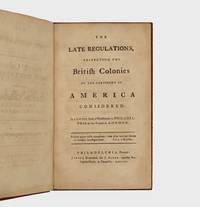
1766376944London: J. Almon 1766. First English edition. 62pp. Without the terminal ad leaf. 8vo. Modern full speckled calf spine gilt red morocco label. First English edition. 62pp. Without the terminal ad leaf. 8vo. The scarce first British edition after the first edition printed in Philadelphia in December 1765 of Dickinson's first work an important tract against the Stamp Act. Here Dickinson argued against stricter trade regulations that drained the colonies of currency and warned that taxing the colonies without their consent was a step toward slavery. "Considered only as an essay in economic theory the pamphlet is notable for its discussion of paper money of flows of trade and of the mechanisms and effects of taxation are sophisticated for the time.But the essay is more than a technical treatise. Stylistically it has the vivid phraseology the dramatic exclamatory italicization and paragraphing and the aptness of illustration that would soon make Dickinson the most widely read pamphleteer in the colonies" Bailyn. <br /> <br /> This can be exemplified by the culminating section of this work in which Dickinson writes: "Late measures have indeed excited an universal and unexampled grief and indignation throughout the colonies. What man who wishes the welfare of America can view without pity without passion her restricted and almost stagnated trade with its numerous train of evils-taxes torn from her without her consent-Her legislative assemblies the principal pillars of her liberty crushed into insignificance-A formidable force established in the midst of peace to bleed her into obedience-The sacred right of trial by jury violated by the erection of arbitrary and unconstitutional jurisdictions-and general poverty discontent and despondence stretching themselves over his unoffending country"<br /> <br /> Indeed it was in the wake of the dissent following the Stamp Act that Dickinson emerged as arguably the first hero of the Revolution an important spokeman against British tyranny. His Letters from a Farmer in Pennsylvania published in 1768 would put him at the forefront of the Patriot movement and the philosophical underpinnings of that work can be found in his Late Regulations. It is widely believed that Benjamin Franklin then in London as the colonial agent for Pennsylvania arranged for the work's publication there timed with his famous testimony before the House of Commons protesting the Stamp Act.<br /> <br /> Both the Philadelphia and London first editions of Dickinson's Late Regulations are considerably more scarce than his Letters from a Farmer with only a single example of either edition appearing in the auction records in the last quarter century. American Controversy 65-5b; Howes D238; Sabin 20043; Bailyn Pamphlets of the Revolution 14 J. Almon unknown