VULTEJUS, HermannAntiquariat.de

129 résultats
1600615097Marburg, Egenolff, 1600. 4to. 4 Bl., 852 S., 26 Bl. (d.l.w.). Pergament d. Zeit (berieben u. fleckig, Vorderdeckel mit starkem Feuchtigkeitsschaden, Innengelenke gebrochen, Bezug an den Kanten teils aufgeplatzt). [2 Warenabbildungen]
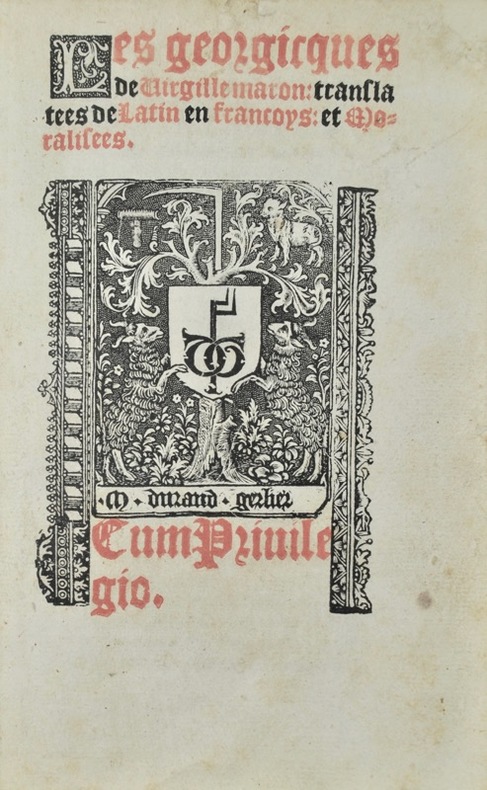
15199666Paris, Durand Gerlier, 1519. In-8 gothique de (148) ff. (a8, A-R8, S4), maroquin vert, filet à froid, encadrement central d’un triple filet à froid avec fleurons d’angle de style italien, dos orné de filets à froid et fers dorés, filets intérieurs et fleurs de lis aux angles, tranches dorées (reliure du XIXe siècle).
1582627856Basel, Oporinus, 1582. 11 Bl., 334 S., 2 Bl. - Angebunden: Gribaldi, Matteo. Tractatus de omni genere homicidij. Speyer, B. Albin 1582. 4 Bl., 101 S., 8 Bl. Pergament d. Zeit mit handschriftlichem Rückentitel (etwas fleckig, Innengelenke angebrochen bzw. wurmstichig, Schließbänder fehlen). [3 Warenabbildungen]
1573610737Basel, Oporinus, 1573. 8 Bl., 611 S., 22 Bl. Mit 3 gefalteten Tabellen. Flexibler Pergament d. Zeit mit Schließbändern (angestaubt). [2 Warenabbildungen]
156214710Lugduni, Apud Antonium Vincentium, 1562. In-8 de 700-(2) pp. 1 f.bl., caractères italiques, manchettes, vélin souple à rabats, dos à nerfs, titre manuscrit sur le dos, traces de lacet (reliure de l'époque).
156942200Paris, De l'Imprimerie de Fédéric Morel, 1569. In-8 de 8 ff., maroquin rouge, triple filet doré sur les plats, dos orné à nerfs, dentelle intérieure, tranches dorées sur marbrure (Trautz-Bauzonnet).
157042259In Vinetia, appresso Filippo Giunti e fratelli, 1570. In-4 de (16)-282-(34) pp. (sign. * , A , B-V , X ).CASTELVETRO (Lodovico). Correttione d'alcune cose del Dialogo delle lingue di Benedetto Varchi, et vna giunta al primo libro delle Prose di M. Pietro Bembo dove si ragiona della vulgar lingua. Bâle, [Pietro Perna], 1572. In-4 de (8)-290-(16) pp., la pagination 179-184 est répétée, (sign. 2* , a-z , A-Q , le dernier feuillet blanc).Ensemble 1 vol. in-4, veau brun, dos orné à nerfs, armes sur les plats (reliure de l'époque).
152916224Paris, Robert Esienne, 1529. In-folio (29,5 x 20,5 cm) de (8)-182-(22) ff. (sign. *8a-z, A8B, C6), veau fauve à coins de basane olive, dos orné à nerfs, pièce de titre en maroquin rouge, filet à froid d'encadrement sur les plats, tranches rouges (reliure du XVIIIe siècle).
1598127139Paris, Jean Houzé 1598 In-folio 37,5 x 23 cm. Reliure postérieure, dos lisse demi-basane fauve avec report du titre doré, plats en bois sculptés, le premier avec le portrait en pied d’Athena en bas-relief, [6]-889-138-[3] pp., bandeaux, lettrines et culs-de-lampe. Premier plat fendillé, charnières fendillées, 3 premiers feuillets avec réparations marginale et angulaires, mouillure angulaire en continu sur les 100 dernières pages, page de titre postérieure manuscrite.
150897671508 velin à recouvrement, soies vertes (moderne ?). in-8, (14ff. n.c.), 211ff., 1 f., Paris Jean Barbier 1508,
150243414Bologne, Benedetto Faelli, 1502. In-folio de (3) ff. 1 f.bl. ccclxxxix ff. (sign. [*]4 (dernier blanc) a-t6 u4 x-z6 &6 [&]6 [rum]6 π6 A-H6 I-K8 L-Z6 AA-BB6 CC8 DD-OO6 PP7 , exemplaire sans le dernier feuillet blanc), maroquin lie-de-vin aux armes de Joaquín Gómez de la Cortina, dos orné à nerfs, titre et date en pied de dos dorés, tranches dorées (reliure du XIXe siècle).
1584023505Paris Chez Abel L' ANGELIER 1584 un fort volume in-12° (85 x 143mm), [12] ff. (titre, au lecteur, argument, hommage), 1-431 ff., 1 ff. folioté " 434 ", 1 feuillet folioté " 387 ", un feuillet folioté " 434 ", [18] ff. (indice). Reliure ancienne en plein veau marbré, dos à nerfs orné, premier plat aux armes (non identifiés). (reliure restaurée, le premier plat et une partie du dos ont été conservés, le second plat a été renouvelé, mors ouvert au second plat, présence d'une mouillure sur la gouttière, sur la tranche supérieure et sur la plupart des feuillets avec souvent atteinte au texte, numérotation fantaisiste à la signature sur les six premiers feuillets foliotés : au lieu d'avoir " A I - A II - A III - A IIII - A V - A VI " on a " A - B II - A III - B IIII - A V - B VI "). Bandeaux et lettrines gravés sur bois. Un tableau. Dans cette ouvre, Guillaume du Bartas se fait le défenseur des théories géocentriques et de l'astrologie judiciaire. Pour lui, le système de Copernic n'est qu'une chimère. Cette critique se fait au nom de l' encyclopédisme de la Renaissance et de la foi ; Bartas ayant en vue de glorifier Dieu en proposant une lecture poétique du livre du monde (wikipédia). Ex-libris manuscrit et annotations biffées sur le titre. Cette édition comporte les pièces liminaires (poèmes en préface) des réformés : Jean de Serres, Campagnan, Chambrun. Rare deuxième édition au format in-12°.
153111203Venise, Bindoni, Pasini, 1531. Petit in-8 (145 x 95 mm) de 128 ff., veau fauve, dos orné à nerfs, pièces de titre rouge et noire, filet et frise dorés d'encadrement sur les plats (reliure du XVIIIe siècle).
1587131001587 vélin souple. in-8, (2ff.), 251pp., P. Robert Estienne 1587
1580375CGO.J. (um 1580). Kupferstich (Brustbild). Bild- u. Blattgrösse: 28,5 x 19,5 cm. + Wichtig: Für unsere Kunden in der EU erfolgt der Versand alle 14 Tage verzollt ab Deutschland / Postbank-Konto in Deutschland vorhanden +, Abbildung
1572D4701Venice: F. Rampazeto 1572. Hardcover. Very Good. 8vo 175 x 120mm. 48 366pp. Signatures: a-f 8; A-YY 8; ZZ 8 -ZZ7-8 blank. Woodcut printers device on title of basilisk fighting a bird with motto Terrena coelestibus obsunt; in an architectural frame and woodcut historiated headpiece woodcut vignette beginning book of the Institutiones; on leaf 212r a full-page representation of the arbor civilis. Text is all-around gloss; printed in black and red. Dedicatory letter of H. Messaggius to Senator Federicus Baduarius prelim. leafs 2 is dated 1558. Period vellum three raised bands; leaves slightly offset slightly browned; hinge cracked at rear some quires loose rear pastedown glue-stained. The Corpus Iuris Civilis or the Justinian Code was the result of Emperor Justinians desire that existing Roman law be collected into a simple and clear system of laws or code. Tribonian a legal minister under Justinian lead a group of scholars in an effort to codify existing Roman law. The result was the first Justinian Code completed in 529. This code was later expanded to include Justinians own laws as well as two additional books on areas of the law. In 534 the Justinian Code made up of the Code the Digest and the Institutes was completed. Justinians collections were in ancient times always copied separately and afterwards they were printed in the same way. This part of the Institutiones falls under the whole Corpus Iuris Civilis is an early example before the unification under this heading. The present name of Justinians codification was only adopted in the 16th century when it was printed in 1583 by Dionysius Gothofredus. The legal thought behind the Corpus Juris Civilis served as the backbone of the single largest law reform of the modern age the Napoleonic Code which marked the abolition of feudalism. <br/><br/> [F. Rampazeto] hardcover books
1572D4701Venice: F. Rampazeto 1572. Hardcover. Very Good. 8vo 175 x 120mm. 48 366pp. Signatures: a-f 8; A-YY 8; ZZ 8 -ZZ7-8 blank. Woodcut printers device on title of basilisk fighting a bird with motto Terrena coelestibus obsunt; in an architectural frame and woodcut historiated headpiece woodcut vignette beginning book of the Institutiones; on leaf 212r a full-page representation of the arbor civilis. Text is all-around gloss; printed in black and red. Dedicatory letter of H. Messaggius to Senator Federicus Baduarius prelim. leafs 2 is dated 1558. Period vellum three raised bands; leaves slightly offset slightly browned; hinge cracked at rear some quires loose rear pastedown glue-stained. The Corpus Iuris Civilis or the Justinian Code was the result of Emperor Justinians desire that existing Roman law be collected into a simple and clear system of laws or code. Tribonian a legal minister under Justinian lead a group of scholars in an effort to codify existing Roman law. The result was the first Justinian Code completed in 529. This code was later expanded to include Justinians own laws as well as two additional books on areas of the law. In 534 the Justinian Code made up of the Code the Digest and the Institutes was completed. Justinians collections were in ancient times always copied separately and afterwards they were printed in the same way. This part of the Institutiones falls under the whole Corpus Iuris Civilis is an early example before the unification under this heading. The present name of Justinians codification was only adopted in the 16th century when it was printed in 1583 by Dionysius Gothofredus. The legal thought behind the Corpus Juris Civilis served as the backbone of the single largest law reform of the modern age the Napoleonic Code which marked the abolition of feudalism. <br/><br/> [F. Rampazeto] hardcover
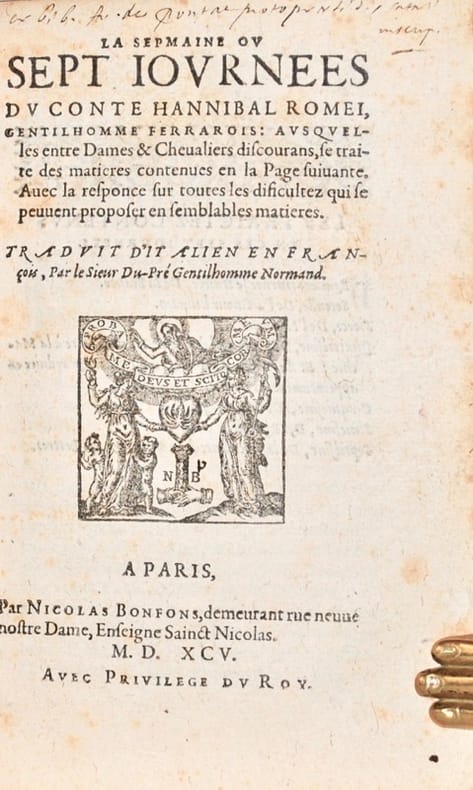
15957977A Paris, Nicolas Bonfons, 1595. In-8 de 8 feuillets non chiffrés (titre, dédicace, table), 199 feuillets chiffrés, 2 feuillets blancs, demi-veau blond à coins, dos orné de filets dorés, pièce de titre en maroquin noir, tranches marbrées (Bauzonnet).
1520146311520 broché - 15 x 20 - 265 pp - année 1950 - les éditions de l'imprimerie nationale de Monaco -
151950071519 Paris, Les Cahiers de la Quinzaine (15e Cahier de la 19e Série, 1930, in 8, broché, 153 pages.
1552186651552 Broché - 10,5 x 17,5 - 596 pp - année 2010 - éditions Presse de la Cité -
150258611502 Broché, bon état, 150x210, 189 gr, 142 pages, illustrations N&B - Introduction de Michel Random
150258591502 Broché, bon état, 150x210, 102 gr, 63 pages - Introduction de Michel Random
150258751502 Broché, très bon état, 150x210, 237 gr, 189 pages, illustrations N&B, Introduction de Michel Random
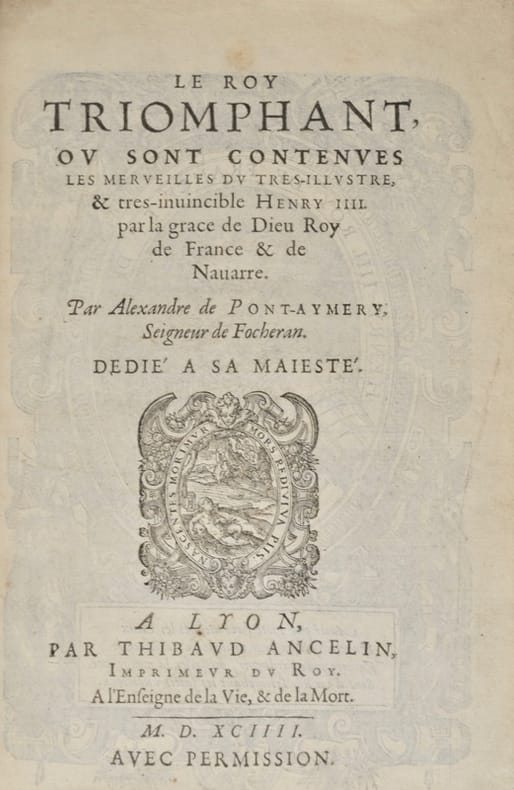
159442198Lyon, Thibaud Ancelin, 1594. In-4 de 120 pp. (sign. (A-P4).Les Piliers d'Estat, dédiez au Roy, par E.D.B. où il est clairement monstré, que la piété & justice sont les vrais fondements des empires, & que sans elles ils ne peuvent longuement subsister. Lyon, Thibaud Ancelin, 1594. In-4 de (8)-44-(2) pp. (sign. A-G4).Les deux pièces reliées en 1 vol. in-4, maroquin brun, décor à la Du Seuil, dos orné à nerfs, dentelle intérieure, tranches dorées (Capé).