BECQUE (Maurice de).Livre Rare Book
297 résultats
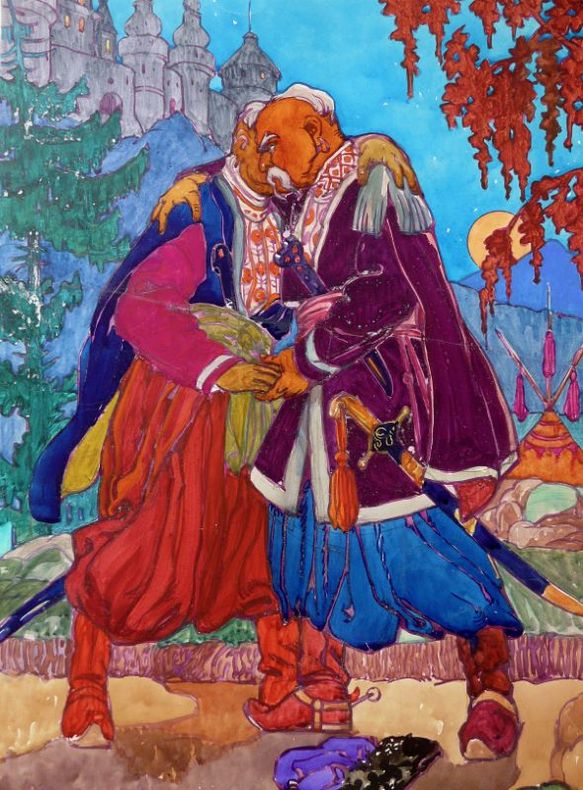
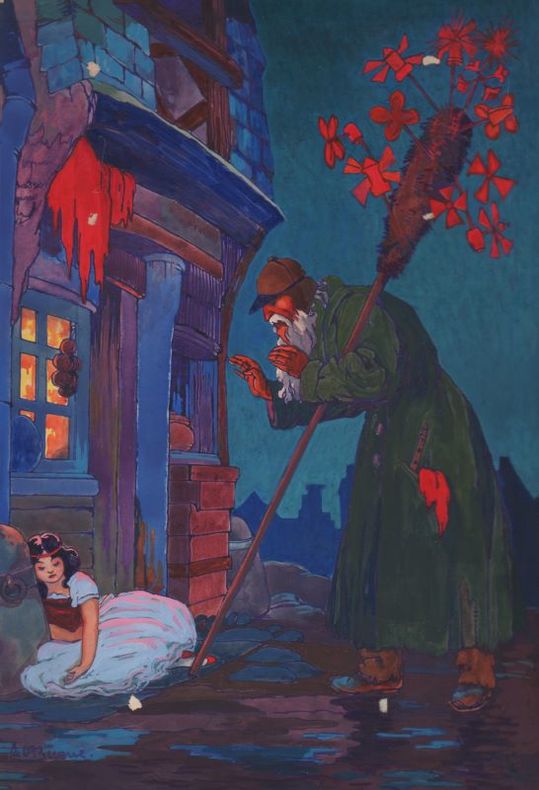
1920222981920 Gouache sur papier fort signée en bas à gauche, (1920), 39 x 26.7 cm ( format à vue), 48 x 31.4 cm (format de la feuille).
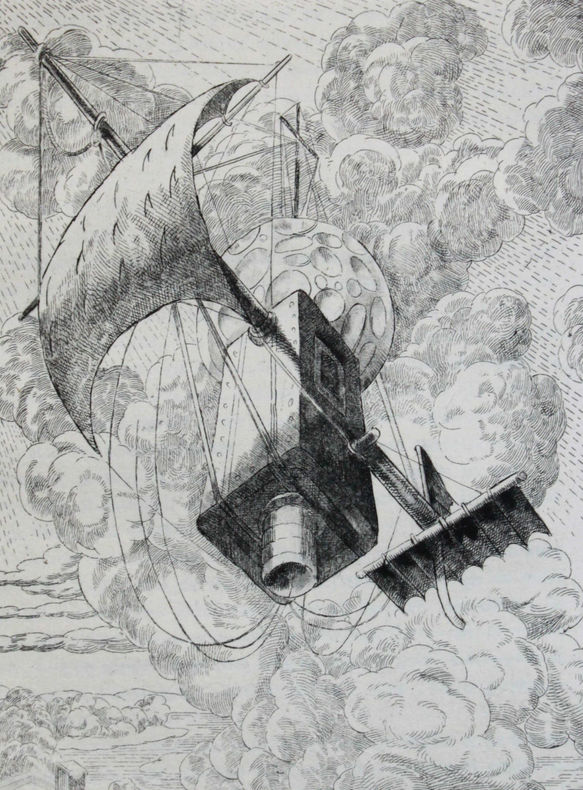
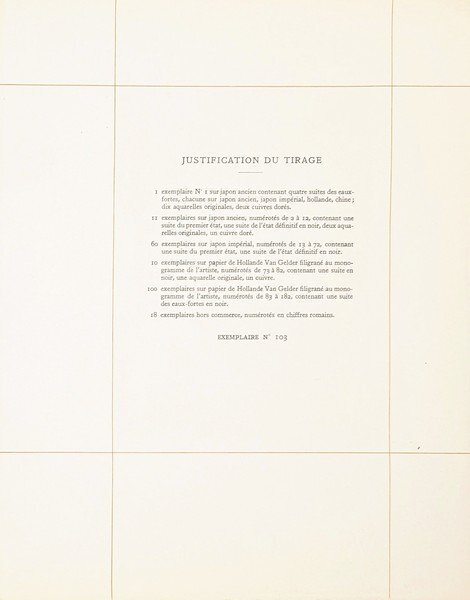
1944AMO-2426Editions des Moulins d'Auvergne, Clermont-Ferrand, 1944 (Imprimerie X. Perroux et Fils à Mâcon) 1 volume in-4 (24 x 19 cm), en feuilles, sous couverture rempliée imprimée et emboîtage toile de l'éditeur. Excellent état, proche du neuf. ÉDITION BIBLIOPHILIQUE. TIRAGE A 400 EXEMPLAIRES. CELUI-CI, 1 DES 50 EXEMPLAIRES HORS-COMMERCE AVEC SUITE EN BISTRE, RÉSERVÉS AUX COLLABORATEURS. Tous les exemplaires ainsi que les suites sont tirés sur papier d'Auvergne pur fil, fait à la main, comme au moyen âge. Texte établi par P. Bondois, archiviste paléographe au Département des Manuscrits de la Bibliothèque Nationale. Préface d'Emile Magne. Quinze illustrations à l'eau-forte, dessinées et gravées par Maurice de Becque. Très belle édition bibliophilique illustrée (posthume) avec une grande finesse et l'esprit qui sied à Cyrano par Maurice de Becque (1878-1938). Edition publiée 6 ans après le décès de l'illustrateur. Trop éclipsé par l'excellent Cyrano d'Edmond Rostand, le véritable Cyrano de Bergerac existe bel et bien et a laissé des textes d'une philosophie majeure. Les Etats et Empires du Soleil et de la Lune (parus pour la première fois en 1657. Certains commentateurs, dont Madeleine Alcover, considèrent les deux Voyages comme les deux volets d'un même projet romanesque, intitulé L'Autre monde. L'œuvre raconterait les voyages d'un même personnage, Je sur la Lune, et Dyrcona sur le Soleil (Dyrcona étant l'anagramme de D(e) Cyrano). La structure de chacune des deux parties est assez similaire : sur la Lune comme sur le Soleil, le narrateur rencontre différentes personnes avec lesquelles il aborde toutes sortes de sujets, et subit un procès dont une intervention extérieure le sauve. Cette œuvre est considérée comme un des premiers romans de science-fiction. L'auteur y décrit ses voyages dans la Lune et le Soleil et rend compte des observations qu’il a pu y faire de sociétés indigènes, dont le mode de vie est parfois totalement différent de celui des terriens, voire choquant, et parfois au contraire identique, ce qui lui permet d’en dénoncer indirectement les limites. Ces voyages imaginaires sont avant tout prétextes à exprimer une philosophie matérialiste. Le voyage de Je-Dyrcona est un voyage initiatique, il se qualifie lui même comme une « personne qui n'avait risqué les périls d'un si grand voyage que pour apprendre ». Ce dernier ne cesse de questionner tous ceux qu'ils rencontrent pour s'instruire sur leurs mœurs, leurs sciences, leur philosophie … Cependant, à l'inverse du roman d'apprentissage classique, Je-Dyrcona ne va pas découvrir des vérités, et bien au contraire, ce qu'il tenait pour vrai va être détruit. En effet, chacun de ses interlocuteurs énonce des vérités qui seront par la suite détruites par un autre interlocuteur. Il s'agit donc bien plus d'un roman épistémologique. On peut y voir une sorte de mise en garde contre la Vérité, rappelant la relativité de toute connaissance et de tout savoir (d'autant plus vrai à l'époque) ; ce qui donne toute sa place à cette œuvre dans le mouvement du libertinage intellectuel du xviie siècle. L'Histoire des Oiseaux est quant à elle extraite des Empires de la Lune. Cet épisode ou « histoire » des Oiseaux natifs du Soleil expose en effet les marques d’un système politique et sociétal assez original, car tout à fait opposé, ou presque, à celui des humains. SUPERBE EXEMPLAIRE.
189030844Paris G. Charpentier et Ci 1890 2 volumes in-12, bradel demi-maroquin citron coins, plats de papier marbr, dos orns en longueur petits fers dors avec des fleurettes pousses or et mosaques en maroquin bleu; doublures et gardes de papier peigne, ttes dores, non rogns, couvertures imprimes (Carayon).Premire dition collective regroupant toutes les pices de thtre dHenry Becque. Un des 25 exemplaires numrots sur hollande, seul tirage sur grand papier.
1895453741895 Paris. Bibliothèque Artistique et Littéraire. 1895. 1 volume petit in-8, plein maroquin rouge à La Bradel, dos lisse, couvertures et dos conservés. Reliure signée Champs.
A charming livre d'artiste, with 26 ORIGINAL ANIMAL ETCHINGS (10 of which are hors-texte) BY ODETTE DENIS, granddaughter of Maurice Denis and one of the true masters of the genre, along with Paul Jouve and Maurice de BËcque. From a total edition of 250 numbered copies printed on fine Arches wove paper, this is one of 144 copies with all of the etchings in final state. SIGNED by the artist below the justification. Folio. Loose as issued in the original wraps. FINE AND BRIGHT, with no defects. Housed in the original (lightly worn) board chemise and slipcase.
1920194881920 Aquarelle et encre de Chine, s.d. (1920), sur carton, 48 x 35.5 cm, titrée sous le dessin.
1432Paris : chez Maurice de Becque, 1930. 40 EAUX-FORTES AVEC SUITE EN NOIR D'UN EXCELLENT PEINTRE ANIMALIER
188525519Paris Calmann Lvy 1885 In-12, demi-maroquin gris fonc coins, plats de papier marbr, dos quatre nerfs; doublures et gardes de papier marbr, tte dore, non rogn, couverture imprime (Ch. Septier).Edition originale. Un des 20 exemplaires numrots sur hollande, seul tirage sur grand papier.
1927157151927 Paris : Librairie Lemercier, 1927 [1928]. In-4, :reliure demi maroquin a coins, dos a nerfs, titre doré, tete dorée,3 ff bl, couverture illustrée, 2 ff bl, aquarelle originale signee, titre et justification,frontispice illustre , titre, 207 pp + suite en noir, ., (2 ff. dernier blanc), 19 planches,Très belle édition , bien reliée datée sur le titre de 1927 mais achevée dimprimer le 28 février 1928, tirée à 285 exemplaires, illustrée de 34 superbes aquarelles de Maurice de BECQUE (1878-1938), reproduites par Jean Saudé, dont 20 hors texte., Un des 26 exemplaires sur japon impérial enrichis dune suite en noir des illustrations et dune aquarelle originale signée de Maurice de Becque.
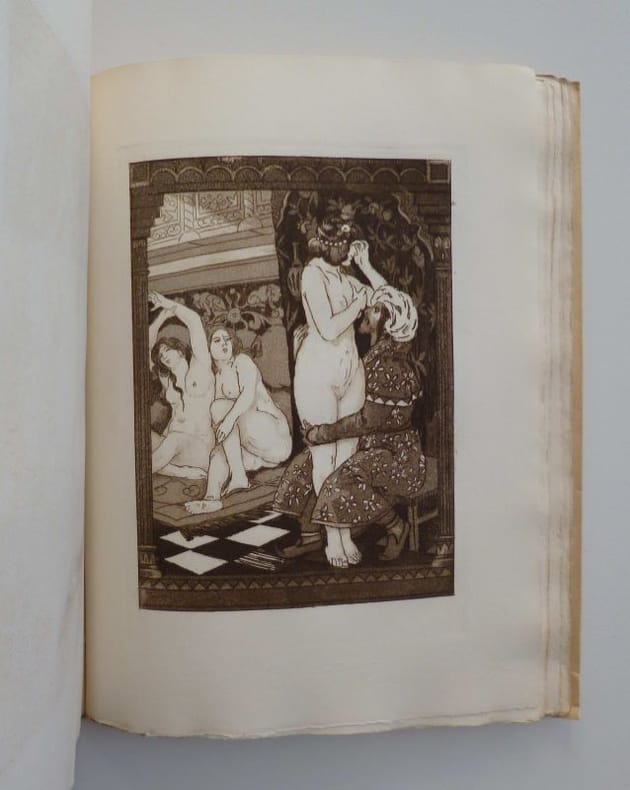
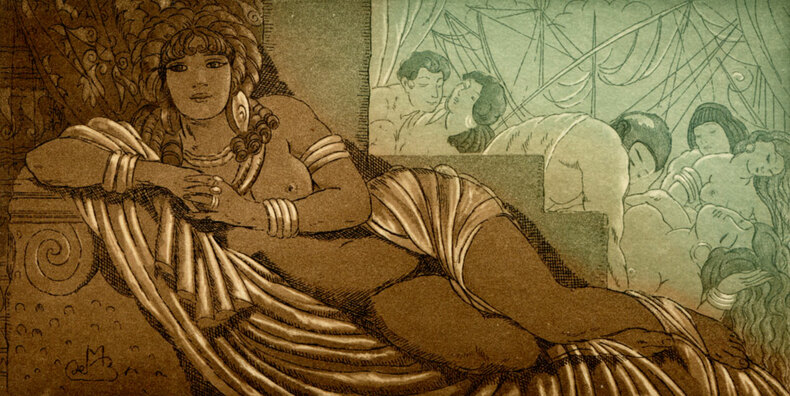
97Aux Éditions de la Lampe d'or, Chez L. Baudel, Paris, 1925, In-quarto (19,4 x 25,5 cm), 418 pages, sous couverture à rabats. Édition illustrée de 30 eaux-fortes en couleurs de Maurice de Becque tirées à la poupée, dont 14 planches hors-texte. L'ouvrage est également orné par l'illustrateur de lettrines, bandeaux et vignettes en violine. Tirage limité à 330 exemplaires, celui-ci un des 50 exemplaires numérotés sur papier de Rives, avec une suite des gravures en bistre (Seulement 175 exemplaires du tirage comportent les gravures tirées en couleurs à la poupée. Il existe également une édition courante comprenant 25 dessins en fac-similé). Superbe interprétation teinté d'érotisme oriental de ce grand classique par Maurice de Becque, doublé d'une impression et mis en couleurs des plus contrastés et lumineuses. Un fort et luxueux volume tel que paru, dans une condition de fraîcheur excellente.
192464238Paris: A l'enseigne de la lampe d'or 1924. Fine. A l'enseigne de la lampe d'or Paris 1924 19.50 x 25.50 cm broché Edition illustrated with 30 etchings and original initials by Maurice de Becque one of 10 numbered copies on Imperial Japan paper containing a duplicate suite signed by Maurice de Becque. Two slight tears at head and foot of spine otherwise handsome copy. A l'enseigne de la lampe d'or unknown
5024Texte établi par P.BONDOIS,préface d’Emile MAGNE.In 8 en feuillets,couverture rempliée,faux-titre,titre,316 pages, 1 feuillet de justification de tirage.17 eaux-fortes sous serpentes de Maurice de BECQUE(15 annoncées)Editions des Moulins d’Auvergne Clermont-Ferrand.30 avril 1944 Exemplaire n°13 sur Auvergne,avec une suites des dix-sept eaux-fortes en sépia(plus deux en noir)avec un cuivre correspondant à un bandeau.Chemise cartonnée, dos toilé avec titre doré,étui cartonné avec bords toilé.(un petit renfort)sinon très bon état,superbes eaux-fortes
1928LIQ-6174P. Chez Maurice de Becque 1928. In-4° broché sous couverture, chemise et étui +1 volume de suites en feuilles avec la même chemise et étui.
In-4 p., brossura orig. (dorso restaur.), pp. (4),IV,313,(5), illustrato da 60 pregevoli acqueforti a colori di Maurice Jaubert de Becque, così composte: 12 grandi testate, 9 finali, 21 composizioni nel t. e 18 tavole f.t. Romanzo storico che celebra la vita di una cortigiana all’epoca dell’impero romano. Cfr. Carteret,IV, p. 73: “Edition recherchée et cotée” - Benezit,I, p. 955 cita dell’artista francese anche l’illustrazione di quest’opera. Bella edizione di 270 esempl. numerati. Il ns., 64, “sur vélin pur fil Lafuma” fa parte della tiratura di 200 (num. 61 a 260), ed è molto ben conservato. Uniamo anche: “Six planches refusées complétant l’illustration de "Sonnica la Courtisane" et reservées aux amis de l’artiste”. Sono 6 bellissime acqueforti in tinta “avec remarques”, di gusto fortemente erotico, ciascuna con alcune righe di testo a fronte (e l’indicaz. del capitolo e della pag. cui fanno riferimento): in tutto 16 cc.nn. a fogli sciolti, copertina in brossura con vignetta inc. all’acquaforte al piatto anter., custodia in mz. tela, astuccio. Tracce d’uso margin. altrimenti esemplare ben conservato.
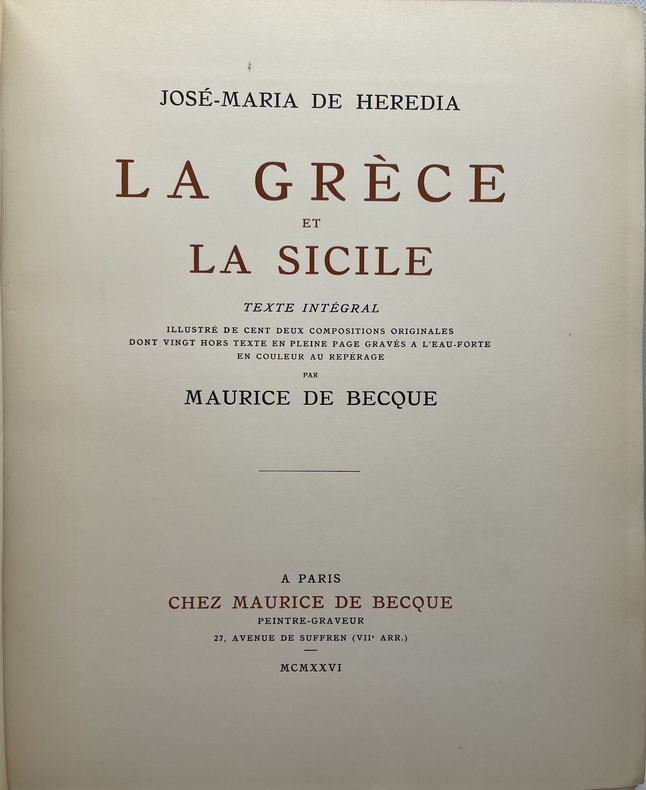
012879Jose-Maria de Heredia, Maurice de Becque (illustrateur), La Grèce et la Sicile. Paris, Maurice de Becque, 1926. In-4, 90-[1]p. Belle édition illustrée de 102 compositions de Maurice de Becque dont 20 eaux-fortes pleine page, tirée à 232 exemplaires seulement, le nôtre un des 140 sur pur fil. Demi-parchemin, pièces de titre, tête dorée, couvertures conservées. Superbe édition.
1925LIQ-6175P. Chez Maurice de Becque 1925. In folio en feuilles sous chemise demi basane, plats de papier illustré, dos lisse orné de fleurons noir, titre dorée, couverture rempliée, étui recouvert du même papier (dos légèrement frotté).
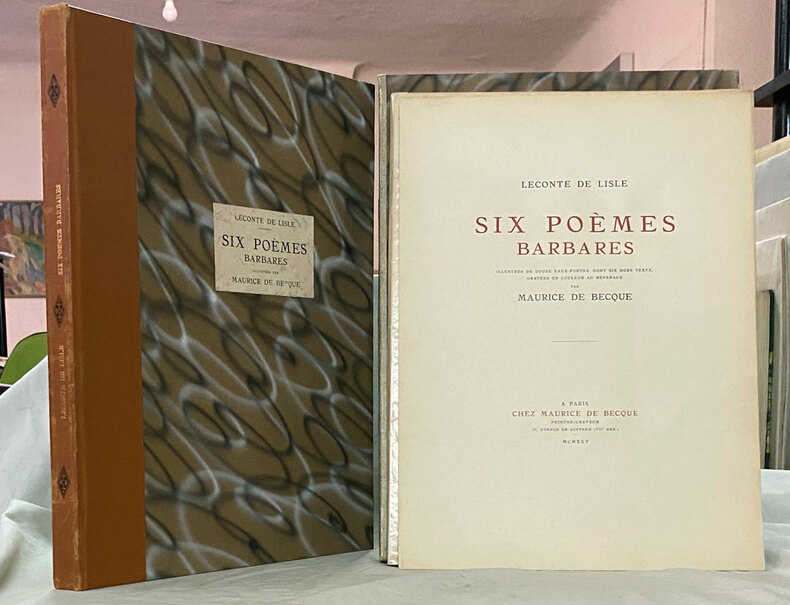
78133Paris Maurice de Becque 1925. Folio 34.8 x 26.4 cm. Title leaf in red and brown. Seven finely engraved and hand-coloured plates tissue-guarded illustrating poems on separate leaves with engraved hand-coloured headpieces and colour-printed pictorial endpieces. The text leaves numbered 1-15. Loose-leaved in printed portfolio with pictorial vignette on the front side. = A wonderful publication by Maurice de Becque joining his impressive illustrations of wild and fierce animals with a collection of Leconte de Lisle's poems inspired by civilizations other than those of the Greeks and Romans and with a focus on animals and their habitats. Charles Marie René Leconte de Lisle 1818-1894 was a French poet traditionally known by his surname only. He "is most famous for his three collections of poetry: Poèmes antiques 1852 Poèmes barbares 1862 this work Poèmes tragiques 1884. He is also known for his translations of Ancient Greek tragedians and poets such as Aeschylus Sophocles Euripides and Horace" Wikipedia. The "barbaric" poems are the following: 1. Les éléphants; 2. Le sommeil du condor; 3. La panthère noire; 4. Les jungles; 5. Les taureaux; 6. Le rêve du jaguar. Each poem has a page-sized illustration of the animal mentioned in the title except Les jungles which shows a tiger. Les éléphants has two text leaves the others have one. Maurice Jaubert De Becque 1878-1838 was a French illustrator and set and costume designer also one of the founders of the Société des Peintres Animalier. All plates show mammals except one bird the condor. It is hardly a surprise that De Becque illustrated Rudyard Kipling's Jungle Book Le Livre de la Jungle Paris Simon Kra 1924 too. This is No. VI handwritten in pencil of 20 copies "horse commerce numérotés en chiffres romains" with the handwritten text "Hommage de l'artiste" and signed by De Becque. Also inscribed in the top margin "A mon ami Charpentier." signed and written by De Becque. Slight wear mostly restricted to the portfolio spine top and bottom otherwise in excellent condition. Very rare. unknown
1927006395Paris: Librairie Lemercier 1927. Limited Edition. First Edition thus. Three Quarter Morocco. Wooden boards. Fine. No. 54 of 255 copies in limitation on velin pur fil Lafuma. Beautiful 3/4 morocco binding with unusual wood or wood veneer boards and matching wood veneer endpapers. And leather painted "onlay" illustration mounted onto spine! 4to. 28 by 22 cm. 208 pp. with 18 color plates and twelve vignettes and a second suite of all the illustrations in just outline form bound in at the end along with the spine to the wraps. The wrap cover serves as one of the three title pages. In its original title "Raharu" this is the novel that put Loti on the map in 1880 and it served as the inspiration for Leo Delibes' once popular opera "Lakmé" which premiered just three years later. Essentially Loti was the authorial counterpart to Gauguin in plunging whole into Tahitian society and his pen-name "Loti" followed from this novel. Without question one of Loti's greatest strengths as a writer was the color he brought to his descriptions and exotic subject matter and these pochoirs most definitely honor and capture that mastery. The bright plates and vignettes could be mistaken for actual painting and they are a feast to the eye. Apparently scarce with the only copy we could locate at the BNF -- no copies of this edition were found at all on OCLC or in commerce. Light rubbing of front joint. <br /><br /> Librairie Lemercier hardcover books
1927004618Paris: Librairie Lemercier 1927. Limited Edition. First Edition thus. Three Quarter Morocco. Marbled Boards. Near Fine. 1 of 12 copies to the limitation this being a presentation copy to Madame de Becque the wife of the illustrator. Beautiful 3/4 morocco binding by Saulnier. 4to. 28 by 22 cm. 208 pp. with 18 color plates and twelve vignettes and a second suite of all the illustrations in just outline form bound in at the end along with the spine to the wraps. The wrap cover serves as one of the three title pages. In its original title "Raharu" this is the novel that put Loti on the map in 1880 and it served as the inspiration for Leo Delibes' once popular opera "Lakmé" which premiered just three years later. Essentially Loti was the authorial counterpart to Gauguin in plunging whole into Tahitian society and his pen-name "Loti" followed from this novel. Without question one of Loti's greatest strengths as a writer was the color he brought to his descriptions and exotic subject matter and these pochoirs most definitely honor and capture that mastery. The bright plates and vignettes could be mistaken for actual painting and they are a feast to the eye. Apparently scarce with the only copy we could locate at the BNF -- no copies of this edition were found at all on OCLC or in commerce. A few tiny specks of discoloration on the spine and very light edgewear. Otherwise clean and pristine inside. <br /><br /> Librairie Lemercier hardcover books
1927006395Paris: Librairie Lemercier 1927. Limited Edition. First Edition thus. Three Quarter Morocco. Wooden boards. Fine. No. 54 of 255 copies in limitation on velin pur fil Lafuma. Beautiful 3/4 morocco binding with unusual wood or wood veneer boards and matching wood veneer endpapers. And leather painted "onlay" illustration mounted onto spine! 4to. 28 by 22 cm. 208 pp. with 18 color plates and twelve vignettes and a second suite of all the illustrations in just outline form bound in at the end along with the spine to the wraps. The wrap cover serves as one of the three title pages. In its original title "Raharu" this is the novel that put Loti on the map in 1880 and it served as the inspiration for Leo Delibes' once popular opera "Lakmé" which premiered just three years later. Essentially Loti was the authorial counterpart to Gauguin in plunging whole into Tahitian society and his pen-name "Loti" followed from this novel. Without question one of Loti's greatest strengths as a writer was the color he brought to his descriptions and exotic subject matter and these pochoirs most definitely honor and capture that mastery. The bright plates and vignettes could be mistaken for actual painting and they are a feast to the eye. Apparently scarce with the only copy we could locate at the BNF -- no copies of this edition were found at all on OCLC or in commerce. Light rubbing of front joint. Librairie Lemercier unknown
1927004618Paris: Librairie Lemercier 1927. Limited Edition. First Edition thus. Three Quarter Morocco. Marbled Boards. Near Fine. 1 of 12 copies to the limitation this being a presentation copy to Madame de Becque the wife of the illustrator. Beautiful 3/4 morocco binding by Saulnier. 4to. 28 by 22 cm. 208 pp. with 18 color plates and twelve vignettes and a second suite of all the illustrations in just outline form bound in at the end along with the spine to the wraps. The wrap cover serves as one of the three title pages. In its original title "Raharu" this is the novel that put Loti on the map in 1880 and it served as the inspiration for Leo Delibes' once popular opera "Lakmé" which premiered just three years later. Essentially Loti was the authorial counterpart to Gauguin in plunging whole into Tahitian society and his pen-name "Loti" followed from this novel. Without question one of Loti's greatest strengths as a writer was the color he brought to his descriptions and exotic subject matter and these pochoirs most definitely honor and capture that mastery. The bright plates and vignettes could be mistaken for actual painting and they are a feast to the eye. Apparently scarce with the only copy we could locate at the BNF -- no copies of this edition were found at all on OCLC or in commerce. A few tiny specks of discoloration on the spine and very light edgewear. Otherwise clean and pristine inside. Librairie Lemercier unknown
192311025Paris: Éditions de la Lampe d’Or 1923. Translated by Louis Jarty. One of only 40 deluxe copies printed on Japon with an extra suite of prints in shades of sanguine this no.20. 30 hand-coloured aquatints by Maurice Becque highlighted in gilt. 4to. bound in later half maroon morocco with marbled paper covered boards marbled endpapers spine lettered in gilt original wrappers bound in. A sumptuous copy.Maurice de Becque 1878-1928 was a noted French illustrator and painter this is one of his later books with a sophisticated style and finish. One of only 40 copies on japon with an extra suite of plates Éditions de la Lampe d’Or hardcover