54 résultats
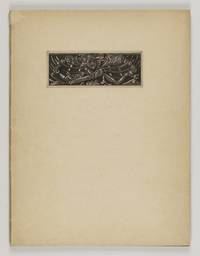
78133Paris Maurice de Becque 1925. Folio 34.8 x 26.4 cm. Title leaf in red and brown. Seven finely engraved and hand-coloured plates tissue-guarded illustrating poems on separate leaves with engraved hand-coloured headpieces and colour-printed pictorial endpieces. The text leaves numbered 1-15. Loose-leaved in printed portfolio with pictorial vignette on the front side. = A wonderful publication by Maurice de Becque joining his impressive illustrations of wild and fierce animals with a collection of Leconte de Lisle's poems inspired by civilizations other than those of the Greeks and Romans and with a focus on animals and their habitats. Charles Marie René Leconte de Lisle 1818-1894 was a French poet traditionally known by his surname only. He "is most famous for his three collections of poetry: Poèmes antiques 1852 Poèmes barbares 1862 this work Poèmes tragiques 1884. He is also known for his translations of Ancient Greek tragedians and poets such as Aeschylus Sophocles Euripides and Horace" Wikipedia. The "barbaric" poems are the following: 1. Les éléphants; 2. Le sommeil du condor; 3. La panthère noire; 4. Les jungles; 5. Les taureaux; 6. Le rêve du jaguar. Each poem has a page-sized illustration of the animal mentioned in the title except Les jungles which shows a tiger. Les éléphants has two text leaves the others have one. Maurice Jaubert De Becque 1878-1838 was a French illustrator and set and costume designer also one of the founders of the Société des Peintres Animalier. All plates show mammals except one bird the condor. It is hardly a surprise that De Becque illustrated Rudyard Kipling's Jungle Book Le Livre de la Jungle Paris Simon Kra 1924 too. This is No. VI handwritten in pencil of 20 copies "horse commerce numérotés en chiffres romains" with the handwritten text "Hommage de l'artiste" and signed by De Becque. Also inscribed in the top margin "A mon ami Charpentier." signed and written by De Becque. Slight wear mostly restricted to the portfolio spine top and bottom otherwise in excellent condition. Very rare. unknown
1927006395Paris: Librairie Lemercier 1927. Limited Edition. First Edition thus. Three Quarter Morocco. Wooden boards. Fine. No. 54 of 255 copies in limitation on velin pur fil Lafuma. Beautiful 3/4 morocco binding with unusual wood or wood veneer boards and matching wood veneer endpapers. And leather painted "onlay" illustration mounted onto spine! 4to. 28 by 22 cm. 208 pp. with 18 color plates and twelve vignettes and a second suite of all the illustrations in just outline form bound in at the end along with the spine to the wraps. The wrap cover serves as one of the three title pages. In its original title "Raharu" this is the novel that put Loti on the map in 1880 and it served as the inspiration for Leo Delibes' once popular opera "Lakmé" which premiered just three years later. Essentially Loti was the authorial counterpart to Gauguin in plunging whole into Tahitian society and his pen-name "Loti" followed from this novel. Without question one of Loti's greatest strengths as a writer was the color he brought to his descriptions and exotic subject matter and these pochoirs most definitely honor and capture that mastery. The bright plates and vignettes could be mistaken for actual painting and they are a feast to the eye. Apparently scarce with the only copy we could locate at the BNF -- no copies of this edition were found at all on OCLC or in commerce. Light rubbing of front joint. Librairie Lemercier unknown
1927004618Paris: Librairie Lemercier 1927. Limited Edition. First Edition thus. Three Quarter Morocco. Marbled Boards. Near Fine. 1 of 12 copies to the limitation this being a presentation copy to Madame de Becque the wife of the illustrator. Beautiful 3/4 morocco binding by Saulnier. 4to. 28 by 22 cm. 208 pp. with 18 color plates and twelve vignettes and a second suite of all the illustrations in just outline form bound in at the end along with the spine to the wraps. The wrap cover serves as one of the three title pages. In its original title "Raharu" this is the novel that put Loti on the map in 1880 and it served as the inspiration for Leo Delibes' once popular opera "Lakmé" which premiered just three years later. Essentially Loti was the authorial counterpart to Gauguin in plunging whole into Tahitian society and his pen-name "Loti" followed from this novel. Without question one of Loti's greatest strengths as a writer was the color he brought to his descriptions and exotic subject matter and these pochoirs most definitely honor and capture that mastery. The bright plates and vignettes could be mistaken for actual painting and they are a feast to the eye. Apparently scarce with the only copy we could locate at the BNF -- no copies of this edition were found at all on OCLC or in commerce. A few tiny specks of discoloration on the spine and very light edgewear. Otherwise clean and pristine inside. Librairie Lemercier unknown
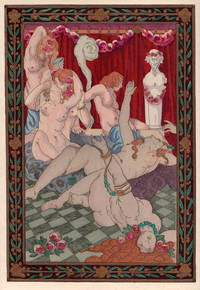
192311025Paris: Éditions de la Lampe d’Or 1923. Translated by Louis Jarty. One of only 40 deluxe copies printed on Japon with an extra suite of prints in shades of sanguine this no.20. 30 hand-coloured aquatints by Maurice Becque highlighted in gilt. 4to. bound in later half maroon morocco with marbled paper covered boards marbled endpapers spine lettered in gilt original wrappers bound in. A sumptuous copy.Maurice de Becque 1878-1928 was a noted French illustrator and painter this is one of his later books with a sophisticated style and finish. One of only 40 copies on japon with an extra suite of plates Éditions de la Lampe d’Or hardcover