Melville, HermanBiblio.com

5 529 résultats
1846138349New York: Wiley and Putnam 1846. First edition of Melville's first book and his most popular during his lifetime. Octavo two volumes bound into one in the original cloth stamped in blind with gilt titles to the spine frontispiece map both half-titles and 6 pages of publisher's advertisements at rear. BAL 13653. Presentation copy inscribed by the author on the front free endpaper one month after publication "Captain Ball With the respects of the author Westport April 18th 1846." The recipient Captain Charles Ball was captain of the whaling ship Theophilus Chase on which Thomas Melville the author's youngest brother set sail for the first time at the age of sixteen. Thomas's decision to follow in his older brother's footsteps was likely due to hearing Herman's stories of his time at sea which began in 1841 with his voyage aboard the whaling ship the Acushnet. Thomas set sail aboard the Theophilus Chase on March 18 1846 for the South Atlantic from Westport but was homeward bound by April at which point Herman apparently visited Westport and inscribed this copy of Typee just one month after its American publication on March 17th. In very good condition. Housed in a custom half morocco clamshell box. Books inscribed by Melville are scarce. Inspired by Richard Henry Dana Jr.'s new book Two Years Before the Mast and Jeremiah N. Reynolds's account in the May 1839 issue of The Knickerbocker magazine of the hunt for a great white sperm whale named Mocha Dick Herman Melville travelled to New Bedford Massachusetts where he secured a position aboard the whaler Acushnet in 1841. On January 3 1841 the Acushnet set sail and traveled to the Bahamas and the South Pacific and later up the coast of Chile to the Galapagos Islands and Peru. In the summer of 1842 Melville and his shipmate Richard Tobias Greene jumped ship at Nuku Hiva Bay in the South Pacific Marquesas Islands where they stayed for several months before leaving the island aboard the Australian whaler Lucy Ann bound for Tahiti. Melville would return home to write his first book Typee a provocative and lively account of his exploits in the exotic South Seas which made him notorious as the "man who lived among the cannibals." "A classic of American literature and the pioneer in South Sea romance" Arthur Stedman. Wiley and Putnam hardcover
185042820846<p><strong>"An association copy linking two of the greatest figures in American literature" Reese this is Nathaniel Hawthorne's copy of Herman Melville's <em>Redburn</em>. </strong></p><p>The front free endpaper is inscribed: "Nath. Hawthorne from the Publisher." <strong>The facing pastedown bears Herman Melville's signature on a card</strong>. <em>Redburn</em> first published in 1849 is based on Melville's experiences while on a cargo ship sailing to Liverpool in June 1839. It recounts the adventures of a son of a gentleman on his first voyage living among coarse and sometimes brutal sailors.</p><p><strong>The importance of the relationship between Herman Melville and Nathaniel Hawthorne cannot be overstated.</strong> In the late 1840s the Melville family moved to Arrowhead their farm in the Berkshires. There he was encouraged and inspired by Hawthorne whom he visited in nearby Lenox. They met on 5 August 1850 at a picnic hosted by a mutual friend. Melville had just read Hawthorne's latest collection of stories <em>Mosses from an Old Manse</em> and would he review the collection anonymously in Literary World several weeks later.</p><p>Reading <em>Mosses from an Old Manse</em> with its themes of human evil and moral ambiguity had a transformative effect on Melville and the writing of <em>Moby-Dick</em>. Reading Hawthorne helped to make Melville not just a writer of sea stories but a profound investigator into the human condition. Their friendship in this key period helped produce <em>Moby Dick </em>1851 which he dedicated to Hawthorne "In Token of My Admiration for His Genius." And that same year Hawthorne published <em>The House of the Seven Gables</em>. Julian Hawthorne the author's son and an author himself would many years later publish <em>Nathaniel Hawthorne and his Wife</em> in 1884. In writing the book he called on Melville who in the 1880s was nearly forgotten and working in the Customs House. The younger Hawthorne wrote that Melville was "a melancholy and pale wraith of what he had been in his prime" and that it was "a sad interview." "I knew that he had once proposed to Hawthorne to join him in some literary work . I spoke of this project to Melville but he made no intelligible response. His words were vague and indeterminate . When I tried to revive memories in him of the red-cottage days —red-letter days too for him—he merely shook his head" Leyda The Melville Log. Melville's wife purchased a copy of Julian Hawthorne's book in 1885 but Melville made no recorded comments.</p><p><strong>A remarkable association highlighting not only Melville's greatest creative period but also his fall to obscurity.</strong></p><p>Original purple cloth. Faded rubbed with some loss to spine ends rear joint repaired. Foxing name of Nathaniel Hawthorne blotted. Custom case.</p><p>BAL 13660. Provenance: Nathaniel Hawthorne publisher's presentation inscription – Julian Hawthorne ownership inscription in several places – Stephen H. Wakeman perhaps the greatest of all collectors of 19th-century American literature bookplate his sale American Art Association 28 and 29 April 1924 lot 410.</p> Harper & Brothers hardcover
1851140946120New York: Harper and Brothers 1851. First Edition. Very Good. First American edition of Melville's epic novel in first issue binding and completely unrestored. In original gray cloth with publisher's device stamped in blind. xxiii 635 6 ads. Very Good. Cloth lightly soiled and worn at the extremities spine toned. Pages heavily foxed as common owner details to front free endpaper ink owner name to title page with offsetting to adjacent pages as well. Light sporadic pencil notations to text old unobtrusive tidemark to bottom margins <p>A difficult linguistically-innovative fever dream of a novel which has been hailed as America's greatest contribution to world literature. Uncommon in the original publisher's binding and without any restoration; a beautiful example housed in a custom chemise case. BAL 13664. Harper and Brothers unknown
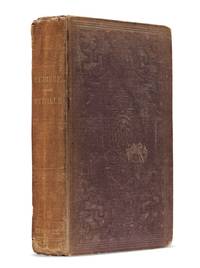
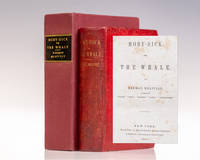
185199735New York: Harper & Brothers 1851. First edition first issue binding with the circular Harper's device of Melville's masterpiece. Octavo original purple-brown cloth BAL's A grain covers stamped in blind with the publisher's circular device at the center within a heavy blind rule frame original orange-coated endpapers. Of the 2951 copies printed 125 were review copies. About 1500 sold in 11 days but then sales slowed to less than 300 the next year. After two years copies of the first edition were still available and almost 300 were destroyed in the 1853 fire of Harper's warehouse. In near fine condition with some of the usual light foxing and light shelfwear to the spine tips. Housed in a custom half morocco clamshell box. A completely unrestored example of this cornerstone. A superior example. Initially panned by critics and readers when published in 1851 "in the 20th century Moby Dick would be rediscovered and acknowledged as possibly the greatest of all American novels" Chronology of American Literature. Arguably the greatest single work in American literature Moby-Dick was initially “a complete practical failure misunderstood by the critics and ignored by the public. Nevertheless Melville’s permanent fame must always rest on the great prose epic of Moby-Dick a book that has no equal in American literature for variety and splendor of style and for depth of feeling†DAB. Harper & Brothers hardcover
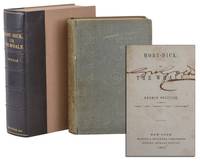
185169223New York: Harper & Brothers 1851. Full Description:<br> <br> MELVILLE Herman. Moby-Dick; or The Whale. New York: Harper & Brothers 1851.<br> <br> First edition. Large twelvemo 7 1/2 x 4 7/8 inches; 190 x 125 mm. xxiii 1 blank 634 1 epilogue 1 blank 6 publisher's advertisements pp.<br> <br> BAL first binding of drab purple-brown "A" cloth. Covers stamped in blind with a heavy rule frame and publisher's circular device at center. Spine stamped and lettered in gilt. Orange coated endpapers. Cloth somewhat soiled and lightly frayed at extremities with some blistering to front cover and spine but with no restoration. Light to moderate foxing throughout but much less than usual and some minor soiling. Penciled signature on title-page. Endpapers a bit rubbed. Small bookseller sticker on front pastedown. Overall a very good tight copy. In a half black morocco over decorative paper clamshell case.<br> <br> "Melville's great book Moby Dick was a complete practical failure misunderstood by the critics and ignored by the public; and in 1853 the Harpers' fire destroyed the plates of all of his books and most of the copies remaining in stock only about sixty copies survived the fire.Melville's permanent fame must always rest on the great prose epic of Moby Dick a book that has no equal in American literature for variety and splendor of style and for depth of feeling" D.A.B. XII pp. 522-526.<br> <br> "Moby Dick is the great conundrum-book. Is it a profound allegory with the white whale the embodiment of moral evil or merely the finest story of the sea ever written" Grolier 100 American.<br> <br> "The publishers used as their text Melville's original manuscript. The Whale as issued in London was set from New York sheets with Melville's alterations" BAL.<br> <br> "This book was expurgated for publication in England the American text containing thirty-five passages not included in Bentley's edition" Sadleir Excursions in Victorian Bibliography p. 339.<br> <br> BAL 13664. Grolier 100 American 60.<br> <br> HBS 69223.<br> <br> $50000. Harper & Brothers unknown
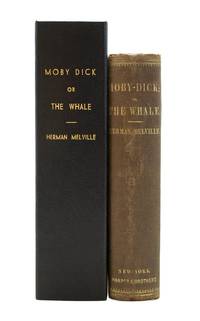
185142820879<p>FIRST AMERICAN EDITION. From Jonah to Jaws the Great Fish stories have fascinated readers for thousands of years. Melville's masterpiece is perhaps the foremost of these tales in part because the novel was written to succeed at two levels. At the first level "<em>Moby Dick</em> is a story of the sea . . . <em>Moby-Dick</em> is a portrait of the whale" Lewis Mumford. As late as May of 1850 Melville described this first <em>Moby-Dick</em> as "the Whaling voyage" in a letter to Richard Henry Dana: "It will be a strange sort of book I fear blubber is blubber you know; tho you may get oil out of it the poetry runs as hard as sap from a frozen maple tree & to cook the thing up one needs throw in a little fancy. The descriptions are the finest most accurate and entertaining of any narrative of sea life that has ever been published."</p><p>In an 1850 essay on Nathaniel Hawthorne the dedicatee of <em>Moby-Dick</em> Melville reflected on the mysteries of literary genius: "I somehow cling to the strange fancy that in all men hiddenly reside certain wondrous occult properties. . .which by some happy but very rare accident. . .may chance to be called forth here on earth." On completing <em>Moby-Dick</em> Melville wrote to his friend Hawthorne "I have written a wicked book and feel as spotless as the lamb!" Melville dedicated the work to Hawthorne in part because Hawthorne's <em>Mosses From an Old Manse</em> 1846 brought Melville into contact with literary explorations of the supernatural and the cloaked realms of madness and evil latent in the minds of men.</p><p>Yielding to the temptation to explore those "wondrous occult properties" Melville reconceived <em>Moby-Dick</em> as an epic of man's psychological struggles in confronting the mysteries and power of nature and fate. This great tension defines the "second" <em>Moby-Dick</em> The dedication of Melville's great work acknowledges his indebtedness to Hawthorne. The growth of<em> Moby Dick</em> from a mere sea tale into a profound exploration of man's inner turmoil marks Melville's transformation from a writer of fictionalized Pacific voyages into the great author of America's most important novel. Modern literary scholars remain mesmerized by this great monster of a tale. As Louis Mumford wrote "<em>Moby-Dick</em> is a portrait of the Whale and a presentation of the demonic energies of the universe . . . <em>Moby-Dick</em> is a labyrinth and that labyrinth is the universe."</p><p>Yet despite the greatness of the book after completing his masterwork Melville toiled in obscurity as he had predicted to Hawthorne in1850 ""But I was talking about 'The Whale.' As the fishermen say 'he's in his flurry' when I left him some three weeks ago. I'm going to take him by his jaw however before long and finish him up in some fashion or other. What's the use of elaborating what in its very essence is so short-lived as a modern book Tho' I wrote the Gospels in this century I should die in the gutter."</p><p>This has long been a scarce book in collector's condition both because almost 300 copies of the already small first edition print run were destroyed in the Harper's warehouse fire of 1853 and because the physical bulk of the book and the fragility of its binding have resulted in most surviving copies being damaged.</p><p><strong>Attractive unrestored copies are very infrequently seen and in great demand.</strong></p><p>Original black cloth orange coated endpapers first binding. Foot of spine neatly chipped joints a little frayed. Light foxing. Bookplate removed. An honest unrestored tight copy. Cloth case.</p> Harper hardcover
1851150358New York: Harper & Brothers Publishers 1851. First edition first issue binding of Melville’s masterpiece. Octavo original red variant cloth BAL’s A grain covers stamped in blind with Harper’s circular device at the center of the front panel within a heavy blind ruled frame plain orange endpapers. Issued in a single volume in black green blue red purple slate or brown cloth gilt. The first state of the binding has a circular device at center of covers that is absent from the second state binding. Much has been made of whether the earliest copies bound should have orange-coated end papers but in fact there is no priority between copies with orange dark orange maroon veined in gold or marbled end papers. Of uncertain status are three copies that have been seen with plain white end papers and a copy seen with yellow-coated end papers. Copies in bindings with beaded rope-like designs or Grolier-esque strapwork borders are very likely copies that survived Harper's terrible fire of December 10 1853 which destroyed 287 copies 212 were still unbound in sheets. The first printing by Harper's in 1851 numbered 2915 copies approximately 300 copies were destroyed in a warehouse fire in 1853 and as late as 1854 copies of the first edition were still available from the publisher. A second printing of 250 copies was issued in 1855 and in 1863 the third printing of 253 copies was issued. In very good condition rebacked. Housed in a custom cloth clamshell box. Rare and desirable in the rare variant publisher's red cloth. Initially panned by critics and readers when published in 1851 "in the 20th century Moby Dick would be rediscovered and acknowledged as possibly the greatest of all American novels" Chronology of American Literature. Arguably the greatest single work in American literature Moby-Dick was initially “a complete practical failure misunderstood by the critics and ignored by the public. Nevertheless Melville’s permanent fame must always rest on the great prose epic of Moby-Dick a book that has no equal in American literature for variety and splendor of style and for depth of feeling†DAB. Harper & Brothers, Publishers hardcover
1851191308New York: Harper & Brothers 1851. There is no folly of the beast of the earth which is not infinitely outdone by the madness of man First US edition first issue binding. This is the first appearance of the novel under its famous title and the first appearance of the epilogue and 35 passages that were omitted from the slightly earlier British edition. To protect its international copyright Moby-Dick was first issued in London earlier the same year set from the New York sheets and titled The Whale. On publication the novel was a "complete practical failure misunderstood by the critics and ignored by the public; and in 1853 the Harpers' fire destroyed the plates of all Melville's books and most of the copies remaining in stock" DAB vol. 12 p. 523. It was only from the early 20th century that the work found widespread acclaim as one of the greatest of novels and perhaps the greatest tale of sea. Bindings in the first issue have the publisher's device on the covers and appear without priority in black blue grey green purple-brown red or slate-coloured cloth. It was the custom of American publishers during this period to use cloths of various colours for window display. Octavo. With 6 pp. publisher's advertisements at end. Original green cloth spine lettered in gilt and with decorative gilt border at head and foot covers with thick one-line border and central publisher's life-buoy device in blind orange coated endpapers. Pencilled shelfmark on front endpapers. Binding recased spine toned marks and rubbing to cloth with crease to front cover worn at ends and edges repairs to inner hinges and rear pastedown coated endpapers rubbed small loss to upper outer corner of title page contents foxed. A very good copy. BAL 13664; Grolier American 100 60. hardcover
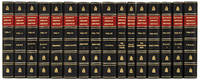
1922167606London: Bombay Sydney Constable and Company Ltd 1922-24. A handsome set of this major edition The Standard Edition number 23 of 750 sets only signed by the publisher as issued and rarely encountered in a contemporary binding in such nice condition given the episodic nature of the publication. The Standard Edition comprises all of Melville's major works including the first edition of the novella Billy Budd which was discovered in manuscript among Melville's papers in 1924. 16 vols octavo 222 x 143 mm. Contemporary blue half morocco spines lettered in gilt with nautical motifs blue watered silk sides marbled endpapers top edges gilt. A fine set. unknown
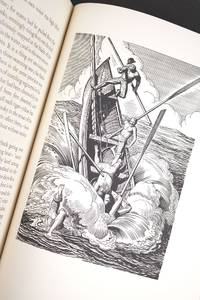
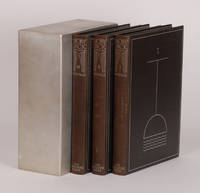
1930142517Chicago: The Lakeside Press 1930. black cloth with decorations and title stamped in silver top edge stained black aluminum slipcase. Kent Rockwell. 4to. black cloth with decorations and title stamped in silver top edge stained black aluminum slipcase. xxvii 1 279; vi 2 284; vii 1 282 5 pages. With a total of 280 illustrations by Rockwell Kent printed in black. Three volumes. First edition thus limited to 1000 copies printed by the Lakeside Press under the supervision of William A. Kittredge The Artist and the Book no.140; Bolton p.94; Blumenthal The Printed Book in America plate 48. Lacking the publisher's acetate jackets. Spines nearly free of fading with a hint of discoloration to the spine ends small half-inch abrasion to the top fore-edge of the rear board of volume one very minor bump to the top corner of the front board of volume two. Very minor wear and uneven toning to the aluminum slipcase. Internally a very light dark finger smudge to the verso of the 2nd blank of volume one very light offsetting of the engravings to the opposite pages as usual volumes two and three are partially unopened else a practically unread fine set of one of the finest productions produced by The Lakeside Press.<BR> <br /> <BR> <br /> One of the most notable of Kent's illustrated books and a classic interpretation of Melville's story. Kent had complete creative control over his edition and "spent five years researching and designing his project during which time he discovered many of the 19th-century textual and visual sources that had influenced Melville" Abrams p. 377. The three-volume set was also one of the four titles produced by R. R. Donnelley and Sons' Lakeside Press under the "Four American Books" campaign with the other three being Edgar Allan Poe's Tales Henry David Thoreau's Walden and Richard Henry Dana's Two Years Before the Mast. It was Moby Dick however that sold out completely and was hailed as among the great American illustrated books of the century and it is also credited with reviving public interest in a sublime but difficult novel.<BR> <br /> <BR> <br /> The book contains 280 striking wood cuts by Kent which are reproduced to illustrate Melville's classic nineteenth century whaling novel. Beautiful silver-stamped cover and spine design by Kent. Epilogue at rear.<BR> <br /> <BR> <br /> "The most lasting contribution of the undertaking though was Kent's Moby Dick. Still regarded as the definitive illustrated edition of this American Classic it positioned Chicago as a major center in the history of American book illustration design and production" Coventry "Four American Books Campaign" Chicago by the Book p.121. The Lakeside Press unknown
1855138591c. 1855. Rare autograph letter signed and entirely in the hand of great American novelist Herman Melville. One page the letter reads in full "Pittsfield Aug 26 Osmond Tiffany Esq. My dear Sir With pleasure I comply with your request but hardly think that any letter will further your object; still if the accompanying one can be made of the least service I shall be happy. Wishing you all success in your affairs I am Very Truly Yours H Melville." The recipient Osmond Tiffany was a Baltimore merchant and occasional author who contributed to the Atlantic Monthly and The Knickerbocker. In 1855 he reached out to several authors including Washington Irving seeking assistance in finding a publisher for his novel Brandon; or A Hundred Years Ago. Based on Irving's response dated December 15 1855 Melville's letter was likely written in that same year. Tiffany's work set during the French and Indian War was published in New York by Stanford & Delisser in 1858. In fine condition. Housed in a custom half morocco and folding chemise slipcase. American novelist and short story writer Herman Melville remains best-known for his masterpiece Moby-Dick the story of Captain Ahab on his quest for revenge against the giant white sperm whale that bit off his leg at the knee. Although it is now recognized as one of the great American novels its popularity during Melville's lifetime paled in comparison to his first novel Typee based on his exploits in Tahiti after jumping ship in the Marquesas Islands aboard the whaler Acushnet. Melville began writing Moby-Dick in February 1850 and finished 18 months later a year after he had anticipated. Melville drew on his experience as a common sailor from 1841 to 1844 including on whalers and on wide reading in whaling literature. The detailed and realistic descriptions of whale hunting and of extracting whale oil as well as life aboard ship among a culturally diverse crew are mixed with exploration of class and social status good and evil and the existence of God. unknown
1930140938372Chicago IL: The Lakeside Press 1930. First Edition Thus. Near Fine/Very Good. First edition thus limited to 1000 copies. Three volumes in publisher's acetate jackets in aluminum slipcase. Presentation copy signed by Rockwell Kent on the front free end paper of Volume I "Inscribed with affectionate friendship to Putzie - Rockwell Kent 1950." Volumes II and III bear Rockwell Kent-illustrated bookplates of Marie Luise Hinrichs. Near Fine. Narrow strips of sunning to spine cloth at ends light rubbing to cloth at extremities and light abrasions to black topstains. Pages toned and with offsetting from illustrations. Acetate wrappers are wrinkled and shrunken with age as is typical and show a bit of chipping and edge wear with some separation starting between the acetate and a paper flap on both volumes II and III; acetate on volume II with light staining. Aluminum slipcase is lightly worn bumped at top and bottom edge. A stunning presentation copy inscribed by Kent and with bookplates designed by him as well. The Lakeside Press unknown
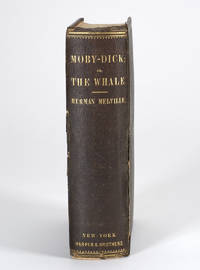
1851377976New York: Harper & Brothers 1851. First American edition. xxiii i 634 2 pp. 4 pp. of publisher's advertisements at end. 1 vols. 8vo. Contemporary three-quarter morocco binding with marbled paper boards. Gilt banded spine with spine title. Edges and corners worn interior foxed cracked after title page with lower thread detached trimmed slightly on outer edge. First American edition. xxiii i 634 2 pp. 4 pp. of publisher's advertisements at end. 1 vols. 8vo. First American edition of the greatest American novel. This edition was technically preceded by the extremely rare English edition Richard Bentley two months earlier but textually this is the far more important of the two having been printed from Melville's manuscript whereas the Bentley edition was set up from the sheets of the American edition. Furthermore for political or editorial reasons Bentley made some thirty-five unauthorized deletions from the original and the American edition remains the standard text never having been further revised. Printed on cheap wood-pulp paper and in one bulky volume Moby Dick rarely survives without foxing and is generally found chipped and shaken.<br /> <br /> "Melville's great book Moby Dick was a complete practical failure misunderstood by the critics and ignored by the public; and in 1853 the Harpers' fire destroyed the plates of all of his books and most of the copies remaining in stock only about sixty copies survived the fire . Melville's permanent fame must always rest on the great prose epic of Moby Dick a book that has no equal in American literature for variety and splendor of style and for depth of feeling" Dictionary of American Biography.<br /> <br /> "Moby Dick is the great conundrum-book. Is it a profound allegory with the white whale the embodiment of moral evil or merely the finest story of the sea ever written" Grolier American. BAL 13664; Grolier One Hundred American Books 60; Johnson High Spots 57; Wright II:1701; Tanselle 2; Sadleir Excursions 229 Harper & Brothers unknown
139021Rare autograph letter signed and entirely in the hand of Herman Melville to his publisher Harper & Brothers. One page the letter reads in full "Harper & Brothers New York. Pittsfield Oct. 8th Gentlemen: Herewith is an article which if it suit will you according to what you have said to me send me the money for without further trouble to yourselves or me. Very truly yours H. Melville." The letter likely dates from 1885 when Melville's financial circumstances were becoming dire. The article he references The Apple-Tree Table first appeared in serial form in 1850 and was later published in a collected trade edition by Princeton University Press in 1922. "Melville's 'The Apple-Tree Table or Original Spiritual Manifestations' enjoys a unique place among his works as a topical satire on a current religious movement: the Spiritualist cult of the 1850s. as Frank Davidson long ago pointed out it 'records its author's thoughts on religion at a critical time in his life' - a time when Melville was meditating and perhaps actually writing the more comprehensive religious satire generally considered his bleakest and most difficult work: The Confidence-Man" Karcher The "Spiritual Lesson" of Melville's "The Apple-Tree Table" 1971. Melville's financial success as a writer during his lifetime was not great relative to his posthumous success; over his entire lifetime Melville's writings earned him just over $10000 equivalent to $254469 in 2021. Melville's travelogues based on voyages to the South Seas and stories based on his time in the merchant marine and navy led to some initial success but his popularity declined dramatically afterwards. By 1876 all of his books were out of print. In near fine condition. Housed in a custom folding chemise slip case with a morocco spine label lettered in gilt. American novelist and short story writer Herman Melville remains best-known for his masterpiece Moby-Dick the story of Captain Ahab on his quest for revenge against the giant white sperm whale that bit off his leg at the knee. Although it is now recognized as one of the great American novels its popularity during Melville's lifetime paled in comparison to his first novel Typee based on his exploits in Tahiti after jumping ship in the Marquesas Islands aboard the whaler Acushnet. Melville began writing Moby-Dick in February 1850 and finished 18 months later a year after he had anticipated. Melville drew on his experience as a common sailor from 1841 to 1844 including on whalers and on wide reading in whaling literature. The detailed and realistic descriptions of whale hunting and of extracting whale oil as well as life aboard ship among a culturally diverse crew are mixed with exploration of class and social status good and evil and the existence of God. unknown
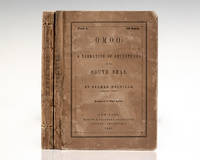
1847142411New York: Harper & Brothers Publishers 1847. First edition of this classic Melville work Omoo the Martin-Manney copy in the rare original wrappers. Octavo two volumes original wrappers. Volume 1 with half-title title-page printed in black and red and frontispiece map of the Marquesas and Tahiti. Volume 2 with advertisements at rear paginated xv-xxiii 1-16 light staining to prelims lower corner clipped from endpaper in volume 2. Original printed wrappers wrappers darkened and rubbed; part 1 backstrip restored with part of title in facsimile; part 2 with abrasion to rear cover deleting some of the text. Provenance: "Appleton" ownership inscription to inside front cover of part II H. Bradley Martin his sale Sotheby's New York 30 January 1990 lot 2145; Richard Manney his sale Sotheby's New York 11 October 1991 lot 223. Housed in a custom clamshell box. Rare with RBH records only two other copies selling at auction. BAL 13656. Following the commercial and critical success of Typee Herman Melville continued his series of South Sea adventure-romances with Omoo. Named after the Polynesian term for a rover or someone who roams from island to island Omoo chronicles the tumultuous events aboard a South Sea whaling vessel and is based on Melville’s personal experiences as a crew member on a ship sailing the Pacific. From recruiting among the natives for sailors to handling deserters and even mutiny Melville gives a first-person account of life as a sailor during the nineteenth century filled with colorful characters and vivid descriptions of the far-flung locales of Polynesia. Harper & Brothers, Publishers unknown
19301974Chicago: The Lakeside Press 1930. Limited Edition one of 1000 copies. Hardcovers in publisher's aluminum slipcase. Quartos. 891 pages in total. Fine in good somewhat brittle acetate jackets all housed in the original aluminum slipcase. The volumes are bound in black cloth over bevelled boards with spines and upper boards titled and decorated in stamped silver foil top edges black. Acetate jackets have overall wrinkling a few chips and tears and are fragile. A strikingly well-preserved set of this amazing edition. Illustrated by Rockwell Kent. The stunning limited edition of what is widely regarded as the definitive edition of "Moby Dick." Melville's great novel was not well received when published in 1851 and it and he languished in relative obscurity through the rest of the 19th century. Rockwell Kent came to the rescue with the nearly 300 illustrations he produced for this edition while deeply immersing himself in the text as he worked over a period of years. The result is the closest thing possible to a Kent-Melville collaboration.<br /> <br /> Nicknamed "the fish in the can" because of the distinctive aluminum slipcase that houses the three volumes this edition is also a landmark in 20th century American fine press work book illustration and design. It was conceived and produced by the Lakeside Press for their "Four American Books" project. <br /> <br /> The Lakeside Press was the fine press division of the R. R. Donnelley & Sons Company of Chicago and the "American Books" project was designed to demonstrate their ability to execute fine printing on par with European presses. The other three books in the series were Edgar Allan Poe's "Tales" "Two Years Before the Mast" by Richard Henry Dana and Thoreau's "Walden."<br /> <br /> A beautiful set in original acetate jackets and slipcase.<br /> <br /> Ref. BADARACCO; THE LAKESIDE PRESS ANNOUNCES ILLUSTRATED EDITIONS OF AMERICAN BOOKS. The Lakeside Press hardcover
192271774London: Constable and Company Ltd 1922-24. Includes the first edition of Billy Budd The standard edition limited to 750 copies. The Standard Edition was published episodically and includes among other pieces the first edition of the novella Billy Budd which was discovered in manuscript among Melville's papers that year. 16 vols octavo. Title pages printed in blue and black. Attractively bound in recent in full blue morocco double red morocco labels spines with gilt ship motifs in compartments gilt rules to spines and sides top edges gilt others uncut. A fine set. unknown
193055285Chicago: The Lakeside Press 1930. First edition thus. Overall near fine. The legendary Lakeside Press limited edition - among the greatest illustrated interpretations of a great American novel a key publication in the Melville Revival and Kent's spellbinding masterpiece. A fine balance of philosophy and comedy like DON QUIXOTE but with epic Miltonic undertones MOBY DICK 1851 was not only Melville's most ambitious work to date but became one of his biggest flops. By his death in 1891 the book was out of print and would have to wait until the 1920s for a critical resurrection one solidified in no small part by this edition. Approached in 1926 by Lakeside Press to illustrate a classic of American literature Kent gladly accepted the commission but insisted upon MOBY DICK as his subject. The book became a four-year obsession in which Kent strove to match both Melville's transcendent heights and ordinary elegances. The most striking images are of the White Whale: sublime alien cosmic. Kent's mystic vision of MOBY DICK has shaped our approach to the work ever since. A modern monument. Three volumes 11.5'' x 8.25'' each. Original black cloth stamped in silver with Kent-designed titles and images. Black topstains other edges uncut and largely unopened. In original acetate jackets with paper flaps and original aluminum slipcase. Illustrated by Kent with 280 images. xxvii 279 1; viii 284; viii 282 8 pages. Limited to 1000 copies. Bookplates to front pastedowns. Moderate rubbing to slipcase. Spine of vol. I acetate perished vol. II acetate split at spine some rippling and a few closed tears as typical. Cloth sharp. Interiors a trifle musty but crisp and clean. Tight. Scarce with slipcase and all acetates. The Lakeside Press unknown
1888369787104 E. 26th St. New York 1888. Written in brown ink dated in another hand likely Johnson's 1 p. 8vo. Integral blank leaf apparently removed "Davis and Gilman reported that it was written on the same paper as that of Melville's 29 January 1888 letter to Edmund C. Stedman" Horth; old folds; very good. Custom cloth folding case. Written in brown ink dated in another hand likely Johnson's 1 p. 8vo. In December Rossiter Johnson editor of various encyclopedias dictionaries anthologies and volumes of abridged classics including Melville's piece "The Bell-Tower" in the third volume "Tragedy" 1875 of his Little Classics 1874-81 wrote to Melville requesting that he contribute to a work that Rossiter was editing either the Annual Cyclopaedia or Appletons' Annual Cyclopadia. Melville had written on December 11 declining his invitation: "I am unpractised in a kind of writing that exacts so much of heedfulness-heedfulness I mean of a sort not demanded in some other departments." <br /> This letter is the follow-up returning the proof not present: "Herewith you have the proof. I have supplied the dates and names wanted and see nothing else to do. Many thanks for your courtesy Very truly yours / H. Melville." <br /> <br /> Melville had retired as a customs inspector in New York in 1885 and did not published a book between Clarel in 1876 his death in 1891. Horth Lynn ed. Herman Melville: Correspondence Northwestern U. Press 1993 pp. 503-504 unknown
1930250348<p>Chicago: The Lakeside Press 1930. Limited Deluxe and First Edition Thus. Hardcover. Very Good/lacks the very fragile acetate dust jackets. ROCKWELL KENT. Quartos Kent-decorated silver stamping on black cloth black cloth lightly rubbed The Company was R. R. Donnelley & Sons. EX LIBRIS R. R. DONNELLEY II grandson of RRD1; inscribed to him on the endpaper by Rockwell Kent. Oddly this limited edition was not designed to be autographed by Kent <br /><br />"Probably the most impressive single work in American literature" -Arthur Mizener quoted in FAMOUS AMERICAN BOOKS 16. This is the first of the Four American Books produced by The Lakeside Press in its effort "to produce definitively illustrated books of American literature by American artists and particularly such books as are read for entertainment -- the Prospectus." ". printed under the supervision of William A. Kittredge. The most elaborate physical presentation which had been accorded to MOBY DICK up to this time and one of the finest examples of bookmaking to be found among all the editions of his works. Kent's illustrations are now perhaps the best-known illustrations for MOBY DICK and are certainly among the most effective --Tanselle's MOBY DICK Checklist 17." "One of a thousand copies containing 8 more illustrations than the trade edition -THE ARTIST & THE BOOK p.96" The complete run was "very heavily oversubscribed" at its original price of $52.00. In fact there were 1027 copies produced. Rockwell Kent made nearly 300 drawings for this work. You can only get ALL of Kent's illustrations by buying some copy of ONLY THIS EDITION. If CHICAGO BY THE BOOK 101 Publications That Shaped The City and Its Image 53 - "Still regarded as the definitive illustrated edition of this American classic."; Grolier Club A CENTURY FOR THE CENTURY 22 .</p> The Lakeside Press hardcover
1930374720Chicago: Lakeside Press issued by Random House 1930. One of 1000 sets. 280 woodcut illustrations by Rockwell Kent. 3 vols. 4to. Publisher's black cloth stamped in silver with design by Kent. Some offsetting to pages otherwise near fine in like original aluminum slipcase. Kent Rockwell. One of 1000 sets. 280 woodcut illustrations by Rockwell Kent. 3 vols. 4to. A nice set of one of the most famous illustrated American books of the twentieth century<br /> <br /> In 1926 The Lakeside Press launched their 'Four American Books' campaign that aimed to produce illustrated books to rival those of the private presses of Europe. Moby Dick is widely considered the greatest of the four. Rockwell Kent saw his illustrations as "literary woodcutting" although his illustrations are not woodcuts but rather ink and wash. So successful and captivating were Kent's designs that this edition is credited with finding the novel a wider audience and cementing the status of Moby Dick as an American classic. William Kittredge Director of Design and Typography at the Lakeside Press was so bold as to tell Kent: "We will all go jump in the lake if this book is not the greatest illustrated book ever done in America Lakeside Press, issued by Random House unknown
193016496Chicago: The Lakeside Press 1930. black cloth with decorations and title stamped in silver top edge stained black aluminum slipcase. Kent Rockwell. 4to. black cloth with decorations and title stamped in silver top edge stained black aluminum slipcase. xxvii 1 279; vi 2 284; vii 1 282 5 pages. With a total of 280 illustrations by Rockwell Kentprinted in black. Three volumes. First edition thus limited to 1000 copies printed by the Lakeside Press under the supervision of William A. Kittredge The Artist and the Book no.140; Bolton p.94; Blumenthal The Printed Book in America plate 48. Lacking the publisher's acetate jackets. Spines with a hint of fading very minor rubbing to volume one and two slight offsetting of the engravings to the opposite pages else a fine set of one of the finest productions produced by The Lakeside Press.<BR> <br /> <BR> <br /> One of the most notable of Kent's illustrated books and a classic interpretation of Melville's story. Kent had complete creative control over his edition and "spent five years researching and designing his project during which time he discovered many of the 19th-century textual and visual sources that had influenced Melville" Abrams p. 377. The three-volume set was also one of the four titles produced by R. R. Donnelley and Sons' Lakeside Press under the "Four American Books" campaign with the other three being Edgar Allan Poe's Tales Henry David Thoreau's Walden and Richard Henry Dana's Two Years Before the Mast. It was Moby Dick however that was hailed as among the great American illustrated books of the century and it is also credited with reviving public interest in a sublime but difficult novel.<BR> <br /> <BR> <br /> The book contains 280 striking wood cuts by Kent which are reproduced to illustrate Melville's classic nineteenth century whaling novel. Beautiful silver-stamped cover and spine design by Kent. Epilogue at rear.<BR> <br /> <BR> <br /> "The most lasting contribution of the undertaking though was Kent's Moby Dick. Still regarded as the definitive illustrated edition of this American Classic it positioned Chicago as a major center in the history of American book illustration design and production" Coventry "Four American Books Campaign" Chicago by the Book p.121. The Lakeside Press unknown
1930140946580Chicago: The Lakeside Press 1930. Limited Edition. Near Fine/Poor. First edition thus limited to 1000 copies. Three volumes in publisher's acetate jackets and aluminum slipcase. Near Fine with minor sunning to panels and light bruising at spine ends. Trivial staining to spine panel of volume two with slight staining to top edges. Silver stamping is stunning and bright. Light offsetting from plates throughout each volume. In Poor acetate jackets that are shrunken yellowed and chipped with large areas of loss and spines mostly perished. Aluminum case is bright with light rubbing and wear.<p> A simply stunning set and a crowning achievement of Machine Age book design whose publication helped to propel Moby Dick out from semi-obscurity into its current fame as perhaps the quintessential American novel. The Lakeside Press unknown
NEZNORwalk: LAKESIDE Book. Illus. by Rockwell Kent. Fine. Hardcover. FIRST EDITION LIMITED. Deluxe Limited Edition. First edition thus limited to 1000 copies. Three volumes bound in publisher's black cloth stamped in silver; housed in the original aluminum slipcase. .1930 limited to 1000 printings; Lakeside Press for Donnelly & Sons; three near fine quarto hardcover volumes in near fine aluminum slipcase.TIPPED IN SIGNATURE OF ROCKWELL KENT. LAKESIDE Hardcover
1922108786London: Constable and Co. Ltd 1922-24. The Standard Edition. Limited to 750 numbered sets signed on behalf of the publishers of which this is number 250. Volume 13 contains the first edition of the novella Billy Budd which was discovered in manuscript among Melville's papers in 1919 by Raymond M. Weaver the author's first biographer. Original receipt of purchase dated 1924 and publisher's promotional slip laid in to first volume. A beautiful set in the original cloth. 16 vols octavo. Original blue cloth titles to spines gilt boards and spines decorated with interlace pattern in blind dark red coated endpapers top edges gilt others untrimmed. Small hairline crack to lower spine of Vol. 15 neatly repaired a few spines very faintly sunned. A fine set in exceptionally bright cloth. BAL 13682-3 for Vols. 13 & 16. hardcover