448 résultats
1816023285London: Printed for Henry Colburn 1816. Good condition. PHOTOS UPON REQUEST. Bound in contemporary marbled boards with leather spine and corners. Cover rubbed. Internally Very Good. Pages are clean and unmarked but for light scattered foxing. PHOTOS UPON REQUEST. 1816. First Edition. This is one of the earliest books with biographical references to William Blake. According to G. E. Bentley in BLAKE BOOKS there are discussions of William Blake e.g. "an eccentric and very ingenious artist" under William Hayley W. Blake and William Blake the bibliography from the last of which is reprinted in Watt no. 533. Although the BIOGRAPHICAL DICTIONARY was published anonymously Bentley reports that Watkins compiled A-K and from there on by Shoberl citing B. Corney "a persuasive witness" in NOTES & QUERIES XI 1855 34. Full title: "A Biographical Dictionary of the Living Authors of Great Britain and Ireland Comprising Literary Memoirs and Anecdotes of Their Lives and a Chronological Register of Their Publications With the Number of Editions Printed Including Notices of Some Foreign Writers Whose Works Have Been Occasionally Published in England Illustrated by a Variety of Communications from Persons of the First Eminence in the World of Letters." BLAKE BOOKS 2929. First Edition. Hardcover. Good condition. Illus. by NOT a library discard. 8vo. viii 449pp. Great Packaging Fast Shipping. Printed for Henry Colburn Hardcover
18989999_01468New York & Philadelphia lea Brothers 1898. 1st Edition . Hardcover. . ~ ~ NOTE: THE PRICE OF THIS BOOK IS CURRENTLY REDUCED! ~ ~ . Octavo. Pp. 398. Plus a coloured plate. With 110 illustrations mostly wood-engraved. HARDCOVER bound in the original publisher's full cloth gilt lettering to spine blind embossed lettering to cover old signature to title detached first free endpaper with old stamp. In a very good condition very fine interior. ~ FIRST EDITION. Bacon's authoritative Manual went at least through six editions. K-7 <br/> <br/> New York & Philadelphia, lea Brothers hardcover
18011227331801. London : Dalla Stamperia di Gul. Bulmer 1801. <br /> <br /> Thick 4to 2 1 1-721 pp. Printed in English and Italian. Contemporary red straight-grained goatskin flat spine banded with double gilt rules single gilt rule to the margins of the boards all edges gilt some foxing to the preliminaries binding repaired and refurbished still showing some scratches and stains but still an attractive copy.<br /> <br /> § Only edition of absolute rarity three copies recorded none at auctionone in the marketplace bought by Yale. Maggs wrote of this copy: "Written by an associate of William Blake this is a profoundly eccentric production full of the revolutionary spirit of the times combining mysticism philosophy electricity and magnetism. One of an unknown number of copies privately printed for the author without a title page by George Bulmer all of them intended for presentation to the author's friends this copy bearing the 19th Century ownership inscription 'Girdlestone' for whose identity there are several candidates none completely convincing.<br /> <br /> It is in two parts the first "An Investigation into Principles" written in English is a series of reflections on the nature of elements gravitation "the pressure of the general ethereal fluid against our orb" time "Look for time in the vast expanse Eternity will start to view and time revolve no more" tides earthquakes and the lack of salt in rain when raised into the sky by waterspouts it is sweetened by the action of electricity. His logic is baffling at times demonstrating the wisdom of a forward five year old or of an experienced haschischan : for instance he observes that gravity isn't all that Newton cracked it up to be since water "from a known principle in hydraulics" rises to the top of mountains which truth he derives from the fact that rivers never run dry. "On the Barleycorn" is a dialogue between Mata and Ata based on a conversation with George Finch Earl of Winchilsea concerning wisdom folly genius reason the individuality and the faculty of the soul.<br /> <br /> The second part is titled "On the Soul. On Magnetism. Magnetic Productions." and comprises the transcripts of Avena's automatic writings see below in Italian many with English introductions and some untranscribed writings dismissed as "too confused to merit attention". There are a total 51 sessions in the first year dated to "Alessandria 1796" 52 in the second year and 27 in the third and last year. The last two years have almost no English narrative.<br /> <br /> In researching this book we Maggs rely heavily on the intoxicating and brilliant essay by Marsha Schuchard "Blake's Healing Trio: Magnetism Medicine and Mania" published in Blake an Illustrated Quarterly Vol 23 Issue 1 which explores Blake's relationship with the "eclectic network of illuminés which included Swedenborgians Freemasons and Cabalists who shared his interest in animal magnetism spirit-communication and erotic trances". George Baldwin was one of these and is included as "Baldwin of Egypt's Lake" in a vicious later 1808 - 1811 poem attacking their lack of commitment to his studies.<br /> <br /> Baldwin born in 1744 was an author and diplomat who became very wealthy in the later years of the 18th century establishing trade links for the East India Company with Egypt owning a monopoly of the British trade route through Suez demonstrating remarkable prescience about the importance to British trade of this route to the east. He was British Consul-General in Egypt from 1786 to 1796 in which position he warned the British Government of French plans to take over Egypt a warning which was largely ignored. When the French invaded Egypt in 1798 he left the country for Italy leaving behind substantial property in Alexandria which was seized by the French. He was of considerable help in the planning of the British counter invasion returning to Egypt in 1801 with the British forces and claimed the credit for the decision to breach the canal in Alexandria and flood Lake Mareotis to hinder French navigation which played a significant role in the recapture of Egypt - this is what Blake refers to when he mentions "Baldwin of Egypt's Lake." It is attractive to think of a time in which a man could be a senior servant of the state as well as indulging in such arcane personal tastes.<br /> <br /> Baldwin's wife Jane Malpass a famous Greek beauty sat for her portrait to Sir Joshua Reynolds and to Richard Cosway who introduced Baldwin to English devotees who believed in healing by magnetism which although he was a popular figure in English society made him the subject of some ridicule. Some Blake scholars believe that Jane Malpass is one of the figures in Blake's 'Vala' manuscript. Baldwin had come across what he claimed were many cures in Egypt using magnetism and experimented on himself with he said considerable success. His Magus so to speak was an itinerant poet one Cesare Avena di Valdieri who passed on his gifts to Baldwin during magnetic sleep. The 'Principles' begins in English with a history of the development of Animal Magnetism then turns to Italian and intertwines the further exploration of the theme with the story of Baldwin's 'contact' with the spirit of his lost first love through the mediumship of Valdieri in a magnetised trance. Both Blake and Baldwin believed that the same Muse that dictated spirit writings to them also inspired Milton in the writing of 'Paradise Lost'. <br /> <br /> Baldwin was in London from 1781-6 where he must have first encountered the English school of Animal Magnetism a fashionable science begun largely by Franz Anton Mesmer who was for a while very successful as a practitioner in London society. It is highly likely that Baldwin made the acquaintance of Blake during these years. Mesmer was soon eclipsed by his disciple Dr. John Bonniot de Mainaduc who became a very rich man treating the great and the good of British society from Royalty downwards. Mainaduc published in 1798 a series of lectures with a frontispiece by Cosway where much of the phraseology bears a striking resemblance to the writings of Blake. Baldwin was back in Egypt in 1786 from where he ordered many publications on Animal Magnetism and on his interest in 'native' medicines with their use of magic and trance states. He set himself up as a practitioner and claimed much success as a healer - it is thought that a drawing from Blake's notebooks showing a cloaked man wearing a turban treating a young crippled girl represents Baldwin. Baldwin even claimed to be able to heal the plague rife in Egypt at the time mainly by the use of massage with olive oil. <br /> <br /> This publication originated with Baldwin's meeting with Valdieri and his consequent magnetisation of the poet who poured forth the verse printed here dictated to him by spirits. In 1797 Baldwin was visited in Egypt by the art connoisseur Thomas Hope a devotee of Animal Magnetism. The copy of this book in Emory University Library is inscribed to Hope's brother Henry a wealthy banker and disciple of Mainaduc. The inscription reads 'To Henry Hope Esq from his humble servant George Baldwin author of the English part of this work and editor only of the Italian'. Baldwin himself categorises the principles of the title as 'the discovery of a spiritual influence on the physical temperature of man'.<br /> <br /> Worldcat reports only two copies in institutions worldwide Emory University and the University of Chicago but a deeper poke reveals a mis-catalogued copy in the British Library. Not in Crabtree Animal Magnetism early hypnotism and psychical research an annotated bibliography. 1766-1925."<br /> <br /> DNB notes: "Baldwin was welcomed into London society as an exotic newcomer. He was described by Wright as 'lolling on oriental cushions amid strange hangings' T. Wright Life of William Blake 1929 2.31 and had some interesting pictures to share. Baldwin became intrigued by Cosway's keen interest in the therapeutic powers of magnetism as expounded by John de Mainauduc. Baldwin's presence was noted in William Blake's lines:<br /> Cosway Frazer and Baldwin of Egypt's lake<br /> Fear to associate with Blake<br /> This life is a warfare against evils<br /> They heal the sick he Blake casts out devils."<br /> Bentley BBS 495 p. 404. unknown
1855MASTER260191IWASHINGTON D.C.: BEVERLEY TUCKER PRINTER. VG REBOUND IN GREEN CLOTH WITH GILT LETTERING. Pages: 553. . 1855. HARDCOVER. VOL. 2 OF SERIES OF REPORTS TO 33RD CONGRESS. NO COLOR PLATES. LIGHT DAMPSTAINING TO SOME PAGE EDGES. BINDING TIGHT. . BEVERLEY TUCKER, PRINTER hardcover
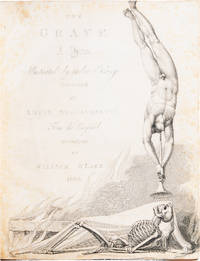
18701278541870. BLAKE William BLAIR Robert. The Grave. London: John Camden Hotten circa 1870. Folio 11 by 14 inches modern three-quarter red morocco raised bands top edge gilt. $1650.Third edition of Blair's singular poetic achievement with splendid engraved frontispiece portrait of William Blake and 12 engraved plates rendered by Shiavonetti after Blake's original designs including the engraved title page. In October 1805 Blake was commissioned by the engraver and would-be publisher Robert H. Cromek to prepare 40 drawings for Robert Blair's Grave from which Cromek planned to select 20. While The Grave originally appeared in 1743 the illustrations in this very scarce second edition and the rarely found 1808 first edition are especially famous for vividly demonstrating ""the rare imaginative power of William Blake"" Magnusson 162. ""In fact Blair had a perceptible influence on Blake the poet as well as on Blake the painter"" Kunitz & Haycraft 46. A dispute over a preliminary etching ""in white-line"" called ""Death's Door"" which Cromek rejected resulted in Blake's being prevented from engraving his own designs so the 12 drawings eventually selected were rendered by Louis Schiavonetti ""with a mingled grace and grandeur which won for them a wider popularity Never has the theme of death been handled in pictorial art with more elevation and beauty"" DNB. Also featured is Blake's dedicatory poem ""To the Queen"" a prefatory comment on the designs by Henry Fuseli and a concluding section ""Of the Designs."" Preceded by the rare 1808 edition of less than 600 copies and the large folio second edition of 1813. This third edition was produced by John Camden Hotten sometime around 1870 after Gilchrist's 1863 Life of William Blake reawakened an interest in the poet/artist. With minor alterations Gilchrist was able to use the original plates from the 1813 edition with the reset text being a very close imitation of the original; the letterpress title page is still for the 1813 Ackermann edition for instance with no mention of Hotten or 1870. Bentley Blake Books 350A. Keynes 82. Ray Illustrator and the Book in England 6a. See Lewine 68. Fine condition. hardcover
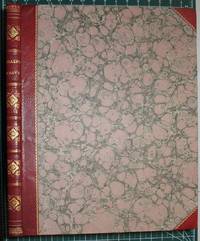
180822141London: Printed by T. Bensley for RH Cromek 1808. First quarto edition. Original endpapers retained along with some provenance thereby. Edges trimmed not by Dusel! to 34.4 x 27 cm. A few finger smudges to text and to margins of a couple plates plate marked for page 21 out-of-place at page 23 and with some rubbing to plate caption. . Complete with 13 plates including portrait plate of Blake by Schiavonetti after the painting by T. Phillips and engraved title page: 2 fl. xvi 36 4 pp. 11 plates inserted in main text. New binding by Phillip Dusel of half red morocco and marbled boards. <br/><br/>Bookplate of Ferdinand Meath McVeagh 1789-1888 of Drewstown County Meath Ireland and period Post Office / Bookseller / Stationer's ticket to front pastedown. A very handsome and clean copy in a very tasteful modern fine binding in period style. Bentley 435-B. Printed by T. Bensley for RH Cromek hardcover
1813003676London: R. Ackermann 1813. Leather. Very Good. William Blake. Original half brown morocco over pebbled boards five raised bands gilt title and decorated compartments marbled endpapers 14" x 11 1/2". Dedication to the Queen by Blake List of Subscribers from 1808 issue Advertisement signed Cromak Remarks signed Fuseli Biographical sketch of Robert Blair Biographical sketch of Lewis Schiavonetti Biographical sketch of Robert Hartley Cromek Text of poem 37 pages Of the Designs; Engraved Blake portrait engraved titlepage of 1808 plus 11 full-page plates engraved by Schiavonetti after William Blake at rear. Some general exterior wear bumped corners and rubbing; typical light foxing heaviest on Blake portrait and engraved title page else internally clean. Provenance: Armorial bookplate of George Baird Stichill. Size: Folio <br/> <br/> R. Ackermann hardcover
1808951London: T. Bensley for R. H. Cromek 1808. First Edition. William Blake. 1st edition quarto xiv 36 4. of Blake’s illustrations for Blair’s 1743 poem. Portrait frontispiece after Phillips etched title page 11 plates by Luigi Schiavonetti engraved after Blake's designs. One of about 590 copies published by subscription. Some foxing particularly concentrated at the portrait and etched title page else very good in 20th century ¾ calf and marbled boards. In October 1805 Blake was commissioned by the publisher Cromek to prepare 40 drawings for the poem. Disagreements between Blake and Comek about the artistic direction led to hiring Schiavonetti for the engraving. Bentley Blake Books 435B. Bindman Complete Graphic Works of Blake 465-476. Keynes 81. Ray 6. T. Bensley for R. H. Cromek unknown