3 139 résultats
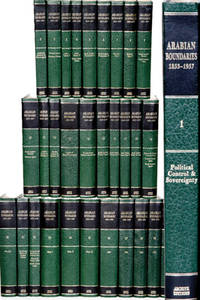
1988Arabian-Boundaries-30Archive Editions Ltd 1988-12-01. Hardcover. Very Good. 23x15x11. In fine clean condition 30 volume set including all maps some volumes have DENTED corners clean pages no missing pages Archive Editions Ltd hardcover
1989165741Archive Editions 1989. Hardcover. 1 inch tear to top of back joint else near new clean tight and bright condition. 836pp. Archive Editions hardcover
1990165744Archive Editions 1990. Hardcover. Near new fresh unused condition covers bright text clean & binding tight / published without dust jacket. 527pp. Archive Editions hardcover
1990165742Archive Editions 1990. Hardcover. As new clean tight & bright condition / published without dust jacket. 651pp. Archive Editions hardcover
1992165743Archive Editions 1992. Hardcover. Minor dent to edge of back cover else near new clean tight and bright condition / published without dust jacket. 831pp. Archive Editions hardcover
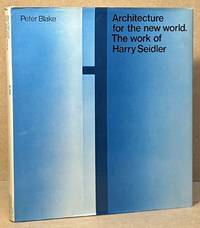
197398889Sydney: Horwirtz Australia 1973. Cloth/dust jacket Quarto. Hardcover. Very good/very good. gray cloth black lettering dust jacket 264 pp inscribed by Harry Seidler to Eric Boissonnas on the title page <br /> <br /> <br /> Standard shipping no tracking / Priority with tracking / Custom quote for large or heavy orders. Horwirtz Australia hardcover
19739546393Wittenborn 1973. This is an ex-library book and may have the usual library/used-book markings inside.This book has hardback covers. In fair condition suitable as a study copy. Dust jacket in fair condition. Please note the Image in this listing is a stock photo and may not match the covers of the actual item1600grams ISBN:0725502320 Wittenborn hardcover
1973023111Horwirtz Australia 1973. First edition. hardcover. Near Fine/near fine. Inscribed full signature on half-title by Seidler. No other markings. Mylar covered dust jacket. Always securely packed. Professional booksellers since 1994. Satisfaction guaranteed. Horwirtz Australia unknown
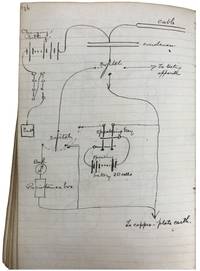
191335824Various places chiefly United States and Europe 1913. A substantial archive documenting the scientific technical and personal life of Francis Blake Jr. inventor and electrical engineer associated with the early development of the telephone. The material traces Blake’s career from his work with the U.S. Coast and Geodetic Survey through his experimental work on telephone transmission and his later involvement in patent disputes and the business of telephony.<br/> <br/> "If the Blake name is unrecognizable today this is no reflection of his accomplishments which were significant but of Blake's loathing for publicity and public attention. Ultimately Blake reached the goals he sought and achieved the anonymity he preferred. Whatever lesson that offers us today the significance of Blake's life and his inventions endures. His story is a compelling and fascinating chronicle of unbounded energy independence and genius" Elton W. Hall Francis Blake: An Inventor's Life Massachusetts Historical Society: 2003 p. xi. At a very young age Francis Blake Jr. the youngest of five children born to Francis Blake Sr. an itinerant businessman and Caroline Trumbull Blake was recognized for his high aptitude in science and math. His uncle a Commodore in the U.S. Navy secured for him an appointment to the U.S. Coast and Geodetic Survey where starting at the age of 16 he excelled at triangulation hydrographic work astronomical measurements and the complicated method of determining trans-Atlantic and trans-continental longitude via telegraphy. His work with the U.S.C.G.S. brought him to France Cuba and all over the United States. Blake's fascination with the technical equipment he encountered and the drive to perfect each piece of apparatus developed into a career as an inventor. Leaving the U.S.C.G.S. in 1877 he began working to that end. Blake first learned of Alexander Graham Bell's invention from his Coast supervisor Julius E. Hilgard who had been one of several judges that had awarded Bell a prize at the 1876 Centennial Exhibition. The telegraphic work Blake had done during his years at the Coast Survey had provided him with a highly sophisticated understanding of electricity Hall pp. 71-72. While Bell had been the first to invent the telephone his first apparatus had a significant flaw: while it listened well it could not transmit speech with distinct quality or sufficient volume for communicants to easily understand one another and carry a meaningful conversation. Famed inventor Thomas J. Edison jumped on the opportunity and sold a better transmitter to Western Union which was poised to take the lion's share of the new telephone market. Working from his home workshop however Blake bested both Bell and Edison inventing a transmitter using a carbon microphone and contacts that telephonically produced better sound quality than anything before. The addition of the Blake transmitter would immediately launch Bell Telephone as the gold standard for the next century. The present archive is predominantly comprised of material from his U.S.C.G.S. work as well as the period during and immediately after the invention of his transmitter. Evidenced throughout are two key components of Blake's character: his continual drive for perfection whether related to an invention construction on his estate Keewaydin or the quality of oats delivered from a local merchant; and his firm belief in his own claims whether related to the endless patent infringement litigation which followed his invention to the monies owed to him from a bequest after the death of a relative. Included are several daily manuscript journals and account books a retained carbon copy letterbook from 1881 and numerous books and pamphlets from his own library related to the telephone including Bell's The Telephone: A Lecture Entitled Researches in Electric Telephony . delivered before The Society of Telegraph Engineers October 31st 1877. Other printed material includes Blake's true copy of the seminal 1879 contract between Western Union and Bell Telephone in which the former agreed to withdraw from the telephone business. Significant holdings of Blake material are found in the Massachusetts Historical Society donated by the descendants of Francis Blake Jr. in May 1964. The present archive was part of the Blake family's Dover Massachusetts residence the contents sold at public auction in 2018. An itemized catalogue of the full Francis Blake archive is available upon request.<br/> <br/> Elton W. Hall Francis Blake: An Inventors Life Massachusetts Historical Society: 2003. unknown
1960136893Los Angeles: Twentieth Century-Fox 1960. Archive of scripts and revision pages for 56 episodes of the detective television series dated variously between 1958 and 1960. Copies belonging to screenwriter Lewis Reed with his manuscript name on the front wrapper of each episode.<br /> <br /> 36 scripts contain pink blue white and yellow revision pages many bound separately and laid in at the rear.<br /> <br /> Included are screenplays for nearly half of the 114-episode run of the series starring the sophisticated sharp-dressed jazz-loving private eye Peter Gunn played by Craig Stevens. Probably the only television show to ever rival the best films noir of the big screen with minimalist dialogue and bleak open-ended conclusions that challenge even the best of television today. <br /> <br /> Creator Blake Edwards would use the success of the series to jump start his film career going on to direct "Breakfast at Tiffany's" 1961 and the "Pink Panther" film series starring Peter Sellers.<br /> <br /> Noted composer Henry Mancini won an Emmy and two Grammy Awards for the show's well-loved theme song including the first Grammy ever awarded for Album of the Year.<br /> <br /> Scripts in Very Good to Near Fine condition. Mimeograph on eye-rest green or white stock. Twentieth Century-Fox unknown
19684215011968. Very Good. A large archive of manuscripts and related literary papers of gay writer Richard Blake Brown including novels plays poetry travel writing and memoirs. The collection consists of about 130 holograph and typescript manuscripts: 50 notebooks of holograph manuscripts; 38 volumes of bound typescripts; 39 unbound typescripts; two holograph booklets; one unbound holograph manuscript; seven of Brown’s published novels five of which are annotated by him and have extra material laid in; and about 60 miscellaneous items including manuscript extracts letters. and photographs. The bulk of the writings date from the late 1920s-1950s.<br /> <br /> Richard Blake Brown 1902-1968 is an overlooked figure in the British literary scene of the interwar period: a remarkable man and an exceptional writer Brown’s open homosexuality was a source of puzzlement even to fellow gay writer Denton Welch who once exclaimed in response to a 1946 letter from Brown: "Is this exhibitionism or vanity or what"<br /> <br /> The collection contains a number of references to the Queen’s dressmaker Norman Hartnell another prominent homosexual and lifelong friend of Brown's and Brown’s homosexual sensibility permeates the whole of the present collection: from his teenage memoir The Remarkable History of Hilden Abbey – in which he describes dressing up with his brother Lincoln and Tonbridge schoolfellow Rupert Croft-Cooke as monks and abbots – to a number of misogynistic limericks written in the late 1960s; and in other writings such as My Aunt in Pink and The Gaiety of God. However such honesty was received at the time it now looks courageous in the light of the sort of punishment meted out to Croft-Cooke who was imprisoned for homosexual activities in 1953. Whatever view the authorities may have taken it does appear that Brown was indulged by his friends: a copy of Graham Greene’s 1958 play The Potting Shed survives not in this collection inscribed to: "My dear Richard Many thanks for your letter which has broken a long silence. I am glad you liked the play. What have you been doing with yourself Any more books on the way I heard rumours of you at the wedding and how you eclipsed every other male there. Affectionately Graham."<br /> <br /> A useful account of Brown’s life up to 1947 can be found in his unpublished autobiography A Life in the Shade: born in 1902 in Boston ‘of American parents who brought him to England later in the same year’ because his father had invented a system of power-signaling for London’s Underground Railways he attended Tonbridge and Berkhamsted public schools and Magdalene College Cambridge graduating in 1923. He then joined the Old Vic Company for a season of Shakespeare as a student-actor uncertain as to whether the stage or the church should be his profession. Having decided on the latter he studied theology at St. Stephen’s House Oxford and became one of the 12 curates of the famous parish of St. Mary’s Portsea but voluntarily resigned his orders three years later. He then published 12 books during the 1930s including The Apology of a Young Ex-Parson and returned to the exercise of his ministry with the approval of Archbishop of Canterbury Doctor Cosmo Gordon Lang and went to work in a mining village in Derbyshire. For six years he was a temporary chaplain R.N.V.R. including chaplain of the Flagship HMS Renown during the sinking of the Bismarck episode. After the war he continued in his ministry as a prison chaplain.<br /> <br /> Brown remained an inveterate writer throughout his life and published 14 novels: Miss Higgs and her Silver Flamingo Duckworth 1931 Yellow Brimstone Duckworth 1931 The Apology of a Young Ex-Parson Duckworth 1932 A Broth of a Boy Fortune Press 1934 The Blank Cheque Fortune Press 1934 Joy in Jeopardy Fortune Press 1935 Rococo Coffin Fortune Press 1936 My Aunt in Pink Martin Secker 1936 Spinsters Awake! Martin Secker 1937 Bicycle Belle Fortune Press 1937 God by Lamplight Skeffington 1938 Mr. Prune on Cotswold Martin Secker 1938 Yet Trouble Came Cassell 1957 and Bright Glades Cassell 1959.<br /> <br /> Not only does the archive contain some of the manuscripts of these books including Miss Higgs and her Silver Flamingo My Aunty in Pink and Bright Glades but even more important are the large number of unpublished novels and other unpublished writings in the collection including poetry plays and short stories.<br /> <br /> Although an assessment of such a large body of published and unpublished work is difficult a writer such as Brown praised by the English writer and feminist Vera Brittan for his "scintillating phrases" and "conscious brilliance" deserves to be taken seriously. In response to being described as a "Firbankian" novelist Brown wrote in 1951: "I grow so weary of being told that my books have been strongly influenced by Ronald Firbank of whom few people in these days would ever had heard but for his 'Valmouth' being turned into a modern musical a few years ago … I admit I enjoyed several of Firbank’s short novels … but I possess far too vivid an imagination of my own."<br /> <br /> Brown’s writing is often described as being unusual and idiosyncratic. Several of the novels Yellow Brimstone; Yet Trouble Came; Thunder are set in the future and although the influence of Firbank is apparent so is that of Anthony Trollope and Thomas Love Peacock. In Vera Brittan’s 1931 review of Yellow Brimstone she wrote: "The author whose delicate improprieties are subtly reminiscent of Mr. James Branch Cabell undoubtedly regards himself – by no means without justification – as a very clever young man. He is not yet however sufficiently aware that the New Morality which his scintillating phrases embody has been stated before; though never perhaps with such conscious brilliance."<br /> <br /> The following year on the publication of Brown’s autobiography The Apology of a Young Ex-Parson another novelist Norman Collins commented that it hard to believe that Blake Brown was not "strenuously parodying himself" in "this unbelievable diary": "Anyone who reads this book will agree with the author when he says of himself; 'I am quite a singular person.' An orthodox churchman – one of the kind that the author hates – might even see evidence of benevolent creation in the fact that Mr. Blake Brown is unique."<br /> <br /> The condition of the collection is very good overall with damp-staining to several intermittent volumes mostly confined to the covers only or just to the covers and margins of the endleaves and not affecting any autograph or typescript pages. A few volumes have some additional damp-staining pervading into the leaves at the front or back with no visible damage to the manuscript pages. Four volumes with partial damage are noted in the individual description. Several volumes have later manuscript notes by RBB including some in which he added or removed a photograph or other tipped-in material.<br /> <br /> A detailed finding aid to the collection divided into eight sections: Novels; Poetry; Short stories; Non-fiction; Drama; Travel; Miscellaneous; Published works is available. unknown
1971355490719475London 1971. London: Lion and Unicorn Press 1971. First UK Edition Thus. A Limited Edition of 400 Copies this being # 132. A Softcover. Illustrations by Quentin Blake. A very faint crease to the bottom right hand corner of the front cover otherwise VG indeed. Not issued with a D/W. Uncommon. Photographs/scans available upon request. paperback
1995Q-0449147347Ivy Books 1995-06-27. Mass Market Paperback. New. New. In shrink wrap. Looks like an interesting title! Ivy Books paperback
1993Q-0449908240Ballantine Books 1993-06-08. Hardcover. New. New. In shrink wrap. Looks like an interesting title! Ballantine Books hardcover
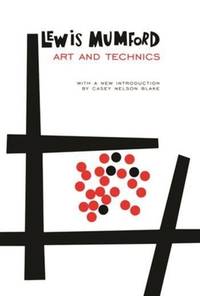
2000Q-0231121059Columbia University Press 2000-05-15. Paperback. New. In shrink wrap. Looks like an interesting title! Columbia University Press paperback
2000x-0231121059Columbia Univ Pr 2000. Paperback. New. 162 pages. 8.25x5.25x0.75 inches. Columbia Univ Pr paperback
19733015Abrams Harry Printed in Columbia 1973. HBDJ Oversized THICK pictorial White cloth buckram 1ST edition 1973 LARGE FORMATpictorial white buckram Cover is Nice bright White in original printed acetate DJ titled in Black & red on fron t panel Very Light soil DJ & tiny chips extremities DJ few very small edge tears extremities DJ Interior nice tight Clean minor wearNF/NF AS-IS 458 pgs. First Edition. Hard Cover. Abrams Harry, Printed in Columbia hardcover
19972-1862070032Granta Books 1997. Hardcover. New. 245 pages. 8.43x5.67x1.02 inches. Granta Books hardcover
1997Q-0312167776St. Martin's Press 1997-08-15. Hardcover. New. In shrink wrap. Looks like an interesting title! St. Martin's Press hardcover