Sophoclis [Sophocles] [Author]; Brunck, Rich Franc Phil [Brunck, Richard Francois Philippe] [Editor]Biblio.com
137 résultats
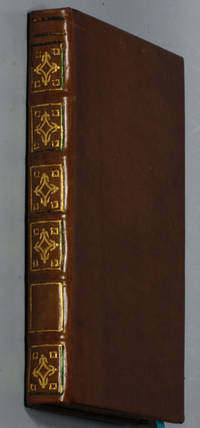
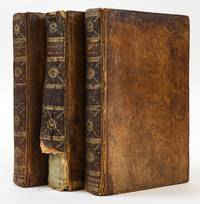
17881396093Argentorati Strasbourg: n.p. volume I and II; excudit Jon. Henricus Heitz volume III 1788. Hardcover. Octavo three volumes. Volumes 1 and 3 in Good minus condition Volume 2 in Fair condition. Bound in full tree calf with gilt ornamentation to spine and edges. Spines have gilt lettering cracking to joints tears and chipping. Volume 2 spine is partially detached with the tail end torn away. Boards have mild rubbing wear and peeling chipping and moderate wear to extremities. Mild to moderate bumping to corners in some cases exposing the boards. Textblocks have marbled endpapers light age toning light stains scattered throughout and speckling to edges. Some of the end papers appears to have a line of adhesive near the spine which partially attaches the free end pages to the marbled pages. Volume 1 front marbled endpapers are partially attached has a pen inscription on the front free end page and light to moderate adhesive stains on the edges of pages 429-432. Volume 2 has light to moderate adhesive stains on the edges of the title page and pages 547-549. Volume 3 has light to moderate adhesive stains on the edges of the title page and pages 531-533. Text appears complete however volumes 2 and 3 contain half-title pages which volume 1 lacks. Text in Greek and Latin. Shelved in Room G.<br /> <br> <br /> <br> <br /> CONTENTS: VOL I: xii 432 pages;-- VOL II: 2 549;-- VOL III: 2 533. 1396093. Special Collections. [n.p.] [volume I and II]; excudit Jon. Henricus Heitz [volume III] hardcover
178877673BB1788 . Paris: Didot Fils 1788. 8°. XVI 341 3 S. Titelblattvignette. 28 gestochene Schlachtenpläne auf 18 Ausfalttaf. Marmorierter Pappband mit rotem Rückenschild mit goldgeprägter Schrift und Filletten und umlaufendem gemustertem Schnitt leicht gebräunt; wenige Stockflecken; Ecken bestossen: Kanten berieben; Einband minim beschabt; altersmässig gut erhalten Philippe Henri Comte de Grimoard 1753-1815. Französischer Generaladjutant und Militärschriftsteller. unknown
172735035Paris:: Montalant. Very Good with no dust jacket. 1727. Hardcover. folding plates; Tabulae astronomicae : Ludovici Magni jussu et munificentia exaratae et in lucem editae : in quibus solis lunae reliquorumque planetarum motus ex ipsis observationibus . Traduntur . : adjecta sunt descriptio constructio & usus instrumentorum astronomiae novae practicae inservientium variaque problemata astronomis geographisque perutilia : ad meridianum Observatorii Regii Parisiensis in quo habitae sunt observationes ab ipso autore Philippo de La Hire .4 folding engraved plates. 14 102 2 81 7 pages. 4to 256x197 mm full decoarative modern calf gilt; opening leaves dampstained and foxed occasional limited browning. DSB VII 579; Houzeau & Lancaster 12780. . Montalant hardcover
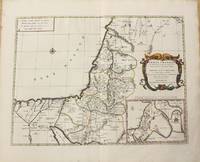
1710M10249Amsterdam: Jean Covens & Corneille Mortier c.1710. Very Good. Size : 417x555 mm 16.42x21.85 Inches Coloring: Original Hand Coloring Category: Maps Africa North Egypt; Maps Asia Middle East Holy Land & Palestine; Jean Covens & Corneille Mortier unknown
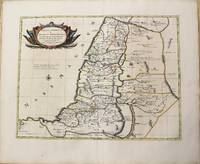
1710M10226Amsterdam: Jean Covens & Corneille Mortier c.1710. Very Good. Notes: Map of the Holy Land with a large decorative cartouche showing the location of the twelve tribes in the Holy Land. Size : 410x530 mm 16.14x20.87 Inches Coloring: Original Hand Coloring Category: Maps Asia Middle East Holy Land & Palestine; Jean Covens & Corneille Mortier unknown
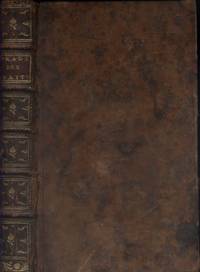
1753123403Sans mention d'éditeur 1753. Bonded Leather. <b>Livre en français</b>. Couverture rigide. Sans mention d'éditeur ni d'auteur. Reliure plein veau d'époque. 365 12 pages. Un mors fendu. <i>ref. 123403</i> Sans mention d'éditeur hardcover
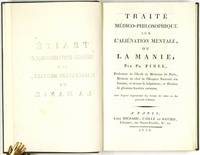
1800315841800. Paris Chez Richard Caile et Ravier Libraires rue Haute-Feuille No. 11 An IX 1800-01 8° I-V VI-LVI 318 pp. 1 Tabelle. 2 Taf. feiner Pappband mit Rvg.; ungewöhnlich breites und frisches Exemplar. First Edition of one of the most important medical classics and one of the most valuable texts in the history of psychiatry written in the opening year of the new century. It is both a postcript to the eighteenth and a preface to the nineteenth century. Pinel wrote this treatise on the basis of his experience in the Bicêtre. His medical theories and classifications are very methodical and clear and they contain some original ideas but their importance pales in comparison with his work of hospital reform and reorganization by which a new tradition was established and a new perspective opened for practical and research psychiatry; it is this achievement which always come to mind when the name of Philippe Pinel is mentioned. On May 24 1798 at the risk of his own life and liberty he struck off the chains of the insane at the Bicêtre placing them in hospitals under lenient physicians and doing away with the abuses of drugging and blood-letting to which they were subjected. Garrison & Morton No. 4922; Heirs of Hippocrates 1070 Grolier/Medicine 54; Lilly Notable Medical Books 155; Norman 1701 unknown
172437118à Paris: par La Compagnie des libraires 1724. Fine. par La Compagnie des libraires à Paris 1724 18.50 x 25.50 cm relié New edition after the original published in 1699. The second part is announced by a half-title. Contemporary speckled brown calf binding. Richly decorated spine with raised bands. Red morocco title label. Various rubbing. Good copy. Renusson devoted several works to family law including this treatise on dower rights which concerns the property that a husband will leave to his wife in case of death. We distinguish customary law thus fixed by custom and contractual law that is to say fixed by contract. Dower is a fundamental element of marriage law under the Ancien Régime. par La Compagnie des libraires hardcover
178956943Strasbourg Levrault 1789. 2 contemp. marbled boards. Spines faded. Gilt lettering and paperlabels pasted on lower part of spines. Stamp on title-pages. 2262274138;3662 pp. and 28 folded engraved plates. A few faint marginal brownspots. Printed on thick fine paper. <br/><br/><em>Klaus Jordan 2049. - Sloos 8192. </em> hardcover
1777001671Utrecht: G.T. van Paddenburg and J. Visch 1777. Hardcover. Very Good/No Jacket. Folio. Etc. en Andere Voornaame Gebouwen van dit Hertogdom. Four volumes in one Vols. 2-4 dated 1770. Second Edition. Four volumes in one. Separate title pages and pagination. Full vellum binding with decorative blind tooling on front and rear boards. Raised bands and red leather spine label. In tan custom slipcase. Vol. 1: 3 39 p.p. 1 9 leaves of engravings showing castles and countrysides 1 folding; Vol. 2: 43 p.p. with 40 leaves of engravings 3 folding. Vol. 3: 30 p.p. 1 35 engravings 3 folding. Vol. 4: 24 p.p. errors to pagination 13 engravings 2 folding. A historical and genealogical description of the villages cities and prominent buildings in the province of Brabant Netherlands. Illustrations of castles architectural buildings countrysides and coats of arms. Upper front joint cracked and rear joint starting. Some scuffs and black smudges to boards and spine. Light soiling to upper rear board. Pages and endpapers lightly foxed. Otherwise a very good copy with nicely detailed engravings. G.T. van Paddenburg and J. Visch hardcover
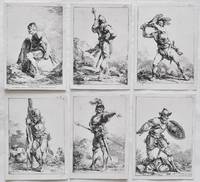
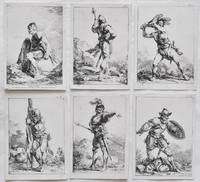
175525093<p>A work from Loutherbourg`s early career when he was in Paris 1755 – 1770. This series is outstandingly rare. Ca. 11.9 x 8.5 cm; plate mark not visible; in fine condition.</p><p>Literature: Le Blanc.</p><p>Loutherbourg an Alsatian painter who studied etching in Johann Georg Wille's academy clearly admired the prints of the seventeenth-century Neapolitan painter Salvator Rosa as did many other French printmakers of the time. In the set entitled "First suite of Soldiers"Loutherbourg took up a format associated with Rosa in order to showcase his own inventiveness and fluency.</p><p><strong>Philip James de Loutherbourg</strong> RA 31 October 1740 – 11 March 1812 whose name is sometimes given in the French form of <strong>Philippe-Jacques</strong> the German form of <strong>Philipp Jakob</strong> or with the English-language epithet of <strong>the Younger</strong> was a French-born British painter who became known for his large naval works his elaborate set designs for London theatres and his invention of a mechanical theatre called the "Eidophusikon". He also had an interest in faith-healing and the occult and was a companion of the confidence-trickster Alessandro Cagliostro</p><p><input type="checkbox"></p></p><p>Loutherbourg was born in Strasbourg in 1740 the son of an expatriate Polish miniature painter.1 Intended for the Lutheran ministry he was educated at the University of Strasbourg.2</p><p>Rejecting a religious calling Loutherbourg decided to become a painter and in 1755 placed himself under >Charles-André van Loo in Paris and later under Francesco Giuseppe Casanova. His talent developed rapidly and he became a figure in the fashionable society of the day. In 1767 he was elected to the French Academy although below the age required by the rules of the institution and painted landscapes sea storms and battles all of which work had a celebrity above those of the specialists then working in Paris. He made his debut with the exhibition of twelve pictures including <em>Storm at Sunset</em> <em>Night</em> and <em>Morning after Rain</em>.2</p><p>Loutherbourg then travelled through Switzerland Germany and Italy distinguishing himself as much by his mechanical inventions as by his painting. One of these showing new effects produced in a model theatre was the wonder of the day with its use of lights behind canvas representing the moon and stars and the illusory appearance of running water produced by clear blue sheets of metal and gauze with loose threads of silver.2</p><p>In 1771 he settled in London where David Garrick paid him £500 a year to design scenery and costumes and oversee the stage machinery at the Drury Lane Theatre.3 His stage effects attracted the admiration not just of the general public but also of artists including Joshua Reynolds. He devised scenic effects in which for instance green trees gradually became russet and the moon rose and lit the edges of passing clouds:2 illusions achieved through the use of coloured lantern-slides and the ingenious lighting of transparencies.4 He continued to work at the theatre until 1785.3</p><p>He achieved an even greater success with an entertainment called the <em>Eidophusikon</em> meaning "image of nature". This was a miniature mechanical theatre measuring six by eight feet and described as displaying "Various Imitations of Natural Phenomena represented by Moving Pictures". It was presented at Loutherbourg's home from March 1781 in an auditorium seating about 130 people. He used Argand lamps to light the stage and stained glass to change colours.</p><p>At Christmas 1781 Loutherbourg mounted a spectacle at a party in the Egyptian Hall at Fonthill for William Beckford promising according to Beckford to "present a mysterious something that the eye has not seen or heart of man conceived".4 Following this he attempted rather more fantastical subjects for the Eidophusikon presenting a scene from <em>Paradise Lost</em> with "Satan arraying his troops on the banks of the Fiery Lake and the rising of the Palace of Pandemonium".4 The Eidophusikon soon closed however as the income did not cover the costs and the audience demanded new productions faster than Loutherbourg could create them. He has been called the inventor of the panorama but although it first appeared about the same time as the Eidophusikon the first panorama was painted and exhibited by the Scottish painter Robert Barker.</p><p>Despite these other projects Loutherbourg still found time for painting. <em>Lord Howe's action or the Glorious First of June</em> exhibited 1795 and other large naval pictures were commissioned to commemorate British naval victories many of them ending up soon afterwards in the Greenwich Hospital Gallery in whose successor the National Maritime Museum they still remain. His finest work was the <em>Destruction of the Armada</em>. He also painted the <em>Great Fire of London</em> and several historical works including the <em>Attack of the Combined Armies on Valenciennes</em> 1793.2 He was interested in the industrial revolution and his 1801 painting <em>Coalbrookdale by Night</em> shows iron foundries at work.</p><p>Seven of his paintings including <em>Lodore Waterfall</em> and <em>Skating in Hyde Park</em> are in the Government Art Collection.5</p><p>He was made a member of the Royal Academy in 1781.</p><p>Two sets of drawings by de Loutherbourg were published reproduced in aquatint under the title <em>Picturesque English Scenery</em> in 1801 and 1805. He also contributed illustrations to a Bible published by Thomas Macklin in 1800.3 After his death Cadell and Davies published a volume of the Apocrypha. All 110 of his drawings for the vignettes but not the Apocrypha are pasted in the Bowyer Bible in Bolton Museum in Greater Manchester.</p><p>Esoteric interests</p><p>In 1789 Loutherbourg temporarily gave up painting in order to pursue an interest in alchemy and the supernatural.3 He met Alessandro di Cagliostro who instructed him in the occult.3 He travelled about with Cagliostro leaving him however before his condemnation to death.2 He and his wife also took up faith-healing. A pamphlet called <em>A List of a Few Cures performed by Mr and Mrs De Loutherbourg of Hammersmith Terrace without Medicine</em> was published in 1789. Written by a follower named Mary Pratt it claimed that the Loutherbourgs had cured two thousand people between Christmas 1788 and the following July "having been made proper recipients to receive divine manuductions".6</p><p>Death</p><p>Loutherbourg died in Chiswick in 1812.</p><p>There are paintings by him in the collections of many British institutions including Tate Britain The Victoria and Albert Museum The National Portrait Gallery The Royal Academy of Art Leicester Farnham and Derby Art Gallery.7</p><p>Loutherbourg was buried in Chiswick Old Cemetery adjoining the graveyard of St Nicholas Church Chiswick. Buried nearby are the artists William Hogarth and James Abbott McNeill Whistler.</p>
176022093<p>A work from Loutherbourg`s early career when he was in Paris 1755 - 1770. This series is outstandingly rare. Ca. 11.9 x 8.5 cm; plate mark not visible; in fine condition.</p><p>Literature: Le Blanc.</p><p>Loutherbourg an Alsatian painter who studied etching in Johann Georg Wille's academy clearly admired the prints of the seventeenth-century Neapolitan painter Salvator Rosa as did many other French printmakers of the time. In the set entitled "First suite of Soldiers"Loutherbourg took up a format associated with Rosa in order to showcase his own inventiveness and fluency.</p>