137 résultats
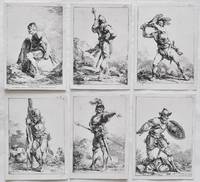
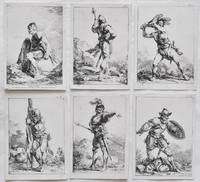
176022093<p>A work from Loutherbourg`s early career when he was in Paris 1755 - 1770. This series is outstandingly rare. Ca. 11.9 x 8.5 cm; plate mark not visible; in fine condition.</p><p>Literature: Le Blanc.</p><p>Loutherbourg an Alsatian painter who studied etching in Johann Georg Wille's academy clearly admired the prints of the seventeenth-century Neapolitan painter Salvator Rosa as did many other French printmakers of the time. In the set entitled "First suite of Soldiers"Loutherbourg took up a format associated with Rosa in order to showcase his own inventiveness and fluency.</p>
175525093<p>A work from Loutherbourg`s early career when he was in Paris 1755 – 1770. This series is outstandingly rare. Ca. 11.9 x 8.5 cm; plate mark not visible; in fine condition.</p><p>Literature: Le Blanc.</p><p>Loutherbourg an Alsatian painter who studied etching in Johann Georg Wille's academy clearly admired the prints of the seventeenth-century Neapolitan painter Salvator Rosa as did many other French printmakers of the time. In the set entitled "First suite of Soldiers"Loutherbourg took up a format associated with Rosa in order to showcase his own inventiveness and fluency.</p><p><strong>Philip James de Loutherbourg</strong> RA 31 October 1740 – 11 March 1812 whose name is sometimes given in the French form of <strong>Philippe-Jacques</strong> the German form of <strong>Philipp Jakob</strong> or with the English-language epithet of <strong>the Younger</strong> was a French-born British painter who became known for his large naval works his elaborate set designs for London theatres and his invention of a mechanical theatre called the "Eidophusikon". He also had an interest in faith-healing and the occult and was a companion of the confidence-trickster Alessandro Cagliostro</p><p><input type="checkbox"></p></p><p>Loutherbourg was born in Strasbourg in 1740 the son of an expatriate Polish miniature painter.1 Intended for the Lutheran ministry he was educated at the University of Strasbourg.2</p><p>Rejecting a religious calling Loutherbourg decided to become a painter and in 1755 placed himself under >Charles-André van Loo in Paris and later under Francesco Giuseppe Casanova. His talent developed rapidly and he became a figure in the fashionable society of the day. In 1767 he was elected to the French Academy although below the age required by the rules of the institution and painted landscapes sea storms and battles all of which work had a celebrity above those of the specialists then working in Paris. He made his debut with the exhibition of twelve pictures including <em>Storm at Sunset</em> <em>Night</em> and <em>Morning after Rain</em>.2</p><p>Loutherbourg then travelled through Switzerland Germany and Italy distinguishing himself as much by his mechanical inventions as by his painting. One of these showing new effects produced in a model theatre was the wonder of the day with its use of lights behind canvas representing the moon and stars and the illusory appearance of running water produced by clear blue sheets of metal and gauze with loose threads of silver.2</p><p>In 1771 he settled in London where David Garrick paid him £500 a year to design scenery and costumes and oversee the stage machinery at the Drury Lane Theatre.3 His stage effects attracted the admiration not just of the general public but also of artists including Joshua Reynolds. He devised scenic effects in which for instance green trees gradually became russet and the moon rose and lit the edges of passing clouds:2 illusions achieved through the use of coloured lantern-slides and the ingenious lighting of transparencies.4 He continued to work at the theatre until 1785.3</p><p>He achieved an even greater success with an entertainment called the <em>Eidophusikon</em> meaning "image of nature". This was a miniature mechanical theatre measuring six by eight feet and described as displaying "Various Imitations of Natural Phenomena represented by Moving Pictures". It was presented at Loutherbourg's home from March 1781 in an auditorium seating about 130 people. He used Argand lamps to light the stage and stained glass to change colours.</p><p>At Christmas 1781 Loutherbourg mounted a spectacle at a party in the Egyptian Hall at Fonthill for William Beckford promising according to Beckford to "present a mysterious something that the eye has not seen or heart of man conceived".4 Following this he attempted rather more fantastical subjects for the Eidophusikon presenting a scene from <em>Paradise Lost</em> with "Satan arraying his troops on the banks of the Fiery Lake and the rising of the Palace of Pandemonium".4 The Eidophusikon soon closed however as the income did not cover the costs and the audience demanded new productions faster than Loutherbourg could create them. He has been called the inventor of the panorama but although it first appeared about the same time as the Eidophusikon the first panorama was painted and exhibited by the Scottish painter Robert Barker.</p><p>Despite these other projects Loutherbourg still found time for painting. <em>Lord Howe's action or the Glorious First of June</em> exhibited 1795 and other large naval pictures were commissioned to commemorate British naval victories many of them ending up soon afterwards in the Greenwich Hospital Gallery in whose successor the National Maritime Museum they still remain. His finest work was the <em>Destruction of the Armada</em>. He also painted the <em>Great Fire of London</em> and several historical works including the <em>Attack of the Combined Armies on Valenciennes</em> 1793.2 He was interested in the industrial revolution and his 1801 painting <em>Coalbrookdale by Night</em> shows iron foundries at work.</p><p>Seven of his paintings including <em>Lodore Waterfall</em> and <em>Skating in Hyde Park</em> are in the Government Art Collection.5</p><p>He was made a member of the Royal Academy in 1781.</p><p>Two sets of drawings by de Loutherbourg were published reproduced in aquatint under the title <em>Picturesque English Scenery</em> in 1801 and 1805. He also contributed illustrations to a Bible published by Thomas Macklin in 1800.3 After his death Cadell and Davies published a volume of the Apocrypha. All 110 of his drawings for the vignettes but not the Apocrypha are pasted in the Bowyer Bible in Bolton Museum in Greater Manchester.</p><p>Esoteric interests</p><p>In 1789 Loutherbourg temporarily gave up painting in order to pursue an interest in alchemy and the supernatural.3 He met Alessandro di Cagliostro who instructed him in the occult.3 He travelled about with Cagliostro leaving him however before his condemnation to death.2 He and his wife also took up faith-healing. A pamphlet called <em>A List of a Few Cures performed by Mr and Mrs De Loutherbourg of Hammersmith Terrace without Medicine</em> was published in 1789. Written by a follower named Mary Pratt it claimed that the Loutherbourgs had cured two thousand people between Christmas 1788 and the following July "having been made proper recipients to receive divine manuductions".6</p><p>Death</p><p>Loutherbourg died in Chiswick in 1812.</p><p>There are paintings by him in the collections of many British institutions including Tate Britain The Victoria and Albert Museum The National Portrait Gallery The Royal Academy of Art Leicester Farnham and Derby Art Gallery.7</p><p>Loutherbourg was buried in Chiswick Old Cemetery adjoining the graveyard of St Nicholas Church Chiswick. Buried nearby are the artists William Hogarth and James Abbott McNeill Whistler.</p>
1777001671Utrecht: G.T. van Paddenburg and J. Visch 1777. Hardcover. Very Good/No Jacket. Folio. Etc. en Andere Voornaame Gebouwen van dit Hertogdom. Four volumes in one Vols. 2-4 dated 1770. Second Edition. Four volumes in one. Separate title pages and pagination. Full vellum binding with decorative blind tooling on front and rear boards. Raised bands and red leather spine label. In tan custom slipcase. Vol. 1: 3 39 p.p. 1 9 leaves of engravings showing castles and countrysides 1 folding; Vol. 2: 43 p.p. with 40 leaves of engravings 3 folding. Vol. 3: 30 p.p. 1 35 engravings 3 folding. Vol. 4: 24 p.p. errors to pagination 13 engravings 2 folding. A historical and genealogical description of the villages cities and prominent buildings in the province of Brabant Netherlands. Illustrations of castles architectural buildings countrysides and coats of arms. Upper front joint cracked and rear joint starting. Some scuffs and black smudges to boards and spine. Light soiling to upper rear board. Pages and endpapers lightly foxed. Otherwise a very good copy with nicely detailed engravings. G.T. van Paddenburg and J. Visch hardcover
178956943Strasbourg Levrault 1789. 2 contemp. marbled boards. Spines faded. Gilt lettering and paperlabels pasted on lower part of spines. Stamp on title-pages. 2262274138;3662 pp. and 28 folded engraved plates. A few faint marginal brownspots. Printed on thick fine paper. <br/><br/><em>Klaus Jordan 2049. - Sloos 8192. </em> hardcover
172437118à Paris: par La Compagnie des libraires 1724. Fine. par La Compagnie des libraires à Paris 1724 18.50 x 25.50 cm relié New edition after the original published in 1699. The second part is announced by a half-title. Contemporary speckled brown calf binding. Richly decorated spine with raised bands. Red morocco title label. Various rubbing. Good copy. Renusson devoted several works to family law including this treatise on dower rights which concerns the property that a husband will leave to his wife in case of death. We distinguish customary law thus fixed by custom and contractual law that is to say fixed by contract. Dower is a fundamental element of marriage law under the Ancien Régime. par La Compagnie des libraires hardcover
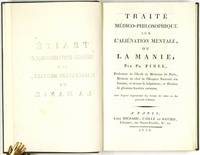
1800315841800. Paris Chez Richard Caile et Ravier Libraires rue Haute-Feuille No. 11 An IX 1800-01 8° I-V VI-LVI 318 pp. 1 Tabelle. 2 Taf. feiner Pappband mit Rvg.; ungewöhnlich breites und frisches Exemplar. First Edition of one of the most important medical classics and one of the most valuable texts in the history of psychiatry written in the opening year of the new century. It is both a postcript to the eighteenth and a preface to the nineteenth century. Pinel wrote this treatise on the basis of his experience in the Bicêtre. His medical theories and classifications are very methodical and clear and they contain some original ideas but their importance pales in comparison with his work of hospital reform and reorganization by which a new tradition was established and a new perspective opened for practical and research psychiatry; it is this achievement which always come to mind when the name of Philippe Pinel is mentioned. On May 24 1798 at the risk of his own life and liberty he struck off the chains of the insane at the Bicêtre placing them in hospitals under lenient physicians and doing away with the abuses of drugging and blood-letting to which they were subjected. Garrison & Morton No. 4922; Heirs of Hippocrates 1070 Grolier/Medicine 54; Lilly Notable Medical Books 155; Norman 1701 unknown
1753123403Sans mention d'éditeur 1753. Bonded Leather. <b>Livre en français</b>. Couverture rigide. Sans mention d'éditeur ni d'auteur. Reliure plein veau d'époque. 365 12 pages. Un mors fendu. <i>ref. 123403</i> Sans mention d'éditeur hardcover
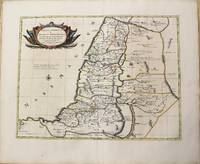
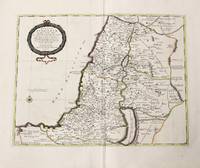
1710M10226Amsterdam: Jean Covens & Corneille Mortier c.1710. Very Good. Notes: Map of the Holy Land with a large decorative cartouche showing the location of the twelve tribes in the Holy Land. Size : 410x530 mm 16.14x20.87 Inches Coloring: Original Hand Coloring Category: Maps Asia Middle East Holy Land & Palestine; Jean Covens & Corneille Mortier unknown
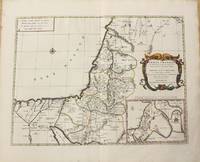
1710M10249Amsterdam: Jean Covens & Corneille Mortier c.1710. Very Good. Size : 417x555 mm 16.42x21.85 Inches Coloring: Original Hand Coloring Category: Maps Africa North Egypt; Maps Asia Middle East Holy Land & Palestine; Jean Covens & Corneille Mortier unknown
172735035Paris:: Montalant. Very Good with no dust jacket. 1727. Hardcover. folding plates; Tabulae astronomicae : Ludovici Magni jussu et munificentia exaratae et in lucem editae : in quibus solis lunae reliquorumque planetarum motus ex ipsis observationibus . Traduntur . : adjecta sunt descriptio constructio & usus instrumentorum astronomiae novae practicae inservientium variaque problemata astronomis geographisque perutilia : ad meridianum Observatorii Regii Parisiensis in quo habitae sunt observationes ab ipso autore Philippo de La Hire .4 folding engraved plates. 14 102 2 81 7 pages. 4to 256x197 mm full decoarative modern calf gilt; opening leaves dampstained and foxed occasional limited browning. DSB VII 579; Houzeau & Lancaster 12780. . Montalant hardcover
178877673BB1788 . Paris: Didot Fils 1788. 8°. XVI 341 3 S. Titelblattvignette. 28 gestochene Schlachtenpläne auf 18 Ausfalttaf. Marmorierter Pappband mit rotem Rückenschild mit goldgeprägter Schrift und Filletten und umlaufendem gemustertem Schnitt leicht gebräunt; wenige Stockflecken; Ecken bestossen: Kanten berieben; Einband minim beschabt; altersmässig gut erhalten Philippe Henri Comte de Grimoard 1753-1815. Französischer Generaladjutant und Militärschriftsteller. unknown
17881396093Argentorati Strasbourg: n.p. volume I and II; excudit Jon. Henricus Heitz volume III 1788. Hardcover. Octavo three volumes. Volumes 1 and 3 in Good minus condition Volume 2 in Fair condition. Bound in full tree calf with gilt ornamentation to spine and edges. Spines have gilt lettering cracking to joints tears and chipping. Volume 2 spine is partially detached with the tail end torn away. Boards have mild rubbing wear and peeling chipping and moderate wear to extremities. Mild to moderate bumping to corners in some cases exposing the boards. Textblocks have marbled endpapers light age toning light stains scattered throughout and speckling to edges. Some of the end papers appears to have a line of adhesive near the spine which partially attaches the free end pages to the marbled pages. Volume 1 front marbled endpapers are partially attached has a pen inscription on the front free end page and light to moderate adhesive stains on the edges of pages 429-432. Volume 2 has light to moderate adhesive stains on the edges of the title page and pages 547-549. Volume 3 has light to moderate adhesive stains on the edges of the title page and pages 531-533. Text appears complete however volumes 2 and 3 contain half-title pages which volume 1 lacks. Text in Greek and Latin. Shelved in Room G.<br /> <br> <br /> <br> <br /> CONTENTS: VOL I: xii 432 pages;-- VOL II: 2 549;-- VOL III: 2 533. 1396093. Special Collections. [n.p.] [volume I and II]; excudit Jon. Henricus Heitz [volume III] hardcover
174057023Antverpiae Antwerp Anvers Antwerp: Ex offinina plantiniana Balthasaris Moretti 1740. Fine. Ex offinina plantiniana Balthasaris Moretti Antverpiae Antwerp Anvers Antwerp 1740 7.50 x 13 cm relié New edition. One engraved title-frontispiece. Contemporary worn full brown sheep binding. Headcaps worn. Joints cracked and split at head and foot. Corners cut. Some foxing and dampstains to margins. Canons and decrees of the Council of Trent in the edition and interpretation of Philippe Chifflet theologian of Besançon. Ex offinina plantiniana Balthasaris Moretti unknown
171283746BB1712 . Editio Novissima. Lugduni Leiden: Petri Thened 1712. Kl.-8°. 12 Bll. 416 S. 40 Bll. 1 Stempelvignette auf Titelblatt mit Bordüren im Text. Leder auf 5 Bünden. Rotes Rückenschild mit Goldbuchstaben und reichem floralem Schmuck. Umlaufender roter Schnitt. altersmässig gebräunt und stockfleckig; Besitzereintrag mit Datum auf Vorsatz; Deckel innen frühere Besitzereiträge von alter Hand unkenntlich gemacht; Titelseite am Rand kleiner Einriss und kleine Fehlstelle; einige Seiten mit Randläsuren Einband beschabt; Kanten berieben; Ecken bestossen Philippe Chifflet 1597-1657 Theologe und Domherr. unknown
1710M10246Amsterdam: Jean Covens & Corneille Mortier c.1710. Very Good. Size : 408x527 mm 16.06x20.75 Inches Coloring: Original Hand Coloring Category: Maps Asia Middle East Holy Land & Palestine; Jean Covens & Corneille Mortier unknown
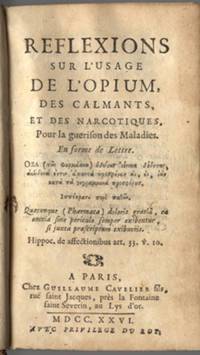
172611199Paris: Guillaume Cavelier 1726. 1st edition. Hecquet Philippe 1661-1737. Reflexions sur l'usage de l'opium des calmants et des narcotiques pour la guerison des maladies. 12mo. 8 374 14pp. Paris: Guillaume Cavelier fils 1726. 167 x 92 mm. Calf c. 1726 gilt spine rubbed & worn small chip at foot of spine front hinge cracking but overall sound. Light toning otherwise very good. First Edition. A treatise on the use of opium and other narcotics in the treatment of disease. Hecquet physician at the Charite Hospital in Paris was a confirmed mechanist and a longtime opponent of chemical medicine which he attacked in several publications. He was a great believer in the virtues of opium which he recommended for a broad spectrum of ailments including those of children and pregnant women. Osler 2916. Guillaume Cavelier unknown
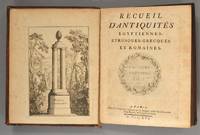
1761891021761. CAYLUS Anne Claude Philippe de Tobieres de. RECUEIL D'ANTIQUITES Egyptiennes Etrusques Grecques et Romaines. Paris Chez Duchesne 1761-1767. Seven volumes. Second edition of Volume I with two title pages dated 1756 and 1761. First edition of Volumes II-VII dated 1756 1759 1761 1762 1764 and 1767. Xix 3 348pp. 104ff. plates; viii4293pp. 129ff. plates; xxxvi448pp. 121ff. plates; xx4181pp. 125ff. plates; xxvi2348pp. 121FF. PLATES; XX 132ff. plates; 4xxviii336pp. 85ff. plates. Lacking only 4 out 107 plates to Volume I one plate out of 121 to Volume III and seven out of 97 to Volume VII leaving 818 of 830 numbered platesand 829 in total including four unnumbered plates and seven frontispieces. Several plates are out of order or misnumbered. A compendious and learned account of a formidable collection of antiquities with over 800 plates each with up to five objects depicted plus headpieces and initials. Each object is discussed in detail in the text. Le Comte de Caylus was noted for many reasons not all of them reputable but primarily as a pioneer in the study of ancient objects focussing on their subject matter and style with a critical eye. He left his collection to the King. He also studied the archaeological remains of the Gauls and Volumes III-VII are titled "Recueil d'Antiquites Egyptiennes Etrusques Grecques Romaines et Gauloises." Bound in full calf the spines in six compartments gilt with rococo floral tools and two morocco lettering-pieces. Wear to extremities; one board detached from each of Volumes III and III; rear board of VII loose; some superficial splits to hinges and abrasions to boards. Light spotting here and there faint dampstain to margins of two volumes discoloration to tops of a few boards but on the whole internally clean. An extraordinary record of early antiquarian scholarship. unknown
174670635Lutetiae Parisiorum: sumptibus Ant. Urb. Coustelier 1746. 12mo pp. xxiv 299 1; text in Latin; engraved frontispiece by Duflos after Picart; printer's woodcut device on title page engraved headpieces woodcut initials and ornaments; contemporary full calf triple gilt-ruled border on covers smooth gilt spine laid out in 6 compartments gilt-lettered direct in 1 a.e.g.; rebacked with spine laid down spine worn and with small loss at the extremities upper joint cracked dampstains in the foremargin of A7 and A8 and C7 and C8; a good sound and clean copy. This copy with the bookplate of Adolphe Périès and with 2 signed manuscript translations of his inserted dated 1853 and 1856 on 3 small pages in ink on blue paper: Ode 1-22 at p. 23; and Ode 4-1 at p. 100. A manuscript note tipped to the front pastedown possibly by H. H. Furness notes: "Mr. A. Périès seems to have been the owner of this book as evidenced by the two manuscript translations inserted and by the bookplate on whose motto his name appears "aperies". He was a fine classical scholar with a dainty gift of versification as shown by a little volume of translations published "by himself for himself" at Philadelphia in 1861. The author's name is not given the work is "by an idler" but has been ascertained from a copy containing his photograph and an autograph inscription to his friend John T. Montgomery." Mills College Check List 616; Riedel-Horatiana A-177. sumptibus Ant. Urb. Coustelier unknown
175470386Lutetiæ Parisiorum: typis Josephi Barbou 1754. Small 8vo pp. xxiv 299 1; engraved frontispiece printer's woodcut device on title page woodcut initials and ornaments engraved head- and tailpieces throughout; contemporary full maroon goat dotted gilt rule on covers smooth gilt-decorated spine laid out in 5 compartments gilt-lettered direct in 1; a very good sound and clean copy. Owner's inscription on flyleaf dated 30-1-99. Mills College Check List 658; not in Riedel-Horatiana. typis Josephi Barbou unknown
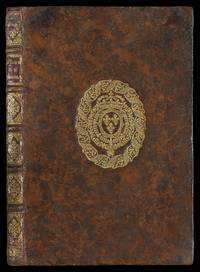
170417661Paris: De l'Imprimerie de L.V. Thiboust 1704. Books""Description et explication des globes With the Arms of the Sun King Octavo. Contemporary speckled calf gilt. In 1678 the Cardinal d'Estrées commissioned Vincenzo Coronelli to make an enormous pair of globes as an unparalled gift for Louis XIV: the celestial globe depicts the constellations as they would have been on the evening of Louis XIV's birth. This monumental pair - a terrestrial and a celestial globe - was constructed in Paris between 1681 and 1683 eventually measuring four metres in diameter supported on bronze stands. To this day these globes remain unequalled in both beauty and technical prowess. The giant globes were originally intended for display at the equally opulent Palace of Versailles but they were transferred to the King's Marly """"retreat"""" in 1703. Completely hidden in a thick forested valley Marly took more than five years to complete. Louis XIV first visited in November 1683 but only stayed there for the first time in 1686. In the centre of the grounds was a large pavilion for the King surrounded by twelve smaller pavilions for guests like the planets circling the sun. Next to the Royal pavilion were four service pavilions and in 1688 baths for the guests were added and in 1703 two further pavilions on either side of the central pool were refurbished to house Coronelli's magnificent globes. There they stayed until they were moved to the Royal Library in 1722 where a room of globes was installed in 1731. Afterwards they were displayed in the Grand Palais but are now on permanent display in the Bibliothèque nationale de France. Once installed at Marly two permanent curators were appointed to care for the globes: Robert Crosnier for the celestial; and François Lelarge for the terrestrial. Lelarge transcribed the inscriptions and described the figures which ornamented the terrestrial globe. Philippe de la Hire 1640-1719 the Astronomer of Paris was commanded by the King to write the current treatise on the use of the globes. A large paper example bound in red morocco also emblazoned with the Royal arms and described as being printed for the Sun King's """"own use"""" was offered by Sotheby's in 1859 as part of the 'Choicer portion of the magnificent library formed by M. Guglielmo Libri'. It is likely that Louis had a number of examples of the book bound for presentation including this one. La Hire was the son of Laurent de la Hire a renowned painter and engraver. An early interest in geometry led to surveying work particularly with Jean Picard on his map of France and diverting the Eure to the grounds of Versailles. His earliest major work was 'Nouvelle method de Geometrie pour les sections de superficie coniques et cylindriques qui ont pour base des cercles ou des paraboles des ellipses ou des hyperboles' 1673 but he published numerous treatises on various scientific subjects and became a member of the Academie Royale des Sciences in 1678. Rare: only one other example offered in available records the Macclesfield copy Sotheby's 2005 Provenance: 1. With the supra-libros of the Sun King Louis XIV of France 1638-1715 on each cover; 2. Armorial bookplate of a Viscomte on front paste-down De l'Imprimerie de L.V. Thiboust, unknown
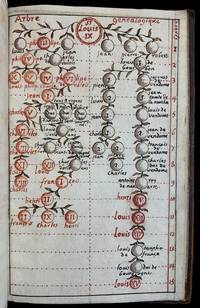
17304557N/A: N/A 1730. A lovely manuscript copy of this selection of Royal ordinances attributed to Andre Barrigue de Montvalon. This work existed only in copied manuscript form from 1724 to 1752 when it was finally published. Our copy is an early manuscript. Attractive manuscript title with a coat of arms beneath. It appears to show the arms of a Marquis. The work contains the Royal Laws along with the commentary of Philippe Bornier. The author is quite critical of Bornier's work and corrects his errors and dating. As stated in the preface content in red ink refers to Bornier's work. Dates of ordinances are indicated in side notes. There are also two tables. One shows them in chronological order. The other in alphabetical. Text is throughout in a neat French secretarial hand. This work is almost identical to a 1728 version found in the Bibliotheque de Droit Schuman in Aix-en-Provence and a slightly earlier 1724 edition currently on sale in the USA. Our copy is slightly enlarged as BOUND IN is a lovely genealogical tree of the French Royal family and 8 pages 4 leaves of a red and black list of the kings and their significant dates. Condition. The full leather period binding is in good strong condition with just a little rubbing and slight loss to the head of the spine. Attractive gilt decoration and titles to spine. Marbled end papers. Internally the pages are in good clean condition with just a touch of movement to the binding. The final gathers with the genealogical details are slightly cracked to the binding and "sit proud" of the rest of the text block. Overall in excellent condition. Collation: 236 7 1 8 1 ff. / 472 ordinances & indexes 14 blank 2 ruled only 16 genealogies 1 1 blank pages. 170 by 110mm 6¾ by 4¼ inches. Conforms to Worldcat OCLC Number: 18455885. Barrigue de Montvalon was a legal advisor to the Parlement of Provence. He was sent to defend the King physically when a disputed broke out between the parlement and the court at Aixes. He was a great supporter of the Jesuits. Barrigue lived to the age of 101. P. Girard noting his devotion said of him that he "knew only the Palace and retirement. A long life is the reward of good morals". Bornier was an Advisor to the King serving as a counselor to the king and lieutenant principal at the présidial court of the city. . Belle copie manuscrite de cette sélection d'ordonnances royales attribuée à André Barrigue de Montvalon. Cet ouvrage n'a existé que sous forme de manuscrit copié de 1724 à 1752 date à laquelle il fut finalement publié. Notre exemplaire est un manuscrit ancien. Titre manuscrit attrayant avec des armoiries en dessous. Il semble qu'il s'agisse des armoiries d'un marquis. L'ouvrage contient les lois royales ainsi que le commentaire de Philippe Bornier. L'auteur est assez critique à l'égard du travail de Bornier dont il corrige les erreurs et les datations. Comme indiqué dans la préface le contenu à l'encre rouge se réfère à l'ouvrage de Bornier. Les dates des ordonnances sont indiquées dans les notes annexes. Il y a également deux tableaux. L'un les présente dans l'ordre chronologique. L'autre par ordre alphabétique. Le texte est rédigé d'une main soignée de secrétaire français. Cet ouvrage est presque identique à une version de 1728 trouvée à la Bibliothèque de Droit Schuman à Aix-en-Provence et à une édition légèrement antérieure 1724 actuellement en vente aux Etats-Unis. Notre exemplaire est légèrement plus grand car il contient un bel arbre généalogique de la famille royale française et 8 pages 4 feuilles d'une liste rouge et noire des rois et de leurs dates significatives. Condition. La reliure d'époque en plein cuir est en bon état solide avec juste un peu de frottement et une légère perte à la tête de la colonne vertébrale. La décoration et les titres dorés au dos sont attrayants. Papiers de fin marbrés. L'intérieur des pages est en bon état propre avec juste un peu de mouvement à la reliure. Les derniers feuillets avec les détails généalogiques sont légèrement fendus à la reliure et se détachent du reste du bloc de texte. Dans l'ensemble l'ouvrage est en excellent état. Collation : 236 7 1 8 1 ff. / 472 ordonnances et index 14 vierges 2 réglées seulement 16 généalogies 1 1 vierge pages. 170 par 110mm 6¾ par 4¼ pouces. Conforme au numéro Worldcat OCLC : 18455885. Barrigue de Montvalon était conseiller juridique au Parlement de Provence. Il fut envoyé pour défendre physiquement le roi lorsqu'un différend éclata entre le parlement et la cour d'Aixes. Il était un grand partisan des Jésuites. Barrigue vécut jusqu'à l'âge de 101 ans. P. Girard notant son dévouement dit de lui qu'il "ne connaissait que le Palais et la retraite. Une longue vie est la récompense des bonnes mœurs". Bornier était conseiller du roi servant comme conseiller du roi et lieutenant principal à la cour présidiale de la ville. N/A hardcover
1760M7182Paris: Desnos c. 1760. Very Good. Notes: These maps was originally designed by de la Hire 1640-1718 in 1705. Size : 461x461 mm 18.15x18.15 Inches Coloring: Hand Colored Reference: Tooley III:72 Category: Maps Celestial; Desnos unknown
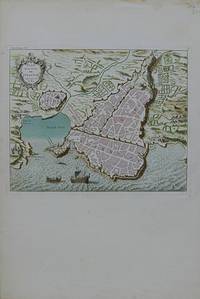
17464136Paris 1746. Copper engraving 21 x 25.5 cms original hand-colour on a folio leaf 37 x 29 cms blank verso. Map unknown
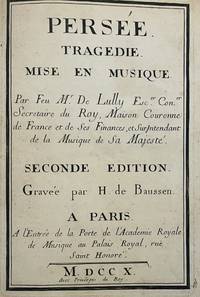
17102811Paris: A l’Entrée de la Porte de l'Academie Royale de Musique …: Henry de Baussen 1710. The first illustrated and the first edition engraved full score of Lully’s Persée. Engraved music. Folio. In somewhat later green half maroquin. Spine and front panel gilt. Supra ex-libris: M.me Adolp. de Lanneau - Partitions. With six engravings by Scotin and Deplaces after Duplessis. Binding rubbed at the extremities. Water stain to the lower edge of the first and last leaves. Sporadic foxing pages toned due to aging. Otherwise in fine condition. The first illustrated and the first edition engraved full score of Lully’s Persée. Engraved music. Folio. In somewhat later green half maroquin. Spine and front panel gilt. Supra ex-libris: M.me Adolp. de Lanneau - Partitions. With six engravings by Scotin and Deplaces after Duplessis. 4 229 1 p. The first illustrated and the first edition engraved full score of Lully’s Persée.<br /> Full score of Lully’s tragédie en musique with Philippe Quinault libretto. The opera premiered on 7 April 1682. This is the Persée’s first engraved edition adorned with six engravings illustrating scenes from the opera the first for the prologue and one for each of the five acts.<br /> Provenance: Madame Adolphe de Lanneau wife of A. de Lanneau 1796–1881 a French school director and politician to whom George Onslow dedicated his Violin Sonata No. 6 Opus 31.<br /> RISM L 2993. A l’Entrée de la Porte de l'Academie Royale de Musique […]: [Henry de Baussen] unknown
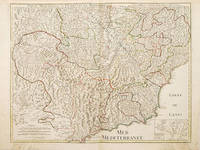
173057564c 1730. This detailed and beautifully engraved map of the French/Italian Mediterranean coast from Nice to Montferrat has no cartouche- the title is written in the top border 3 scales inset map at lower right of Nice.The plates were originally made by De l'Isle around 1700. Covens and Mortimer reissued them in the Atlas Novissimo 1730-40. Phillipe Buache de l'Isle's successor and son in law continued to reissue de l'Isle's maps in the later eighteenth century. Copper engraving. Fine condition good margins edges a little browned Hand coloured. Size: 64 x 49 cm. unknown