CHAUCER Geoffrey:Livre Rare Book

10 résultats
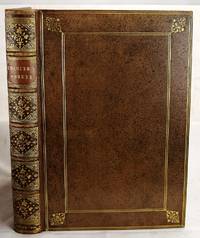
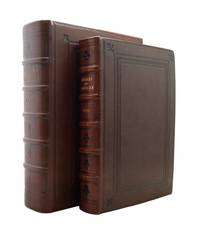
159814677London, Printed by Adam Islip, at the charges of Bonham Norton, 1598. In-folio de [27]-394-[13] feuillets [5; b-c6; 4; A-V6; Aa-Tt6; Vv-Xx8; Yy-Zz6; Aaa-Zzz6; Aaaa6; Bbbb7]. Plein maroquin marron, dos à nerfs orné de fleurons dorés, plats décorés de larges roulettes à froid avec le titre, le lieu et la date dorés sur chacun des plats, ornés au centre d'un large fleuron doré, tranches dorées. Coiffes et mors épidermés. Ex-libris Thomas Thorburn Nesbitt and Marion Wallace Nesbitt (his wife).In-folio of [54]-788-[26] pages [5; b-c6; 4; A-V6; Aa-TT6; Vv-XX8; Yy-Zz6; Aaa-Zzz6; Aaaa6; Bbbb7]. Full brown morocco, ribbed back decorated with gilt floral ornaments, sides decorated with large blind roll-stamps with the title, gilt place and date on each side, decorated in the center with a large gilt floral ornament, gilt edges. Turn in and joints scratched. Bookplate Thomas Thorburn Nesbitt and Marion Wallace Nesbitt (his wife). La reliure est signée Rivière.The binding is signed by Rivère.
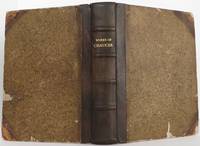
1598318051Londin: printed by Adam Islip for George Bishop 1598. First Speght edition. Full page woodcut of the progeny of Chaucer incorporating a portrait of the author full page woodcut arms of Chaucer large woodcut of Knight at head of his tale separate title for Canterbury Tales within elaborate woodcut borders woodcut initials. 27 394 13 ff. Without first and final blank leaves and printed errata provided in near contemporary manuscript at end. Printed in two columns. 1 vols. Folio 31.3 x 19.6 cm. Near contemporary calf rebacked lacking cornerpiece and one clasp detached later ownership blindstamp at center of covers. Intermittent browning minor edge chips to a few leaves overall very good. Provenance: Mary & Brent Maxfield gilt ownership stamp to upper cover. First Speght edition. Full page woodcut of the progeny of Chaucer incorporating a portrait of the author full page woodcut arms of Chaucer large woodcut of Knight at head of his tale separate title for Canterbury Tales within elaborate woodcut borders woodcut initials. 27 394 13 ff. Without first and final blank leaves and printed errata provided in near contemporary manuscript at end. Printed in two columns. 1 vols. Folio 31.3 x 19.6 cm. First Speght edition. The first of several influential editions to be published by Thomas Speght; while it relies heavily on the Stowe edition of 1561 "Speght's notes and introductory material are far more elaborate than in any previous edition and he was the first to provide a substantial glossary . Speght also contributed new annotations to the text of Chaucer . and an extensive biography which informed all subsequent accounts of the poet's life until the 1840s ODNB. STC 2nd ed 5077 Pforzheimer 177 Luborsky & Ingram English illustrated books 1536-1603 5077 [printed by Adam Islip for] George Bishop unknown books
15982105240007London : printed by Adam Islip at the charges of Bonham Norton 1598. Hardcover. Very Good. The Elizabethan Chaucer: An important early English printing that helped establish Chaucer in the English literary pantheon Folio 31 cm. Fine binding by Riviere. Gilt spine compartments gilt ruled cover. Gilt dentelle and turn downs. Attractive and professional reback. All edges gilt. Marbled end sheets. Printed in black Letter in double column. Frontispiece portrait of "the Progenie of Geffrey Chaucer" engraved by John Speed. Letterpress title with woodcut borders. Additionally "The Canterbury tales" "The romaunt of the rose" and "The story of Thebes" have engraved divisional titles; the foliation and register are continuous. Lacking leaves b1 ppiii and iiii and the final 6 leaves 4b iii-vii. Contemporary marginalia throughout in a near contemporary hand. "In this impression you shall find these additions. 1. His portraiture and progenie shewed. 2. His life collected. 3. Arguments to euery booke gathered. 4. Old and obscure words explaned. 5. Authors by him cited declared. 6. Difficulties opened. 7. Two bookes of his neuer before printed." Refs: STC 5078. Pforzheimer 177. Luborsky & Ingram. A Guide to English Illustrated Books 1536-1603 5078. <br> Provenance: Lord Wardington's copy. Signatures of W. Featherstonhaugh possibly George William Featherstonhaugh and Sir John William Pease 1869-1950 First Baron Wardington Armorial bookplate and signature Newcastle. Most recently by descent of Lord Wardington; sold in Sotheby's London July 13th 2006 sale lot 62. <br> Cataloguer's note: The first of Thomas Speght edition of Chaucer's works one of three editions printed in 1598 the others by Adam Islip. This edition contains the first "life of Chaucer" to appear in English. The two additional works printed are: "The Floure and the Leafe" and "Chaucer's Dreame" these are spuriously attributed to Chaucer. London : printed by Adam Islip, at the charges of Bonham Norton hardcover
159867348First Edition of Chaucer Edited by Thomas Speght CHAUCER Geoffrey. The Workes of our Antient and lerned English Poet Geffrey Chaucer newly Printed. In this Impression you shall find these Additions: 1 His Portraiture and Progenie shewed. 2 His Life collected. 3 Arguments to every Booke gathered. 4 Old and obscure Words explaned. 5 Authors by him cited declared. 6 Difficulties opened. 7 Two Bookes of his never before printed. London: Impensis George Bishop 1598. First edition edited by the Chaucerian scholar Thomas Speght sixth published edition. Folio 11 7/8 x 8 inches; 302 x 204 mm. 27 394 14 leaves. With errata leaf bound at the end. Lacking the initial and final blank leaves. Black letter. Double columns. Engraved portrait of Chaucer on ∂7v after Hoccleve. Woodcut arms of Chaucer on A6v and woodcut illustration for the ìKnightÃs Taleî at head of B1r. Woodcut title border McKerrow and Ferguson 148 and three divisional titles within repeated woodcut border McKerrow and Ferguson 75. Woodcut historiated and floral initials. Eighteenth-century paneled calf rebacked with possible original spine laid down. A bit of rubbing to boards and spine. Some worming sporadically throughout mainly marginal. Some toning and browning throughout. Previous owner's old ink signature on title-page and old ink notes on dedication page top margin. Overall a very good copy. Housed in a custom quarter morocco clamshell. This is the first edition of Chaucer edited by Thomas Speght fl. 1600. He introduced for the first time a biography of Chaucer in English a glossary of Chaucerian words and the spurious ìDreameî and the ìFlower and the Leafî both of which Francis Beaumont apologized for in the preface. ìThis is the first edition edited by Speght who had the assistance of John Stowe Francis Thynne Francis Beaumont the elder and Robert Glover. The most remarkable feature of this edition is the glossary which was largely the editorÃs production and was the main object of Francis ThynneÃs Animadversionsî Pforhzheimer. Speght was also the editor for the seventh edition printed in 1602. Grolier Langland to Wither 43. Pforzheimer 177. STC 5077. HBS 67348. $12500 Impensis Geor[ge] Bishop hardcover books
15612210201London: John Kyngston for John Wight 1561. Fifth. hardcover. Very good. First issue of the 1561 Stowe edition. Very good in contemporary covers and recent leather spine with gold lettering. Probable first issue of the Stowe Edition with Chaucer's arms dated 1560 and before woodcut additions. As for the differences between the Stowe issues David R. Carlson "The Woodcut Illustrations in Early Printed Editions of Chaucer's Canterbury Tales" in Chaucer Illustrated: Five Hundred Years of The Canterbury Tales in Pictures British Library 2003 states "the most plausible explanation seems to be that the printer and publisher of the Stowe edition came into possession of the woodcuts belatedly after most of the press work for the edition had been done. After obtaining the blocks they ran up a new issue of the beginning of the book incorporating a "General Prologue" illustrated with woodcut. In all documented cases the unillustrated i.e. first"General Prologue" occurs with a title page showing the Chaucer arms dated 1560 at the top of the shield. A different title-page dated 1561 is found in copies incorporating the woodcut illustrated General Prologue." A handsome complete copy without loss of text beautifully printed in fifty-six line two-column black-letter Gothic. The 1561 Stowe edition is probably the one known to William Shakespeare and Edmund Spenser. Folio. More photos available upon request. John Kyngston for John Wight unknown
1561318052London: printed by John Kyngston for John White 1561. Stowe edition issue without illustrations in prelims. Large woodcut arms of Chaucer to title separate titles for Canterbury Tales and Romaunt of the Rose printed within elaborate historiated border woodcut of Knight at head of his tale woodcut initials head and tail pieces. 10 378 ff. Printed in two columns. 1 vols. Folio. Modern calf. Title page laid down with losses to blank top corners and inner margin second leaf silked with marginal losses affecting a few letter final leaf repaired with marginal losses not affecting text a handful of additional repairs and tears throughout some dust-soiling and intermittent browning. Stowe edition issue without illustrations in prelims. Large woodcut arms of Chaucer to title separate titles for Canterbury Tales and Romaunt of the Rose printed within elaborate historiated border woodcut of Knight at head of his tale woodcut initials head and tail pieces. 10 378 ff. Printed in two columns. 1 vols. Folio. 1561 Stowe edition. The fifth printed edition of Chaucer overall. The editing is mostly William Thynne's from his edition of 1532 with several additions made by John Stowe of pieces he attributed to Chaucer now proved spurious. Stowe's edition was however that most likely used by the Elizabethans including Shakespeare in creating his Troilus and Cressida. STC 2nd ed 5076; Langland to Wither 42 printed by John Kyngston for John White unknown books
15611489<p>Full calf. Probable first issue of the Stowe Edition with Chaucer's arms dated 1560 and before woodcut additions. Relative to the precedence of issues of the 1561 Stowe edition David R. Carlson "The Woodcut Illustrations in Early Printed Editions of Chaucer's Canterbury Tales" in Chaucer Illustrated: Five Hundred Years of The Canterbury Tales in Pictures British Library 2003 states "the most plausible explanation seems to be that the printer and publisher of the Stowe edition came into possession of the woodcuts belatedly after most of the press work for the edition had been done. After obtaining the blocks they ran up a new issue of the beginning of the book incorporating a "General Prologue" illustrated with woodcut. In all documented cases the unillustrated i.e. first"General Prologue" occurs with a title page showing the Chaucer arms dated 1560 at the top of the shield. A different title-page dated 1561 is found in copies incorporating the woodcut illustrated General Prologue." v. also David R. Carlson "Woodcut Illustrations of the Canterbury Tales 1483-1602. More specifically a recent Robert Temple Catalogue adds: "The first three gatherings in the 1561 second issue were entirely reprinted this being done to permit the inclusion of twenty-two wood-cut illustrations in the Prologue to the Canterbury Tales the signatures running floret4 floretiii being mis-signed Aiii 6 A4 B - I6. instead of the floret4 A - I6. of the first issue. In the illustrated i.e. second issue some damage to the wood-cut frame of the first secondary title is apparent which is not evident in the first issue: a crack in the wood extends from the centre of the lower edge up through the box identifying King Henry IIII to just left of centre of the title box and another from the top left-hand corner of the title-box through the box identifying King Henry VII and ending apparently at a worm-hole in its top rules. STC 2nd edition unaccountably and without assigning a reason lists these two issues in the reverse order - despite the evidence in the illustrated issue of the later date on the title-page the obviously interpolated gathering `' which contains the first six illustrated leaves of ten the rest being in the variant short gathering `A' and the extended splitting of the wood-block on the title-page to the Canterbury Tales which shows only a slight split at the extreme tail in the first printing and no worm-hole." Professional restoration to the present copy include wash and repair of title page with ancient replacement of top inch and periphery of same not affecting text; repapering of Prologue gutters; new pastedowns & fly papers. All that said a complete copy without loss of text. Light peripheral worming. Handsomely bound in appropriate period style full ruled English calf five raised bands six compartments; morocco title & date labels. This copy was presented by the Durants to Wellesley College then sold in 1912 to George Herbert Palmer & then to Lewis Kennedy Morse. Folio 12 3/16 x 8 1/2 inches 310 x 215 mm; 5 ccclxxviii leaves. Divisional title pages of the "Caunterburie Tales" and "Romaunt of the Rose" both borrowed from Edward Hall's 1550 Vnion of the two noble and illustre famelies of Lancastre & Yorke in ornamental border showing the ascent of Henry VIII. Large woodcut of the Knight at the head of his tale recto of B1. Collation: Floret4; A-I6; K-U6; Aa-Ii6. Kk-Pp6; Q-U6; X-Z6; Aaa-Iii6; Kkk-Uuu8. Numerous oddities in foliation following CCXXIV though catchwords and signatures remain constant. A handsome & supple copy beautifully printed in fifty-six line two-column black-letter Gothic. The 1561 Stowe edition is probably the one known to William Shakespeare and Edmund Spenser and presents some nineteen poems here first printed from manuscript sources. STC5076 Foregoing copyright 2024.; Folio ; Additional images and further information provided upon request. ; All shipments through USPS insured Priority Mail.</p> John Kyngston for Jhon Wight hardcover
15611489Full calf. Probable first issue of the Stowe Edition with Chaucer's arms dated 1560 and before woodcut additions. Relative to the precedence of issues of the 1561 Stowe edition David R. Carlson "The Woodcut Illustrations in Early Printed Editions of Chaucer's Canterbury Tales" in Chaucer Illustrated: Five Hundred Years of The Canterbury Tales in Pictures British Library 2003 states "the most plausible explanation seems to be that the printer and publisher of the Stowe edition came into possession of the woodcuts belatedly after most of the press work for the edition had been done. After obtaining the blocks they ran up a new issue of the beginning of the book incorporating a "General Prologue" illustrated with woodcut. In all documented cases the unillustrated i.e. first"General Prologue" occurs with a title page showing the Chaucer arms dated 1560 at the top of the shield. A different title-page dated 1561 is found in copies incorporating the woodcut illustrated General Prologue." v. also David R. Carlson "Woodcut Illustrations of the Canterbury Tales 1483-1602. More specifically a recent Robert Temple Catalogue adds: "The first three gatherings in the 1561 second issue were entirely reprinted this being done to permit the inclusion of twenty-two wood-cut illustrations in the Prologue to the Canterbury Tales the signatures running floret4 floretiii being mis-signed Aiii 6 A4 B - I6. instead of the floret4 A - I6. of the first issue. In the illustrated i.e. second issue some damage to the wood-cut frame of the first secondary title is apparent which is not evident in the first issue: a crack in the wood extends from the centre of the lower edge up through the box identifying King Henry IIII to just left of centre of the title box and another from the top left-hand corner of the title-box through the box identifying King Henry VII and ending apparently at a worm-hole in its top rules. STC 2nd edition unaccountably and without assigning a reason lists these two issues in the reverse order - despite the evidence in the illustrated issue of the later date on the title-page the obviously interpolated gathering `' which contains the first six illustrated leaves of ten the rest being in the variant short gathering `A' and the extended splitting of the wood-block on the title-page to the Canterbury Tales which shows only a slight split at the extreme tail in the first printing and no worm-hole." Professional restoration to the present copy include wash and repair of title page with ancient replacement of top inch and periphery of same not affecting text; repapering of Prologue gutters; new pastedowns & fly papers. All that said a complete copy without loss of text. Light peripheral worming. Handsomely bound in appropriate period style full ruled English calf five raised bands six compartments; morocco title & date labels. This copy was presented by the Durants to Wellesley College then sold in 1912 to George Herbert Palmer & then to Lewis Kennedy Morse. Folio 12 3/16 x 8 1/2 inches 310 x 215 mm; 5 ccclxxviii leaves. Divisional title pages of the "Caunterburie Tales" and "Romaunt of the Rose" both borrowed from Edward Hall's 1550 Vnion of the two noble and illustre famelies of Lancastre & Yorke in ornamental border showing the ascent of Henry VIII. Large woodcut of the Knight at the head of his tale recto of B1. Collation: Floret4; A-I6; K-U6; Aa-Ii6. Kk-Pp6; Q-U6; X-Z6; Aaa-Iii6; Kkk-Uuu8. Numerous oddities in foliation following CCXXIV though catchwords and signatures remain constant. A handsome & supple copy beautifully printed in fifty-six line two-column black-letter Gothic. The 1561 Stowe edition is probably the one known to William Shakespeare and Edmund Spenser and presents some nineteen poems here first printed from manuscript sources. STC5076 Foregoing copyright 2021.; Folio ; Additional images and further information provided upon request. ; All shipments through USPS insured Priority Mail. John Kyngston for Jhon Wight hardcover books
15503936<p>London: Wyllyam Bonham n.d. 1550 1550. Third collected edition ESTC describes it as one of four variants of this date with different publisher's names in the colophon. The text is the version edited by William Thynne. Folio. 295x197mm. ff. 8 cxciii cxciii-cc ccii-ccvii ccx-cclxxi cclxxiii-cclxxvii cclxxix-ccclv. Lacking final blank leaf. Printed in double columns woodcut initials and woodcuts of the Knight and the Squire. The Romaunt of the Rose has a separate title. Full brown sheep single fillet border to covers with corners decorated with crowned garlands framing dolphins. Spine with five raised bands compartments decorated in gilt. Red edges. Front pastedown has armorial bookplate of Mr Baron Maule and Kenneth Rapoport. Front free endpaper has armorial bookplate of Newton Hall Cambridge and ownership inscription of Jo. Maule. Head and foot of spine chipped with loss. Hinges strengthened. Some damp-staining to first gathering which is also a little loose. A very nice copy in a smart eighteenth century binding of the Thynne edition published jointly by four London booksellers. Although all copies are undated William Bonham the publisher of this copy is known to have been at the Red Reed Lion address in 1551 so a date of 1550 is generally agreed. All variants are rare ESTC recording this one in seven UK libraries and eight in the US. ESTC: S108819</p> London: Wyllyam Bonham n.d. [1550] hardcover
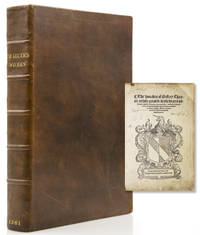
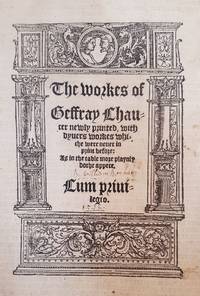
153269608London: Printed.by Thomas Godfray 1532. RIVIÈRE & SON. . The workes of Geffray Chaucer. newly printed with dyuers workes whiche were neuer in print before: As in the table more playnly dothe appere. London: Printed.by Thomas Godfray 1532.<br> <br> Full Description:<br> <br> CHAUCER Geoffrey. The workes of Geffray Chaucer newly printed with dyuers workes whiche were neuer in print before: As in the table more playnly dothe appere. London: Printed.by Thomas Godfray 1532.<br> <br> The first collected edition of Chaucer's works and the first attempt at historical editing of any English author. Folio in sixes 11 11/16 x 8 1/8 inches; 297 x 205 mm. 397 leaves plus an additional leaf Qq7 containing compartment for divisional title on recto 22 xiii-CCxix 4 CCxx-CCC CCC-CCClxxxiii leaves. With fourteen leaves including title in facsimile A1-A4 B1 I4 Qq4 Qq5 Qq7 and Vvv2-Vvv6. Black letter. Forty-eight lines plus headline double columns. Several sets of decorated initials and lombards used as initials a few capital spaces with guides. Fifteen woodcuts in the Canterbury Tales three repeated one three times a total of twenty impressions. Edited by William Thynne.<br> <br> Handsomely bound by Rivière & Son in full brown morocco. Covers decoratively panelled in blind spine in six compartments with five raised bands gilt-lettered in two compartments and decoratively tooled in blind in the remaining four board edges and turn-ins ruled in blind all edges gilt. A few early ink annotations. Housed in a custom full brown morocco clamshell. Box with some tape repairs at edges. Overall a very good copy.<br> <br> The first collected edition of Chaucer deserves to rank in many ways with the 1623 First Folio edition of Shakespeare. The editor William Thynne was chief clerk of the kitchen in Henry VIII's household and accrued a wide variety of lucrative preferments. His dedication to Henry VIII actually written by Sir Brian Tuke contains many interesting remarks on the development of language and on Thynne's efforts at forming an "author collection" of Chaucer both manuscript and printed. The source for the Canterbury Tales was Wynkyn de Worde's 1498 edition collated with several manuscripts. Besides authentic works Thynne included some two dozen inauthentic poems making this the largest compendium of Middle English poetry heretofore published. In all twenty-one of the poems in the collection are first printings including four authentically by Chaucer: "The Book of the Duchess" "The Complaint unto Pity" "Lack of Steadfastness and "The Legend of Good Women." Thynne has often by criticized for publishing so many inauthentic poems in his Chaucer but this is unhistorical; nor is it even clear that he was making an active claim of authenticity for all that was included. His edition established the vulgate text of Chaucer for well over two centuries until Tyrwhitt's great edition of the Canterbury Tales appeared in 1775 see Sotheby's New York 29 October 1996 lot 346.<br> <br> "The woodcuts of the Knight and the Squire are here used for the first time as Chaucer illustrations the former is a close copy of the cut used in the Pynson 1526 edition but the rest belong to the original series of blocks cut for Caxton's second edition of the Canterbury Tales 1484" Pforzheimer.<br> <br> Pforzheimer 173. STC 5068.<br> <br> HBS 69608.<br> <br> $125000. Printed...by Thomas Godfray unknown