Richardus de Mediavilla (1249-1308)MareMagnum

4 577 résultats
In-folio (300 x 200mm). 320 carte, grande iniziale in rosso di 26 linee, interamente rubricato. Legatura in pelle di scrofa coeva tedesca su assi di legno (Heilbronn), anticamente legato al pluteo, angoli e fermagli in metallo, borchie mancanti.
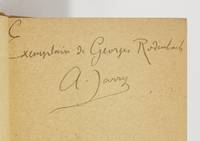
189669650Paris: Mercure de France 1896. Fine. Mercure de France Paris 1896 9.50 x 15.50 cm relié The first edition with two portraits of Père Ubu drawn by Alfred Jarry. Half brown morocco over marbled paper boards by G. Gauché spine in five compartments raised bands with blind ruled fillet gilt date to foot of spine marbled endpapers and pastedowns covers and spine repaired preserved top edge gilt. A rare handsome autograph inscription signed by Alfred Jarry: Georges Rodenbach's copy. Alfred Jarry. Provenance: from the personal collection of President Georges Pompidou with his ex-libris to endpaper. He showed that he could at the same time love Racine and Soulages. Poussin and Max Ernst. Virgil and René Char and from that point of view he was outstanding. Alain Peyrefitte. From behind a desk in the école Normale and high up in the government administration in the bank and finally as a politician Georges Pompidou put together in the heart of his personal collection an anthology of French literature. This handsome copy of Ubu Roi reveals his identity as a man of letters between classicism and the avant-garde. Pompidou whose literary training would imbue both his thinking and political speeches showed a taste cultivated alongside his wife Claude for modern art cinema and the theatre: we know that he was well acquainted with Jules Romains read Beckett and was a great admirer of Louis Jouvet. The arts among other things owe him a debt for the unfailing support he showed the Théâtre National Populaire of Jean Vilar who presented a new staging of Ubu Roi in 1958 at Chaillot. This copy of Jarry's masterpiece also bears witness to its famous first owner the Belgian Symbolist Georges Rodenbach one of the most perfect writers in Flanders who received this work with a signed inscription from the author his fellow contributor to the Revue blanche. They were both disciples of Stéphane Mallarmé meeting every Tuesday with their master at his salon in the rue de Rome. Also a member of the circle of the Hydropathes in which Jarry was an active participant Rodenbach published in the same year as Ubu one of his most important collections of poems Les vies encloses inspired by the occultism of Novalis and the German Romantics. With Jarry claiming to be a follower of Pantagruel as Rodenbach did of Baudelaire one of them struggled with the incomprehension of the public while the other revelled in it: they developed at the two extremes of the Mallarmé spectrum. An admirable witness of the Parisian literary and bohemian microcosm this work with its prestigious provenance brings together two great names of the avant-garde theatre and fin-de-siecle poetry: Jarry the ultimate mystifier and Rodenbach the nostalgic poet of cloistered lives. Mercure de France hardcover
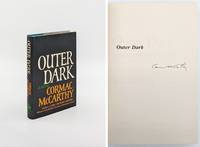
196871258New York: Random House 1968. First edition first printing. Hardcover. Near Fine/Very Good. Signed by Cormac McCarthy in black ink on the half-title page.<br /> <br /> 242 pp. Octavo 21 cm. Publisher's turquoise cloth and grey paper-covered boards stamped in black silver blue. Publisher's black topstain. Black dust jacket with white green and orange typography designed by Muriel Nasser. First printing statement on the copyright page. Dust jacket is price-clipped and has the "9/68" code at the front flap’s bottom-right.<br /> <br /> A Near Fine unread copy clean and square. The black topstain is lightly faded. The price-clipped dust jacket is Very Good with just a tiny closed tear measuring less than 1cm at the bottom edge of the front panel and one very small dark stain on the spine. A nice copy. Signed by the notoriously reclusive author. From the library of the late Santa Fe bookseller Nicholas Potter. Throughout a friendship spanning forty years Potter’s bookstore served as a frequent destination for McCarthy where the two shared a rapport rooted in their mutual appreciation of literature art music and history. This volume represents a vital fragment of that connection.<br /> <br /> The first printing of Outer Dark consisted of a run of 5000 copies and was the only printing of the first edition of this work. The book was a commercial failure upon its release selling less than 3500 copies.<br /> <br /> Set in purgatorial turn-of-the-century Appalachia Outer Dark is McCarthy’s second novel distilling his Southern Gothic style which he would continue to explore in his two subsequent novels Child of God and Suttree. The narrative utilizes an archaic rhythmic prose to deliver a wandering tale—a harrowing meditation on nihilism. Its publication cemented McCarthy as a singular prophetic stylist distinguished from many of his more experimental postmodernist contemporaries through a mastery of the macabre and the mythic. Random House hardcover
EXE-241Neuchâtel, Samuel Fauche et Louis Fauche-Borel, 1779-1796. 4 volumes in-4°, plein veau, dos lisses, pièces de tomaison vertes (reliure de l'époque). Edition Originale. Illustrée de 22 planches gravées sur cuivre d'après les dessins de Marc Théodore Bourrit, dont 19 repliées, 2 grandes cartes dépliantes, 8 vignettes dont 4 vignettes de titre et 2 tableaux d'observation, également repliés. À la conquête du Mont Blanc et des « glacières », pionnier de la géologie alpine et de la météorologie, Horace-Bénédict de Saussure (1740-1799) ne néglige pas pour autant la botanique et l'aspect humain dans son tableau détaillé des montagnes. Le Genevois a traversé la chaîne des Alpes quatorze fois. Il fut l'âme de la première ascension du Mont-Blanc, en 1786, avant de l’accomplir lui-même l'année suivante. Il a aussi fixé le vocabulaire de la glaciologie, propageant l'idée d'une dynamique glacière. Le Voyage dans les Alpes est le texte fondateur de ce qui deviendra la géographie physique. Du point de vue cartographique, de nombreuses cimes et des glaciers, restés jusque-là anonymes, sont identifiés. Il présente également le premier tableau général de la région du Mont Blanc dressé sur la base d'observations directes. Référence: Jacques Perret. Regards sur les Alpes, 100 livres d'exception, 1515-1908, p. 87.
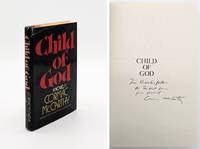
71269New York: Random House 1973. First edition first printing. Hardcover. Near Fine/Very Good. Inscribed by Cormac McCarthy in black ink on the half-title page to Santa Fe bookseller Nicholas Potter: "For Nicholas Potter All the best from your friend Cormac McCarthy."<br /> <br /> 197 pp. Octavo 21.5 cm. Publisher's black cloth and red paper-covered boards stamped in red and gold. Black dust jacket with red white and olive green typography designed by Muriel Nasser. First edition clearly stated on the copyright page. Dust jacket with "$5.95" price intact at top-front flap and "1/74" code at the rear flap's bottom-left.<br /> <br /> A Near Fine unread copy with occasional light surface soil or toning. The text block is solid and square. The top edges of the boards are gently sunfaded. The front free endpaper has a previous ownership inscription written neatly in blue ink: "Dane Meyers Hugh Prather Collection." The dust jacket is in Very Good condition showing the spine-fading common to this title along with some general surface rubbing and scratching. The jacket edges are lightly toned with a few minor creases and short closed tears measuring less than 2cm. An attractive copy with an intimate association. A significant association copy warmly inscribed by the notoriously reclusive author to his long-time friend the late Santa Fe bookseller Nicholas Potter. A short note in Potter's hand is laid in: ".This copy inscribed to me in the mid 90's." Throughout a friendship spanning forty years Potter’s bookstore served as a frequent destination for McCarthy where the two shared a rapport rooted in their mutual appreciation of literature art music and history. This volume represents a vital fragment of that connection; McCarthy who famously avoided public life inscribed most of his published works to Potter.<br /> <br /> The first printing of Child of God consisted of a run of 7500 copies and was the only printing of the first edition of this work. The book was a commercial failure upon its release selling less than 2500 copies. The book sparked controversy over its subject matter with some reviewers objecting to it on moral grounds.<br /> <br /> The narrative chronicles the progressive isolation and depravity of Lester Ballard—a dispossessed outcast who pushes the boundaries of abhorrent human behavior. Set in the rugged hill country of mid-century Tennessee the story is told in a detached clinical manner. McCarthy’s third novel Child of God intensified the visceral Southern Gothic vision of his previous works and solidified his reputation for writing spare biblical prose that depicts harrowing and macabre scenes with unflinching clarity. Random House hardcover
196571251New York: Random House 1965. Second printing of the first edition in the first issue dust jacket. Hardcover. Near Fine/Very Good. Inscribed by Cormac McCarthy in black ink on the half-title page to Santa Fe bookseller Nicholas Potter: "For Nicholas All the very best Cormac." <br /> <br /> 246 pp. Octavo 21 cm. Publisher's green cloth and light burgundy paper-covered boards stamped in gilt red and blind. Publisher's green topstain. White dust jacket with red and black typography designed by Muriel Nasser. Second printing clearly stated on the copyright page. First issue dust jacket with "$4.95" price intact at top-front flap and "5/65" code at the bottom-right. <br /> <br /> A Near Fine copy the text block is clean square and seemingly unread throughout. The green topstain is lightly faded and the paper at the fore-edges of the boards show bits of abrasion. The dust jacket is Very Good gently sunned at the spine and showing light overall surface soiling and minor edgewear including a short split beginning at the top-front flap fold and tiny chips at the spine head and the top-right corner of the front panel. An attractive copy with an intimate association. A significant association copy warmly inscribed by the notoriously reclusive author to his long-time friend the late Santa Fe bookseller Nicholas Potter. Throughout a friendship spanning forty years Potter’s bookstore served as a frequent destination for McCarthy where the two shared a rapport rooted in their mutual appreciation of literature art music and history. This volume represents a vital fragment of that connection; McCarthy who famously avoided public life inscribed most of his published works to Potter.<br /> <br /> The second printing of The Orchard Keeper consisted of a small run of only 750 copies. It has been noted that surplus first-issue dust jackets were used for this printing; these were frequently price-clipped to accommodate the second printing’s increased $6.95 price. The present example is notably not price-clipped retaining the original $4.95 price.<br /> <br /> Set in a remote rural Tennessee community between the World Wars The Orchard Keeper is McCarthy’s debut novel inaugurating a cycle of four Southern Gothic works with Outer Dark Child of God and Suttree to follow. The narrative explores the forces of modern civilization as they encroach upon older more rugged ways of living. Upon its release the novel earned McCarthy immediate critical acclaim and comparisons to the likes of William Faulkner. Random House hardcover
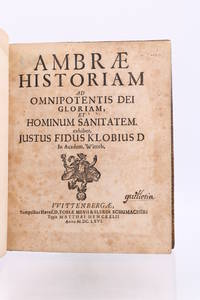
166689746Wittenberg: Héritiers de D. Tobias Mevius et E. SchumacherImpr. de Matthaeus Henckel 1666. Fine. A copy ""uncut at the head"" Héritiers de D. Tobias Mevius et E. Schumacher Impr. de Matthaeus Henckel Wittenberg 1666 16.3 x 20.2 cm Relié First edition illustrated with four plates including a folding world map cf. Sinkankas 3466; Agassiz III 370.Full fawn calf spine with five slender raised bands gilt-tooled compartments with occasionally softened floral tools rubbed gilt headcaps brown morocco lettering-piece marbled endpapers and pastedowns gilt dentelle framing the pastedowns gilt fillets to board edges marbled edges contemporary binding.Repairs to the spine one joint split at head and foot browning along the board margins with surface scratches scattered foxing a waterstain at the head of all leaves.A noteworthy treatise devoted to yellow amber and above all to ambergris the fragrant substance derived from the intestinal concretions of sperm whales which once expelled float on the surface of the sea and yield a highly prized perfume.The plates depict a frog and a lizard embedded in amber a world map Africa Europe Asia and part of the Southern Lands figures collecting bird droppings and various animals.""This book commonly appears in bibliographies on amber when in fact it is about ambergris but Klobius examines both substances and notes their differences on p. 26-9. One of the plates shows a frog and a lizard imbedded in amber both of which are fakes"" Sinkankas.On the title-page a distinguished manuscript ex-libris in black ink Héritiers de D. Tobias Mevius et E. SchumacherImpr. de Matthaeus Henckel hardcover
166689746Héritiers de D. Tobias Mevius et E. Schumacher Impr. de Matthaeus Henckel | Wittenberg 1666 | 16.3 x 20.2 cm | Relié
1760(LCPCLIT-0005)(Le Virgile du Comte Jean du Barry, l'homme qui découvrit et présenta au Roi la célèbre maîtresse qui prit la place de Madame de Pompadour) VIRGILE (Vergilius Publius Maro) (Andes (Lombardie), 70 avant J.C. - Brindes (Sud de l'Italie), 19 avant J.C.) "L'ENEIDE DI VIRGILIO DEL COMMENDATORE ANNIBAL CARO". 1760, Parigi, Vedova Quillau. 2 volumes in-8° (217x152 mm) (dimensions pages 210x140 mm) I: 1 portrait de Virgile gravé par Ficquet, 2 ff. (1 frontispice gravé, 1 dédicace), 2 pp., 2 ff. (table des gravures sur cuivre et errata), 314 pp., 6 planches gravées sur cuivre h.t., 9 gravures sur cuivre dans le texte, toutes dessinées par G. Rocchi et gravées par J.J. Pasquier, L. Lempereur, J. Tardieu, Le Veau. II: 1 portrait d'Annibale Caro gravé par Defehrt, 1 frontispice gravé par P. Chenu, 342 pp., 1 f. (privilège), 6 planches gravées sur cuivre h.t., 9 gravures sui cuivre dans le texte, toutes dessinées par G. Rocchi et gravées par Defehrt et Prevost. En total: 12 planches et 18 gravures sur cuivre. Reliure de l'époque en maroquin rouge. Encadrement de triple filet doré sur les plats. Dos à cinq nerfs avec décorations et fleurons dorés, pièces de titre et de tomaison en maroquin citron; armoiries dorées en queue des dos. Filet doré sur les coupes. Tranches dorées. Gardes de papier décoré. Exemplaire imprimé sur papier fort. Quelques pages avec des rousseurs, infimes usures à trois coins, mais très bel exemplaire. Provenance: Exemplaire aux armes dorées du Comte Jean du Barry, dit le "Roué" (Lévignac, 1723 - Toulouse, 1794). "Ce Toulousain, beau parleur, bavard et conteur, plein de faconde, connaissait jusqu'où peut être portée la fortune d'un homme qui dispose d'une jolie femme. Cette jolie femme, il osait rêver de la présenter au Roi". (Paul Reboux: "Les Conqûetes d'Amour et la Gloire du Maréchal, Duc de Richelieu", 1929, Paris, Flammarion, p. 250) Il habitait à Paris, rue Neuve-des-Petits-Champs. En 1769, il arriva à présenter, avec l'appui de membres influents de la Cour, la future Comtesse du Barry au Roi Louis XV et, comme reconnaissance, il reçut, entre autre, le comté de l'Isle-Jourdain. Les rarissimes livres lui ayant appartenus et portant ses fers furent catalogués et vendus, au XIXe siècle, comme livres aux armes de la Comtesse du Barry, la favorite du Roi Louis XV. Les fers, au dos, sont attribués à Gravelot (Pour les même fers sur des livres appartenus au Comte du Barry, voir les catalogues Libr. Sourget n° XXX/2005 n° 171 et XXXV/2007 n° 144 et n° 162). Ex libris armorié du XIXe de la famille Alfieri (Asti) à la page de garde de chaque volume. C'est la famille du célèbre poète et écrivain Vittorio Alfieri. (LCPCLIT-0005) (5.500,00 €) (Tous les livres provenant d'Italie possèdent la licence d'exportation (Attestato di Libera Circolazione) du Ministero dei Beni e Attività Culturali)
156713778Paris, aedibus Rovillii, (1567) ; in-8 ; plein veau havane marbré, dos décoré et doré, roulette sur les coupes, tranches mouchetées de rouge (reliure du XVIIIe) ; 376, (21) pp. (Index rerum et verborum et Index Autorum), (1) p. blanche, (1) f. blanc. ; portrait gravé sur bois (p.81).
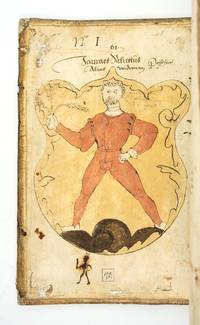
1558ST20936Mainz: druckts Franz Behem Arnold Birckmann I heirs of 1558 1559. FIRST EDITION. 320 x 205 mm. 12 5/8 x 8". 6 p.l. CCCCCI 501 leaves; 4 p.l. CCLXII 162 leaves. <br/> Contemporary blind-stamped pigskin over bevelled wooden boards covers with concentric frames containing a palmette roll and roll featuring half-length portraits of King David signed K D St. Paul Christ the Savior and St. John the Baptist dated 1549 each of these with abbreviated Latin mottos beneath the figures central panel with botanical tooling raised bands inked shelfmark G 73 in bottom panel brass catchplates and remnants of straps corners of boards and head and tail of joints repaired with pigskin some decades ago. Title pages with printer's device 6 with woodcut of the Crucifixion verso of title page of second work with woodcut arms of the archbishop of Mainz. Front pastedown with FULL-PAGE HAND-PAINTED EX-LIBRIS OF JOHANNES SALICETUS WIDENER: his ink inscription at head of page above a shield painted yellow with curling ink leaves around the perimeter dominated by a bearded young man in red shirt and tights standing astride three brown hillocks one hand on his hip the other holding three stalks of wheat a ink-drawn homunculus at the foot of the page his head sprouting what appear to be two antennae the later blue ink stamp of F T E beside this. First work: USTC 694128; VD16 694130. Second work: 694130; VD16 For the binding: EBDB workshop w002792; EBDB roll r001326 similar to saints roll but dated 1547 and with slightly different Latin mottos. Pigskin somewhat soiled and rubbed title page of first work tipped onto 2 leaves lightly browned due to paper quality with intermittent foxing and occasional mostly trivial stains and smudges final leaf with a two-inch to half-inch triangular piece torn away from the upper half of the fore edge affecting a total of perhaps 80 or 100 words. Still a copy featuring a binding with antique appeal and considerable interest in terms of provenance see below.<br/> <br/> Offered in its original blind-stamped pigskin binding this imposing collection of Counter-Reformation sermons by an influential preacher is of special interest because of the impressively large hand-painted ex-libris at the front. The two groups of sermons bound together here were written by Johann Wild 1497-1554 a Franciscan who was educated at Cologne and who served as the Domprediger official cathedral preacher at Mainz Cathedral. Wild's sermons were very popular and it has been suggested that they played a significant role in keeping Mainz Catholic at a time when many surrounding cities were converting to Lutheranism. Despite his being a Catholic hero for a time Wild later became a controversial figure in the Church: many of his works eventually faced posthumous censure even being placed on the Vatican's Index Librorum Prohibitorum on the grounds that they might invite scriptural misinterpretation. Our copy was owned by a second German Counter-Reformation figure Johannes Salicetus i.e. Johann Wideman whose exuberantly large hand-painted ex-libris takes up nearly the entire front pastedown. Salicetus was rector at the University of Ingolstadt which had become a bastion of Catholic thought in Southern Germany under the leadership of theologian Johann Eck 1486-1543 an outspoken Luther opponent. A relative and very close friend of Eck Salicetus composed Eck's eulogy USTC 698476 as well as a marital poem for his son Oswald USTC 2213477. The enormous bookplate is apparently a coat of arms and features a particularly proud central figure posing staunchly in a very red suit with a prominent codpiece and holding three stalks of wheat. While this peculiarly emphatic expression of ownership is surely not unprecedented we have never owned a book with provenance shown in quite such a dramatic fashion. druckts Franz Behem, [Arnold Birckmann (I) (heirs of)] unknown
1795(LCPCLIT-0012)(Le "Orlando Furioso" de l'Arioste, avec une double suite de gravures, conservé dans une élégante reliure en maroquin du temps) ARIOSTO Ludovico. (Reggio Emilia, 1474 - Ferrara, 1533) "ORLANDO FURIOSO". 1795, Parigi, P. Plessan. 4 volumes in-fol. (323x245 mm) (dimensions pages 313x237 mm) I: (1) f. (portrait de l'Arioste), LXXIX, (1), 360 pp.; II: 452 pp.; III: 448 pp.; IV: 452 pp. 92 planches h.t., y compris le portrait de l'Arioste au frontispice, gravé sur cuivre par Fiquet d'après Eisen. Elégante reliure de l'époque en maroquin vert. Encadrement de triple filet doré sur les plats. Dos à cinq nerfs avec fleurons, décorations et titres dorés. Filet doré sur les coupes et dentelle intérieure dorée. Tranches dorées. Gardes de papier décoré. "L'Orlando furioso è un poema cavalleresco in ottave, a schema ABABABCC, strutturato su 46 canti, per un totale di 38.736 versi nell'edizione definitiva del 1532. Vi sono infatti due edizioni precedenti, scritte con una lingua più popolare e rozza. In particolare, una prima redazione dell'Orlando furioso, in 40 canti, era stata redatta nel 1515 e venne pubblicata nel 1516. La seconda edizione uscì nel 1521, caratterizzata da una lieve revisione linguistica. L'opera ha una trama molto stratificata che si sviluppa sostanzialmente su tre narrazioni principali: quella militare, costituita dalla guerra tra paladini, difensori della religione cristiana, e i saraceni infedeli; quella amorosa, incentrata sula fuga di Angelica e sulla pazzia di Orlando, e infine quella encomiastica, con cui si lodava la grandezza dei duchi d'Este, dedicata invece alle vicende amorose tra la cristiana Bradamante e il saraceno Ruggiero. L'Orlando furioso si propone come il naturale prosieguo dell'Orlando innamorato di Matteo Maria Boiaro; Ariosto continuò la narrazione proprio dove Boiardo la interruppe, facendo evolvere la vicenda amorosa tra Angelica e Orlando che, a causa del rifiuto dell'amata, diviene furioso, pazzo per amore". (Wikipedia) Très jolie édition. Exemplaire enrichi d'une double suite de gravures: celle de Cochin, en premier tirage, et celle de Moreau le jeune, Eisen et Monnet, réalisée pour l'édition de Birmingham de 1773. Exemplaire imprimé sur papier de Hollande, à marges immenses, quelques fois non rognées. Petits frottements à la coiffe inférieure et petit coup sur le second plat du premier tome. Quelques rousseurs, surtout aux marges des planches et plus fortes sur quelques cartes. Deux gravures du t. III avec des rousseurs plus fortes. Provenance: Ex Libris Fumach (XXe siècle). (Cohen, p. 98) (LCPCLIT-0012) (4.800,00 €) (Tous les livres provenant d'Italie possèdent la licence d'exportation
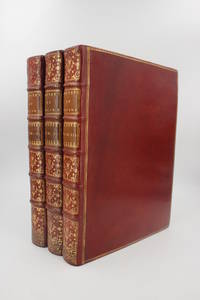
176088881Paris: S. n. 1760. Fine. A contemporary full red morocco binding S. n. Paris 1760 22.5 x 29.3 cm trois volumes reliés New edition adorned with a portrait of the author by Daullé three headpieces by de Sève engraved by Juste Chevillet twelve plates engraved by Jacques Aliamet Jean-Jacques Flipart Noël Le Mire Louis-Simon Lempereur Dominique Sornique and Jacques-Nicolas Tardieu and thirteen vignettes and sixty tail-pieces all by de Sève engraved by Jean-Charles Baquoy Jean-Jacques Flipart and Louis Legrand. A superb copy of the first luxury edition of Racine among the most sought-after bound in the most sumptuous red morocco. Contemporary full red morocco spine with five raised bands and gilt compartments triple gilt fillet border corner fleurons yellow morocco lettering pieces and volume numbers double gilt fillets on the boards marbled endpapers double gilt fillet on the edges gilt dentelle turn-ins gilt edges. Occasional light foxing mostly on the early leaves of the volumes; some browned pages; skilfully restored corners and joints; a few scratches. Provenance: Library of Jean Fürstenberg his red morocco bookplate pasted to the verso of a free endpaper of vol. I others in paper in vols. II and III. From a family of Berlin bankers and a banker himself Hans Fürstenberg took refuge in France in 1938 and francised his name. It was then that he presented to the Bibliothèque nationale his collection of original editions of German works from the pre-classical and classical periods. From his youth Jean Fürstenberg also collected illustrated books rare French eighteenth-century works incunabula and bindings maintaining his interest in these fields throughout his life and publishing several works on the subjects. In 1959 together with Julien Cain he founded the International Association of Bibliophily. Comité dhistoire de la Bibliothèque nationale de France S. n. hardcover
18299273Paris, Firmin-Didot, 1829 - 1833 ; 2 tomes reliés en 3 volumes in-folio atlantique (53 x 35,3 cm) ; demi-chagrin maroquiné à coins grenat, dos à nerfs soulignés de filets fins à froid, titre doré en lettres majuscules, filets à froid sur les plats, armes poussées à froid sur le premier plat de chaque volume, ex-libris Belton House (Grande-Bretagne), tête dorée, tranches juste ébarbées (reliure de l’époque) ; [4], 4, 9, [1 bl.], 50 pp. ; [4], pp.51-143, [1 bl.] pp.; [4], 143, [1bl.] pp. et en tout 254 lithographies hors-texte tirées sur Chine contrecollé sur vélin fort (quelques unes le sont directement sur la feuille), par Taylor, Fragonard, Eugène Isabey (17), Jorand, Deroy, Bourgeois, Sabatier, Bouton, Jaime, Athalin, Adam, J.D. Harding, Dauzats, Daguerre, Regnier, Brascassat, Ciceri, Bichebois, Tirpenne, Goré, Nouveaux, Villeneuve, Hubert, Monthelier, Alcaux, etc... ; 15 dessins in-texte lithographiés, 3 grandes lettrines de style celtique.
71330London: Picador 2006. First U.K. edition first printing. Hardcover. Fine/Fine. One of only 200 copies issued with a bookplate signed in black ink by Cormac McCarthy mounted to the title page. These bookplates were signed specifically for this first Picador edition and distributed via the British retailer Waterstones. From the library of the late Santa Fe bookseller and McCarthy associate Nicholas Potter. Laid in is Potter's original invoice and purchase receipt from Nicholas & Helen Burrows booksellers Surrey/London UK dated 20-Nov-06.<br /> <br /> 241 pp. Octavo 24 cm. Publisher’s black paper-covered boards with silver stamping to the spine. Original pictorial dust jacket with the "£16.99" price intact. A bright square and clean copy. The inclusion of the signed bookplate at the title page is notably scarce. A short note in Potter's hand is also laid in: "w/signed Bookplate tipped in. October 2006. Cormac told me he would not sign this book title so it is rare signed even if it is on a bookplate." Throughout a friendship spanning forty years Nicholas Potter’s Santa Fe bookstore served as a frequent destination for McCarthy where the two shared a rapport rooted in their mutual appreciation of literature art music and history. This volume represents a vital fragment of that connection.<br /> <br /> Pulitzer Prize-winning and austere The Road is a harrowing odyssey and a testament to paternal devotion. Set in an ash-covered wasteland the narrative depicts a father and son navigating a landscape of predatory cannibals among the ruins of civilization. Refining the sparse prose of his late career into minimalist parable McCarthy captures the endurance of hope in the face of total environmental collapse. The work was adapted into a film directed by John Hillcoat and starring Viggo Mortensen. Picador hardcover
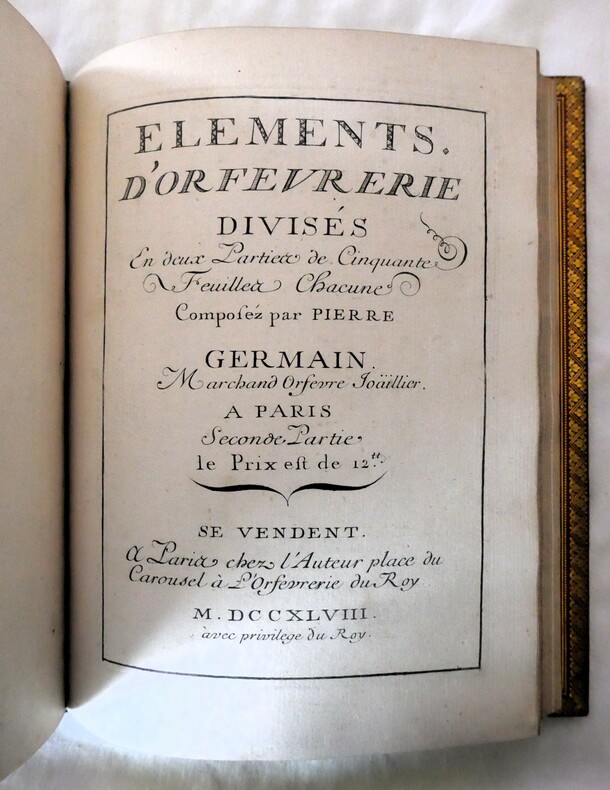
174812cb2in4 plein maroquin rouge à nerfs. Titres dorés. Tranches dorées. Reliure signée Cuzin. Gardes marbrées avec encadrements des 2ème et 3ème de couvertures richement ornés. Magnifique ex-libris de Cortlandt Bishop. 2 parties reliées en ce volume. Ouvrage signé en sa première partie par Germain.
1691002926A Paris, Galerie-Neuve du Palais, G.de Luyne, T. Girard, Veuve M. Guérout, avec Privilège du Roy, 1691
176088881S. n. | Paris 1760 | 22.5 x 29.3 cm | trois volumes reliés
1741AMO-4530A Trévoux, Par la Compagnie, M. DCC. XLI. [1741]. 5 volumes in-12 (17,3 x 10,5 cm) de (24)-345-(3), (2)-307-(4), (2)-277-(2), (2)-356-(4) et (2)-XII-383 pages. Collationné complet. Reliure strictement de l'époque plein veau glacé caramel, dos à nerfs ornés, tranches rouges, pièces de titre et tomaisons de maroquin rouge, doublures et gardes de papier peigne, supra-libris doré sur le plat supérieur de chaque volume (Frédéric Lachèvre). Quelques marques et ombres sans gravité aux reliures, quelques coins frottés ou très légèrement émoussés. Reliures solides et décoratives en excellent état de conservation. Intérieur très frais, imprimé sur beau papier. Nouvelle édition. "Cette édition reproduit exactement le texte de l'édition de Paris, Guillaume Cavelier, 1691, réimprimée en 1698. 4 vol. in-12" (note manuscrite de Frédéric Lachèvre placée en tête du deuxième feuillet blanc du premier volume).
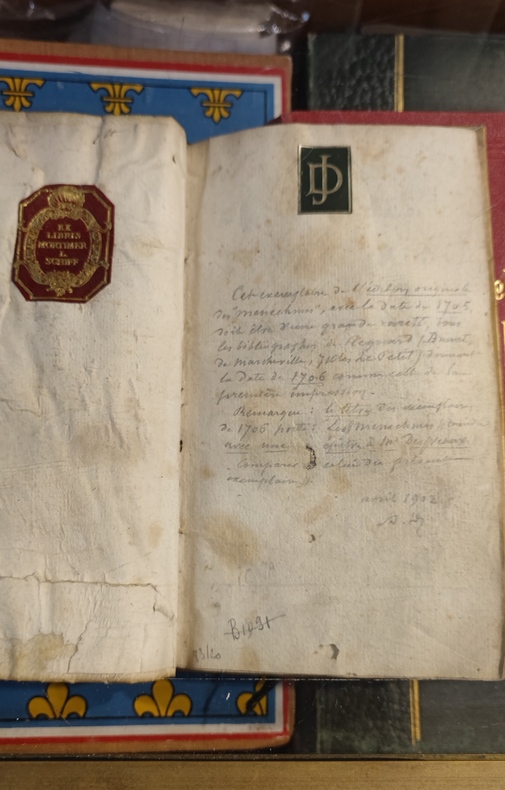
17053495Pierre Ribou, 1705 in-12 (16 x 9,7 cm.), 4 ff., 1 blanc, page de titre avec vignette, Espitre à Mr Despreaux, 96 pp., reliure d'époque vélin souple, coffret gris foncé, dos demi-maroquin. Edition originale datée de 1705, date de la création de la pièce La plupart des références bibliographiques donnant la date de 1706. Bandeaux et frises d'en-tête. Ex-libris Mortimer L. Schiff, Jean Davray, de Cruzille. Note bibliographique manuscrite concernant cet ouvrage, signée par Edouard Rahir, sur le premier feuillet blanc comportant trois trous. "Le théâtre comique de tous les temps s'est servi de cette comédie de Plaute comme d'un modèle typique pour diverses comédies ayant pour sujet les équivoques provoquées par la confusion de personne entre deux jumeaux".(Laffond-Bompiani. Dictionnaire des oeuvres)
157917643Lutetiae, apud Marnerum Patissorum typographum Regius, in officina Roberti Stéphani, 1579 ; deux parties avec titre propre reliées en un volume in-8, veau marbré, dos à nerfs décoré et doré avec le chiffre de Mathieu Molé, armes de Mathieu Molé au centre des plats ; (12)-136 pp. , (6) p. , (1) f. blanc ; 292, (12) pp.volume in-8, veau marbré, dos à nerfs décoré et doré avec le chiffre de Mathieu Molé, armes de Mathieu Molé au centre des plats ; (12)-136 pp. , (6) p. , (1) f. blanc ; 292, (12) pp.
188521625Paris, Masson, 1885-1888-1891 ; trois tomes in-8° brochés, chemise individuelle pour chaque tome : demi-chagrin bleu-marine, dos rond, faux nerfs, titre et date en queue dorés, plats de papier “oeil de chat” bleu et gris, étui de trois volumes, avec arrondi pour chaque tome, bordé et papier oeil de chat identique (P.Goy et C. Vilaine) ; VI, 664; 615 ; IV, 1032 pp. et en tout 508 figures légendées dans le texte.
9a629A.M.da Mota Miranda Celorico de Basto 1995. Zusammen ca.3.500 S. mit zahlreichen Illustrationen und aufgezogenen teils signierten Originalen in verschiedenen Techniken Kunstleder. Quart. - Die Bände sind viersprachig. Neben Deutsch ebenso Italienisch: "Enciclopedia Bio-Bibliografica da Arte do Ex-Libris contemporaneo"/französich:"Envyclopèdie Bio-Bibliographique de L`Art de L`Ex-Libris contemporain"/englisch: "Encyclopaedia Bio-Bibliographical of the Art of the Contemporary Ex-Libris" - unknown
19530458541953. 1950-2015, 4°, private Halblwd. u. geb. OPappeinbd. m. hundrrten montierten und teilw. handsignierten Ex-Libris u. zahlr. Werkverzeichnissen - ein privater Einband setil. angeplatzt, ein zweiter bestoßen, sonst sehr gute Exemplare der umfangreichen Sammlung.
1754(LCPCLIT-0003)(Un séduisant Lucrèce illustré conservé dans une reliure en maroquin du temps) LUCRECE (Titus Lucretius Carus). (Pompei, 94 avant J.C. (?) - Rome, 54 avant J.C. (?)) "DELLA NATURA DELLE COSE LIBRI SEI TRADOTTI DAL LATINO IN ITALIANO DA ALESSANDRO MARCHETTI". 1754, Amsterdam. 2 volumes grand in-8° (231x154 mm) (dimensions pages 224x144 mm) I: (4) ff. (1 gravure d'après Eisen, 1 front. gravé, dédicace, note du traducteur), 243 pp., (1) p. (vignette au recto), 3 vignettes et 3 gravures en taille-douce h.t. d'après Cochin; II: (2) ff., (1 gravure d'après Eisen, 1 front. gravé), 1 p. b. (gravure au recto), (1) p., pp. 246 à 543, (1) p. b., 3 vignettes et 3 gravures en taille-douce h.t. d'après Cochin et Le Lorrain. Reliure françaises de l'époque en maroquin rouge. Encadrement avec triple filet doré sur les plats. Dos à cinq nerfs avec fleurons dorés, titre et tomaison dorés. Coupes ornées. Tranches dorées. Gardes de papier décoré. Exemplaire imprimé sur grand papier de Hollande. Plat supérieur du premier volume légèrement frotté et dos ensoleillés. Quelques ff. avec infimes brunissures. Très bel exemplaire. Provenance: Ex libris armorié C. Yorke et ex libris L. Aurriv. (LCPCLIT-0003) (2.200,00 €) (Tous les livres provenant d'Italie possèdent la Licence d'exportation (Attestato di Libera Circolazione) du Ministero dei Beni e Attività Culturali)

_1.jpg)
_2.jpg)







_3.jpg)