141 résultats
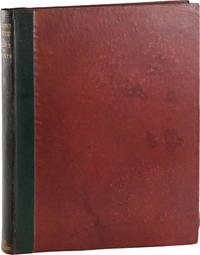
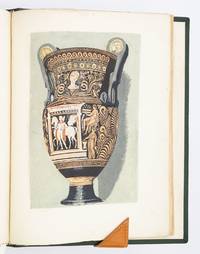
18759365Paris: Ve. A. Morel 1875. First edition. 20 chromolithographic plates 5 uncolored architectural views. 1 vols. Folio. Half red morocco. Some rubbing and chipping with head of spine missing corners repaired with red cloth not unattractive. 2 Photographs of Sainte Chapelle loosely inserted paste marks to front free endpaper. Text and plates bright. First edition. 20 chromolithographic plates 5 uncolored architectural views. 1 vols. Folio. Very fine plates by Lemercier of Paris. Ve. A. Morel unknown
1822ST17561London: Published for the Proprietor by Longman Hurst Rees Orme and Brown 1822 1823. FIRST EDITION ONE OF 227 COPIES. 288 x 220 mm. 11 3/8 x 8 5/8". 3 p.l. vi 2 100 8 103-118 pp. 2 leaves. <br/> Pleasing 20th century rich green crushed morocco gilt-framed covers and smooth spine gilt lettering to spine edges untrimmed. In a burgundy calf-backed clamshell box meant for this book but for some reason substantially larger green morocco title label on spine. WITH 60 ENGRAVED ILLUSTRATIONS as called for in Abbey 48 PRINTED IN COLORS including decorative title page dedication with Earl Spencer's coat of arms six plates with a total of 18 color ink specimens two type specimen plates four engravings of printing presses Columbian Press in two states one before letters nine defaced plates printed recto-verso and six headpieces three color printed 28 engraved plates printed in colors: five in a single block six in two to four blocks 14 in five to nine blocks and three full-color in 13 14 and 29 blocks respectively as called for in the contents and in Abbey. Front pastedown with the bookplate of the Robin Collection. Abbey Life 233; Ray "England" 99. Occasional mild thumbing otherwise nothing but the most trivial imperfections--quite a fine copy internally clean and fresh with pleasing colors in a very appealing unworn binding.<br/> <br/> This virtuoso production was in Ray's opinion Savage's magnum opus a work that was "both a highly idiosyncratic volume and a notable landmark in the history of color printing from wood." Printer and engraver William Savage 1770-1843 was in Ruari McLean's words "the first true colour printer of the nineteenth century in England." One of his great innovations which made possible color printing as seen here was a new formulation of ink. DNB reports "Printing ink in England at that time was of a very poor quality and Savage by various experiments made a printing ink without any oil in its composition. This made it more serviceable for artistic work and easier to manufacture." Savage's inks transferred so cleanly from the engraved wooden block to the paper that the blocks did not have to be wiped between impressions--speeding up the process considerably especially when as here one image could require up to 29 colored blocks. The oil-free inks were also less inclined to smear or to bleed through the paper. While Savage's elaborate methods were not economically viable for mass printing of color-illustrated works his improvements to printing ink and his use of multiple blocks paved the way for the use of chromolithography. The engravings in this work are rare because the work was strictly limited and because Savage despite some protests fulfilled his promise to subscribers that all the blocks would be destroyed. While the plate count in the work can vary from copy to copy the present item collates as indicated by the table of contents and includes Clymer's Columbian Press plate in two states as called for by Abbey. This work appears on the market from time to time but seldom in the kind of agreeable condition seen here. Published for the Proprietor by Longman, Hurst, Rees, Orme, and Brown unknown
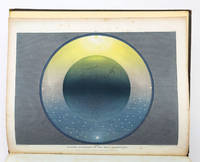
1846ST19286London: Printed by Catchpool & Trent for Simpkin Marshall & Co 1846. FIRST EDITION. 320 x 255 mm. 12 1/2 x 10". xiii 3 96 pp. <br/> Publisher's original blind-decorated dun-colored cloth gilt titling to upper cover smooth spine newer endpapers. WITH 11 COLOR ENGRAVINGS after Frost by W. P. Chubb & Son printed in oil colors by George Baxter all with original tissue guards. Front free endpaper with small ink signature of John Hill. See: Francis Reid "Isaac Frost's 'Two Systems of Astronomy' 1846: Plebeian Resistance and Scriptural Astronomy" in "The British Journal for the History of Science" Vol. 38 No. 2 Jun. 2005 pp. 161-177. Cloth rather spotted corners bumped but the binding solid with no wear to joints or hinges. A few spots of foxing to title page half of the tissue guards with overall very faint foxing/browning the illustrations with minor foxing at edges and in margins but the images themselves clean and bright and all in all a really excellent copy the text wide-margined and quite clean and fresh and the plates with rich coloring.<br/> <br/> Illustrated with beautiful color plates this anti-Newtonian work promotes a view of the universe based on the backward-looking beliefs professed by a Protestant sect known as the Muggletonians. Named after co-founder Lodowicke Muggleton the Muggletonians emerged in London in 1651 based on the claims of two tailors who professed to be the "Last Witnesses" described in the Book of Revelation. Rejecting the new directions in philosophical reason Muggletonians believed in a purely scriptural interpretation of the universe. According to E. P. Thompson's 1994 "Witness Against the Beast" the Muggletonians had curious notions quite contrary to other Protestant denominations: they believed that the soul is mortal that Jesus and God are one and the same that Heaven was left without divine supervision from Jesus' death until the day of judgment that Heaven resides six miles above the Earth that God stands between five and six feet tall and other unconventional things. Although the sect initially avoided both worship and evangelizing during the 19th century some followers became more outspoken about their beliefs and even published books appealing to the general public. Our author Isaac Frost 1793-1858 was a prominent Muggletonian and successful owner of a brass foundry who along with his brother Joseph invested large sums to promote their belief system--the present work being an especially notable example. Divided into two main sections the text first describes the Newtonian system of heliocentric astronomy and then turns to Frost's scriptural interpretation and geocentric views. As Reid tells us "According to Frost Scripture clearly states that the Sun the Moon and the Stars are embedded in a firmament made of congealed water and revolve around the Earth that Heaven has a physical reality above and beyond the stars and that the planets and the Moon do not reflect the Sun's rays but are themselves independent sources of light. Our book was apparently written as a reaction against the lecturers who expressed Newtonian astronomy--which was often for them and their audiences simply shorthand for heliocentrism." The 11 plates that illustrate these extraordinary ideas are the work of George Baxter a pioneering printer who revolutionized color printing techniques by combining metal engravings with woodblock printing using oil-based inks to produce high-quality affordable prints. The plates here are appropriately ethereal and otherworldly utilizing a beautiful palette with subtle gradations and esoteric figures to create memorable pseudo-scientific imagery. Although this work appears at auction with some regularity it is almost always incomplete no doubt because the attractiveness of its plates encourages harvesting. Useful price comparisons include a complete copy said to be in fine condition selling for £7500 in 2016 and six loose prints from the book fetching £6875 in 2015. [Printed by Catchpool & Trent for] Simpkin, Marshall, & Co unknown
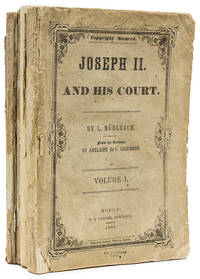
1864228980Mobile Alabama: S.H. Goetzel; Farrow & Bennett Printers 1864. First edition in English. 4 vols. 8vo. Printed wallpaper wrappers worn and fragile; back wrapper of Vol. II missing. In blue cloth drop-box. First edition in English. 4 vols. 8vo. Rare and telling example of printing in the confederacy toward the end of the war when paper was so scarce the publisher was forced to use wallpaper taken from Southern homes for the wrappers. Parrish 6437; Crandall M.L. Confederate imprints 3106 S.H. Goetzel; Farrow & Bennett, Printers unknown
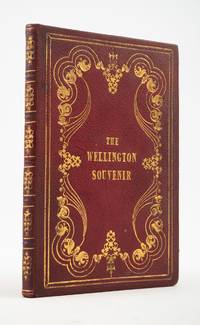
1852ST20768London: Simpkin & Marshall 1852. FIRST EDITION. 153 x 102 mm. 6 x 4". 64 pp. <br/> Publisher's deluxe red pebble-grain morocco gilt covers with graceful Romantic-style frame central panel of upper cover with gilt lettering that of lower cover with gilt ornament spine blind-stamped to resemble raised bands panels with gilt ornament gilt turn-ins pale yellow endpapers all edges gilt. With title page vignette frontispiece portrait of Wellington and three full-page engravings of battles. Printed entirely in gilt on "enamel" gloss paper. Front free endpaper with faint pencilled signature. Binding very slightly soiled joints and extremities a little rubbed trivial soiling to front endpapers otherwise quite a fine copy the text entirely clean fresh and bright with sparkling gold.<br/> <br/> This now-scarce luxuriously produced little volume celebrates the life and military achievements of Arthur Wellesley Field Marshall and 1st Duke of Wellington perhaps the most widely admired Briton of the 19th century--and does so in glittering fashion. The key facts of Wellington's life and the decisive battles of his storied career are related here in sparkling gold text and images on alabaster white pages. Poet laureate Tennyson's funerary ode described Wellington 1769-1852 as "the last great Englishman" and his death evoked great mourning in response to his life of public service. DNB notes that his defeat of Napoleon at Waterloo crushing the emperor's ambition for European dominance put him in a class of his own: "No man certainly no Briton had ever been in such a situation before in Europe the object of universal hero-worship and gratitude." Wellington was particularly notable among senior military officers for his determination to lead his troops on the frontline in battle. The three battles depicted in the illustrations here attest to this: in "The Battle of Assaye" we see him on horseback two horses were shot from under him during the conflict wielding his sword as he bears down on enemy cannon. At the "Battle of Vittoria" he is shown leading the infantry to face the enemy with bayonet fixed. And in the decisive "Battle of Waterloo" scene he is once again with the cavalry wheeling to attack the advancing French. The frontispiece shows Wellington astride his famed horse Copenhagen who was his mount at Waterloo. Our volume concludes with a chronology of principal events in the duke's life. It is notable that such a handsome memorial work was produced so quickly after Wellington's sudden death on 14 September 1852: a contemporary ad in Bent's Literary Advertiser notes our title was published on 15 November three days before Wellington's state funeral on the 18th. Copies of this work are rare: we could trace no auction sales and OCLC records only seven copies just one in North America. Simpkin & Marshall unknown
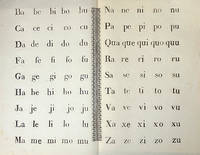
1850102955<p>No place no date but Nancy Hinzelin c. 1850. One large folio sheet size 44 x 55 cm showing 90 large syllables with a vertical typographical border in the middle of the sheet.</p><p>Scarce and curious sheet that was printed to help children to learn the alphabet and read. Was it used to hang on the wall in schools</p>
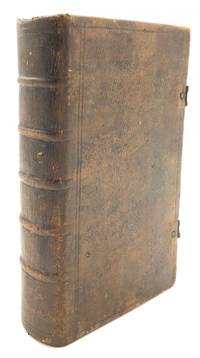
1821H11177Lancaster PA: Johann Baer 1821. Hardcover. Very Good. 8vo full original leather one clasp intact the other mainly missing contents very good some age toning and foxing throughout. Solid and clean copy small ink stain to rear pastedown. 518 pp index. German language edition of the Lutheran New Testament. Johann Baer hardcover
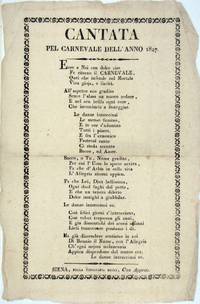
1827100954<p>1827. Sciena nella tipografia Mucci Con Approv. 1827. One sheet c. 19 x 29 cm. Text within typographical border. The carnival song originated in the fifteenth- and early sixteenth-century and celebrated the carnival season in Florence. Lyrics were drawn mostly from popular legend and daily life. A rare survival.</p>
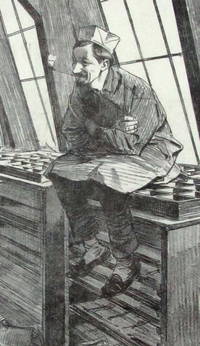
1900101626Bijvoegsel van de Amsterdammer Weekblad voor Nederland van 6 mei 1900. Lithography. Broadsheet Folio 47 x 30 cm. Johan Coenraad Braakensiek 1858 - 1940 was a Dutch painter illustrator and political cartoonist. The subject of this print is the strike of the typographers in Amsterdam from the end of April to the beginning of May 1900.
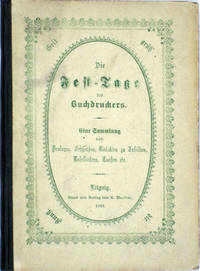
1868100088ALeipzig 1868. 1462pp. Original hcloth with printed boards. 10x14cm.
189743316East Aurora New York: The Roycroft Printing Shop 1897. 120 1 colophon pp. 1 vols. 8vo. Original red cloth backed mustard boards uncut. Slight rubbing at tips minor soiling of spine some browning to text. Inscribed on ffep "For Mr. Frank W. Noxon with all good wishes from Elbert Hubbard". A very good copy. 120 1 colophon pp. 1 vols. 8vo. Ransome p. 405 no. 8 The Roycroft Printing Shop unknown
1882ST12705Paris: A. Quantin 1882. UNIQUE COPY ON VELLUM printed for M. A. Werlé. 206 x 140 mm. 8 1/8 x 5 1/2". xxxii 247 pp. 1 leaf colophon.With a bio-bibliographical notice by Fernand Drujon. <br/> Pleasing burgundy Jansenist crushed morocco by Canape et Corriez stamp-signed in gilt on front turn-in dated 1930 on rear turn-in raised bands turn-ins richly gilt marbled endpapers all edges gilt on the rough. Decorative head- and tail-pieces throughout and eight engraved plates comprised of a frontispiece portrait in four states one on vellum three on paper and an allegorical vignette also in four states. Verso of front free endpaper with ex-libris of Jean Furstenberg. ◆Two small dark spots to upper cover a couple of leaves with naturally occurring minor discoloration to vellum but A FINE COPY--especially clean fresh and bright internally and in a lustrous unworn binding.<br/> <br/> Given its illustrious provenance and its singular status as the only copy printed on vellum this is a quintessentially bibliophilic copy of the poems of French cleric and diplomat Cardinal François-Joachim de Pierre de Bernis 1715-94. Admired as a witty epigrammist at the court of Louis XV where Madame de Pompadour presided Bernis composed poems on such conventional themes as love and the natural world but also verses contemplating manners and mores fashion independence and love of country. Since none of his poems was published before his death he was not widely known as a poet during his lifetime but in another sphere he performed important service to his country as France's ambassador to Rome. He provided shelter and succour there for refugees from the French Revolution earning the papal epithet "Protector of the Church of France." The present work was printed for Count Alfred Werlé whose father had inherited the Veuve Clicquot Champagne house from the Widow Clicquot. Alfred took over the operation in 1884 and greatly expanded the Veuve Clicquot-Ponsardin vineyards. The volume subsequently passed into the library of the great collector Jean or Hans Furstenberg 1890-1982 who put together one of the finest collections of 18th century books ever assembled. In 1974 the Furstenberg collection was sold en bloc to Dr. Otto Schäfer whose marvelous library had already become distinguished for its fine and historic bindings. A. Quantin unknown
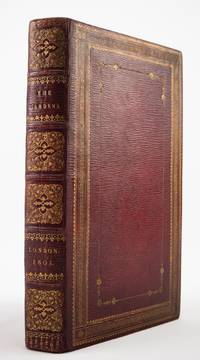
1805ST21016London: Printed by T. Bensley 1805. APPARENTLY THE ONLY COPY PRINTED ON VELLUM. 260 x 152 mm. 10 x 1/4 x 6". 2 p.l. 146 pp. 1 leaf notes. Translated by Maria Henrietta Montolieu. <br/> Very pleasing contemporary straight-grain scarlet morocco gilt by Charles Hering binder's ticket on verso of front flyleaf covers bordered with a wide frame of multiple patterned rolls with rosette cornerpieces enclosing a delicate frame of a dotted roll cornered small floral tools raised bands spine gilt in compartments wide turn-ins sumptuously gilt cream silk endleaves with gilt borders and fleuron cornerpieces all edges gilt. WITH EIGHT ENGRAVINGS BY FRANCESCO BARTOLOZZI IN TWO STATES one on gold silk and the second on paper. EXTRA-ILLUSTRATED with two engravings depicting Princess Izabela Czartoryska and her daughter Zofia. A Large Paper Copy. Henrey 624. See also Clemens Alexander Wimmer "The Princess and the Poles" Historic Gardens Review no. 10 2002: 14-17. Spine slightly darkened joints and edges with minor barely noticeable wear vellum a bit and naturally rumpled and consequently the book yawning a bit a handful of light spots but still an extremely appealing copy with fine impressions of the plates vast margins and a special story to tell.<br/> <br/> Printed on vellum richly bound and illustrated with attractive plates on silk this is an extraordinarily luxurious copy of Delille's famous poem on gardens that almost certainly belonged to a noblewoman whose gardens are mentioned in the text. First published in 1780 our poem condemns formal gardens and broad promenades in favor of a gardening art which hides its artistry by reproducing the asymmetrical groupings of nature and careless bounty of the countryside. This view accords with the translation of Virgil's "Georgics" done by Delille 1738-1813 in 1769 a version that brought him great acclaim for its supple and sonorous versification. In fact it so pleased the Count of Artois the future Charles X that he named Delille abbot of Saint-Séverin; however revolution disrupted things and the poet for a time led a wandering life in Switzerland Germany and England where this updated and expanded version of "Gardens" was published in 1801. The present special edition includes the plates which had appeared as head- and tailpieces in the first edition but now used as stand-alone plates in two states. These were executed by Bartolozzi after originals by Portuguese neoclassical painter Francisco Vieira. In addition to the called-for suite of illustrations our copy includes two inserted plates portraits of Princess Izabela Czartoryska 1745-1835 and her daughter Zofia. Czartoryska was a major figure in the Polish Enlightenment as a writer and patron of the arts as well as an advocate for improving the lives of the poor. She is best remembered for the sprawling gardens at her palace in Pu awy which included a formal garden a "wild promenade" or landscape park and multiple structures including the neoclassical Temple of the Sibyl which became one of Poland's first museums. She made the acquaintance of the author while travelling through Paris in 1791 and the two struck up a friendship. She financially backed the second edition of the work in exchange for a mention of her gardens which duly appears in heightened verse on pp. 11-13: "Favoured Pulhavi! You from Heaven obtain / Each separate charm Earth's choicest scenes contain; / Bright glow thy features fresh from Nature's hand / Excite our wonder and our praise command." The presence of this poetic tribute--and especially the inserted plates showing the princess and her daughter-- clearly suggest that the our apparently unique luxury edition must have been a presentation copy to Czartoryska herself. The present copy is as striking outside as it is inside. Charles Hering was the most distinguished and influential English binder of the first decade of the 19th century and although his career was brief from about 1795-1812 Ramsden focuses on his work as representing the transition in binding styles from those of the German émigrés of the late 18th century to the new generation of binders headed by Charles Lewis. Dibdin states that until "the star of Charles Lewis rose above the bibliopegistic horizon no one could presume to 'measure business' with Hering. There was a strength squareness and a good style of work about his volumes which rendered him deservedly a great favourite." We have been unable to trace any other copies of the present edition on vellum. Printed by T. Bensley unknown
1882ST16453Glasgow: Printed by Robert Anderson for Private Circulation 1882. ONE OF ONLY 50 COPIES. 195 x 122 mm. 7 3/4 x 4 7/8". 1 p.l. x 103 1 pp.From George Bannatyne's manuscript compiled A.D. 1568. <br/> BEAUTIFUL CITRON CRUSHED MOROCCO ELABORATELY TOOLED IN GILT BY RAMAGE stamp-signed on front turn-in covers with six concentric frames--intricate filigree roll pointillé-tooled floral vine and alternating small ornaments--enclosing a central panel with cornerpieces semé with rows of fleurs-de-lys large oval medallion at center radiating ornate fleurons raised bands spine compartments with large central medallion containing a vase of flowers delicate tooling in corners gilt titling turn-ins framed by filigree roll and alternating small ornaments brown and tan silk jacquard endleaves patterned in a Medieval motif top edge gilt. Printer's device on title page decorative woodcut initials and headpieces. Spines evenly sunned to a warm honey brown corners lightly rubbed short faint scratch to lower board but the binding virtually unworn and happily free of the splaying that plagues vellum books. Leaves lightly rumpled but A VERY FINE COPY the vellum leaves creamy clean and bright and the binding glittering with gold.<br/> <br/> Printed on luxurious vellum and limited to just 50 copies presumably for private circulation among friends of the printer this is a lovely edition of 16th century poems by a mysterious author believed to have been a poet and musician associated with the court of Mary Queen of Scots. This work contains all 36 extant poems attributed to Scott ca. 1520-82/3 including what is considered to be his most historically important work "Ane New Yeir Gift to Quene Mary" 1562 written in support of the young Scottish queen caught between Catholic and Protestant agendas. His other poems consist largely of lyric verses on love and sexuality which DNB describes as possessing "exceptional metrical variety and vernacular directness" with "a musician's ear for rhythm and melody." Scott's poems are known to us via the Bannatyne manuscript now held in the National Library of Scotland which ranks among the most important documents of Scottish Medieval literature. Written by George Bannatyne in 1568 during a period of confinement due to an outbreak of plague it contains a mixture of both secular and religious material including the sole extant copies of several texts. In the preface to the present work the publisher notes that Scott's poetry has been faithfully reproduced from that manuscript and thus "for the first time accurately printed." Very little is known regarding the life of Alexander Scott but he seems to have been attached to the court of Mary Stuart through John Erskine a guardian and counselor to the queen. Given the very limited number of copies made it is not surprising that this work is extremely rare on the market. Printed [by Robert Anderson] for Private Circulation unknown
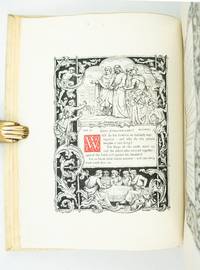
1862ST20857London: Edmund Evans for Sampson Low Son and Co 1862. ONE OF PERHAPS 10 COPIES PRINTED ON VELLUM. 260 x 195 mm. 10 1/4 x 7 3/4". vii 1 235 1 pp. <br/> Publisher's stiff vellum smooth spine with gilt lettering edges untrimmed. In a modern felt-lined blue buckram drop-back box. Decorative initials in red or blue title page and text leaves with full criblé border of vined foliation occasionally inhabited eight or 10 leaves with more extensive illustrations at head or foot all engraved by W. J. Linton after illustrations by John Franklin. Front pastedown with ex-libris of Marion Hope Rattey. A Large Paper Copy. McLean "Victorian Book Design" p. 184. Short thin cracks to head and tail of front joint spine vaguely soiled upper cover with two very small brown spots and one trivial red mark occasional mild rumpling or naturally occurring variations in the grain or thickness of the vellum as usual a couple of minor smudges but still a very agreeable copy the binding solid and without the splaying common in vellum books the interior clean fresh and bright and the margins extraordinarily wide.<br/> <br/> This is an infrequently encountered copy of a beautiful Victorian book on vellum issued by one of the era's top printers. The volume was printed by Edmund Evans 1826-1905 who is now best remembered for his illustrations and advances in color wood engravings. Relatively little is known about this book's production: Ruari McLean tells us that it was "entirely printed" by Evans but it is unknown whether he was responsible for the design as well McLean remarks that "if Evans was responsible for its design it shows his superiority in book-making". We also are unsure how many copies were printed on vellum although the general consensus is 10. Regardless as McLean tells us "it is one of the prettiest books of the 'sixties" with sharp deep impressions of the type on the rich creamy vellum jewel-like colored initials and elegant wood-engraved illustrations. These illustrations are the work of John Franklin ca.1800-68 a painter and draftsman who was highly respected in his own time. The precisely realized borders feature idealized human forms posed within a robust botanical largely acanthus context the figures posing with balletic grace their expressive faces often turned gently away from the reader. The size of the leaf here is significant: the untrimmed edges retain their tiny printing pinholes which would normally have been trimmed away with regrettable loss. And not surprisingly our vellum printing is almost never seen: we could trace just two copies at auction since 1924. Former owner Marion Hope Rattey 1922-97 was likely the daughter of bibliographer Clifford C. Rattey 1886-1970 whose impressive library featured incunabula and block prints. [Edmund Evans for] Sampson Low, Son, and Co unknown
18932111902160200405Iwanami Sono Remnants Edition 1893. Soft Cover. Fine. Volume: 1 Iwanami Sono Remnants Edition paperback
18205York: J. Kendrew 1820. Very good in stitched paper wraps with light soiling to covers. A charming 48mo chapbook. In its 16 pages it was able to fit 16 woodcuts. Kendrew despite being a provincial printer in York was one of the most prominent printers of nineteenth century children's chapbooks until his death in 1841. This instant book was from his series of twenty-four 16-page halfpenny chapbooks. Atkinson Street Literature of the Long Nineteenth Century pgs. 218-19.<br /> <br /> Uncommon in commerce as other copies appear bound as sammelbands with other chapbooks. Davis Kendrew of York 40; Opie N 799. J. Kendrew unknown
190019838Bruxelles: J. Verschueren 1900. Very good condition. An early Chinese railroad bond with attractive bank-note engraving and with three Chinese vignettes: a Chinese village a Chinese temple and a railway bridge spanning a large river. Printed in red & black with multiple tax stamps at top of page. Number 05219 with coupon sheet attached dated 1936 through 1944 with the 1936 coupon removed. Complete with statutes printed in red on verso. 14 x 15" J. Verschueren unknown
1856D12674London: Dean & Son 1856. Paperback. Fair. Original stitched illustrated wraps; 8vo 243x167mm; with 7 colored lithographs one double-page alternately printed on the recto or verso with some blank pages in between. Publisher's ads printed on rear cover. Covers lightly chipped along the edges with small stains at spine tips from old tape repairs. Some dusty finger-smudges but overall internally not so bad. Scarce. OCLC locates just 4 copies. All the trappings of highfalutin human Western weddings -- except that when fine monkeys get married they travel by pug-pulled carriage. <br/><br/> Dean & Son paperback
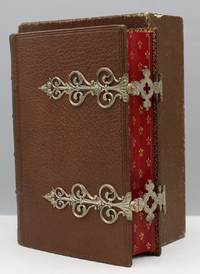
185517474<p>Paris: L. Curmer Éditeur 1855 First edition thus. Finely bound in brown morocco with metal fore-edge clasps. Spine titled in blind. Glossy red gauffered edges. Small octavo. . With eleven plates ten of which are beautifully chromolithographed including three plates with richly illustrated ornamental borders and hand-drawn gilt accents. The eleventh plate is printed in brown with a floral frame for an ownership signature. That plate is attractively hand-illustrated in color and gilt with the text "Laure & Oscar 29 Octobre 1862" in manuscript. Some toning to versos and margins of plates. Otherwise a fine bright copy of a scarce book in a matching custom slipcase and chemise. Henri Léon Curmer 1801 – 1870 is best remembered for publishing a landmark chromolithographed edition of L'Imitation de Jesus-Christ 1856 printed by Joseph Lemercier and Jules Claye. McLean calls Curmer's publication a "masterpiece of French chromolithography…in which over four hundred pages are decorated in almost every known style of ornamentation in up to fourteen colors" including medieval Renaissance and Islamic examples Victorian Book Design p. 166. In A History of Chromolithography 2013 Michael Twyman wrote that the book "took chromolithography into new territory" and required an enormous amount of labor and resources p. 158. An average of ten to twelve impressions were required for each page and the printing process used over nine hundred stones.</p> L. Curmer, Éditeur
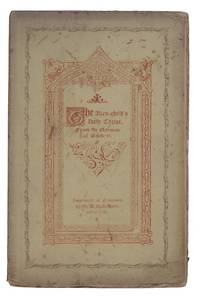
1846AQ18518Imprinted at Newcastle: by M.A. Richardon 1846. 19pp 1. Uncut in original yellow wrappers printed in red and black. Slight rubbed marking to upper wrapper chipping to extremities preserved in cream buckram chemise. The handsomely printed parallel English and German edition the English translated by Elizabeth Hodges of German man of letters Friedrich Ruckert's 1788-1866 short poem on the nativity in 18 verses 'Der Fremden Kindes heiliger Christ'. The text is adorned with borders illuminated initials and vignettes as with the text variously printed in red blue and black. . 8vo. by M.A. Richardon hardcover
188257197London: Macmillan and Co. R.ichard Clay Sons & Taylor Printers 1882. 4to. 48 pp. Colour frontisp. colour-illustrated title colour-printed and illustrated throughout. Quarter-brown cloth over colour-illustrated boards cover art by Cruikshank dustsoiling edgewear minor scuffing & wear to corners slightly shaken still good copy w/ very bright interior. First edition of this satirical and humorous series of vignettes surrounding the Suffolk Harvest Festival featuring dancing eating libations and pursuit of the fetching Judie Twitchett as reminiscences told to a group of young children. Macmillan and Co., [R.[ichard] Clay, Sons & Taylor, Printers], hardcover
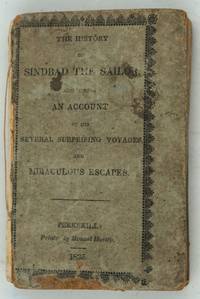
183528300Peekskill NY: Samuel Huestis 1835. Hardcover. Good overall. An early Peekskill imprint of this story which originated in the 8th and 9th centuries A.D.<br /> 32mo 118pp blue stiff paper cover stitch bound spine lacking with b&w woodcut illustrations. Light foxing throughout spine tender but holding. OCLC 701787336 shows 1 copy at Yale. Samuel Huestis hardcover
186953665London: John Camden Hotten 1869. First Edition. First printing. Quarto 29cm. Publisher's quarter morocco over glazed boards; brown coated endpapers; xxi8032pp. Mild external rubbing primarily to board corners and spine ends; scattered faint foxing within; Very Good in the original publisher's binding. <br /> <br /> A well-printed facsimile on thick paper with a substantial introduction and end-notes by Rae. John Camden Hotten unknown
180810529Mexico: Airzpe. Good with no dust jacket. 1808. Leather. vii 250 pp. Entirely in Spanish. A small octavo. Bound in what appears to be the original leather front board detached spine perished. First blank has an old flourished inscript dated 1824. Text is clean and unmarked paper nice printing is somewhat uneven as to be expected from an 1808 Mexican edition. Goldsmith was pro-Napoleon for many years then took against him publishing an English language edition shortly followed by a Spanish. The Mexican edition is quite scarce. ; 8vo 8" - 9" tall; 250 pages . Airzpe hardcover