Delacroix, EugeneBiblio.com
986 résultats
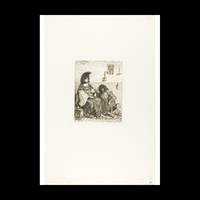
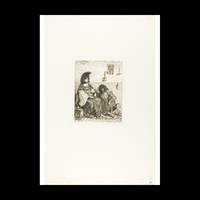
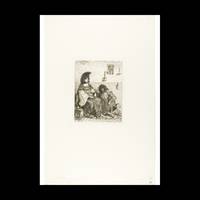
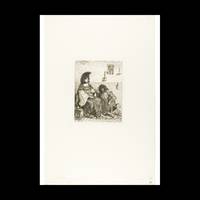
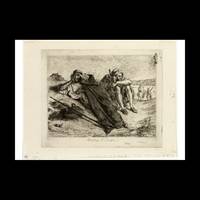
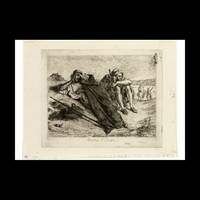
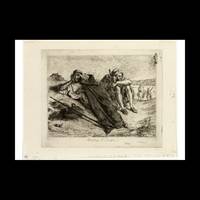
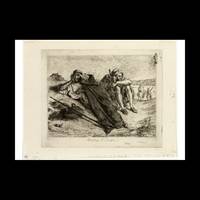
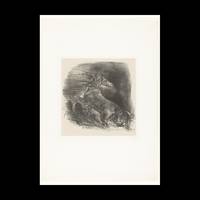
1844291Contentum Ltd. Loose sheet. New. High-quality art print based on an original work from the Rijksmuseum. Created in the 19th century 1828. Professionally printed on premium fine-art paper Museum Etching museum quality in size A2. The artwork is printed with a white border museum-style presentation. Contentum Ltd. unknown
1015908772.Ghardcover. Good. Access codes and supplements are not guaranteed with used items. May be an ex-library book. hardcover
1015913318.Gpaperback. Good. Access codes and supplements are not guaranteed with used items. May be an ex-library book. paperback
1908r6737Paris: Félix Alcan. Cover rubbed and scuffed at joints and corners. Ex-lib. Spines scuffed with end wear. Browning to page ends. 1908. First Edition. Half-leather cover. 220mm x 140mm 9" x 6". xix 470pp. Text in French. 'Saint Thérèse- Madam Guyon- suso le développment des états mystiques l'expérience mystique'. . Félix Alcan hardcover
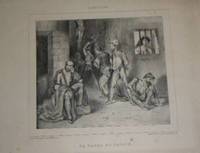
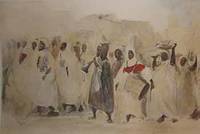
51-4181Paris: L'Artiste 1832. Lithograph. 21.5 x 28cm. Published in L'Artiste : journal de la littérature et des beaux-arts. Vol. IV. Catalogued in "Les Estampes de L'Artiste 1831-1904" by Pierre Sanchez and Xavier Seydoux no. 1832-59.Fondée en 1831 aux plus beaux jours de la révolution romantique la revueL'Artiste connut une longue vie se transformant et se renouvelant plusieurs fois au cours du XIXe siècle pour ne s'éteindre définitivement que dans les toutes premièresannées du XXe siècle. C'est dire que durant ses soixante-quatorze ans d'existence cetterevue porte un témoignage direct sur l'évolution des mouvements artistiques etlittéraires ayant joué souvent un rôle actif soit dans la légitimation de la modernité et de l'innovation soit au contraire dans la défense des principes proclamés et propagés par les organes officiels de l'Institut et du gouvernement. Paris: L'Artiste, 1832. unknown
20052-2200268114Armand Colin 2005. Paperback. New. French language. 9.21x6.30x0.87 inches. Armand Colin paperback
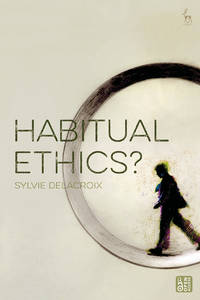
A9781509920419Hardback. New. Just like other experts members of the professions develop their craft thanks to a deep internalisation of both complex cognitive structures and a mix of habits and intuitive understandings. These non-cognitive aspects of expertise can be what distinguishes the merely competent from the truly brilliant. Yet habits can also be what makes us blind to important features of the world we inhabit. In the life of a professional these features include the vulnerability of those seeking her services which in turn grounds the professional's particular ethical responsibility. This book develops an in-depth account of habit to understand its impact upon the way moral decisions are made in a professional context. Its central thesis is the following: what most often stands in the way of a professional meeting her ethical responsibility is not so much stupidity or character defects but rather the deleterious aspects of habituation. This book calls for renewed attention to be paid to habits and their relationship to ethical agency. Mostly neglected in moral and legal theory such an inquiry not only conditions an adequate understanding of the risks inherent in a legal system's institutional structure. It is also essential if we are to come to grips with the challenges raised by the professions' growing reliance upon automated systems. hardcover
19-8620Paris: Quai D’Orsay ca. 1950s. Color reproduction print 9†x 13â€. Very Good. Printed in France. Paris: Quai D’Orsay, [ca. 1950s?]. unknown
63-0187Geneve Switzerland: Skira 1946. Folio. 4 pp. 6 leaves of color plates Light Glassine-Covered Boards Unbound Leaves Glassine Good with tears losses minor staining & creasing else VG. Eight Color Plates some mounted. Swiss edition of multi-volume set originally published 1939 in Paris. Text in French. Geneve, Switzerland: Skira, [1946]. hardcover
1995131134077London: The Folio Society 1995. Hardcover. Like New. 10x7x2. Folio Society. Fine in publisher's slipcase. A very nice copy. The Folio Society hardcover
194187253<p>Third printing - very good condition with bit of wear & small corner fold marks</p> Harmanson Pubolishers paperback
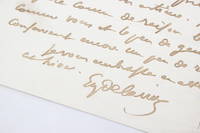
185086760Champrosay 1850. Fine. I am madly in love with these innocent and beautiful trees while human nature on the other hand falls every day in my esteem. Champrosay s. d. 1840-1860 13.50 x 20.10 cm une page sur un feuillet remplié Autograph letter signed by the painter Eugène Delacroix to his friend Baron Félix Feuillet de Conches master of protocol at the Ministry of Foreign Affairs under Charles X and Louis-Philippe. One page in black ink on a folded sheet with the autograph address on the verso. Traces of seal and postal stamps dated October 7. The painter writes to his friend Feuillet de Conches a distinguished man of letters whose works were well received and who also amassed an elegant collection of art and autographs in his apartment on the rue Neuve-des-Mathurins the address of this very letter. A charming and witty missive in which Delacroix expresses his enchantment with country life far removed from the bustle of Paris. ""From the summer of 1844 Eugène Delacroix settled at Champrosay on the edge of the Sénart forest near Paris. There he recorded in his journal the impressions inspired by his regular walks through the countryside. He produced numerous sketches later reworked into his large compositions as well as more ambitious landscapes that reveal how in his mature and later years the observation of nature now contemplated for its own sake had become central to his art."" MuMa ""I reply to you late dear Feuillet but you will forgive me: I promise you a Gros very happy to add it to the collection. I pity you for living far from the fields. If we were still in the time of Ovids Metamorphoses I might believe myself in danger of one day being turned into a tree. I am mad about these innocent and beautiful trees while human nature on the other hand loses each day in my esteem. I except of course friends like you and the few who retain a little reason.I embrace you while awaiting this winterEug. Delacroix."" unknown
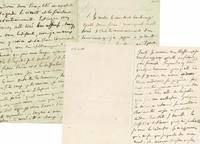
1823759401823. Fine. s. d. ca 1823 12 x 18.20 cm Six pages sur deux feuillets rempliés Almost entirely unpublished handwritten letter from the painter Eugène Delacroix to the love of his youth the mysterious Julie now identified as being Madame de Pron by her maiden name Louise du Bois des Cours de La Maisonfort wife of Louis-Jules Baron Rossignol de Pron and daughter of the Marquis de La Maisonfort Minister of France in Tuscany patron of Lamartine and friend of Chateaubriand. 90 lines 6 pages on two folded leaves. A few deletions and two bibliographical annotations in pencil on the upper part of the first page no114. This letter is one of the last to his lover in private ownership all of Delacroix's correspondence to Madame de Pron being kept at the Getty Research Institute Los Angeles. Only nine of the ninety lines of this unpublished letter were transcribed in the Burlington Magazine in September 2009 alongside the long article by Michèle Hanoosh Bertrand and Lorraine Servois whose research finally revealed the identity of the famous recipient. Sublime love letter from twenty-four-year-old Eugène Delacroix addressed to his lover Madame de Pron twelve years his senior who unleashed the liveliest passion in him. This episode of the painter's youth then considered the rising star of Romanticism for a long time remained a mystery in the biography of Delacroix who was careful to preserve the anonymity of his lover thanks to various pseudonyms: Cara the Lady of the Italians and even Julie as in this letter in reference to the famous epistolary novel Julie ou la Nouvelle Héloïse by Rousseau. For obvious reasons Delacroix did not sign his name on any of the letters in correspondence with the lady. A great figure of the legitimate aristocracy the recipient of this feverish letter is Madame de Pron daughter of the Marquis de La Maisonfort Minister of France in Tuscany patron of Lamartine friend of Chateaubriand. Her beauty was immortalized in 1818 by Élisabeth Vigée-Lebrun who painted her portrait in pastel with an oriental hairstyle. Delacroix and Madame de Pron met in April 1822 when the portrait of the latter's son Adrien was commissioned a pupil at the Lycée Impérial now Lycée Louis-le-Grand. Delacroix had been commissioned for the portrait by his close friend Charles Soulier Madame de Pron's lover who despite himself served as an intermediary for Delacroix. In the absence of Soulier who had gone to Italy the painter and the young women established an intense romantic relationship. The portrait commission became a pretext for their tender meetings in his studio on rue de Grès while no trace of the child's painting has been found to this day. Their adventure lasted a little over a year but it was one of the most intense passions of the artist's life. Our letter undoubtedly corresponds to the last throes of their relationship in the month of November 1823. After one of their visits at the end of a hiatus of several months Delacroix writes to her again under the influence of emotion: I come home with a shaken heart what a wonderful evening! . Sometimes I say to myself: why did I see her again In the calm sanctuary where I lived even in the middle of the invisible places that I had formed . I managed to silence my heart. Madame de Pron had indeed decided to bring an end to their intimate relationship see her letter from 10 November 1823: I want sweet friendship . I do not want to torment you Getty Research Institute. Losing all discernment and with blind devotion Delacroix attempts to revive their affair: Make me lie prove to me that your soul is indeed that of the Julie that I once knew since mine has regained its charming emotions and its worries. But the painter runs into Soulier and General de Coëtlosquet also lovers of Madame de Pron. Delacroix had narrowly avoided a final disagreement with Soulier who had almost seen a letter from Madame de Pron in h unknown
13256Contentum Ltd. Loose sheet. New. High-quality art print based on an original work from the Artic. Created in the 19th century 1833. Professionally printed on premium fine-art paper Photo Rag Bright White premium quality in size A2. The artwork is printed with a white border museum-style presentation. Contentum Ltd. unknown
13254Contentum Ltd. Loose sheet. New. High-quality art print based on an original work from the Artic. Created in the 19th century 1833. Professionally printed on premium fine-art paper Museum Etching museum quality in size A3. The artwork is printed with a white border museum-style presentation. Contentum Ltd. unknown
13257Contentum Ltd. Loose sheet. New. High-quality art print based on an original work from the Artic. Created in the 19th century 1833. Professionally printed on premium fine-art paper Museum Etching museum quality in size A2. The artwork is printed with a white border museum-style presentation. Contentum Ltd. unknown
13255Contentum Ltd. Loose sheet. New. High-quality art print based on an original work from the Artic. Created in the 19th century 1833. Professionally printed on premium fine-art paper Photo Matt Fibre in size A2. The artwork is printed with a white border museum-style presentation. Contentum Ltd. unknown
74671Contentum Ltd. Loose sheet. New. High-quality art print based on an original work from the Artic. Created in the 19th century 1833. Professionally printed on premium fine-art paper Museum Etching museum quality in size A3. The artwork is printed with a white border museum-style presentation. Contentum Ltd. unknown
74673Contentum Ltd. Loose sheet. New. High-quality art print based on an original work from the Artic. Created in the 19th century 1833. Professionally printed on premium fine-art paper Photo Rag Bright White premium quality in size A2. The artwork is printed with a white border museum-style presentation. Contentum Ltd. unknown
74672Contentum Ltd. Loose sheet. New. High-quality art print based on an original work from the Artic. Created in the 19th century 1833. Professionally printed on premium fine-art paper Photo Matt Fibre in size A2. The artwork is printed with a white border museum-style presentation. Contentum Ltd. unknown
74674Contentum Ltd. Loose sheet. New. High-quality art print based on an original work from the Artic. Created in the 19th century 1833. Professionally printed on premium fine-art paper Museum Etching museum quality in size A2. The artwork is printed with a white border museum-style presentation. Contentum Ltd. unknown
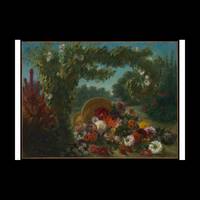
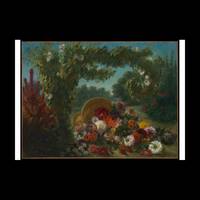
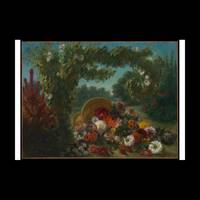
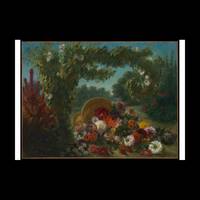
319718Contentum Ltd. Loose sheet. New. High-quality art print based on an original work from the Met. Created in the 19th century 1848–49. Professionally printed on premium fine-art paper Museum Etching museum quality in size A3. The artwork is printed with a white border museum-style presentation. Contentum Ltd. unknown
319721Contentum Ltd. Loose sheet. New. High-quality art print based on an original work from the Met. Created in the 19th century 1848–49. Professionally printed on premium fine-art paper Museum Etching museum quality in size A2. The artwork is printed with a white border museum-style presentation. Contentum Ltd. unknown
319719Contentum Ltd. Loose sheet. New. High-quality art print based on an original work from the Met. Created in the 19th century 1848–49. Professionally printed on premium fine-art paper Photo Rag 308 in size A2. The artwork is printed with a white border museum-style presentation. Contentum Ltd. unknown
319720Contentum Ltd. Loose sheet. New. High-quality art print based on an original work from the Met. Created in the 19th century 1848–49. Professionally printed on premium fine-art paper Photo Rag Bright White premium quality in size A2. The artwork is printed with a white border museum-style presentation. Contentum Ltd. unknown