117 résultats
197221508New York: The Vanishing Rotating Triangle 1972. First edition. Paperback. Very Good. Tall side-stapled wrappers with mylar cover. 21 pp mostly text with one image. The text describes of the images visible during one of the rare performances of Deafman Glance by Robert Wilson in 1971. It is the first section of a much larger essay. Contents in fine condition. Dark mylar sleeve has some chipping at edges. Scarce item. <br/><br/> The Vanishing Rotating Triangle paperback books
19653921Berlin: Suhrkamp 1965. 21 volumes. Original boards or original cloth. Very good and fine copies. First editions except vol. I of Stücke which is a later printing of Brecht's collected works The first 12 of 14 eventually published volumes of plays and the first 9 of 10 of poems. W.-G. 64 77. Additional shipping will be required. <br/><br/> Suhrkamp hardcover books
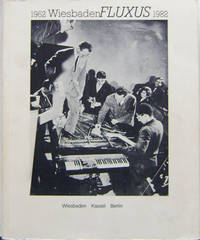
1982010077Wiesbaden Berlin and Kassel: Harlekin Art Berliner Kunstlerprogramm Des DAAD 1982. First Edition. Paperback. Very Good/No. First edition. Fantastic 377 pp catalogue documenting twenty years of fluxus. Profusely illustrated. The Spirit of Fluxus booklet tipped in at rear. Very good condition in tall thick bound wrappers. <br/><br/> Harlekin Art Berliner Kunstlerprogramm Des DAAD paperback books
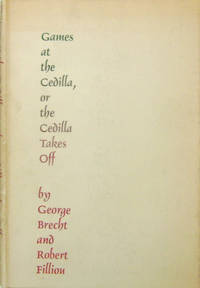
196719043New York Toronto Frankfurt: Something Else Press 1967. First edition. Cloth. Very Good/very good. 8vo. Unpaginated artist book collaboration between Brecht and Filliou. A very good clothbound copy in very good unclipped dustwrapper. Some toning at spine of book and wrapper. A solid collectible copy of a book that is difficult to describe. Illustrated with drawings and photographs. <br/><br/> Something Else Press hardcover books
2369Prague Nase Vojsko 1962. 4to. Cloth bound book with original dust jacket. Translated by Ludvik Kundera with illustrations by Hoffmeister. 117 pp. unknown books
196534191Berlin: Suhrkamp Verlag 1965. All are first editions except Vol I and IX. 12 vols. 12mo. Patterned paper over boards title labels. Fine in almost fine dust jackets 2 are torn. Lower board of Vol. W bowed. All are first editions except Vol I and IX. 12 vols. 12mo. Suhrkamp Verlag unknown books
25184New York: A New/Kinda Theatre Company No date. First edition. Paperback. Very Good. Folio. Edited by Jerry Benjamin. Scarce first issue and only of this mimeographed magazine devoted to avant garde theatre. N.D. but circa 1964. Features "On The Everyday Theatre" by Brecht "Liner Notes From Howl and Other Poems" by Ginsberg plus work by Baby Jane Holzer James Waring Alan Solomon and even Burgess Meredith. A very good copy in very tall side-stapled wrappers with illustration of Georg Buchner to front cover. Internally clean and unmarked. A couple of small chips to the fragile covers. Some light staining to front cover. Only the third copy of this rarity we have come across. A New/Kinda Theatre Company paperback books
200017992Koln: Lempertz Contempora 2000. First edition. Paperback. Very Good . Wide paperbound octavo. 67 pp. Illustrated in color. Text in German by Roger Goepper. A clean very good or better copy of this catalog from a Koln exhibition in 2000. This copy INSCRIBED by Brecht in year of publication to Patrick Hughes. Books signed or inscribed by Brecht are uncommon in the marketplace. <br/><br/> Lempertz Contempora paperback books
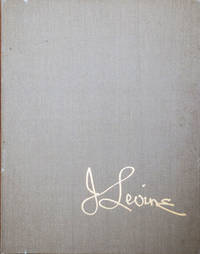
196725259New York: Touchstone Publishers Ltd 1967. First edition. Loose Sheets. Fine. Double elephant folio in cloth-covered clamshell box. Contains a suite of twenty-five soft ground etchings by Jack Levine inspires by the Bertolt Brecht and G. W. Pabst "Dreigroschen Film" of 1930. One of 100 portfolios each hand-numbered and signed by the artist on each etching. Etchings which measure approx. 18 x14" wide are all in fine condition. The thick outer clamshell box is a bit scuffed and worn. BFK Rives paper. Touchstone Publishers Ltd unknown books
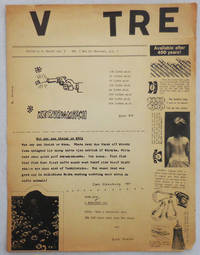
196323017Metuchen: George Brecht and Fluxus Editorial Council for Fluxus 1963. First edition. Loose Sheets. Very Good. Tall single double-sided sheet of fragile paper. Offset lithograph. Measures 9 3/4 x 12 3/4" tall. The antecedant issue of what would become the central periodical of the Fluxus movement. Paper is toned with age and has some minor paper loss at bottom. A better than typical example of this rare early piece of Fluxus ephemera. Not dated but from circa 1963. This unnumbered issue of V TRE precedes cc V TRE #1. Includes brief contributions by Ruth Krauss Claes Oldenburg Diter Rot Robert Morris and others. <br/><br/> George Brecht and Fluxus Editorial Council for Fluxus unknown books
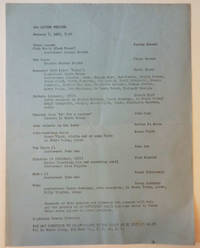
196228081New York: Living Theatre 1962. First edition. Loose Sheets. Very Good. Single sheet of blue paper measuring 8 1/2 x 11". A simple list of performances to take place at the Living Theatre on January 8 1962. Performers for the evening includes an extraordinary line-up of avant garde talent including George Brecht Henry Flynt La Monte Young Yoko Ono Earle Brown and more. Ono performs Mudai #1 plus The Chair #1. Brecht reads poems and performs Also present at the evening's events were La Monte Young reading a piece by John Cage Dick Higgins Terry Jennings and several others. Sheet of paper is in very good condition. This series of events included some of Yoko Ono's earliest performances at The Living Theatre. Scarce ephemera. Living Theatre unknown books
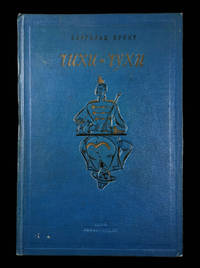
P004280Moscow: Khudozhestvennaia literatura 1936. Octavo 22 à 15 cm. Original pictorial embossed cloth; 197 3 pp. Twelve full-page illustrations and thirteen vignettes by Evgenii Kogan who has signed and inscribed this copy most likely to the writer Lev Grigorevich Gel'man 1864-1951. Very good. Authorized Russian translation from the German manuscript of Bertold Brecht's play known in English as "Round Heads and Pointed Heads" written shortly before Hitler was elected Reichskanzler. It has been described as "Brecht's first anti-Fascist play one of the few which Brecht directed during his years of exile . Round Heads and Pointed Heads would become a lightning rod in the literary politics of exile in Moscow" Stephen Parker Brecht: A Literary Life 300-301. While initially conceived as an adaptation of Shakespeare's "Measure by Measure" the rapid growth of National-Socialism prompted Brecht to depart from his original inspiration. The play became a clear parody of the Nazi's demagogery and racial politics set in the fictive country "Peru" whose inhabitants are divided into "round heads" "Tschuchen" and the "pointy heads" "Tschichen" leading to radicalization and violence. The play's genealogy and reception are complex: scheduling conflicts prevented it from being premiered in Berlin in January 1932. After going into exile in 1933 Brecht rewrote the piece for a performance in Copenhagen which was cancelled due to censorship concerns; a planned performance directed by Piscator in Moscow in 1935-1936 did not materialize nor was Brecht able to secure contracts in France. In November 1936 the play premiered in a Danish-language performance; its first German production would come only in 1948. This Russian translation is the first full appearance of the play in print in any version an English translation followed in 1937 and the first German edition of the finalized text appeared in 1938.<br/><br/>In a curious division of labor blank verse and prose were translated by Valentin Stenich; couplets and songs by Semen Kirsanov. Both were noted avant-garde poets in their own right. Stenich later fell victim to Stalin's Purges: he was arrested for his well-known anti-Soviet views and shot in 1938. With an effusive inscription by the Soviet artist Evgenii Kogan 1906-1983 a student of Vkhutemas and later Vladimir Favorsky. As a result the book may subsequently have been removed from circulation. One of 3000 copies. KVK OCLC show no copies outside of Germany where it is held by Staatsbibliothek zu Berlin the Brecht-Archiv at Akademie der Künste and Deutsche Nationalbibliothek. hardcover books
196216655Berlin und Frankfurt on Main: Suhrkamp Verlad and Editora Brasiliense 1962. First edition. Cloth. Very Good . Oblong folio in slipcase. Text in German and Portugese Introductory text by Tatiana Belinky. Loose sheets in folio. Illustrated with vinte e quartro gravuras by Gerson Knispel. Number 210 of quinhentos exemplares. Although not called for this copy has been SIGNED by the artist. Quite scarce thus. A poem written bt Brecht in 1941 while in refuge in Finland. Contents fine. Cloth slipcase shows some wear and toning. A large and somewhat awkward production measuring 12 1/2 x 18" wide. Handsome production values employed. Gorgeous gravuras by Israeli artist Knispel. Please note: this is a large and heavy volume. Additional shipping charges will apply for international orders. <br/><br/> Suhrkamp Verlad and Editora Brasiliense hardcover books
1933138407Germany: Kinematrade 1933. Vintage US poster for the 1932 German communist propaganda film "Kuhle Wampe oder Wem gehort die Welt" The subtitle is seen here under the English translation "Whither Germany." Circa 1933 as identified by the name of the Philadelphia theatre on the poster. <br/><br/>The last and arguably most important communist film of the Weimar era "Kuhle Wampe oder" is according to screenwriter Brecht a "Collective Presentation" that tells the tale of a family in early 1930s Berlin. After the son is prolongedly unemployed he commits suicide and the family is forced to relocate to a shantytown known as "Kuhle Wampe" or "Empty Stomach." Created under severely limited material conditions with filming constantly being broken up by the Weimar government's paramilitary SA agency the film attempts to depict archetypes of the times including an intellectual clash on a subway between members of the bourgeoisie and the proletariat. <br/><br/>Banned first by the failing Weimar Republic and subsequently by the Nazi Reich the film was believed to have been lost until it reappeared over 20 years later in East Germany in 1958. This poster likely originates from screenings held in November 1933 by an unknown pro-communist organization in Philadelphia at the short lived left-leaning Philkino theater. A US screening of this film dating before the film's disappearance and only just after the very beginnings of Hitler's rise to power makes this poster not only very scarce but one of significant historical value. <br/><br/>The poster touting "Kuhle Wampe" as "The Film Hitler Burned" features an image of a man with a hammer and sickle attacking two snakes that form the Nazi swastika and touts the involvement of members of the "Labor Sports Union" in the film. <br/><br/>9.5 x 13 inches letterpress on pale faded pink stock. Very Good condition with a couple of tiny chips at the extremities and moderate creasing. Kinematrade unknown books
1935144812New York: Music Vanguard 1935. Complete two issue run of "Music Vanguard" magazine listed as Vol. 1 issue 1 March-April 1935 and Vol. 1 issue 2 Summer 1935. Rare.<br/><br/>"Music Vanguard" focused on the relationship between music and social justice with a particular focus American socialist thought noting in the introduction to the first issue the "wish to interrelate diverse elements in the field of music itself so that a clear and simple view of what may be called 'the musical present' shall be within the range of every intelligent worker." Subjects for articles in the two issues include African American protest music German workers music the arts under fascist rule and the difficulty and necessity of translating of protest music into other languages. <br/><br/>Saddle stapled card wrappers. Lightly soiled overall else both volumes Near Fine. Music Vanguard unknown books
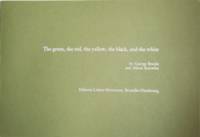
198321524Bruxelles Hambourg: Editions Lebeer Hossmann 1983. First edition. Paperback. Fine. Artist book collaboration between fluxus artists George Brecht and Alison Knowles. Called a "bean-book" in the collophon which states that this book is based on illustrations from the "Sprach-Brockhaus - Deutsches Worterbuch fur jedermann" Verlag Eberhard Brockhaus Wiesbaden 1947. Some of the legends and labels of the original have been replaced by the authors sometimes at random by George Brecht with the names of beans from the Alison Knowles collection. Published in February 1983 in an edition of eighty copies of which this copy is hand-numbered 80 plus 8 hors commerce reserved for the authors and publisher. The edition has been silk-screen-printed on simili-japon by Roel Goussey and hand-bound by Liliane Gerard. Each copy is accompanied by an original silk-screen print hand-annotated by Alison Knowles and signed by the authors. SIGNED by both artists on the colophon page as well as the laid in silk-screen print which in this instance has been annotated by Knowles as follows " The Scarlet Runner draws the white butterfly" A fine copy. In addition this copy has been INSCRIBED by the artists to fellow fluxus artists Jackson Mac Low and Anne Tardos. A scarce and beautiful production. Only two copies noted in WorldCat. <br/><br/> Editions Lebeer Hossmann paperback books
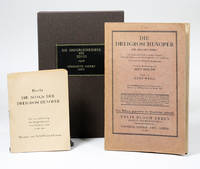
19282315Wien: Universal-Edition 1928. First edition. Original wrappers. Very Good. THE RARE FIRST EDITION OF "THE THREEPENNY OPERA" A CLASSIC OF THE MODERN STAGE ALONG WITH THE BOOKLET OF SONGS FROM THE PLAY THAT WAS PUBLISHED TO MARK ITS HUNDREDTH PERFORMANCE; BOTH ITEMS IN FINE CONDITION IN THE ORIGINAL PRINTED WRAPPERS AND BOTH WITH THE OWNERSHIP INSCRIPTION OF CHARLOTTE GROTE-HASELBALG ONE OF THE ACTRESSES WHO PLAYED POLLY PEACHUM IN THE PLAY'S ORIGINAL 1928 RUN. In 1926 after a brief career in journalism a stint in the Army at the end of World War I and almost a decade of work in the theater Bertolt Brecht born Eugen Berthold Friedrich Brecht discovered a new source of inspiration for his plays. "In 1926 . while researching material for a play about the Chicago grain exchange Brecht discovered the writings of Karl Marx and the theory of dialectics. The play was never completed but in Marx Brecht found what he regarded as the key to understanding the world around him and to the historical process as well as a framework and structure for his own writing." Non & Nick Worrall eds. Bertold Brecht: The Threepenny Opera 2005. He remained a committed Marxist through his life although he apparently never joined the Communist Party. Marxist dialectics typically do not have much entertainment value yet somehow Brecht managed to transmute his ideological preoccupations into one of the most rousing amusing cynical and entertaining plays of the twentieth century - the work offered here. As Harold Clurman recognized in the quotation above the play is very much of its time first performance 1928 - capturing the hysteria despair and cultural experimentation of the Weimar era - yet universal in its relevance and appeal.<br /> <br /> Brecht developed innovative theatrical techniques to communicate with his audiences. "He drew up a rough-and-ready yet basic distinction between the old Aristotelean theatre which he generally called 'dramatic' . and his own new theatre which he called 'epic.' . Brecht found in epic writing an objectivity an ability of the author to stand back and comment on the action which attracted him. He wanted to make his audience think not just feel; to find ways of thinking that would enable them to apply those processes to their real worlds and therefore act as a force for change in society." Id.<br /> <br /> In order to force the audience to think about the action rather than passively absorbing it Brecht used various devices to keep the audience members aware that what was before them was after all only a play. He referred to this process as Verfremdung a term that is sometimes translated as "alienation" but might more accurately be rendered as "defamiliarization" or "distancing." The devices he used for this purpose included putting the orchestra in full view of the audience; having the curtain conceal only part of the stage; using projected signs that anticipated summarized or commented on the action; and constructing the play from paratactic scenes without a smooth flow between them "montage".<br /> <br /> The Play: Die Dreigroschenoper was adapted by Brecht with some assistance from the translator Elisabeth Hauptmann and with music written by Kurt Weill from John Gay's "A Beggar's Opera." He maintained the original English setting but transposed the action from the early 18th century to the Victorian era. Both eras offered an abundance of rascality at all levels of society that enabled Gay and then Brecht to convey their implicit message that there was at bottom not all that much difference between the high life and the low life.<br /> <br /> The play opens at a fair in Soho. The stage directions indicate that "The beggars are begging the thieves are stealing the whores are whoring. A ballad singer sings a ballad." This and other quotations from the play are from the translation by Ralph Mannheim and John Willett. The ballad is the famous "Moritat von Mackie Messer" - a song that in a somewhat softened English version and as sung by Frank Sinatra Bobby Darin Louis Armstrong and a host of others became the perennial favorite "Mack the Knife."<br /> <br /> Mackie is the master criminal MacHeath. His character is suggested by a couple of verses from the Moritat:<br /> <br /> On a beautiful blue Sunday
<br /> See a corpse stretched in the Strand.
<br /> See a man dodge round the corner
<br /> Mackie's friends will understand.<br /> <br /> <br /> <br /> And Schmul Meier reported missing
<br /> Like so many wealthy men:
<br /> Mac the Knife acquired his cash box.
<br /> God alone knows how or when.<br /> <br /> MacHeath it transpires is romantically involved with Polly Peachum the daughter of the second principal character and foil to MacHeath Jonathan Jeremiah Peachum. "His business is trading in misery and guilt. He has divided London into fourteen districts and for a sizable fee and a percentage of the earnings licenses beggars to ply their trade in a particular area. His emporium is also a theatrical outfitters in that he supplies the beggars with customers and properties designed not to horrify but to elicit sympathy from passers-by. . Independent beggars are beat up by Peachum's employees and forced to join the equivalent of a beggars' trade union." Worrall op. cit.<br /> <br /> The play proceeds through a series of crimes and misdemeanors betrayals double and triple crosses and dirty tricks reminiscent of the more sophisticated but no less amoral behavior of Peachum and MacHeath's betters in Parliament industry the Church and the military. In the final scene MacHeath sentenced to death is awaiting his execution when a messenger arrives: "I bring a special order from our beloved Queen to have Captain Macheath set at liberty forthwith - All cheer. - as it's the coronation and raised to the hereditary peerage. Cheers. The castle of Marmarel likewise a pension of ten thousand pounds to be his in usufruct until his death." Good news all around although as Peachum cautions the audience "Saviours on horseback are seldom met with in practice."<br /> <br /> Stephen Parker in his biography Bertolt Brecht: A Literary Life 2014 describes the origins of the play as follows:<br /> <br /> "Elisabeth Hauptmann had been translating from English into German John Gay's satirical ballad opera of 1728 The Beggar's Opera a parody of Italian opera style. She had told Brecht of the huge success of the revival at London's Lyric Theatre where it had run since 1920 for an astonishing 1463 performances. Instead of the usual grand music and themes of opera Gay's work relied on everyday tunes and characters. . The audience could sing along to the music and enjoy the characters in this satire about corruption at all levels of society."<br /> <br /> "Brecht had scarcely touched the material when one day . in the spring of 1928 Ernest Josef Aufricht asked him if he had a new play for the re-opening of the Theater am Schiffbauerdamm . Brecht quickly convinced him that his adaptation of The Beggar's Opera was the very thing."<br /> <br /> "The material was right up Brecht and Weill's street. However it would have to be re-cast substantially to make it work as a satire of modern society. . For both Weill and Brecht it was . an opportunity to break down barriers between elite and popular art. . In Gay's gangster Macheath Brecht encountered an irresistible hedonistic outsider in the same mould as his great early creations. Of course when Brecht wrote about the project for German critics in January 1929 he pointed to the serious underlying message . However . his fascination with the amoral outsider produced a gangster whose courage and magnetic attraction outweighed the anti-capitalist message. Brecht knew exactly how to make him part of an unforgettable theatrical experience. He would never again allow his audience to enjoy themselves in such an unfettered way."<br /> <br /> "Brecht and Hauptmann made rapid progress on the text and Weill began composing the music in April 1928. Brecht and Hauptmann had a first draft ready for the playbook by early May. Weill's playful quirky tunes were the perfect foil for the savage lyrics. Weill imbued the form of the ballad opera with his contemporary style drawing on jazz and dance music."<br /> <br /> The play was an unqualified success. "The Threepenny Opera was performed at the Theater am Schifffbauerdamm for the whole of the 1928-9 season and enjoyed phenomenal success throughout Germany. By January 1929 there were productions at nineteen German theatres as well as in Prague Budapest and Vienna. In all there were 4200 performances in 1928-9 . The Threepenny Opera rapidly became an international success. . Success in the USA would have to wait until the famous production in Marc Blitzstein's translation which ran at New York's Theater de Lys from 1954 to 1961. . Today The Threepenny Opera remains one of the world's most performed musical dramas."<br /> <br /> <br /> <br /> The work offered here is the true first edition of the libretto of Die Dreigroschenoper described on the cover as follows: Bert sic Brecht & Kurt Weill "Die Dreigroschenoper The Beggar's Opera: Ein Stück mit Musik in einem Vorspiel und acht Bildern nach dem Englischen des John Gay. Übersetzt von Elisabeth Hauptmann . Universal Edition - Wien Leipzig Nr. 8850." See "Sources and Genesis of 'Die Dreigroschenoper'" in Stephen Hinton "Kurt Weill: Threepenny Opera" Cambridge Opera Handbooks 1990 at 13 describing the first edition. <br /> <br /> Hinton states that the first issue of 300 copies was reprinted twice in printings of 500 copies each in November 1928 and December 1929. In the present copy there is a publisher's imprint on the rear wrapper ending in "2338 28". Other copies have the imprint ending in "1398 29" and it has been generally understood that ones with "28" are from 1928; while copies with the "29" are from 1929.<br /> <br /> Regarding the two 1928 printings however we have not been able to determine definitively in what ways if any they differ. However the rubber-stamped number "225" appears on the front wrapper and in the margin of page 31 of our copy. Similar stamps appear on other copies of the first edition that have appeared on the market and may indicate the numbering of the 300 copies comprising the first printing. <br /> <br /> The cover of the first edition states: "Den Bühnen gegenüber als Manuskript Gedruckt" "Printed as a manuscript for theatres" - i.e. originally intended for use in connection with productions of the play rather than for sale although some copies were apparently sold. It is reasonable that an edition of only 300 copies intended primarily for use by performers directors etc. would be numbered so that the copies could be tracked and retrieved and redistributed as necessary. Perhaps the edition became repurposed in light of the popularity of the play and the subsequent 500 copies from 1928 were printed primarily for sale to the public in which case there would be no need to number them. These indications are far from definitive but they perhaps constitute circumstantial evidence that numbered copies are from the first issue. Additional circumstantial evidence that this copy is from the first issue is provided by its ownership by a person associated with the original production as described below.<br /> <br /> The libretto is offered here with the pamphlet "Die Songs der Dreigroschenoper. Zur 100. Aufführung der Dreigroschenoper dem Publikum überreicht vom Theater am Schiffbauerdamm" copyright date 1928. "The Songs of the Threepenny Opera. Presented to the audience by the Theater am Schiffbauerdamm for the 100th performance of the Threepenny Opera." It would appear to be distinct from the issue of 10000 copies prepared for public distribution Item 105 in Walter Nudel's "Bertolt Brecht - Bibliographie" in the journal Sinn und Form's special issue on Brecht 1957; see also Hinton op cit. page 13 and Gero von Wilpert & Adolf Gühring Erstausgaben Deutscher Dichtung: Eine Bibliographie zur Deutschen Literatur 1600-1990 2d ed. 1992 at 183 No. 13.<br /> <br /> Both works have the ownership signature of "Charlotte Grote-Haselbalg" on the title page of Die Dreigroschenoper and on the half-title of the songbook. Charlotte Grote-Haselbalg also known as Charlotte Andersch the name under which she was born Charlotte Haselbalg and Charlotte Ander was a German stage and film actress of the early twentieth century credited with a lengthy list of movie roles in both the silent and sound eras. One of her stage roles was Polly Peachum MacHeath's lover in the original production of Die Dreigroschenoper.<br /> <br /> Carola Neher who had been selected to play Polly Peachum in the 1928 production "had to go to Switzerland to tend to her dying husband the poet Klabund with the result that she arrived two weeks late for rehearsal and felt obliged to abandon the role. She was replaced by Roma Bahn who learned the part in four days." Worrall op cit. Bahn is in fact listed as Polly in the playbill for the play's premiere; however Ander performed the role at least once during the play's original run. The media biographer and historian Kay Weniger in his 2008 work "Zwischen Bühne und Baracke: Lexikon der Verfolgten Theater- Film- under Musikkünstler 1933-1945" a collection of biographies of performers who suffered under Nazi persecution notes that "mit der Polly Peachum in einer Aufführung von Brechts-Weills 'Dreigroschenoper' in Ernst Josef Aufrichts Threatre an Schiffbauerdamm spielte sie 1928 ihre wichtigste und schönste Bühnenrole vor dem Machtantritt der Nazis." As "Polly Peachum in a performance of Brecht-Weill's Threepenny Opera in Ernst Josef Aufricht's Theatre an Schiffbauerdamm in 1928 she Anders played her most important and most beautiful stage role before the Nazis came to power."<br /> <br /> According to Weniger Anders had been threatened by the Nazis with a boycott due to an affair with a Jewish businessman and later was accused of threatening to dismiss any members of her household who voted for Hitler in the 1933 election. She found it expedient to flee Germany for England although she later returned due to a lack of adequate roles before the declaration of war between the two countries.<br /> <br /> Die Dreigroschenoper: Wien - Leipzig: Universal-Edition 1928. Octavo original printed wrappers. Near-fine condition with only very light general wear. Die Songs Der Dreigroschenoper: Potsdam: Gustav Kiepenheuer 1928. Twelvemo original printed wrappers. A touch of restoration at hinges otherwise near-fine. Housed together in custom cloth box with leather label. <br /> <br /> RARE FIRST EDITION IN OUTSTANDING CONDITION OF A 20TH-CENTURY MASTERPIECE WITH A NOTED PROVENANCE. Universal-Edition unknown books