2 630 résultats
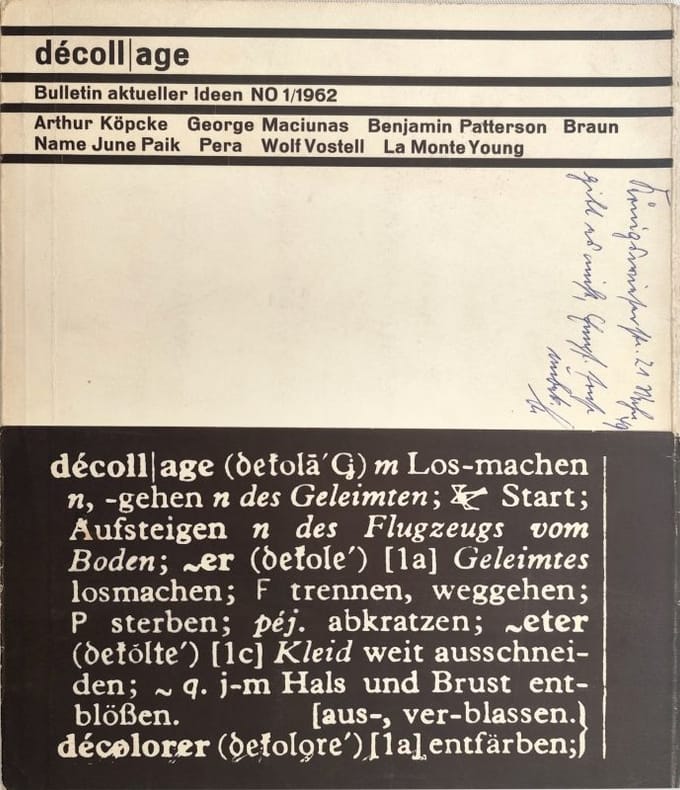
105480Fondée et dirigée par l’artiste et graphiste Wolf Vostell à l’intersection des tendances avant-gardistes des années 60, entre néo-dada, nouveau réalisme, happening, pop-art et actionnisme.
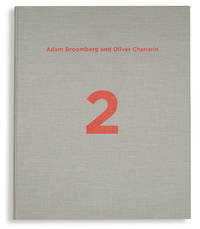
110758London Mack 2011. . First edition an altered artists' book number 68 of 100 copies signed by both artists on the front free endpaper; 4to 294 x 243 mm 11½ x 9½ in; 85 black-and-white photographs printed in offset each with a new photographic reproduction partially pasted over it by hand the final image with a screen printed red square new notes screen printed in red over the original text section; plain endpapers grey cloth-covered boards original titles stamped on spine in silver new titles screen printed in red on upper side starting at head near-fine; 176 xxivpp.<br /> German poet and dramatist Bertold Brecht's Kriegsfibel War Primer was first published in 1955. Brecht's mistrust of the press imagery emerging from the Second World War led him to compose four-line poems which he juxtaposed with photographs sourced from newspapers and magazines many of which were from LIFE magazine as Brecht was living in the United States in exile from Nazi Germany. Broomberg & Chanarin concerned with the proliferation of imagery relating to the 'War on Terror' that began with 9/11 have taken copies of the 1998 first English edition of Brecht's War Primer as the starting point for this revised version. Keeping the original captions intact they have partially overlaid the original photographs selected by Brecht with contemporary imagery from both sides of the recent conflict drawn from online sources. The URL for each image is provided with a caption in a new set of notes screenprinted over the originals. Broomberg & Chanarin were awarded the 2013 Deutsche Börse Photography Prize for this work.<br /> The Photobook: A History III p285. London, Mack, 2011. hardcover
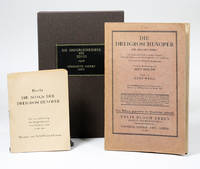
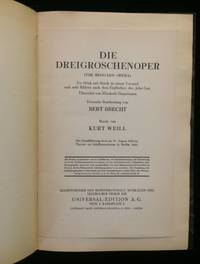
19282315Wien: Universal-Edition 1928. First edition. Original wrappers. Very Good. THE RARE FIRST EDITION OF "THE THREEPENNY OPERA" A CLASSIC OF THE MODERN STAGE ALONG WITH THE BOOKLET OF SONGS FROM THE PLAY THAT WAS PUBLISHED TO MARK ITS HUNDREDTH PERFORMANCE; BOTH ITEMS IN FINE CONDITION IN THE ORIGINAL PRINTED WRAPPERS AND BOTH WITH THE OWNERSHIP INSCRIPTION OF CHARLOTTE GROTE-HASELBALG ONE OF THE ACTRESSES WHO PLAYED POLLY PEACHUM IN THE PLAY'S ORIGINAL 1928 RUN. In 1926 after a brief career in journalism a stint in the Army at the end of World War I and almost a decade of work in the theater Bertolt Brecht born Eugen Berthold Friedrich Brecht discovered a new source of inspiration for his plays. "In 1926 . while researching material for a play about the Chicago grain exchange Brecht discovered the writings of Karl Marx and the theory of dialectics. The play was never completed but in Marx Brecht found what he regarded as the key to understanding the world around him and to the historical process as well as a framework and structure for his own writing." Non & Nick Worrall eds. Bertold Brecht: The Threepenny Opera 2005. He remained a committed Marxist through his life although he apparently never joined the Communist Party. Marxist dialectics typically do not have much entertainment value yet somehow Brecht managed to transmute his ideological preoccupations into one of the most rousing amusing cynical and entertaining plays of the twentieth century - the work offered here. As Harold Clurman recognized in the quotation above the play is very much of its time first performance 1928 - capturing the hysteria despair and cultural experimentation of the Weimar era - yet universal in its relevance and appeal.<br /> <br /> Brecht developed innovative theatrical techniques to communicate with his audiences. "He drew up a rough-and-ready yet basic distinction between the old Aristotelean theatre which he generally called 'dramatic' . and his own new theatre which he called 'epic.' . Brecht found in epic writing an objectivity an ability of the author to stand back and comment on the action which attracted him. He wanted to make his audience think not just feel; to find ways of thinking that would enable them to apply those processes to their real worlds and therefore act as a force for change in society." Id.<br /> <br /> In order to force the audience to think about the action rather than passively absorbing it Brecht used various devices to keep the audience members aware that what was before them was after all only a play. He referred to this process as Verfremdung a term that is sometimes translated as "alienation" but might more accurately be rendered as "defamiliarization" or "distancing." The devices he used for this purpose included putting the orchestra in full view of the audience; having the curtain conceal only part of the stage; using projected signs that anticipated summarized or commented on the action; and constructing the play from paratactic scenes without a smooth flow between them "montage".<br /> <br /> The Play: Die Dreigroschenoper was adapted by Brecht with some assistance from the translator Elisabeth Hauptmann and with music written by Kurt Weill from John Gay's "A Beggar's Opera." He maintained the original English setting but transposed the action from the early 18th century to the Victorian era. Both eras offered an abundance of rascality at all levels of society that enabled Gay and then Brecht to convey their implicit message that there was at bottom not all that much difference between the high life and the low life.<br /> <br /> The play opens at a fair in Soho. The stage directions indicate that "The beggars are begging the thieves are stealing the whores are whoring. A ballad singer sings a ballad." This and other quotations from the play are from the translation by Ralph Mannheim and John Willett. The ballad is the famous "Moritat von Mackie Messer" - a song that in a somewhat softened English version and as sung by Frank Sinatra Bobby Darin Louis Armstrong and a host of others became the perennial favorite "Mack the Knife."<br /> <br /> Mackie is the master criminal MacHeath. His character is suggested by a couple of verses from the Moritat:<br /> <br /> On a beautiful blue Sunday
<br /> See a corpse stretched in the Strand.
<br /> See a man dodge round the corner
<br /> Mackie's friends will understand.<br /> <br /> <br /> <br /> And Schmul Meier reported missing
<br /> Like so many wealthy men:
<br /> Mac the Knife acquired his cash box.
<br /> God alone knows how or when.<br /> <br /> MacHeath it transpires is romantically involved with Polly Peachum the daughter of the second principal character and foil to MacHeath Jonathan Jeremiah Peachum. "His business is trading in misery and guilt. He has divided London into fourteen districts and for a sizable fee and a percentage of the earnings licenses beggars to ply their trade in a particular area. His emporium is also a theatrical outfitters in that he supplies the beggars with customers and properties designed not to horrify but to elicit sympathy from passers-by. . Independent beggars are beat up by Peachum's employees and forced to join the equivalent of a beggars' trade union." Worrall op. cit.<br /> <br /> The play proceeds through a series of crimes and misdemeanors betrayals double and triple crosses and dirty tricks reminiscent of the more sophisticated but no less amoral behavior of Peachum and MacHeath's betters in Parliament industry the Church and the military. In the final scene MacHeath sentenced to death is awaiting his execution when a messenger arrives: "I bring a special order from our beloved Queen to have Captain Macheath set at liberty forthwith - All cheer. - as it's the coronation and raised to the hereditary peerage. Cheers. The castle of Marmarel likewise a pension of ten thousand pounds to be his in usufruct until his death." Good news all around although as Peachum cautions the audience "Saviours on horseback are seldom met with in practice."<br /> <br /> Stephen Parker in his biography Bertolt Brecht: A Literary Life 2014 describes the origins of the play as follows:<br /> <br /> "Elisabeth Hauptmann had been translating from English into German John Gay's satirical ballad opera of 1728 The Beggar's Opera a parody of Italian opera style. She had told Brecht of the huge success of the revival at London's Lyric Theatre where it had run since 1920 for an astonishing 1463 performances. Instead of the usual grand music and themes of opera Gay's work relied on everyday tunes and characters. . The audience could sing along to the music and enjoy the characters in this satire about corruption at all levels of society."<br /> <br /> "Brecht had scarcely touched the material when one day . in the spring of 1928 Ernest Josef Aufricht asked him if he had a new play for the re-opening of the Theater am Schiffbauerdamm . Brecht quickly convinced him that his adaptation of The Beggar's Opera was the very thing."<br /> <br /> "The material was right up Brecht and Weill's street. However it would have to be re-cast substantially to make it work as a satire of modern society. . For both Weill and Brecht it was . an opportunity to break down barriers between elite and popular art. . In Gay's gangster Macheath Brecht encountered an irresistible hedonistic outsider in the same mould as his great early creations. Of course when Brecht wrote about the project for German critics in January 1929 he pointed to the serious underlying message . However . his fascination with the amoral outsider produced a gangster whose courage and magnetic attraction outweighed the anti-capitalist message. Brecht knew exactly how to make him part of an unforgettable theatrical experience. He would never again allow his audience to enjoy themselves in such an unfettered way."<br /> <br /> "Brecht and Hauptmann made rapid progress on the text and Weill began composing the music in April 1928. Brecht and Hauptmann had a first draft ready for the playbook by early May. Weill's playful quirky tunes were the perfect foil for the savage lyrics. Weill imbued the form of the ballad opera with his contemporary style drawing on jazz and dance music."<br /> <br /> The play was an unqualified success. "The Threepenny Opera was performed at the Theater am Schifffbauerdamm for the whole of the 1928-9 season and enjoyed phenomenal success throughout Germany. By January 1929 there were productions at nineteen German theatres as well as in Prague Budapest and Vienna. In all there were 4200 performances in 1928-9 . The Threepenny Opera rapidly became an international success. . Success in the USA would have to wait until the famous production in Marc Blitzstein's translation which ran at New York's Theater de Lys from 1954 to 1961. . Today The Threepenny Opera remains one of the world's most performed musical dramas."<br /> <br /> <br /> <br /> The work offered here is the true first edition of the libretto of Die Dreigroschenoper described on the cover as follows: Bert sic Brecht & Kurt Weill "Die Dreigroschenoper The Beggar's Opera: Ein Stück mit Musik in einem Vorspiel und acht Bildern nach dem Englischen des John Gay. Übersetzt von Elisabeth Hauptmann . Universal Edition - Wien Leipzig Nr. 8850." See "Sources and Genesis of 'Die Dreigroschenoper'" in Stephen Hinton "Kurt Weill: Threepenny Opera" Cambridge Opera Handbooks 1990 at 13 describing the first edition. <br /> <br /> Hinton states that the first issue of 300 copies was reprinted twice in printings of 500 copies each in November 1928 and December 1929. In the present copy there is a publisher's imprint on the rear wrapper ending in "2338 28". Other copies have the imprint ending in "1398 29" and it has been generally understood that ones with "28" are from 1928; while copies with the "29" are from 1929.<br /> <br /> Regarding the two 1928 printings however we have not been able to determine definitively in what ways if any they differ. However the rubber-stamped number "225" appears on the front wrapper and in the margin of page 31 of our copy. Similar stamps appear on other copies of the first edition that have appeared on the market and may indicate the numbering of the 300 copies comprising the first printing. <br /> <br /> The cover of the first edition states: "Den Bühnen gegenüber als Manuskript Gedruckt" "Printed as a manuscript for theatres" - i.e. originally intended for use in connection with productions of the play rather than for sale although some copies were apparently sold. It is reasonable that an edition of only 300 copies intended primarily for use by performers directors etc. would be numbered so that the copies could be tracked and retrieved and redistributed as necessary. Perhaps the edition became repurposed in light of the popularity of the play and the subsequent 500 copies from 1928 were printed primarily for sale to the public in which case there would be no need to number them. These indications are far from definitive but they perhaps constitute circumstantial evidence that numbered copies are from the first issue. Additional circumstantial evidence that this copy is from the first issue is provided by its ownership by a person associated with the original production as described below.<br /> <br /> The libretto is offered here with the pamphlet "Die Songs der Dreigroschenoper. Zur 100. Aufführung der Dreigroschenoper dem Publikum überreicht vom Theater am Schiffbauerdamm" copyright date 1928. "The Songs of the Threepenny Opera. Presented to the audience by the Theater am Schiffbauerdamm for the 100th performance of the Threepenny Opera." It would appear to be distinct from the issue of 10000 copies prepared for public distribution Item 105 in Walter Nudel's "Bertolt Brecht - Bibliographie" in the journal Sinn und Form's special issue on Brecht 1957; see also Hinton op cit. page 13 and Gero von Wilpert & Adolf Gühring Erstausgaben Deutscher Dichtung: Eine Bibliographie zur Deutschen Literatur 1600-1990 2d ed. 1992 at 183 No. 13.<br /> <br /> Both works have the ownership signature of "Charlotte Grote-Haselbalg" on the title page of Die Dreigroschenoper and on the half-title of the songbook. Charlotte Grote-Haselbalg also known as Charlotte Andersch the name under which she was born Charlotte Haselbalg and Charlotte Ander was a German stage and film actress of the early twentieth century credited with a lengthy list of movie roles in both the silent and sound eras. One of her stage roles was Polly Peachum MacHeath's lover in the original production of Die Dreigroschenoper.<br /> <br /> Carola Neher who had been selected to play Polly Peachum in the 1928 production "had to go to Switzerland to tend to her dying husband the poet Klabund with the result that she arrived two weeks late for rehearsal and felt obliged to abandon the role. She was replaced by Roma Bahn who learned the part in four days." Worrall op cit. Bahn is in fact listed as Polly in the playbill for the play's premiere; however Ander performed the role at least once during the play's original run. The media biographer and historian Kay Weniger in his 2008 work "Zwischen Bühne und Baracke: Lexikon der Verfolgten Theater- Film- under Musikkünstler 1933-1945" a collection of biographies of performers who suffered under Nazi persecution notes that "mit der Polly Peachum in einer Aufführung von Brechts-Weills 'Dreigroschenoper' in Ernst Josef Aufrichts Threatre an Schiffbauerdamm spielte sie 1928 ihre wichtigste und schönste Bühnenrole vor dem Machtantritt der Nazis." As "Polly Peachum in a performance of Brecht-Weill's Threepenny Opera in Ernst Josef Aufricht's Theatre an Schiffbauerdamm in 1928 she Anders played her most important and most beautiful stage role before the Nazis came to power."<br /> <br /> According to Weniger Anders had been threatened by the Nazis with a boycott due to an affair with a Jewish businessman and later was accused of threatening to dismiss any members of her household who voted for Hitler in the 1933 election. She found it expedient to flee Germany for England although she later returned due to a lack of adequate roles before the declaration of war between the two countries.<br /> <br /> Die Dreigroschenoper: Wien - Leipzig: Universal-Edition 1928. Octavo original printed wrappers. Near-fine condition with only very light general wear. Die Songs Der Dreigroschenoper: Potsdam: Gustav Kiepenheuer 1928. Twelvemo original printed wrappers. A touch of restoration at hinges otherwise near-fine. Housed together in custom cloth box with leather label. <br /> <br /> RARE FIRST EDITION IN OUTSTANDING CONDITION OF A 20TH-CENTURY MASTERPIECE WITH A NOTED PROVENANCE. Universal-Edition unknown books
1931157959N.p.: N.p. 1931. Vintage oversize reference photograph from the 1931 film showing actress Lotte Lenya. With annotations in German in manuscript pencil identifying Lenya and photographer Tobin Warner on the verso along with an annotation noting the photograph as property of "Close Up" magazine. <br /> <br /> Based on the 1928 stage play "Die Dreigroschenoper" by Bertolt Brecht and Kurt Weill. A biting socialist "play with music" based on Elisabeth Hauptmann's translation of John Gay's eighteenth-century ballad opera "The Beggar's Opera" and on four ballads by François Villon. <br /> <br /> Lenya would go on to receive a Tony Award for her performance in Marc Blitzstein's English version of the play in 1956. <br /> <br /> 9.25 x 12 inches. Very Good plus faintly age toned with light creasing on the top right corner. N.p. unknown
198321524Bruxelles Hambourg: Editions Lebeer Hossmann 1983. First edition. Paperback. Fine. Artist book collaboration between fluxus artists George Brecht and Alison Knowles. Called a "bean-book" in the collophon which states that this book is based on illustrations from the "Sprach-Brockhaus - Deutsches Worterbuch fur jedermann" Verlag Eberhard Brockhaus Wiesbaden 1947. Some of the legends and labels of the original have been replaced by the authors sometimes at random by George Brecht with the names of beans from the Alison Knowles collection. Published in February 1983 in an edition of eighty copies of which this copy is hand-numbered 80 plus 8 hors commerce reserved for the authors and publisher. The edition has been silk-screen-printed on simili-japon by Roel Goussey and hand-bound by Liliane Gerard. Each copy is accompanied by an original silk-screen print hand-annotated by Alison Knowles and signed by the authors. SIGNED by both artists on the colophon page as well as the laid in silk-screen print which in this instance has been annotated by Knowles as follows " The Scarlet Runner draws the white butterfly" A fine copy. In addition this copy has been INSCRIBED by the artists to fellow fluxus artists Jackson Mac Low and Anne Tardos. A scarce and beautiful production. Only two copies noted in WorldCat. <br/><br/> Editions Lebeer Hossmann paperback books
015752Paris E[ditions].S[ocilales].I[nternationales]. 0 In-12 carré Brochés
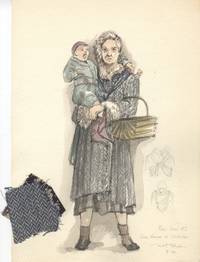
39919Executed on quality watercolor paper all but one with fabric swatches attached. Sheet size 380 x 275 mm. <br /> <br /> Depicting characters in the play including Mrs Shin Wang Mrs Yang God and Shen Te. <br /> <br /> Some minor browning. In very good condition overall. "The Good Woman of Setzuan drama a "parable in 10 scenes" by Bertolt Brecht produced in 1943 and published in 1953 as Der gute Mensch von Sezuan. The title has many English-language variants including The Good Person of Szechwan and The Good Soul of Szechuan.<br /> <br /> "The play is set in China between World War I and World War II. The title character Shen Te is a poor but warmhearted prostitute. Because she alone was willing to shelter three gods they have favoured her with a gift of money. She purchases a tobacco shop but finds that her kinsfolk and other customers take advantage of her kindness. To save her business Shen Te adopts an alter ego; dressing as a man and acting the role of her tough pragmatic cousin Shui Ta she is able to exact just payment. She is forced to assume this role so often that as Shui Ta she is accused of murdering Shen Te. In the climactic trial scene Shui Ta reveals that he and Shen Te are the same person.<br /> <br /> Bertolt Brecht . was a German poet playwright and theatrical reformer whose epic theatre departed from the conventions of theatrical illusion and developed the drama as a social and ideological forum for leftist causes." Britannica Online<br /> <br /> "Coming of age during the Weimar Republic Brecht had his first successes as a playwright in Munich and moved to Berlin in 1924 where he wrote The Threepenny Opera with Elisabeth Hauptmann & Kurt Weill and began a life-long collaboration with the composer Hanns Eisler. Immersed in Marxist thought during this period he wrote didactic Lehrstücke and became a leading theoretician of epic theatre which he later preferred to call "dialectical theatre" and the Verfremdungseffekt.<br /> <br /> During the Nazi Germany period Brecht fled his home country first to Scandinavia and during World War II to the United States where he was surveilled by the FBI.3 After the war he was subpoenaed by the House Un-American Activities Committee. Returning to East Berlin after the war he established the theatre company Berliner Ensemble with his wife and long-time collaborator actress Helene Weigel." Wikipedia<br /> <br /> Perdziola an internationally-recognized set and costume designer for theater opera and ballet has worked extensively throughout the United States at such venues as the Metropolitan Opera San Francisco Opera Santa Fe Opera Lyric Theatre of Chicago American Ballet Theater Shakespeare Theater in Washington Boston Ballet and Miami Ballet as well as for various Broadway productions. He has also worked internationally for productions at the Monte Carlo Opera the Niedersächsische Staatsorchester in Hannover the Garsington Opera in the United Kingdom the Finnish National Ballet the Saito Kinen Festival in Japan and the Sydney Opera House. The artist has received three Helen Hayes awards and a Helpmann award; he has also been nominated for numerous additional awards. unknown
1935144812New York: Music Vanguard 1935. Complete two issue run of "Music Vanguard" magazine listed as Vol. 1 issue 1 March-April 1935 and Vol. 1 issue 2 Summer 1935. Rare.<br/><br/>"Music Vanguard" focused on the relationship between music and social justice with a particular focus American socialist thought noting in the introduction to the first issue the "wish to interrelate diverse elements in the field of music itself so that a clear and simple view of what may be called 'the musical present' shall be within the range of every intelligent worker." Subjects for articles in the two issues include African American protest music German workers music the arts under fascist rule and the difficulty and necessity of translating of protest music into other languages. <br/><br/>Saddle stapled card wrappers. Lightly soiled overall else both volumes Near Fine. Music Vanguard unknown books
16373751Lutetiæ Parisiorum: Sumptibus viduæ Ioannis Meiat è regione D. Hilarij sub signo Bonæ fidei. 1637. Leonardi Lessii Societ. Iesu theologi Opuscula varia in vnum corpus redacta.-Quorum indicem quinta pagina Inuenies- by Leonardus Lessius Leonardi Lessii Lenaert Leys; 1 October 1554 Brecht 15 January 1623 Leuven- Jesuit moral theologian and a pioneer in Business ethics.- Engraved Device I. Briot. fecit Isaac Briot Head and Tail Pieces- Briot Isaac 1585-1670 engraver.- Sumptibus viduæ Ioannis Meiat è regione D. Hilarij sub signo Bonæ fidei.- Lutetiæ Parisiorum- 1637- 1st Thus- title- 2nd Theologi Opuscula- 1st of 1626- Titled: Opuscula.- Hardcover:- Folio Good antiqurian condition- Original 3/4 leather and cloth 6 raised bands on spine one panel black leather and gilt title- rubbed at corners chipped at spine hairline cracks at spine edges boards still attached and relatively solid textblock square and tight- Pagination: blank blank 6ff 1-725 11ff blank blank. Page errors- 333 misprint as 233 609 as 611 610 as 612 611 as 609 612 as 610 644 as 444 645 as 445 681 as 981 and 723 as 623.- Collation: ã6 A-T6 X-Rrr6.- Complete!- Conforms to copy at University of Oxford UK: Description 12 725 23 p. fol. Notes T.p. printed in red and black. . 1st Thus. 3/4 Leather & Cloth. Good/No Jacket as Issued. Illus. by Engraved Device I. Briot. fecit Isaac Briot Head and Tail Pieces. Folio - over 12" - 15" tall. Sumptibus viduæ Ioannis Meiat, è regione D. Hilarij, sub signo Bonæ fidei. Hardcover
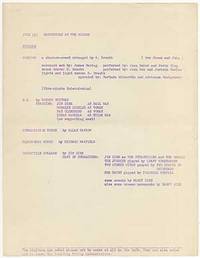
1960384904New York: Reuben Gallery 1960. Softcover. Near Fine. Single spirit-duplicated sheet. Quarto. Near fine with light wear along the foredge with a few tiny tears. A program for an early Happening performance held at the Reuben Gallery in New York by Allan Kaprow who coined the phrase to describe the emerging performance art that incorporated various forms of artistic expression such as text dialogue sounds colors music and audience participation. The pieces at this show featured: "Gossoon a chamber event movement" arranged by George Brecht with performances by James Waring John Baker and Jerry King; "E.G." by Robert Whitman starring Jim Dine Rosalyn Drexler Pat Oldenburg and Lucas Samaras; "Intermission Piece" by Kaprow; "Electronic Music" by Richard Maxfield who co-curated the Fluxus concerts at Yoko Ono's loft with LaMonte Young; and "Vaudeville Collage" written and performed by Dine. An important piece of ephemera from the then-emerging New York performance art scene of the early 1960s. OCLC locates no copies of this 1960 performance but one from 1959. Reuben Gallery unknown
197714183New York New York U.S.A.: Grove Press. As New. 1977. Paperback. FREE UPGRADE to Courier/Priority Shipping Upon Request - IN STOCK AND IMMEDIATELY AVAILABLE FOR SHIPMENT - Book In fine Condition -- with a bonus offer-- . Grove Press paperback
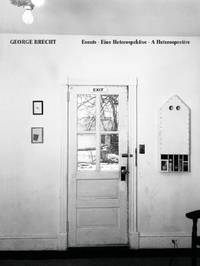
200672013Walther Konig Koln. New. 2006. Hardcover. 3883759791 . FREE UPGRADE to Courier/Priority Shipping Upon Request - IN STOCK AND IMMEDIATELY AVAILABLE FOR SHIPMENT - Flawless copy brand new pristine never opened -- Text in German and English. 348 pp. With 411 ills. 207 col. . 31 x 24 cm. -- with a bonus offer-- . Walther Konig, Koln hardcover
1933138407Germany: Kinematrade 1933. Vintage US poster for the 1932 German communist propaganda film "Kuhle Wampe oder Wem gehort die Welt" The subtitle is seen here under the English translation "Whither Germany." Circa 1933 as identified by the name of the Philadelphia theatre on the poster. <br/><br/>The last and arguably most important communist film of the Weimar era "Kuhle Wampe oder" is according to screenwriter Brecht a "Collective Presentation" that tells the tale of a family in early 1930s Berlin. After the son is prolongedly unemployed he commits suicide and the family is forced to relocate to a shantytown known as "Kuhle Wampe" or "Empty Stomach." Created under severely limited material conditions with filming constantly being broken up by the Weimar government's paramilitary SA agency the film attempts to depict archetypes of the times including an intellectual clash on a subway between members of the bourgeoisie and the proletariat. <br/><br/>Banned first by the failing Weimar Republic and subsequently by the Nazi Reich the film was believed to have been lost until it reappeared over 20 years later in East Germany in 1958. This poster likely originates from screenings held in November 1933 by an unknown pro-communist organization in Philadelphia at the short lived left-leaning Philkino theater. A US screening of this film dating before the film's disappearance and only just after the very beginnings of Hitler's rise to power makes this poster not only very scarce but one of significant historical value. <br/><br/>The poster touting "Kuhle Wampe" as "The Film Hitler Burned" features an image of a man with a hammer and sickle attacking two snakes that form the Nazi swastika and touts the involvement of members of the "Labor Sports Union" in the film. <br/><br/>9.5 x 13 inches letterpress on pale faded pink stock. Very Good condition with a couple of tiny chips at the extremities and moderate creasing. Kinematrade unknown books
196948050Mönchengladbach.: Städtisches Museum Mönchengladbach. 1969. Card box. 210 x 160 x 20 mm. Large card box with printing to replicate a matchbox containing a smaller real matchbox with similar printing to front cover contsaining four metal screw-hooks; also included loose are cards and booklets a text by Cladders a list of works by Robert Filliou and George Brecht before their collaboration and then work completed by the pair during their stay at Villefranche all on different paper stock and with the upper right corner removed in order to fit within the box together with the matchbox. Robert Filliou and George Brecht's Mönchengladbach kassettenpublikation catalogue / multiple.From the edition limited to 440 numbered copies.The exhibition 'La Cedille Qui Sourit' was held at the Städtisches Museum Mönchengladbach from June 18th to July 27th 1969. The three parts of the joint exhibition were: 'I. Vorspiel zum Cédille / Prelude to the Cedilla / Prélude à la Cédille. II. Le Cédille Qui Sourit 12 rue du May Villefranche-sur-Mer A. M. September 1965 - Oktober 1968. III. Das ständige Geschehen / The Eternal Network / La Fête Permanente. Was das Cédille sein wird ist / What the Cedilla will be is / Çe que deviendra la Cédille est devenue.''La Cédille Qui Sourit' was Brecht and Filliou's artist run shop or rather 'non-shop' - the raison-d'etre was to eschew typical commercial activities - in Villefranche-sur-Mer. Stocked with artist books and multiples from Filliou and Brecht's Fluxus associates together with examples of their own work and other ephemera from their working process: letters jokes puzzles recipes poems and sketches. The venture lasted as indicated above from 1965 to 1968 before its metamorphosis into 'The Eternal Network'.Whilst the format of boxes as exhibition catalogues follows the Mönchengladbach format the use of a matchbox design was unique and appears to have been the brainchild of Museum Director Johnanes Cladders.Rennert / Titz 7. Städtisches Museum Mönchengladbach. unknown
196160454Hamburg, Hauswedell 1961. 22 Holzschnitte von Hansen-Bahia. 21 Bll. lose in OLwd.-Kassette. 34,5 x 26 cm. OPp.
1938576859New York: Hillman-Curl 1938. Hardcover. Fine/Near Fine. First American edition. Translated by Desmond I. Vesey. Verse translation by Christopher Isherwood. Tiny stamped initials on half-title and copyright page else fine in handsome near fine dust jacket with a light toning on the spine. A novel later re-issued as Threepenny Novel loosely based on John Gay's The Beggar's Opera filtered through Brecht's experiences among the criminal fringe elements of the Weimar Republic. A novelization by Brecht of his famous collaboration with Kurt Weill the 1928 musical drama The Three-Penny Opera the opera had not previously appeared in America. The play continues to be widely performed was filmed on many occasions and provided the popular hit song "Mack the Knife." A nick copy of an important title. Hillman-Curl hardcover
0878300724New. Brand new and still unused unknown
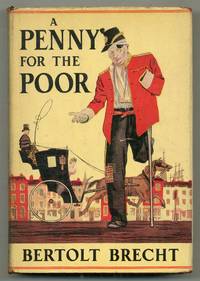
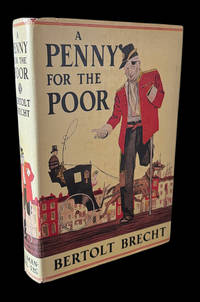
1938112233445566782<p>The First USA Printing published by Hillman-Curl Inc. New York in 1938. The BOOK is in near Fine condition. 8vo. bright red publisher's cloth lettered lined and decorated with hand and arm devices in black to upper cover and spine; yellow top-stain remains bright. else untrimmed; together in the vibrant pictorial wrapper featuring a man with one leg to the upper panel and spine unclipped displaying the correct price of $2.50 to the front flap; An excellent bright copy with just a couple of tiny marks to the rear board; light offsetting and toning to the blank end-papers ; with a small shop sticker of Miller & Rhoads to the lower rear paste-down. The WRAPPER also in excellent Very Good or better condition retaining much of its original colour with just a hint of sunning to the spine; light edge-wear to the spine tips and one small closed tear to the rear flap fold; aside from marginal shelf wear a very attractive example. The wrapper is protected in a removable Brodart archival cover. First USA printing translated from the German by Desmond I. Vesey with the chapter-head verses translated by Christopher Isherwood. A novel based on the author's famous 1928 musical play 'A Threepenny Opera' later re-issued as 'Threepenny Novel' which he co-wrote with Kurt Weill itself loosely based on John Gay's 'The Beggar's Opera'. The play was filtered through Brecht's experiences among the criminal fringe elements of the Weimar Republic. It was the first of Brecht's plays to appear in English. This edition was not issued in the UK. Bertolt Brecht was born in 1898 in Augsburg Germany and was 16 when the First World War broke out. Exploiting a loophole which allowed medical students to be deferred from the army he enrolled at Munich University and began to study theatre under the guidance of Arthur Kutscher. His first works of theatre criticism began to appear as early as 1919 and over the following few years he took part in a political cabaret of the Munich comedian Karl Valentin. Valentin became a huge influence for the young writer and he wrote his first full-length play Baal in response to an argument he had with Kutscher during one of his drama seminars. This re-writing of other's work - as well as his own - would become a key theme in his writings. As he claimed "Anyone can be creative.it's rewriting other people that's a challenge." Over the following years of the 1920s Brecht began studying Marxism and Socialism in earnest. By the 1930s he had formed a writing collective which was composed of such names as Elisabeth Hauptmann Margarete Steffin and Ruth Berlau. Together they adapted John Gay's 'The Beggar's Opera' into 'The Threepenny Opera' with Brecht's lyrics set to music by Kurt Weill. The resulting opera was a huge hit in Berlin and helped to renew public interest in the musical genre worldwide. Set in Victorian London the plot follows Macheath the leader of a criminal gang who marries Polly Peachum at the displeasure of her father. In revenge he seeks out Macheath's death - but is hindered by the chief of police Tiger Brown. ""You are about to hear an opera for beggars" Brecht famously narrates ahead of the performance "Since this opera was intended to be as splendid as only beggars can imagine and yet cheap enough for beggars to be able to watch it is called the Threepenny Opera." Fearing persecution Brecht fled Nazi Germany in February 1933 and after stints in Denmark and Finland he settled in California to continue his career as a screenwriter. Very scarce with the wrapper. More images available on request. Ashton Rare Books welcomes direct contact.</p> Hillman-Curl, Inc., New York hardcover
1933138407Germany: Kinematrade 1933. Vintage US poster for the 1932 German communist propaganda film "Kuhle Wampe oder Wem gehort die Welt" The subtitle is seen here under the English translation "Whither Germany." Circa 1933 as identified by the name of the Philadelphia theatre on the poster. <br /> <br /> The last and arguably most important communist film of the Weimar era "Kuhle Wampe oder" is according to screenwriter Brecht a "Collective Presentation" that tells the tale of a family in early 1930s Berlin. After the son is prolongedly unemployed he commits suicide and the family is forced to relocate to a shantytown known as "Kuhle Wampe" or "Empty Stomach." Created under severely limited material conditions with filming constantly being broken up by the Weimar government's paramilitary SA agency the film attempts to depict archetypes of the times including an intellectual clash on a subway between members of the bourgeoisie and the proletariat. <br /> <br /> Banned first by the failing Weimar Republic and subsequently by the Nazi Reich the film was believed to have been lost until it reappeared over 20 years later in East Germany in 1958. This poster likely originates from screenings held in November 1933 by an unknown pro-communist organization in Philadelphia at the short lived left-leaning Philkino theater. A US screening of this film dating before the film's disappearance and only just after the very beginnings of Hitler's rise to power makes this poster not only very scarce but one of significant historical value. <br /> <br /> The poster touting "Kuhle Wampe" as "The Film Hitler Burned" features an image of a man with a hammer and sickle attacking two snakes that form the Nazi swastika and touts the involvement of members of the "Labor Sports Union" in the film. <br /> <br /> 9.5 x 13 inches letterpress on pale faded pink stock. Very Good with expected moderate wear. Kinematrade unknown
WEAU0043Wien u. Leipzig Österr. Bundesverlag dann Leipzig später Stuttgart Reclam 1928-1950. 8°. Je Bd. ca 300 S. Farb. OLeinenbde. u. OHLeinenbde 2 m. Rü.- u. Deckeltitel sowie Deckelrahmen in Goldpräg u. farb. Kopfschnitt; 25 illustr. Originalumschläge beiliegend. 3 Bde. m. Bibl.etik. am Rü. einige Bände mit leichten Gebrauchsspuren großteils jedoch unberührt. Bode Reclam S.146ff. - Vollständige Sammlung dieser umfassenden Textreihe die zunächst auf 250 dann auf 300 Bände angelegt war. Reclam übernahm die 1928 mit 2 Bänden begonnene Edition vom Österreichischen Bundesverlag. Die Sammlung blieb - äußerlich durch den zweiten Weltkrieg bedingt - ein Torso. Reihen mit bekannteren Texten wie 'Klassik' sind kaum begonnen worden andere Reihen wie 'Neue Mystik und Magie' wurden in Verlagsprospekten angekündigt sind aber nie erschienen. Die abgeschlossenen Reihen z.B. 'Aufklärung' und 'Romantik' gelten als wissenschaftlich verdienstvoll. Bei Reclam wurden 110 Bände ediert zuletzt 1950 noch Band 1 der Reihe 'Romantik'. Das Monumentalwerk sollte den ""Gesamtbesitz deutscher Dichtung"" überschaubar machen und wissenschaftsgeschichtlich die vom Positivismus des 19. Jahrhunderts geprägte Sammlung 'Kürschners Nationalliteratur' ablösen. Die Herausgabe wurde - auch von Nichtwissenschaftlern wie H. Hesse Thomas Mann und Karl Wolfskehl lebhaft begrüßt. Mit dem Aufkommen des Nationalsozialismus und der bekannten systemkonformen politischen Einstellung des Hauptherausgebers Kindermann bei gleichzeitigem Ausscheiden von Walther Brecht erlebte das Reihenwerk einige Planänderungen und Ergänzungen in denen sich die Wendung ins Volkhaft-Nationale spiegelt. - Die erschienenen Bände - wie vorliegend : Drama des Mittelalters 3 Bde. / Geistliche Dichtung des Mittelalters 2 Bde. / Höfische Dichtung 1 Bd. / Realistik des Spätmittelalters 4 Bde. / Humanismus und Renaissance 2 Bde. / Reformation 7 Bde. / Dt. Volkslied 2 Bde. / Volks- und Schwankbücher 3 Bde. / Barockdrama 6 Bde. / Barocklyrik u. Erg.Bd 4 Bde. / Barocktradition im. Volkstheater 6 Bde. / Aufklärung 15 Bde. / Irrationalismus 4 Bde. / Klassik 3 Bde. / Romantik 23 Bände / Politische Dichtung 9 Bände / Deutsche Selbstzeugnisse 10 Bde. / Deutsche Sagen 3 Bde. / Naturalismus 2 Bde. / Formkunst 3 Bde. Wien u. Leipzig, Österr. Bundesverlag, dann Leipzig (später Stuttgart), Reclam 1928-1950. unknown
19303243881930. Duplicated typescript printed rectos only. Prologue and 4 acts paginated individually. 6 20 17 9 12 pp. 1 vols. 4to. Metal brads. Toned some light inking of a few pages. Duplicated typescript printed rectos only. Prologue and 4 acts paginated individually. 6 20 17 9 12 pp. 1 vols. 4to. My station in life<br /> Is that of a clerk.<br /> But privately <br /> There are two things I love<br /> Surpassingly:<br /> Good wine<br /> And the women<br /> Of other men.<br /> <br /> Acting script of the Ethel van der Veer translation of a Chinese play Circle of Chalk which tells a tale of disputed inheritance discord and murder in the tenth century C.E. <br /> The play was first popularized in the west through a German translation by Klabund Alfred Henschke produced in Berlin in 1925 and also produced in London from a script by James Laver with Anna May Wong as the heroine. Independent of these productions Ethel van der Veer's translation was published in 1933.<br /> The Circle of Chalk must be counted as a key source for Bertholt Brecht's postwar drama Die Kaukasische Kreidekreis. The present text is uncredited but follows the van der Veer with the frequent addition of stage directions many of which now seem "Brechtian" in the way characters turn to face and often directly address the audience. unknown
1928011176Vienna: Universal- Edition A. G. 1928. Hardcover. Near Fine. Rebound copy lacking paper covers with 220 stamped in the middle of the right margin on page 31 thus indicating either one of 300 copies of the first printing or perhaps less likely one of 500 copies of the second printing. Rebound in 1/4 cloth over dark beige and black marbelized boards oversized to original leaf dimensions with separate sheets bound in between each leaf of text. 79 pp 1. Internally fine. Covers a wee soiled. Universal- Edition A. G. hardcover
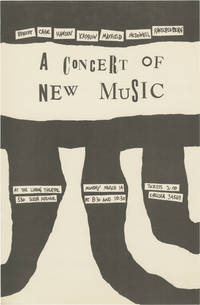
1960160202New York: The Living Theatre 1960. Vintage flyer for an experimental music show held at The Living Theatre on March 14 1960. Flyer advertises performances by John Cage George Brecht Alfred Hansen Allan Kaprow Richard Maxfield John Herbert McDowell and Robert Rauschenberg. <br /> <br /> Among the pieces performed were Kaprow's "Sound Piece 1958" Brecht's "Candle Piece for Radios" and "Card Piece for Voice" Rauschenberg's "Telephone Music" Maxfield's "Cough Music" and "Symphonie Pastorale" Cage's "Imaginary Landscape No. 5" and "Suite for Toy Piano" Hansen's "Bibbe's Tao" and McDowell's "Music for a While." <br /> <br /> Founded in 1947 The Living Theatre laid the foundation for a robust underground art scene in the New York City. After more than a decade of successful original radical stage productions and adaptations of works by playwrights such as Bertold Brecht and Gertrude Stein founders Judith Malina and Julian Beck used their space and resources for the nourishment of the arts more broadly offering the theatre for literary benefits film screenings and musical performances such as the ones advertised here. <br /> <br /> 8.5 x 12.75 inches. Near Fine. The Living Theatre unknown
2158-22Berlin Kiepenheuer 1930-33. 7 Hefte in einem Band. gr.-8°. Mit einigen Bildbeigaben und 25 Illustrationen von George Grosz Heft 6. Ln.-Bd. mit den Orig.-Umschlägen. Nubel A169 ff.; W.-G.² 14 1-9 - Alle Hefte in Erstausgabe. Komplette Reihe aller "Versuche" die vor dem Zweiten Weltkrieg erschienen waren darunter das überaus gesuchte Heft 6 mit den Illustrationen von George Grosz. "Die Publikation der Versuche erfolgt zu einem Zeitpunkt wo gewisse Arbeiten nicht mehr so sehr individuellem Erlebnisse sein Werkcharakter haben sollen sondern mehr auf die Benutzung Umgestaltung bestimmter Institute und Institutonen gerichtet sind aus der Einleitung. "Die Versuche 1-8 enthalten was die politische Wirkung angeht den lebendigen Teil seiner Arbeiten den im Sinn von Benjamins Marxismus-Verständnis theologischen Glutkern" Heiner Müller in: Brecht-Jahrbuch 1980. Berlin, Kiepenheuer 1930-33. unknown
1905B95811Brecht, 1905-1967 Collectie van 146 nummers van dit tijdschrift dat werd uitgegeven van 1905 tot en met 1967 (zie hieronder), samen ca. 4700 pp., originele omslagen, over het algemeen in zeer goede staat (enkele oudere nummers met wat gebreken zoals o.m. roestplekjes), zeldzaam, [Inhoud: Jg.1 nr.1 (1905, 28pp.), Jg.2 nr.1-2-3-4 (1906, 82pp.), Jg.3 nr.1-2-3-4 (1907, 68pp.), Jg.4 nr.1-2-3-4 (1908, 68pp.), Jg.5 nr.1-2-3-4 (1909, 66pp.), Jg.6 nr.1-2-3-4 (1910, 72pp.), Jg.7 nr.1-2-3/4 (1911, 74pp.), Jg.8 nr.1-2-3-4 (1912, 64pp.), Jg.9 nr.1-2-3-4 (1913, 66pp.), Jg.10 nr.1-2 (1914-1919, 32pp.), Jg.13 nr.1-2-3-4 (1922, 94pp.), Jg.14 nr.3-4 (1923, pp.49-92), Jg.15 nr.1-2-4 (1924, 68pp.), Jg.16 nr.1-3/4 (1925, 68pp.), Jg.17 nr.1-2-3-4 (1926, 92pp.), Jg.18 nr.1/2-3-4 (1927, 96pp.), Jg.19 nr.1-2-3-4 (1928, 108pp.), Jg.20 nr.1-2-3-4 (1929, 168pp.), Jg.21 nr.1-2-3-4 (1930, 192pp.), Jg.22 nr.1-2-3-4 (1931, 186pp.), Jg.23 nr.1-2-3-4 (1932, 158 + XX pp.), Jg.24 nr.1-2-3-4 (1933, 164pp.), Jg.25 nr.1-2-3-4 (1934, 118 + XXII pp.), Jg.26 nr.1-2-3/4 (1935, 60 + 18pp.), Jg.27 nr.1/2-3-4 (1936, 149 + 32pp.), Jg.28 nr.1/2/3-4 (1937, 120 + 72 + [20] pp.), Jg.29 nr.1-2/3-4 (1938, 16 + 116 + 16pp.), Jg.30 nr.1-2/3/4 (1939, 127 + 46pp.), Jg.31 nr.1 (1940, 70pp.), Jg.32 nr.1-2-3-4 (1951, 132 + 22pp.), Jg.35 nr.1-2-3 (1952, 112 + 14pp.), Jg.36 nr.1/2/3-4 (1953, 174 + 18pp., nr.1/2/3 betreft themanummer door Verbeemen: Emigratie uit de antwerpse kempen bronnenuitgave, 135pp.), Jg.43 nr.1/2/3 (1960, 88pp.), Jg.44 nr.1/2/3-4 (1961, 140 + XVIII pp. bevat vnl. Ernalsteen: Kempische schuttersgilden deel 1), Jg.45 nr.1/2/3-4 (1962, 152 + XVIII pp. bevat vnl. Ernalsteen's Kempische schuttersgilden deel 2), Jg.46 nr.1/2/3-4 (1963, 113 + XXV pp.), Jg.47 nr.1/2/3-4-5-6 (1964, 147 + XXV pp.), Jg.48 nr.1/2/3-4 (1965, 170 + XX pp.), Jg.49. nr.1/2/3-4 (1966, 151 + XXXV pp.), Jg.50 nr.1/2/3-4 (1967, 59 + 15pp.) // De volgende nummers ONTBREKEN dus: Jg.I nr.2-3-4 // vanaf Jg.10 (1914) nr.3 tot en met jg.12 (1921) // Jg.14 nr.1-2 // Jg.15 nr.3 // Jg.16 nr.2 // vanaf Jg.31 nr.2 t.e.m. Jg.33 (deze oorlogsnummers ontbreken in alle bekende collecties en werden dus wellicht nooit uitgegeven?!) // Jg.35 nr.4 // Jg.37 t.e.m. jg.42 // Jg.43 nr.4], De ondertitel van dit tijdschrift varieert, gewicht: 11kg., N.B.: Deze collectie wordt enkel als set aangeboden (er worden dus géén losse nummers uit verkocht), B95811