117 résultats
1978WRCLIT34080New York: Seabury Press 1978. Cloth. Photographs. First American edition. Poet Cid Corman's copy with ownership signature and annotations and leaf of notes laid in. Edges slightly darkened else good in an edge and spine-sunned dust jacket with a price sticker on the upper panel. Seabury Press hardcover books
1963WRCLIT37365New York: NYU Press 1963. Cloth. First edition. Translated by Daniel Russell. With the pencil ownership signature of New Directions publisher James Laughlin. Light dampstain to top edge else very good in a good dust jacket with some dampstaining to the spine. NYU Press hardcover books
1959WRCLIT32022London: Methuen 1959. Cloth. Illustrations. First edition. Spot to top edge else a good copy in a rubbed lightly stained dust jacket with a few nicks at spine ends. Methuen hardcover books
1332082Frankfurt am Main: Suhkamp Verlag. Mixed Editions. Hardcover. 12mo; VG-; beige/black patterned spines with white text to labels; no jackets; 3 volumes: vol. 1 pp 210 1960; vol. 2 pp 263 1960; vol. 3 pp 245 1961; cloths show some scratches to rear; slight wear to edges; mildly toned spines; strong boards; text block edges mildly toned; previous owner's name to ffeps; illustrated; text in German;. 1332082. FP New Rockville Stock. Suhkamp Verlag hardcover books
19781324339Frankfurt am Main: Suhrkamp Verlag 1978. First Edition. Hardcover. Thick Octavo; pp 1003; G/G; red spine with black text; dust jacket shows slight wear to exterior; mild wear to edges; slight shelf wear inside dj; cloth has lightly sun faded exterior; strong boards; light bumping to front head edge; text block has some small stains to exterior edges; interior clean; text in German;. The pieces from in one volume. 1324339. FP New Rockville Stock. Suhrkamp Verlag hardcover books
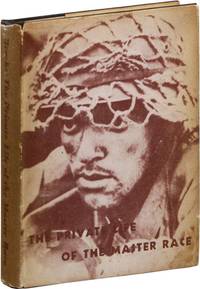
194424136New York: New Directions Books Published by James Laughlin 1944. First American Edition. Small octavo 18.5cm.; publisher's black cloth in photo-illustrated dust jacket; 10140pp. Light wear to jacket extremities including a few tiny chips spine and extremities rather browned else Very Good and sound. Seventeen of twenty-eight scenes from the author's anti-Nazi Fears and Miseries of the Third Reich. New Directions Books, Published by James Laughlin unknown books
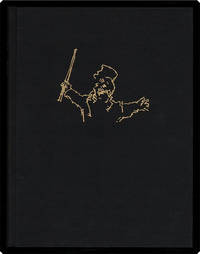
198239034New York: The Limited Editions Club 1982. 4to 29.3 cm 11.5". 155 3 pp.; 12 plts. incl. in pagination incl. frontis. <br><br>This edition of Bertolt Brecht's script for one of the 20th century's most innovative and political musicals was translated by Desmond Vesey with lyrics rendered in English by Eric Bentley who also wrote the introduction. The => 12 full-page illustrations are reproductions of Jack Levine's etchings of scenes from G.W. Pabst's 1931 film version of The Threepenny Opera and one original three-color lithograph => pulled by Emiliano Sorini specially for this edition. Howard I. Gralla designed the book choosing a 12-point Walbaum font with two points leading-space between the lines.<br>Â Â Â Â This is numbered copy 1063 of the 2000 printed signed by both Levine and Bentley at the colophon. The monthly newsletter is laid in.<br>Â Â Â Â Binding: Full black linen stamped in gold on the front cover from a design by Levine with gilt lettering to spine.<br>Â Â Â Â => Binding slipcase and illustrations all properly evoke the grittiness of the London underworld. <br>Â Â Â Â <br>Â Â Â Â Bibliography of the Fine Books Published by the Limited Editions Club 529. Bound as above in original black slipcase with gilt lettering to spine; minor rubbing to slipcase. => A highly enjoyable copy of a fine production. The Limited Editions Club unknown books
1964UBRETHR00efGrove Press 1964. Very Good. Brecht Bertolt. Threepenny Opera. Vesey Desmond. New York: Grove Press 1964. 110pp. Mass Market. Book condition: Very good. Grove Press paperback books
1964UBRETHR01HMRBlack Cat 1964. Very Good. Brecht Bertolt. The Threepenny Opera. Vesey translator Desmond; Bentley translator Eric; Lenya foreword Lotte. New York: Black Cat 1964. 110pp. 16mo. Mass Market. Book condition: Very good with yellowed rear cover rubbed corners and former owner's name penned on first page. Black Cat paperback books
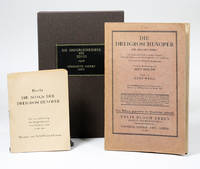
19282315Wien: Universal-Edition 1928. First edition. Original wrappers. Very Good. THE RARE FIRST EDITION OF "THE THREEPENNY OPERA" A CLASSIC OF THE MODERN STAGE ALONG WITH THE BOOKLET OF SONGS FROM THE PLAY THAT WAS PUBLISHED TO MARK ITS HUNDREDTH PERFORMANCE; BOTH ITEMS IN FINE CONDITION IN THE ORIGINAL PRINTED WRAPPERS AND BOTH WITH THE OWNERSHIP INSCRIPTION OF CHARLOTTE GROTE-HASELBALG ONE OF THE ACTRESSES WHO PLAYED POLLY PEACHUM IN THE PLAY'S ORIGINAL 1928 RUN. In 1926 after a brief career in journalism a stint in the Army at the end of World War I and almost a decade of work in the theater Bertolt Brecht born Eugen Berthold Friedrich Brecht discovered a new source of inspiration for his plays. "In 1926 . while researching material for a play about the Chicago grain exchange Brecht discovered the writings of Karl Marx and the theory of dialectics. The play was never completed but in Marx Brecht found what he regarded as the key to understanding the world around him and to the historical process as well as a framework and structure for his own writing." Non & Nick Worrall eds. Bertold Brecht: The Threepenny Opera 2005. He remained a committed Marxist through his life although he apparently never joined the Communist Party. Marxist dialectics typically do not have much entertainment value yet somehow Brecht managed to transmute his ideological preoccupations into one of the most rousing amusing cynical and entertaining plays of the twentieth century - the work offered here. As Harold Clurman recognized in the quotation above the play is very much of its time first performance 1928 - capturing the hysteria despair and cultural experimentation of the Weimar era - yet universal in its relevance and appeal.<br /> <br /> Brecht developed innovative theatrical techniques to communicate with his audiences. "He drew up a rough-and-ready yet basic distinction between the old Aristotelean theatre which he generally called 'dramatic' . and his own new theatre which he called 'epic.' . Brecht found in epic writing an objectivity an ability of the author to stand back and comment on the action which attracted him. He wanted to make his audience think not just feel; to find ways of thinking that would enable them to apply those processes to their real worlds and therefore act as a force for change in society." Id.<br /> <br /> In order to force the audience to think about the action rather than passively absorbing it Brecht used various devices to keep the audience members aware that what was before them was after all only a play. He referred to this process as Verfremdung a term that is sometimes translated as "alienation" but might more accurately be rendered as "defamiliarization" or "distancing." The devices he used for this purpose included putting the orchestra in full view of the audience; having the curtain conceal only part of the stage; using projected signs that anticipated summarized or commented on the action; and constructing the play from paratactic scenes without a smooth flow between them "montage".<br /> <br /> The Play: Die Dreigroschenoper was adapted by Brecht with some assistance from the translator Elisabeth Hauptmann and with music written by Kurt Weill from John Gay's "A Beggar's Opera." He maintained the original English setting but transposed the action from the early 18th century to the Victorian era. Both eras offered an abundance of rascality at all levels of society that enabled Gay and then Brecht to convey their implicit message that there was at bottom not all that much difference between the high life and the low life.<br /> <br /> The play opens at a fair in Soho. The stage directions indicate that "The beggars are begging the thieves are stealing the whores are whoring. A ballad singer sings a ballad." This and other quotations from the play are from the translation by Ralph Mannheim and John Willett. The ballad is the famous "Moritat von Mackie Messer" - a song that in a somewhat softened English version and as sung by Frank Sinatra Bobby Darin Louis Armstrong and a host of others became the perennial favorite "Mack the Knife."<br /> <br /> Mackie is the master criminal MacHeath. His character is suggested by a couple of verses from the Moritat:<br /> <br /> On a beautiful blue Sunday
<br /> See a corpse stretched in the Strand.
<br /> See a man dodge round the corner
<br /> Mackie's friends will understand.<br /> <br /> <br /> <br /> And Schmul Meier reported missing
<br /> Like so many wealthy men:
<br /> Mac the Knife acquired his cash box.
<br /> God alone knows how or when.<br /> <br /> MacHeath it transpires is romantically involved with Polly Peachum the daughter of the second principal character and foil to MacHeath Jonathan Jeremiah Peachum. "His business is trading in misery and guilt. He has divided London into fourteen districts and for a sizable fee and a percentage of the earnings licenses beggars to ply their trade in a particular area. His emporium is also a theatrical outfitters in that he supplies the beggars with customers and properties designed not to horrify but to elicit sympathy from passers-by. . Independent beggars are beat up by Peachum's employees and forced to join the equivalent of a beggars' trade union." Worrall op. cit.<br /> <br /> The play proceeds through a series of crimes and misdemeanors betrayals double and triple crosses and dirty tricks reminiscent of the more sophisticated but no less amoral behavior of Peachum and MacHeath's betters in Parliament industry the Church and the military. In the final scene MacHeath sentenced to death is awaiting his execution when a messenger arrives: "I bring a special order from our beloved Queen to have Captain Macheath set at liberty forthwith - All cheer. - as it's the coronation and raised to the hereditary peerage. Cheers. The castle of Marmarel likewise a pension of ten thousand pounds to be his in usufruct until his death." Good news all around although as Peachum cautions the audience "Saviours on horseback are seldom met with in practice."<br /> <br /> Stephen Parker in his biography Bertolt Brecht: A Literary Life 2014 describes the origins of the play as follows:<br /> <br /> "Elisabeth Hauptmann had been translating from English into German John Gay's satirical ballad opera of 1728 The Beggar's Opera a parody of Italian opera style. She had told Brecht of the huge success of the revival at London's Lyric Theatre where it had run since 1920 for an astonishing 1463 performances. Instead of the usual grand music and themes of opera Gay's work relied on everyday tunes and characters. . The audience could sing along to the music and enjoy the characters in this satire about corruption at all levels of society."<br /> <br /> "Brecht had scarcely touched the material when one day . in the spring of 1928 Ernest Josef Aufricht asked him if he had a new play for the re-opening of the Theater am Schiffbauerdamm . Brecht quickly convinced him that his adaptation of The Beggar's Opera was the very thing."<br /> <br /> "The material was right up Brecht and Weill's street. However it would have to be re-cast substantially to make it work as a satire of modern society. . For both Weill and Brecht it was . an opportunity to break down barriers between elite and popular art. . In Gay's gangster Macheath Brecht encountered an irresistible hedonistic outsider in the same mould as his great early creations. Of course when Brecht wrote about the project for German critics in January 1929 he pointed to the serious underlying message . However . his fascination with the amoral outsider produced a gangster whose courage and magnetic attraction outweighed the anti-capitalist message. Brecht knew exactly how to make him part of an unforgettable theatrical experience. He would never again allow his audience to enjoy themselves in such an unfettered way."<br /> <br /> "Brecht and Hauptmann made rapid progress on the text and Weill began composing the music in April 1928. Brecht and Hauptmann had a first draft ready for the playbook by early May. Weill's playful quirky tunes were the perfect foil for the savage lyrics. Weill imbued the form of the ballad opera with his contemporary style drawing on jazz and dance music."<br /> <br /> The play was an unqualified success. "The Threepenny Opera was performed at the Theater am Schifffbauerdamm for the whole of the 1928-9 season and enjoyed phenomenal success throughout Germany. By January 1929 there were productions at nineteen German theatres as well as in Prague Budapest and Vienna. In all there were 4200 performances in 1928-9 . The Threepenny Opera rapidly became an international success. . Success in the USA would have to wait until the famous production in Marc Blitzstein's translation which ran at New York's Theater de Lys from 1954 to 1961. . Today The Threepenny Opera remains one of the world's most performed musical dramas."<br /> <br /> <br /> <br /> The work offered here is the true first edition of the libretto of Die Dreigroschenoper described on the cover as follows: Bert sic Brecht & Kurt Weill "Die Dreigroschenoper The Beggar's Opera: Ein Stück mit Musik in einem Vorspiel und acht Bildern nach dem Englischen des John Gay. Übersetzt von Elisabeth Hauptmann . Universal Edition - Wien Leipzig Nr. 8850." See "Sources and Genesis of 'Die Dreigroschenoper'" in Stephen Hinton "Kurt Weill: Threepenny Opera" Cambridge Opera Handbooks 1990 at 13 describing the first edition. <br /> <br /> Hinton states that the first issue of 300 copies was reprinted twice in printings of 500 copies each in November 1928 and December 1929. In the present copy there is a publisher's imprint on the rear wrapper ending in "2338 28". Other copies have the imprint ending in "1398 29" and it has been generally understood that ones with "28" are from 1928; while copies with the "29" are from 1929.<br /> <br /> Regarding the two 1928 printings however we have not been able to determine definitively in what ways if any they differ. However the rubber-stamped number "225" appears on the front wrapper and in the margin of page 31 of our copy. Similar stamps appear on other copies of the first edition that have appeared on the market and may indicate the numbering of the 300 copies comprising the first printing. <br /> <br /> The cover of the first edition states: "Den Bühnen gegenüber als Manuskript Gedruckt" "Printed as a manuscript for theatres" - i.e. originally intended for use in connection with productions of the play rather than for sale although some copies were apparently sold. It is reasonable that an edition of only 300 copies intended primarily for use by performers directors etc. would be numbered so that the copies could be tracked and retrieved and redistributed as necessary. Perhaps the edition became repurposed in light of the popularity of the play and the subsequent 500 copies from 1928 were printed primarily for sale to the public in which case there would be no need to number them. These indications are far from definitive but they perhaps constitute circumstantial evidence that numbered copies are from the first issue. Additional circumstantial evidence that this copy is from the first issue is provided by its ownership by a person associated with the original production as described below.<br /> <br /> The libretto is offered here with the pamphlet "Die Songs der Dreigroschenoper. Zur 100. Aufführung der Dreigroschenoper dem Publikum überreicht vom Theater am Schiffbauerdamm" copyright date 1928. "The Songs of the Threepenny Opera. Presented to the audience by the Theater am Schiffbauerdamm for the 100th performance of the Threepenny Opera." It would appear to be distinct from the issue of 10000 copies prepared for public distribution Item 105 in Walter Nudel's "Bertolt Brecht - Bibliographie" in the journal Sinn und Form's special issue on Brecht 1957; see also Hinton op cit. page 13 and Gero von Wilpert & Adolf Gühring Erstausgaben Deutscher Dichtung: Eine Bibliographie zur Deutschen Literatur 1600-1990 2d ed. 1992 at 183 No. 13.<br /> <br /> Both works have the ownership signature of "Charlotte Grote-Haselbalg" on the title page of Die Dreigroschenoper and on the half-title of the songbook. Charlotte Grote-Haselbalg also known as Charlotte Andersch the name under which she was born Charlotte Haselbalg and Charlotte Ander was a German stage and film actress of the early twentieth century credited with a lengthy list of movie roles in both the silent and sound eras. One of her stage roles was Polly Peachum MacHeath's lover in the original production of Die Dreigroschenoper.<br /> <br /> Carola Neher who had been selected to play Polly Peachum in the 1928 production "had to go to Switzerland to tend to her dying husband the poet Klabund with the result that she arrived two weeks late for rehearsal and felt obliged to abandon the role. She was replaced by Roma Bahn who learned the part in four days." Worrall op cit. Bahn is in fact listed as Polly in the playbill for the play's premiere; however Ander performed the role at least once during the play's original run. The media biographer and historian Kay Weniger in his 2008 work "Zwischen Bühne und Baracke: Lexikon der Verfolgten Theater- Film- under Musikkünstler 1933-1945" a collection of biographies of performers who suffered under Nazi persecution notes that "mit der Polly Peachum in einer Aufführung von Brechts-Weills 'Dreigroschenoper' in Ernst Josef Aufrichts Threatre an Schiffbauerdamm spielte sie 1928 ihre wichtigste und schönste Bühnenrole vor dem Machtantritt der Nazis." As "Polly Peachum in a performance of Brecht-Weill's Threepenny Opera in Ernst Josef Aufricht's Theatre an Schiffbauerdamm in 1928 she Anders played her most important and most beautiful stage role before the Nazis came to power."<br /> <br /> According to Weniger Anders had been threatened by the Nazis with a boycott due to an affair with a Jewish businessman and later was accused of threatening to dismiss any members of her household who voted for Hitler in the 1933 election. She found it expedient to flee Germany for England although she later returned due to a lack of adequate roles before the declaration of war between the two countries.<br /> <br /> Die Dreigroschenoper: Wien - Leipzig: Universal-Edition 1928. Octavo original printed wrappers. Near-fine condition with only very light general wear. Die Songs Der Dreigroschenoper: Potsdam: Gustav Kiepenheuer 1928. Twelvemo original printed wrappers. A touch of restoration at hinges otherwise near-fine. Housed together in custom cloth box with leather label. <br /> <br /> RARE FIRST EDITION IN OUTSTANDING CONDITION OF A 20TH-CENTURY MASTERPIECE WITH A NOTED PROVENANCE. Universal-Edition unknown books
196471789NY:: Viking Press. Very Good in Very Good dust jacket. 1964. Hardcover. B0007E9ERY . First edition. Very good in a very good a few short closed edge tears price clipped dust jacket. . Viking Press, hardcover books
196552304NY:: Viking Press. Very Good in Very Good dust jacket. 1965. Hardcover. First edition. Very good in a very good age toning lower corner of front flap is clipped dust jacket. . Viking Press, hardcover books
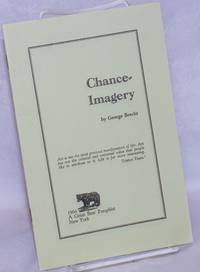
1966265198New York: Something Else Press 1966. 16p. includes covers 5.5x8.5 inches references backlist very good first edition pamphlet in stapled green wraps. Great Bear Pamphlet #3. First book by the Dadaist/Surrealist chemist who worked for Pfizer in the 1950s-60s and designed several tampons. He became involved with John Cage and later with Fluxus. Something Else Press unknown books
196661353NY: Great Bear/Something Else Press 1966. Second printing. 15 pp. Light bump to base of spine else near fine in stapled ochre wrappers. A single essay on chance in the arts that appeared originally in Collage magazine. Three Great Bear pamphlet titles listed on the rear cover. NY: Great Bear/Something Else Press unknown books
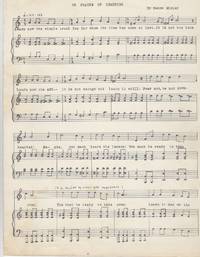
31428n.p.: n.p. Privately printed. Sheet Music. Sheet music very good. The sheet was kept in an ancient manilla folder stamped "Pierre Degeytter Club of N. Y." and it is possible that the club produced this for their own use. Brecht's name does not appear anywhere on the sheet. ; 4to 11" - 13" tall; 4 pp . n.p. unknown books
196725259New York: Touchstone Publishers Ltd 1967. First edition. Loose Sheets. Fine. Double elephant folio in cloth-covered clamshell box. Contains a suite of twenty-five soft ground etchings by Jack Levine inspires by the Bertolt Brecht and G. W. Pabst "Dreigroschen Film" of 1930. One of 100 portfolios each hand-numbered and signed by the artist on each etching. Etchings which measure approx. 18 x14" wide are all in fine condition. The thick outer clamshell box is a bit scuffed and worn. BFK Rives paper. Touchstone Publishers Ltd unknown books
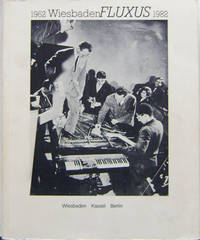
1982010077Wiesbaden Berlin and Kassel: Harlekin Art Berliner Kunstlerprogramm Des DAAD 1982. First Edition. Paperback. Very Good/No. First edition. Fantastic 377 pp catalogue documenting twenty years of fluxus. Profusely illustrated. The Spirit of Fluxus booklet tipped in at rear. Very good condition in tall thick bound wrappers. <br/><br/> Harlekin Art Berliner Kunstlerprogramm Des DAAD paperback books
200017992Koln: Lempertz Contempora 2000. First edition. Paperback. Very Good . Wide paperbound octavo. 67 pp. Illustrated in color. Text in German by Roger Goepper. A clean very good or better copy of this catalog from a Koln exhibition in 2000. This copy INSCRIBED by Brecht in year of publication to Patrick Hughes. Books signed or inscribed by Brecht are uncommon in the marketplace. <br/><br/> Lempertz Contempora paperback books
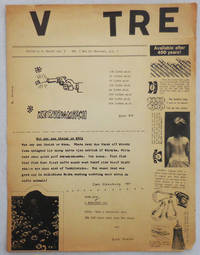
196323017Metuchen: George Brecht and Fluxus Editorial Council for Fluxus 1963. First edition. Loose Sheets. Very Good. Tall single double-sided sheet of fragile paper. Offset lithograph. Measures 9 3/4 x 12 3/4" tall. The antecedant issue of what would become the central periodical of the Fluxus movement. Paper is toned with age and has some minor paper loss at bottom. A better than typical example of this rare early piece of Fluxus ephemera. Not dated but from circa 1963. This unnumbered issue of V TRE precedes cc V TRE #1. Includes brief contributions by Ruth Krauss Claes Oldenburg Diter Rot Robert Morris and others. <br/><br/> George Brecht and Fluxus Editorial Council for Fluxus unknown books
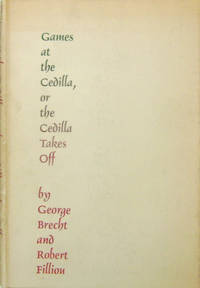
196719043New York Toronto Frankfurt: Something Else Press 1967. First edition. Cloth. Very Good/very good. 8vo. Unpaginated artist book collaboration between Brecht and Filliou. A very good clothbound copy in very good unclipped dustwrapper. Some toning at spine of book and wrapper. A solid collectible copy of a book that is difficult to describe. Illustrated with drawings and photographs. <br/><br/> Something Else Press hardcover books
198321524Bruxelles Hambourg: Editions Lebeer Hossmann 1983. First edition. Paperback. Fine. Artist book collaboration between fluxus artists George Brecht and Alison Knowles. Called a "bean-book" in the collophon which states that this book is based on illustrations from the "Sprach-Brockhaus - Deutsches Worterbuch fur jedermann" Verlag Eberhard Brockhaus Wiesbaden 1947. Some of the legends and labels of the original have been replaced by the authors sometimes at random by George Brecht with the names of beans from the Alison Knowles collection. Published in February 1983 in an edition of eighty copies of which this copy is hand-numbered 80 plus 8 hors commerce reserved for the authors and publisher. The edition has been silk-screen-printed on simili-japon by Roel Goussey and hand-bound by Liliane Gerard. Each copy is accompanied by an original silk-screen print hand-annotated by Alison Knowles and signed by the authors. SIGNED by both artists on the colophon page as well as the laid in silk-screen print which in this instance has been annotated by Knowles as follows " The Scarlet Runner draws the white butterfly" A fine copy. In addition this copy has been INSCRIBED by the artists to fellow fluxus artists Jackson Mac Low and Anne Tardos. A scarce and beautiful production. Only two copies noted in WorldCat. <br/><br/> Editions Lebeer Hossmann paperback books
1966S11452New York:: Grove Press 1966. 1966. Sm. 8vo. 155 pp. Printed wrappers; rubbed. Grove Press, (1966). unknown books
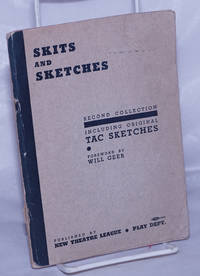
1939263377New York: New Theatre League 1939. Pamphlet. 72p. wraps worn and creased internal damp stain in right margin a few gatherings detached but present 5x7.25 inches. Includes a sketch by Langston Hughes one sketch by Lewis Allan along with the lyrics to his classic song "Strange Fruit" and our favorite sketch "Waiting for Odets New Theatre League unknown books
2369Prague Nase Vojsko 1962. 4to. Cloth bound book with original dust jacket. Translated by Ludvik Kundera with illustrations by Hoffmeister. 117 pp. unknown books
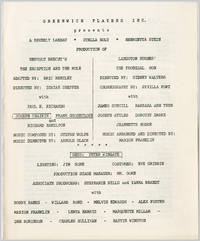
1965WRCLIT73638New York: Greenwich Mews Theatre 1965. 4pp. Folded leaflet. Mimeographed typescript printed recto and verso of folded oblong legal sheet. An original playbill associated with a double bill that paired Bentley's translation of Brecht's post-modern play with Hughes' "Gospel songplay" which uses few spoken words utilizing traditional songs or songs by him. The double bill was at its heart a marriage of financial convenience but Hughes admired Brecht and was happy with the pairing. The 21 May 1965 New York TIMES review commented to its readers "We know now that there are many other aspects to the Negro . but if we remember that this is only one side of his nature and potentialities we can share in his gift for rapturously innocent song and dance." The double-bill enjoyed no small success with over 100 performances but Holt's decision to send Hughes's play on a solo tour of Europe without Brecht's play led to some violent disagreement in the company. Greenwich Mews Theatre unknown books